


Choosing the Perfect Tech Stack for a Modern Website
Choosing the Perfect Tech Stack for a Modern Website
Choosing the Perfect Tech Stack for a Modern Website
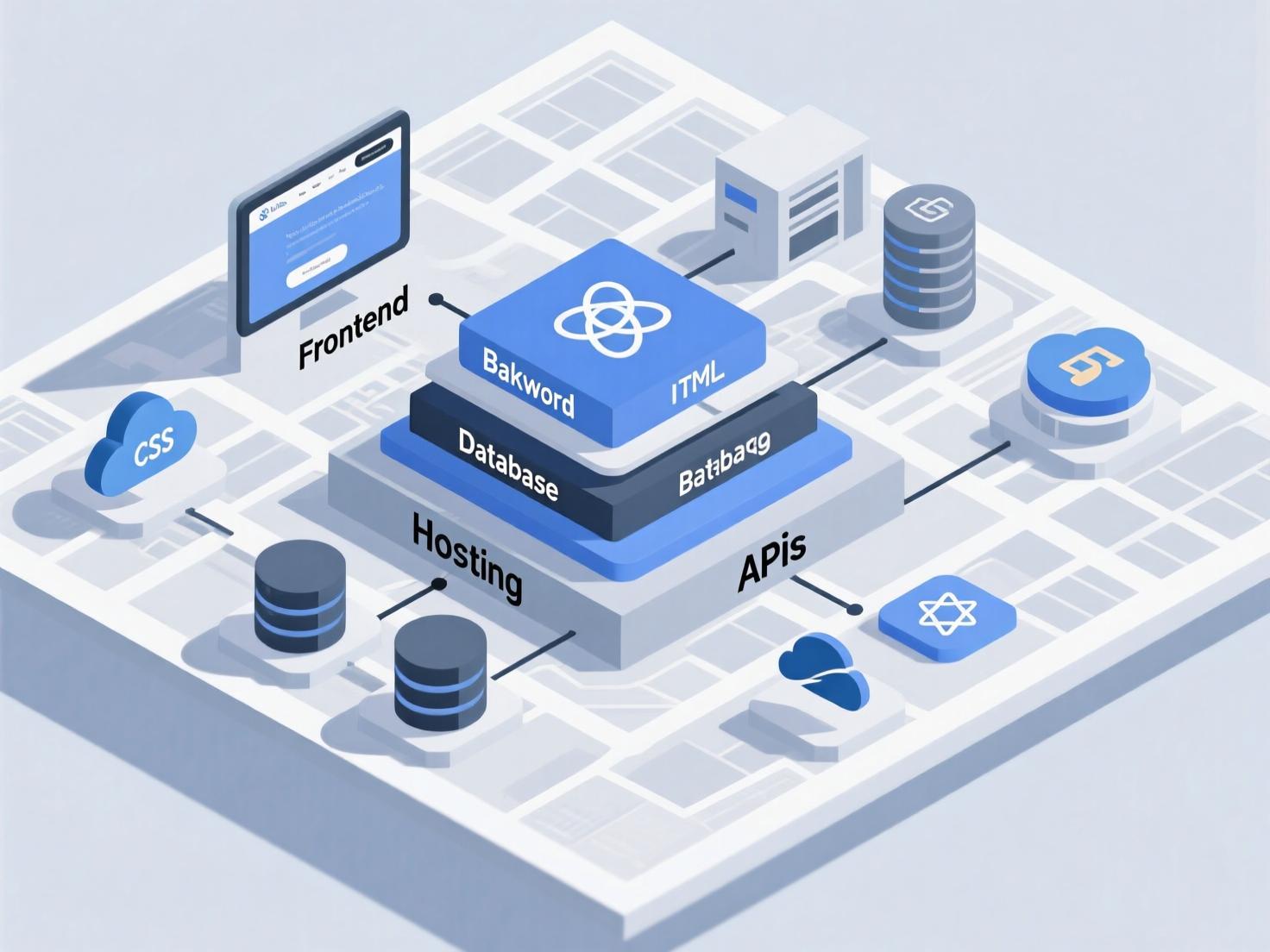
Modern websites have to do it all: load fast on any device, rank well, convert visitors, and scale without drama. The tooling you choose your tech stack for a modern website—determines not only developer experience but also Core Web Vitals, SEO, security posture, and total cost of ownership. Get the stack right, and you’ll ship faster with fewer regressions; get it wrong, and you’ll fight performance issues, brittle builds, and missed opportunities.
This guide breaks down core decisions across the frontend, backend, content, data, and hosting layers. We’ll map trade-offs between client-side rendering (CSR), server-side rendering (SSR), static generation (SSG), and incremental static regeneration (ISR), plus when Jamstack makes sense. We’ll also connect these choices to Google’s Core Web Vitals, the metrics Google surfaces across its tools to reflect real-world UX.
TL;DR
-
Start from user goals and content model, not frameworks.
-
Prefer pre-rendered HTML (SSG/ISR) for marketing and editorial pages; use SSR for personalization and authenticated app views.
-
Optimize for Core Web Vitals from day one this is a product and growth concern, not only an engineering concern.
What “Tech Stack” Really Means in 2025
A web tech stack spans:
-
Frontend (React/Next.js, Vue/Nuxt, SvelteKit, Astro) and rendering strategy (CSR/SSR/SSG/ISR).
-
Backend (Node.js, Deno, Bun; frameworks like Express, NestJS; or opinionated MVC such as Rails/Django).
-
Content (headless CMS such as Contentful, Sanity, Strapi; or a traditional monolith).
-
Data (PostgreSQL/MySQL/Serverless DBs), APIs, and edge functions.
-
Hosting/Delivery (Vercel/Netlify/Cloudflare Pages, AWS/GCP/Azure).
-
Observability & CI/CD (logging, traces, testing, preview deploys).
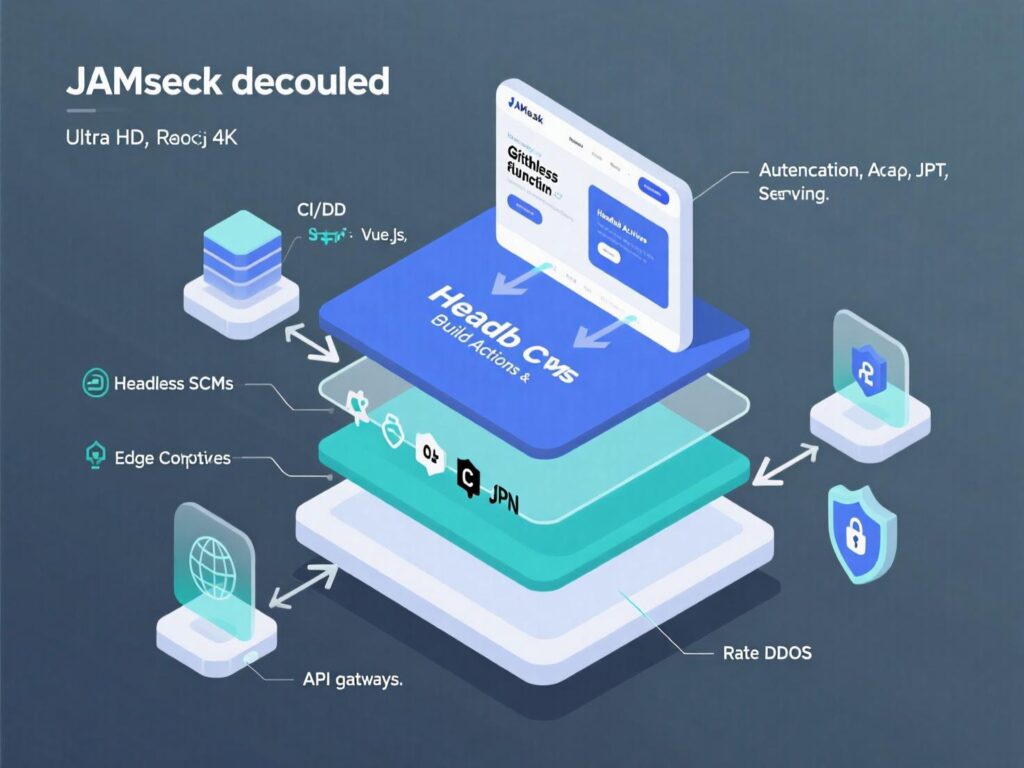
Jamstack decoupling the web experience layer from data and business logic via APIs—remains a solid approach for speed, security, and scalability when paired with modern CDNs and edge compute.
How to Choose a Tech Stack for a Modern Website (Decision Framework)
-
Clarify goals & constraints
What are you building—brochure site, content hub, web app, e-commerce? What’s your timeline, skill set, and budget? -
Model content & routes first
Define the shapes of pages and their update frequency. When content changes often but doesn’t need personalization, prefer SSG/ISR. For dashboard-style or highly personalized pages, prefer SSR. -
Pick rendering per route
-
SSG for evergreen landing pages and documentation.
-
ISR to get the benefits of SSG with periodic revalidation.
-
SSR for logged-in or request-time personalization.
-
CSR sparingly—keep critical content server-rendered.
-
Tie choices to Core Web Vitals
Pre-rendering and smart hydration help Largest Contentful Paint (LCP) and Interaction to Next Paint (INP). Layout stability practices reduce CLS. -
Check team fit & ecosystem maturity
Choose tools your team can ship with. Prefer mainstream frameworks with strong docs and hosting support.
Pro tip: Score each option 1–5 on speed (CWV), SEO, content velocity, DX, cost, and risk. Then pick the highest weighted score for your tech stack for a modern website.
Score Your Options Against Your “Tech Stack for a Modern Website” Criteria
Create a simple table:
| Criterion | Weight | Jamstack (Next.js+Headless) | Monolith (Rails/Django) | SPA (CSR-heavy) |
|---|---|---|---|---|
| Core Web Vitals | 5 | 5 | 3–4 | 2–3 |
| SEO (crawlable HTML) | 4 | 5 | 4 | 2 |
| Personalization | 3 | 4 (edge/SSR islands) | 5 | 3 |
| Editorial velocity | 4 | 5 (headless) | 3–4 | 3 |
| Hosting simplicity | 3 | 5 | 3 | 4 |
| Cost at scale | 3 | 4–5 | 3–4 | 4 |
(CWV & SEO advantages of pre-rendered HTML are well-documented; see Google and Next.js references.)
Frontend Choices for a Tech Stack for a Modern Website
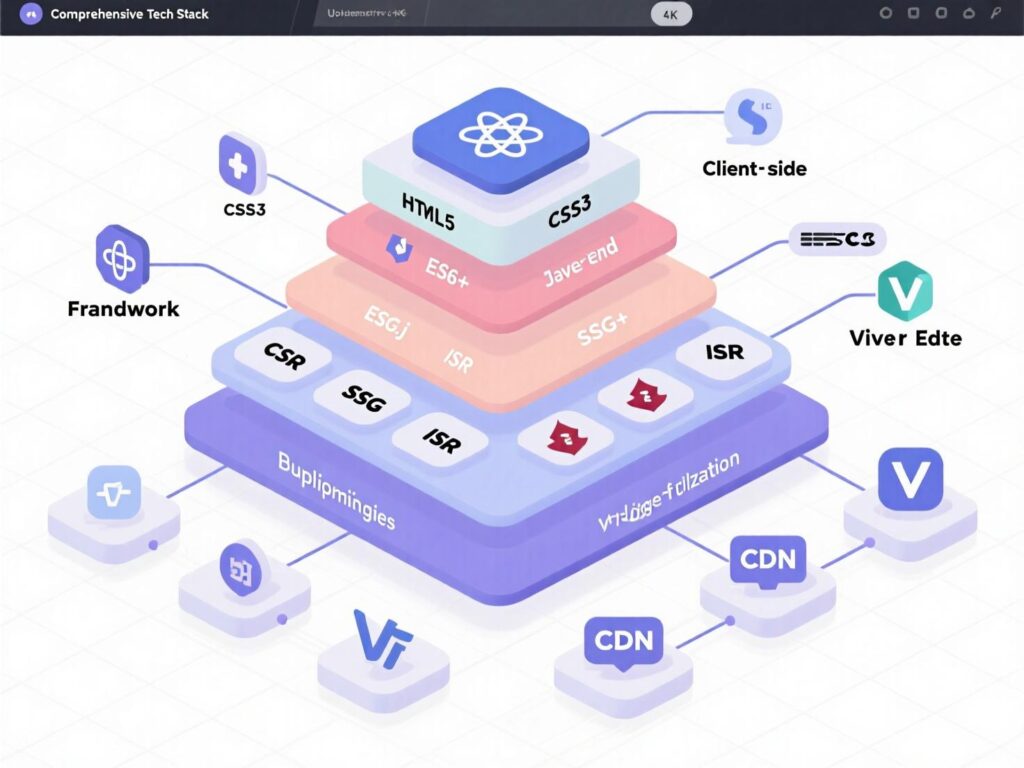
Next.js (React): A default for many teams thanks to file-based routing, hybrid rendering (SSG/ISR/SSR), image optimization, and strong edge support. Data-fetching patterns span build-time, request-time, and on-demand regeneration.
Alternatives:
-
Astro for content-heavy sites with partial hydration.
-
Nuxt (Vue), SvelteKit, Remix for full-stack DX with server components/streaming.
CSR vs SSR vs SSG/ISR—quick guidance
-
Prefer SSG/ISR for public pages to ship HTML and reduce JS on the critical path (better LCP/INP).
-
Use SSR when the server must compute the view at request time.
-
Use CSR when the page is highly interactive after initial load, but keep critical content server-rendered.
Backend & Data in a Tech Stack for a Modern Website
Pick the thinnest backend that serves your use case:
-
Headless CMS + API: Contentful, Sanity, Strapi, or a Git-based CMS for editorial workflows.
-
Serverless functions / edge runtime: For pricing calculators, forms, lightweight personalization.
-
Full frameworks: Rails/Django for opinionated CRUD and admin back-office; excellent for SSR when paired with modern frontends.
-
Datastores: Postgres (OLTP workhorse), serverless Postgres/MySQL, or KV/edge stores for session/personalization.
If you’re leaning Jamstack, the decoupled approach lets you build the experience layer independent of business logic—exactly what Jamstack advocates.
Hosting & Delivery Considerations
-
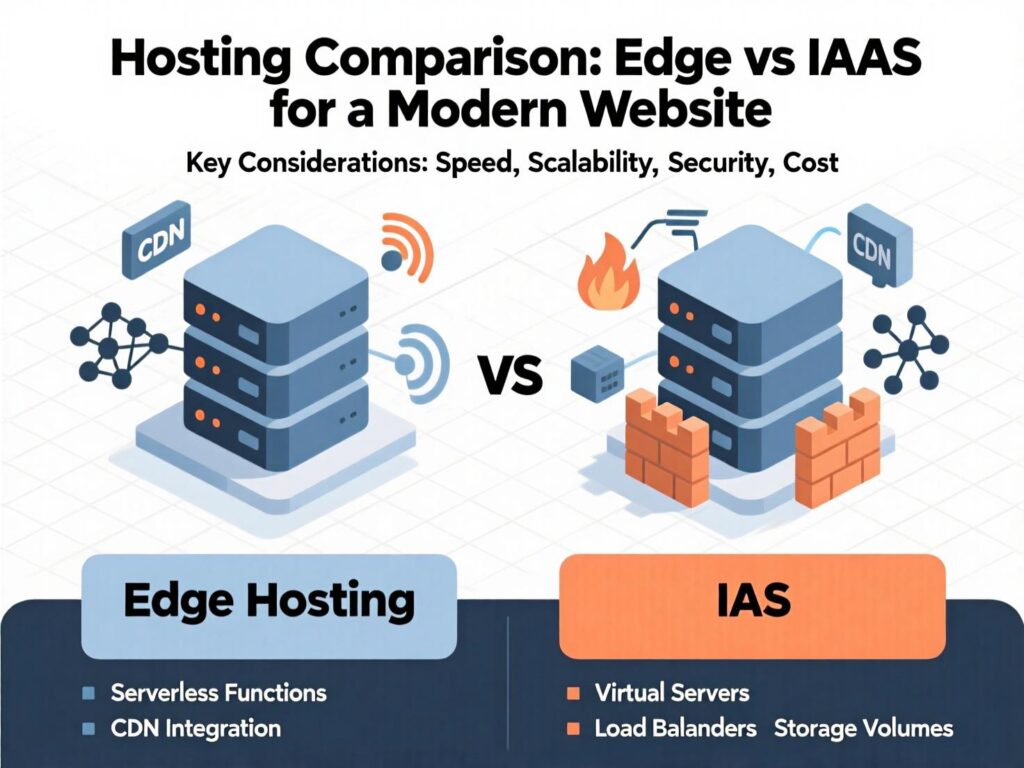
Global edge (Vercel/Netlify/Cloudflare): push pre-rendered HTML and assets to users near their region for consistently fast LCP; pair with ISR for freshness.
-
Traditional IaaS (AWS/GCP/Azure): ultimate control, but more ops work.
-
Build previews: non-negotiable for content & QA; treat every PR as a preview URL.
SEO & Core Web Vitals: Why They Should Shape Your Stack
Google’s Core Web Vitals—LCP, INP, CLS—are field metrics surfaced across Google tools; plan for them as product requirements, not afterthoughts. Use pre-rendered HTML, efficient fonts/images, and limit hydration.
-
LCP: Serve hero content quickly (SSG/ISR, optimized images).
-
INP: Reduce JS on the main thread; ship less JS via islands/partial hydration.
-
CLS: Reserve space for images/ads, avoid late layout shifts.
Security & Compliance in Your Stack
Choose well-maintained frameworks and keep dependencies current. Prefer managed auth (Auth0/Cognito/Clerk) and managed secrets. With Jamstack, most pages are static behind a CDN, shrinking attack surface; dynamic bits live in serverless functions or upstream APIs.
Budget & Team Fit
-
Small team, content-heavy: headless CMS + Next.js (SSG/ISR) + edge hosting.
-
Product with complex business logic: conventional MVC (Rails/Django) with progressive enhancement or hybrid React server components.
-
E-commerce: headless commerce (Shopify/Hydrogen, CommerceTools) with ISR for product/category pages.
Decision Playbooks (Copy/Paste)
Marketing Site / Docs
-
Frontend: Next.js (SSG/ISR), Astro or SvelteKit also viable
-
Content: Headless CMS
-
Hosting: Vercel/Netlify/Cloudflare Pages
-
Result: Optimal CWV + fast iteration.
Web App (Authenticated)
-
Frontend: Next.js with SSR for auth/personalization
-
Backend: Node API or Rails/Django
-
Database: Postgres
-
Hosting: Vercel (edge functions) + managed DB
Global E-commerce
-
Frontend: Next.js (ISR for catalog), server actions for cart/checkout
-
Commerce: Headless API
-
Payments: Stripe
-
Edge functions for localization and A/B tests
Mini Case Studies
B2B SaaS Marketing (Jamstack)
A Series-A SaaS moved from a monolithic CMS to Next.js + headless CMS with ISR. After migrating hero imagery to optimized components and inlining critical CSS, its LCP and INP measurably improved on key markets, lifting organic landings and demo requests. (Approach aligns with Google’s guidance on realistic CWV improvements.)
News/Editorial (Hybrid)
A newsroom rebuilt its site with SSG for evergreen features and SSR for live coverage. ISR kept home/category pages fresh every few minutes while preserving caching. Editors gained preview builds for every PR, cutting regressions before publish. (Model consistent with MDN/Next.js rendering guidance.) MDN Web DocsNext.js
Conclusion
There is no one-size-fits-all tech stack for a modern website. Start with the customer journey and your content model, then pick rendering strategies per route. Favor pre-rendered HTML (SSG/ISR) for public pages, reserve SSR for personalization, and keep CSR under control. Anchor these choices to Core Web Vitals targets, team skills, and total cost of ownership. With a small set of proven tools and edge-ready hosting, you can ship fast now and scale later—without repainting the plane mid-flight.
CTA: Want a battle-tested architecture tailored to your goals? Get a 60-minute stack blueprint (routes → rendering → hosting) and leave with a deployable plan.
FAQs
1) How do I choose between CSR, SSR, SSG, and ISR?
A . Use SSG for evergreen public pages, ISR for freshness without rebuilds, SSR for request-time personalization/auth, and CSR for post-load interactivity. Hybridize per route.
Schema expander: Include examples of page types per strategy.
2) How does Core Web Vitals affect stack choice?
A . Pre-rendered HTML, smart hydration, and optimized assets directly influence LCP/INP/CLS. Pick frameworks and hosts that support these patterns by default.
Schema expander: Mention LCP/INP/CLS definitions.
3) How can Jamstack help a modern site?
A . By decoupling content and logic, Jamstack improves speed, security, and scalability. You ship static or cached HTML and call APIs for dynamic bits.
Schema expander: Add note on edge functions.
4) What is the best database for a modern website?
A . Most sites do well with Postgres for relational data; pair with serverless variants when you need elastic scale. Choose based on data model, not hype.
Schema expander: Include examples of read patterns.
5) How to evaluate the tech stack for a modern website for SEO?
A . Ensure crawlable HTML (SSR/SSG/ISR), fast LCP, minimal CLS, and semantic markup. Prefer image/font optimization out-of-the-box.
Schema expander: Add structured data recommendation.
6) How do content teams preview changes safely?
A . Use preview deploys on every PR and CMS preview URLs; treat them as the single source of truth before publish.
Schema expander: Mention branch-based workflows.
7) How can I localize at scale?
A . Edge middleware can detect locale and serve localized content; keep translation strings in your CMS and revalidate with ISR.
Schema expander: Outline fallback language behavior.
8) How do I secure a modern stack?
A . Keep dependencies updated, prefer managed auth/secrets, apply least privilege, and reduce attack surface with static delivery and serverless functions.
Schema expander: Add WAF/CDN notes.
9) How much does a modern stack cost?
A . Edge hosts and serverless often reduce ops cost, but watch for egress and build minutes. Model traffic and rebuild cadence before you commit.
Schema expander: Suggest a simple cost model.