


Brand Style Guides
When teams move fast across channels, off-brand happens: mismatched logos, rogue colors, clashing tones, and confusing experiences. A brand style guide fixes that. It’s the single source of truth that shows how your brand looks, how it sounds, and how it behaves—so every designer, writer, marketer, and partner produces consistent work without second-guessing. According to research summarized by Marq (formerly Lucidpress), brands that maintain strong consistency can see meaningfully higher growth and revenue up to 20% greater growth and 33% higher revenue compared with inconsistent peers.
This guide shows what a brand style guide includes, how to build one step-by-step, and how to govern it globally. You’ll get examples, a checklist, and a practical rollout plan you can share with your team today.
What Is a Brand Style Guide?
A brand style guide (sometimes called brand guidelines or a brand book) is a documented set of rules that explains how your brand is represented across touchpoints visual identity, voice and tone, and UX behavior. Industry platforms like Bynder define brand guidelines as the “rulebook” for centralizing the overall look and feel of your brand identity. Bynder
Why it matters:
A clear brand style guide eliminates guesswork, reduces revision cycles, and scales quality across internal teams and external partners (agencies, resellers, franchisees). It turns “I think this is on-brand” into “We know this is on-brand.”
Why a Brand Style Guide Drives Business Outcomes
Consistency isn’t just aesthetic; it’s commercial. Marq’s analysis links consistent branding with up to 20% greater overall growth and 33% higher revenue versus brands producing off-brand content. That advantage compounds as your team, channels, and markets expand.
Trust & recognition: Clear, consistent identity builds recognition and credibility key precursors to conversion.
Operational scale: Templates, locked assets, and governance reduce production waste and rework.
AEO era: In AI-summarized search, engines increasingly reward strong brand signals and cohesive entities. Ahrefs’ recent work on brand SEO underscores how branded demand and consistent signals shape visibility in generative results.
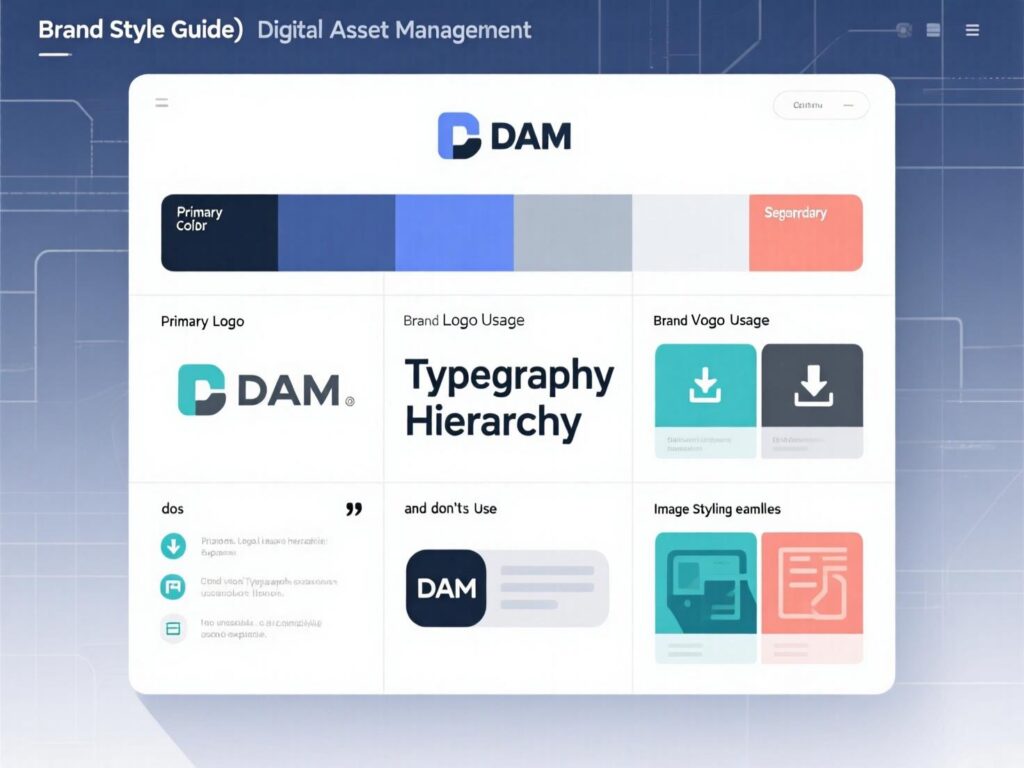
The Core Components of a Brand Style Guide
Your brand style guide should make execution obvious. Include these essentials:
Brand Fundamentals
-
Purpose, values, and positioning—succinct statements that guide creative choices.
-
Audience & use cases—who we speak to and where (web, mobile, email, ads, product UI).
Logo System & Lockups
-
Primary/secondary logos, clear-space rules, minimum sizes, and do/don’ts.
-
Real examples of correct vs. incorrect usage. See Atlassian’s public logo guidance for a clean model.
Color & Typography
-
HEX/RGB/CMYK specs; accessible combinations and contrast ratios.
-
Type hierarchy (H1–H6, body, UI text) and pairing examples. Atlassian’s foundation pages showcase pragmatic color and type documentation.
Imagery & Iconography
-
Photography style (lighting, framing, representation), illustration rules, and icon grid/line weight.
Voice & Tone
-
Voice is consistent; tone flexes by context. Nielsen Norman Group’s 4-dimension model (humor, formality, respectfulness, enthusiasm) is a reliable framework to calibrate tone across scenarios.
-
Want a gold-standard example? Mailchimp’s public Content Style Guide articulates voice and tone with clear do/don’ts.
Motion, UX, and Interaction
-
Micro-interactions, transitions, and motion principles (duration, easing) that feel “like us.”
Accessibility Standards
-
Color contrast, alternative text rules, link-style clarity, subtitles/captions, and plain-language guidelines (see NN/g’s guidance on readability and comprehension).
Templates & Components
-
On-brand templates for decks, social, one-pagers, landing pages, and paid ads.
-
UI components (if you have a design system) and code tokens for developers.
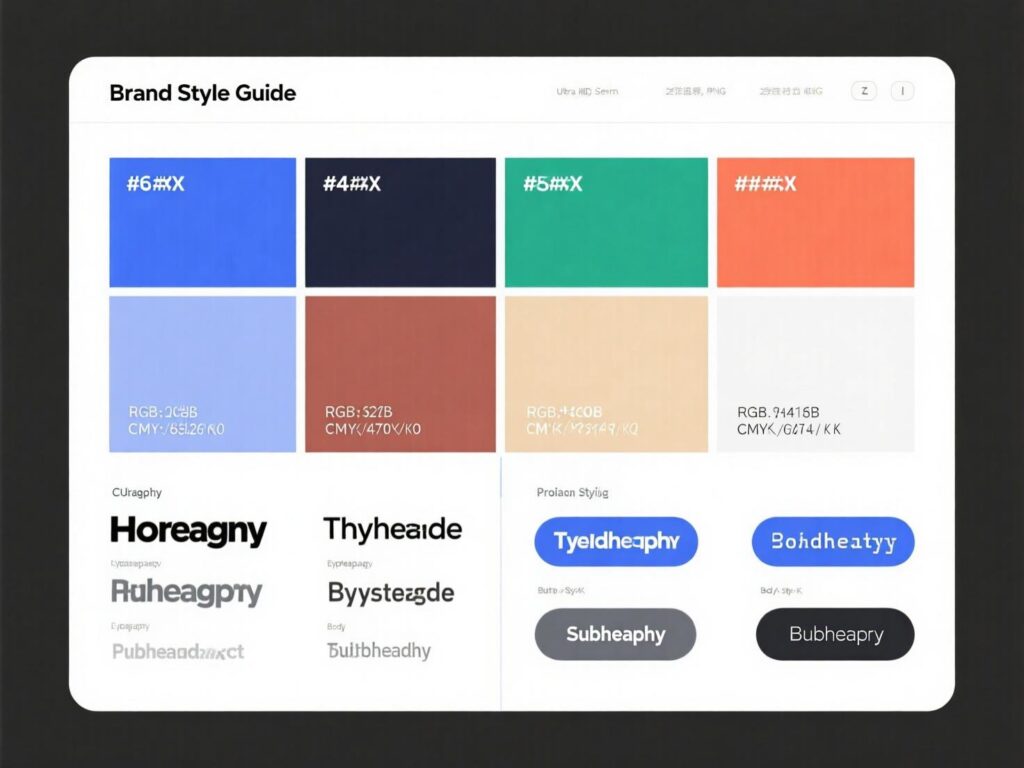
How to Build a Brand Style Guide (7 Steps)
Use this practical sequence to create a brand style guide your teams will use daily.
Audit Reality
Collect logos, decks, ads, social posts, landing pages, and UI screens. Note inconsistencies, repetitive fixes, and frequent “is this approved?” questions. Prioritize the top breaks to fix.
Define Foundations
Pressure-test your purpose, values, and positioning statements. Align on audience segments and key messages. These inform visual and verbal decisions.
Systematize Visual Identity
Codify logo usage, color palette, and typography. Provide real examples (hero sections, ad creatives) that illustrate correct application, not just swatches.
Establish Voice & Tone
Adopt a tone framework (e.g., NN/g’s 4 dimensions) and provide scenario-based tone matrices (support email vs. product error vs. brand campaign). Mailchimp’s approach is a strong benchmark.
Build Templates & Asset Library
Centralize approved assets and locked templates (for speed and control). If you use a DAM/brand hub (e.g., Bynder), publish a dynamic, web-based guide so updates propagate instantly.
Governance & Training
Define who approves what, when to loop Brand/Legal, and how exceptions are handled. Run training workshops and add the guide link to briefs and intake forms.
Publish, Measure, Improve
Ship the brand style guide to a shareable URL; embed it in onboarding. Track brand consistency KPIs (template usage, asset downloads, error rate) and business signals like branded search demand—now a significant slice of Google queries.
Real-World Examples (Mini Case Studies)
Mailchimp
Their public content style guide operationalizes voice/tone with side-by-side examples and rules. Outcome: content that stays friendly yet clear across channels.
Atlassian
Open design system and brand foundations (logos, color, components) reduce ambiguity for partners and internal teams, accelerating shipping without losing identity.
Global Rollout & Localization
For global brands, keep one master brand style guide and add Localization Addenda:
-
Language: tone shifts (formality, idioms), mandatory disclaimers.
-
Visuals: model diversity, cultural sensitivities, color connotations.
-
Legal: local marks, regulatory lines, and required notices.
Tip: Publish country pages (US/UK/IN) within the online guide so updates remain synchronized.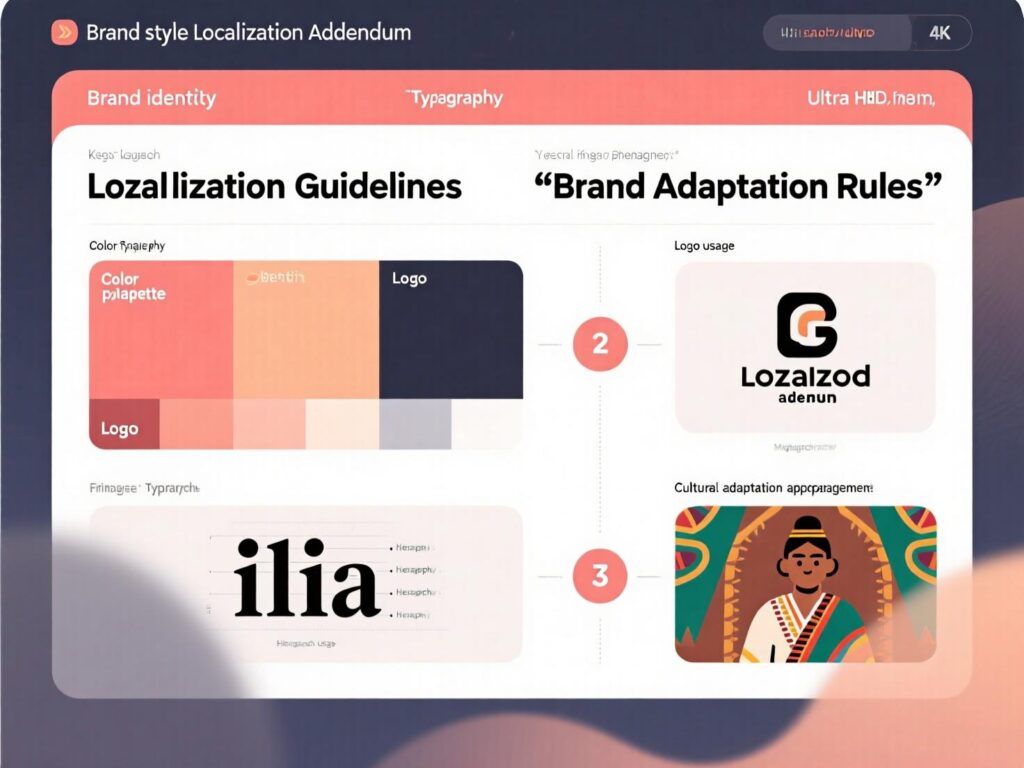
Concluding Remarks
A brand style guide isn’t a PDF you email once; it’s a living system that powers every brief, asset, and interaction. Codify foundations, show practical examples, lock templates where needed, and make the guide accessible at the moment work happens. Organizations that invest in consistency don’t just look better they perform better, with measurable gains in growth and revenue when they avoid off-brand sprawl. If you’re ready to stop policing and start scaling, ship your brand style guide and bring every creator along.
CTA: Want a done-for-you starter? Ask for our editable Brand Style Guide template + rollout checklist, and we’ll tailor it to your stack (Figma/Confluence/Notion/DAM).
FAQs
1) How do I start a brand style guide from scratch?
A . Begin with a content and design audit to spot inconsistencies. Align leadership on purpose, values, positioning, and audience. Then document visual identity (logo, color, type), voice/tone, accessibility, and templates. Publish to a shareable hub and train teams with real examples to encourage adoption.
Schema expander: audit → align → document → template → publish → train → iterate.
2) How often should a brand style guide be updated?
A . Review quarterly for minor updates (new sub-brands, product names, legal lines) and annually for broader shifts (palette, typography, tone calibration). Treat it as a living document with version history and changelogs.
Schema expander: Maintain versioning; assign an owner; capture release notes.
3) How detailed should logo and color rules be?
A . Be explicit on clear space, minimum sizes, restricted backgrounds, and misuse examples. Provide HEX/RGB/CMYK and accessibility contrast pairings; include downloadable assets for speed.
Schema expander: Include correct/incorrect mockups; lock templates where possible.
4) How can a brand style guide improve revenue?
A . Consistency builds recognition and trust, which supports conversion and retention. Marq reports brands with consistent execution can see up to 20% greater growth and 33% higher revenue vs. inconsistent peers.
Schema expander: Link your guide to measurable KPIs (template adoption, error rate, branded search growth).
5) How do we handle voice and tone across regions?
A . Use a tone framework (e.g., NN/g’s 4 dimensions) and provide localized examples. Keep a master voice, and tune tone per audience/market to respect cultural norms.
Schema expander: Add locale addenda and glossary; specify forbidden idioms.
6) How can we keep freelancers and agencies on-brand?
A . Grant read access to your brand style guide hub and share locked templates. Require a pre-flight checklist before delivery, and run a 15-minute onboarding for new partners.
Schema expander: Provide a short “Top 10 rules” one-pager.
7) How do we measure brand consistency?
A . Track template usage, asset downloads, and content QA pass rate. Watch branded search volume and direct traffic as proxy signals for recognition/affinity.
Schema expander: Build a scorecard; include targets and owners.
8) How can we ensure accessibility in brand guidelines?
A . Define contrast ratios, alt-text rules, plain-language principles, and captioning standards. Include examples for UI components and marketing creatives.
Schema expander: Add an accessibility checklist section to your guide.
9) How do design systems relate to brand style guides?
A . Design systems operationalize the guide in UI—tokens, components, and patterns encode your brand. Link your brand guide to the system so devs and designers work from the same source. Atlassian is a good reference.
Schema expander: Connect brand guide with system tokens/components.