

AI Content with Guardrails
AI enables you to publish faster than ever but speed without standards risks “AI slop,” distrust, and penalties. The solution is AI content guardrails: clear processes, policies, and technical controls that ensure your AI-assisted content is accurate, original, compliant, and genuinely useful. Done right, AI content guardrails protect your brand from spammy tactics (like scaled boilerplate or parasite SEO), meet regulator expectations, and align with what search engines reward—helpful, people-first content. Google’s March 2024 updates explicitly targeted scaled content abuse, site reputation abuse, and expired domain abuse, with the company reporting a 40–45% reduction in low-quality results post-rollout.
This guide shows you how to design AI content guardrails that scale quality, pass editorial muster, and earn visibility across SEO and Answer Engine Optimization (AEO) surfaces.
What are AI content guardrails?
AI content guardrails are the documented standards, prompts, workflows, and review steps that constrain how AI is used in your editorial pipeline. They codify:
-
Where AI helps (e.g., outlines, drafts, data extraction) and where humans own decisions (angles, claims, final edits).
-
Must-meet quality bars (helpfulness, originality, citations) and must-avoid risks (deception, spam, undisclosed AI, hallucinations).
-
Compliance expectations (disclosures, copyright, privacy) and review sign-offs.
In short, guardrails keep scale from turning into spam.
Why guardrails matter now (SEO, law, and trust)
-
SEO reality.
Google’s ranking systems prioritize helpful, people-first content; using automation primarily to manipulate rankings violates spam policies. March 2024 updates strengthened enforcement against scaled content abuse and site reputation abuse. Google for Developers+2Google for Developers+2 -
Visible impact.
Google stated these changes would reduce low-quality results by ~40% (and later reported ~45% after full rollout). -
Regulatory pressure.
The EU AI Act imposes transparency obligations (e.g., informing users when they interact with AI; labels for synthetic media). -
Advertising integrity.
The FTC requires truthful endorsements; new rules ban selling/creating fake reviews—including AI-generated ones. Disclose material connections and avoid deceptive testimonials. -
Risk frameworks.
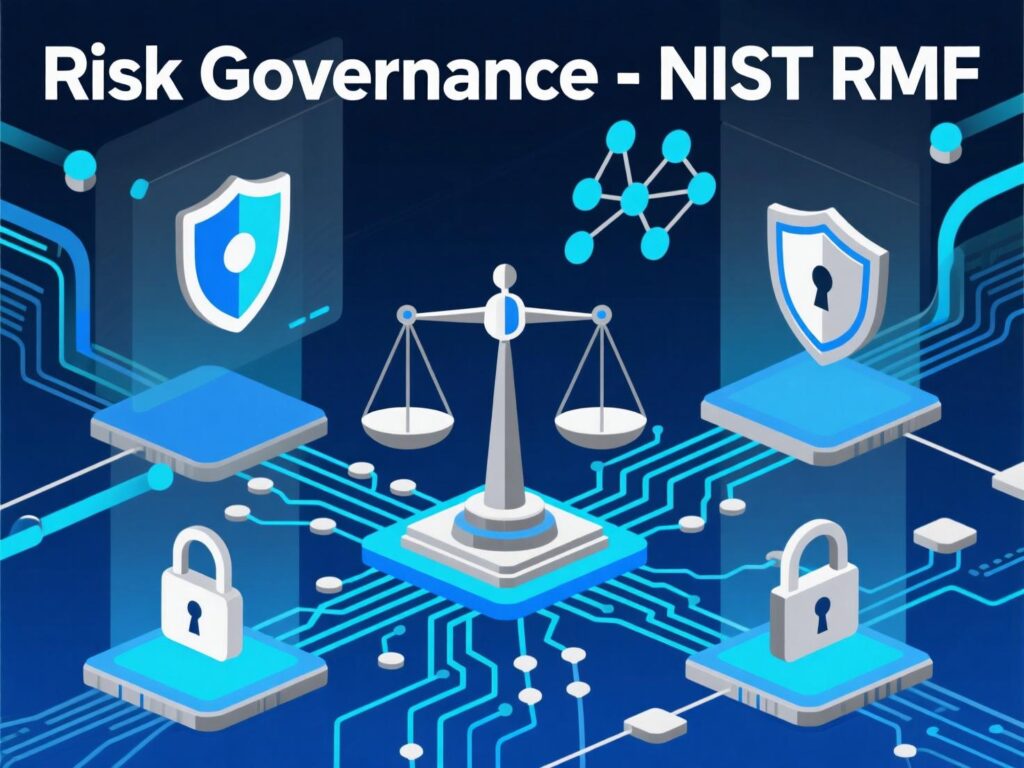
NIST’s AI Risk Management Framework recommends governance, measurement, and continuous monitoring principles you can adapt for content pipelines.
An actionable framework for AI content guardrails
Use this step-by-step blueprint to operationalize AI content guardrails without slowing your newsroom/marketing team.
Define purpose, scope, and red lines
-
Document content types where AI can assist (briefs, outlines, summaries) and where it can’t (investigative claims without human verification, medical or legal advice without experts).
-
Ban risky use cases (fake authors, fake reviews, undisclosed affiliate puffery). Align with Google spam policies and applicable laws.
Create approved prompts & style templates
-
Maintain a prompt library that embeds your tone, audience, claim-checking steps, and a request for citations.
-
Include meta prompts for accessibility, inclusive language, and internationalization.
-
Version prompts in Git/Notion; require owner + last updated date.
Source, cite, and verify facts
-
Require source-supported claims (prefer primary sources, official docs, peer-reviewed research).
-
Mandate a fact-check pass: claims tagged high-risk (medical, finance, safety, policy) must have explicit human verification.
-
Flag any generative summary of user reviews; never fabricate reviews (FTC rule).
E-E-A-T signals by design
-
Attribute content to real humans with bios showing experience, expertise, authoritativeness, and trust.
-
Use bylines, editor credits, and last-reviewed dates.
-
If AI assisted, disclose how (e.g., outline drafting) and confirm human oversight.
Quality bar & acceptance criteria
Adopt a pre-publish rubric:
-
Helpfulness: Directly answers the query; depth appropriate to intent.
-
Accuracy: Facts sourced; statistics linked.
-
Originality: Adds analysis or examples; no boilerplate repetition.
-
Experience: First-hand insights or data where relevant.
-
UX: Clear scannability; mobile-friendly formatting.
De-duplication and scaled-content controls
-
Rate-limit mass generation; require unique outlines/angles before drafting.
-
Compare new drafts to your own corpus to avoid duplication.
-
Block “parasite” placements on third-party domains intended to exploit reputation.
Human edit & compliance review
-
Editor validates claims, adds context, rewrites generic passages, and ensures compliance (EU AI Act transparency, FTC disclosures).
AEO & structured data baked in
-
Add FAQ, HowTo, and Article schema; answer queries succinctly in on-page summaries to earn inclusion in AI Overviews and other answer experiences. Semrush’s 2025 research shows AI Overviews appear for a meaningful share of queries optimize to “become the answer.”
Post-publish monitoring
-
Track impressions, clicks, dwell time, scroll depth, and user feedback.
-
Watch for manual actions or volatility in affected queries; investigate content that resembles scaled or third-party “reputation abuse.”
Governance & training
-
Quarterly policy reviews; tabletop exercises for edge cases (sensitive topics, political content, UGC).
-
Train writers/editors on your AI content guardrails and update prompts based on incident learnings.
-
Log notable edits to create an audit trail (aligns with NIST RMF best practices).
AI content guardrails for SEO & AEO
SEO. Build pages that satisfy searcher intent and demonstrate expertise; automation that exists mainly to rank is spam by policy.
AEO. Summarize answers up top, support with citations, and add FAQ/HowTo schema. Semrush analysis (10M+ keywords) underscores how AI Overviews reshape discovery—authority helps you appear in the answer itself.
Practical tips:
-
Lead with a crisp answer paragraph (40–60 words).
-
Include evidence boxes (sources, stats).
-
Add 2–4 concise FAQs mapping to high-intent sub-questions.

Real-world examples (and lessons)
-
Sports Illustrated’s vendor fiasco (2023): Reports revealed product reviews tied to fake author profiles; fallout included executive changes and reputational harm. Lesson: Never obscure authorship; verify vendor processes; disclose AI assistance.
-
Third-party/“parasite” content crackdowns (2024–2025): Google’s site reputation abuse policy sparked manual actions and industry shifts. Lesson: Don’t host low-value third-party content to exploit domain strength; keep tight editorial oversight.
Common pitfalls to avoid
-
Scaled boilerplate that adds no value classic scaled content abuse.
-
Hosting unrelated affiliate coupons on authoritative domains site reputation abuse risk.
-
Buying expired domains to rank low-quality material expired domain abuse.
All are explicitly called out in Google’s spam policies.
Localization buckets (GEO options)
-
United States:
-
Title tweak: AI Content Guardrails: Quality Without Spam (US Edition)
-
Meta tweak: Build AI content guardrails that satisfy Google and FTC rules in the US.
-
Geo keywords: “FTC disclosure rules,” “AI content guardrails US,” “fake reviews rule.
-
-
United Kingdom:
-
Title tweak: AI Content Guardrails: UK Best Practices for Quality and Compliance
-
Meta tweak: Set AI guardrails aligned with UK consumer protection and ASA guidance.
-
Geo keywords: “UK advertising disclosure,” “ASA guidance AI content,” “UK E-E-A-T.”
-
-
India:
-
Title tweak: AI Content Guardrails for India: Quality, Compliance, and Trust
-
Meta tweak: Scale content responsibly under India’s evolving digital policies.
-
Geo keywords: “AI content guardrails India,” “disclosure for sponsored content India,” “trust signals India.”
-
Concluding Remarks
AI can multiply your output or your risks. The difference is whether you design and enforce AI content guardrails. By setting clear boundaries, requiring human oversight, prioritizing sources and disclosures, and formatting for SEO/AEO, you’ll publish at scale without sacrificing trust. If you operationalize these guardrails today, you’ll meet search expectations, pass legal sniff tests, and build durable authority quality without spam powered by AI content guardrails.
CTA: Want a ready-to-use guardrail kit (prompts, checklists, schema, and workflows) tailored to your brand? Reach out and we’ll adapt this framework to your stack.
FAQs
Q1) What are AI content guardrails?
A : They’re the policies, prompts, and workflows that constrain how AI is used in content creation—covering quality standards, disclosures, compliance, and reviews—so you scale output without spam or risk.
Q2) How do AI content guardrails help with Google’s policies?
A : They prevent scaled boilerplate, undisclosed third-party content, and other behaviors Google classifies as spam (scaled content abuse, site reputation abuse).
Q3) How can I disclose AI usage properly?
A : Add a short line like “This article was drafted with AI assistance and reviewed by [Editor].” Pair with real author bios and last-reviewed dates; align with FTC endorsement and transparency norms.
Q4) How do AI content guardrails improve AEO?
A : By structuring answers, adding FAQ/HowTo schema, and citing sources, you increase eligibility to appear in AI Overviews and answer-type surfaces.
Q5) How can teams stop hallucinations?
A : Mandate source citations, human fact checks for high-risk claims, and block publishing when sources are weak or unverifiable.
Q6) How do we avoid “parasite SEO” issues?
A : Don’t host low-value third-party content aimed at exploiting your domain’s reputation. Keep editorial oversight and clear labeling.
Q7) How do guardrails intersect with the EU AI Act?
A : Use transparency labels where users interact with AI and mark synthetic media accordingly; maintain records of AI assistance.
Q8) What metrics should we track for AI content guardrails?
A : Track helpfulness (task completion), engagement (scroll depth, dwell), accuracy (fact-check pass rate), and trust (brand search, return users).
Q9) How often should we update AI content guardrails?
A : Quarterly, or after major policy/algorithm changes (e.g., core updates or new spam policies).
[…] Mak It Solutions frequently helps clients navigate this decision, as seen in their Generative AI Security Risks in the Workplace 2025 and AI Content with Guardrails guides. Makitsol Makitsol […]