
Make vs Zapier vs n8n: Choosing Your Automation Spine
Make vs Zapier vs n8n: Choosing Your Automation Spine
Make vs Zapier vs n8n: Choosing Your Automation Spine
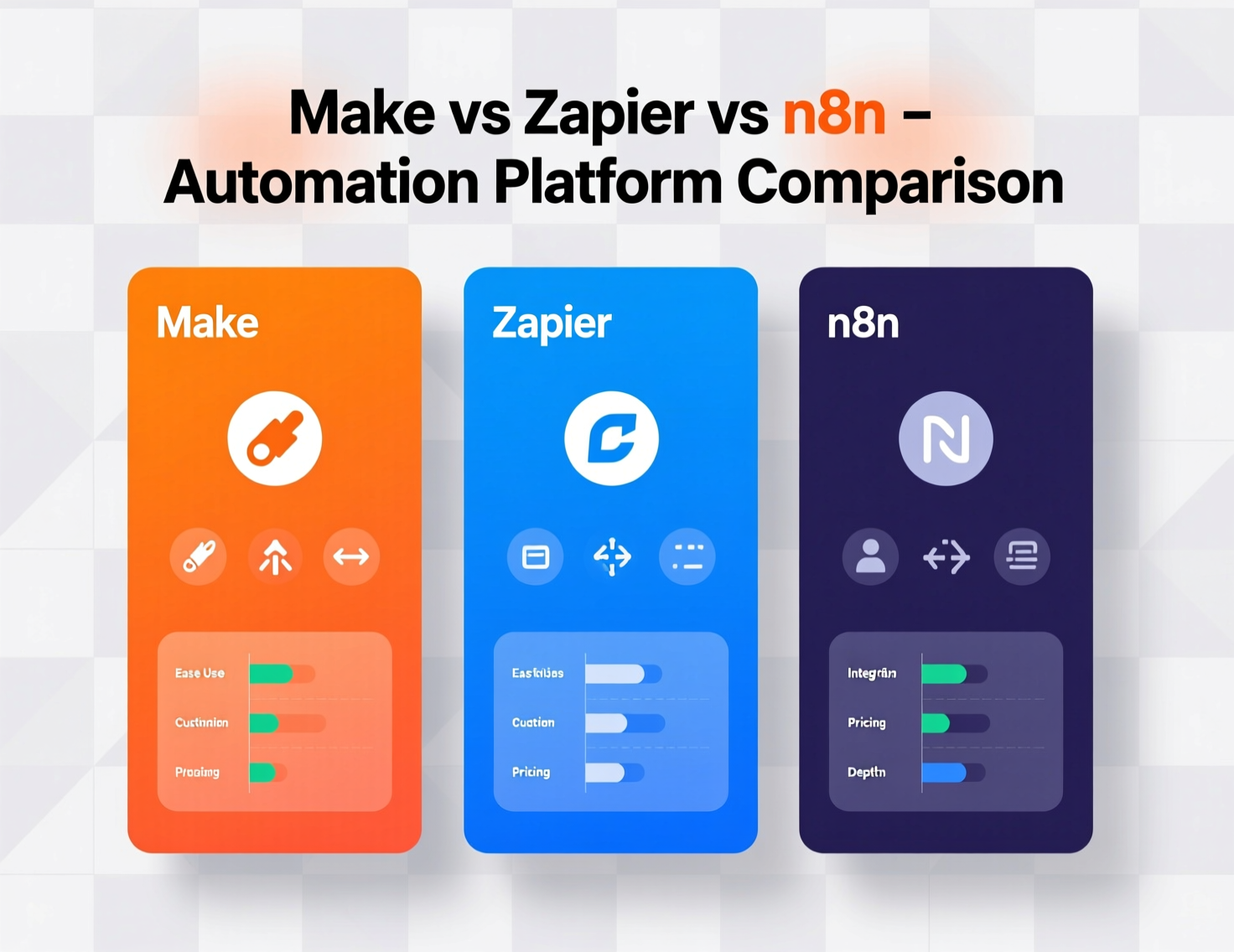
Selecting an automation spine the core orchestration layer that connects apps, data, and AI agents—has strategic consequences for cost, control, reliability, and compliance. If you’re torn on Make vs Zapier vs n8n, you’re not alone. All three handle triggers, actions, branching logic, and webhook events, yet they diverge on pricing units (credits, tasks, executions), extensibility (code & custom nodes), governance, and security posture. In this guide, we’ll examine Make vs Zapier vs n8n across the dimensions that actually matter: features, pricing, integrations, scale, security, and real-world fit. We’ll close with a checklist and migration tips so the Make vs Zapier vs n8n choice aligns with your roadmap not the other way around.
Quick Verdict: Make vs Zapier vs n8n at a Glance
-
Zapier:
Largest ecosystem (now marketed as 8,000+ apps) and an easy on-ramp for non-technical teams. In 2025, Zapier also bundles Tables and Interfaces into core plans, plus Canvas for mapping systems—helpful if you want one vendor for forms, data, and workflows. Zapier+4Zapier+4Zapier+4 -
Make:
Visual, modular scenarios with strong data manipulation and cost-efficient credits pricing; library lists 2,000 2,500+ apps; Enterprise includes SOC 2 Type II. Great for complex branching and parallelism at mid-market scale. -
n8n:
“Fair-code,” self-hostable with full JavaScript/Python steps, community/custom nodes, and execution-based billing in cloud. n8n now provides SOC reports (SOC 2/SOC 3 availability referenced on security page). Best for technical teams needing deep control or on-prem data.
Bottom line
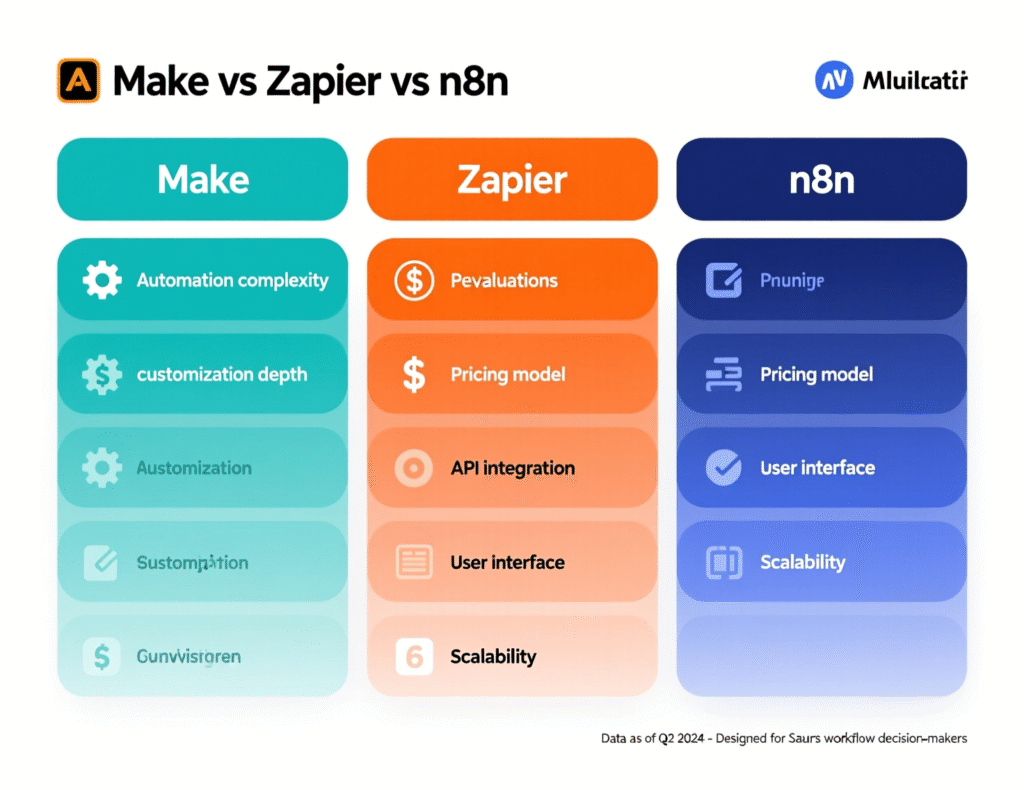
If you need fastest time-to-value and the widest app coverage, Zapier shines. If you need visual power and cost control with credits, Make is a strong default. If you need sovereignty, custom code, and self-hosting, n8n is your best bet. That’s the core Make vs Zapier vs n8n trade-off.
Core Differences: Triggers, Actions, and Orchestration
-
Zapier
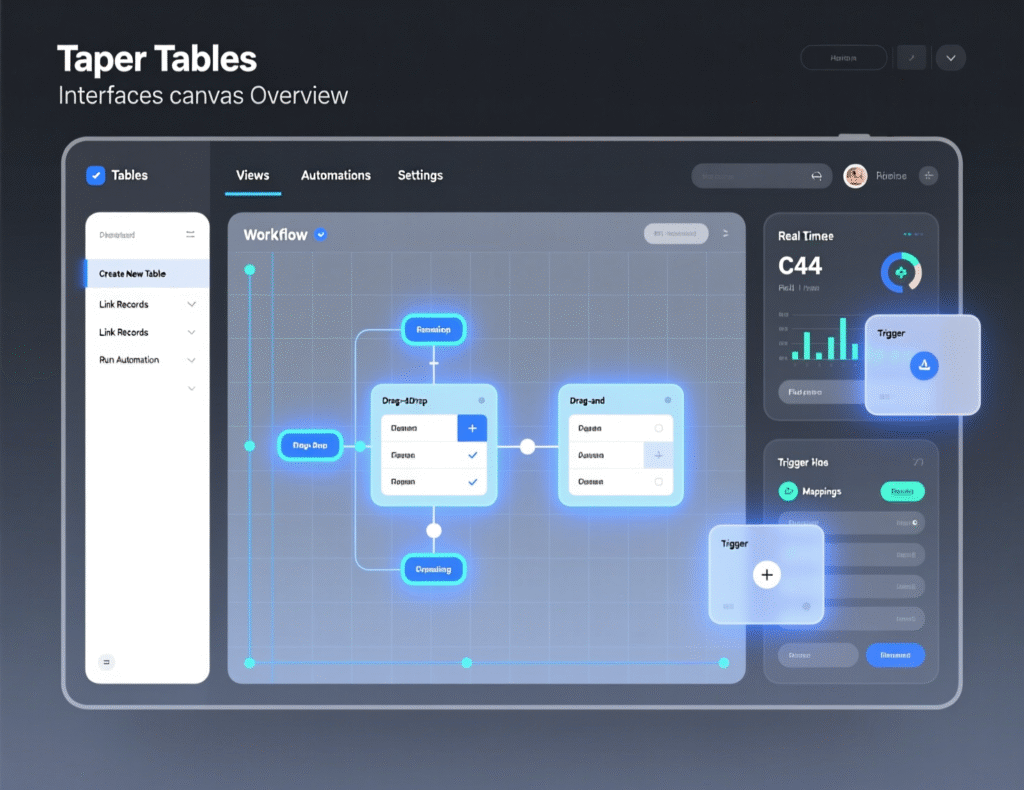
Coined the Zap (trigger → actions) model and adds Paths, Filters, Formatter, and sub-Zaps. With Tables (no-code database) and Interfaces (forms, dashboards), you can centralize workflow inputs/outputs, while Canvas helps document systems. MCP connects AI agents to 8,000+ integrations. -
Make
Scenarios emphasize routers, iterators, mappers, and parallel execution, plus strong debugging/monitoring. Pricing is on credits (1 module action ≈ 1 credit), keeping cost predictable for long multi-step flows. -
n8n
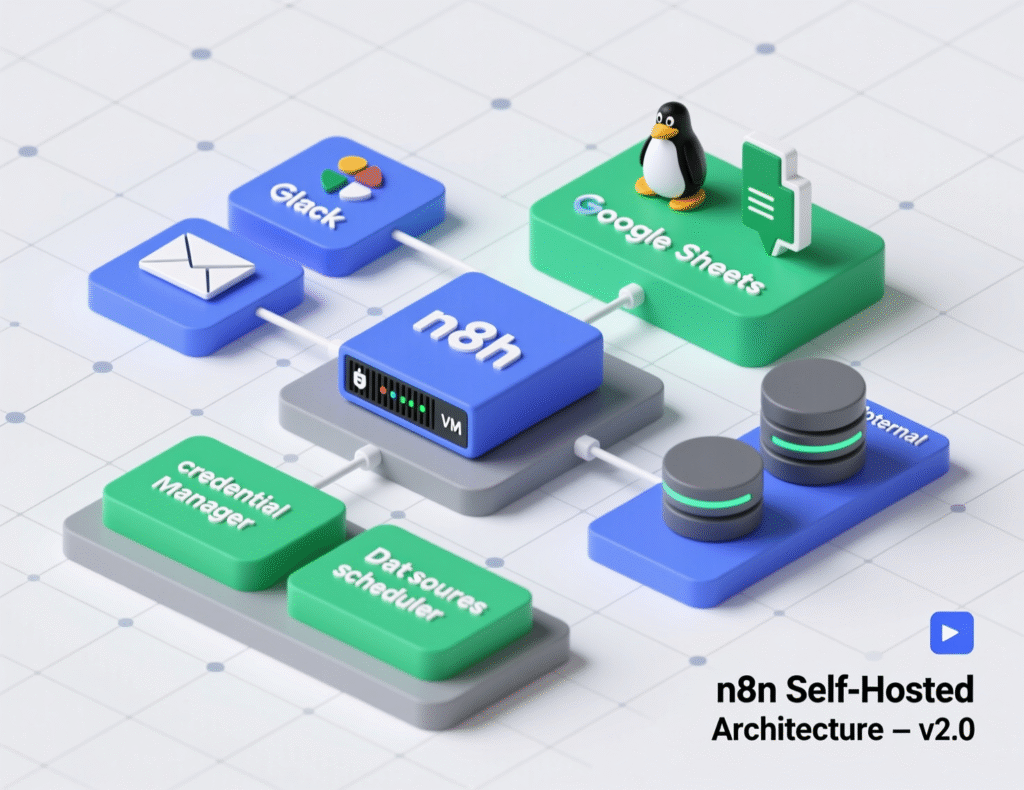
Offers node-based flows with first-class code nodes (JS & Python), HTTP/GraphQL requests, and powerful debugging. You can run self-hosted for data control or use cloud with execution-based limits; Enterprise adds SSO/SAML/LDAP and governance.
Pricing & Limits (2025 Snapshot)
-
Zapier
Plans start at $19.99/mo billed annually on Professional. Tasks scale with tier; overages use pay-per-task (up to 3× your plan’s task limit before pausing). Tables/Interfaces are now included in plans. -
Make
Core $9/mo, Pro $16/mo, Teams $29/mo each at 10,000 credits/mo baseline; Free plan includes 1,000 credits. Credits ≈ module actions. Parallel execution and priority vary by tier. -
n8n
Cloud Starter €20/mo (2.5k executions), Pro €50/mo (10k); Business/Enterprise add SSO, environments, Git, and more; self-hosting free (Community). Executions = full workflow runs (unlimited steps).
Interpretation: In high-step flows, Make’s credit model can be cheaper than task-based billing. For bursty but complex logic, n8n’s “per execution” can be predictable, especially self-hosted. Zapier’s value rises with the ecosystem and now-bundled assets (Tables/Interfaces), reducing your stack sprawl. This practical math is central to Make vs Zapier vs n8n budgeting.
Ecosystems & Extensibility
-
Zapier
7,000–8,000+ apps advertised; Interfaces lets you ship simple internal tools; Canvas documents your architecture; MCP bridges AI agents into the Zapier app universe. -
Make
App library surfaces 2,000–2,500+ connectors, strong data tools, and sub-scenarios for reuse; Enterprise exposes 300+ Make API endpoints with higher rate caps as you move up tiers. -
n8n
400+ native nodes with easy HTTP Request node, custom/community nodes, code steps, and full self-hosting for private integrations—ideal when you must hit internal services or restricted networks.
Reliability, Security & Compliance
-
SOC 2: Zapier and Make explicitly state SOC 2 Type II. n8n’s legal/security page references SOC reports (SOC 2 report available to enterprise customers + SOC 3 link). Always request current reports under NDA.
-
Recent event: In Feb 2025, Zapier reported unauthorized access to certain code repositories (not production systems). Consider this when designing token hygiene and secrets rotation.
Takeaway: All three invest in security. For strict data residency or on-prem restrictions, n8n self-hosted often wins. For turnkey compliance posture, Make and Zapier offer mature attestations—another angle in Make vs Zapier vs n8n decisions.
Performance & Scale
-
Make
Plan-based rate caps for API endpoints escalate (e.g., 60 → 1000+/min), plus parallel execution and priority runs on higher tiers—useful for peak loads. -
Zapier
Flexible task tiers up to the millions; pay-per-task buffer helps avoid outages until 3× cap. Combine Tables for durable state and Interfaces for controlled intake to stabilize throughput. -
n8n
Horizontal scaling with workers/queue mode when self-hosted; 200+ concurrent executions in Enterprise cloud. Best for engineering-led teams comfortable with infra.
Use-Case Fit (with examples)
-
Go-to-market ops (leads, enrichment, routing): Zapier if you want templates + easy admin; Make if you need intricate branching, transforms, and retriable subflows; n8n if you must enrich via private APIs.
-
Marketing data plumbing (UTM validation, warehouse sync, LLM summarization): Make shines for complex mapping; n8n excels where you need AI + code in the loop.
-
Engineering/IT (internal systems): n8n for self-hosting and code-heavy automations; Make for visual orchestration at team scale; Zapier when business teams self-serve on the long tail of SaaS.
Case Study 1: DTC Brand Scaling Ops (Make)
A DTC brand running 1,000 orders/day needed refund triggers from Shopify → ERP → Slack with branching rules and CSV exception handling. Make handled split routes, parallel retries, and sub-scenarios for reusable tax logic. Credits stayed predictable; visual logs aided post-mortems. This “visual power + cost control” balance is a classic Make vs Zapier vs n8n outcome for mid-market ops.
Case Study 2: SaaS with On-Prem & AI (n8n)
A B2B SaaS needed to orchestrate on-prem CRM, vector DB, and LLM agents with strict data boundaries. n8n won via self-hosting, code nodes, and custom connectors; SOC artifacts satisfied stakeholders. As their volumes grew, they introduced worker queues and maintained sovereignty—another data-driven Make vs Zapier vs n8n decision.
Decision Framework: Picking Your Automation Spine
-
Governance & Data
-
Need on-prem/self-host? → n8n
-
Centralized cloud with strong compliance docs? → Make or Zapier.
-
-
Team Skill & Speed
-
No-code self-serve & templates? → Zapier
-
Operators comfortable with visual logic? → Make
-
Devs who want code + control? → n8n.
-
-
Cost Model Fit
-
Many steps per run? → Make credits
-
Millions of simple actions? → Zapier tasks
-
Complex single-run workflows? → n8n executions.
-
Migration Tips (Mini-HowTo)
-
Inventory Zaps/Scenarios/Workflows; tag dependencies (apps, secrets, webhooks).
-
Map parity of triggers/actions; where missing, plan webhook + custom HTTP nodes (n8n) or webhooks + code (Zapier/Make).
-
Parallel run critical automations for 1–2 weeks and compare logs.
-
Rotate tokens and secrets; enforce SSO/MFA; download compliance docs.
-
Cutover with back-pressure controls (queues/rate limits) to avoid spikes.
Bottom Lines
Your automation spine must be reliable, governable, and extensible. Zapier maximizes velocity and ecosystem breadth. Make offers visual power and predictable credit economics. n8n maximizes control and sovereignty via self-hosting and code. Revisit this Make vs Zapier vs n8n choice annually as your stack, AI agents, and compliance needs evolve. Then pick the platform that reduces friction now and won’t box you in later.
CTA: Want a one-page, platform-agnostic automation blueprint? Grab the free worksheet and map your automation spine before you buy.
FAQs
1) How do I choose between Make vs Zapier vs n8n quickly?
A . Score each platform on governance, skill fit, cost model, and ecosystem. If you want fastest non-technical wins, try Zapier. If you need complex visual logic with efficient pricing, try Make. If you need self-hosting and code flexibility, try n8n.
2) How does pricing really differ (credits vs tasks vs executions)?
A . Make charges per credit (roughly a module action). Zapier charges per task (successful action). n8n cloud charges per execution (full workflow run). Self-hosted n8n is free to run (infra costs aside).
3) How secure are these platforms?
A . Zapier and Make publish SOC 2 Type II. n8n provides SOC 2/SOC 3 report info on its security page; request latest under NDA. Always pair with strong secrets hygiene.
4) How can I handle missing connectors when migrating?
A . Use webhooks + HTTP requests to hit APIs directly, or code nodes (n8n) / Code steps (Zapier) to fill gaps. In Make, combine routers + iterators with custom functions (Enterprise) if needed.
5) How does Zapier’s new bundling change the equation?
A . With Tables and Interfaces included in plans, Zapier can replace point tools for forms/data stores, simplifying your stack especially for ops teams.
6) How do I budget for spikes without outages?
A . Zapier’s pay-per-task buffer (up to 3× plan limit) can bridge surges; Make’s priority execution helps during peaks; n8n self-hosted can scale horizontally via workers/queues.
7) How can AI agents fit into each platform?
A . Zapier exposes MCP and agent features; Make ships AI Agents (beta) and AI toolkit; n8n supports AI nodes and custom LLM flows with code. Choose based on governance and cost.
8) How does self-hosting n8n help with compliance?
A . It keeps data inside your perimeter, supports SSO/LDAP, and offers enterprise governance. Pair with your internal controls and request SOC artifacts as needed.
9) What if a security incident happens?
A . Rotate tokens, audit logs, and review scopes. Example: Zapier’s Feb 2025 repository incident prompted token hygiene and internal audits; design for rapid rotation regardless of vendor.