
Prestashop Development Company in UAE for GCC Growth
Prestashop Development Company in UAE for GCC Growth
Prestashop Development Company in UAE: How to Choose a GCC-Ready Partner
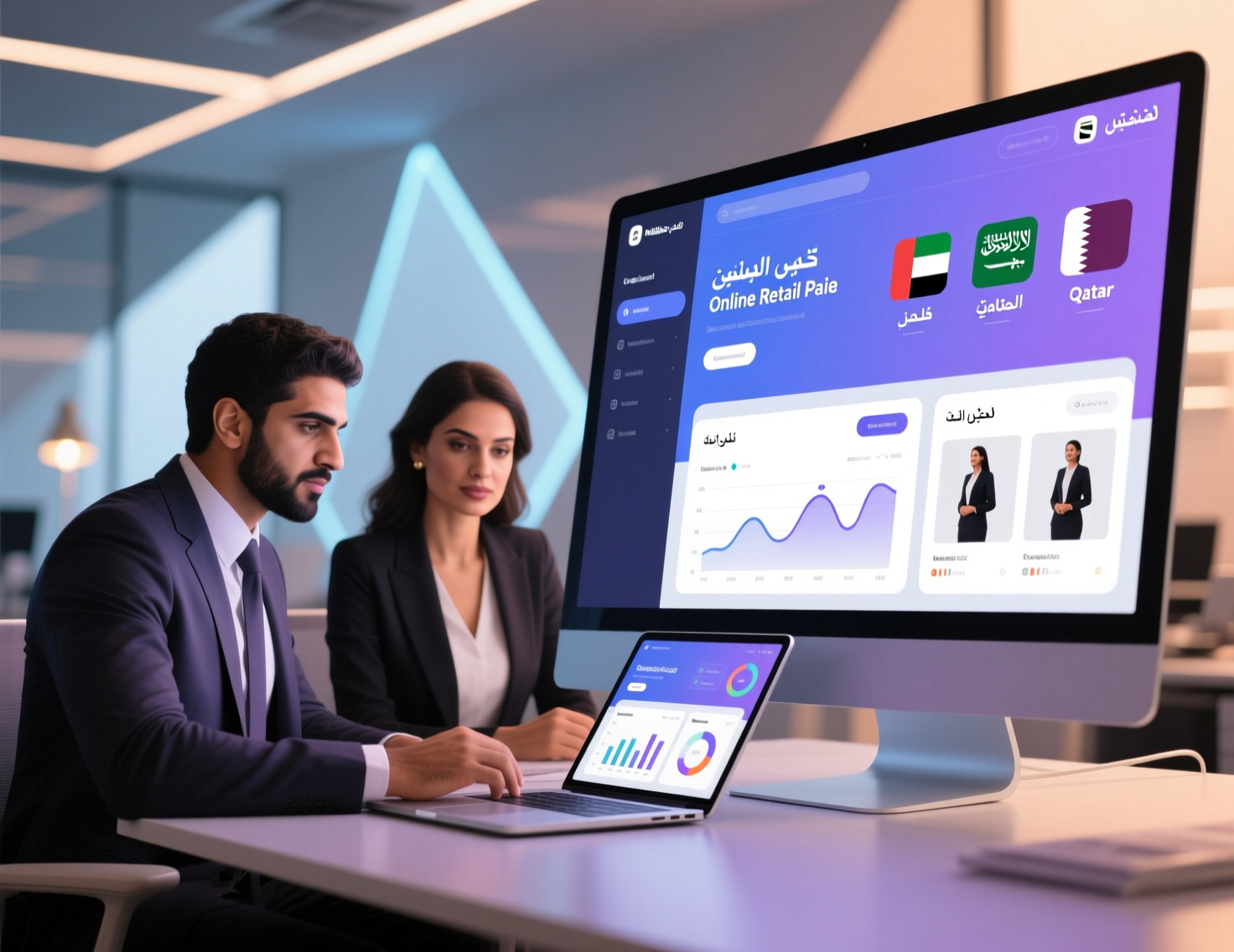
A Prestashop development company in UAE helps brands in Dubai, Abu Dhabi and across the GCC launch and grow Arabic/English ecommerce stores that are fully aligned with local payments, VAT and data residency rules. This guide explains how to choose the right Prestashop partner, what services you actually need, and what it really costs in UAE, Saudi Arabia and Qatar.
Introduction
If you’re searching for a Prestashop development company in UAE, you’re probably not just thinking about a basic online store. You’re thinking about Arabic shoppers in Riyadh and Jeddah, COD orders from Kuwait, wallets like STC Pay and Tabby, VAT invoices that match Saudi and UAE rules, and hosting that keeps sensitive data inside the region.
Prestashop is a strong fit for GCC ecommerce because it’s an open-source ecommerce platform that you can host in Saudi, UAE or Qatar, customize deeply, and localize fully for Arabic, RTL and multi-currency without being locked into heavy SaaS fees. For many brands in Dubai, Abu Dhabi and Sharjah, the UAE has become the natural ecommerce hub to serve Saudi, Qatar, Kuwait, Bahrain and Oman.
This page will walk you through everything you need to pick the right Prestashop development company in UAE: what these agencies actually do, which services you need to launch, how GCC compliance and hosting work, and realistic budget ranges for Dubai, Riyadh and Doha projects.
What Does a Prestashop Development Company in UAE Actually Do?
Core Role of a Prestashop Agency for UAE & GCC Businesses
A specialist Prestashop development company in UAE focuses 100% on building, customizing and supporting stores on the Prestashop platform for GCC markets. Think of them as your long-term ecommerce tech partner: they translate your business model into catalog structure, UX, payment flows, integrations and ongoing performance optimization.
Compared to a generic web agency that “also does ecommerce”, a dedicated Prestashop team usually offers:
Deep experience with Prestashop customization and module development
Knowledge of common Prestashop edge cases (multi-store, multi-currency, Arabic RTL)
Proven integrations with GCC payment gateways, shipping APIs and ERPs
Guidance on scaling: caching, CDNs, queue workers, and Prestashop performance optimization and SEO services
Where a generic agency may treat Prestashop like “just another CMS,” a true Prestashop partner understands the platform’s strengths and limits, and designs around them from day one.

Who Typically Hires a Prestashop Development Company in UAE?
In the GCC, Prestashop agencies in UAE typically serve.
SMEs and family businesses:
Fashion boutiques, perfume brands, abayas, cosmetics, home décor
Retail chains & franchises:
Supermarkets, pharmacies, electronics and lifestyle brands
F&B concepts:
Specialty coffee, sweets, meal plans and cloud kitchen brands
Electronics & mobile:
Multi-brand electronics, accessories, refurbished devices
B2B distributors & wholesalers:
Industrial supplies, medical equipment, automotive parts
Geographically, most demand comes from Dubai, Abu Dhabi and Sharjah, including free-zone startups in DMCC, IFZA, RAKEZ, ADGM and DIFC that sell into Saudi, Qatar, Kuwait, Bahrain and Oman. For these businesses, working with a Prestashop development company in UAE is a way to centralize their tech while selling region-wide.
Why UAE-Based Agencies Often Serve Saudi, Qatar, and Wider GCC
UAE agencies are often the “regional ecommerce desk” for Saudi and Qatar because:
Proximity & time zone
Easy overlap with Riyadh, Jeddah, Dammam/Khobar and Doha
English-first with Arabic support
Project managers can handle global vendors while developers handle Arabic RTL and local UX
Mature cloud & telecom
Strong access to AWS Middle East (UAE me-central-1), Azure UAE North/Central and regional CDNs.
Free-zone flexibility
Many cross-border ecommerce and logistics setups run from UAE free zones with GCC-wide shipping networks
In practice, one Prestashop development company in UAE may handle: a Dubai fashion brand, a Riyadh B2B distributor portal, and a Doha SME store each with different currencies, tax rules and payment methods.
Why GCC Retailers Choose Prestashop for UAE, Saudi & Qatar Ecommerce
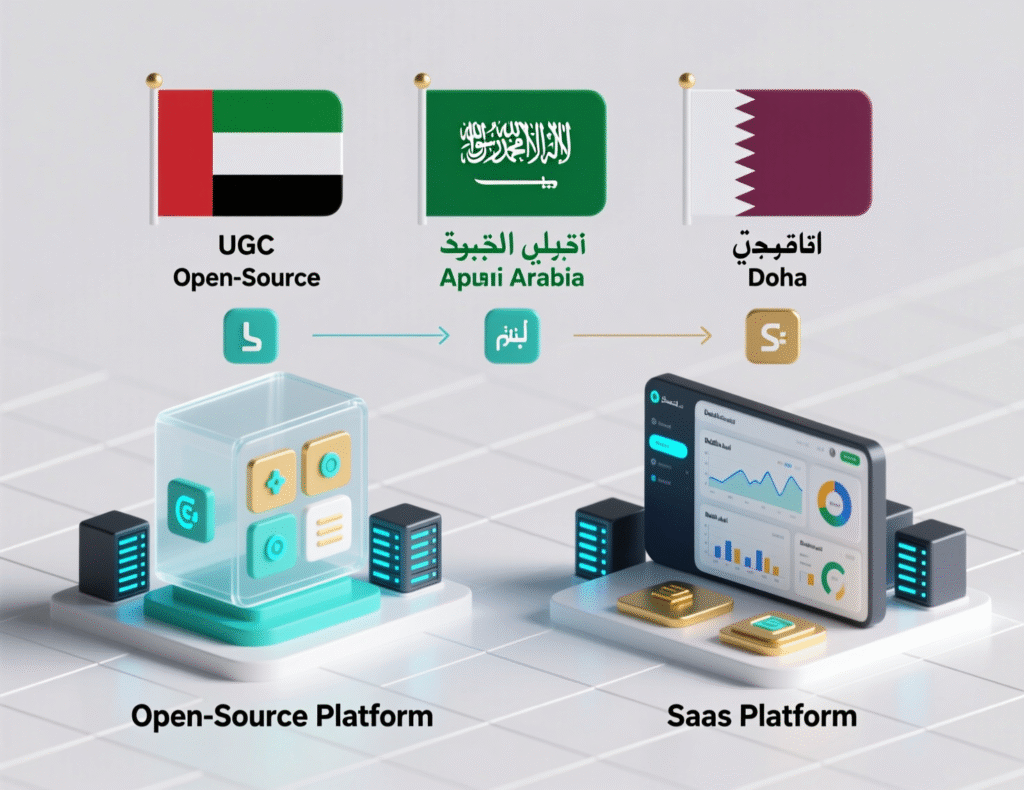
Open-Source Freedom vs. SaaS Limitations in GCC
For GCC retailers, Prestashop’s biggest advantage is ownership. With Prestashop, you control the codebase, hosting and data. That makes it easier to:
Host inside Saudi, UAE or Qatar to satisfy data residency expectations (e.g., NDMO guidance in KSA or local cloud preferences in Qatar)
Avoid rising SaaS fees and transaction charges that eat into margins
Build complex B2B/B2C workflows that many SaaS platforms struggle with
SaaS options like Shopify are fantastic for simple stores but can be limiting when you need custom VAT rules, strict data control or deep ERP integrations. An open-source ecommerce platform development approach with Prestashop gives GCC brands more flexibility to adapt over time.
Arabic, RTL and Multi-Currency Support for GCC Shoppers
For GCC audiences, UX is not just “translate to Arabic”. A Prestashop development company in UAE should help you:
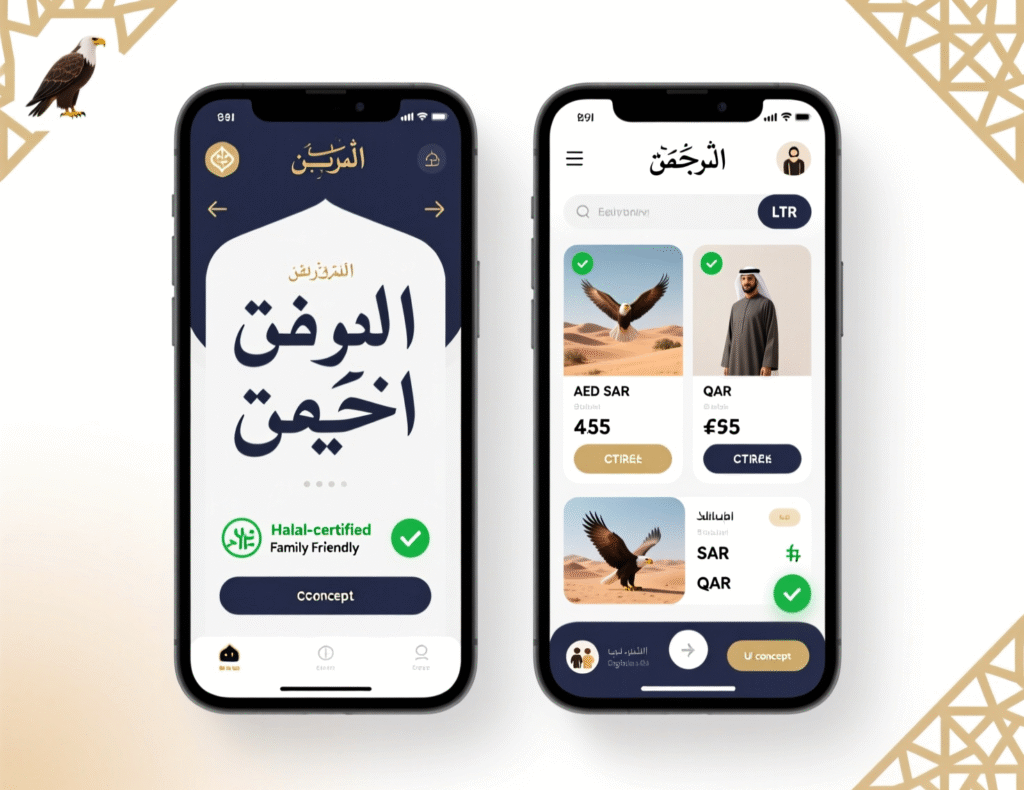
Implement Arabic RTL themes with correct alignment, typography and navigation
Run bilingual Arabic–English content for product pages, blogs and emails
Reflect “family-friendly / halal” branding in imagery, copy and content moderation
Support multi-currency checkout for AED, SAR, QAR, KWD, BHD and OMR
Offer local payment flows: COD, card, wallets, BNPL, and bank transfer
Localize addresses (building, flat, area) and phone formats for each country
Prestashop’s multi-store and multi-currency features make it easier to run one backend with different storefronts and currencies for UAE, Saudi and Qatar while keeping stock, orders and reporting centralized.
Prestashop vs Shopify / WooCommerce for UAE & Saudi Markets
GCC retailers often ask.
“Why choose Prestashop instead of Shopify or WooCommerce?”
Prestashop is usually a better fit when you need in-region hosting, complex B2B logic, advanced Arabic RTL control, or tight compliance with SAMA, TDRA or QCB-related requirements. Shopify and WooCommerce work well for simpler catalogs or lower-risk use cases, but they can be harder to align with strict data residency or bespoke VAT flows.
High-level comparison for UAE & Saudi:
Prestashop Best when you need.
In-region hosting (e.g., AWS UAE me-central-1, AWS Bahrain me-south-1, Azure UAE, GCP Doha)
Custom checkout, multi-price lists, B2B portals
Complex tax logic and custom invoice formats
Autonomy from SaaS pricing and app dependencies
Shopify Best when you need.
Fast MVP launch, limited customization
Mostly card and wallet payments with standard shipping logic
WooCommerce Best when you.
Already use WordPress heavily
Have small to mid-size catalogs and lighter compliance needs
For regulated or intricate GCC businesses like fintech-adjacent wallets, government suppliers, or medical distributors Prestashop with the right UAE partner often delivers the control and compliance they need.
Key Prestashop Development Services You Need in Dubai, Riyadh & Doha
Essential Services to Launch a New Prestashop Store
If you’re asking “What Prestashop services do I need to launch an online store in Dubai or Riyadh?”, the core checklist usually includes:
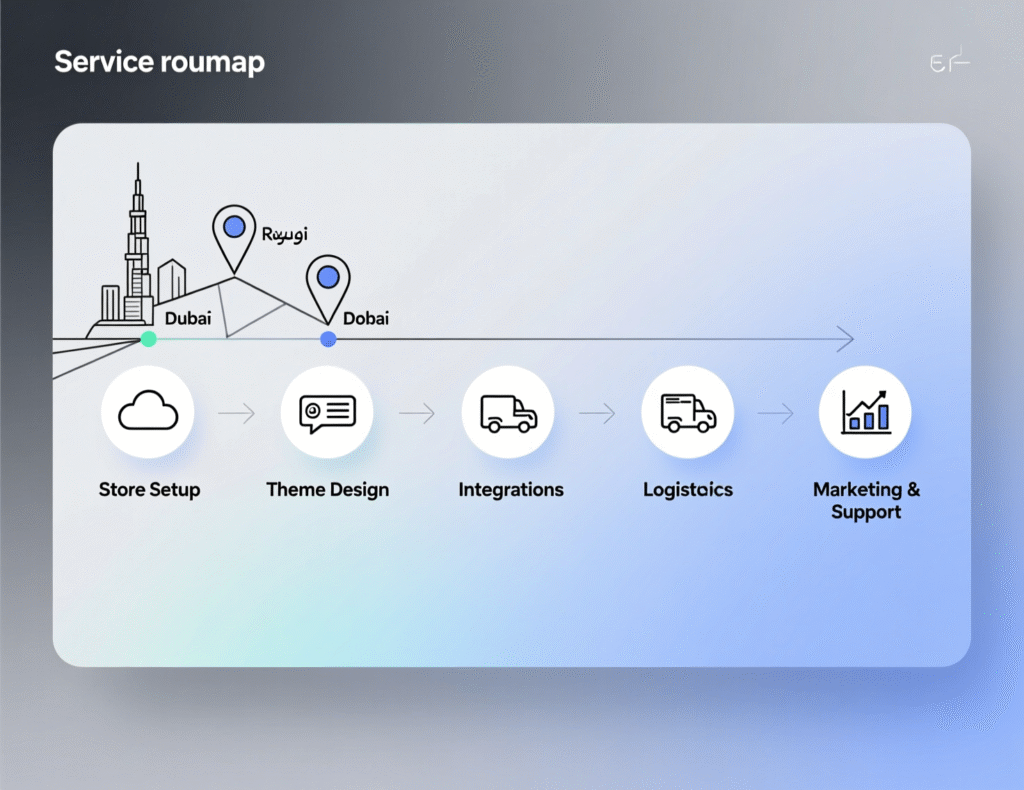
Store setup & configuration
Prestashop installation, environment setup, security hardening
Language packs (Arabic/English), currency setup (AED, SAR, QAR, etc.)
Prestashop theme design and integration
Custom or premium theme selection
Full Arabic RTL implementation and mobile-first UX
Catalog and product data
Category and attribute structure for GCC sizing, bundles and sets
VAT-aware pricing (e.g., inclusive pricing for KSA and UAE)
Content entry in Arabic and English
Checkout, payments & shipping basics
One or two local payment gateways for your launch countries
Core shipping providers (Aramex, SMSA, local couriers)
COD, delivery windows and basic shipping rules
Analytics & SEO foundations
On-page SEO setup, structured data, clean URLs
Google Analytics / GA4, search console, Facebook/Google tags
A strong Prestashop development company in UAE will package these into a launch bundle and recommend a realistic MVP scope so you can go live quickly, then iterate.
Customization, Modules & Integrations for GCC Operations
After launch, most GCC merchants invest in deeper Prestashop customization and module development such as.
Custom modules & business logic
Tiered B2B pricing, quotes and approval flows
Loyalty points, referral programs, gift cards
Marketplace or multi-vendor extensions where relevant
ERP, CRM & accounting integrations
SAP, Odoo, Microsoft Dynamics or local ERPs
Zoho, HubSpot, Salesforce for CRM
Automated VAT posting and reconciliation
Logistics & delivery integrations
Shipping APIs (Aramex, SMSA, Naqel, Quiqup, etc.)
Address validation for Saudi & UAE
Real-time tracking links in SMS/WhatsApp
Marketing & engagement stack
Local SMS gateways and WhatsApp Business APIs
Email marketing, marketing automation tools
On-site personalization and A/B testing
This is where having an experienced Prestashop development company in UAE matters: you need developers who have already wired these systems together for other GCC brands.
Ongoing Support, Maintenance & Performance Optimization.
GCC ecommerce is event-driven: Ramadan, White/Yellow Friday, National Days, back-to-school and mega sale festivals. You don’t just need code; you need a partner who keeps your store healthy when traffic and expectations spike.
Typical retainer services include.
Security patches and minor Prestashop updates
Version upgrades and module compatibility checks
Prestashop performance optimization and SEO services
Database and cache tuning, CDN configuration
Uptime monitoring and 24/7 incident response during peak campaigns
For high-traffic brands in Dubai, Riyadh and Doha, it’s common to have SLAs that cover 15–30 minute response times during critical campaigns, with clear escalation paths for payment, hosting or integration incidents.
GCC Compliance, Payments & Hosting for Prestashop Stores
Data Residency & Hosting in Saudi, UAE and Qatar
Regulators and large buyers in the GCC increasingly expect data to stay in-region. A capable Prestashop development company in UAE will guide you through options like:
Saudi Arabia
Hosting aligned with NDMO data management guidance
AWS regions serving the Middle East (e.g., Bahrain me-south-1 and UAE me-central-1) and growing in-kingdom options
Telco and network reliability considerations with CST (formerly CITC) context
United Arab Emirates
Azure UAE North (Dubai) and UAE Central (Abu Dhabi)
AWS Middle East (UAE me-central-1) data centers
Local DC providers for government and semi-government projects
Qatar
Google Cloud Doha region (me-central1) for in-country hosting and Qatar Digital Government alignment
Local data centers for sensitive government or financial workloads
For many mid-market merchants, the key is to keep payment, personal and order data in GCC regions, and to be ready to demonstrate this in RFPs or due diligence with banks, investors or government buyers.
Local Payment Gateways and Open Banking Integrations
A big part of choosing a Prestashop development company in UAE is their experience with GCC payments and open banking.
Saudi Arabia (SAMA-regulated)
Card + mada debit network
Wallets like STC Pay
BNPL providers (Tabby, Tamara)
Growing Open Banking / Open Finance ecosystem for account-to-account payments
United Arab Emirates (TDRA / free-zones context)
Gateways like Network International, Amazon Payment Services (PayFort), PayTabs
Tight KYC and AML expectations for fintech and financial services brands (ADGM, DIFC)
UAE Pass and future digital ID integrations for certain services
Qatar (QCB-regulated)
Local banks and processors licensed by Qatar Central Bank
Card payments, local wallets and direct bank integrations
The right Prestashop partner will already have modules or patterns for these gateways, plus the ability to implement strong 3D Secure, tokenization and fraud checks.
VAT, E-Invoicing and Content Rules Across GCC
Compliance is not just “turn on VAT = 15%”.
A GCC-aware Prestashop development company in UAE should help you:
Configure GCC VAT correctly for UAE, Saudi, Bahrain, Oman and Qatar
Implement Saudi e-invoicing (FATOORA)-ready invoice formats and numbering where relevant
Produce invoices that meet B2B and government procurement requirements
Apply different tax rules for cross-border vs domestic orders
On the content side, you also have “family-friendly / halal” expectations:
Respectful, non-controversial imagery and copy
Arabic UX that follows local cultural norms
Moderation policies aligned with UAE TDRA and similar guidelines in Saudi and Qatar
A mature Prestashop partner will bake these requirements into your design, content and governance processes not treat them as afterthoughts.
How Much Does a Prestashop Ecommerce Store Cost in UAE, Saudi & Qatar?
For AEO purposes, here’s the short answer: a basic Prestashop store in UAE or Saudi typically starts from a low five-figure USD budget, while mid-market and enterprise projects can run into the mid to high five-figure range depending on customization, integrations and compliance demands.
Your final investment depends on scope, complexity and how quickly you need to go live.
Typical Cost Ranges for Different Store Sizes
While every project is unique, many GCC agencies use ranges like.
Starter SME store
For small retailers, niche brands or F&B concepts
Theme-based design, limited customizations, 1–2 countries
Basic payment & shipping integrations, simple catalog
Typical band: roughly USD 8,000 – 18,000
Mid-market multi-store / multi-language
Separate storefronts for UAE, Saudi, Qatar with shared backend
Custom UX, advanced search, promotions, loyalty
Multiple payment gateways, ERP or accounting integration
Typical band: roughly USD 20,000 – 45,000
Enterprise & B2B distributors
Complex catalogs, contract pricing, credit limits
Deep ERP/CRM integrations, e-invoicing, approval workflows
Performance-tuned for high traffic and large teams
Typical band: roughly USD 50,000+
A Prestashop development company in UAE should give you a clear breakdown of what’s included in each band, not just a single number.
Cost Drivers in GCC Projects
Key factors that move your budget up or down.
Design approach
Purely custom UX vs. premium theme customization
Arabic RTL complexity
One simple storefront vs. multi-store with nuanced RTL layouts
Integrations
Number and complexity of ERP, CRM, POS, and payment/shipping systems
Compliance
SAMA/NDMO, TDRA, QCB, ADGM/DIFC or government RFP requirements
Support & SLAs
Business-hours only vs. 24/7 incident response with strict uptime guarantees
The more regulated your industry (fintech, government suppliers, healthcare), the more time your agency must spend on security, documentation and testing.
Example Budgets for Dubai, Riyadh and Doha Projects
To make it more concrete, here are typical investment bands seen across the region.
Dubai / Abu Dhabi retail brand
Fashion or lifestyle brand launching in UAE and Saudi
Strong design, multi-currency, loyalty, influencer tracking
USD 25,000 – 40,000 for a well-rounded build
Riyadh B2B distributor
Complex price lists, credit terms, approval workflows
Integration with Saudi ERP, e-invoicing and reporting
USD 35,000 – 60,000+ depending on scope
Doha SME / Qatar-focused retailer
Qatar-first store with GCC expansion roadmap
Hosted in GCP Doha or Qatar-based DC for data residency
USD 12,000 – 25,000 for an MVP with growth path
Free-zone vs mainland vs semi-government projects can also move the budget: free-zone startups may optimize for speed and MVP, while government-linked entities require heavier security and compliance work.
How to Choose the Right Prestashop Development Company in UAE & GCC
Must-Have Criteria for UAE, Saudi & Qatar Projects
There is no single “best” Prestashop development company in UAE for every business. The best partner for you is the one that has real GCC experience, understands Arabic UX and can prove they’ve delivered compliant, high-performing stores in UAE, Saudi and Qatar.
Your shortlist should at minimum satisfy
Arabic & RTL expertise
Real production stores in Arabic with strong UX
Local payments
Live integrations with mada, STC Pay, Network International, Amazon Payment Services, PayTabs, QCB-regulated gateways
VAT & invoicing
GCC VAT, Saudi e-invoicing, invoice formats used by auditors and government buyers
Regulatory awareness
Understanding of SAMA, NDMO, TDRA, QCB and sector regulations (fintech, government, healthcare, logistics)
Cloud & hosting
Experience on AWS Middle East, Azure UAE, GCP Doha and local DC providers
Ask for case studies specifically from Dubai, Riyadh, Jeddah, Dammam/Khobar and Doha—not just global references.
Step-by-Step Checklist to Shortlist Agencies (How-To — Actionable process)
Use this simple, practical process.
Define your GCC scope
Countries (UAE, Saudi, Qatar, etc.), languages, currencies and product range
Document non-negotiables
Payments, VAT rules, hosting region, ERP/CRM integrations, sector regulations
Search specifically for Prestashop specialists
Prioritize agencies that position themselves clearly as Prestashop experts, not generic web studios
Review GCC-specific portfolios
Look for projects in Dubai, Abu Dhabi, Riyadh, Jeddah, Dammam/Khobar and Doha
Validate technical stack & hosting
Ask which cloud providers and regions they typically use, and how they handle security and backups
Assess support model & SLAs
Response times, escalation procedures and coverage during Ramadan/peak campaigns
Request GCC-specific references
Speak to existing clients in similar industries or markets (e.g., Riyadh fintech, Dubai fashion, Doha SME)
By the end of this process, the “right” Prestashop development company in UAE usually stands out very clearly.
Red Flags When Evaluating Prestashop Developers in GCC (Informational — Risk avoidance)
Be cautious if you notice.
No real GCC case studies
Only generic international work with no mention of Saudi, UAE or Qatar
No mention of data residency or regulators
They can’t explain NDMO, SAMA, TDRA or QCB expectations in simple terms
Everything outsourced, no GCC presence
Entire team in a different time zone with no local understanding of Arabic UX or Ramadan trade patterns
Over-reliance on third-party modules
No ability to write or maintain custom modules, everything depends on marketplace addons
Unclear ownership of code and infrastructure
No clarity on repository, deployment pipeline, domains or hosting accounts
If you see more than two of these red flags, it’s usually safer to keep looking.
Example Use Cases from Dubai, Riyadh and Doha Merchants
Retail & Fashion Brands Scaling Across GCC
Imagine a Dubai-based abaya and modest fashion brand:
Runs an Arabic-first Prestashop storefront for UAE, with English secondary
Uses a Saudi-specific storefront for Riyadh and Jeddah with SAR pricing and local delivery partners
Hosts in AWS Middle East (UAE) for low latency to both UAE and Saudi shoppers
Uses BNPL (Tabby/Tamara) and card wallets to increase AOV
A Prestashop development company in UAE coordinates the design, catalog, payment flows and seasonal campaigns across all these markets from a single backend.
B2B & Wholesale Distributors in Saudi and UAE
Consider a Riyadh-headquartered industrial distributor with branches in Dammam/Khobar and Dubai.
Uses Prestashop to provide a portal-style UX for B2B customers
Implements tiered pricing, quote requests, and approvals
Integrates with a Saudi ERP and warehouse system for stock and credit control
Issues VAT-compliant invoices and export documentation
For this kind of project, the Prestashop development company in UAE must be comfortable with both technical complexity and Saudi business processes.
Niche and “Family-Friendly” Brands Targeting Arabic Shoppers
Many successful GCC ecommerce stories come from niche “family-friendly / halal” brands:
Halal cosmetics brands serving UAE, Saudi and Qatar
Children’s educational toys with Arabic-first content
Subscription boxes for Islamic occasions and family events
In these cases, your partner must balance performance and conversion with cultural sensitivity. Arabic copywriting, modest imagery, appropriate product categorization and compliance with UAE and Saudi content guidelines.
If you’re planning to launch or replatform a Prestashop store for UAE, Saudi or Qatar, you don’t have to figure it all out alone. The team at Mak It Solutions can help you define your GCC ecommerce roadmap, choose the right architecture and deliver a Prestashop build that’s ready for Arabic shoppers, local payments and regional regulations.
Book a consultation, request a technical audit of your existing store, or ask for a tailored quote for your Dubai, Riyadh or Doha project so you can launch with confidence, not guesswork.( Click Here’s )
FAQs
Q : Is Prestashop suitable for Saudi ecommerce businesses under SAMA and NDMO guidelines?
A : Yes, Prestashop is suitable for Saudi ecommerce businesses, provided it is implemented correctly with proper hosting and security controls. Because Prestashop is open-source, you can deploy it on infrastructure that aligns with NDMO data governance expectations and banking or payments requirements driven by SAMA. In practice, that means choosing in-region cloud or Saudi-aligned hosting, enforcing strong encryption and access controls, and integrating only with payment gateways licensed by SAMA. Your Prestashop development partner should be able to explain how they design architecture and documentation so that it supports Saudi Vision 2030’s broader digital and fintech agenda.
Q : Can a UAE Prestashop development company host my store on Saudi or Qatar data centers?
A : Yes. A capable Prestashop development company in UAE can architect and manage deployments on AWS, Azure or Google Cloud regions that meet Saudi or Qatar data residency expectations. For example, you might run front-end nodes and caching in AWS Middle East (UAE or Bahrain) and use in-country services where needed, or host in the Google Cloud Doha region for Qatar-centric workloads. The key is that your agency has real experience with multi-region cloud setups, VPNs, peering and security so they can balance performance, cost and regulatory comfort for your legal, IT and compliance teams.
Q : Which GCC payment gateways can be integrated with Prestashop (Mada, STC Pay, PayTabs, etc.)?
A : Prestashop can integrate with a wide range of GCC payment gateways, either through existing modules or custom development. In Saudi, this typically includes mada card payments, STC Pay, plus BNPL providers like Tabby and Tamara under SAMA oversight. In UAE, merchants commonly use Network International, Amazon Payment Services (PayFort) and PayTabs, as well as Apple Pay and Google Pay where supported by issuers. In Qatar, integrations usually involve QCB-licensed banks and processors. Your Prestashop agency should map your target markets and work with payment providers that are properly licensed and aligned with national fintech and Open Banking programs.
Q : How long does it take to launch a Prestashop online store in Dubai or Abu Dhabi?
A : Timelines depend on scope, but a realistic range for a well-planned build is usually 8–14 weeks. A smaller MVP store with a premium theme, limited integrations and simple VAT rules might be ready in 6–8 weeks, especially for SMEs and startups. More complex projects—multi-store GCC setups, ERP integrations, custom modules, and detailed UX—can take 12–16 weeks, particularly if they involve approvals from entities like ADGM, DIFC or sector regulators. To avoid delays, define your requirements early, appoint a clear decision-maker on your side, and choose a Prestashop development company in UAE with a structured delivery process and transparent milestones.
Q : Can one Prestashop store handle Arabic and English shoppers across UAE, Saudi and Qatar with different currencies?
A : Yes, Prestashop is well-suited to handle Arabic and English shoppers across multiple GCC countries from a single backend. You can run either one multi-language store with dynamic pricing rules or separate country storefronts under a multi-store setup, each with its own domain, language defaults and currencies (AED, SAR, QAR). The key is to work with an agency that deeply understands Arabic RTL design, SEO for both languages, and proper configuration of taxes, shipping and currency rounding. Done right, you can centralize inventory and operations while giving UAE, Saudi and Qatar customers a localized, compliant experience aligned with national digital government and ecommerce strategies.