


Golang Development Services for High-Scale Backends
Golang Development Services for High-Scale Backends
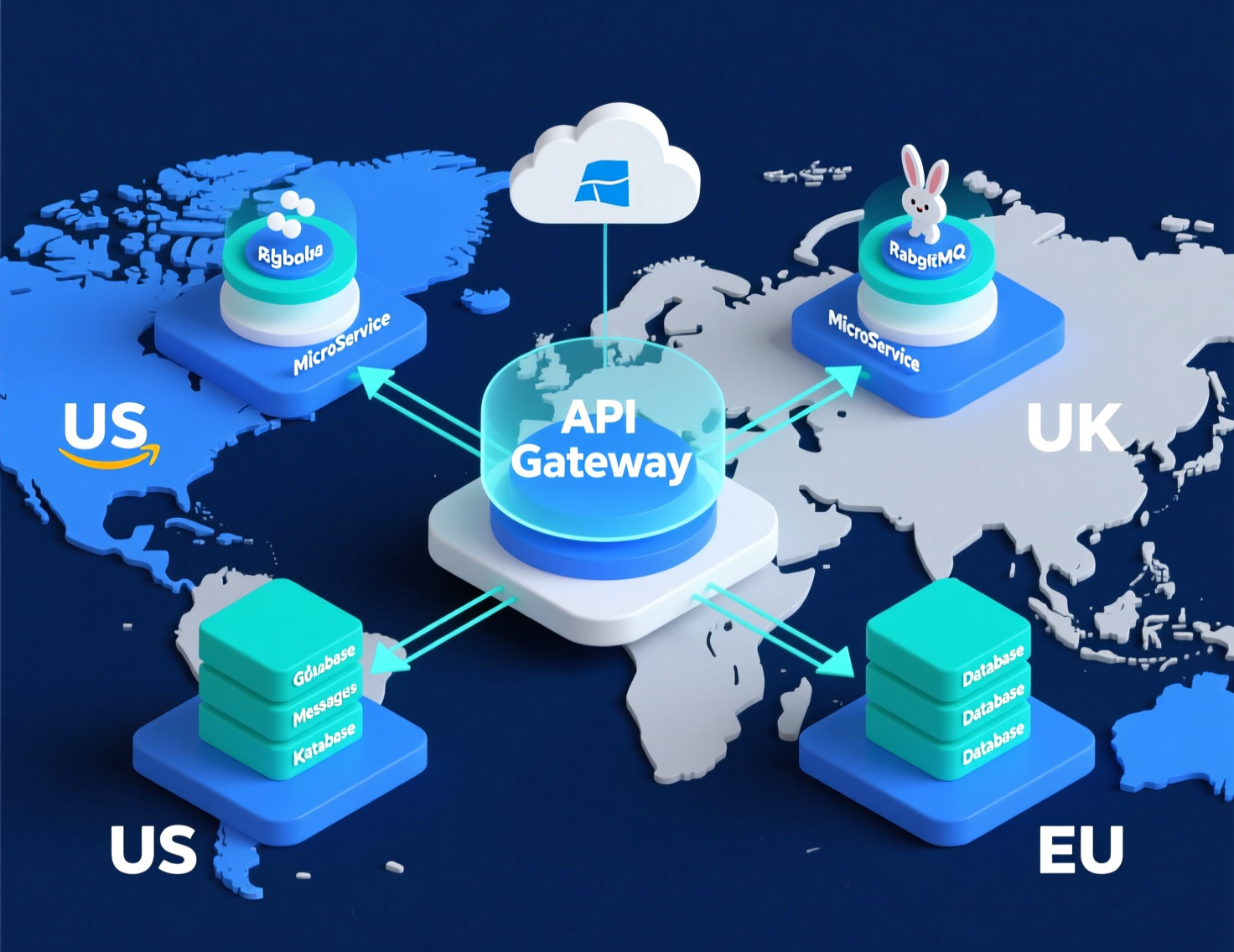
Golang Development Services: Pricing, Use Cases & How to Choose a Partner
Golang development services cover designing, building and operating high-performance backends, APIs and cloud-native systems using the Go programming language, especially for scalable, concurrent workloads. Businesses typically choose Golang over Node.js or Java when they need low-latency, cloud-native services with heavy concurrency such as fintech, SaaS or real-time platforms while still keeping the stack simple to maintain.
Golang (often called Go) has quietly become a go-to choice for building high-performance, cloud-native backends. From real-time trading engines in New York to Open Banking APIs in London and payment processing platforms in Berlin, Golang development services are now at the core of many modern digital products.
In this guide, we’ll walk through what Golang services actually include, where Go shines compared with Node.js and Java, how pricing and outsourcing models work across the US, UK and EU, and what to check before choosing a Golang development company. Throughout, we’ll keep the focus on practical decisions: performance, compliance, cost, and time-to-market.
What Are Golang Development Services?
Golang development services are professional services focused on designing, building and maintaining software systems using the Go programming language. Companies typically choose these services when they need high-throughput, cloud-native backends, microservices or APIs that can handle large volumes of concurrent requests with predictable performance.
At a high level, Go is a compiled, statically typed language created at Google to build simple, secure and scalable systems, with built-in concurrency and a strong standard library. go.dev+1 This makes it attractive for engineering teams that want a clean stack and strong runtime characteristics without the complexity of older enterprise languages.
Golang development services can span.
Custom backend application and API development
Microservices and event-driven architectures
Cloud-native design on AWS, Azure and Google Cloud
Performance optimization, refactoring and modernization
DevOps, observability and production operations
Golang at a Glance
Tech teams in the US, UK and EU choose Go because it combines three things that are hard to get together: performance, simplicity and concurrency. Go’s goroutines and channels provide lightweight concurrency primitives that make it easier to handle thousands of simultaneous connections—ideal for APIs, streaming and real-time systems.
Compared with languages that have complex runtime models, Go’s straightforward syntax, single binary deployment and fast compilation help teams ship and iterate quickly. This is especially valuable for startups and scale-ups that need both speed and stability.
Core Golang Development Services Agencies Offer
Most Golang development agencies offer a similar core scope, even if they package it differently:
Backend & API development
REST/GraphQL APIs, internal services, authentication, authorization, rate limiting and caching.
Cloud-native microservices
Designing and implementing microservices deployed on Kubernetes, Docker and managed container platforms.
Event-driven systems
Message queues, streaming (Kafka, NATS, etc.), event sourcing and asynchronous processing.
DevOps & SRE
CI/CD pipelines, observability with Prometheus/Grafana, infrastructure-as-code (e.g., Terraform), autoscaling and incident response.
Modernization & migration
Breaking monoliths into Go microservices, performance rewrites, or replacing legacy Java/.NET components with Go.
For businesses comparing vendors, the key is less the label and more the depth: How strong is their experience with concurrency, distributed systems and production support?

When to Choose Golang Over Node.js or Java
You should choose Golang over Node.js or Java when your application needs high concurrency, low latency and predictable performance, especially under heavy load. Typical scenarios include real-time APIs, trading platforms, payment processing, streaming and intensely parallel background jobs.
Versus Node.js
Node excels for I/O-bound APIs and front-end-heavy teams, but it relies on a single-threaded event loop and can require more effort to manage CPU-heavy or highly concurrent workloads. Go’s lightweight goroutines and multi-core support make it a better fit for CPU-bound and high-throughput systems.
Versus Java
Java is mature with a massive ecosystem but often comes with heavier runtime overhead and more complex frameworks. Go provides a leaner runtime and simpler deployment model (single static binary), which often translates into lower operational complexity and cloud costs for microservices at scale.
If you’re building something like a new Open Banking API in London, a real-time pricing engine in Frankfurt, or a high-traffic SaaS backend in Austin, Go is usually worth a serious look.
Types of Projects That Benefit from Golang
Golang is a strong fit for projects where performance, concurrency and cloud-native architecture are central requirements. High-growth SaaS, fintech and healthcare companies in the USA, UK and Germany often choose Golang development services for their backends because Go combines fast execution, built-in concurrency and simple deployment, making it ideal for scalable cloud-native systems.
This is particularly relevant in regions where regulations and uptime expectations are strict: US healthcare and payments (HIPAA, PCI DSS), UK Open Banking, and EU/German financial services under GDPR and BaFin supervision.
High-Concurrency Backends and Real-Time APIs
If your system must handle tens or hundreds of thousands of concurrent connections, Go is designed for that. Its goroutines are much lighter than OS threads, and its scheduler efficiently multiplexes them across CPU cores.
Common examples:
Real-time trading and risk engines in New York or Frankfurt
Live sports streaming backends in London or Manchester
Multi-tenant SaaS platforms in San Francisco or Berlin with heavy API usage
Global surveys show that Kubernetes, containers and cloud-native patterns are now used in production by roughly 80% of organizations, which pairs naturally with Go-based microservices.
Microservices, Cloud-Native and Kubernetes-First Architectures
Golang’s simplicity and static binaries make it ideal for microservices deployed on Kubernetes across AWS, Azure and Google Cloud. Cloud providers offer multiple regions in the US, UK and EU (including Germany), allowing you to meet data residency and latency requirements.
Typical patterns include.
Dozens or hundreds of Go microservices running on Kubernetes clusters
Sidecar services (e.g., proxies, operators, controllers) written in Go
Infrastructure tooling (CLIs, operators, controllers) also built with Go
If your architecture is or will be Kubernetes-first, investing in a cloud-native Golang backend often pays off in operational simplicity.
Fintech, SaaS and Regulated Industries in the USA, UK & EU
High-growth SaaS, fintech and healthcare companies in the USA, UK and Germany choose Golang development services because Go combines strong performance with predictable behavior, which is critical for regulated and high-risk domains. Go’s simplicity reduces the cognitive load on teams dealing with compliance frameworks like GDPR, UK-GDPR, HIPAA or PCI DSS.
Examples.
Fintech & banking
Open Banking and PSD2-compliant APIs in London, BaFin-regulated platforms in Frankfurt, ECB/EBA-supervised services across the EU.
Healthcare
HIPAA-compliant healthtech and NHS data integrations with low latency and strong auditability.
SaaS & logistics
Multi-region SaaS platforms that must respect GDPR/DSGVO and provide EU data residency by design.
Core Golang Development Services We Provide
At Mak It Solutions, our Golang development services focus on building fast, resilient backends with clear business outcomes: faster response times, better scalability and lower long-term cost of ownership.
We blend custom Go engineering with cloud, DevOps and analytics expertise so your backend isn’t just “written in Go” but designed for real-world operations and compliance from day one.
Custom Golang Application & Web Development
We deliver custom Golang application development for everything from MVPs to complex enterprise systems. That typically includes:
Backend services for SaaS products, marketplaces and B2B platforms
Admin portals, internal tools and workflow automation
Multi-tenant architectures with robust tenancy, billing and access control
Integrations with third-party APIs (payments, KYC, CRM, ERP, etc.)
Whether you’re launching a new SaaS in Austin, replatforming a legacy system in London or adding new modules to an existing product in Munich, we can scope a Go-based backend that balances performance and time-to-market.
API, Microservices and Event-Driven Architecture in Go
A big portion of our work is scalable API development in Golang and designing microservices around clear bounded contexts. This often includes:
REST/GraphQL APIs with authentication, rate limiting and API gateways
Microservices communicating over gRPC, message queues or event streams
Event-driven patterns (Kafka, NATS, AWS SNS/SQS, Google Pub/Sub)
Observability using Prometheus, Grafana and distributed tracing
Because most cloud-native stacks are now containerized and orchestrated (often via Kubernetes), our teams align Golang service design with infrastructure from the start—CI/CD, autoscaling, blue-green deployments and more.
Modernization, Refactoring and Migrating from Monoliths
Many clients come to Go not for a greenfield build, but to fix an aging monolith that’s slowing down growth. We help by:
Analysing existing Java, .NET or PHP applications and identifying high-impact modules to rewrite in Go
Designing a target microservices or modular architecture
Implementing strangler-fig patterns to gradually move traffic from monolith endpoints to new Go services
Refactoring performance-critical paths into Go workers or services
Done right, modernization in Go can reduce cloud spend, improve reliability and make regulated audits (e.g., for SOC 2 or ISO 27001) easier by clarifying service boundaries and responsibilities.
Hire Golang Developers or a Dedicated Team
Companies typically engage Golang development services either by hiring individual senior developers or by partnering with a dedicated Go team. The right model depends on your in-house architecture leadership, delivery timelines and budget.
Hire Senior Golang Developers in US & European Time Zones
If you already have a strong tech leadership team, augmenting with senior Golang developers can be the fastest route. This model suits:
US companies in New York, San Francisco or Austin needing Go specialists overlapping with EST/PST
UK and EU companies (London, Berlin, Munich, Amsterdam) that want EU-based talent for time zone and regulatory reasons
Teams that want to keep product management and architecture in-house while extending delivery capacity
Time-to-hire for senior Go engineers in US and European time zones often ranges from several weeks to a few months on the open market, which is why many companies use vetted partners to shorten the process.
Dedicated Golang Teams vs Classic Outsourcing
A dedicated Golang team operates like a remote extension of your engineering department: same stand-ups, shared roadmap, long-term backlog. Classic outsourcing, by contrast, is often project-based, with more distance between your product management and the delivery team.
Dedicated teams make sense when:
You’re building or scaling a strategic Go-based platform (e.g., fintech or SaaS core backend)
You want stable, long-term collaboration and knowledge retention
You expect ongoing product evolution rather than a one-off project
Classic outsourcing can still be a good fit for clearly bounded projects—such as building a single Go microservice or a well-defined internal tool.
How Staff Augmentation Works in Practice
Staff augmentation for Golang generally follows a predictable workflow.
Discovery & role definition.
You share your stack, roadmap and team structure; we agree on seniority and responsibilities.
Candidate selection..
We propose vetted Golang engineers or small squads; you interview and approve them.
Onboarding.
Developers join your ceremonies, tools and processes (Slack, Jira, GitHub, CI/CD, etc.).
Delivery & governance.
We track outcomes via sprint goals, SLAs and clear KPIs (throughput, cycle time, incident rates).
This model helps you keep product ownership internal while gaining specialized Go and cloud-native expertise on demand.
Golang Development Outsourcing: Nearshore & Offshore Options
To successfully outsource Golang development across US, UK and EU markets, you need to balance cost, time zone overlap, language/culture fit and regulatory considerations. Nearshore and offshore models each have their place.
Nearshore Golang Development for US, UK and Germany
For US companies in New York, Austin or Miami, nearshore Golang teams in Latin America can provide strong time zone overlap with lower costs than onshore hiring. For UK and German companies, Central & Eastern Europe offers a similar nearshore advantage.
Nearshore works well when:
You want daily real-time collaboration in overlapping hours
Your product is complex and evolving rapidly
Compliance and data residency need to be handled within US/EU legal frameworks
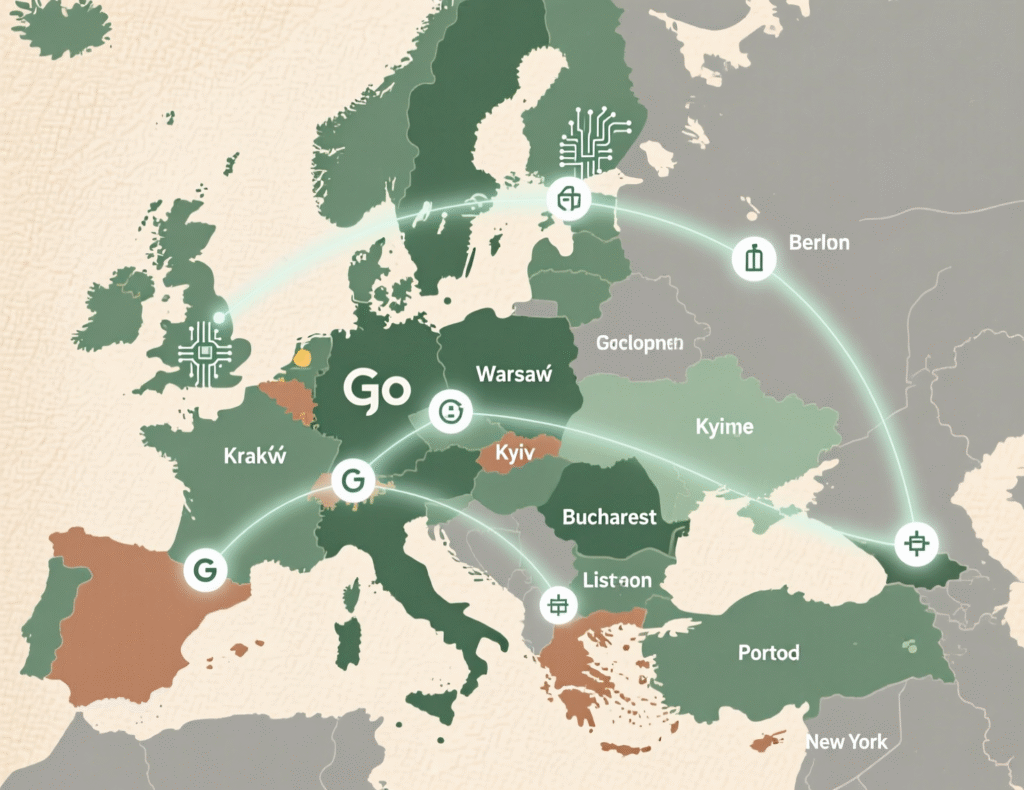
Popular Golang Hubs: Poland, Ukraine, Romania, Portugal
Several European hubs have developed deep Golang and cloud-native talent pools, especially for fintech and SaaS work:
Poland: Kraków, Warsaw, Wrocław
Ukraine: Kyiv, Lviv
Romania: Bucharest
Portugal: Lisbon, Porto
These locations are popular with companies in London, Berlin, Munich and Hamburg looking for long-term nearshore Golang teams, often with strong English skills and EU-friendly legal frameworks.
Managing Remote Golang Teams Effectively
Regardless of geography, effective remote Golang development requires:
Clear architecture documentation (ADR records, diagrams, contracts)
Strong DevOps and CI/CD practices for autonomous deployments
Time-boxed ceremonies (stand-ups, refinements, reviews) that respect time zones
Transparent SLAs on availability, response times and incident handling
Companies that treat remote Go teams as integrated partners rather than ticket factories tend to see better outcomes and retention.
Compliance, Security and Cloud for Golang Projects
For regulated industries, Golang development services have to fit into a broader ecosystem of compliance, security controls and cloud governance. The language itself is just one part of the story.
GDPR, UK-GDPR, DSGVO, HIPAA, PCI DSS, SOC 2 and ISO 27001
If your Golang backend processes personal data or cardholder information in the EU, UK or US, you need to align both technology and process with regulations and standards such as:
GDPR / DSGVO & UK-GDPR
Core EU and UK privacy regulations covering personal data processing, consent, data subject rights and more.

HIPAA
US regulation governing protected health information, relevant for healthtech and integrations with providers like the NHS or US hospitals.
PCI DSS
Industry standard for payment card data security.
SOC 2 / ISO 27001
Security and controls frameworks often required by enterprise customers.
GDPR fines alone have reached an estimated cumulative total of nearly €6 billion since 2018, underscoring the cost of non-compliance.
In practice, this means Golang services must incorporate logging, audit trails, encryption, access controls and data minimization into their design.
Deploying Golang on AWS, Azure and Google Cloud
Most modern Golang backends run on one of the big three cloud providers:
AWS
Rich support for Go in Lambda, ECS, EKS and managed databases; multiple Regions in the US, UK, Germany and across the EU.
Azure
Extensive region coverage, including UK South/West and multiple EU/German regions, with data residency boundaries by geography.
Google Cloud Platform
Strong networking and data center footprint across Europe and North America, ideal for latency-sensitive Go services.
Your Golang development partner should be able to design for multi-region resilience, backups, disaster recovery and cloud cost optimization from the outset.
Data Residency, EU Hosting and BaFin.
For BaFin-regulated financial institutions in Germany or Open Banking/PSD2 players in the UK and EU, data residency and regulator expectations are non-negotiable.
Typical requirements:
Hosting customer data in EU or specific German regions
Keeping certain logs and backups within regulated boundaries
Documenting data flows for regulators (BaFin, ECB, EBA)
Implementing robust access controls and audit logs for API calls
A Golang development company with experience in these regimes will design your architecture to meet regulator expectations from day one, not bolt them on later.
Cost of Golang Development Services in the US, UK and Germany
Golang development pricing varies by region, seniority and engagement model, but there are consistent patterns you can use to budget.
Typical Hourly Rates and Team Compositions by Region
While exact numbers fluctuate, you can think in ranges (for senior-level Golang work) [VERIFY LIVE]:
United States (New York, SF, Austin)
Highest rates, aligned with top-tier backend and cloud engineers.
United Kingdom (London, Manchester)
Slightly lower than US but still premium, especially for fintech/healthtech.
Germany (Berlin, Munich, Frankfurt, Hamburg)
Similar to or slightly below London for senior engineers, often with strong compliance and enterprise experience.
Central & Eastern Europe (Poland, Ukraine, Romania, Portugal)
Typically lower blended rates with solid Go and cloud-native expertise, especially for nearshore dedicated teams.
A typical Golang squad might include.
1 Tech Lead / Architect
2–4 Senior Golang Developers
1 DevOps/Cloud Engineer
Optional: QA engineer, BA or product owner
What Drives Golang Project Costs: Scope, Complexity, Compliance
Three main drivers determine the cost of Golang development services:
Scope & feature depth
More features, complex business rules and integrations raise costs.
Technical complexity
High concurrency, low-latency requirements, advanced security, event-driven architectures and multi-region deployments all require more senior engineers.
Compliance & audit needs
Work in regulated sectors (fintech, banking, healthcare) often adds design, documentation and security engineering effort to satisfy guidelines from GDPR, HIPAA, PCI DSS, BaFin and others.
Optimizing Budget with Nearshore and Hybrid Delivery Models
To optimize cost without sacrificing quality, many companies use a hybrid model.
Keep product leadership, architecture and some senior engineers in key hubs like New York, London or Berlin
Build a nearshore Golang team in Central/Eastern Europe or Portugal for most implementation work
Use shared DevOps and QA resources across multiple Go squads
This setup keeps communication tight with stakeholders while leveraging cost-effective locations for day-to-day feature delivery.
How to Choose the Right Golang Development Company
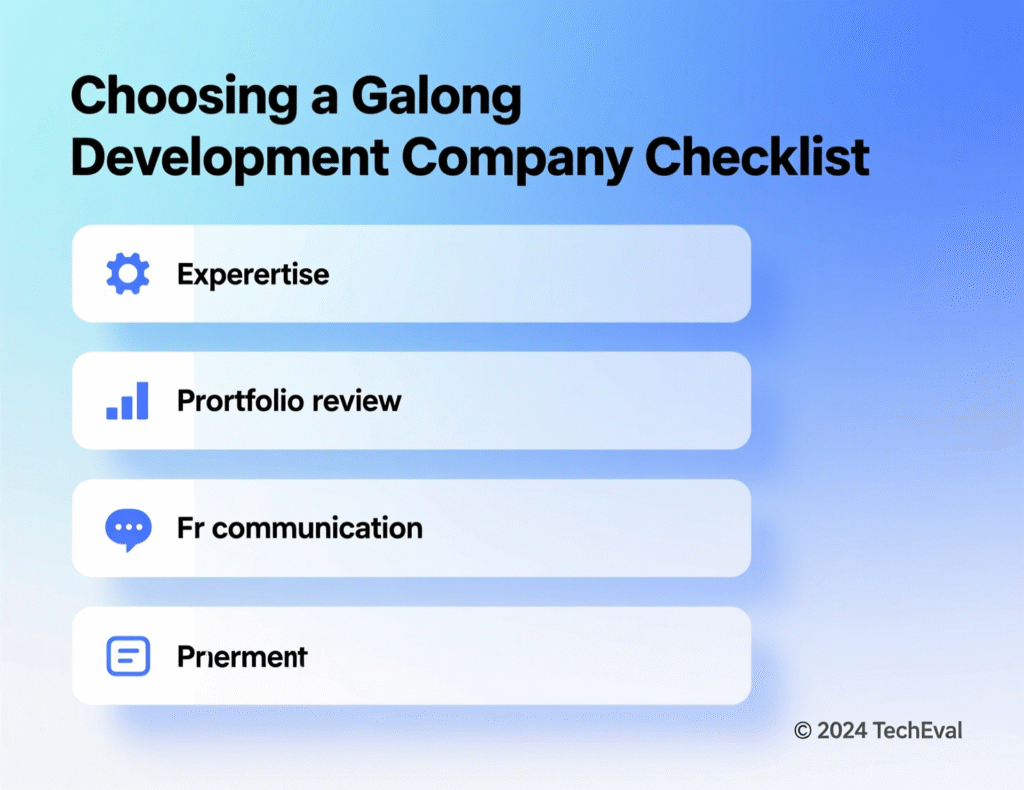
To evaluate, price and successfully outsource Golang development across the US, UK and EU, you need a structured selection process: define your requirements, check technical depth, verify industry and compliance experience, and examine how they work in practice.
Below is a practical step-by-step approach you can follow.
Technical Skills to Look For: Microservices, DevOps, Cloud, Testing
When you vet a Golang partner, look beyond simply “we use Go” and focus on capabilities such as:
Proven microservices and distributed systems experience
Kubernetes, Docker and cloud-native operations on AWS/Azure/GCP
CI/CD pipelines, infrastructure-as-code (Terraform), observability and SRE practices
Automated testing: unit, integration, contract and load tests
Ask to see concrete examples—code samples, architecture diagrams or anonymized case studies.
Evaluating Portfolio, Case Studies and Domain Expertise
A strong Golang development company should be able to show:
Case studies in your or adjacent industries (fintech, insuretech, SaaS, healthtech, e-commerce, logistics)
References or public reviews on platforms like Clutch or GoodFirms demonstrating delivery quality and communication
Evidence of working with regulations and standards relevant to you, such as GDPR, HIPAA, PCI DSS, SOC 2 or ISO 27001
For example, if you’re a fintech startup in London, you’ll want to see prior work with Open Banking APIs and PSD2, and at least a basic understanding of FCA and BaFin expectations.
Questions to Ask Before You Sign: Contracts, SLAs and Communication
Before you sign with any Golang development company, ask structured questions around:
Contracts & IP
Who owns the code and cloud accounts? How is IP assignment handled?
SLAs
What are the response and resolution times for production incidents? How is uptime measured and reported?
Security & compliance
How do they handle access control, secrets management, data protection and audits?
Communication
Which tools do they use (Slack, Teams, Jira)? What is the overlap in time zones? Who is your primary point of contact?
Documenting these answers up front saves a lot of pain later.
Simple 5-Step Process to Choose a Golang Partner
Define your business goals and compliance requirements.
Shortlist vendors with strong Golang, cloud-native and industry experience.
Review case studies, architecture examples and technical interviews.
Align on pricing, SLAs, IP ownership and delivery model.
Start with a small pilot project and expand based on results.
Why Companies in the USA, UK and Germany Trust Golang for Growth
Companies in the USA, UK and Germany trust Golang for growth because it offers a rare combination of performance, simplicity and cloud-native readiness. For high-growth SaaS, fintech and healthcare businesses, this translates directly into higher reliability, better scalability and lower total cost of ownership over time.
Scalability, Reliability and Total Cost of Ownership
Go’s ability to handle large numbers of concurrent connections with modest resource usage makes it an excellent fit for scale-out architectures.Combined with Kubernetes and modern CI/CD, this allows teams to scale horizontally without rewriting their entire stack.
From a cost perspective.
Efficient Go services can reduce CPU and memory usage, lowering cloud bills.
Simpler language and tooling reduce onboarding time for new engineers.
A well-designed Go microservices architecture often simplifies compliance audits and incident response.
Industry reports suggest that cloud-native, containerized workloads will represent the vast majority of production deployments by the end of the decade, with Kubernetes adoption already around 80–90% of surveyed organizations.
SaaS, Fintech and Healthcare Backends Built with Go
While specific client names are often confidential, typical Golang backends we see in the market include:
SaaS
Multi-tenant analytics platforms running in US and EU regions, where Go services handle ingestion, aggregation and real-time dashboards.
Fintech
Payment gateways, risk scoring engines and Open Banking aggregators operating under BaFin and FCA oversight.
Healthcare
Appointment scheduling, telemedicine and clinical data exchange platforms that must align with HIPAA and NHS data standards.
Request a Golang Architecture Review or Pilot Project
If you’re considering Golang development services for your next project, a low-risk way to start is a focused architecture review or small pilot:
Evaluate whether Go is the right fit versus Node.js or Java for your scenario
Identify performance and reliability bottlenecks in your current stack
Prototype a key microservice, API or event pipeline in Go and measure results
FAQs
Q : Is Golang a good choice for a new SaaS product MVP or only for large-scale systems?
A : Golang is a strong choice for both MVPs and large-scale systems. For early-stage SaaS products, Go offers fast development with a clean standard library and a predictable deployment model—ideal when you want to avoid framework bloat yet keep a solid foundation for growth. As you scale, Go’s concurrency and performance characteristics mean you’re less likely to hit painful limits that require major rewrites. If your MVP involves APIs, background jobs or streaming data, starting with Go can actually reduce long-term technical debt.
Q : How does Golang performance compare to Node.js and Java for API-heavy applications?
A : In API-heavy applications, Golang typically delivers lower latency and more predictable performance under heavy load than Node.js, thanks to its compiled nature and lightweight goroutines rather than a single-threaded event loop. Compared with Java, Go often offers similar or better performance for microservices with fewer runtime tuning knobs and simpler deployment (single binary instead of a larger JVM-based stack). Real-world benchmarks will depend on your specific workload and implementation quality, but Go was designed from the start for efficient, concurrent network services.
Q : Can I start with a small Golang pilot project before committing to a full outsourcing contract?
A : Yes and it’s usually the safest path. Many companies start with a small Golang pilot project such as building a single microservice, refactoring a performance-critical module, or creating a proof-of-concept for a new API. This lets you evaluate the vendor’s technical quality, communication and delivery practices without committing to a long-term contract. If the pilot succeeds, you can extend the engagement into a broader roadmap, confident that the team understands your domain and expectations.
Q : What is the typical time-to-hire for senior Golang developers in US and European time zones?
A : On the open market, time-to-hire for senior Golang developers in US or European time zones can easily range from one to three months, depending on location, salary expectations and competition from large tech employers. In hot markets like New York, London or Berlin, it can be even longer. Partnering with a Golang development company or staff augmentation provider that already has vetted Go engineers can compress this timeline significantly, sometimes to just a few weeks, because vetting and technical assessments are largely pre-completed. [VERIFY LIVE]
Q : How do Golang development companies handle code ownership, IP and long-term maintenance?
A : Reputable Golang development companies assign full IP ownership of custom code to you, typically via contract clauses that explicitly state all work product is “work made for hire” or is assigned upon payment. Operationally, best practice is to host code in your own Git repositories and cloud accounts while granting the vendor access, so there’s no ambiguity about control. For long-term maintenance, you should agree on documentation standards, handover procedures and optionally a maintenance retainer or support SLA, ensuring your Go codebase remains healthy even if team composition changes.
Key Takeaways
Golang development services focus on high-performance, cloud-native backends and APIs, making Go a strong alternative to Node.js or Java for concurrent workloads.
High-growth SaaS, fintech and healthcare companies in the USA, UK and Germany use Go for scalable, compliant backends that align with regulations like GDPR, HIPAA, PCI DSS and BaFin guidance.
Effective outsourcing across US, UK and EU markets depends on choosing the right mix of onshore, nearshore and offshore Golang teams, with clear SLAs and communication practices.
Project cost is driven by scope, technical complexity and compliance requirements; nearshore and hybrid delivery models can optimize budget without sacrificing quality.
A structured selection process covering technical skills, industry experience, contracts, SLAs and a small pilot dramatically increases the odds of success with your Golang partner.
If you’re exploring Golang development services for a new product, a core platform rewrite or a regulated backend, Mak It Solutions can help you move from idea to a concrete architecture and delivery plan. Our teams support clients across the USA, UK, Germany and the wider EU with cloud-native Go, DevOps and analytics expertise.
Reach out to request a scoped estimate, schedule a Golang architecture review, or launch a small pilot project to validate Go for your next-generation backend.( Click Here’s )