
How AI in Arabic Education Is Transforming GCC Schools
How AI in Arabic Education Is Transforming GCC Schools
AI in Arabic Education: Arabic-First Tutors for GCC Schools in Saudi Arabia, UAE and Qatar
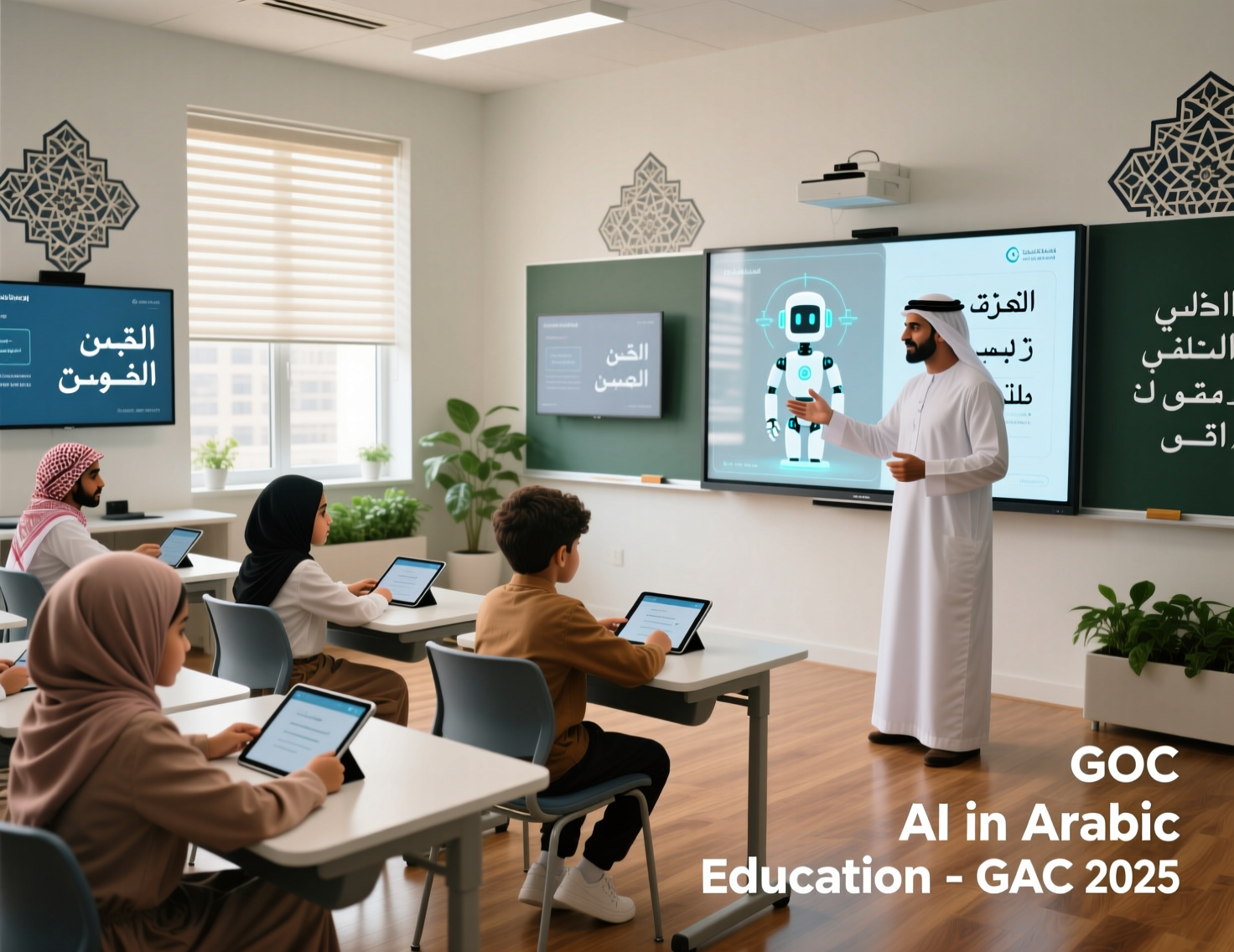
AI in Arabic education uses Arabic-first generative AI to support reading, writing, speaking and Quran/Islamic studies in a way that matches GCC curricula and culture. In Saudi Arabia, the UAE and Qatar, this means Arabic AI tutors that personalize lessons, respect local values and comply with strict data and education regulations.
Introduction
Across Riyadh, Dubai and Doha, “AI in Arabic education” is no longer a future idea it’s arriving inside real classrooms, parent portals and university LMS dashboards. Saudi Arabia’s Vision 2030, the UAE’s AI curriculum plans, and Qatar Foundation’s AI focus are all pushing schools to adopt smarter, Arabic-aware learning tools.
Yet ministries and school groups still face familiar pain points: weak Arabic outcomes compared with English, big learning gaps between top and struggling students, overloaded teachers, and parents worried about screen time, “haram” content and data privacy. In many GCC schools, Arabic periods are shorter, resources are thinner, and the most innovative apps are English-only.
This is exactly where Arabic-first AI tutors can help. When designed properly, they give personalized learning for Arabic-speaking students, automate practice and feedback, and free teachers to focus on higher-order skills all while staying halal, curriculum-aligned and compliant with national data laws. The rest of this guide explains how.
Defining AI in Arabic Education for GCC Schools and Universities
What “AI in Arabic education” actually means in KSA, UAE and Qatar
In the GCC, AI in Arabic education is not just “using ChatGPT in class.” It means deploying intelligent systems that support:
Arabic-medium subjects (Arabic language, Arabic literature, social studies)
Arabic-language environments in bilingual or international schools
Islamic and Quran studies, where recitation, comprehension and values are central
In KSA, this aligns with Vision 2030’s push to embed AI literacy across basic education while protecting Arabic and Islamic identity. In the UAE, AI is being integrated into a nationwide curriculum so students learn to use AI safely and ethically from KG to Grade 12. In Qatar, initiatives under Qatar Foundation and QCRI emphasise Arabic content, research and innovation linked to National Vision 2030.
Practically, this includes.
AI-powered Arabic language lessons and exercises
Adaptive reading levels for Fusha texts and school textbooks
Automated feedback on grammar, spelling and writing structure
Pronunciation and tajweed-style support for Quranic and Islamic education (always under teacher/scholar oversight)
Analytics dashboards for teachers, heads of department and ministries
From English-first tools to Arabic-first generative AI models (Jais, Allam, Fanar, etc.)
Historically, GCC schools relied on English-first tools that only partly support Arabic. Today, a new wave of Arabic-first generative AI for education is emerging:
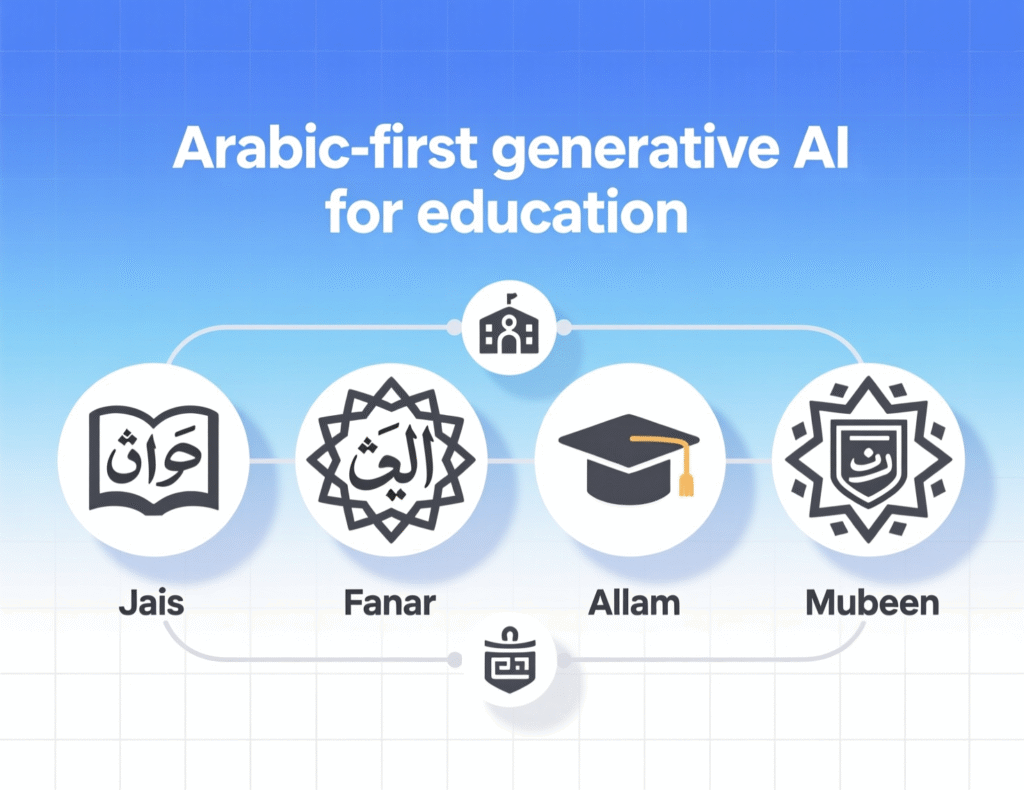
Jais an Arabic-English LLM developed in the UAE (Core42/G42 + MBZUAI), built specifically to generate high-quality Arabic and handle dialects.
Fanar a Qatar-developed Arabic-centric multimodal platform from QCRI and Qatar Foundation, focused on Arabic language, speech and culturally aligned AI.
Other regional models (Allam, Mubeen, Falcon Arabic, etc.) that strengthen Arabic data and cultural context in AI systems.
For GCC ministries and school groups, this matters because:
Content generation can follow local curricula and exam formats
AI understands Fusha plus Gulf and Levantine phrasing better
Safety filters can be tuned to Islamic values and local regulations
Key stakeholders: ministries, school groups, universities, edtech startups and parents
Successful AI in Arabic education is an ecosystem issue.
Ministries of Education (KSA, UAE, Qatar) set curriculum, procurement, and AI safety rules.
Regulators like SDAIA/NDMO, TDRA and QCB oversee data governance, AI ethics and financial flows.
School groups and universities (public and private) choose platforms, approve pilots and manage data access.
Edtech startups and integrators develop Arabic AI tutors, connect them to LMS portals, and localize UX for GCC students.
Parents demand kids-safe, culturally aware AI – especially in cities like Riyadh, Jeddah, Dubai, Sharjah, Abu Dhabi and Doha.
When all of these stakeholders are aligned, AI tutors stop being “a random app” and become part of a structured, trusted learning ecosystem.
GCC Policy & Vision: How Governments See AI in Arabic Education
AI in Arabic education in Saudi Arabia under Vision 2030
Direct answer
Saudi schools are adding AI and smart tutors to Arabic classes as part of Vision 2030’s plan to build a digital, knowledge-based economy. From the 2025–26 school year, AI becomes part of the national curriculum, with millions of students learning how to use AI tools responsibly while strengthening Arabic, coding and problem-solving skills.
Practically, this looks like
AI curriculum rolled out across public schools, including modules on data, algorithms and ethics.
SDAIA and NDMO setting national data and AI policies including personal data protection and data residency rules that affect AI tutors.
Ministry of Education and National Center for e-Learning pushing digital platforms (Madrasati, etc.) where AI features can be embedded.
For Arabic classes in Riyadh, Jeddah, Makkah, Madinah or Dammam, this means AI will increasingly be “built-in” to official platforms instead of being an optional extra tool.
UAE strategies: AI in multilingual classrooms in Dubai and Abu Dhabi
The UAE positions itself as a global AI testbed, and education is central to that strategy. The Ministry of Education has announced an AI subject for all public schools from 2025–26, with students learning prompt engineering, bias and ethics.
For multilingual classrooms in Dubai and Abu Dhabi.
KHDA and ADEK encourage innovative edtech pilots, including AI-based tools for Arabic, English and other languages.
TDRA sets the broader digital and AI standards, including generative AI on government portals a strong signal for secure AI deployments in schools as well.
AI in Arabic education in the UAE therefore focuses on:
Supporting both Emirati and expatriate students in Fusha
Helping non-native speakers in private schools reach required Arabic levels
Embedding AI into portals, apps and national digital services that families already use
Qatar’s Arabic-first AI push via Qatar Foundation, QCRI and Fanar
Qatar has leaned heavily into Arabic-first AI. Qatar Foundation and QCRI invest in Arabic-centric research and platforms like Fanar, a multimodal Arabic LLM aligned with Qatar National Vision 2030.
In education, this connects to:
Qatar Foundation’s ecosystem of universities in Education City (CMU-Q, HBKU, etc.), which explore AI’s impact on learning and the future of work.
MoEHE tools like the AI-powered “Talib” chatbot, serving students and parents in Arabic and English.
National AI and fintech strategies, where QCB’s AI guidelines and cloud regulations show how seriously data governance and ethics are enforced important signals for any Qatar Arabic AI learning platform for Doha students.
For Arabic education, Qatar’s message is clear: AI must strengthen Arabic language and identity, not replace them.
What Is an Arabic AI Tutor and How Is It Different from a Normal Language App?
Core features of an Arabic AI tutor for Gulf students
Direct answer (definition)
An Arabic AI tutor is an adaptive smart tutor for Gulf schools that uses Arabic-first generative AI for education to give students live, two-way practice in reading, writing, speaking and Quranic recitation. Unlike a standard language app, it personalizes every question, explains in Fusha and Khaleeji dialects, and stays aligned with GCC school curricula and cultural norms.
Key features typically include.
Conversational practice in Fusha and, where appropriate, Gulf dialects, with instant feedback
AI-powered Arabic language lessons covering grammar, morphology, vocabulary and comprehension
Reading and listening support, including chunking long texts and highlighting difficult words
Tajweed-style pronunciation guidance (always as a helper, not a replacement for qualified Quran teachers)
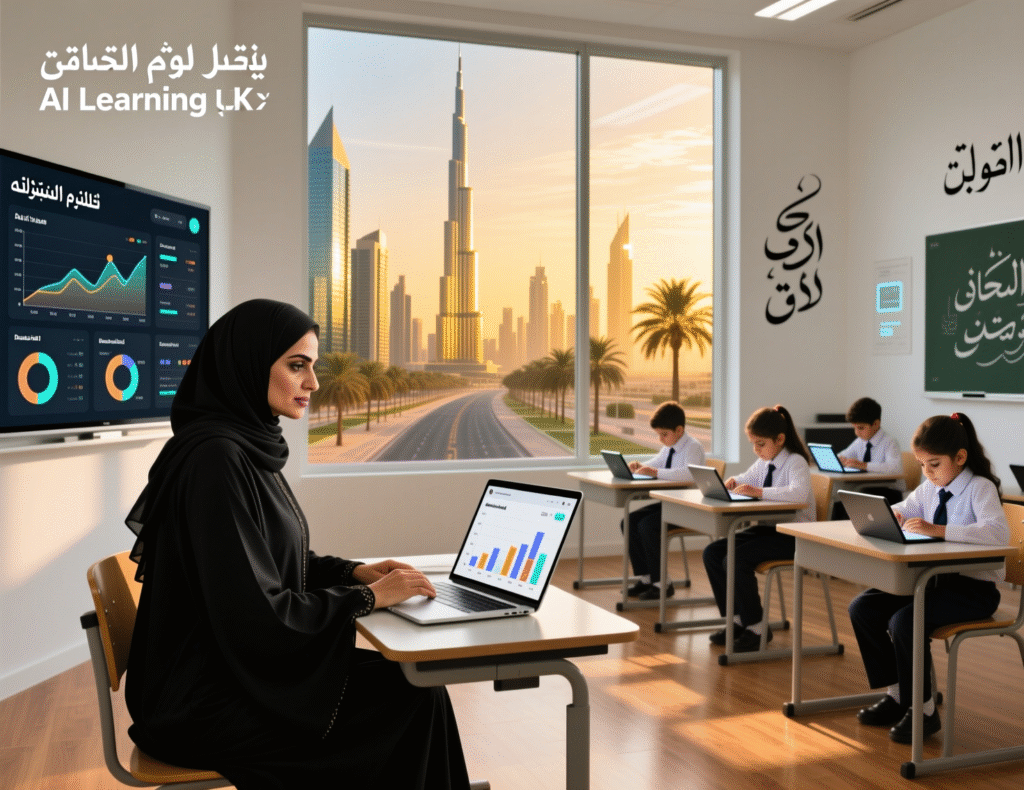
Built-in analytics that show teachers which students in Riyadh, Dubai or Doha are stuck on which skills
Kids-safe, culturally aware and “halal” AI behavior for GCC families
For GCC parents, the main question is rarely “Is the AI smart?” but “Is it safe and halal?”
A Gulf-ready Arabic AI tutor should:
Filter out inappropriate or un-Islamic topics for school-age children
Respect modesty, family structures and local customs in its examples and stories
Avoid giving religious rulings (fatwas) or sensitive advice, instead pointing back to teachers and trusted authorities
Offer parent and school control panels to set time limits, view logs and restrict features
Be audited regularly for bias, hallucinations and harmful outputs
This is where GCC-specific guardrails, content filters and local advisory boards (scholars, Arabic curriculum experts, child psychologists) make a big difference compared with generic global apps.
Arabic AI tutor vs human tutor: when to blend both in classrooms and homes
AI tutors should augment, not replace Arabic teachers and human tutors. A realistic blend in GCC contexts looks like.
In class
AI handles repetitive practice and instant feedback; the teacher leads explanation, discussion and values.
At home
AI supports extra reading and speaking practice; parents and tutors keep an eye on progress and behavior.
For high-stakes exams
AI helps with past-paper style questions and personalized revision, while teachers focus on strategy and motivation.
For example, the best Arabic AI tutor app in KSA for high school will let a Grade 12 student practice composition and grammar at scale but the school’s Arabic teacher will still guide how to structure arguments, analyze poetry and respect exam rules.
How AI Tutors Help Close Learning Gaps for Arabic-Speaking Students in GCC Classrooms
Personalized learning for Arabic-speaking students across Riyadh, Dubai and Doha
Direct answer (learning gaps)
AI tutors help close learning gaps for Arabic-speaking students in GCC classrooms by giving each learner a personalized path through reading, grammar, vocabulary and writing, instead of one-size-fits-all worksheets. They adapt difficulty in real time, highlight weak skills for teachers, and provide extra support for struggling students without slowing down the whole class.
In practice, personalized learning for Arabic-speaking students could look like:
A student in Riyadh gets extra exercises on broken plurals, while her classmate in Jeddah sees more practice with sentence structure.
In Dubai, a non-native Arabic speaker receives simpler Fusha texts with visual support, while an Emirati peer tackles deeper comprehension questions.
In Doha, a prep-year student working on academic Arabic gets targeted writing prompts linked to college assignments.
Analytics dashboards help schools spot patterns for example, that Grade 7 boys in one campus struggle with reading fluency – and adjust teaching or timetable accordingly.
Bridging learning gaps in GCC classrooms with AI-powered Arabic lessons
AI-powered Arabic language lessons make it easier to bridge learning gaps in GCC classrooms with AI by.
Diagnosing each student’s reading level in a few minutes
Automatically suggesting differentiated questions on the same text
Giving instant feedback on spelling, grammar and handwriting (where devices support it)
Recommending short review sessions just before exams
For ministries worried about national test scores, the real value is scale: an AI system doesn’t get tired of checking paragraphs from tens of thousands of students across Saudi Arabia, UAE and Qatar. Teachers can then focus on deep explanation and motivation instead of low-level marking.
Supporting Arabic, Islamic and Quran classes with smart madrasa-style AI tutors
In Arabic, Islamic and Quran classes, AI must be handled very carefully
The AI tutor can listen to recitation and point out tajweed errors like elongation or qalqalah, but final judgment stays with the sheikh or teacher.
It can generate simple explanations of vocabulary and stories from approved textbooks, but not independent religious opinions.
For younger students, it can play interactive games about prayer times, basic ethics and seerah stories always using content reviewed by qualified scholars and the ministry.
Think of this as a smart madrasa-style AI tutor sitting beside the student, drilling practice and pronunciation, while the human teacher remains the source of religious guidance and assessment.
Trust, Data Privacy and Compliance for Arabic AI Tutors in the Gulf
Data residency and sovereignty: Saudi, UAE and Qatar cloud and hosting options
To be acceptable for GCC ministries and regulators, Arabic AI tutors must respect data residency and sovereignty rules
Saudi Arabia
Government and education entities generally expect data hosted inside KSA, in line with SDAIA/NDMO’s data protection standards Private schools often look for KSA-based or at least GCC-region clouds.
UAE
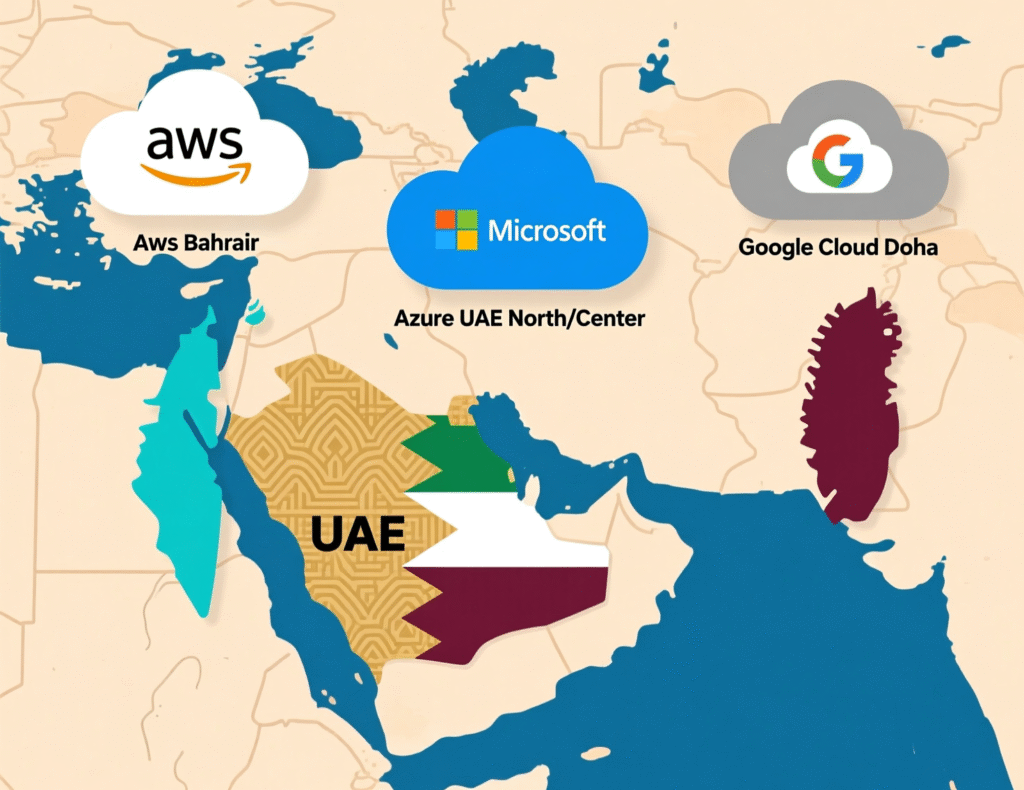
Azure UAE North (Dubai) and UAE Central (Abu Dhabi), along with AWS Middle East (UAE), provide in-country hosting options for education and government workloads.
Qatar
Google Cloud’s Doha region, plus local Qatari data centers, allows Qatar Arabic AI learning platforms for Doha students to keep data fully inside Qatar.
For a GCC Arabic AI tutor for remote and home-school students, it’s not enough to be “in the cloud” – the platform should clearly state which region, which provider and which laws apply.
Compliance signals: SDAIA, NDMO, SAMA , TDRA, QCB, ADGM and DIFC
Important regulators and frameworks to consider
SDAIA & NDMO (KSA) national data and AI regulators, issuing the Data Management & Personal Data Protection Standards and running the National Data Governance Platform.
SAMA (KSA) key when AI tutor payments go through fintech or subscription gateways.
TDRA (UAE) oversees digital/AI services and can audit AI implementations in government-related contexts.
ADGM and DIFC financial free zones in Abu Dhabi and Dubai with their own data and AI compliance expectations for edtechs handling payments.
QCB (Qatar) has detailed cloud and AI guidelines for QCB-licensed firms; these influence how serious vendors handle data residency and AI governance in Qatar
For school groups, a practical checklist is:
Data mapping, DPIAs and records of processing for student data
Clear privacy policy in Arabic and English
In-region backups and disaster recovery
Regular third-party security assessments
Safe AI tutor design for Arabic-speaking children in conservative contexts
A trustworthy Arabic AI tutor for children in conservative GCC contexts should:
Use age filters different rules for a Grade 2 child in Madinah vs a university student in Dubai
Block risky topics (violence, explicit content, political extremism, etc.)
Provide human-in-the-loop escalation, so sensitive questions are routed to teachers or counselors
Keep transparent logs that school IT and safeguarding teams can review
Offer clear opt-in consent flows for parents and adult learners
This is where AI design goes beyond technology into governance, policy and UX. Ministries in Saudi, UAE and Qatar will increasingly expect written AI governance frameworks as part of procurement.
Implementing AI in Arabic Education in GCC Schools and Universities
How to implement AI tutors in Saudi public and private schools
Here is a practical step-by-step roadmap for KSA schools (public and private) that also adapts well to UAE and Qatar:
Align with national policy and vision
Map your plan to Vision 2030, SDAIA/NDMO standards and Ministry of Education guidelines. In the UAE and Qatar, align with national AI strategies and local regulators.
Start with a needs assessment
Identify which Arabic skills are weak (reading fluency, grammar, writing, Quran recitation) and which grades or campuses in Riyadh, Jeddah or Dammam are most affected.
Run a controlled pilot
Choose 2–3 schools, one grade band, and clear success metrics (test scores, engagement, reduced teacher marking time). Involve Arabic teachers from day one.
Select a compliant, Arabic-first platform
Check for: Arabic-first models, KSA/UAE/Qatar cloud regions, NDMO-aligned data controls, TDRA and QCB-friendly security posture, and SAMA-compatible payment options if subscriptions are used.
Integrate with existing LMS and identity
Use SSO (Microsoft 365/Azure AD, etc.) and connect to platforms such as Madrasati, Moodle or Alef-type systems, so teachers don’t juggle five logins.
Train teachers and department heads
Offer hands-on workshops in Arabic, with real lesson plans. Focus on “co-teaching with AI,” not replacing teachers.
Scale gradually with governance
After the pilot, expand to more grades while keeping an AI steering committee that includes IT, curriculum, safeguarding and compliance.
Real GCC example
A Riyadh fintech-focused secondary school uses an Arabic AI tutor to strengthen financial Arabic vocabulary in business courses, while its IT team ensures all data stays in KSA and payment flows are SAMA-compliant.
Integrating AI tutors with LMS and portals (Moodle, Alef-type platforms, GCC LMSs)
For IT leads and vendors, the technical integration questions are:
Does the AI tutor support LTI, SSO and API-based integration with Moodle, Blackboard, Canvas or custom GCC LMSs?
Can it plug into national portals (Madrasati in KSA, UAE school systems, Qatar MoEHE portals) without breaking identity and access management?
Can student progress be written back to the LMS gradebook and analytics?
A Dubai e-commerce brand that already runs large mobile apps can often help its group’s schools by sharing mobile UX and infrastructure expertise – for example, turning an Arabic AI tutor into a mobile-first experience for both classroom and home.
Training Arabic teachers and department heads to use AI tutors effectively
Without teacher adoption, even the best GCC Arabic AI tutor fails. Good training programmes:
Start with mindset AI as teaching assistant, not competitor
Show concrete use cases: drafting worksheets, differentiating tasks, generating reading texts at multiple levels, creating model answers
Build AI literacy prompt writing, understanding hallucinations, checking sources, and escalating sensitive student queries
Include department heads and supervisors from Riyadh, Dubai and Doha so policies are harmonised across campuses
Over time, Arabic teachers become designers of AI-supported lessons instead of manual producers of every exercise.
Choosing the Right Arabic AI Tutor or Learning App for GCC Learners
Evaluation checklist for Arabic AI learning apps in Saudi Arabia, UAE and Qatar
When shortlisting tools whether for AI in Arabic education in Saudi Arabia Vision 2030, an AI tutor for Arabic language in UAE public schools, or a Qatar Arabic AI learning platform for Doha students use this checklist:
Language quality
Strong Fusha, optional Khaleeji support, no awkward translations
Curriculum alignment
Supports national curricula in KSA, UAE and Qatar, plus exam formats
UX and RTL support
Right-to-left design, Arabic-first interface on web and mobile
Personalization
Genuine adaptive smart tutor for Gulf schools, not just static videos
Safety & compliance
Clear data residency, logging, filtering and regulator references
Support & training
Arabic-speaking support teams, training for teachers and IT
Comparing Arabic AI tutor vs full “smart tutor” platform for schools and universities
You’ll typically encounter two categories:
B2C Arabic AI tutor apps
Great for individual learners and home use
Quick to start, affordable monthly subscriptions
Limited admin dashboards and reporting
Full “smart tutor” platforms
Deep LMS integration, SIS and analytics
Role-based access for ministries, school groups and universities
Higher implementation effort but better long-term governance
Most GCC ministries and large school operators will prefer a platform model, while parents may start with a simple app and then migrate to school-approved tools.
Cost, licensing and payment considerations under GCC fintech and education rules
When calculating total cost of ownership.
Clarify if pricing is per student, per teacher, per campus, or per ministry
For KSA, ensure payment gateways and invoicing flows align with SAMA rules and local tax requirements
For Qatar, check that any fintech component respects QCB AI and cloud regulations if student payments are processed.
For UAE, consider TDRA and free-zone rules if you host in ADGM or DIFC and bill regionally
Also budget for teacher training, change management, and technical support these often determine success more than licence price.
Future of AI in Arabic Education in the GCC
Emerging trends: Arabic-first LLMs (Jais, Allam, Fanar, Mubeen, etc.) in classrooms
Over the next 3–5 years, we can expect
Arabic-first LLMs like Jais, Fanar and newer models (including Falcon Arabic) to be embedded directly into national platforms and ministry systems.
More on-prem or sovereign AI deployments inside Saudi, UAE and Qatar data centers, especially for sensitive student data.
GCC-wide initiatives for Arabic AI in education, similar to existing fintech and open-data collaborations, covering Kuwait, Bahrain and Oman as well.
Practical next steps for ministries, school groups and edtech founders
If you are a ministry, large school group or edtech founder, the most realistic next steps are:
Launch 6–12 month pilots in selected schools in Riyadh, Dubai and Doha with clear metrics
Create an AI in Education governance committee spanning curriculum, IT, legal, and safeguarding
Partner with local universities and research institutes (MBZUAI, QCRI, etc.) to validate Arabic outcomes and bias
Encourage GCC edtech startups to build on Arabic-first LLMs under clear regulatory sandboxes
how to adopt AI in Arabic education while protecting data and Arabic identity
To summarise the journey
Start with policy alignment (Vision 2030, UAE and Qatar national AI strategies)
Choose Arabic-first, culturally aware AI tutors, not generic global apps
Ensure data residency, governance and regulator alignment (SDAIA/NDMO, TDRA, QCB, SAMA, ADGM, DIFC)
Keep teachers-in-the-loop, especially for Arabic, Islamic and Quran subjects
Monitor impact using real assessment data and keep parents meaningfully informed
Done right, AI in Arabic education will not replace Arabic; it will protect and elevate it for the next generation of GCC learners.
If you’re planning AI in Arabic education for your school group, university or edtech product, you don’t have to navigate all of this alone. Mak It Solutions can help you design Arabic-first AI tutor architectures, choose the right cloud regions, and integrate safely with your existing LMS and portals.
Reach out to our team to book a consultation, explore a pilot in Riyadh, Dubai or Doha, or request a custom GCC AI strategy that fits your curriculum, budget and regulatory reality. ( Click Here’s )
FAQs
Q : Is using AI tutors for Arabic and Quran lessons allowed in Saudi and UAE schools?
A : In most cases, AI tutors are allowed as tools, but not as replacements for qualified teachers or scholars. Ministries in Saudi Arabia and the UAE focus on safe, values-aligned use of AI, similar to how SDAIA, NDMO and TDRA regulate data and AI more broadly. Schools should seek written guidance from their ministry or regulator, use approved content only, and configure AI to avoid issuing religious rulings.
Q : Which Arabic AI learning apps are most suitable for primary students in Riyadh and Dubai?
A : For primary students, look for apps that are Arabic-first, age-appropriate, and approved or recommended by your school group or local regulator. In Riyadh, check that data handling complies with SDAIA/NDMO standards; in Dubai, make sure the app respects TDRA and KHDA guidelines on child safety and data use. Always prioritise teacher-managed platforms over random app-store downloads.
Q : How can Qatar schools ensure AI Arabic tutors store data inside the country?
A : Qatar schools should choose platforms that explicitly support hosting in Google Cloud’s Doha region or other Qatari data centres, and ask vendors to confirm this in contracts and data processing agreements. They should also check that the vendor understands QCB’s AI and cloud guidelines, even if the school is not a bank, because those regulations set the tone for responsible AI and cloud use in Qatar.
Q : Do GCC Arabic AI tutors support both Fusha and Khaleeji dialects for students?
A : Many newer Arabic-first models, like Jais and Fanar, are trained on a mix of Fusha and dialectal data, which helps AI tutors understand Gulf Arabic better than older English-first systems. However, schools should still treat Fusha as the reference standard for curriculum and exams, and use dialectal support mainly for comfort, engagement and oral practice. Always ask vendors how they handle dialects and which benchmarks they use to measure Arabic quality.
Q : What training do Arabic teachers in KSA and UAE need before using AI tutors in class
A : Arabic teachers should receive training in three areas: basic AI literacy, practical classroom use, and governance/safety. In KSA, this links directly to Vision 2030’s aim of building AI-ready teachers across all subjects; in the UAE, it aligns with the new AI curriculum and teacher development plans announced by the Ministry of Education. Good programmes include Arabic-language workshops, model lesson plans, and clear escalation rules for inappropriate or sensitive AI outputs.