


Microservices vs Monolith: How to Choose in 2025
Microservices vs Monolith: How to Choose in 2025

Microservices vs Monolith: Costs, Complexity & 2025 Choices
Microservices are best when you have a complex, fast-evolving product, multiple independent teams, and strict scalability or compliance boundaries that justify distributed systems complexity. A well-designed monolith or modular monolith often wins in 2025 when you want lower cloud bills, simpler operations, and faster delivery for small-to-mid-sized teams in the US, UK, Germany and wider EU.
Put simply: choose microservices when complexity and scale genuinely demand it; choose a modular monolith when your main goal is to ship reliably without drowning in platform overhead.
Microservices vs Monolith in 2025.
Modern engineering teams aren’t really asking “microservices vs monolith?” anymore they’re asking “what level of complexity can we sustain for the value we get back?” For a lot of SaaS products in the US, UK and EU, the honest 2025 answer is that a simple monolith or modular monolith is often cheaper, faster and easier to govern than a web of services.
At the same time, cloud-native microservices remain the default for many digital-native companies. Surveys suggest roughly 70–75% of enterprises now use microservices somewhere in their stack, with more planning adoption. Yet a growing minority are quietly consolidating services back into monolithic or modular cores to tame costs and complexity.
We’ll walk through the real trade-offs, why some teams are moving back, and how to decide what’s right for your architecture plus concrete patterns if you’re considering a move toward a modular monolith with AWS, Azure or Google Cloud.
Quick TL;DR
A monolith still wins when
Your product and domain are moderately complex, not a giant platform ecosystem.
You have a small or mid-sized engineering team (say, <50 developers).
You don’t need strict runtime isolation between domains for compliance.
You care more about developer experience, observability and predictable cloud bills than hyper-granular scaling.
In those cases, a modular monolith architecture pattern clear module boundaries inside a single deployable often beats both a “big ball of mud” monolith and premature microservices.
For many SaaS teams in New York, London, Berlin or across the EU, a monolith or modular monolith can deliver 80–90% of the benefits of microservices with a fraction of the operational drag.
Core Definitions.
To keep the “microservices vs monolith” debate grounded, it helps to be precise.
Monolith
One deployable application where UI, business logic and data access live in a single codebase and runtime. Classic “legacy monolithic systems” fall here but so do many clean modern apps.
Microservices
A set of independently deployable services, usually with their own data stores, communicating over APIs or messaging.
Modular monolith
A single deployable app internally split into strongly separated modules or bounded contexts. Think of “self-contained systems vs microservices vs monolith” as a spectrum: modules inside one process instead of many processes.
How Search & Hype Shaped “Microservices by Default”
For nearly a decade, case studies from Netflix, Amazon and the MACH (Microservices, API-first, Cloud-native, Headless) ecosystem pushed “microservices by default” as the only modern choice. Blog posts, conference talks and search results optimised around “cloud-native microservices vs legacy monolithic systems” made monoliths sound automatically wrong.
In reality, those case studies involved global-scale platforms, entire engineering departments, and mature DevOps practices. For a 20-person SaaS team in Manchester or a German Mittelstand manufacturer in Munich, copying those architectures one-to-one often leads to more toil than value.
Teams at Mak It Solutions often see the same pattern: small start-ups jump straight into microservices, Kubernetes, service meshes and event buses when their main problem is simply shipping features reliably. If you’re still searching for product market fit, distributed systems complexity vs monolith simplicity is usually a bad trade.
Classic Comparison: Microservices vs Monolithic Architecture
The core trade-offs between microservices and monolithic architecture for a growing SaaS product come down to deployment independence vs operational simplicity. Microservices optimise for independent teams and scaling per bounded context; monoliths optimise for easier testing, debugging and governance.
Architecture Basics.
Deployment
Monolith:
Single deployment unit simpler CI/CD, fewer moving parts.
Microservices:
Many services, each deployed separately, often on Kubernetes with an API gateway and service mesh.
Data
Monolith
Often one shared database (or a few), simple transactions.
Microservices
“Database per service” pattern; pushes you toward asynchronous communication, eventual consistency, and distributed transactions.
Boundaries
Monolith
Boundaries are mostly logical (modules, packages).
Microservices
Boundaries are physical (separate runtimes/containers); ideally aligned with DDD bounded contexts.
Pros and Cons of Microservices vs Monolith
Microservices – Pros
Independent scaling per service
Tech heterogeneity when truly needed
Easier to align with autonomous domain teams
Microservices – Cons
Orchestration overhead (Kubernetes, Istio/Linkerd, CI/CD, secrets, observability)
Harder end-to-end debugging and incident response
Network latency and failure modes everywhere
Monolith – Pros
Simple local development and debugging
Easier to keep a coherent domain model
Lower baseline cloud and tooling costs
Monolith – Cons
Can become a “big ball of mud” without modularity
Harder to scale different areas independently
Release coordination can slow down if not automated
A 2025 review of microservices performance notes that while most organisations report benefits, over 40% also cite serious challenges around performance tuning, observability and cost.
Performance & Scalability.
Microservices don’t automatically scale better. They scale differently.
For many workloads (e.g., typical B2B SaaS), a vertically and horizontally scalable monolith behind a load balancer can handle millions of requests per day just fine. The overhead of network calls, serialization, retries and service mesh policies can actually make a naive microservices split slower and more expensive than a well-tuned monolith.
Microservices tend to shine when you genuinely need
Very different scaling patterns (e.g., rare billing jobs vs high-volume read APIs)
Strong isolation between workloads (e.g., PCI DSS card data vs general product usage)
Independent life cycles for domain teams in a large organisation
For early-stage SaaS in Austin, London, Berlin or Hamburg, architectural overkill is a bigger risk than lack of microservices. Startups usually get more mileage from:
A clean modular monolith using DDD concepts
A solid CI/CD pipeline
Strong logging, tracing and testing
As you scale toward multi-team, multi-product platforms say a US fintech expanding across the EU under PSD2 microservices or self-contained systems become more attractive, especially when you need independent deployments across regulated boundaries.
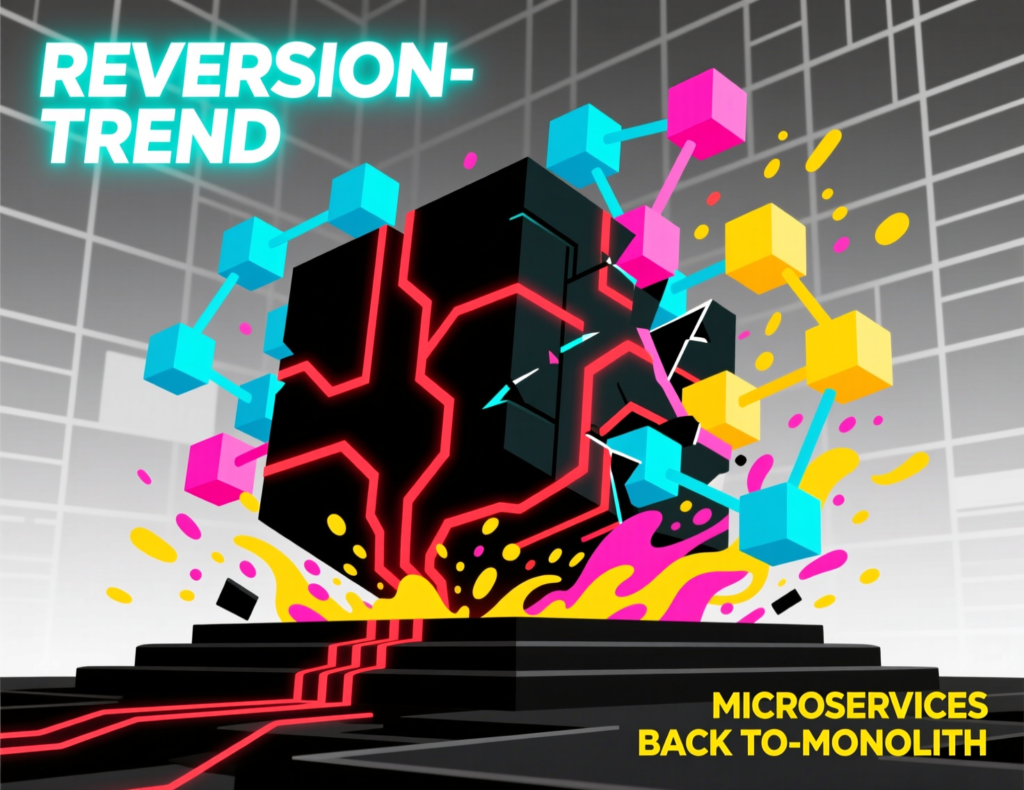
The Reversion Trend: Why Companies Are Moving Back to Monolith
Recent academic work has documented a real trend of companies moving from microservices back to monolith or modular monolith architectures, citing cost, complexity, scalability, performance and organisation as the top five reasons.
What Goes Wrong: Distributed Complexity, Latency and Service Mesh Overhead
A typical anti-pattern in US and European teams looks like this:
Start with a decent monolith.
Break it into dozens or hundreds of microservices.
Add Kubernetes, Istio/Linkerd, Kafka and API gateways for everything.
Discover you now need a platform team just to keep the lights on.
Every network hop introduces latency and failure modes. Service meshes solve important problems (mTLS, retries, circuit-breaking) but they also add operational overhead and a steep learning curve. If your domain was never big enough to justify that complexity, the ROI quickly turns negative.
Cloud Bills, Operational Overhead and Team Load
The worldwide IaaS market reached roughly $170+ billion in 2024 and continues to grow over 20% year-on-year, so cloud costs are under real scrutiny.Each extra microservice can mean more containers, more autoscaling groups, more logs and more storage costs that all show up on your AWS, Azure or GCP bill.
Teams also underestimate.
On-call complexity (more dashboards, more alerts)
Time spent wiring infrastructure instead of shipping features
Training needs for Kubernetes, service meshes and distributed tracing
Amazon Prime Video, Segment and Others Consolidating Services
In the widely discussed Amazon Prime Video monitoring case, consolidating from a distributed, serverless microservices design to a monolithic application reduced costs by around 90% while improving scalability and resilience.
A recent literature review highlights similar reversions at Segment, InVision and parts of the Istio control plane, again driven by cost and complexity rather than “hating microservices.
When Reverting Makes Sense for US, UK and EU Teams
Reverting from microservices back to a monolith or modular monolith makes sense if:
You’re a mid-sized SaaS in San Francisco or New York with many services but only one or two cross-functional teams.
A UK fintech in London finds it spends more on platform overhead than on product features, even though most services share the same compliance regime (FCA, UK GDPR, PCI DSS). ([ICO][12])
A German or EU vendor supervised by BaFin or other regulators wants fewer moving parts in its cloud outsourcing and incident response story. ([BaFin][13])
In all these cases, a modular monolith still allows clear domain separation while shrinking your operational surface area.
Modular Monolith vs Microservices
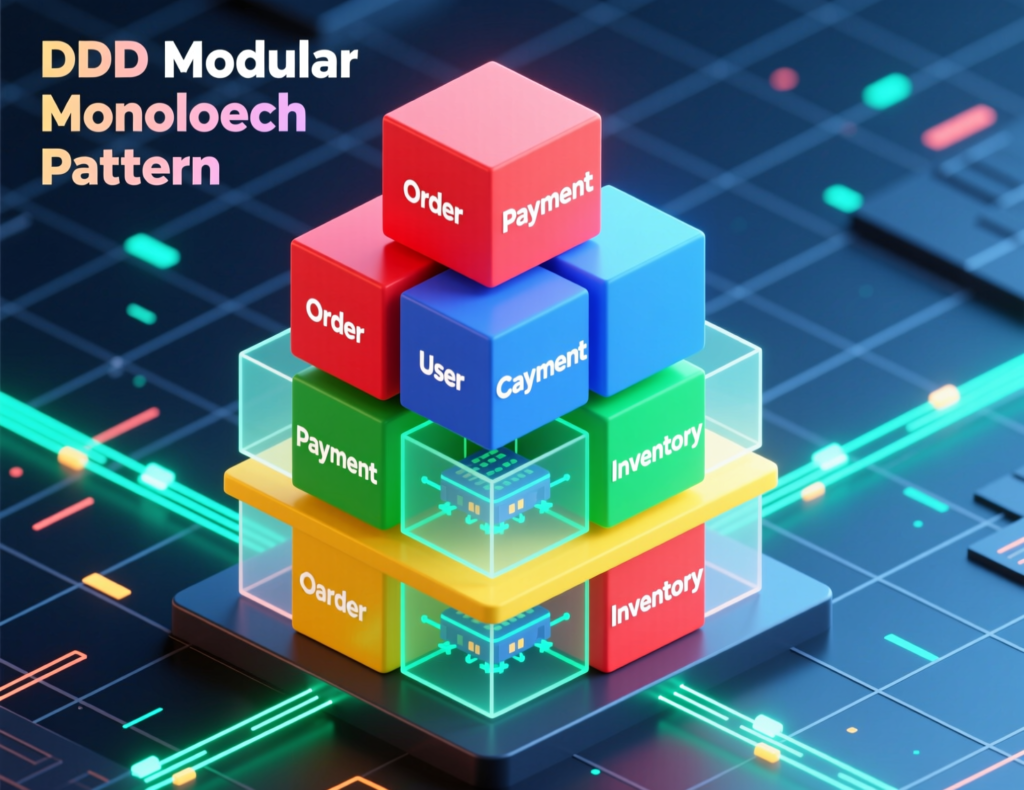
A modular monolith gives you monolith simplicity with microservice-like boundaries. For many teams in the US, UK and Germany, this pattern is the sweet spot: clear modules, strong domain separation, but a single deployable and database schema.
What Is a Modular Monolith?
A modular monolith is a single app (for example, a Spring Boot or Next.js backend) organised into well-defined modules or bounded contexts:
Each module owns its domain model and persistence slice.
Communication between modules goes through explicit APIs or domain events inside the process.
Modules can be extracted into separate microservices later with minimal rewrites.
In the Java ecosystem, Spring Modulith is one example of making those boundaries explicit early.
Modular Monolith vs Microservices vs Classic Monolith
Classic monolith
Single codebase, weak boundaries, lots of cross-module coupling.
Modular monolith
Single deployable, strong boundaries, internal contracts and eventing.
Microservices
Multiple deployables, independent runtimes, networked communication.
For “cloud-native microservices vs legacy monolithic systems,” a modular monolith offers a modern middle ground: you still embrace DDD, CQRS or event-driven architecture where relevant, but without distributing everything across the network on day one.
Self-Contained Systems and Domain-Driven Design in EU/German Contexts
In German-speaking markets, self-contained systems (SCS) are popular: each system provides a complete vertical slice (UI + logic + data), integrating via APIs or events rather than sharing databases.
For a BaFin-regulated bank in Frankfurt or a manufacturing SaaS for the German Mittelstand, SCS combined with DDD lets you
Keep sensitive domains (e.g., payments under PSD2, PCI DSS) separate from less critical modules.
Limit blast radius for outages while avoiding dozens of tiny microservices.
When to Start with a Monolith and When to Split Into Services
A practical roadmap.
Start with a modular monolith when you have <50 engineers and a single primary product.
Split into services only when:
A module has clearly different scalability or availability needs.
You need different compliance regimes (e.g., HIPAA vs non-HIPAA workloads for US healthcare SaaS).
A team needs independent release cadences and tech choices.
Mak It Solutions often pairs this with modern frameworks like Next.js, Webflow and custom back-end development to keep the architecture lean while still ready for future modularisation.
Migration Patterns.
If you’re already deep into microservices, you don’t need a risky “big bang” rewrite. You can follow staged migration patterns to move toward a modular monolith or a smaller, saner set of services.
Signals You Should Consider Consolidating Services
Consider consolidation if you see
Cloud bills growing faster than revenue, despite modest traffic.
Incident reviews constantly pointing to cross-service failures.
Teams in Seattle, London or Paris spending more time on YAML, Helm charts and IaC than on product features.
Compliance reviews (SOC 2, HIPAA, GDPR) becoming harder because nobody has a full view of data flows.
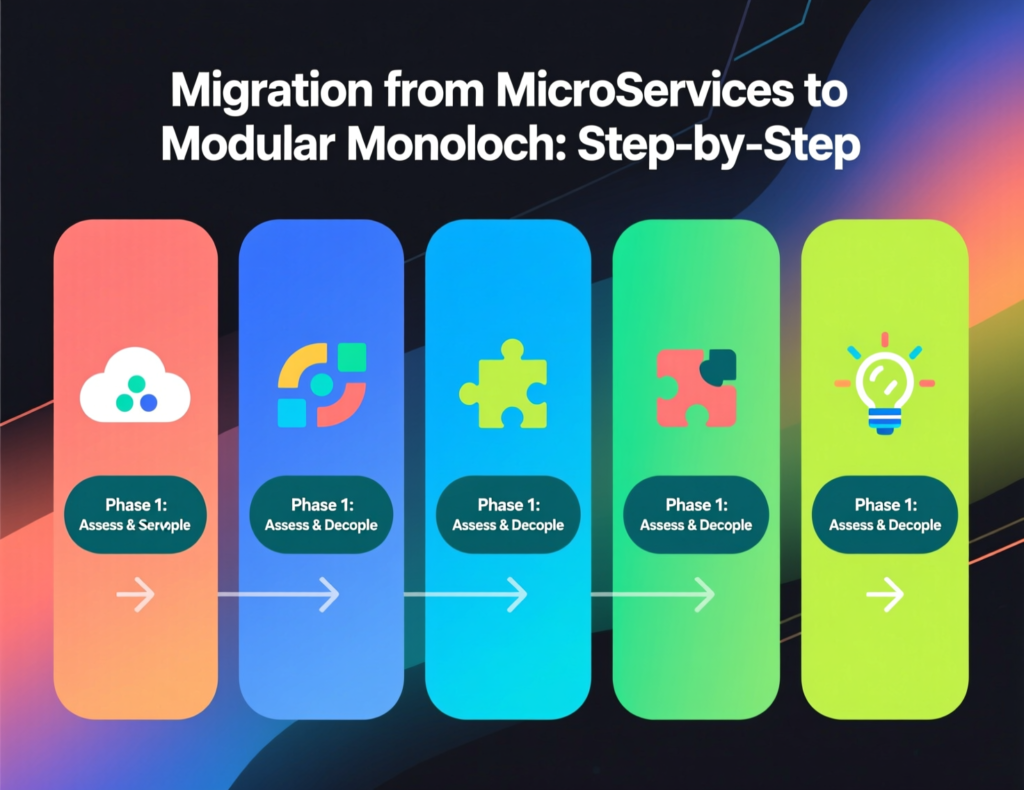
High-Level Migration Strategy.
A battle-tested strategy, echoing academic guidance on switching from microservice to monolith, looks like this.
Stop creating new services – freeze the sprawl.
Choose a core domain (e.g., billing, patient records or orders) as your first consolidation target.
Design the modular monolith shape: modules, data ownership and internal APIs.
Move logic inwards, keeping external contracts stable (APIs, events).
Stepwise Refactoring: Carving Out a Modular Monolith Without a Big Bang Rewrite
Instead of a complete rewrite, use.
Strangler Fig pattern to replace several microservices with one internal module at a time.
Unified data model: progressively merge service-specific schemas into a shared schema with clear ownership boundaries.
Side-by-side runs: mirror traffic to the monolith module, validate behaviour, then cut over.
Research on “Back to the Future: From Microservice to Monolith” recommends consolidating and testing paths, unifying data storage, simplifying technology stacks and embracing modular design principles—not just throwing everything into one project.
Tooling & Platforms: AWS, Azure, GCP Options for a Leaner Architecture
You can usually reuse most of your current platform stack.
AWS / Azure / GCP for autoscaling a single app behind load balancers. ([Gartner][10])
Docker for packaging a monolith with clean health checks and rolling deployments.
Managed databases (PostgreSQL, MySQL, SQL Server) instead of a zoo of small data stores.
At Mak It Solutions, architecture reviews often combine this with modern web dev or back-end engagements such as Back End Development Services and Business Intelligence Services—to align application and data architecture.
Compliance, Security and Governance.
In regulated industries like finance and healthcare, the decision between microservices and monolith often comes down to data residency, auditability and operational risk not fashion.
Data Residency & Privacy
Under GDPR/DSGVO, controllers must track where personal data lives, who can access it and how it flows between systems.Sprawling microservices architectures can make records of processing, DPIAs and data mapping more complex.
In the UK, the UK GDPR and Data Protection Act 2018 mirror many EU rules, with ICO guidance emphasising clear accountability and data flow documentation.
In the US, sectoral laws like HIPAA for healthcare and state privacy laws require strong technical and administrative safeguards, regardless of architecture.
A monolith or modular monolith can make data discovery and subject access requests simpler, while microservices may help when you need strict residency separation (e.g., EU-only vs US-only workloads).
APIs, Service Meshes and Monolithic Attack Vectors
Microservices security
Many APIs, many auth paths, lots of network surfaces.
Requires strong API gateways, mTLS, centralised identity and zero-trust principles.
Monolith security
Fewer external endpoints but a larger internal blast radius.
Emphasis on a hardened perimeter, strong internal access controls and segmentation.
From a PCI DSS or HIPAA standpoint, regulators care about controls and evidence, not whether you’re using microservices. But the more distributed your system, the more complex your risk analysis, penetration testing and audit trail become.
Financial Services & Open Banking (PCI DSS, PSD2, BaFin, UK Fintech)
EU and UK open banking under PSD2 relies heavily on secure APIs and strong customer authentication. Many London-based fintechs run microservices for their core ledgers but still use modular monoliths for internal tooling, analytics or onboarding journeys.
BaFin’s cloud outsourcing guidance expects German financial institutions to control cloud risk, including transparency over providers’ technical and organisational measures.For these teams, fewer critical services can make audits easier, even if auxiliary functionality remains distributed.
Healthcare & Public Sector (HIPAA, NHS, EU Health Data)
In US healthcare SaaS, HIPAA Security Rule expectations push for strong encryption, MFA and documented risk analysis across all systems handling ePHI.Distributing PHI across dozens of services raises the burden of getting those controls right everywhere.
In the UK, NHS architecture and cloud principles emphasise defence-in-depth, penetration testing and sustainable systems design goals that don’t require microservices by default.EU initiatives like the European Health Data Space similarly stress interoperability and governance of health data across borders.
Often, a modular monolith with carefully scoped services for integration or analytics offers a secure, auditable compromise.
Choosing Between Microservices, Monolith and Modular Monolith
To decide whether to keep microservices, go monolith, or evolve into a modular monolith, you need a clear, communicable framework that makes sense to both engineers and business stakeholders.
Team Size, Product Complexity, Release Cadence, GEO
Here’s a simplified matrix you can adapt.
| Factor | Low / Medium | High / Very High |
|---|---|---|
| Team size | Monolith / Modular Monolith | Modular Monolith / Microservices |
| Domain complexity | Monolith / Modular Monolith | Modular Monolith / Microservices |
| Release cadence per domain | Monolith (shared) / Modular Monolith | Microservices / SCS |
| GEO & compliance variation | Monolith / Modular Monolith | Modular Monolith + selected Microservices / SCS |
For most US/UK/German SaaS products with one main revenue stream and a single compliance regime, a modular monolith tends to be the starting recommendation.
Cost, Complexity and Risk Trade-Offs Across US/UK/Germany/EU
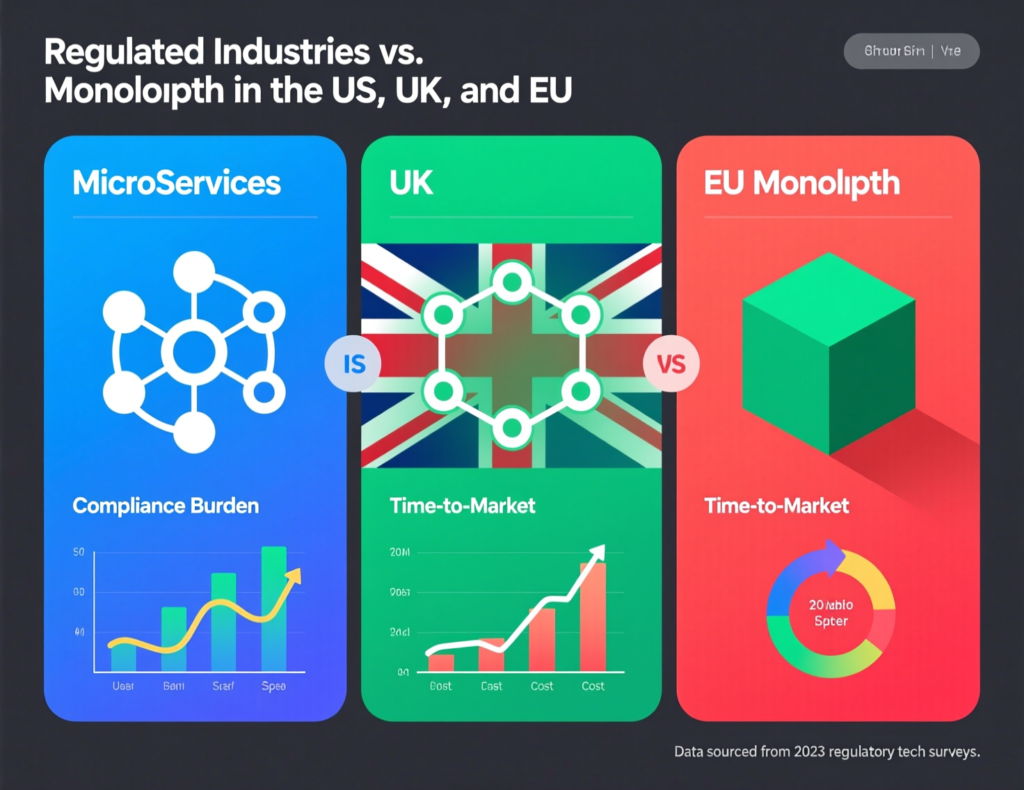
US
Cloud cost and incident risk around HIPAA, SOC 2 and state privacy rules can favour consolidating core services, especially for mid-market healthcare and fintech platforms.
UK
FCA-regulated fintechs must show control over operational risk; fewer moving parts can simplify operational resilience planning.
Germany/EU
BaFin cloud guidance and GDPR/DSGVO obligations push toward clear data flows and strong governance, which can be easier in a modular monolith plus a small set of critical services.
SaaS Startup, Fintech Scale-Up, Enterprise Platform
SaaS Startup (London, 10 devs)
Start with a modular monolith (Next.js or Spring Boot), a single PostgreSQL database and strong module boundaries. Consider splitting billing or analytics into services only when needed.
Fintech Scale-Up (Berlin/Frankfurt, 60+ devs)
Use a modular monolith for UI and common flows, with self-contained systems or microservices for payment initiation, card processing (PCI DSS) and regulatory reporting.
Enterprise Platform (US/EU hybrid)
Hybrid approach: keep core customer-facing flows as a modular monolith, plus microservices for region-specific compliance (EU-only data storage, healthcare modules under HIPAA and EU health data rules).
How to Communicate the Decision to Stakeholders and the Board
Executives and boards don’t care about Kubernetes vs monolith—they care about:
Time-to-market
Faster features with simpler deployments.
Risk
Fewer critical failure modes and clearer incident response.
Cost
Predictable cloud and staffing costs.
Frame your architecture proposal in those terms, backed by case studies like Amazon Prime Video’s cost reduction and the documented trend of switching back from microservices to monolith.
If you’re working with partners like Mak It Solutions, this is also where a structured architecture review or cost audit often bundled with broader Web Development Services or Digital Marketing Services can provide credible input for board discussions.
Key Takeaways
Microservices win when domain and team complexity are high, compliance boundaries are diverse, and you can afford the platform investment.
Monoliths win when you value simplicity, predictable cost and developer experience over fine-grained scaling.
Modular monoliths offer a pragmatic middle ground especially for US, UK and EU SaaS products growing from startup to scale-up.
There is no one “correct” architecture for every team in 2025. The right choice is the one that matches your product, people and regulatory reality not the latest conference talk.
Recommended Next Steps for Architecture Reviews and Cost Audits
Run a services inventory and cost map across AWS/Azure/GCP.
Identify domains where distributed systems complexity vs monolith simplicity no longer make economic sense.
Define a target modular monolith or SCS architecture and plan gradual migrations.
How External Experts/Consultants Can Help You De-Risk the Move
External experts like Mak It Solutions can help you review your current architecture, model realistic cost and risk scenarios, and design a migration roadmap—without forcing a single pattern on every product. Combining cloud, back-end and BI expertise means you can treat architecture as a business decision, not just a technical one.
You can explore Back End Development Services, Next.js Development Services, and broader Services if you’d like hands-on help.This article is for general information only and does not constitute financial, legal or compliance advice. Always consult qualified professionals for decisions that carry regulatory or financial risk.
If you’re staring at a sprawl of microservices and an unruly cloud bill, you don’t have to guess your way out of it. Share your current architecture, cloud spend and GEO targets with Mak It Solutions, and we’ll help you benchmark whether microservices, a modular monolith or a leaner hybrid fits best.
Ready to explore options? Reach out via the Contact page or request an architecture review bundled with Web Development Services. Together, we’ll design an architecture that fits your product, your team and your regulators—not just the latest hype.
FAQs
Q : Is microservices architecture always better than a monolith for cloud-native apps?
A : No. Microservices are powerful for large, complex platforms with multiple independent teams and varied scaling needs, but they introduce extra complexity in networking, observability and security. For many cloud-native apps in the US, UK and EU, a clean modular monolith deployed on AWS, Azure or GCP is faster to build, cheaper to run and easier to secure—especially before you’ve reached scale.
Q : When is a monolith faster and cheaper to run than microservices on AWS or Azure?
A : A monolith is typically faster and cheaper when most of your traffic flows through the same code paths, you have one primary database, and you don’t need per-domain autoscaling. In that world, one well-tuned app behind a load balancer often beats dozens of services each with their own compute, storage, logging and monitoring overhead. This is common for early and mid-stage SaaS products in New York, London or Berlin that don’t justify full-blown distributed systems yet.
Q : Can you partially consolidate microservices without a full migration back to a monolith?
A : Yes. Many teams consolidate clusters of related microservices into a single, modular application while keeping a few critical services independent. You might merge all “back office” services into a modular monolith, but keep payments, authentication or analytics separate for scaling or compliance reasons. This reduces platform overhead and simplifies debugging without losing the flexibility of microservices where they genuinely add value.
Q : How does modular monolith architecture reduce complexity compared to microservices?
A : A modular monolith keeps strong boundaries in code but runs everything in a single process and deployment. That means fewer repositories, fewer pipelines, fewer network hops and fewer places to configure security and observability. You still get the benefits of domain-driven design, self-contained modules and clear ownership, but with simpler DevOps, lower cloud cost and a shorter learning curve for new engineers in US, UK and EU teams.
Q : What common mistakes do teams make when moving from monolith to microservices (and back again)?
A : Common mistakes include splitting the system too early, slicing services by technical layers instead of business domains, and under-investing in platform, observability and security automation. When moving back, teams sometimes swing to the opposite extreme and create an unstructured “mega monolith” instead of a modular one. A better approach is to design clear bounded contexts, consolidate iteratively, and keep compliance requirements (GDPR, UK GDPR, HIPAA, PCI DSS, BaFin guidelines) front and centre throughout migrations.
[…] can work with digital partners who understand both UX and infrastructure from web design to microservices architectures to deliver this roadmap incrementally instead of through a single risky “big bang” […]