


Beyond Dubai: GCC Middle East Tech Startup Hubs
Beyond Dubai: GCC Middle East Tech Startup Hubs

Beyond Dubai: GCC Middle East Tech Startup Hubs
For GCC founders thinking beyond Dubai, Riyadh, Cairo and Amman are the main Middle East tech startup hubs to compare: Riyadh for capital and policy, Cairo for affordable scale talent, and Amman for strong engineering depth. The right choice depends on your funding path, market focus, hiring strategy and how much regulatory complexity you’re ready to manage.
Introduction
For years, when someone said “Middle East tech startup hubs”, most people replied automatically: Dubai. Today, deal flow, talent and government-backed startup programs are spreading across Riyadh, Cairo, Amman and Doha, giving GCC founders real alternatives after Dubai. For a Saudi, Emirati, Qatari or Kuwaiti founder, the key question is less “Dubai or not?” and more “Which combination of Middle East tech startup hubs fits my strategy?”
In simple terms: Riyadh is emerging as the policy-and-capital hub; Cairo is the affordable talent engine; Amman is the engineering-first lab for Arabic-speaking developers; Dubai/Abu Dhabi/Doha remain global-facing HQ and investor magnets. Your ideal map depends on funding, talent sourcing, regulation, costs and exit plans, not hype.
If you want help turning that map into tech execution (apps, platforms, data stack), partners like Mak It Solutions can plug in with development and analytics teams while you focus on expansion.
What “Middle East tech startup hubs” really means in 2025–2026
From one dominant hub to a network of Arab world tech startup cities
Dubai is still the region’s default brand for free zones, visas and global connectivity. But Riyadh’s Vision 2030 push, Egypt’s scale, and Jordan’s engineering depth have created a network of Arab world tech startup cities, not a single dominant hub. Recent startup ecosystem rankings MENA and reports show Riyadh and Cairo climbing rapidly as emerging ecosystems, backed by state capital and reforms.
For GCC founders, that means you can now base HQ, talent hubs and delivery teams in different cities for example, HQ in Riyadh or Dubai, product and CX in Cairo, and deep engineering pods in Amman and still feel “regional”, not scattered.
Key ingredients of a startup ecosystem (funding, talent, regulation, exits)
When you compare Middle East tech startup hubs, use a simple framework.
Funding & exits local venture capital investment in Middle East markets (angel networks, sovereign funds, global VCs, M&A track record).
Talent depth of Arab youth entrepreneurship and tech talent, senior leadership availability, English level, and multi-language (Arabic/English) capabilities.
Regulation & infrastructure ease of incorporation, foreign ownership, sandboxes, data residency, cloud regions and sector regulators (SAMA, TDRA, QCB, ITIDA, ADGM, DIFC).
Costs & lifestyle salary levels, office costs, visas, and how attractive the city is for your team’s life stage.
Think of each city as a scorecard, not just a brand name.
Why GCC-based founders search for “middle east tech startup hubs” in English
Most Saudi, Emirati and Qatari founders do their ecosystem research in English: they’re reading Startup Genome, StartupBlink, Wamda, Flat6Labs insights and global VC blogs, all published in English.
That’s why the search term “middle east tech startup hubs” is in English, even for Arabic-speaking founders. You may pitch investors in Riyadh or Dubai in Arabic, but you’ll still compare incubators and accelerators in the Arab world and global reports in English before deciding where to launch.
Is this the next big Middle East tech startup hub?
Riyadh startup ecosystem overview under Saudi Vision 2030
Riyadh is becoming the GCC’s power hub: deep capital, ambitious policy and a huge home market. Compared to Dubai, Riyadh appeals to GCC founders who want to be close to government demand, Vision 2030 mega-projects and sovereign capital. Recent reports show Saudi Arabia among the fastest-growing startup ecosystems globally, with Riyadh now a top emerging hub backed directly by Vision 2030.
Bodies like Monsha’at (SME authority), Saudi Venture Capital Company (SVC) and MISA (investment ministry) design programs, events like LEAP, and funding tools around fintech, govtech, logistics, health and entertainment. For founders from Jeddah, Kuwait City or Doha, Riyadh now feels like a “capital of opportunity”, not just a government city.

Government-backed startup programs in Saudi Arabia for GCC and global founders
Saudi has combined regulatory sandboxes and government-backed startup programs in GCC style:
SAMA fintech sandbox and open banking framework for payments, lending and insurtech.
Sector sandboxes for areas like health, logistics and smart cities.
Grant and co-investment schemes via SVC and other public funds.
Relocation and visa pathways for regional and global founders.
If your product targets KSA-first sectors (fintech, govtech, public services, mobility), launching in Riyadh can put you right at the center of procurement and regulatory dialogue. For tech build-out, you can still work with distributed teams or partners like Mak It Solutions’ web development services to stay flexible.
Is Riyadh the best Arab world city for tech startups after Dubai?
For many founders, yes Riyadh is now the best Arab world city for tech startups after Dubai, especially if:
You want early access to Saudi capital and corporate deals.
You’re comfortable with more structured regulation and localization.
You plan to build in-demand sectors like fintech, govtech, logistics or health.
Trade-offs: higher salary costs than Cairo/Amman, more on-the-ground bureaucracy than Dubai, and a lifestyle that may feel more conservative to global talent. Many founders hedge by keeping a small Dubai presence while shifting core operations and board focus to Riyadh.
The affordable talent engine for Arab tech startups
Cairo startup ecosystem overview and rankings in MENA
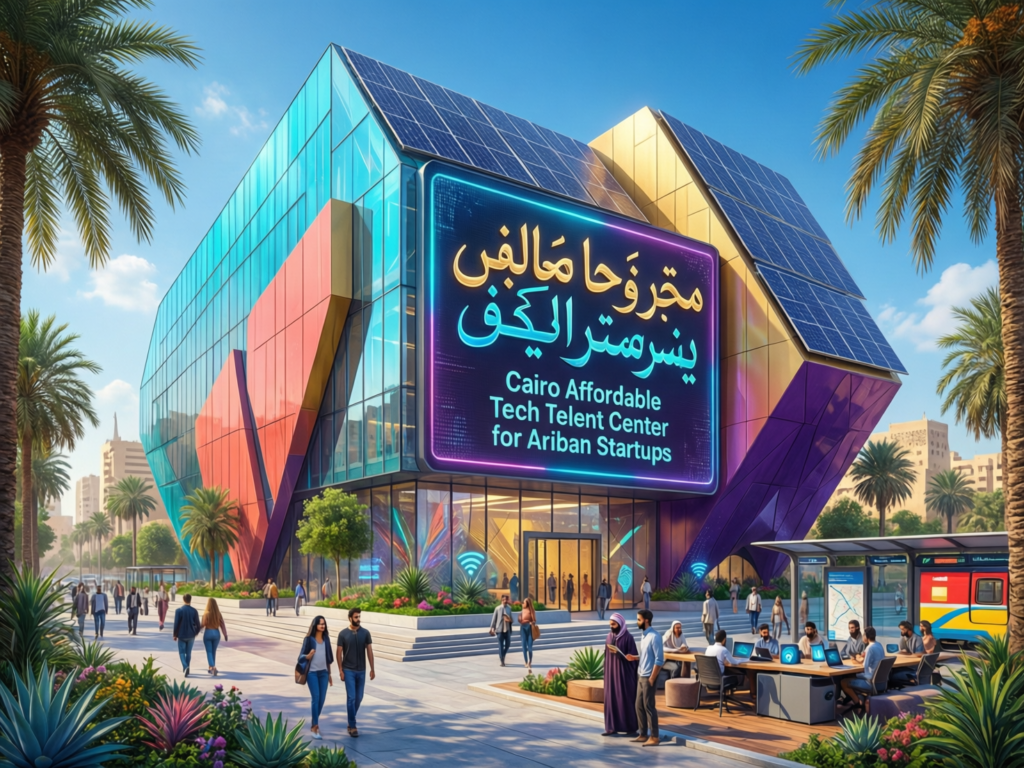
Cairo has quietly become MENA’s affordable scale engine. Startup Genome and Egypt’s ITIDA highlight Cairo as a top-three startup ecosystem in MENA, driven by rising funding and thousands of young engineers.
For GCC founders, that translates into a simple question: “If we need 30–100 Arabic-speaking engineers, product managers and CX agents, where can we actually afford them?” The answer, again and again, is Cairo, especially for e-commerce, SaaS, logistics and fintech support.
Talent depth and salary levels vs Riyadh and Dubai
Compared to Riyadh and Dubai.
Salaries for developers, designers, CX and ops roles are significantly lower.
You can build Arabic-first UX and localization teams that truly understand Saudi, Emirati and Egyptian users.
Hybrid models (remote + co-working) are widely accepted, making cross-border collaboration smoother.
Many GCC startups base HQ and investors in Riyadh, Dubai or Abu Dhabi and then use Cairo as a full delivery center for product, customer support and engineering. Partners like Mak It Solutions’ PHP development or front-end development services can complement in-house Cairo teams when you need extra velocity.
When does Cairo beat Riyadh for Arab founders and GCC scaleups?
Cairo tends to beat Riyadh when:
Your biggest bottleneck is volume of talent, not regulation.
You’re building product-heavy B2B SaaS, CX-heavy e-commerce, or logistics tech.
You’re comfortable keeping legal HQ in KSA/UAE while concentrating teams in Egypt.
If your goal is rapid feature shipping and experimentation rather than immediate government or mega-project deals, Cairo is often the better first build hub.
Engineering-first tech hub for Arabic-speaking developers
Amman startup ecosystem overview and key verticals
Amman is smaller than Cairo or Riyadh but has a reputation as an engineering-first hub. Jordan’s ecosystem, with players like Oasis500, Flat6Labs Amman and funds like ISSF, has backed many regional SaaS, gaming and fintech teams.
Think of Amman as the place to find craft-focused product engineers who are used to building for Saudi and UAE markets while sitting in a smaller, tight-knit ecosystem.
Amman tech hub for Arabic-speaking developers and remote teams
For GCC startups, Amman works well as a remote engineering pod:
Strong base of Arabic-speaking full-stack engineers and mobile developers.
Cost between Riyadh/Dubai and Cairo.
Culturally close to GCC with a long history of cross-border tech work.
If you’re building complex platforms – from PWAs and mobile apps to data-heavy dashboards pairing an Amman team with external engineering partners like Mak It Solutions’ backend development or business intelligence services can give you both speed and reliability.
Cairo vs Riyadh vs Amman startup scene for Arab founders
In one line.
Riyadh – follow the money, policy and mega-project demand.
Cairo – scale teams and operations at lower cost.
Amman – build high-quality, engineering-first products with a focused team.
Rather than asking “Which is best?”, most experienced founders now design regional setups that combine all three.
Funding, accelerators and government programs across Riyadh, Dubai, Abu Dhabi, Cairo, Amman and Doha
Monsha’at, SVC, MISA and Saudi startup funding programs
Saudi has built a full stack of government-backed startup programs in GCC style.
Monsha’at: SME support, Biban events and ecosystem tools.
SVC: public fund of funds and direct co-investments aligned with Vision 2030.
MISA: investment licensing, relocation and incentives for regional HQs.
Together, they make Riyadh particularly attractive for fintech, govtech and regulated sectors – especially when combined with the SAMA sandbox and data-sensitive workloads.
Hub71, ADGM, DIFC and UAE startup incentives vs KSA and Egypt
The UAE (Dubai and Abu Dhabi) remains the region’s global investor magnet:
DIFC and ADGM offer English-law-based courts, financial regulation and free-zone flexibility.
Hub71 in Abu Dhabi combines capital, subsidies and office support for global startups.
TDRA shapes the UAE’s wider digital and telecoms regulation.
For headquarters decisions UAE vs Saudi for tech startup HQ many founders still like UAE’s legal predictability and lifestyle, while using Riyadh for market penetration and policy engagement.
Flat6Labs, Oasis500, QSTP and other Arab world incubators & accelerators
Across Egypt, Jordan and Qatar you’ll find a dense layer of incubators and accelerators in the Arab world
Flat6Labs multi-country accelerator and seed investor active in Cairo, Amman and KSA.
Oasis500 Amman-based early-stage investor and accelerator.
Qatar Science & Technology Park (QSTP) – Qatar’s primary tech incubator and free-zone for deep tech, linked closely to Education City.
Add to that QCB oversight for Qatar’s financial sector, Invest Qatar / Startup Qatar initiatives, and Egypt’s ITIDA programs, and you get a dense web of public–private support.
On the infrastructure side, regional data residency is increasingly easy: GCC startups can choose from AWS Bahrain, Azure UAE Central and GCP Doha regional clouds to keep data in-region while remaining compliant.

How GCC founders can choose between launching in Riyadh, Cairo or Amman
If you’re a GCC-based founder, you should choose between Riyadh, Cairo and Amman by matching each city to your funding path, talent strategy, risk appetite and data/regulatory requirements. In practice, that means scoring each hub on funding access, market size, tech talent, costs and licensing complexity, then picking either a single HQ or a distributed Arab-world team that uses more than one city.
Quick note.
None of this is legal, tax or investment advice. Always work with qualified legal and financial advisors before finalizing structures or cross-border deals.
Funding, market access, talent, regulation, costs.
Define your primary goal (12–24 months).
Are you optimizing for fundraising, Saudi market entry, product velocity, or unit economics?
Score each city across five dimensions.
Funding & exits, market access (KSA, GCC, wider MENA), talent depth, regulatory burden & data residency, and overall cost.
Choose your structure.
HQ in Riyadh or Dubai + delivery in Cairo/Amman
HQ in UAE + KSA commercial presence
HQ in Cairo/Amman with GCC-focused sales outposts
Plan legal, cloud and compliance.
Align visas, company structure and data hosting (e.g. AWS Bahrain, Azure UAE Central, GCP Doha) with sector rules from SAMA, TDRA, QCB and others.
You can use external tech partners like Mak It Solutions to prototype or scale products while you figure out the exact regional footprint, especially for PWAs and mobile apps where cross-border teams are common.
GCC-based startup HQ in Riyadh with Cairo/Amman delivery hubs
Common real-world GCC scenarios.
Riyadh fintech startup licensed under Saudi rules, participating in the SAMA sandbox, HQ and board in Riyadh, engineering split between Cairo and Amman, with cybersecurity stack guided by playbooks similar to this GCC cybersecurity startups guide.
Dubai e-commerce brand front office in Dubai, warehouses across UAE/KSA, CX and product teams in Cairo, specialist engineering in Amman.
Doha SME IP held via QSTP structure, using GCP Doha for data residency, and commercial teams travelling frequently to Riyadh and Dubai.
When to stay in Dubai, when to move, and when to run a distributed Arab-world team
Stay mainly in Dubai/Abu Dhabi if your game is global fundraising, English-first SaaS and international hiring.
Shift gravity to Riyadh if Saudi market access, government contracts and Vision 2030 alignment are your top priorities.
Run a distributed team (Riyadh/Dubai HQ + Cairo/Amman talent hubs) if you want cost-efficiency and resilience.
Whatever you choose, work with product and engineering partners who understand GCC realities from data residency to Arabic UX. That’s where firms like Mak It Solutions’ web design, WordPress development and even advanced stacks like WebAssembly strategy can support you as you grow.

Concluding Remarks
Beyond Dubai, Riyadh gives you capital and policy access, Cairo offers scale talent and operations, and Amman delivers engineering craftsmanship for Arabic-speaking markets. Doha and other GCC cities like Kuwait, Bahrain and Oman add specialized niches in energy, logistics and deep tech.
For serious GCC founders and investors, the goal is not to pick a single “winner”, but to design a regional playbook that uses each hub for what it does best. Use the decision framework above, stay close to regulators like SAMA and TDRA, and lean on local partners when you need execution capacity across borders.
If Middle East tech startup hubs are on your radar, think in terms of a connected network, not a single headquarters and design your tech, teams and compliance around that reality.
If you’re planning your next move beyond Dubai and need help turning strategy into real products, platforms or dashboards, Mak It Solutions can plug in as your technical execution partner. From rapid MVPs for Riyadh-focused fintech to scalable web platforms serving Cairo and Amman teams, our services are built for ambitious founders. Reach out to discuss a custom GCC startup tech roadmap, aligned with your chosen hubs and sector regulations.
FAQs
Q : Is it realistic for a Dubai-based startup to relocate its headquarters to Riyadh?
A : Yes, it’s increasingly realistic for Dubai-based startups to relocate HQ to Riyadh, especially in regulated sectors like fintech, logistics and govtech where Saudi market access is critical. Saudi’s Vision 2030 agenda and platforms like Monsha’at, SVC and MISA actively encourage regional relocation, offering funding, incentives and regulatory support. Many founders keep a lean presence in Dubai for global investor access while shifting board meetings, licenses and core operations to Saudi. You’ll need to plan visas, licensing, banking and data residency carefully, but with the right legal and tech partners it’s absolutely feasible.
Q : Which Middle East city is best for hiring Arabic-speaking developers at scale: Cairo or Amman?
A : For scale hiring (dozens of developers, CX and product roles), Cairo usually wins thanks to its large population, engineering universities and competitive salary levels.Amman, by contrast, shines for smaller, engineering-heavy teams where you want very strong full-stack or product engineers used to GCC markets. Both cities offer excellent Arabic-speaking talent, but Cairo is typically better for volume, while Amman is great for specialized pods. Many GCC founders combine Cairo delivery centers with smaller Amman engineering hubs, overseen from Riyadh or Dubai.
Q : What are the main risks of starting a tech company in Cairo compared to Riyadh or Dubai?
A : Cairo’s main risks are macro-related: FX volatility, inflation and regulatory complexity can affect pricing and fundraising.Compared to Riyadh or Dubai, you’ll need to manage cross-border structures for GCC investors and think carefully about where you incorporate the holding company. On the other hand, operational risks like salary costs and hiring bottlenecks are often lower, and Egypt’s government (through ITIDA and others) has improved support for startups. In practice, many founders keep legal HQ in a GCC hub while using Cairo as a talent engine to reduce risk.
Q : Can GCC investors easily fund startups incorporated in Egypt or Jordan from a legal and FX perspective?
A : GCC investors can and do fund Egyptian and Jordanian startups, but there are extra layers: FX controls, double-taxation issues, and local company law. Many deals are structured via holding companies in ADGM, DIFC or other friendly jurisdictions, with operating entities in Cairo or Amman. It’s important to work with lawyers who know both GCC and local law and to align your data residency and licensing (for example, complying with SAMA if you serve Saudi users). Done right, cross-border structures can give investors comfort while keeping operations near talent.
Q : Does setting up in a free zone like ADGM or QSTP change data residency or licensing requirements for GCC startups?
A : Free zones like ADGM and QSTP can simplify company setup, ownership and taxation, but they do not automatically override sector regulations or data residency rules in Saudi, UAE or Qatar. If you serve Saudi users, for example, you may still need to respect SAMA and national data laws; if you serve UAE users, you must consider TDRA and local financial regulators. In Qatar, QSTP can offer startup-friendly licensing and cloud support, but QCB rules still apply for financial services. Always design your cloud architecture (e.g. AWS Bahrain, Azure UAE Central, GCP Doha) to match where regulators expect data to reside.
[…] For a deeper look at GCC digital and startup hubs, see Mak It Solutions’ guide on GCC Middle East tech startup hubs. […]
[…] micro-answer how to expand from Dubai to Saudi without losing […]