
GCC 2026 Smart City Digital Twin Guide for Urban Ops
GCC 2026 Smart City Digital Twin Guide for Urban Ops
GCC 2026 Smart City Digital Twin Guide for Urban Ops
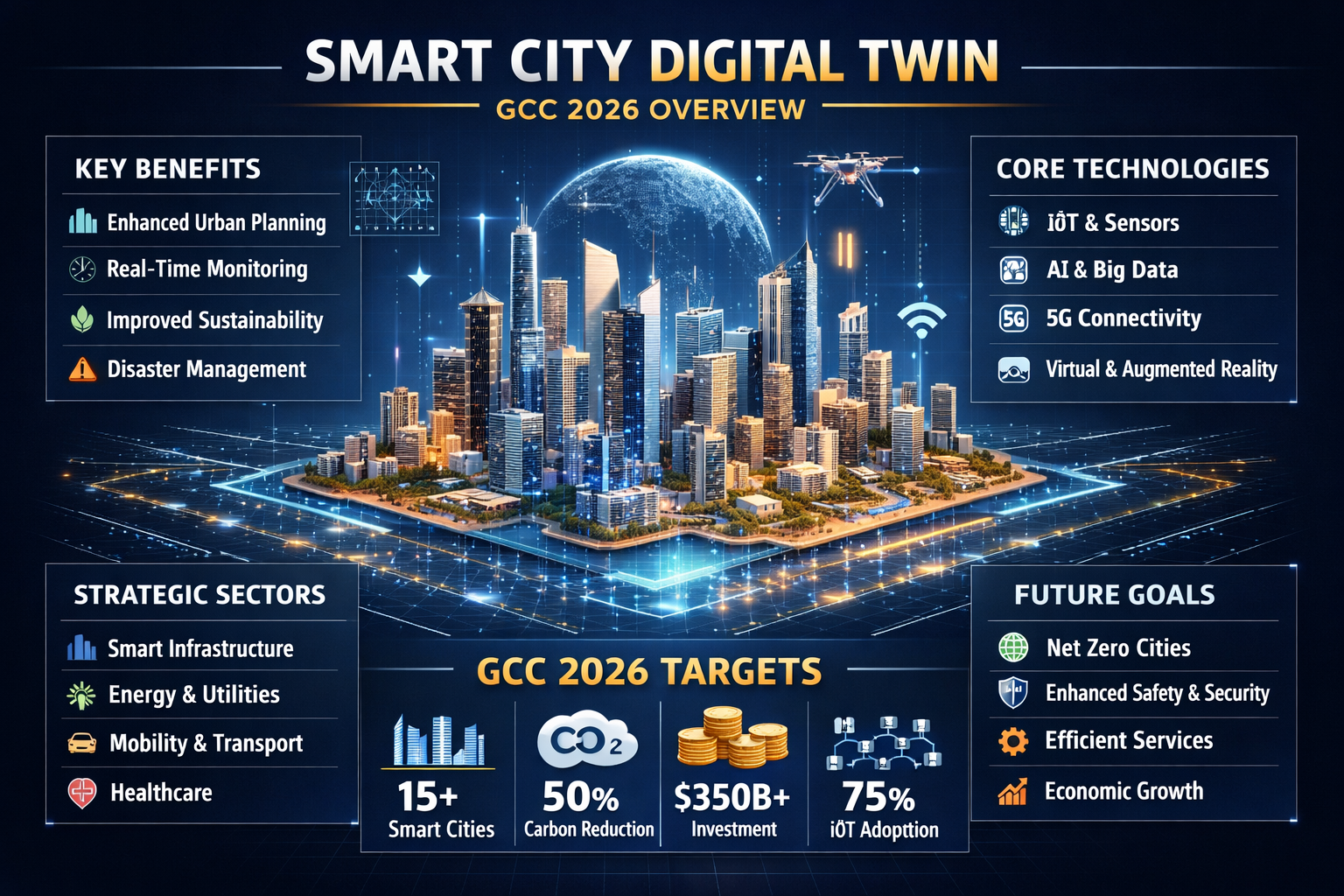
A smart city digital twin gives GCC municipalities a live operational view of the city by connecting IoT sensors, GIS layers, infrastructure systems, and AI-driven workflows in one environment. In 2026, buyers in Saudi Arabia, the UAE, and Qatar are focusing on platforms that support compliance, Arabic UX, interoperability, and trusted regional hosting for real public-sector use.
GCC cities are moving beyond isolated smart tools and toward connected, predictive, AI-supported urban operations. That is exactly why the smart city digital twin is becoming a strategic priority across Riyadh, Dubai, Abu Dhabi, Doha, and Lusail.
For public-sector teams, the real question is no longer whether to digitize. It is how to bring sensors, GIS, command centers, municipal workflows, and governance requirements into one model that helps the city run better every day.
What a Smart City Digital Twin Means in the GCC
More than a 3D city model
A smart city digital twin is not just a visual 3D model. In the GCC, it is a living operational layer that reflects what is happening across roads, utilities, buildings, mobility networks, and public assets in real time.
That matters because government buyers do not need attractive dashboards alone. They need measurable improvements in service delivery, coordination, resilience, and planning.
One operational layer for IoT, GIS, and municipal systems
The real value appears when city teams connect IoT platforms, GIS, asset systems, permitting workflows, traffic feeds, and maintenance data into one shared urban layer.
Instead of departments working in silos, they can work from the same picture of the city. In practice, that means faster decisions, clearer accountability, and fewer delays when problems cut across multiple agencies.
Why Saudi, UAE, and Qatar are prioritizing this in 2026
Saudi Arabia is pushing structured governance and data integration through its national digital transformation agenda. The UAE has moved further toward interoperability and government data exchange standards. Qatar is building momentum through TASMU and Digital Agenda 2030, with a stronger focus on connected platforms and AI-supported insights.
Taken together, that makes city-scale visibility a practical requirement for GCC municipalities rather than a future ambition.
Why GCC Cities Are Investing in Digital Twins, IoT, and AI Operations
Saudi Vision 2030 and municipal modernization
In Saudi Arabia, Vision 2030 continues to shape how cities modernize services, infrastructure, and public operations. Municipal teams are under pressure to reduce downtime, improve coordination, and support growth with smarter planning.
For a city like Riyadh, a smart city digital twin can help move daily operations from reactive management to predictive oversight.
Dubai and Abu Dhabi’s move toward AI-led urban operations
In the UAE, the conversation has moved beyond standalone smart services. Buyers increasingly expect platforms that support real-time operations, multi-agency coordination, and governed data exchange.
That shift is especially relevant in Dubai and Abu Dhabi, where urban complexity, mixed-use developments, and enterprise-grade governance expectations are already high.
Doha, Lusail, and the push for integrated city intelligence
Qatar’s direction is increasingly shaped by TASMU and Digital Agenda 2030. For Doha and Lusail, that creates demand for integrated city intelligence that supports transport, sustainability, public services, and resilience planning through one coordinated platform.
The market is maturing. Cities want connected intelligence, not scattered pilot projects.
Core Components of a GCC Smart City Technology Stack
IoT platforms, smart sensors, and municipal integration layers
Every credible GCC deployment starts with connected sensors, edge data collection, and a strong integration layer. This is where city teams pull together feeds from mobility systems, utilities, buildings, logistics corridors, and public-service platforms.
This is also where implementation partners often rely on custom web development services and SaaS platform development to build dashboards, workflows, and API-based coordination tools.
Urban digital twins, 3D models, and simulation tools
The twin layer helps city leaders test scenarios before they become operational problems. That could include congestion spikes, district growth, asset failures, or climate-response planning.
In GCC environments, where large mixed-use districts and rapid expansion are common, simulation is not just useful. It can save time, budget, and operational disruption.
AI operations, command centers, and predictive maintenance
AI becomes valuable when the platform starts doing more than displaying data. It should detect anomalies, recommend actions, prioritize incidents, and support predictive maintenance.
A Riyadh transport corridor, a Dubai retail district, or a Doha utility zone can all benefit when alerts shift from reactive tickets to pattern-based forecasting. This is why municipalities also evaluate tools such as mobile app development services and Next.js development services for field and control-room interfaces.
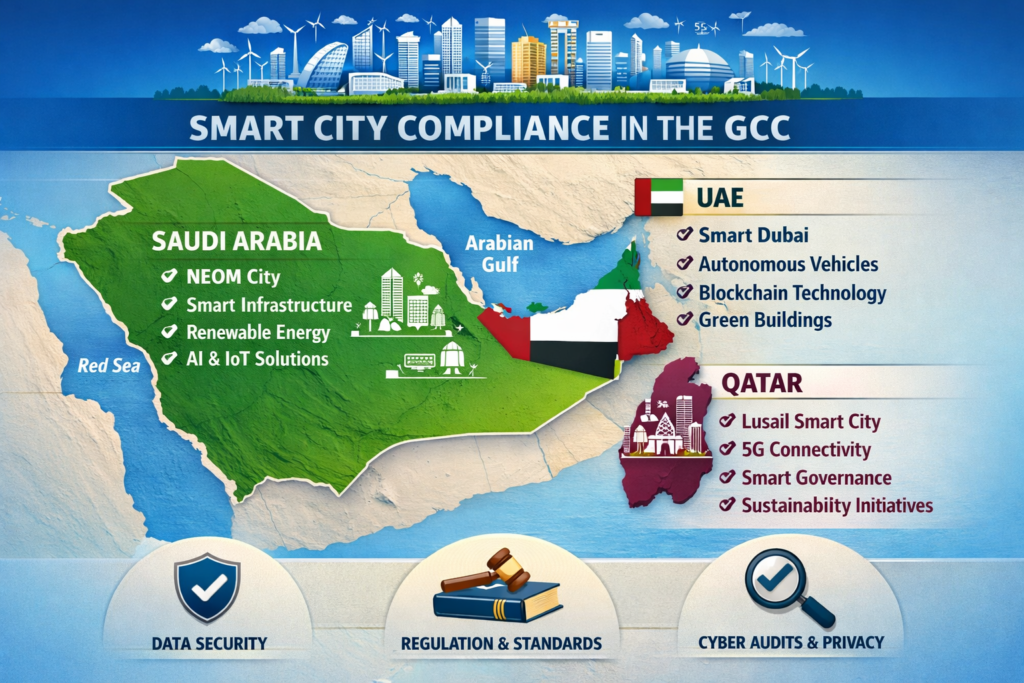
Compliance, Data Governance, and Public-Sector Readiness in GCC Smart Cities
Saudi Arabia.
Saudi deployments need to reflect the Kingdom’s stronger governance posture. For buyers, that means data classification, access control, ownership, and procurement readiness are part of the platform discussion from the beginning.
It is not enough to show a polished interface. Public-sector platforms need to align with how government actually manages trust, oversight, and digital accountability.
UAE.
In the UAE, interoperability is a core requirement. Smart city platforms need clean API architecture, reliable data exchange, and a user experience that works naturally across agencies.
Arabic-first UX is especially important for adoption. A platform may be technically strong, but if it does not feel usable in real government environments, adoption will slow down.
Qatar.
In Qatar, smart city readiness is closely tied to secure digital infrastructure, coordinated service delivery, and scalable orchestration across sectors.
For buyers in Doha and Lusail, that means the platform should support long-term growth while still fitting governance expectations from day one.
Smart City Use Cases Across Riyadh, Dubai, Abu Dhabi, Doha, and Lusail
Traffic flow, mobility, and real-time monitoring
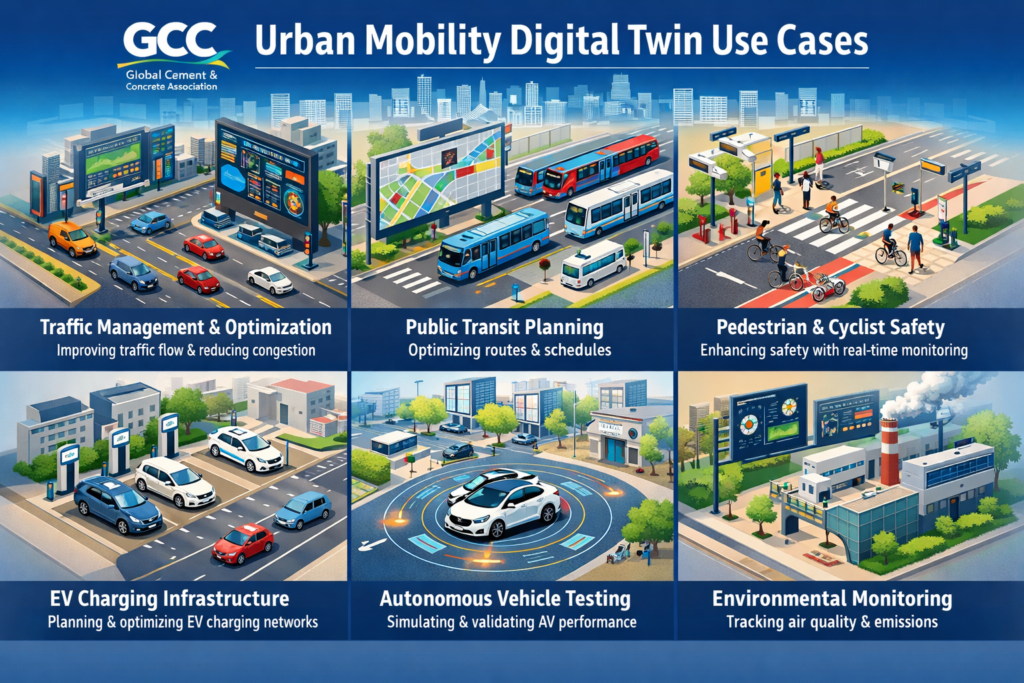
A city command layer can combine traffic feeds, incidents, public events, and route demand into one operational view. In Riyadh, that can support corridor-level traffic management. In Dubai, it can improve coordination across mixed-use districts. In Doha and Lusail, it can help operators balance urban growth with transport efficiency.
Utilities, infrastructure health, and predictive maintenance
A smart city digital twin can flag water-network anomalies, prioritize streetlight maintenance, and identify early signs of asset failure before services are disrupted.
For municipalities with large infrastructure footprints, this is often one of the most practical starting points. Supporting systems may include Laravel development services, PHP web development, or Flask development services for integrations and operational tools.
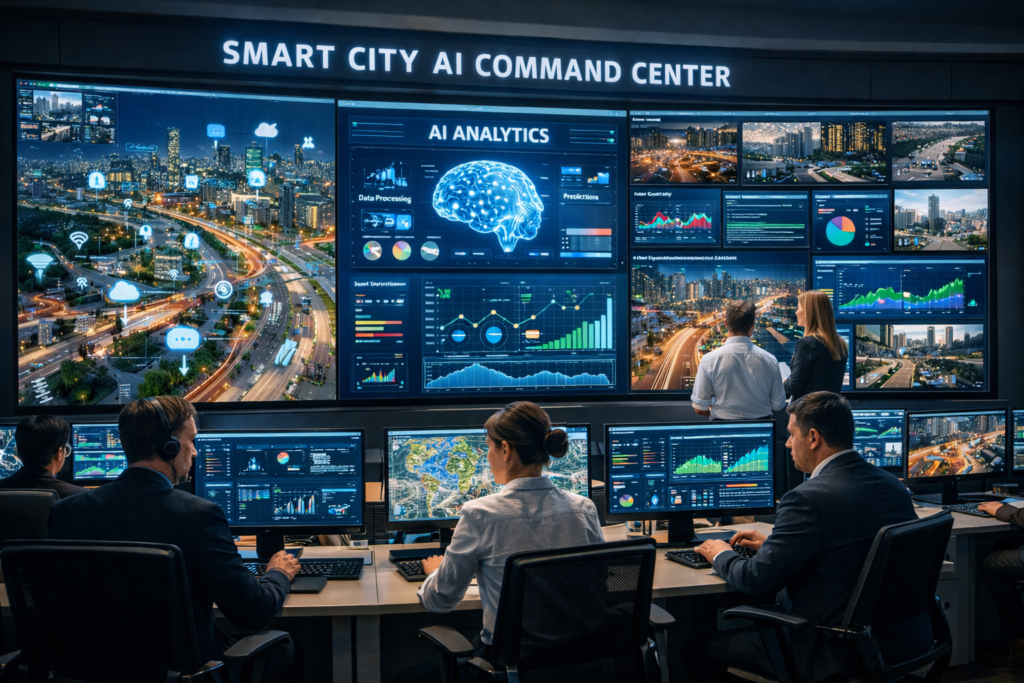
Public safety, sustainability, and command-center coordination
High-value use cases also include emergency coordination, crowd visibility, heat-stress monitoring, and sustainability dashboards.
In GCC conditions, especially where urban density, major events, and climate factors intersect, governments are more likely to favor platforms that connect agencies instead of adding another silo.
How to Evaluate a Smart City Digital Twin Platform for GCC Deployment
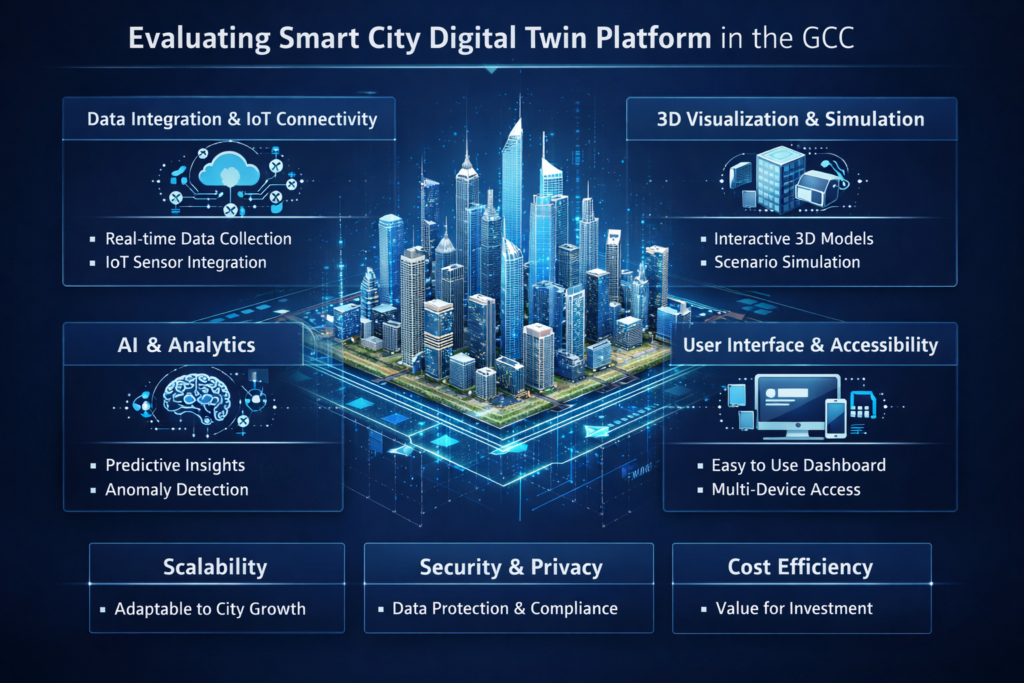
Arabic UX, interoperability, and multi-agency dashboards
A strong platform should feel local from day one. That means Arabic UX, role-based dashboards, and easy coordination across agencies.
This is where web designing services and broader digital services can support municipal-grade interfaces and service layers that are easier to adopt.
Data residency, cloud strategy, and sovereign hosting
Public-sector buyers across Saudi Arabia, the UAE, and Qatar increasingly care about where data is hosted, how access is controlled, and how resilient the architecture is.
That conversation should happen early. Data residency should not be treated as a late procurement checkbox because, in practice, it affects trust, design, vendor selection, and long-term scalability.
Procurement fit, phased rollout, and legacy integration
The strongest GCC deployments usually start with one clear operational use case, prove value, and expand in phases.
When evaluating vendors, buyers should ask:
Can the platform integrate with legacy municipal systems?
Can it support controlled pilots without creating future lock-in?
Can the vendor show measurable operational outcomes?
Can the system scale across districts, departments, and city services?
A dramatic 3D demo is not enough. Practical integration matters more.
What 2026 Will Look Like for Smart Cities in Saudi, UAE, and Qatar
From pilots to AI-operated city command models
In 2026, the market will favor cities that move beyond isolated pilots and toward AI-supported command models with clearer governance and operational accountability.
That shift is especially important in the GCC, where growth, infrastructure investment, and public expectations are all moving quickly.
Measurable outcomes will matter more than hype
Municipal leaders are increasingly focused on outcomes they can actually track:
Reduced congestion
Faster maintenance cycles
Better service coordination
Stronger operational resilience
Improved visibility across agencies
That is a healthier buying model because it ties technology investment to daily city performance, not just smart-city branding.
Building a future-ready roadmap
The strongest roadmap for Saudi Arabia, the UAE, and Qatar is phased, interoperable, and compliance-led.
A successful smart city digital twin strategy should connect planning, operations, and governance in one framework, then scale city by city and district by district. For municipalities, urban developers, and systems integrators, the goal is simple: build a platform that works in the GCC as it really operates, not as a generic vendor slide deck imagines it.
Final Thoughts
The smart city digital twin is becoming one of the most practical frameworks for urban modernization in the GCC. In Saudi Arabia, the UAE, and Qatar, the winning platforms will be the ones that combine real operational value with Arabic usability, interoperability, compliance readiness, and scalable architecture.
If your municipality, urban developer, or systems-integration team is evaluating a smart city digital twin strategy for Saudi Arabia, the UAE, or Qatar, now is the right time to assess platform fit through a GCC lens. Contact Mak It Solutions to explore a roadmap built around Arabic UX, data integration, cloud architecture, and phased public-sector deployment.( Click Here’s )
FAQs
Q : Is a smart city digital twin relevant for Saudi municipalities beyond mega projects?
A : Yes. In Saudi Arabia, a smart city digital twin can support road maintenance, permit-linked planning, utility monitoring, waste operations, and service coordination well beyond flagship mega projects.
For many municipalities, the best starting point is one high-impact use case that can expand into a broader citywide operations model over time.
Q : How do Dubai smart city platforms combine IoT dashboards with AI operations?
A : They usually start by bringing sensor feeds, mobility data, building telemetry, and service alerts into one dashboard. After that, AI adds anomaly detection, forecasting, predictive maintenance, and smarter response coordination.
The real value is not the dashboard itself. It is the ability to turn shared data into action across departments.
Q : What makes TASMU important for Qatar smart city digital twin initiatives?
A : TASMU matters because it supports the idea of smart-city transformation as a connected national platform, not a loose set of isolated projects.
That makes it highly relevant for digital twins, command-center design, and multi-sector coordination across transport, utilities, and public services in Qatar.
Q : Do GCC smart city platforms need local data residency for public-sector deployments?
A : In many cases, yes. Buyers across the GCC increasingly expect stronger control over hosting, access, auditability, and data movement.
Even where regulations vary, residency-aware architecture is often part of trust, procurement planning, and long-term governance.
Q : How should Riyadh, Doha, and Abu Dhabi compare command center platform vendors?
A : They should compare vendors on operational fit, not presentation quality alone.
The most useful criteria are Arabic UX, interoperability, role-based dashboards, phased rollout capability, governance alignment, and integration with legacy systems. In most cases, the stronger vendor is the one that can prove measurable outcomes rather than just showing an impressive visual demo.
[…] matters because GCC mega developments are no longer asking whether digital twins are useful. They are asking how fast […]