


AI Traffic Optimization in Dubai, Riyadh & Doha
AI Traffic Optimization in Dubai, Riyadh & Doha
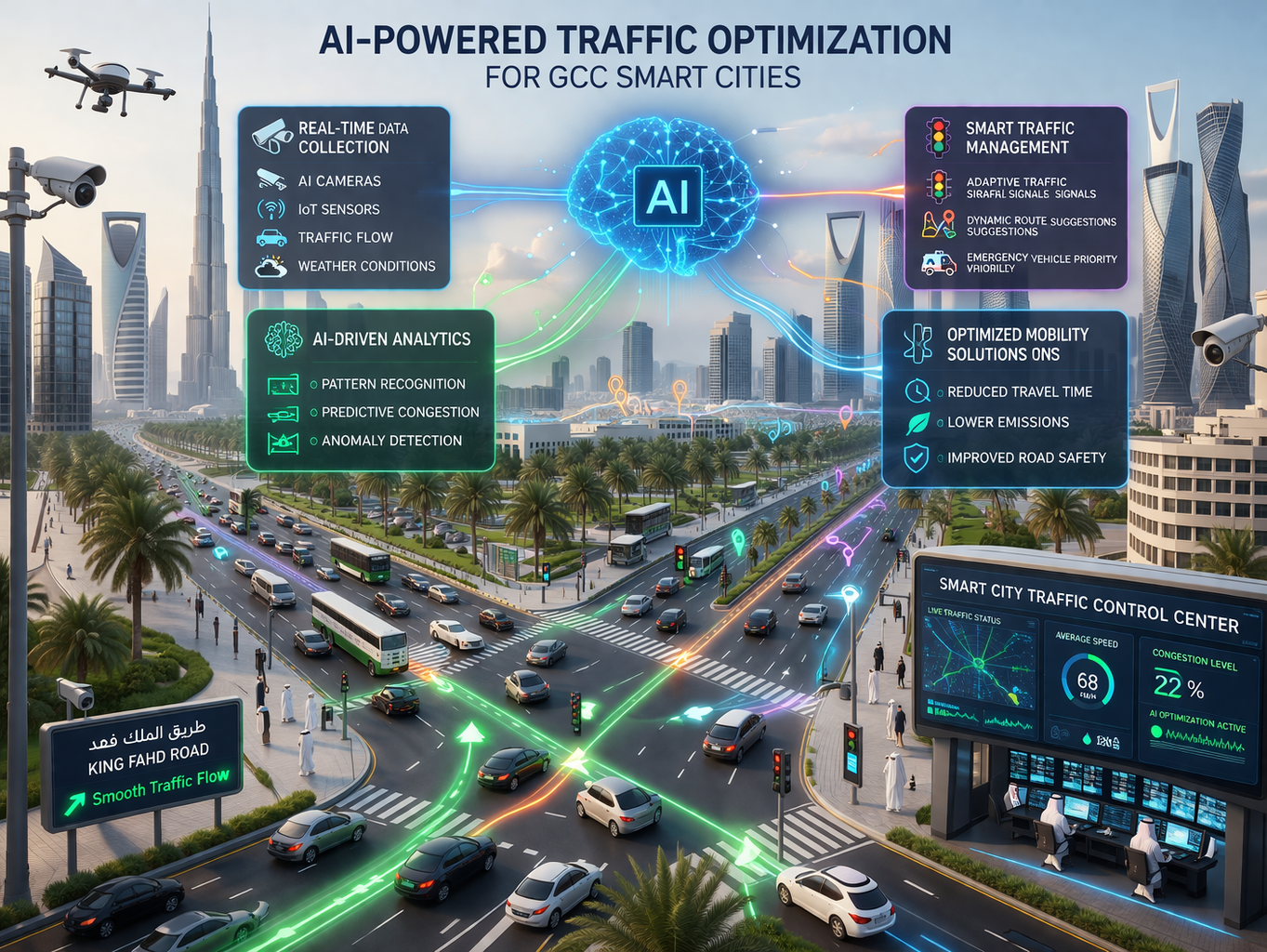
AI Traffic Optimization in Dubai, Riyadh & Doha
Traffic congestion in Riyadh, Dubai, and Doha is no longer just a commuter problem. It affects emergency response, delivery times, fuel use, retail access, and the overall quality of urban life. That is why AI traffic optimization is becoming a serious priority across the GCC.
At its core, AI traffic optimization uses predictive analytics, adaptive traffic signals, computer vision, and route intelligence to reduce congestion and improve traffic flow in real time. In Saudi Arabia, the UAE, and Qatar, the most effective model is usually not a fully new system. It is a practical, compliant layer built on top of existing transport infrastructure, control centers, and smart-city platforms.
Why AI Traffic Optimization Matters in GCC Cities
GCC cities are expanding quickly, but road networks cannot scale forever through physical expansion alone. Urban planners and transport authorities need systems that can respond faster, predict pressure points earlier, and support both public and private mobility services.
In practice, AI traffic optimization helps cities.
Reduce congestion at busy intersections and corridors
Improve incident detection and response times
Support smarter signal timing during peak hours
Improve route planning for logistics and public transport
Strengthen road safety through better monitoring
Create more reliable mobility data for long-term planning
For Saudi Arabia, the UAE, and Qatar, this matters even more because transport modernization is closely tied to smart-city ambitions, digital transformation, and public-service performance.
What AI Traffic Optimization Actually Means
AI traffic optimization is the use of machine learning and real-time data to improve how traffic moves through a city. Instead of relying only on fixed traffic-light schedules or manual monitoring, AI systems analyze patterns and respond dynamically.
Typical data inputs include.
CCTV and road cameras
Vehicle counts and roadside sensors
GPS and fleet tracking data
Parking occupancy systems
Incident-management feeds
Traffic control center inputs
The key difference from traditional traffic control is simple: older systems follow rules, while AI systems learn from conditions and adapt faster.
The Most Practical AI Models for GCC Smart Mobility
Not every AI model is equally useful in real-world transport environments. In the GCC, the most practical options are usually the ones that can be integrated into existing intelligent transport systems without causing major operational disruption.
Predictive Traffic Analytics for Congestion Forecasting
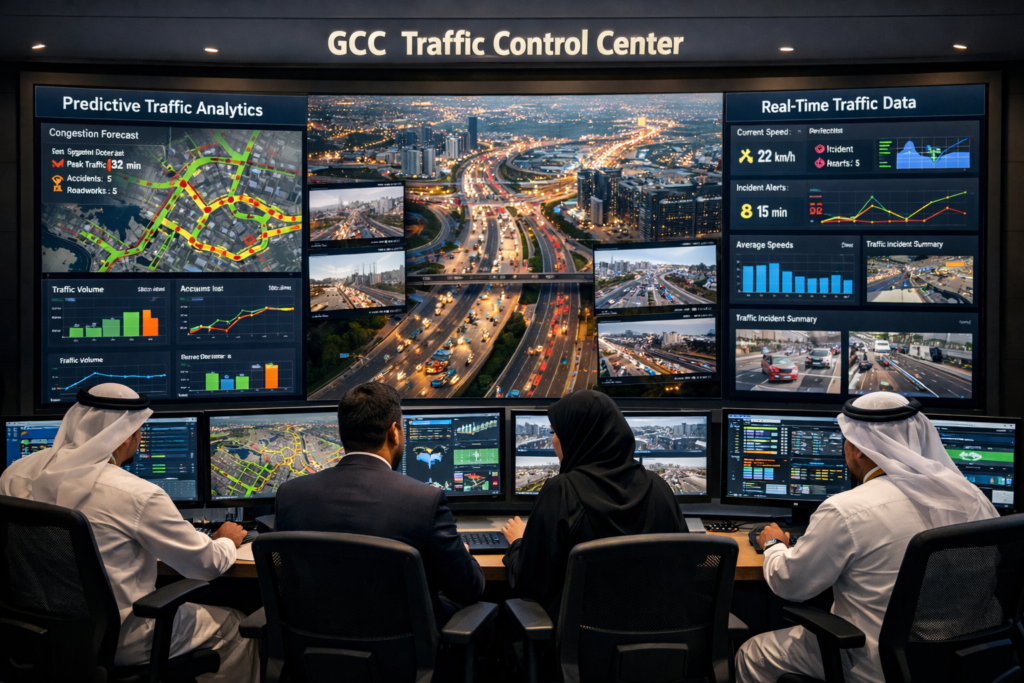
Predictive traffic analytics uses historical and live mobility data to forecast where congestion is likely to happen before it becomes critical.
This is especially useful in GCC cities, where traffic patterns often follow recurring triggers such as.
School start and end times
Prayer-time traffic shifts
Airport access peaks
Weekend retail surges
Large public events
From an operations point of view, this model helps traffic teams adjust timings early, issue route guidance, and allocate field resources before bottlenecks intensify.
Adaptive Traffic Signal Control for Real-Time Intersections
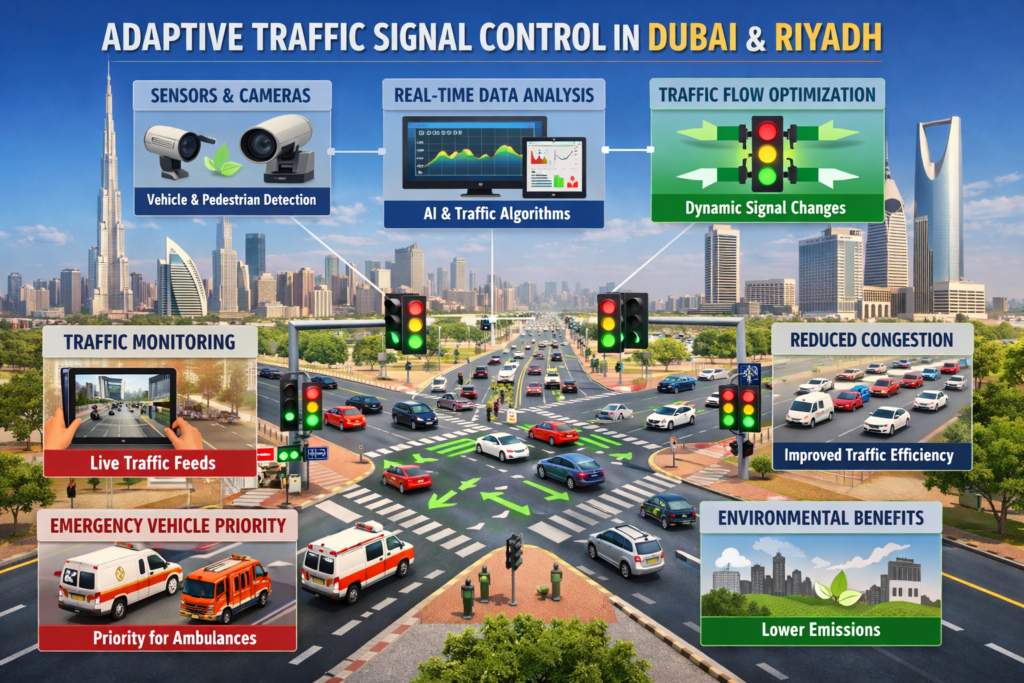
Adaptive signal control changes traffic-light timing based on actual conditions at the intersection. Instead of keeping the same signal sequence all day, the system responds to live traffic demand.
This is one of the fastest ways to improve measurable traffic performance because intersections are often where congestion compounds. For GCC cities, it works particularly well in:
Major business districts
Airport corridors
School-heavy zones
Retail access roads
Mixed-use urban hubs
Computer Vision for Road Monitoring and Incident Detection
Computer vision adds another layer of intelligence by helping transport teams identify accidents, stopped vehicles, unsafe lane behavior, or unusual congestion patterns.
That reduces the reliance on manual observation alone and gives operators a clearer real-time picture of what is happening on the road. In practical terms, that can mean faster emergency response, better traffic diversion, and improved road safety.
Route Intelligence for Fleets and Urban Mobility Services
AI traffic optimization is not only for public agencies. Logistics operators, e-commerce brands, mobility platforms, and service fleets also benefit from route intelligence.
A route optimization layer can help businesses.
Cut fuel waste
Improve ETA accuracy
Reduce missed delivery windows
Handle peak-hour disruptions better
Improve customer experience in dense city zones
In cities like Riyadh, Dubai, and Doha, where delivery expectations are rising, this is often one of the most commercially useful traffic-AI applications.
How Saudi Arabia, the UAE, and Qatar Approach AI Traffic Optimization Differently
The GCC is often grouped together, but each market has a different operating style.
Saudi Arabia: Scale, Planning, and Vision-Led Transformation
Saudi Arabia’s biggest advantage is scale. Cities such as Riyadh and Jeddah can apply AI traffic optimization within broader urban expansion and digital transformation programs.
The opportunity in Saudi Arabia is not only technical. It is also strategic. Traffic optimization can support.
Vision-led infrastructure planning
Smart mobility programs
Better coordination across public agencies
Stronger governance around data and operations
For Saudi deployments, large-scale planning and governance readiness usually matter as much as the AI model itself.
UAE: Faster Implementation and Operational Agility
The UAE, especially Dubai, tends to move faster from concept to implementation. That makes it a strong market for adaptive signals, smart intersections, parking intelligence, and mobility-focused analytics.
In the UAE, organizations often assess AI traffic optimization through a practical lens.
Can it integrate with current systems?
Can it improve service quality quickly?
Can it support resilience and compliance?
Can it scale across transport and urban services?
Dubai and Abu Dhabi are especially strong environments for testing operational models that connect traffic intelligence with retail, logistics, and mobility platforms.
Qatar: Coordinated Infrastructure and Data-Driven Use Cases
Qatar stands out for coordinated digital planning and infrastructure-led modernization. That makes it a strong fit for predictive traffic analytics, smart parking, event-aware mobility planning, and region-hosted transport platforms.
Doha, in particular, offers a useful environment for systems that need low-latency analytics, tighter infrastructure alignment, and centralized public-sector coordination.
The Infrastructure Behind Effective AI Traffic Optimization
AI traffic optimization only works when the underlying system design is right. A strong model cannot compensate for poor inputs, disconnected platforms, or dashboards that operators struggle to use.
Data Sources That Matter Most
The most effective deployments usually combine several sources, including.
Road cameras and vision feeds
Traffic signal controllers
GPS and fleet data
Parking occupancy systems
Incident and emergency response data
Historical traffic flow records
Clean, connected, and trusted data matters more than flashy AI terminology.
Platform Architecture: Edge, Cloud, and ITS Integration
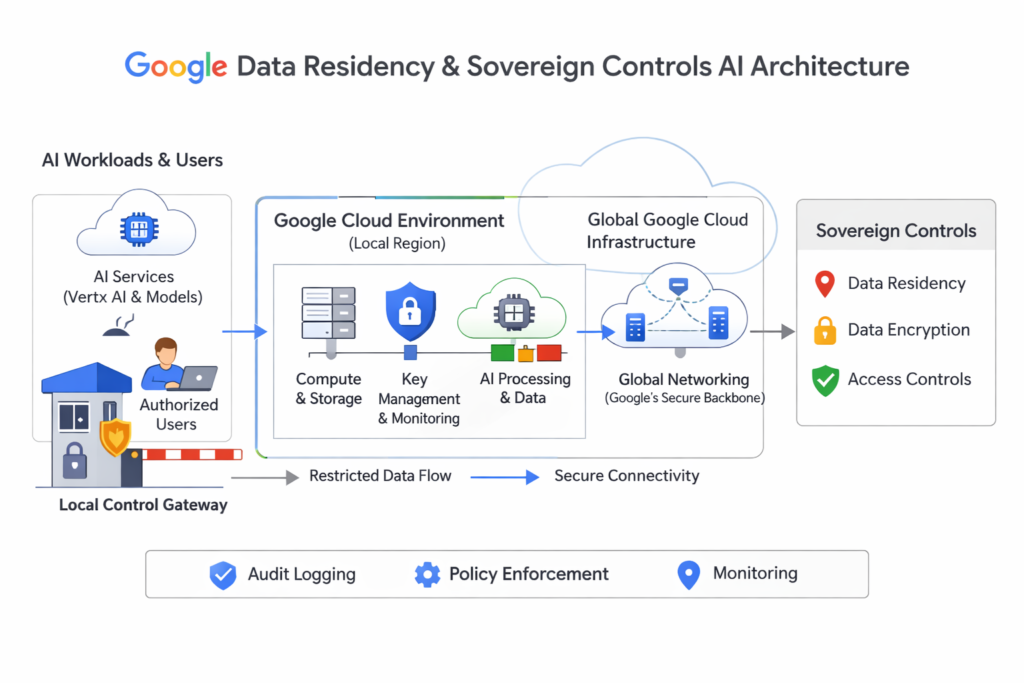
For most GCC projects, the best architecture is hybrid.
A practical setup often includes.
Edge processing for fast local decisions
Cloud analytics for reporting, learning, and long-range optimization
ITS integration for operational control and traffic management
Control-center connectivity for live visibility and response
This kind of architecture is more realistic for public infrastructure than replacing every legacy layer at once.
Arabic UX and Operator-Friendly Dashboards
This part is often underestimated. Even a strong AI model can fail if operators cannot use it comfortably in daily workflows.
For GCC deployments, Arabic-ready interfaces are not a nice extra. They are essential. Dashboards should support:
Arabic-first or bilingual presentation
Clear KPI views
Simple incident alerts
Easy reporting for decision-makers
Smooth integration into procurement and governance workflows
Compliance, Governance, and Data Residency in the GCC
Any serious discussion of AI traffic optimization in Saudi Arabia, the UAE, or Qatar has to include governance.
Mobility systems can interact with sensitive operational data, public infrastructure, payment layers, customer journeys, and sometimes regulated environments. That means compliance choices need to be built in early, not added later.
Saudi Arabia
Saudi projects usually need strong alignment with national data governance expectations, local policy requirements, and clear accountability around access, hosting, and operational oversight.
UAE
In the UAE, organizations often place strong emphasis on interoperability, digital regulation, and controlled handling of personal or regulated data, especially when traffic systems connect with broader smart-city or commercial platforms.
Qatar
Qatar also requires careful thinking around hosting, governance, and public-sector alignment, particularly when mobility platforms intersect with regulated services or centralized digital infrastructure.
A simple rule works well here: if data location, access control, and auditability are unclear, the architecture is not ready.
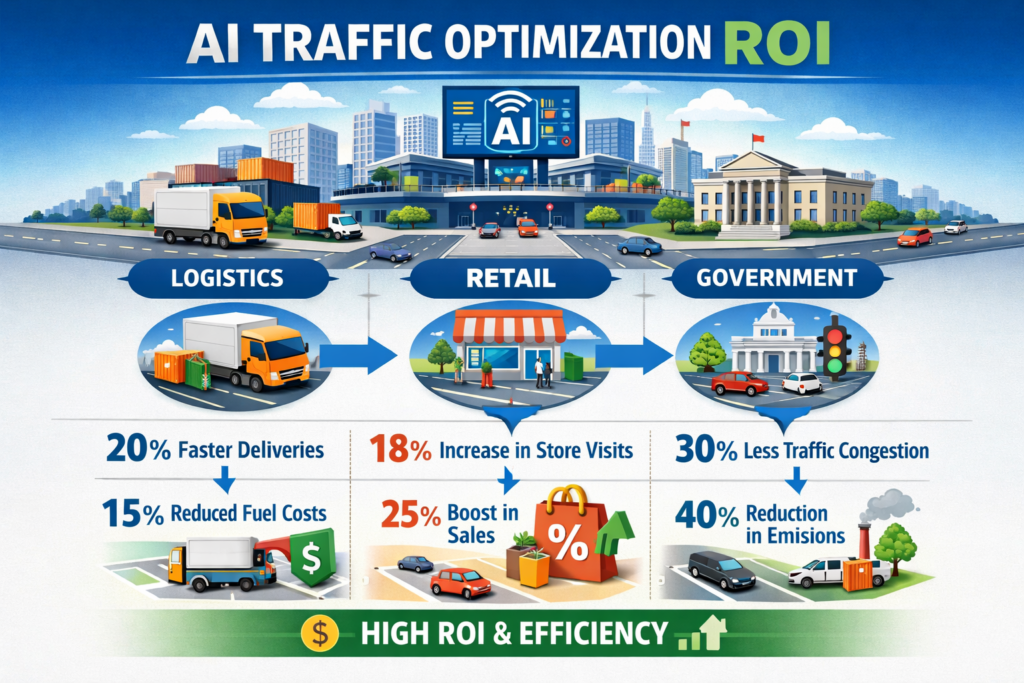
Benefits and ROI of AI Traffic Optimization
The return on investment varies by sector, but the value is usually visible when the deployment is focused on the right problems.
For Government and Transport Authorities
Public agencies benefit from.
Lower average delay
Improved corridor flow
Faster incident response
Better operational visibility
Stronger service delivery outcomes
For Logistics and E-Commerce
Logistics operators and delivery brands can gain.
More reliable routing
Fewer late deliveries
Better fuel efficiency
Improved dispatch planning
Stronger SLA performance
For Retail and Mobility Services
Retailers, smart parking providers, and mobility-payment ecosystems benefit when access becomes easier and customer journeys become more predictable.
From a business point of view, that means traffic intelligence can influence much more than road operations. It can improve commercial performance too.
Best Practices for Deploying AI Traffic Optimization in the GCC
The most successful projects usually start small, prove value clearly, and then scale.
Start With a High-Impact Corridor
Focus on a route, intersection, school zone, airport link, or logistics-heavy corridor where congestion is visible and measurable.
Align Architecture With Compliance Early
Do not treat hosting, governance, and procurement requirements as afterthoughts. In the GCC, these decisions shape the success of the entire rollout.
Prioritize Arabic-Ready Reporting
If operators, stakeholders, or public-sector teams cannot use the platform comfortably, adoption will stall.
Measure Real KPIs Before Scaling
Track outcomes such as:
Delay reduction
Travel-time improvement
Signal efficiency
Incident response speed
Route reliability
Scale Gradually Across Use Cases
Once the model proves itself, it can expand from intersections to corridors, from corridors to districts, and from public roads to connected commercial mobility services.
Common Mistakes to Avoid
Even well-funded projects can underperform when the basics are ignored.
Here are some common mistakes.
Deploying AI before fixing data quality
Ignoring Arabic UX requirements
Overpromising citywide transformation too early
Treating compliance as a late-stage issue
Choosing tools that do not integrate with existing systems
Measuring outputs instead of practical transport outcomes
The strongest GCC projects are usually the most grounded ones.
Final Take
AI traffic optimization is becoming a practical tool for smarter mobility across Saudi Arabia, the UAE, and Qatar. The real opportunity is not in hype-heavy transformation claims. It is in deploying focused, compliant, city-ready systems that reduce congestion, improve safety, and support stronger transport operations.
For GCC organizations, the winning approach is clear: start with real traffic problems, build around local infrastructure and governance, and scale only after proving measurable value. That is how AI traffic optimization becomes long-term infrastructure rather than another short-lived pilot.( Click Here’s )
FAQs
Q : Is AI traffic optimization suitable for Riyadh, Dubai, and Doha?
A : Yes. These cities have the scale, infrastructure pressure, and smart-city momentum to benefit from AI traffic optimization. The key is choosing practical models that integrate with existing transport systems rather than trying to replace everything at once.
Q : Which AI traffic optimization model delivers value fastest?
A : Adaptive signal control and predictive traffic analytics are often the fastest-value options. They can improve intersection flow, reduce delays, and give operators better visibility without requiring a complete infrastructure overhaul.
Q : Do GCC traffic optimization platforms need local or regional hosting?
A : In many cases, local or regional hosting is the safer choice for trust, latency, governance, and procurement alignment. The exact requirement depends on the project, the authority involved, and the type of data being processed.
Q : Who benefits from AI traffic optimization besides government agencies?
A : Logistics companies, e-commerce brands, retail operators, parking platforms, and mobility services can all benefit. Better traffic intelligence improves routing, ETA accuracy, service quality, and customer experience.
Q : Is AI traffic optimization a standalone smart-city solution?
A : Not usually. It works best as part of a broader ecosystem that includes intelligent transport systems, cloud or edge infrastructure, operator dashboards, and governance controls.
[…] Riyadh. […]