
GCC Landing Page Trust Signals That Build Trust
GCC Landing Page Trust Signals That Build Trust
GCC Landing Page Trust Signals That Build Trust
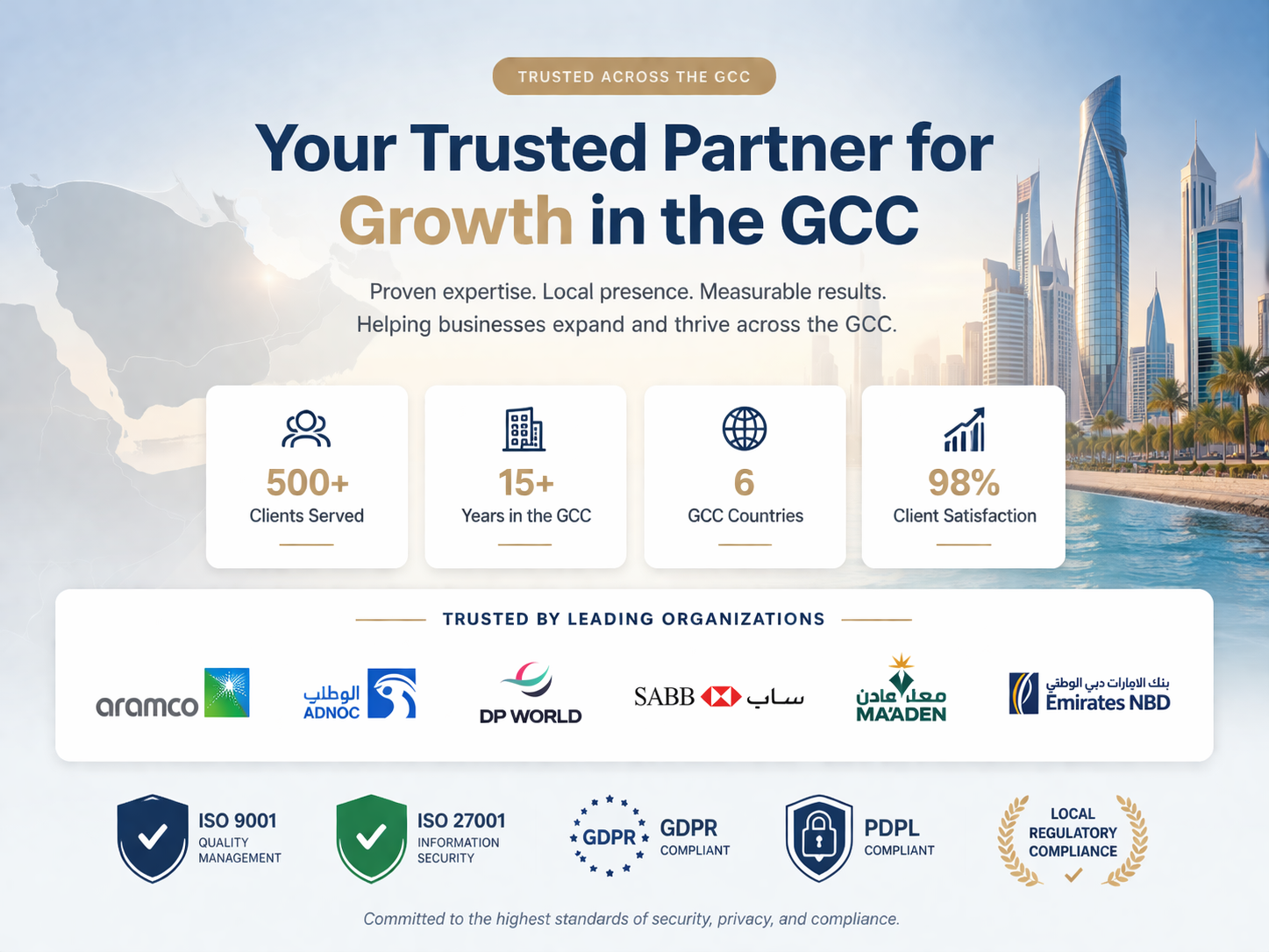
A strong landing page trust signals strategy in Saudi Arabia, the UAE, and Qatar is less about flashy badges and more about proof people can quickly verify. In GCC markets, users tend to trust pages that show a real business identity, clear Arabic-friendly UX, transparent policies, and local credibility.
If your page looks polished but still underperforms, the issue is often not design alone. It is whether visitors can immediately tell who you are, how you operate, and why they should feel safe taking the next step.
Why Generic Trust Badges Often Fall Flat in the GCC
Many businesses use landing page templates built for Western audiences and expect them to perform the same way in Riyadh, Dubai, or Doha. The problem is that generic “secure” icons and vague claims like “100% trusted” do not always answer the real concern GCC users have: Is this business legitimate, reachable, and careful?
In these markets, trust usually grows from visible, practical proof such as.
Clear company identity
Accurate contact details
Arabic-friendly layout and copy
Transparent payment, delivery, or refund terms
Local testimonials or recognizable client names
Compliance-aware wording that does not overclaim
That is the difference between a decorative landing page and one that actually converts.
What Landing Page Trust Signals Mean in Saudi, UAE, and Qatar
Not all trust signals carry the same weight. In the GCC, the strongest ones are usually tied to business legitimacy and operational clarity.
Instead of relying on random badges, high-converting pages often highlight things like.
Business registration context
Invoice or billing transparency
WhatsApp or local phone support
Real office or service-area details
Bilingual clarity across Arabic and English
Honest wording around privacy, payments, and service steps
This matters because users in Saudi, the UAE, and Qatar often make fast credibility judgments. If something feels unclear, mistranslated, or exaggerated, hesitation rises immediately.
Why Official Proof Converts Better Than Visual Decoration
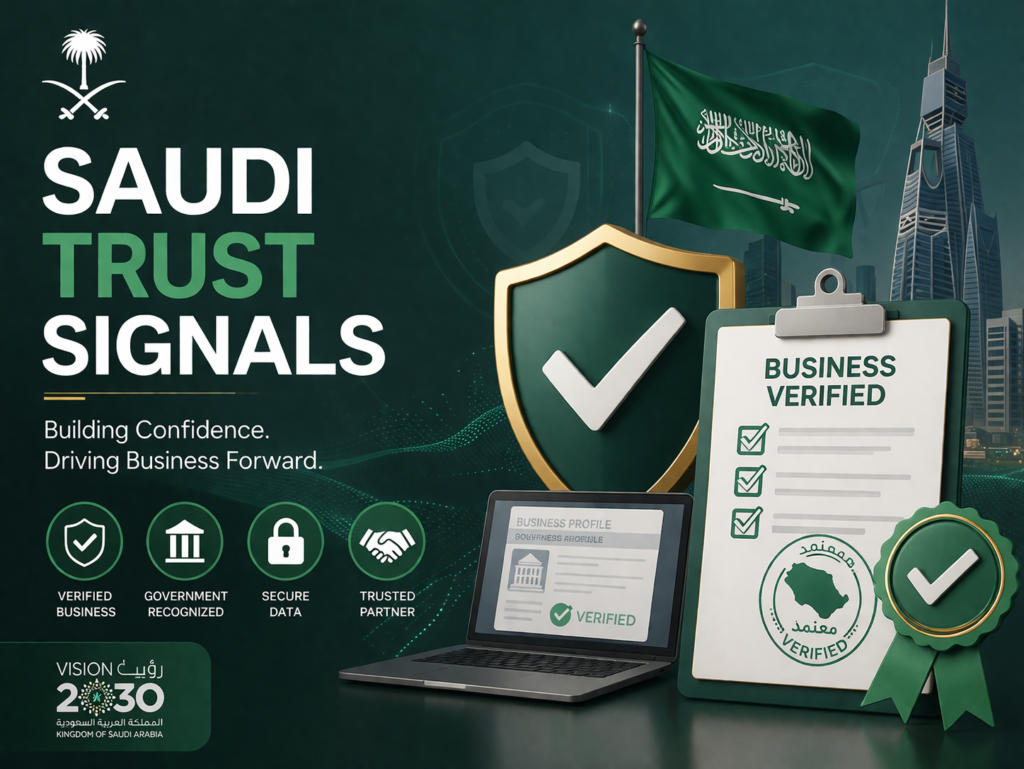
A polished UI can help, but it does not replace trust architecture. GCC buyers often respond better to proof that feels grounded in real operations.
In Saudi Arabia
Saudi users often look for signals that suggest the business is real and accountable. Commercial identity, invoicing clarity, transparent support, and familiar business language can do more for conversion than a strip of generic icons.
For Saudi-facing ecommerce or service pages, practical proof tends to work better than hype. Even small details, like clear refund wording or a visible support number, can make the page feel safer.
In the UAE
In the UAE, users are used to structured digital experiences. That means vague claims can feel weak, while explicit and well-organized pages feel more credible.
For Dubai and Abu Dhabi audiences especially, trust improves when the page feels.
Easy to verify
Professionally written
Clear on next steps
Consistent across form fields, CTAs, and support options
For B2B campaigns, this is even more important because multiple decision-makers may review the page before converting.
In Qatar
Qatar-based users, especially in finance, payments, and sensitive services, often respond better to careful wording than aggressive marketing language.
A Doha-focused page should make it easy to understand.
What the company does
How the service works
What happens after form submission
How payments or personal data are handled
How users can contact support
In practice, clarity often beats persuasion.
The Trust Signals That Usually Increase Conversions
If you want better performance from a GCC landing page, start with the elements people actually check.
Clear business identity
Show who you are without forcing users to dig. That can include your company name, service location, business context, and direct contact channels.
Arabic-friendly UX
Arabic UX is not a cosmetic layer. It is a trust signal on its own. Broken RTL formatting, awkward translations, or inconsistent bilingual copy can reduce confidence fast.
Local proof
Add testimonials, client logos, case studies, or use cases that feel regionally relevant. A Saudi user, a Dubai buyer, and a Doha decision-maker each respond better when the proof feels close to their market.
Policy transparency
Refunds, delivery windows, invoicing, onboarding steps, and response times should be visible and easy to understand. Uncertainty creates friction.
Real contact ability
Pages convert better when users can see there is a real team behind the offer. WhatsApp, local numbers, clear email support, and response expectations all help.
Compliance-aware language
Be precise. Do not imply certifications, approvals, or partnerships you do not have. Credibility rises when the wording is accurate and measured.
How Arabic UX and Bilingual Design Affect Trust
A surprising number of GCC landing pages lose conversions because the page feels translated rather than built for the audience.
That usually shows up in a few ways.
Arabic headlines sound unnatural
English and Arabic versions do not match
RTL spacing breaks on mobile
Forms are harder to use in Arabic
CTAs feel awkward or inconsistent
For Saudi consumer campaigns, Arabic-first pages often feel more natural, especially on mobile. In the UAE, bilingual layouts often work well because audiences are more mixed. In Qatar, concise bilingual pages can be especially effective for technical or service-led offers.
The real goal is not to force Arabic everywhere. It is to make the experience feel intentional.
If your page structure needs work, our web development services, WordPress development team, and front-end specialists can help align trust, usability, and performance. For stronger visibility, our SEO services and this guide on technical SEO for Arabic GCC websites are also worth reviewing.
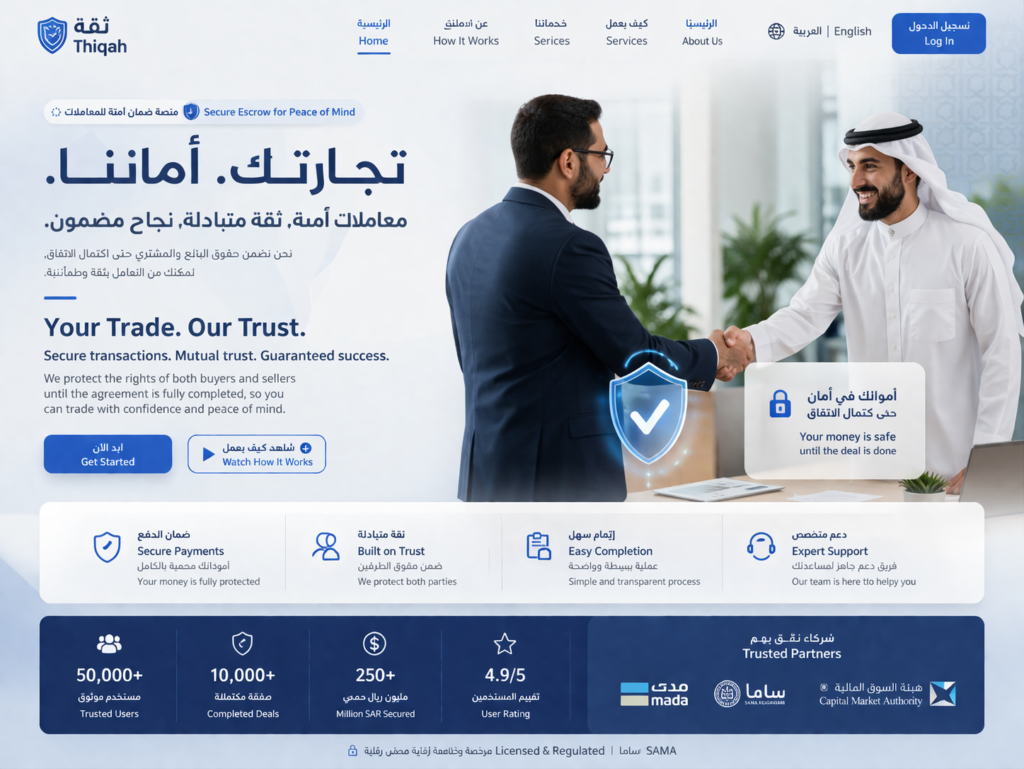
How to Show Compliance Signals Without Overclaiming
One of the fastest ways to damage trust is to sound official without being precise.
A better approach is to use careful, accurate wording. For example.
“Built with invoice-ready workflows”
“Designed for secure digital onboarding”
“Created for Arabic-first and bilingual user journeys”
“Structured for transparent payments and support”
This keeps the tone credible without implying endorsement.
That balance matters even more in GCC sectors like fintech, ecommerce, health, legal, or regulated services. In these cases, calm and accurate language usually performs better than oversized promises.
Best Trust Setups by Industry
The best landing page trust signals vary by business model.
| Industry | Trust signals that matter most |
|---|---|
| Fintech | Legal identity, onboarding clarity, payment/security language, support transparency |
| Ecommerce | Checkout clarity, return policy, delivery expectations, invoice reassurance, local reviews |
| Service businesses | Company identity, response times, service areas, escalation path, direct contact options |
| B2B / SaaS | Case studies, client logos, bilingual clarity, demo expectations, team credibility |
Here is how that can look in practice.
A Riyadh fintech startup may build trust with secure onboarding language, operational clarity, and a more formal tone.
A Dubai ecommerce brand may convert better with Arabic-friendly mobile checkout, visible returns, and fast support options.
A Doha service company may benefit more from transparent process details, regional relevance, and straightforward contactability.
If you are building pages for these use cases, our ecommerce services, mobile app development, Flutter development, and graphic design services support this trust layer well.
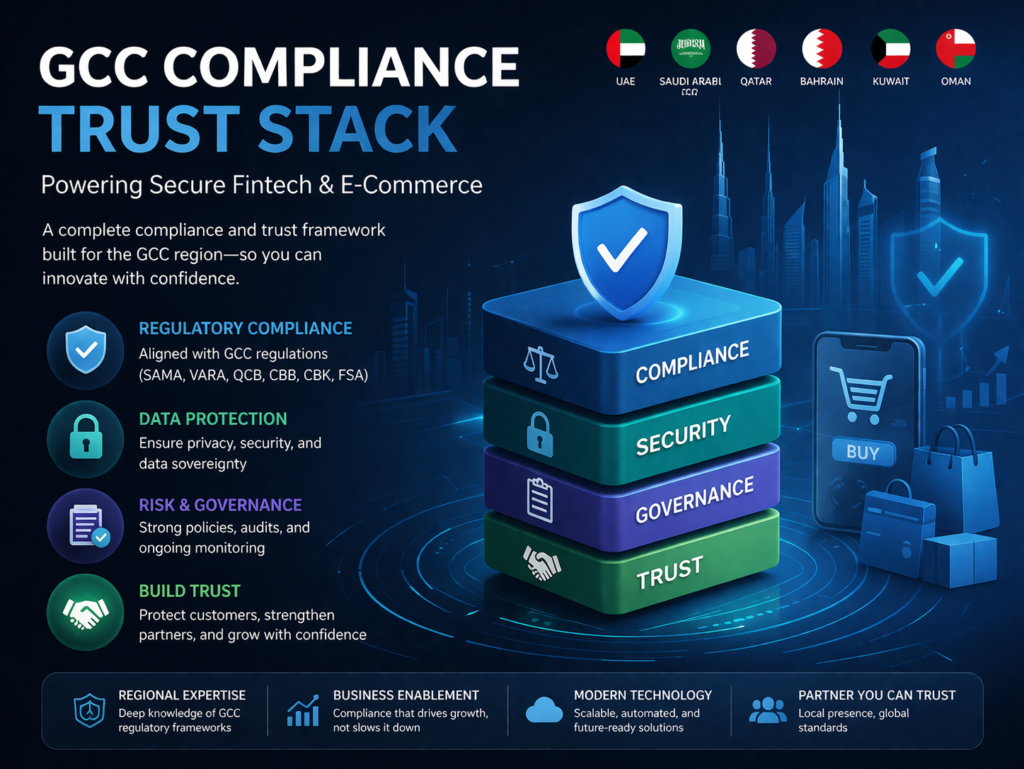
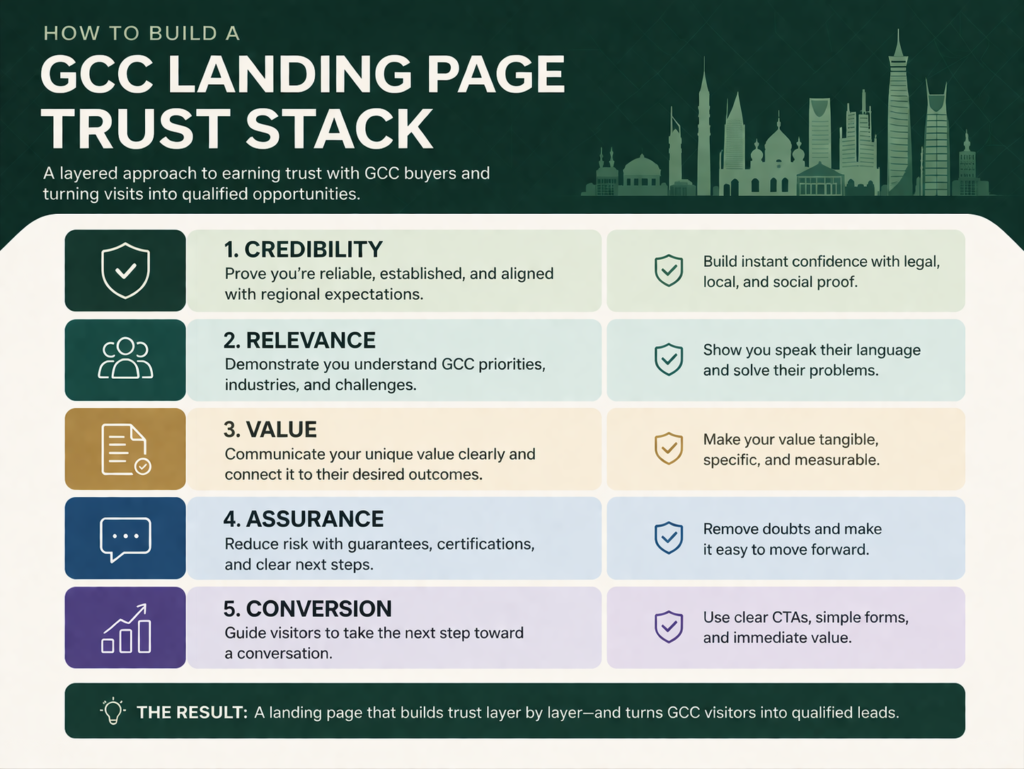
How to Build a High-Converting GCC Landing Page Trust Stack
A simple way to approach this is to layer trust in the order users naturally evaluate it.
Prove you are real
Start with business identity, service context, and visible contact options.
Make the experience easy to trust
Fix Arabic UX, mobile readability, CTA clarity, and bilingual consistency.
Reduce hesitation
Add testimonials, case studies, delivery terms, pricing logic, refund clarity, or onboarding expectations.
Test by market
Do not assume Riyadh, Dubai, and Doha respond the same way. Small differences in language, layout, and proof can change conversion behavior.
From a business point of view, this is where many teams go wrong. They test colors and button styles but ignore the trust layer that shapes whether users are comfortable converting in the first place.
That is also why teams planning broader Arabic growth should review web development trends in the Middle East for KSA and UAE and Next.js vs WordPress SEO before redesigning performance pages.
Common Mistakes That Hurt Trust in GCC Landing Pages
Even attractive pages can underperform when they make avoidable trust mistakes.
The most common ones include.
Using English-first copy for Saudi consumer audiences
Showing badges without any real proof behind them
Hiding contact details or support expectations
Using inconsistent Arabic and English messaging
Making broad compliance claims without precision
Overloading the hero section with symbols instead of useful reassurance
Treating all GCC markets as if they behave the same way
Fixing even two or three of these issues can noticeably improve lead quality and conversion confidence.
To Sum Up
The most effective landing page trust signals in Saudi Arabia, the UAE, and Qatar are the ones users can understand and verify quickly. Clear business identity, Arabic-friendly UX, local proof, honest service language, and transparent policies will usually outperform generic badges every time.
If your landing page looks polished but still feels unconvincing, the problem is probably not aesthetics alone. It is the trust structure behind the page.
Contact Mak It Solutions to audit your current page, improve Arabic UX, and build a GCC trust stack that matches how Saudi, UAE, and Qatar users actually decide.( Click Here’s )
FAQs
Q : What are the most important landing page trust signals in Saudi Arabia?
A : For Saudi audiences, the most effective trust signals are usually clear business identity, Arabic-first clarity, invoice transparency, support visibility, and honest policy wording. Users tend to respond better to proof they can recognize than to generic “secure” graphics.
Q : Should GCC landing pages be Arabic first or bilingual?
A : It depends on the audience. Saudi consumer pages often perform better with Arabic-first messaging, while UAE B2B pages often benefit from a balanced bilingual structure. In Qatar, concise bilingual pages usually work well when the service is technical or institution-facing.
Q : Do trust badges still help in the UAE and Qatar?
A : They can help, but only when they support real credibility. On their own, decorative badges are weak. Users in the UAE and Qatar are more likely to trust clear business information, support transparency, and accurate service language.
Q : How can I improve landing page trust signals without redesigning the whole page?
A : Start with the essentials: improve your headline clarity, show real contact details, fix Arabic UX issues, add local proof, and make policies easier to find. Those changes often have more impact than a full visual redesign.
Q : Why do GCC landing pages lose conversions even when they look professional?
A : Because design is only one part of trust. If the page feels vague, mistranslated, hard to verify, or overly promotional, users may hesitate even if the visuals look modern.