
Arabic Phishing Awareness Training for GCC Teams
Arabic Phishing Awareness Training for GCC Teams
Arabic Phishing Awareness Training for GCC Teams
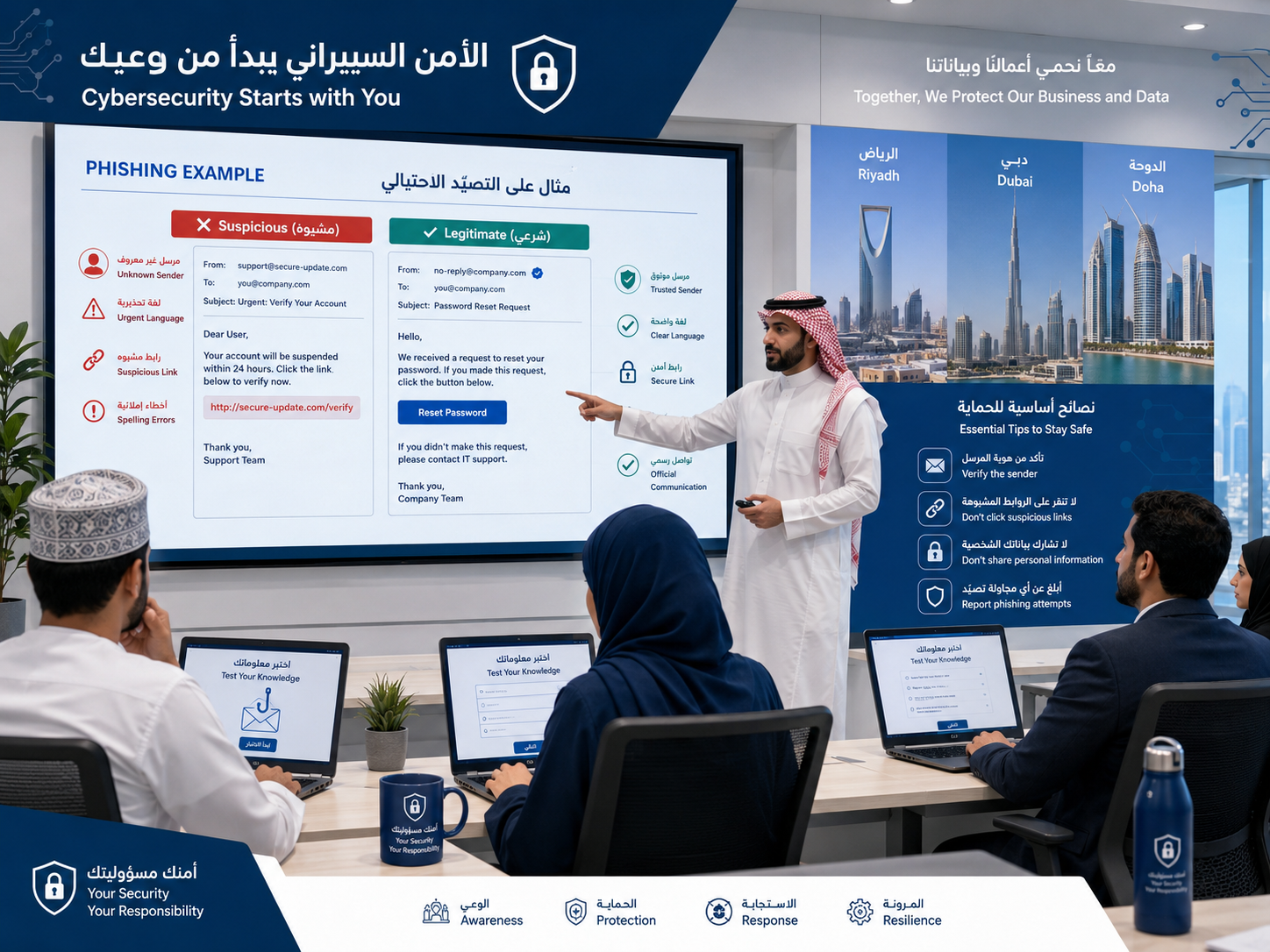
Arabic phishing awareness training helps GCC companies teach employees how to spot fake emails, SMS alerts, WhatsApp scams, OTP theft, fake login pages, and government-style impersonation in the language and context they already trust.
For Saudi, UAE, and Qatar teams, the strongest programs combine Arabic examples, simulated phishing campaigns, reporting dashboards, and practical employee security training. The goal is simple: help people pause, verify, and report before one click turns into a business risk.
Phishing in the GCC no longer looks like a strange email with poor grammar. Employees in Riyadh, Dubai, Abu Dhabi, Doha, and Jeddah now face fake bank alerts, delivery messages, HR requests, OTP traps, and Arabic-language social engineering that feels local and believable.
That is why Arabic-first training matters. A generic English-only course may explain phishing, but it often misses Absher-style messages, UAE Pass fraud attempts, QID impersonation, Metrash-style alerts, or bank SMS pressure tactics.
For digital-first companies building secure platforms, Mak It Solutions can support stronger user journeys through reliable web development services, secure back-end development, and scalable digital systems.
What Is Arabic Phishing Awareness Training?
Arabic phishing awareness training is a localized cybersecurity awareness program that teaches employees how to detect, avoid, and report phishing attempts in Arabic and GCC workplace contexts.
It focuses on the real channels employees use every day.
SMS
Voice calls
QR codes
Fake login portals
Fake HR, vendor, bank, or government messages
Why Arabic-Language Training Matters for GCC Employees
In many GCC workplaces, Arabic is the language of daily trust. A scam written in Arabic can feel familiar, especially when it imitates a bank, government service, courier, HR department, telecom provider, or senior manager.
Arabic-first training helps employees recognize emotional triggers such as urgency, fear, authority, reward, and embarrassment. It also makes learning more inclusive for mixed teams across Saudi Arabia, the UAE, and Qatar.
How Phishing Awareness Differs From General Cybersecurity Training
General cybersecurity awareness covers passwords, devices, data handling, and safe browsing.
Phishing training goes deeper into human risk management. It teaches employees how to question suspicious links, fake login pages, attachments, impersonation, payment-change requests, and unusual message tone.
This is especially important for fintech, logistics, government suppliers, healthcare, and e-commerce teams where one mistaken click can expose customer data, internal systems, or payment workflows.
Why Saudi, UAE, and Qatar Companies Need Arabic Phishing Awareness Training
Saudi Arabia.
Saudi companies in Riyadh, Jeddah, and other business hubs deal with high trust in banking, telecom, delivery, and government-service messages. A fintech startup, for example, must train staff to question fake payment updates, OTP requests, and authority-based messages that appear to come from trusted institutions.
SAMA’s Cyber Security Awareness guidance says awareness programs should cover staff, third parties, and customers, run throughout the year, include emerging threats such as spear-phishing and whaling, and be evaluated for effectiveness.
UAE.
Dubai and Abu Dhabi teams often work across Arabic, English, Hindi, Urdu, Tagalog, and other languages. That multilingual environment gives attackers more room to test different scripts, tones, and social engineering angles.
A Dubai e-commerce brand scaling through mobile apps should combine Arabic phishing awareness training with secure digital architecture, including front-end development services and React development services that protect the customer experience.
Qatar.
In Doha, phishing attempts may imitate banking, QID, delivery, hiring, or public-sector workflows. Qatar businesses should train employees to verify message sources, inspect links carefully, avoid sharing OTPs, and report suspicious Metrash-style or government-style messages internally.
For local hosting and data needs, Qatar companies may also consider regional cloud options. Google Cloud announced its Doha cloud region in 2023, positioning it as a local infrastructure option for Qatar and the wider Middle East.
Common Arabic Phishing Patterns in GCC Workplaces
Fake Bank Alerts, OTP Requests, and Payment Updates
One of the most common GCC phishing patterns is the fake bank alert. The message may claim that an account is blocked, a payment is pending, or a card must be “verified.”
Employees should remember one rule: never share OTPs, passwords, card details, or login credentials through links, calls, or chat messages.
Government Impersonation and Trusted-Service Scams
Attackers often imitate familiar digital systems because people trust them. In the GCC, that may include Absher-style alerts, Nafath-style login prompts, UAE Pass-style messages, QID updates, or Metrash-style notifications.
Training should make this practical. Employees need to learn how to check the sender, inspect the domain, avoid urgent links, and use official apps or websites directly instead of clicking message links.
Arabic WhatsApp Phishing and Social Engineering
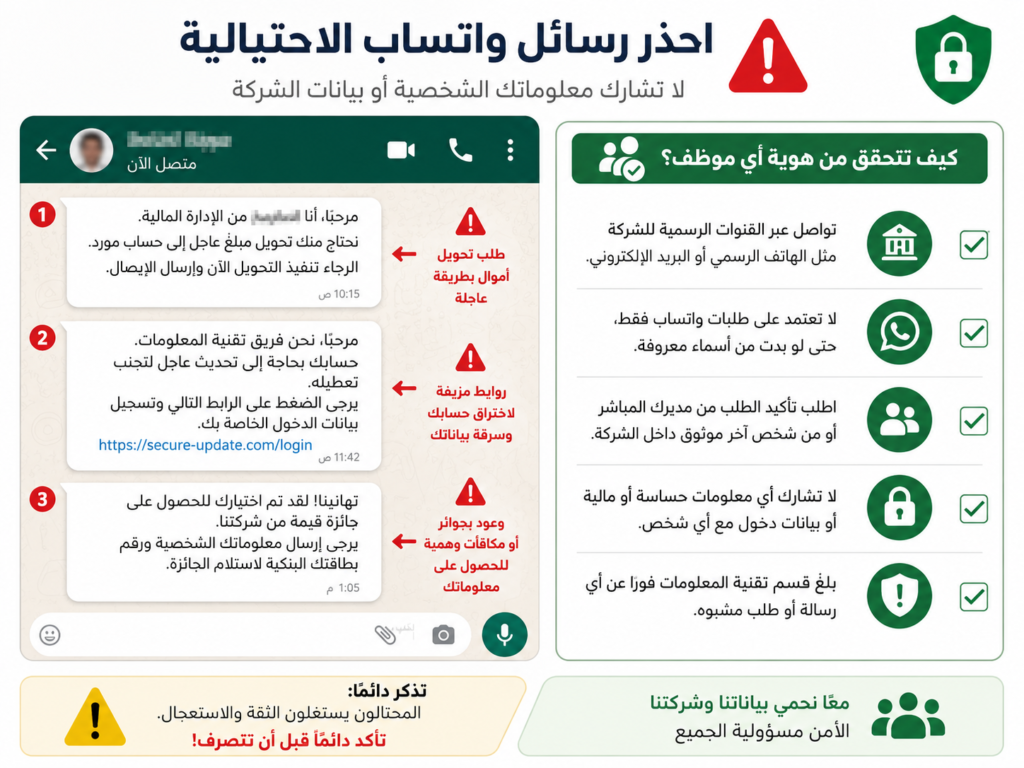
WhatsApp phishing works because it feels personal.
A fake manager may ask finance to “urgently” pay a supplier. A fake HR message may request staff IDs. A fake courier may ask for a small delivery fee. A fake colleague may send a file that leads to credential theft.
Good Arabic phishing awareness training should include realistic chat examples, red-flag callouts, and reporting practice.
What a GCC-Ready Phishing Simulation Program Includes
Arabic Phishing Email Templates Based on Local Scenarios
A strong program uses examples employees instantly recognize.
Saudi bank alert messages
UAE Pass-style verification prompts
Doha delivery notices
Fake HR salary update forms
Vendor invoice changes
Telecom disconnection threats
Fake recruitment or document requests
The point is not to scare employees. The point is to train judgment in the same environment where mistakes usually happen.
Simulated Phishing Campaigns With Dashboards
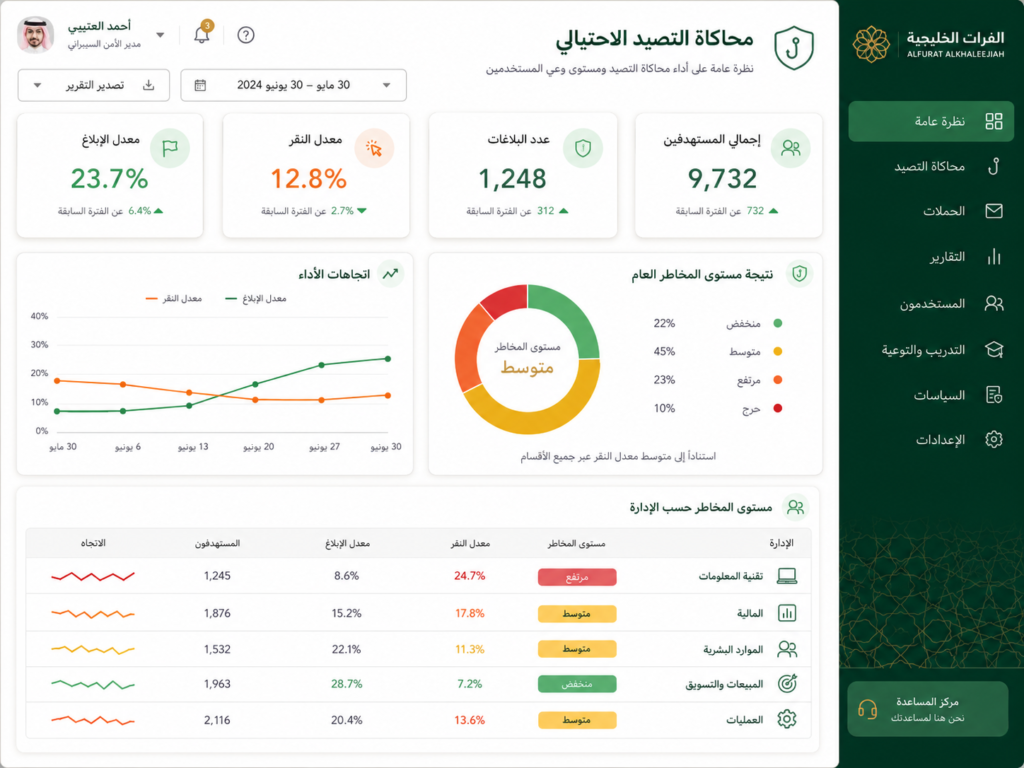
Simulated phishing helps companies measure behavior, not just attendance.
A practical campaign should show.
Who clicked
Who reported
Which departments need support
Which templates created the most risk
Whether reporting improved over time
This turns cybersecurity awareness into measurable progress instead of a once-a-year lecture.
Follow-Up Microlearning for High-Risk Teams
Finance, HR, procurement, customer support, and executive assistants usually need extra training. They handle approvals, invoices, employee records, vendor messages, and sensitive identity data.
Short follow-up lessons work well here. A five-minute scenario after a simulation can teach more than a long generic presentation.
Compliance and Trust Factors for GCC Organizations
Saudi Signals: NCA, SAMA, and Data-Aware Training
Saudi organizations should align phishing awareness with internal risk culture, data protection expectations, and sector-specific requirements.
For regulated financial organizations, SAMA’s guidance is especially relevant because it emphasizes awareness for staff, third parties, and customers, periodic activity throughout the year, emerging cyber threats, and effectiveness measurement.
UAE Signals: TDRA, UAE Cyber Security Council, ADGM, and DIFC
UAE organizations should think beyond basic awareness. Employee reporting, internal escalation, vendor controls, and governance all matter.
For customer-facing products, awareness should also connect with secure digital delivery. Mak It Solutions supports teams through mobile app development and PHP web development for safer, more reliable digital platforms.
Qatar Signals: QCB Expectations and Sector-Specific Policies
Qatar banks, SMEs, and public-sector suppliers should align phishing awareness with internal cybersecurity policies, sector expectations, and data protection needs.
Doha teams using cloud platforms should also review data residency, access controls, employee analytics, and vendor risk before selecting a training platform.
How to Choose Arabic Phishing Awareness Training
Look for Arabic UX, RTL Design, and GCC Examples
Training should feel native, not translated at the last minute.
Look for.
Arabic user experience
Right-to-left layouts
GCC-specific screenshots
Local scam examples
Bilingual options for mixed teams
Clear reporting instructions
Short lessons for busy employees
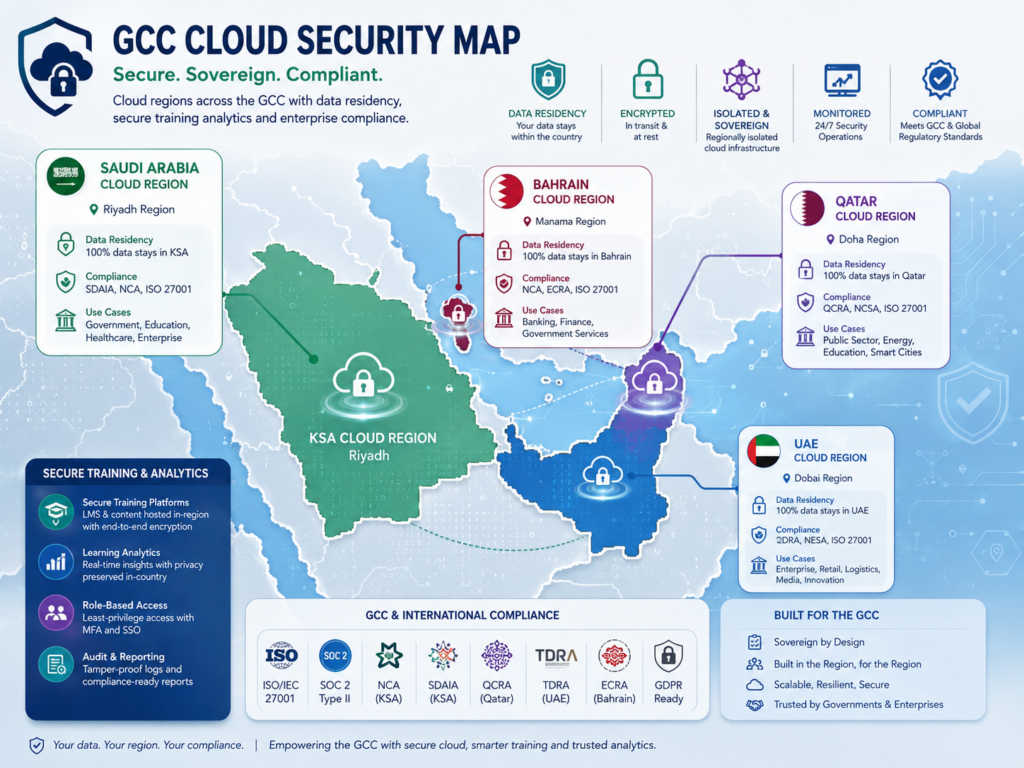
Check Data Residency Options in Saudi, UAE, and Qatar Cloud Regions
Procurement teams should ask where training data, employee emails, campaign logs, and dashboard analytics are stored.
Possible regional options may include Bahrain, UAE, and Qatar cloud infrastructure depending on the provider and requirements. AWS launched its Middle East Bahrain Region in 2019, and later announced UAE regional infrastructure to give local customers more workload and data-location options.
Compare Training Formats Before You Buy
The best format usually blends several methods.
| Format | Best For |
|---|---|
| Short videos | Basic employee awareness |
| Live workshops | High-risk teams and leadership |
| Simulated phishing | Measuring real behavior |
| Dashboards | Security, HR, compliance, and leadership reporting |
| Microlearning | Fixing risky patterns after simulations |
A good provider should not only deliver content. It should help your team improve behavior over time.
Best Practices for Running GCC Phishing Awareness Campaigns
Run Monthly or Quarterly Simulations
A Riyadh fintech startup may run monthly finance simulations because payment and account risks are high. A Doha SME may begin with quarterly campaigns and increase frequency as needed.
The right schedule depends on your risk level, industry, team size, and recent incident history.
Train Arabic and English-Speaking Teams Together
A Dubai logistics company may have warehouse teams, office staff, drivers, customer service agents, and managers using different languages daily.
Bilingual training improves comprehension and reporting. It also reduces the risk that only English-speaking staff receive the full security message.
Make Reporting Easy
Employees should know exactly what to do when they see something suspicious.
Keep the reporting path simple.
Do not click the link.
Do not reply.
Screenshot or forward the message if policy allows.
Report it to IT, security, or the assigned phishing inbox.
Delete only after the security team confirms.
The easier reporting feels, the more likely employees are to act quickly.
Share Progress With Leadership
Track click rates, reporting rates, repeat risky behavior, completion rates, and department-level improvement.
Then share the results with IT, HR, compliance, and leadership in plain language. In practice, leaders are more likely to support ongoing training when they can see risk going down and reporting going up.
Concluding Remarks
Arabic phishing awareness training gives Saudi, UAE, and Qatar organizations a practical way to reduce human risk, improve reporting, and protect employees from localized scams.
For GCC teams, the most effective approach is local, bilingual, measurable, and realistic. Use Arabic scenarios, run phishing simulations, support high-risk departments, and connect awareness with secure digital systems.( Click Here’s )
Contact Mak It Solutions to discuss a custom GCC cybersecurity awareness strategy, or explore our full technology services to strengthen your digital platforms from training to secure development.
FAQs
Q : Is Arabic phishing awareness training useful for Saudi companies?
A : Yes. Arabic phishing awareness training is useful for Saudi companies because many scams imitate local banks, delivery firms, telecom providers, government-style alerts, or workplace authority figures. For Riyadh fintech, Jeddah retail, and government suppliers, Arabic examples help employees recognize threats faster.
Q : What phishing examples should UAE employees learn first?
A : UAE employees should first learn fake UAE Pass-style messages, bank OTP scams, telecom disconnection threats, fake courier links, prize messages, and WhatsApp impersonation. Dubai and Abu Dhabi teams often work in multilingual environments, so Arabic and English examples are both important.
Q : How often should Qatar companies run phishing simulations?
A : Qatar companies can start with quarterly phishing simulations. High-risk teams such as finance, HR, procurement, and customer support may benefit from monthly scenarios, especially if they handle payments, staff records, or customer data.
Q : Can Arabic phishing training support banking and fintech compliance in the GCC?
A : Yes. Arabic phishing training can support banking and fintech compliance by improving employee awareness, reducing social engineering risk, and creating evidence of regular training. It should be combined with secure authentication, access controls, incident reporting, and clear escalation paths.
Q : Should GCC companies train employees in both Arabic and English?
A : Yes. GCC companies should train employees in both Arabic and English because many workplaces include Arabic-speaking nationals, expatriate teams, outsourced support, and regional partners. Bilingual training improves inclusion, comprehension, and reporting across mixed teams.