


Cloud Repatriation GCC for Saudi & UAE Firms
Cloud Repatriation GCC for Saudi & UAE Firms
Cloud Repatriation GCC for Saudi & UAE Firms
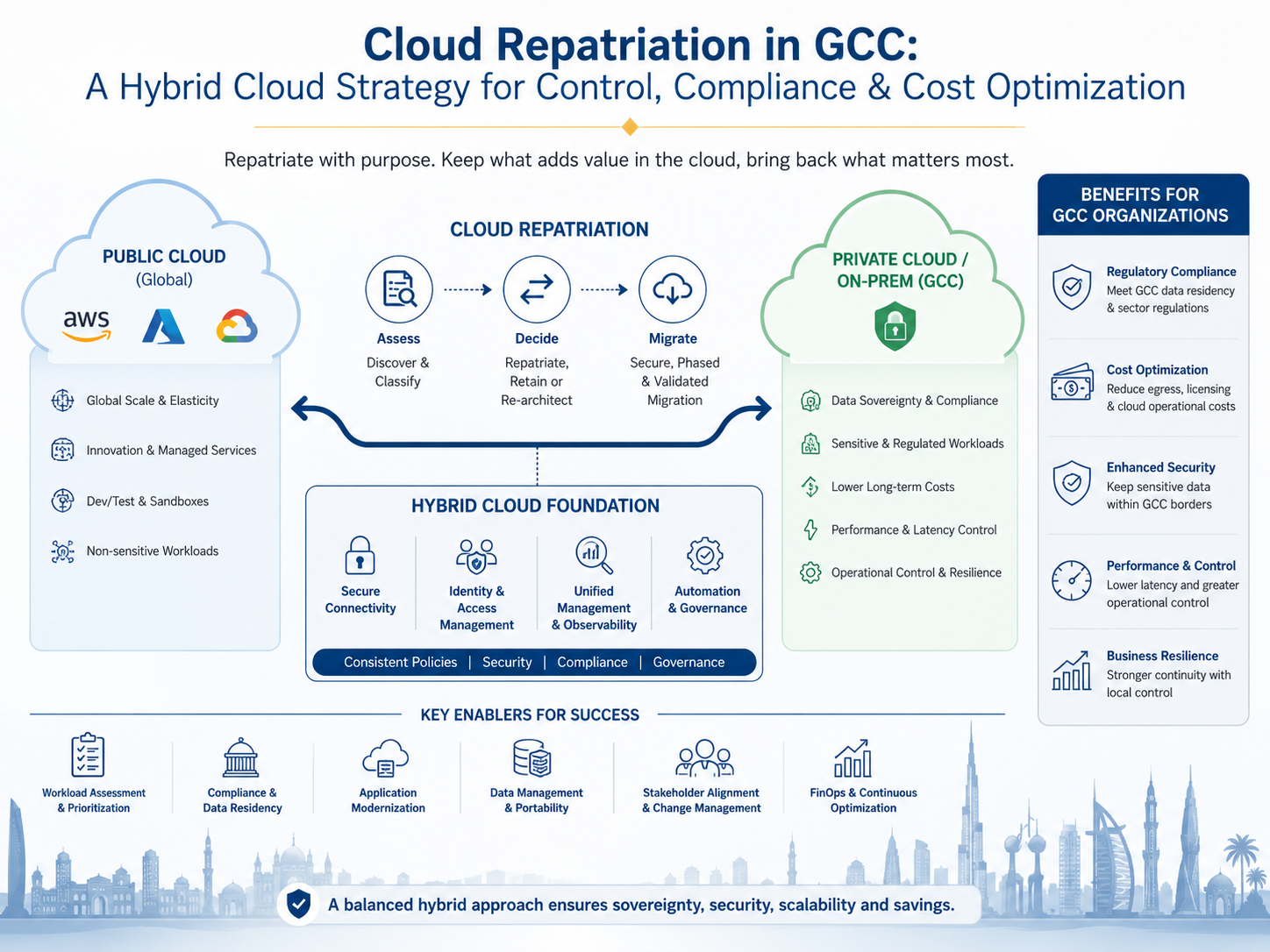
Cloud repatriation GCC is becoming a practical strategy for companies that want better control over cost, compliance, latency, and data residency. For firms in Saudi Arabia, the UAE, and Qatar, it does not mean abandoning public cloud. It means placing each workload where it performs best.
In simple terms, cloud repatriation GCC means moving selected workloads from public cloud back to private cloud, sovereign cloud, on-premises infrastructure, or local colocation. The goal is usually to reduce cloud waste, meet regulatory expectations, improve performance for regional users, and build a more resilient hybrid cloud model.
Why Cloud Repatriation Matters in the GCC
GCC enterprises are not turning against cloud. They are becoming more selective.
A Riyadh fintech may still use public cloud for analytics, while keeping sensitive financial records closer to SAMA-aligned governance. A Dubai e-commerce brand may scale campaign traffic in public cloud, but repatriate high-cost databases. A Doha financial institution may consider local or regional cloud options for residency-sensitive systems, especially as Qatar’s cloud governance has become more formal through QCB’s Cloud Computing Regulation, effective April 15, 2024.
That is the real story: not cloud exit, but smarter workload placement.
What Is Cloud Repatriation GCC?
Cloud repatriation explained for decision-makers
Cloud repatriation GCC is the selective movement of workloads from public cloud into private cloud, on-premises infrastructure, sovereign cloud, or local colocation.
It usually happens after a business reviews four areas.
Cost
Compliance
Performance
Control
Some workloads still belong in public cloud. Others become expensive, risky, or inefficient when they stay there too long.
Why it does not mean “leaving the cloud”
Cloud repatriation is not a full reversal. It is workload repatriation.
A company may keep customer-facing apps, campaign systems, AI experiments, and development environments in public cloud. At the same time, it may move regulated data, stable databases, archives, or latency-sensitive systems into a more controlled setup.
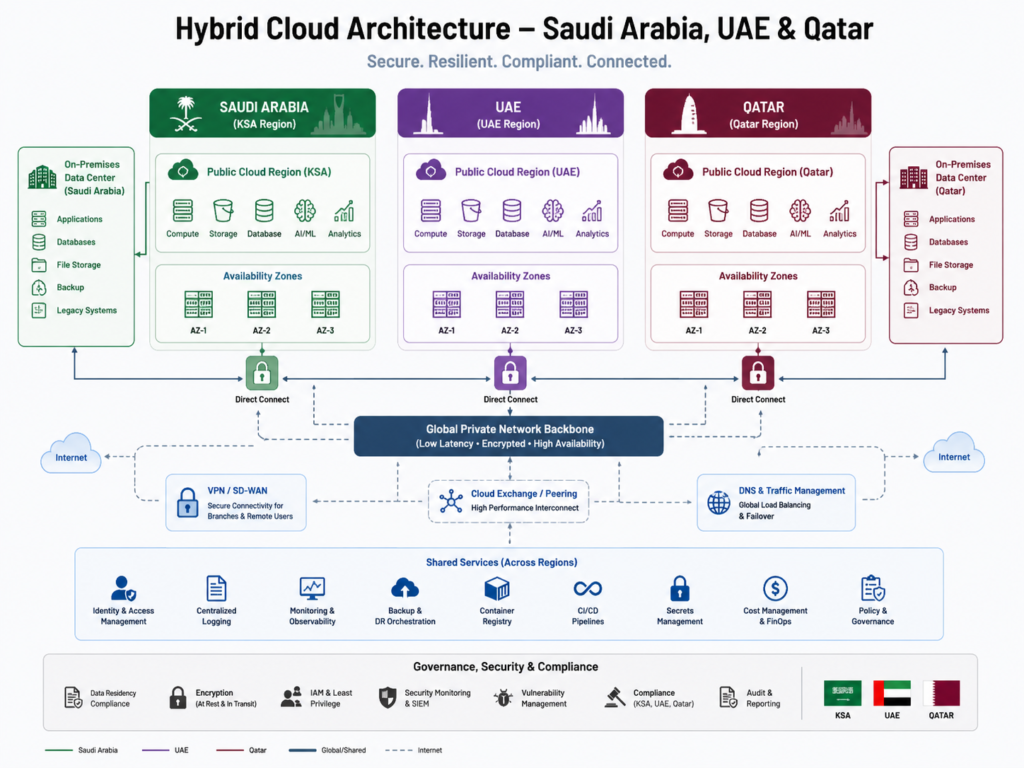
That is why hybrid cloud is often the better term. Public cloud gives speed. Private or local infrastructure gives control.
Why GCC Enterprises Are Repatriating Workloads
Public cloud cost growth and egress pressure
Cloud bills can grow quietly. Storage, backups, premium managed services, bandwidth, monitoring, and data transfer fees can add up over time.
For analytics-heavy firms in Riyadh, Dubai, Abu Dhabi, Doha, or Jeddah, repatriating stable databases may support cloud cost optimization. This is especially true when workloads are predictable and do not need constant elastic scaling.
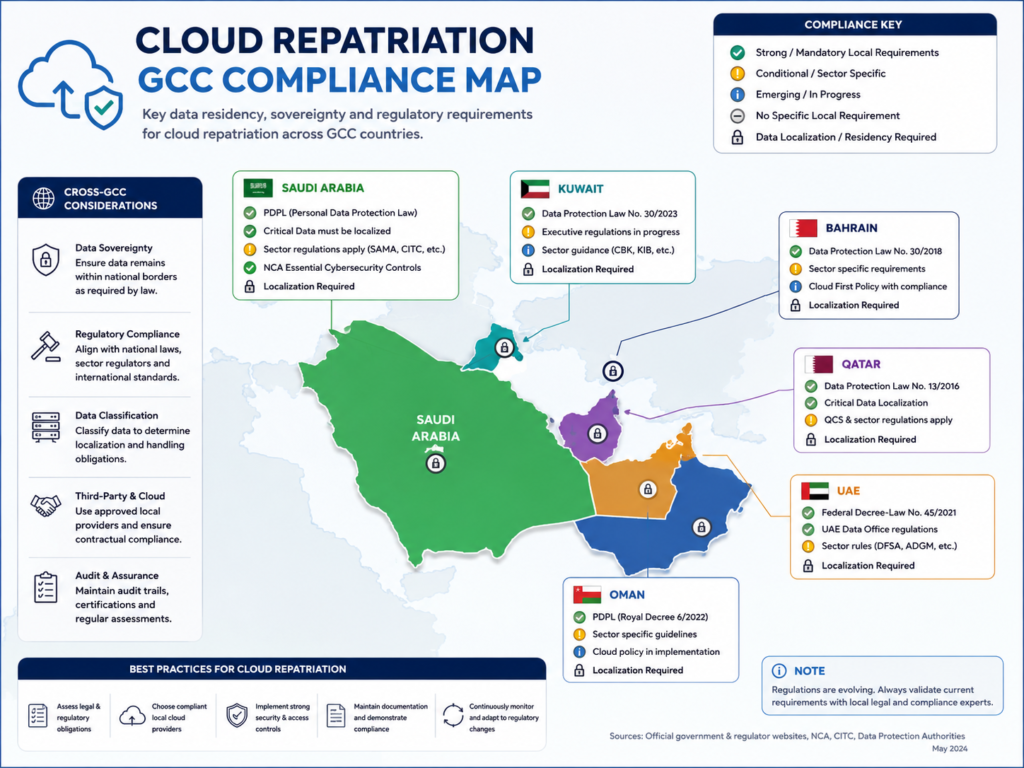
Data residency and sovereignty concerns
Financial services, healthcare, government, logistics, and enterprise SaaS teams need to prove where data lives, who can access it, and how it is audited.
Qatar’s Cloud Computing Regulation is one example of how regional regulators are paying closer attention to cloud arrangements, outsourcing risk, access controls, and exit planning.
In practice, cloud strategy in the GCC now needs input from IT, legal, compliance, cybersecurity, finance, and business leadership.
Latency and user experience for GCC customers
Arabic-speaking users expect fast portals, smooth payment flows, and reliable mobile apps. A slow checkout page, delayed banking screen, or laggy health portal can damage trust quickly.
Local hosting, edge design, and bilingual application support can improve user experience across Riyadh, Dubai, Sharjah, Abu Dhabi, Doha, and other regional markets.
Cloud Repatriation vs Hybrid Cloud vs Sovereign Cloud
When public cloud still makes sense
Public cloud is still useful for.
Burst traffic
AI testing
Development and staging environments
Global applications
Seasonal campaigns
Fast product launches
AWS Middle East Bahrain became available in 2019, giving regional customers another option for cloud workloads in the Middle East. Microsoft also opened its Qatar datacenter region in 2022, launching with Azure and Microsoft 365 services.
So, public cloud is not the problem. Poor placement is.
When private cloud or colocation is better
Private cloud or colocation may be a better fit for.
Predictable workloads
Legacy ERP systems
High-volume databases
Sensitive archives
Regulated business records
Systems with strict audit requirements
These workloads often need cost stability, strong access control, and clear governance.
Where sovereign cloud fits
Sovereign cloud is useful when regulators, boards, or procurement teams need stronger local control over data, operations, access, and compliance.
The UAE’s National Cloud Security Policy focuses on cloud security, governance, privacy, and protection of cloud resources. For many GCC organizations, that kind of policy direction makes cloud governance a board-level topic, not only an IT decision.
GCC Compliance Factors Before Repatriating Workloads
Saudi Arabia.
Saudi firms should map workloads against financial, privacy, cybersecurity, and data governance expectations before moving systems.
For example, a Riyadh fintech may keep fraud analytics in cloud but place customer financial records in a controlled private or local environment. The key is not only where the workload runs, but how access, encryption, audit logs, backup, and recovery are managed.
UAE.
UAE companies should review sector-specific expectations before repatriation. TDRA, CBUAE, ADGM, and DIFC contexts may all matter depending on the business model.
A Dubai retailer may not need sovereign cloud for product images or marketing tools. But a regulated financial services firm in Abu Dhabi may need stronger governance around customer records, transaction data, and vendor access.
Qatar.
Qatar banks, fintech’s, and regulated entities should review QCB’s Cloud Computing Regulation before migration.
A Doha bank should check data location, support access, encryption, logs, backups, disaster recovery copies, and exit options before choosing a cloud or repatriation model. Compliance does not end after migration. It continues throughout the workload lifecycle.
Which Workloads Should GCC Firms Move Back?
Sensitive banking, government, and healthcare workloads
Workloads containing personal, payment, medical, financial, or national data are strong candidates for repatriation, sovereign placement, or stricter hybrid controls.
That does not always mean moving them fully on-premises. It means giving them a better-fit environment with stronger governance.
High-cost databases and storage-heavy systems
Large databases, backups, CCTV archives, and long-term data lakes can become expensive in public cloud.
If demand is stable, repatriation may reduce recurring costs. But teams should compare total cost of ownership before making a move.
Latency-sensitive applications for Arabic-speaking users
Mobile banking, e-commerce checkout, logistics tracking, government portals, and health apps need speed and reliability.
How to Build a GCC Cloud Repatriation Strategy
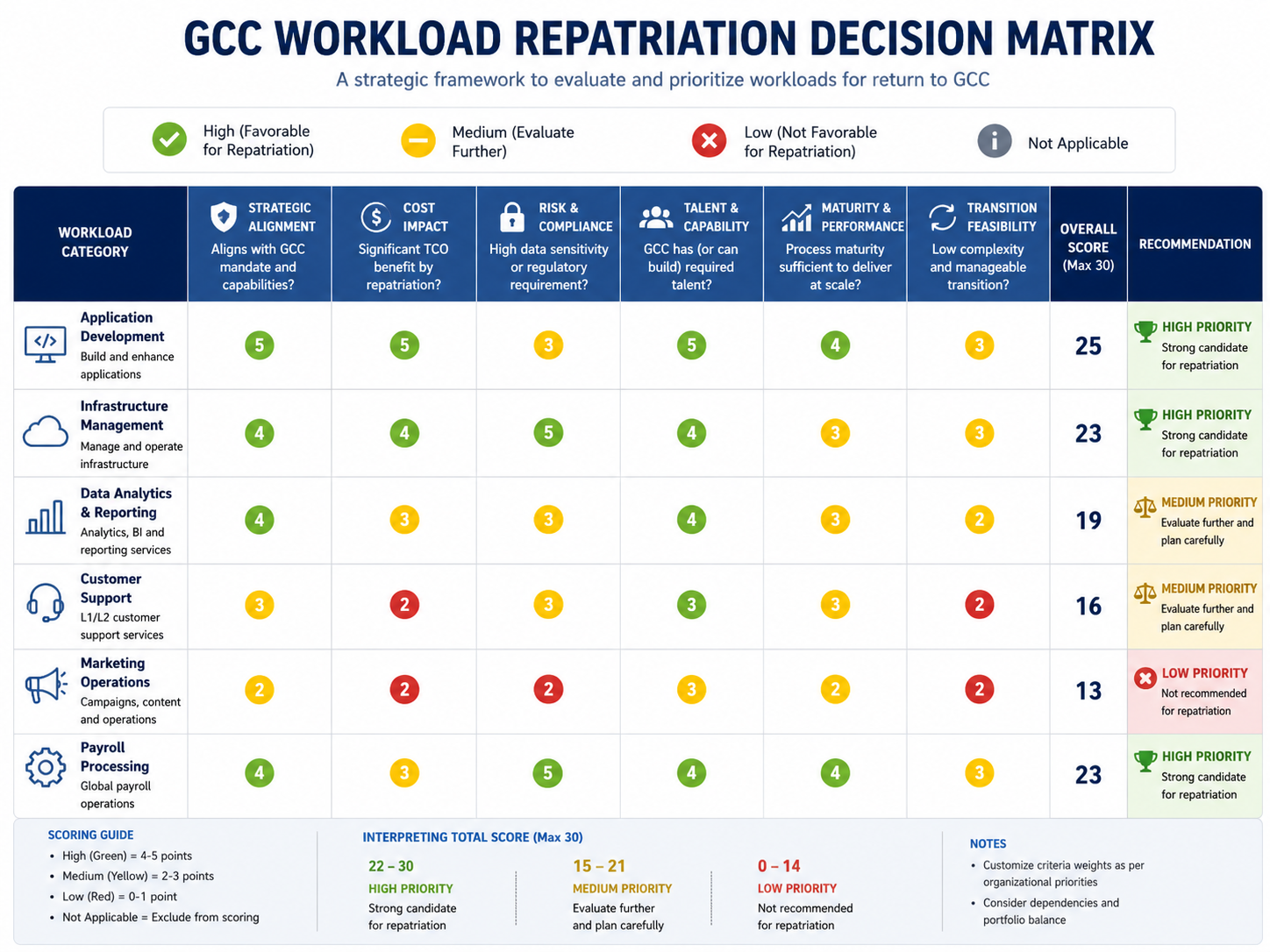
Audit workloads by cost, risk, compliance, and performance
Start with a clear workload inventory.
Score every application by.
Monthly cost
Data sensitivity
Latency needs
Compliance exposure
Integration complexity
Business criticality
Current vendor dependency
This quickly shows which workloads should stay in public cloud and which need a different model.
Choose the right model for each workload
Do not use one rule for everything.
A practical model may look like this.
| Workload Type | Better-Fit Option |
|---|---|
| AI experiments and burst workloads | Public cloud |
| Regulated financial records | Private, sovereign, or controlled hybrid |
| Stable databases | Private cloud or colocation |
| Marketing campaigns | Public cloud |
| Sensitive archives | Local or governed storage |
| Customer-facing mobile apps | Hybrid with strong performance design |
The right answer depends on cost, risk, location, and business value.
Plan exit, migration, security, and vendor governance
Before moving anything, define.
Exit clauses
Encryption controls
Identity and access management
Backup ownership
Disaster recovery targets
SLA responsibilities
Monitoring and incident response
Compliance reporting
Cloud Repatriation Costs, Risks, and Best Practices
Compare total cost of ownership, not only monthly bills
A lower cloud bill does not always mean lower total cost.
Compare.
Infrastructure
People
Licensing
Security tools
Egress
Downtime risk
Monitoring
Support
Compliance audits
Colocation costs
Backup and recovery
The best cloud repatriation GCC strategy is based on full business impact, not only infrastructure pricing.
Avoid over-repatriation
Do not move everything back.
A Dubai retailer may keep marketing automation in public cloud but repatriate order-history databases. A Qatar SME may use local cloud services for sensitive workloads and public cloud for campaigns. A Saudi logistics company may run customer portals in cloud while keeping fleet and operational data in local colocation.
Selective placement keeps the business flexible.
Work with GCC-aware partners
Choose partners who understand regional regulations, Arabic UX, procurement expectations, regulated workloads, and compliance-ready SLAs.
Final Thoughts
Cloud repatriation GCC is not about rejecting cloud. It is about using cloud more intelligently.
For Saudi, UAE, and Qatar firms, the strongest model is often hybrid: public cloud for agility, private or local infrastructure for control, and sovereign options where compliance requires them.
CIOs and CTOs should begin with a workload assessment, then build a phased roadmap around cost, compliance, performance, security, and vendor governance. Mak It Solutions
Planning cloud repatriation GCC for Saudi, UAE, or Qatar? Contact Mak It Solutions to review your workloads, identify cost-saving opportunities, and design a custom hybrid cloud strategy.
FAQs
Q : Is cloud repatriation allowed for Saudi financial institutions?
A : Yes, but it should be handled as a governed technology change, not only an infrastructure move. Saudi financial institutions should document data classification, vendor access, audit trails, business continuity, and cyber controls before moving workloads.
Q : Do UAE companies need sovereign cloud for regulated workloads?
A : Not always. UAE companies should decide based on data sensitivity, sector rules, customer risk, and contractual obligations. Some workloads may need sovereign or UAE-based hosting, while less sensitive systems can stay in public cloud.
Q : How should Qatar banks evaluate QCB cloud compliance before migration?
A : Qatar banks should review QCB’s Cloud Computing Regulation and map each workload by data type, location, encryption, access control, outsourcing risk, disaster recovery, and exit strategy. The goal is to prove governance before, during, and after migration.
Q : Is private cloud cheaper than public cloud for GCC enterprises?
A : Sometimes, but not always. Private cloud can be cheaper for predictable, storage-heavy, or always-on workloads. Public cloud may still be better for short-term projects, AI testing, and burst traffic.
Q : Can GCC companies use public cloud and local colocation together?
A : Yes. This is often the most practical model. A hybrid approach lets GCC firms combine public cloud agility with local control for sensitive, stable, or regulated workloads.
[…] hybrid estates, the dependency thinking used in cloud repatriation and hybrid-cloud planning can also support cryptographic migration […]