
Cloud Cost Optimization GCC: Cut Spend Fast
Cloud Cost Optimization GCC: Cut Spend Fast
Cloud Cost Optimization GCC: Cut Spend Fast
GCC companies are scaling fast on AWS, Azure, Google Cloud, and OCI, but cloud bills can rise quietly until they start hurting margins. For teams in Riyadh, Dubai, Abu Dhabi, Doha, and Jeddah, cloud cost optimization GCC is not just about cutting spend. It is about reducing waste while keeping delivery speed, compliance, reliability, and customer experience intact.
Cloud cost optimization GCC helps Saudi, UAE, and Qatar teams connect cloud usage with business value. The strongest approach brings finance, engineering, security, and leadership into one FinOps model built around visibility, ownership, tagging, rightsizing, dashboards, and local governance.
That matters because GCC cloud decisions often involve more than performance and price. Data residency, regulator expectations, bilingual user experience, multi-cloud resilience, and procurement controls all affect what “optimized” really means.
What Cloud Cost Optimization GCC Means in Practice
Cloud cost optimization GCC means every cloud workload has a clear owner, purpose, budget, environment, and business value. It answers simple but important questions.
Who owns this workload?
Why is it running?
Is it sized correctly?
Is it tagged correctly?
Does it support a product, customer, or compliance need?
Can it be optimized without adding risk?
How FinOps Turns Cloud Spend Into Accountability
FinOps is not a finance-only activity. The FinOps Foundation describes it as an operating framework and cultural practice that helps teams maximize technology business value, make timely data-driven decisions, and create financial accountability through collaboration between engineering, finance, and business teams.
In practice, that means developers are not blamed after the invoice arrives. Instead, teams agree on budgets, alerts, reporting, and trade-offs before usage becomes expensive.
Why GCC Cloud Bills Grow Quickly
Cloud bills usually grow through small leaks: idle test environments, oversized databases, duplicated storage, unoptimized Kubernetes clusters, weak tagging, AI workloads, and regional redundancy.
GCC teams also work across fast-changing cloud footprints. AWS lists Middle East regions in Bahrain and the UAE, Microsoft lists Qatar Central plus UAE Central and UAE North, Google Cloud lists Doha and Dammam locations, and Oracle publishes region and realm models for different compliance needs. Always verify live provider region pages before making architecture or residency decisions.
Why Localized Cost Governance Matters
A Riyadh fintech, Dubai marketplace, and Doha SME may use similar tools, but their risks are not identical. A low-cost architecture that works for a retail app may not be acceptable for regulated financial data.
Good governance does not slow teams down. It gives them approved regions, reusable templates, budget guardrails, and clear escalation paths.
Why GCC Companies Overspend on Cloud
Overspending often starts quietly. A team launches a campaign, creates a test environment, increases storage, or adds new analytics workloads. Nobody notices until the invoice lands.
| Cost issue | What it looks like | Practical fix |
|---|---|---|
| Idle resources | Dev servers running after office hours | Scheduled shutdowns and owner alerts |
| Overprovisioning | Large databases with low utilization | Rightsizing and performance review |
| Poor tagging | Spend cannot be mapped to teams | Mandatory owner, product, and environment tags |
| Shadow IT | Separate accounts with no finance visibility | Central account structure and budgets |
| Duplicate storage | Old backups and unused snapshots | Retention policy and archive rules |
For reporting, teams can connect cloud billing data with [business intelligence services] so finance and engineering see the same numbers.
Shadow IT in Riyadh, Dubai, and Doha
Fast-moving teams often spin up new accounts, environments, or proof-of-concept workloads to meet deadlines. That is normal in growing companies, but without tagging and ownership, these experiments become permanent costs.
A Dubai e-commerce team may create extra infrastructure before a campaign. A Doha product team may test a prototype and forget it. A Riyadh enterprise team may duplicate environments for security testing. None of these are bad decisions by default; they just need expiry dates, budgets, and owners.
Finance and Engineering Need the Same View
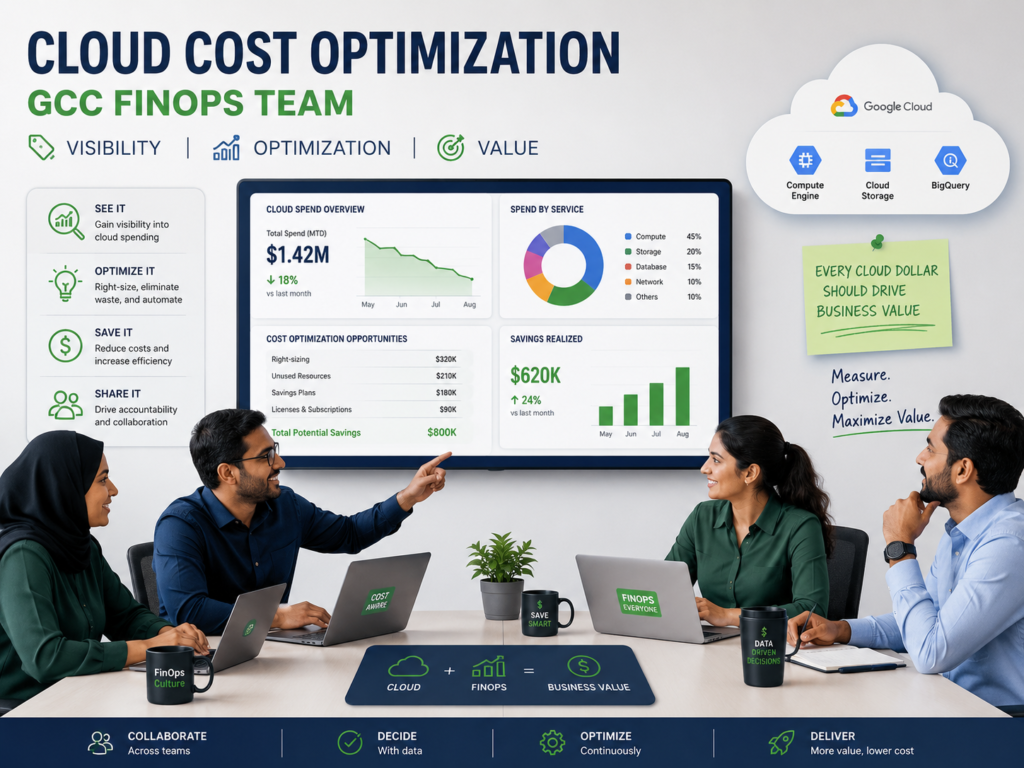
Finance wants predictability. Engineering wants speed. Cloud cost optimization GCC works when both teams share one view of cost, risk, and business value.
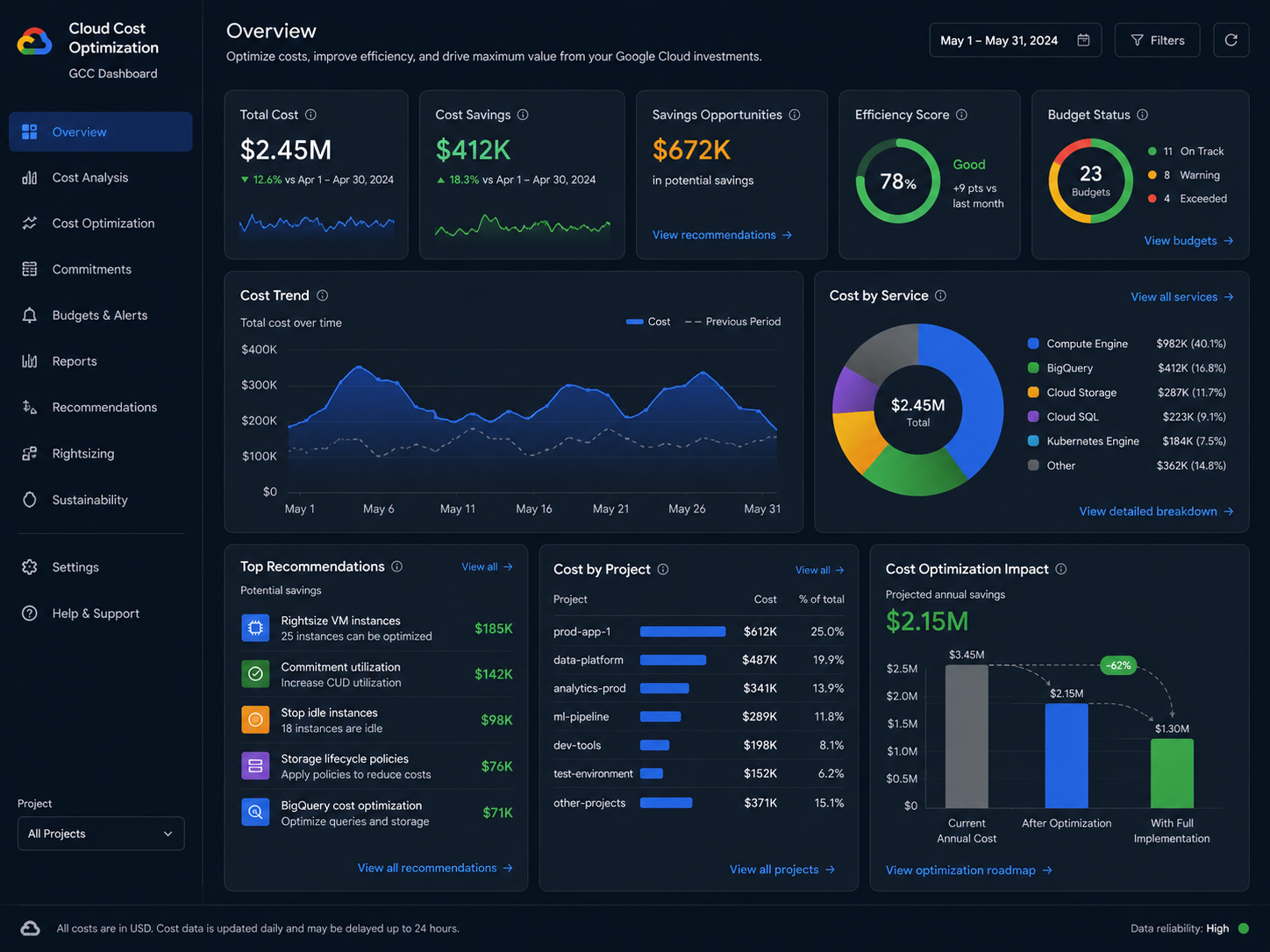
That shared view should include current spend, forecasted spend, untagged resources, anomalies, commitments, and unit-cost metrics such as cost per order, customer, API call, shipment, or tenant.
How to Reduce Cloud Spend Without Slowing Developers
The goal is not to block builders. The goal is to remove waste developers do not need.
Rightsize Compute, Storage, Databases, and Kubernetes
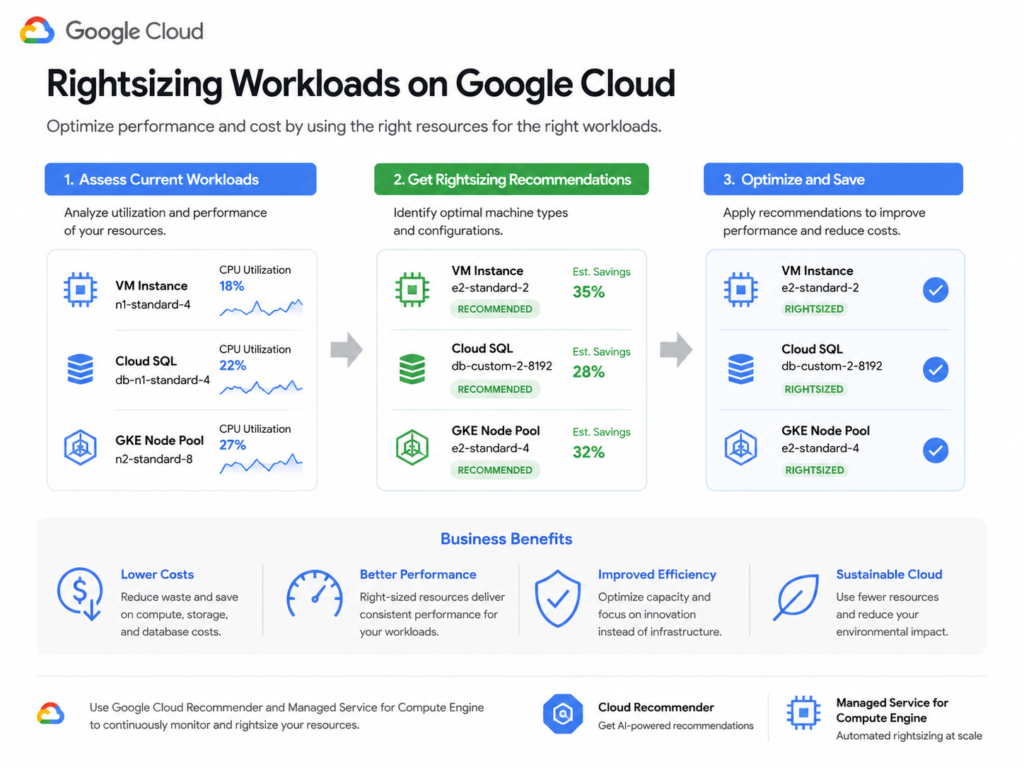
Start with utilization. Review CPU, memory, storage, database IOPS, network transfer, and container usage. Then resize workloads, enable autoscaling, archive cold data, and remove unused disks or snapshots.
For applications where performance and cost are tightly connected, review the architecture with [back-end development services]. Small code or database changes can sometimes reduce infrastructure pressure more effectively than simply changing instance sizes.
Use Commitments Carefully
Reserved Instances, Savings Plans, and provider commitments can help predictable workloads, but they should not be the first move. Commit only after you understand steady production usage.
A common mistake is buying commitments too early, then changing architecture, regions, or instance families later. Start with visibility, remove waste, then commit where usage is stable.
Build Dashboards Developers Will Actually Use
A dashboard should not be a finance spreadsheet with cloud logos. It should show practical signals:
Team spend
Budget burn
Forecast variance
Untagged resources
Idle environments
Anomaly alerts
Cost per product or customer
For GCC teams, bilingual dashboards may help leadership and operations teams. Clear English-Arabic labels, role-based views, and simple visual summaries can make cloud cost ownership easier. [Front-end development services] can support this kind of dashboard experience.
Compliance-Aware Cloud Cost Optimization GCC
Compliance-aware optimization prevents a dangerous mistake: choosing the cheapest option while increasing regulatory or operational risk.
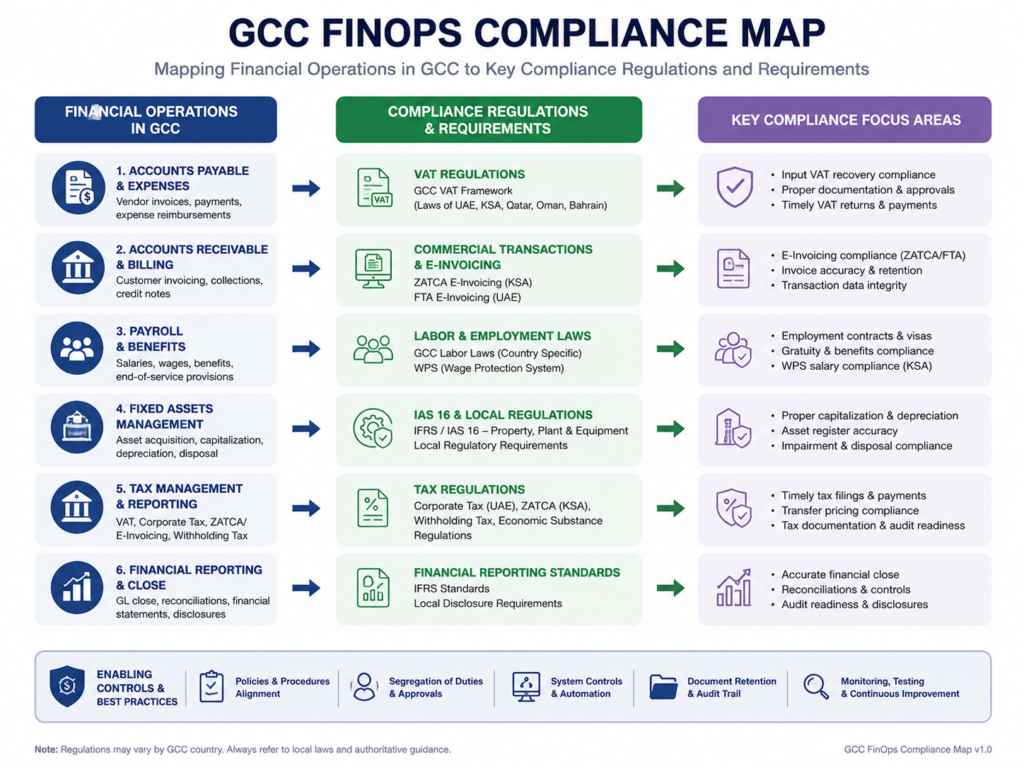
This is planning guidance, not legal advice. Regulated teams should validate cloud decisions with their internal legal, compliance, risk, and security teams.
Saudi Arabia.
For Saudi financial organizations, cloud adoption should be governed from the start. SAMA’s Cloud Computing control says member organizations should define, implement, monitor, measure, and evaluate cybersecurity controls for hybrid and public cloud services. It also references due diligence, SAMA approval before using cloud services or signing contracts, and data-location expectations for Saudi Arabia unless explicit approval applies.
From a FinOps point of view, this means cost dashboards should not only show “cheap vs expensive.” They should also show data class, region, workload owner, audit status, and risk level.
UAE.
UAE teams should consider TDRA expectations, ADGM or DIFC requirements where relevant, identity flows such as UAE Pass, and sovereign hosting needs for sensitive workloads.
TDRA’s Cloud Service Provider initiative uses a voluntary CLSP Information Form to gather information from cloud providers operating in or engaging with the UAE market, with goals around collaboration, transparency, trust, and the cloud regulatory framework.
For Dubai and Abu Dhabi teams, the practical FinOps takeaway is simple: connect cost governance with procurement, security review, and data classification.
Qatar.
Qatar financial services teams should review QCB cloud outsourcing controls before moving regulated workloads. QCB’s Cloud Computing Regulation entered into force on 15 April 2024 and applies to QCB-regulated entities adopting or already using cloud deployments. It covers governance, strategy, due diligence, cloud arrangements, data protection, security testing, and exit controls.
For Doha teams, cost optimization should include business continuity, audit access, vendor due diligence, and exit planning, not only monthly savings.
Cloud Cost Optimization Use Cases for GCC Industries
Fintech
A Riyadh fintech can reduce non-production spend while keeping encryption, logs, approvals, and regulator-facing controls intact. The best savings usually come from idle environments, duplicated analytics workloads, and poor tagging.
Government
Government teams need forecast accuracy, chargeback, policy-based guardrails, and regional control. For hosting strategy, add [sovereign cloud vs hyperscalers GCC guide] as a supporting internal resource.
Retail and Logistics
A Dubai retail or logistics platform may need heavy capacity during campaigns, Ramadan demand, or seasonal promotions, then far less capacity afterward. Autoscaling, caching, and clean architecture help reduce cost without hurting users.
For customer-facing platforms, connect optimization with [e-commerce solutions] and [mobile app development services] so experience, performance, and spend are reviewed together.
Tools, Metrics, and Dashboards GCC Teams Should Track
A strong GCC FinOps dashboard should focus on business value, not just total spend.
Track.
Cost per customer
Cost per product
Cost per transaction
Forecast accuracy
Untagged spend
Idle resources
Budget variance
Anomaly alerts
Commitment utilization
Spend by country, product, team, and environment
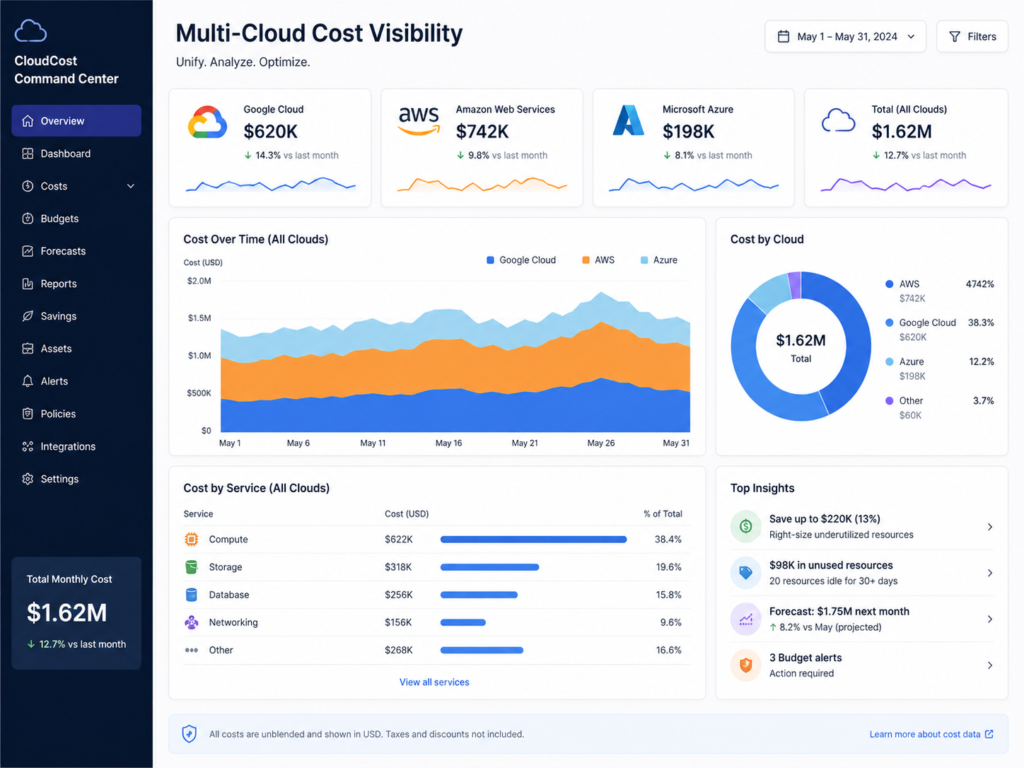
For multi-cloud teams, visibility across AWS, Azure, Google Cloud, and OCI is essential. Pair cost reviews with [cloud security misconfigurations guide], because misconfigured cloud resources can create both security risk and unnecessary spend.
How to Start a GCC FinOps Program
Start With Visibility
Export billing data, map workloads to owners, identify untagged resources, and list obvious waste. Do not begin with complex tooling. Begin with clarity.
Create Governance Without Blocking Product Teams
Set guardrails, not roadblocks. Define approved regions, tagging rules, budget alerts, secure templates, and exception workflows.
In practice, product teams accept governance more easily when it helps them move faster. A clean landing zone, reusable templates, and clear approval paths are better than last-minute finance reviews.
Review Costs With the Right People
Cloud cost reviews should include engineering, finance, security, and business leadership. Engineering sees technical waste. Finance sees budget pressure. Security sees risk. Leadership sees product priorities.
Cloud cost optimization GCC succeeds when these groups discuss savings, reliability, compliance, and customer experience together.
Concluding Remarks
Cloud cost optimization GCC is not a one-time cleanup project. It is an operating habit that helps Saudi, UAE, and Qatar teams scale cloud platforms with better visibility, stronger ownership, and fewer invoice surprises.
Ready to reduce cloud waste without slowing your GCC product roadmap? Explore Mak It Solutions servicesor contact Mak It Solutions to request a Saudi, UAE, or Qatar cloud cost strategy.
FAQs
Q : Is cloud cost optimization useful for Saudi fintech companies?
A : Yes. Saudi fintech companies can use cloud cost optimization GCC to reduce waste while keeping security, auditability, data classification, and SAMA-related governance in view. The key is not simply shutting down servers; it is mapping every workload to an owner, risk level, and business purpose.
Q : How can UAE SaaS startups reduce AWS and Azure bills?
A : UAE SaaS startups can start by shutting down idle environments, rightsizing production workloads, tagging every resource, and setting budget alerts. Commitments should come later, once stable usage is clear.
Q : What cloud cost metrics should Qatar financial services teams track?
A : Qatar financial services teams should track cost per customer, cost per transaction, forecast accuracy, untagged spend, idle resources, and budget variance. They should also connect cloud cost reporting with outsourcing, risk, business continuity, and exit planning.
Q : Do GCC companies need a FinOps consultant or an internal cloud team?
A : Many companies benefit from both. Internal teams understand day-to-day engineering needs, while a FinOps consultant can speed up tagging models, dashboards, governance design, and savings analysis.
Q : How often should GCC teams review cloud spend?
A : Engineering teams should review cloud waste frequently, while leadership should review forecasts, budgets, and business accountability on a regular management rhythm. The important part is consistency: cost control should happen before the invoice becomes a surprise.
[…] cloud spending is already a concern, our guide to cloud cost optimization in the GCC can help frame security investments alongside broader infrastructure […]