


AI Search Optimization GCC: The Original Data Edge
AI Search Optimization GCC: The Original Data Edge
AI Search Optimization GCC: The Original Data Edge
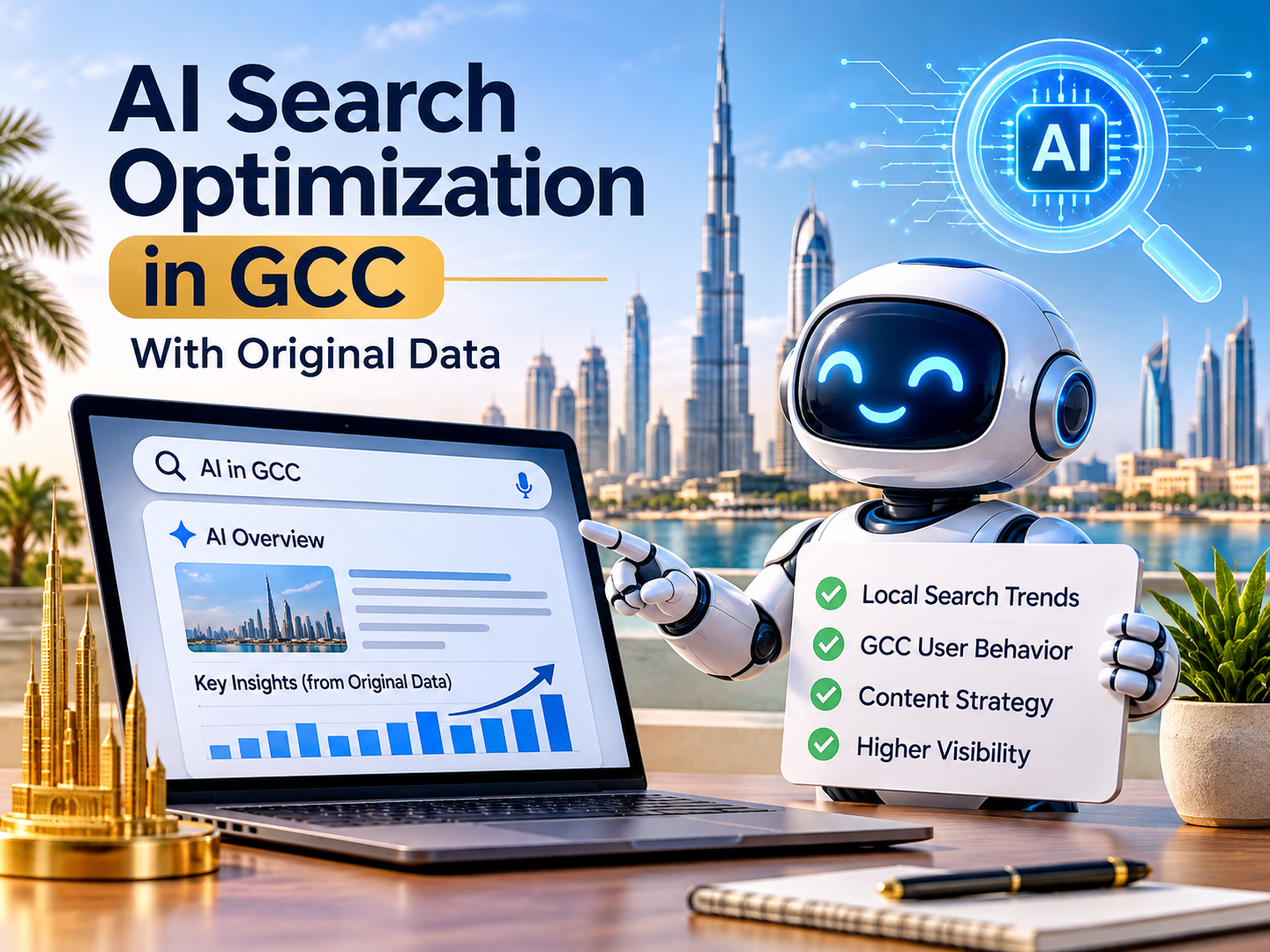
Original research is becoming a valuable competitive advantage for businesses investing in AI search optimization GCC strategies. When companies in Saudi Arabia, the UAE, and Qatar publish credible local findings instead of repeating generic industry advice, they give customers, search engines, and AI-powered platforms more useful information to work with.
The principle is simple: original GCC data can strengthen content authority, increase opportunities for brand mentions and AI citations, and help businesses answer market-specific questions. It does not guarantee search rankings or AI visibility, but it gives your content something competitors cannot easily reproduce.
Consider two Riyadh businesses publishing articles about digital customer behavior. One summarizes international marketing trends. The other investigates questions Saudi customers actually ask, documents its research methods, and publishes the findings.
Both articles may be technically optimized. Only one offers new local evidence. Mak It Sol
For marketing teams working across Riyadh, Dubai, Abu Dhabi, and Doha, that difference matters. Arabic-English search behavior, industry requirements, and regional purchasing expectations create opportunities to develop content with genuine local relevance.
What Is Non-Commodity Content in GCC AI Search?
Non-Commodity Content vs. Generic AI-Generated Articles
Non-commodity content provides something readers cannot easily find in dozens of similar articles. That might be original research, firsthand industry knowledge, expert interpretation, or a useful analysis of previously disconnected information.
Generic content often repeats established advice without adding meaningful evidence.
For example, a standard fintech article might explain why customer onboarding matters. A more distinctive Saudi fintech report could examine actual onboarding questions, identify recurring difficulties, and explain what those findings suggest.
|
Commodity content |
Non-commodity content |
|---|---|
| Recycled industry statistics | Original customer research |
| General international examples | Verified GCC market evidence |
| Unsupported conclusions | Documented methods and limitations |
| Rewritten competitor insights | Independent findings and analysis |
| Broad recommendations | Practical, locally relevant insights |
AI-generated content is not automatically low-quality. The problem arises when publishing processes produce interchangeable articles with little original value.
The goal is not to avoid AI tools. It is to make sure the final content contributes something useful.
Why Information Gain Matters for AI Search Optimization GCC
Information gain describes the additional useful knowledge a page provides beyond information already available elsewhere.
From an editorial perspective, it is an effective way to evaluate whether content deserves attention.
Suppose several UAE marketing websites already explain the importance of bilingual SEO. Publishing another broad explanation adds little.
However, a carefully documented study comparing how Arabic- and English-speaking procurement teams search for enterprise software could provide valuable new insight.
That is the kind of contribution businesses should pursue through AI search optimization GCC.
Information gain should not be treated as a guaranteed Google ranking factor. It is better understood as a content-quality principle that encourages originality and usefulness.
How Original Saudi, UAE, and Qatar Research Creates Value
Every GCC market presents opportunities to investigate questions that general international research may overlook.
A Saudi business could study recurring fintech onboarding difficulties. A Dubai retailer might examine customer checkout concerns across language preferences. A Doha technology company could document common enterprise cloud-procurement questions.
These are potential research projects, not established findings.
Their value depends on collecting appropriate evidence, explaining the methodology, and being transparent about limitations.
For companies operating across multiple GCC markets, combining local research with careful country comparisons can produce particularly useful resources.
Why Original GCC Data Can Strengthen AI Search Visibility
Why Verifiable Research Is More Useful Than Recycled Statistics
Original research becomes more persuasive when readers can understand where its conclusions came from.
A business report should make its methodology visible rather than presenting findings as unexplained facts.
Useful research documentation includes.
The research question and intended audience
The source of the information
Collection dates and geographic coverage
Sample size and participant recruitment methods
Analytical methods and study limitations
Links to relevant supporting sources
These details help readers evaluate whether the conclusions are relevant to their needs.
They also support the broader principles behind Google’s experience, expertise, authoritativeness, and trustworthiness framework, commonly called E-E-A-T.
E-E-A-T is not a standalone ranking score. Nevertheless, showing credible expertise and providing transparent evidence are sensible practices for publishing trustworthy material.
How GCC Research Can Support AI Citations and Brand Mentions
AI-powered search experiences can present answers using information from multiple sources.
If your organization publishes a distinctive, clearly explained regional study, other websites, journalists, analysts, and AI search systems may have a reason to reference it.
For example, a documented study about enterprise technology adoption in Doha could become a useful source when someone researches Qatar’s business technology landscape.
That does not mean AI platforms will automatically cite the publication.
AI Overviews and other generative search experiences use changing retrieval and response systems. Even high-quality research may not appear in a particular answer.
The practical objective is to make your information useful, accessible, identifiable, and worth referencing.
A complementary entity SEO strategy can also help communicate a company’s expertise and maintain a consistent brand identity across online sources.
How to Present Local Findings for Readers and AI Retrieval
Excellent research can lose much of its practical value when it is difficult to navigate.
Publish findings in a format that makes important information easy to identify and evaluate.
Start with a short executive summary containing the research question, main findings, and important limitations. Follow it with readable tables, clearly labeled visuals, methodology details, and supporting references.
Avoid hiding essential evidence inside graphics or downloadable files alone. Important findings should also be available as accessible webpage text.
For GCC audiences, professionally reviewed Arabic and English versions can make the information more useful across different search contexts.
Strong SEO fundamentals, including crawlable pages, descriptive headings, and relevant internal links, remain important.
Original research and technical accessibility work best together.
Saudi Arabia vs. UAE vs. Qatar: Where Original Data Matters
GCC markets share commercial connections, but their customers, industries, and regulatory environments are not interchangeable.
An effective research strategy should reflect those differences without relying on assumptions about national purchasing behavior.
Saudi Arabia.
Saudi Arabia offers research opportunities across fintech, logistics, e-commerce, enterprise technology, and public-sector digital transformation.
Saudi Vision 2030 provides wider economic and transformation context for businesses investigating these industries.
A Riyadh fintech company, for example, could examine the questions customers ask during digital onboarding.
The research might investigate which explanations users find confusing, what information they look for before registering, and which support questions recur.
Actual conclusions should come from collected evidence rather than assumptions about Saudi consumers.
Businesses researching regulated financial activities should also consider relevant Saudi Central Bank requirements.
Public information from Saudi Arabia’s General Authority for Statistics can provide additional background and help distinguish company-level findings from wider market conditions.
UAE.
Dubai and Abu Dhabi offer different opportunities for original commercial research.
Dubai e-commerce businesses might investigate checkout difficulties, customer-service expectations, or language-related purchasing questions.
Abu Dhabi technology providers could examine enterprise procurement processes, cloud adoption considerations, or technical support needs.
Bilingual content may be valuable in both markets, but businesses should verify audience preferences instead of assuming everyone searches the same way.
Regulatory context matters as well.
Companies operating within the Abu Dhabi Global Market (ADGM) or Dubai International Financial Centre (DIFC) may be subject to distinct frameworks. Other UAE businesses may operate under applicable federal requirements.
Research involving financial services or personal data should identify which rules apply before collection or publication.
Qatar.
Qatar provides opportunities for focused research into local industry requirements, enterprise purchasing, logistics, and technology services.
For example, a Doha cloud consultancy could study how local procurement teams evaluate hosting options, security requirements, and service availability.
Google Cloud’s Doha region may be relevant to such discussions, but selecting a local cloud region does not automatically establish legal or regulatory compliance.
Qatar National Vision 2030 provides broader development context, while official statistical publications can help businesses interpret sector conditions.
In a specialized market, narrowly focused research may be more useful than a broad report that provides little practical detail.
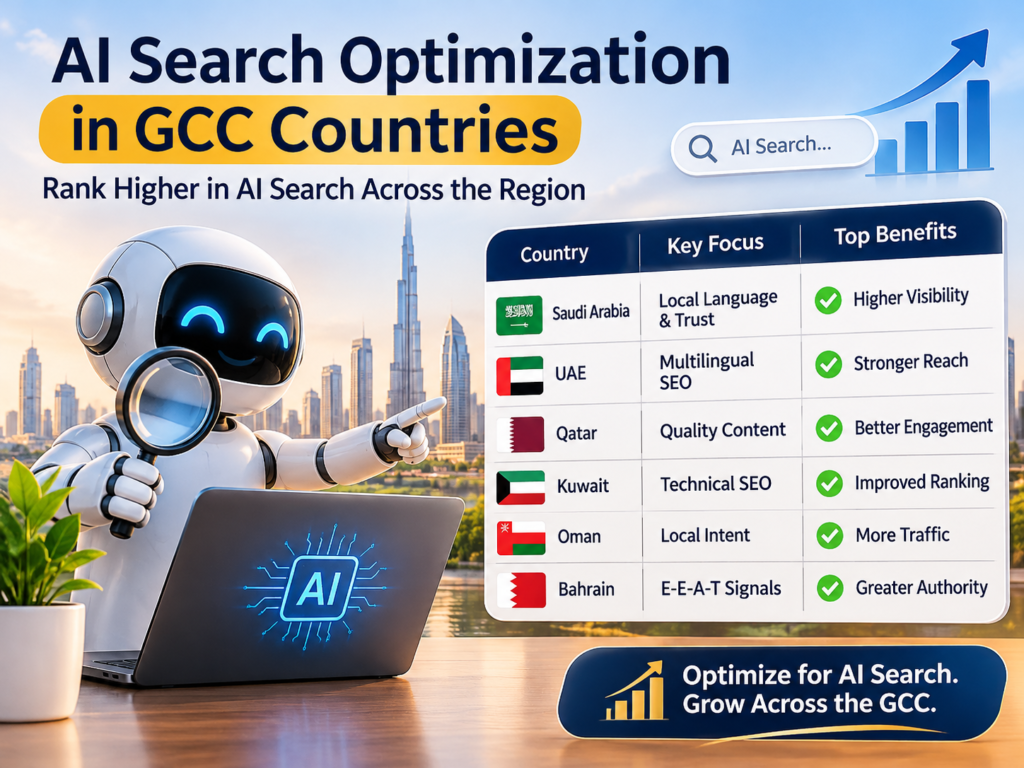
|
Country |
Potential research opportunity | Useful content focus |
|---|---|---|
| Saudi Arabia | Fintech, logistics, and consumer research | Arabic search intent and Saudi industry context |
| UAE | E-commerce and enterprise B2B benchmarks | Arabic-English research and procurement insights |
| Qatar | Cloud services and specialized industries | Doha-specific expertise and buyer questions |
These are research opportunities, not claims that every company or customer in a country behaves similarly.
How to Create Original GCC Research Responsibly
Original regional research does not always require a major industry survey.
A focused project using consented customer feedback, documented interviews, or appropriately anonymized operational data can provide meaningful insights.
What matters is whether the findings are useful, methodologically sound, and presented accurately.
Collect
Source and document
Validate
Check and review
Publish
Explain and share
Collect First-Party Data and Define Your GCC Sample
Begin with a specific question that matters to your intended audience.
For instance, a Saudi logistics provider might investigate which delivery-related questions appear most often during customer inquiries.
Possible sources include customer surveys, consented interviews, appropriately anonymized analytics, and documented internal support trends.
Before collecting information, define who the study covers and how participants or records are selected.
Record the collection period, sample size, recruitment method, market coverage, and limitations.
A small survey can still provide useful insights, but it should never be presented as representative of an entire national population without sufficient evidence.
Expected output: A documented dataset, methodology summary, and source register.
Validate Country Differences and Data Governance
Once information has been collected, review its accuracy and relevance.
Check whether apparent differences between Saudi Arabia, the UAE, and Qatar reflect genuine findings or differences in sample composition and research methods.
Privacy and data governance deserve careful attention.
Depending on the project, relevant frameworks may include Saudi Arabia’s Personal Data Protection Law (PDPL), applicable UAE data-protection requirements, and Qatar’s personal data privacy legislation.
Businesses working in regulated sectors may also need to consider the Saudi Central Bank (SAMA), Qatar Central Bank (QCB), or relevant UAE financial regulators.
The UAE’s Telecommunications and Digital Government Regulatory Authority (TDRA) may be relevant to certain digital-sector issues, but it should not automatically be treated as the regulator for every technology or fintech study.
Similarly, hosting options such as AWS Bahrain, Azure UAE Central, or Google Cloud Doha are infrastructure considerations, not proof of compliance.
Have qualified personnel review applicable requirements before handling or publishing sensitive information.
Expected output: A validated research dataset, documented limitations, and an appropriate privacy review.
Publish a Bilingual Evidence-Led Research Asset
Turn the verified findings into a resource your audience can understand and use.
A strong regional research publication may include an executive summary, detailed findings, country comparisons, a methodology section, and a downloadable brief.
Where relevant, publish a professionally reviewed Arabic companion that reflects local terminology and search intent.
Avoid mechanical translation that changes the meaning of technical or industry-specific information.
Make the main findings accessible directly on the page, supported by clear tables and source references.
For multilingual implementation, the technical SEO checklist for Arabic GCC websites provides a useful starting point.
Expected output: A transparent, bilingual research publication designed for readers and search discoverability.
How GCC Companies Can Measure AI Search Visibility
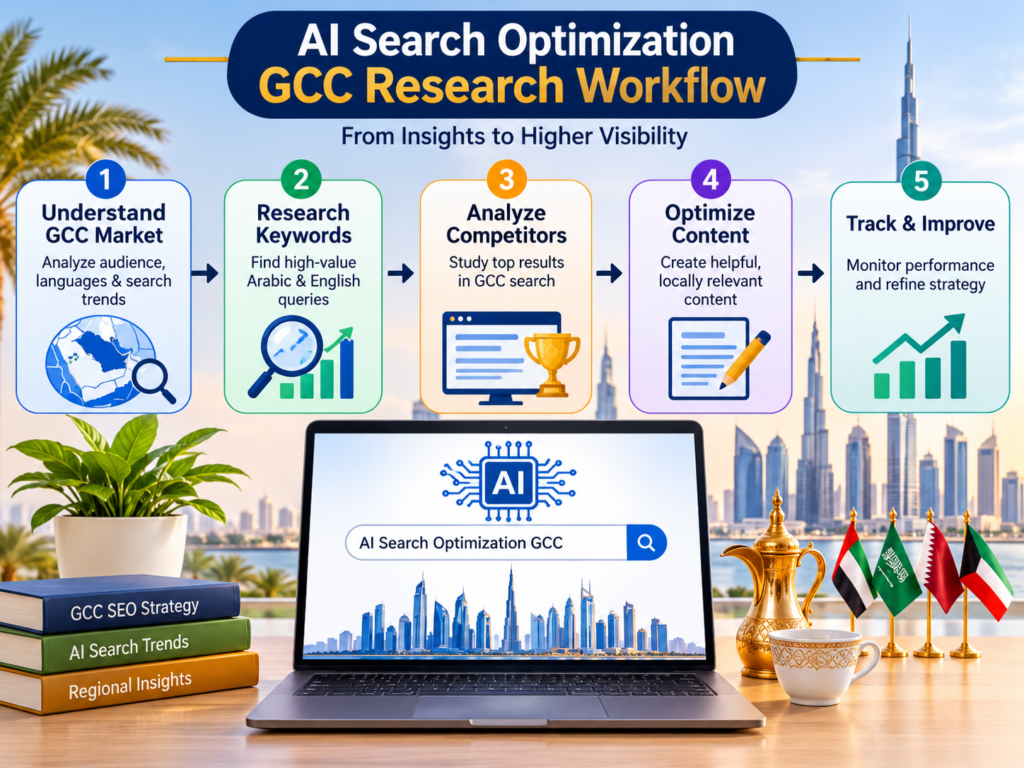
Publishing research is only part of the process.
Marketing teams also need to understand whether the material is reaching relevant audiences and supporting meaningful business outcomes.
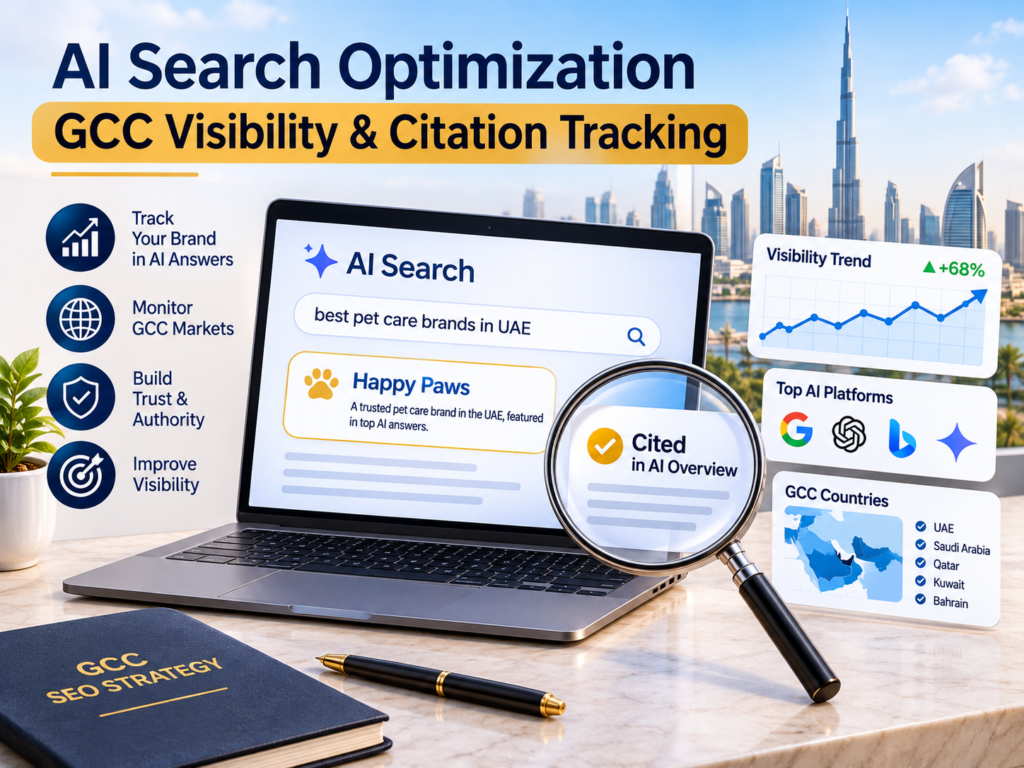
Track AI Citations, Brand Mentions, and Referral Signals
AI search visibility should not be reduced to a single score.
Track several indicators that reveal how the research performs across different discovery channels.
Useful measures include visible AI citations, unlinked brand mentions, identifiable AI referral traffic, branded search activity, and qualified customer inquiries.
Document the testing platform, search question, language, country context, and observation date.
AI-generated answers can vary between tests. A citation observed once should not be treated as a permanent placement.
Also distinguish visibility from business results. A widely cited report may generate awareness without directly producing sales.
Compare Saudi, UAE, and Qatar Search Performance
Cross-country comparisons require a consistent methodology.
For example, a business could prepare equivalent Arabic and English research questions and evaluate responses across Saudi Arabia, the UAE, and Qatar.
Record the search platforms, testing conditions, answer quality, brand references, and cited sources.
Repeat tests over time and note changes rather than assuming that results remain stable.
Language, location context, personalization, platform updates, and prompt wording may influence responses.
The objective is to identify useful patterns, not claim that a limited set of tests represents every search experience in the GCC.
Evaluate Research ROI, Costs, and Production Timelines
Original research requires investment.
Costs may include participant recruitment, data collection, analysis, expert review, translation, visual design, and distribution.
Instead of relying on unsupported regional pricing estimates, build a budget around the actual project scope.
|
KPI |
Measurement source | Review frequency | Business purpose |
|---|---|---|---|
| AI citations | Documented prompt testing |
Monthly |
Monitor discoverability |
| Organic engagement | Search Console and analytics |
Monthly |
Understand audience interest |
| Qualified leads | CRM records |
Quarterly |
Evaluate commercial contribution |
| Research costs | Internal project records |
Per project |
Calculate investment |
| Brand mentions | Media and search monitoring |
Monthly |
Assess external recognition |
A research campaign should ultimately be evaluated against its original objectives.
If the goal is thought leadership, relevant citations and professional engagement may matter most. If the goal is customer acquisition, qualified leads and attributed business opportunities deserve greater attention.
Connect those findings to a broader digital marketing strategy so research supports ongoing commercial priorities.
Best Practices for Building Lasting GCC GEO Authority
Strengthen Expert Authorship and Local Entity Context
Trustworthy content should make it clear who created the research, why they are qualified to interpret it, and where the supporting evidence comes from.
Identify contributors and reviewers when appropriate. Explain their relevant expertise without overstating credentials.
Include research limitations, publication dates, and credible primary references.
Maintain consistent business information across your website and relevant professional profiles.
For GCC companies, genuine local expertise is more persuasive than simply mentioning Riyadh, Dubai, or Doha throughout an article.
Readers should be able to see how regional knowledge shaped the findings.
Optimize Bilingual Pages Without Creating Duplicate Content
Arabic and English audiences may use different terminology and ask different questions, even when they are investigating the same product or service.
That is why bilingual SEO requires more than direct keyword translation.
Adapt examples, headings, terminology, and explanations to the intended audience while preserving factual consistency.
Use suitable hreflang annotations, descriptive page titles, crawlable navigation, and accurate structured data.
A thoughtful internal linking strategy can also help readers discover related research and services.
Avoid publishing nearly identical country-specific pages that offer no meaningful regional distinction.
Each page should serve a clear purpose.
Decide When a GCC GEO Audit or Research Partner Adds Value
Not every company needs an external agency to produce original research.
An internal team may be capable of handling a focused project when it already has suitable research, analytics, privacy, and multilingual content expertise.
External specialists may be useful when projects involve complicated technical architecture, multilingual publishing, AI visibility measurement, or research design.
Before engaging a partner, define the problem you want to solve.
Ask how research quality will be assessed, which metrics will be monitored, and how findings will become practical marketing assets.
It also helps to understand the differences between AEO, SEO, and GEO before deciding where to invest.
The strongest strategy combines original knowledge with sound search fundamentals rather than treating generative search optimization as a replacement for SEO.
Final Thoughts
Effective AI search optimization GCC begins with useful knowledge, not simply publishing more articles.
Businesses across Saudi Arabia, the UAE, and Qatar have opportunities to answer local questions through original research, transparent methodologies, and credible industry analysis.
That evidence can make content more valuable to readers and create stronger opportunities for search visibility, brand recognition, and AI citations.
Start with a question your customers genuinely need answered. Collect relevant information responsibly, validate your findings, and publish them in a format that people can understand and reference.
A distinctive research asset can continue supporting your content strategy long after its initial publication.
If your business wants to move beyond generic content, explore Mak It Solutions’ services or contact our team.
Discuss how an evidence-led SEO, AEO, and GEO strategy could help identify original research opportunities and strengthen your brand’s visibility across Saudi Arabia, the UAE, and Qatar.
FAQs
Q : Can small Riyadh businesses create useful GEO research without a large budget?
A : Yes. Small Riyadh businesses can conduct focused customer surveys, use consented feedback, analyze appropriately anonymized internal data, or interview relevant industry specialists.
A Jeddah logistics startup, for instance, could document frequently reported delivery concerns among its existing customers.
The key is to explain the sample size, research methods, and limitations rather than presenting a small study as representative of Saudi Arabia.
Q : Should Dubai B2B websites publish research in Arabic and English?
A : For businesses serving both language audiences, bilingual research can improve accessibility and make specialized information more useful.
However, Arabic and English search intent may differ. Content should reflect relevant terminology, audience needs, and purchasing context rather than relying on word-for-word translation.
Use professionally reviewed translations, appropriate hreflang annotations, and language-specific internal links.
Q : Which local sources can Doha companies use to validate industry benchmarks?
A : Doha companies can consult Qatar’s National Planning Council publications, relevant government datasets, and credible industry reports.
Financial-sector research may also benefit from applicable Qatar Central Bank publications.
These sources can provide market context, but they should not be presented as original company findings. Always distinguish public statistics from your own research.
Q : Do UAE fintech content studies require additional regulatory review?
A : They may, depending on the information collected, regulated activities, and applicable jurisdiction.
Companies operating under ADGM, DIFC, or UAE federal frameworks should identify the relevant data-protection and sector-specific requirements.
Research involving financial customers or sensitive personal information should receive suitable compliance review before publication.
This is general information, not legal advice.
Q : Can GCC companies reliably compare Arabic and English AI search results?
A : Yes, within the limits of a documented testing process.
Use equivalent questions, record platforms and observation dates, and repeat tests under consistent conditions.
Compare citations, brand mentions, relevance, and factual accuracy. Do not assume that differences in individual AI-generated responses establish permanent rankings or wider market preferences.