

Building Energy Management System for GCC Growth
Building Energy Management System for GCC Growth
Building Energy Management System for GCC Growth
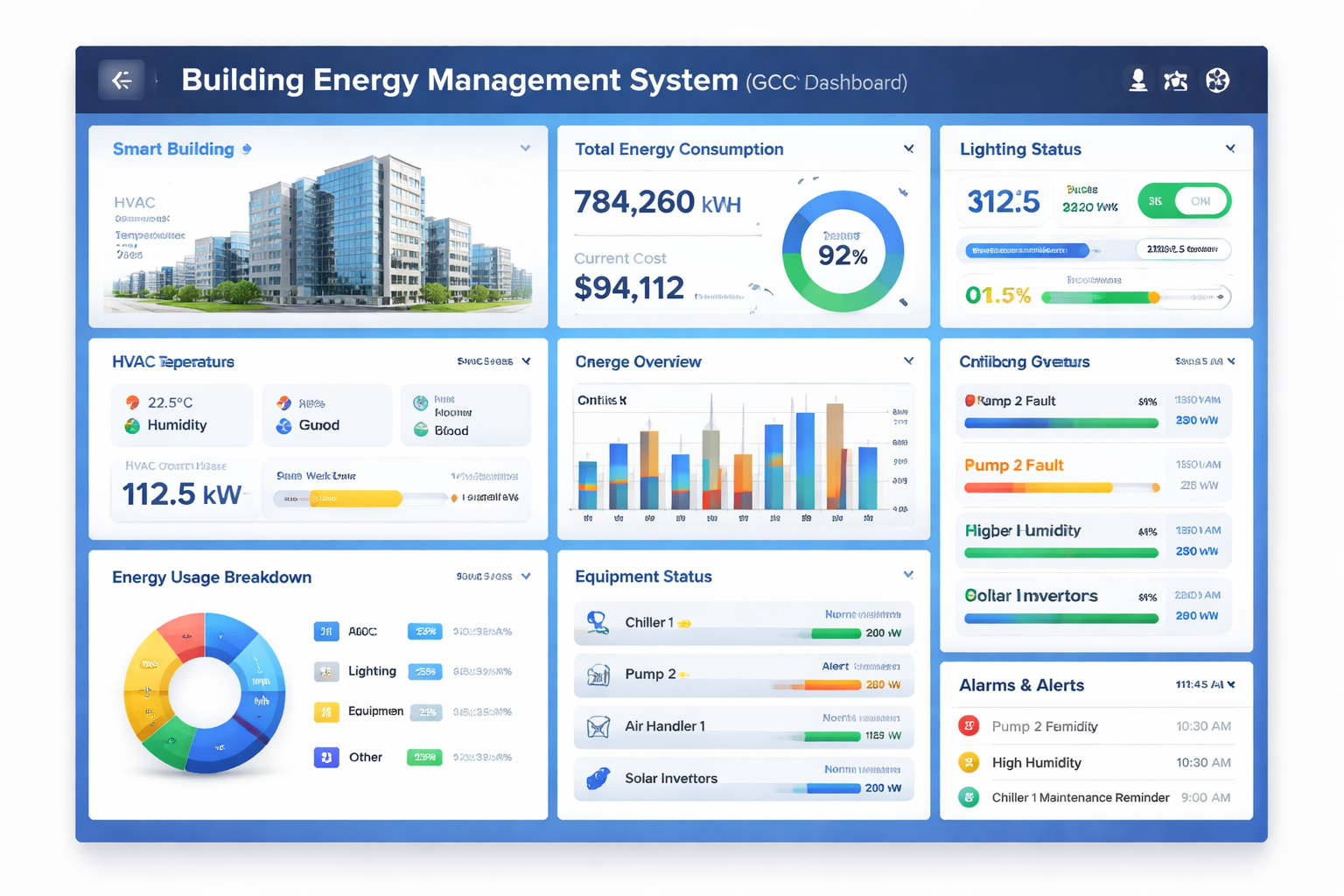
A building energy management system helps commercial buildings in Saudi Arabia, the UAE, and Qatar reduce waste, improve HVAC performance, and make faster operational decisions using real-time data. For owners, operators, and facility teams across Riyadh, Dubai, and Doha, it is becoming a practical way to control costs, support compliance, and plan smarter retrofits.
Cooling demand is high across the GCC. So are expectations around building performance, uptime, and sustainability. That is why a building energy management system is no longer just a technical add-on. It is increasingly a business decision that affects operating margins, tenant experience, and long-term asset value.
What Is a Building Energy Management System?
A building energy management system, often called BEMS, collects data from HVAC, lighting, meters, and connected sensors. It then turns that data into dashboards, alerts, schedules, and optimization rules that help teams cut waste and improve performance.
In GCC buildings, that usually means starting with cooling-heavy areas where inefficiencies are easiest to spot and energy savings are easiest to prove.
BEMS vs. BMS vs. BAS
These terms are often used together, but they are not exactly the same.
BMS or BAS mainly focuses on automation and control of building systems
BEMS adds an energy layer with analytics, benchmarking, reporting, and continuous optimization
That difference matters in the GCC, where electricity and water costs can weigh heavily on large commercial assets.
Why Energy-Focused Controls Matter in the GCC
In hot climates, automation alone is not enough. Facility teams need visibility into.
Consumption patterns
Occupancy mismatch
Setpoint drift
Underperforming HVAC equipment
Retrofit ROI
That is especially true in offices, hotels, malls, logistics hubs, hospitals, and mixed-use developments across Riyadh, Dubai, Abu Dhabi, Jeddah, and Doha.
Why Saudi, UAE, and Qatar Buildings Are Prioritizing BEMS
High HVAC Consumption
HVAC is usually the biggest energy consumer in commercial buildings across the GCC. In cities where cooling is essential for most of the year, even small inefficiencies can create major operating costs.
That is why a building energy management system often proves its value fastest through HVAC optimization, smarter scheduling, and better zone-level control.
More Pressure to Improve Efficiency
Owners and operators are under growing pressure to improve performance in.
Office towers
Hospitality properties
Shopping malls
Mixed-use projects
Government-linked facilities
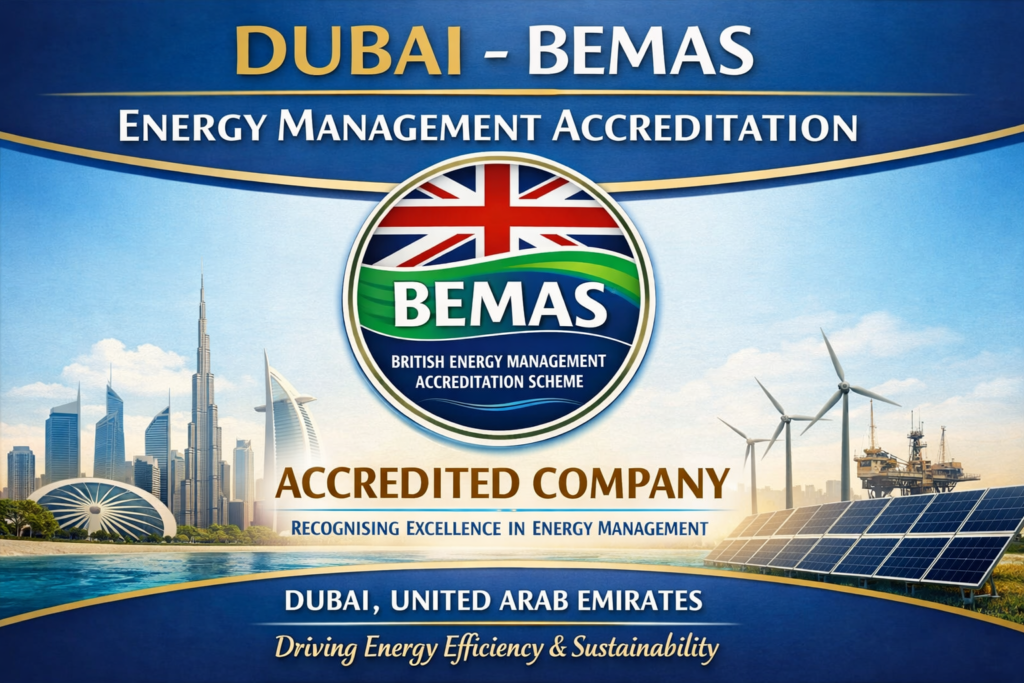
In markets like Dubai, energy management is already tied to accreditation and performance benchmarking. In Saudi Arabia and Qatar, the push is also shaped by broader efficiency, modernization, and smart infrastructure goals.
A Shift From Reactive to Predictive Operations
Many building teams are moving away from waiting for faults, complaints, or comfort issues to appear. With the right BEMS in place, they can identify abnormal trends earlier and respond before a small issue becomes an expensive one.
In practice, that means.
Fewer surprises
Better uptime
Less wasted energy
Stronger maintenance planning
Key Benefits of a Building Energy Management System for GCC Assets
Lower Electricity Use and Better HVAC Performance
This is usually the most obvious win. A building energy management system helps reduce electricity use through.
Smarter schedules
Zone control
Setpoint tuning
Chiller and AHU optimization
Occupancy-based adjustments
A Riyadh office tower may focus on chillers and high-occupancy floors. A Dubai mall may target tenant zones and peak traffic periods. A Doha mixed-use site may prioritize district cooling coordination and premium comfort control.
Real-Time Visibility Through Dashboards and Alerts
Data is only useful if people can act on it. A strong BEMS makes that possible with clear dashboards, automated alerts, and performance reporting that support daily decisions.
For GCC portfolios, bilingual dashboards can make a real difference. Arabic-English reporting improves communication across engineering teams, facility managers, contractors, and leadership.
Better Comfort, Uptime, and Maintenance Planning
Energy savings matter. But comfort and reliability matter too.
A well-managed BEMS helps balance cost control with occupant expectations, which is critical in premium towers, hospitals, fintech offices, and government facilities where downtime or poor comfort can affect reputation just as much as budgets.

GCC Compliance, Data Governance, and Local Standards to Consider
A BEMS project in the GCC is not only about software features. It also needs to fit local regulatory and governance expectations.
Saudi Arabia
Saudi building owners should consider.
Saudi Building Code energy provisions
data governance expectations linked to NDMO and digital government frameworks
internal governance requirements in regulated or government-linked environments
For enterprise facilities, especially those connected to finance or public-sector operations, auditability and data handling can be just as important as energy performance.
United Arab Emirates
In the UAE, building operators often need to think beyond energy dashboards and consider the wider digital and compliance environment. This is especially relevant in sectors tied to ADGM, DIFC, or other high-trust business environments.
Dubai also stands out because of its energy-management accreditation culture, which adds a practical benchmark for owners seeking proven operational capability.
Qatar
In Qatar, regulated environments may need closer review of.
Access control
Hosting decisions
Data handling
Infrastructure resilience
That is especially relevant for financial or sensitive enterprise environments. At the same time, Doha’s smart-building ecosystem and stronger local cloud options make modern analytics deployments more realistic than before.
How BEMS Use Cases Differ Across Riyadh, Dubai, and Doha
Riyadh.
Riyadh portfolios often have strong retrofit potential, especially in aging commercial stock with HVAC-heavy operations. Many projects start with fast wins in high-consumption zones, then expand into portfolio-wide reporting and governance.
Dubai.
Dubai is shaped by premium real estate expectations, stronger benchmarking culture, and accreditation-led improvement. In this market, reporting quality, vendor maturity, and measurable outcomes often matter as much as core system functionality.
Doha.
Doha use cases often connect energy management with sustainability targets, smart-district planning, and modern cloud-enabled operations. That makes BEMS particularly relevant for premium mixed-use developments and enterprise environments that need both performance and oversight.

What to Look for When Choosing a Building Energy Management System
Choosing the right platform is not only about features. It is about fit.
Arabic UX and Bilingual Dashboards
In the GCC, language support is not a cosmetic extra. It helps with.
Training
Adoption
KPI reporting
Executive communication
Cross-team coordination
Integration With Existing Systems
The best-fit BEMS should integrate with existing HVAC controls, lighting systems, IoT sensors, and current BMS platforms. For many retrofits, that is far more practical than a full rip-and-replace approach.
Reporting and ROI Tracking
You need to see what is working. Look for reporting that helps teams track.
Energy reduction
Fault trends
Maintenance response
Comfort stability
Site-level and portfolio-level performance
Data Residency Readiness
This matters more now than it did a few years ago. GCC organizations increasingly want clarity on where their data is hosted, how it is accessed, and how the platform aligns with regional infrastructure and governance expectations.
Implementation Best Practices for GCC Commercial Buildings
A smart rollout usually beats a big rollout.
Start With HVAC-Heavy Zones
Begin with the highest-consumption assets or zones where waste is most visible. This gives you a clearer baseline and helps prove value quickly.
Set KPIs From Day One
Track a small set of meaningful KPIs early, such as.
Energy savings
Maintenance response time
OLccupant comfort stability
Without clear KPIs, even a good BEMS can end up as just another dashboard.
Roll Out in Phases
A phased deployment is often the best fit for GCC portfolios. Start with one building, one plant, or one problem area. Validate performance. Then expand across the wider estate.
This works especially well in mixed-age portfolios across Saudi Arabia, the UAE, and Qatar.
Common Mistakes to Avoid
Even promising BEMS projects can underperform when the rollout is rushed or poorly aligned.
Watch out for these common issues.
Treating BEMS like a one-time software purchase instead of an operational program
Ignoring user adoption and training
Skipping baseline measurement
Trying to optimize every asset at once
Overlooking data governance and hosting requirements
Focusing only on energy savings while ignoring comfort and uptime

Concluding Remarks
A building energy management system is now a practical growth tool for GCC commercial real estate, not just a technical upgrade. For buildings in Saudi Arabia, the UAE, and Qatar, it can help reduce HVAC waste, improve visibility, support governance, and create a clearer path for retrofits and long-term efficiency.
For owners and operators across Riyadh, Dubai, and Doha, the real opportunity is not only lower energy use. It is better decision-making. Better comfort. Better asset performance. And a more resilient building strategy for the years ahead.( Click Here’s )
FAQs
Q : Is a building energy management system required for Saudi commercial buildings?
A : Not every commercial building in Saudi Arabia is explicitly required to install a BEMS. However, energy performance is shaped by the Saudi Building Code and related efficiency expectations. In practice, many owners adopt a building energy management system to support compliance readiness, reduce HVAC waste, and document operational improvements.
Q : How does Dubai BEMAS affect building energy management decisions?
A : Dubai BEMAS gives the market a formal benchmark for energy-management capability. That changes procurement discussions because owners are not only comparing software features. They are also assessing whether a provider has the processes and operational discipline to improve building performance.
Q : Can a Qatar commercial tower use BEMS without replacing its existing BMS?
A : Yes, in many cases it can. A BEMS can often be layered on top of an existing BMS to improve analytics, alerts, and reporting without replacing core controls. That makes phased modernization more realistic and less disruptive.
Q : What kind of savings can Riyadh office buildings expect from HVAC optimization?
A : There is no honest one-size-fits-all number. Savings depend on building age, control quality, occupancy profile, and maintenance discipline. In many Riyadh office environments, the biggest gains come from fixing scheduling issues, setpoint drift, ventilation problems, and poorly tuned plant equipment.
Q : Why do GCC facility teams prefer bilingual dashboards?
A : Because adoption drives results. In GCC portfolios, dashboards may be used by engineers, FM teams, contractors, executives, and owners’ representatives with different language preferences. Bilingual dashboards reduce friction in reporting, training, and decision-making.
[…] a smart city platform in the GCC is not just a software decision. It is a long-term procurement choice that affects compliance, […]