
Designing a Multi Cloud Strategy for GCC CIOs
Designing a Multi Cloud Strategy for GCC CIOs
Designing a Multi Cloud Strategy for GCC CIOs
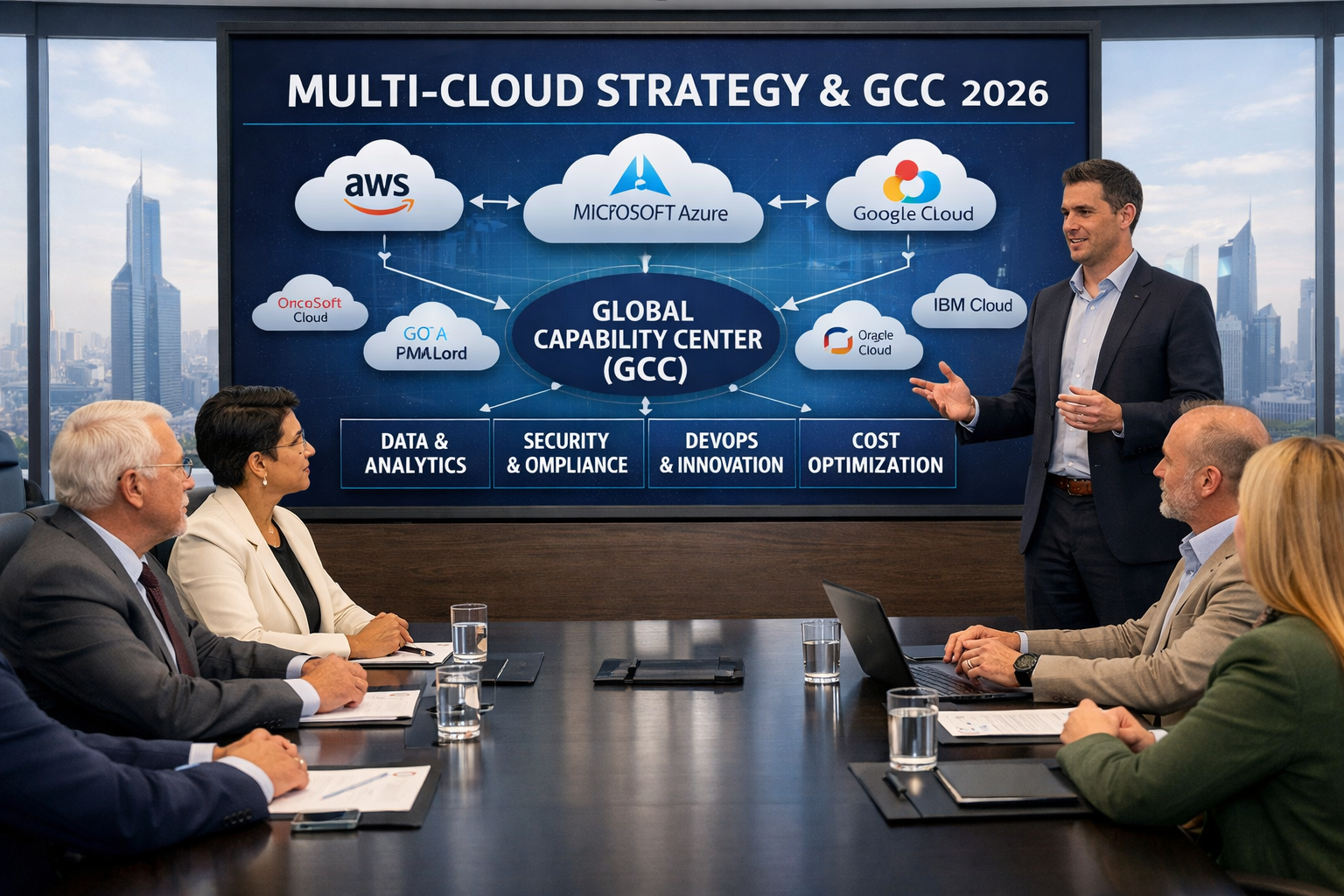
In the GCC, a multi cloud strategy means running workloads across two or more cloud providers or sovereign clouds while respecting strict data residency and localization rules in Saudi Arabia, United Arab Emirates and Qatar. It helps when you genuinely need resilience, negotiation power and specialist AI services, but hurts when your spend, skills and compliance model are not ready for the extra complexity.
Multi Cloud Strategy in GCC.
Across boardrooms in Riyadh, Dubai and Doha, CIOs are under pressure to “go multi-cloud” for AI, digital channels and sovereign cloud mandates. The real decision isn’t whether multi-cloud is fashionable, but whether a multi cloud strategy actually supports your risk, cost and compliance reality in the GCC or turns into an expensive distraction.
Why GCC CIOs Are Rethinking Multi-Cloud
Boardroom Pressure: AI, Sovereign Cloud and “Cloud-First” Mandates
National visions, cloud-first policies and AI programs in KSA, UAE and Qatar all push workloads from legacy data centres into cloud and sovereign regions. Boards want modern apps, Arabic-first journeys and GenAI, while regulators demand in-country hosting, encryption and auditability often at the same time. For many CIOs, multi-cloud sounds like the safest way to satisfy everyone.

The Multi Cloud Strategy Promise vs Reality in GCC
On paper, multi-cloud offers resilience across regions, better negotiation power, access to the “best-of-each” AI service and more control over cloud sovereignty. In reality, it can multiply costs (egress, duplicated tools), complicate PDPL / UAE DP Law / QCB compliance and over-stretch scarce platform/SRE teams especially in markets with tight senior cloud talent.
Who This Guide Is For.
This guide is for CIOs, Heads of Cloud and CTOs in mid-to-large enterprises, banks, fintechs, healthcare providers, utilities and government entities across KSA, UAE, Qatar as well as peers in Kuwait, Bahrain and Oman planning cross-border DR.
What Is a Multi Cloud Strategy in the MENA Context?
Simple Definition of Multi-Cloud vs Hybrid Cloud
Multi-cloud means using two or more independent public or sovereign clouds such as Amazon Web Services, Microsoft Azure, Google Cloud or national clouds in one strategy. Hybrid cloud vs multi cloud is different: hybrid mixes on-prem or private cloud with one or more public clouds, often with a strong sovereign cloud anchor. A single cloud with AWS Bahrain plus multiple availability zones is not “true multi-cloud”, just good single-cloud design.
What is a multi-cloud strategy in the MENA context and how is it different from global best practice?
In MENA, multi-cloud must be designed around data residency, localization and sector rules first, then around resilience and innovation. Global playbooks that assume free cross-border data flows simply don’t work where PDPL, UAE DP Law and QCB regulations tightly define what can leave the country and under which safeguards.
How GCC Multi-Cloud Differs from Global Best Practice
In the GCC, the presence of in-country regions (AWS Bahrain, Azure UAE Central, GCP Doha) plus sovereign offerings like sccc by stc and regional telco clouds changes the baseline. Architectures must assume stricter classification, residency and “cloud sovereignty” requirements than typical EU or US deployments, with regulators like NDMO and TDRA expecting evidence, not slides.
Where Multi-Cloud Fits in Typical GCC Cloud Journeys
Most organizations in KSA, UAE and Qatar move from on-prem → single cloud → hybrid → selected multi-cloud. Today, many banks and governments are still consolidating onto one anchor cloud plus sovereign regions; only digital leaders with mature platform teams actively run multi-cloud for specific workloads like AI, analytics or global channels.
Multi Cloud vs Single Cloud vs Hybrid in GCC
Single Cloud Done Well: When “One Hyperscaler” Is Enough
For many SMEs and early adopters, a single hyperscaler with multiple regions, strong DR and clear data residency controls is the sweet spot. If your monthly spend is under ~USD 50k, mainly SaaS-based, and your team is still building cloud security and zero trust skills, you usually get more value from deepening one cloud than adding another.
Hybrid and Multi Cloud in GCC Architectures
Common GCC patterns include: on-prem + sovereign region + one hyperscaler; or sovereign cloud plus two hyperscalers where AI, analytics or cross-border apps justify the extra effort. National ID platforms like UAE Pass or Qatar Digital ID typically keep core data in-country while using external clouds for anonymised analytics, testing or citizen-facing channels.

Decision Matrix: Match Model to Spend, Risk and Skills
If spend is low, regulations are moderate and you lack a dedicated cloud platform team, “single cloud + hybrid connectivity” is usually enough. Where spend is mid/high, regulations are strict and you have strong SRE/DevOps plus security, a targeted multi-cloud can make sense. The more regulated your data and the weaker your in-house team, the more you should favour simpler hybrid over aggressive multi-cloud.
When is a simple hybrid or single-cloud setup better than full multi-cloud for a GCC SME?
For SMEs in Riyadh or Dubai spending less than USD 50k per month, a well-governed single cloud or simple hybrid setup is almost always safer and cheaper than full multi-cloud. You gain resilience through regions, backups and basic DR—not by doubling every provider, tool and contract.
Sovereign, Compliant Multi-Cloud for GCC
Data Residency, Localization and Sovereignty in GCC
“Cloud sovereignty” in the GCC blends who controls infrastructure with where regulated data actually sits. PDPL, UAE Federal Decree-Law 45/2021 and Qatar’s cloud regulations all tighten rules around cloud data residency and localization, especially for financial, government and telecom data. ([Out2Sol][2])
Mapping Multi-Cloud to PDPL, UAE DP Law and QCB Rules
Saudi PDPL and NDMO rules restrict cross-border transfers unless strict adequacy, consent and security conditions are met; UAE’s DP Law adds its own transfer tests and exemptions; Qatar Central Bank expects clear contracts, in-country storage for key datasets and strong supervision of cloud providers. ([Out2Sol][2]) A GCC-smart multi cloud strategy therefore separates truly in-country workloads from those that can safely use regional or global regions, with encryption and key management designed for audits.
Reference Architectures: GCC Sovereign + Hyperscaler Multi-Cloud
Typical patterns include: Saudi workloads classified under NDMO with Tier-1 data on a sovereign cloud and Tier-2/3 analytics spanning sovereign + AWS; UAE FedNet-style sovereign landing zones for citizen data plus global regions for marketing and developer sandboxes; and Qatar Cloud / Ooredoo / Vodafone Qatar as anchors with targeted use of global SaaS. For deeper detail, many GCC teams pair this article with our dedicated GCC sovereign cloud and data residency guide.
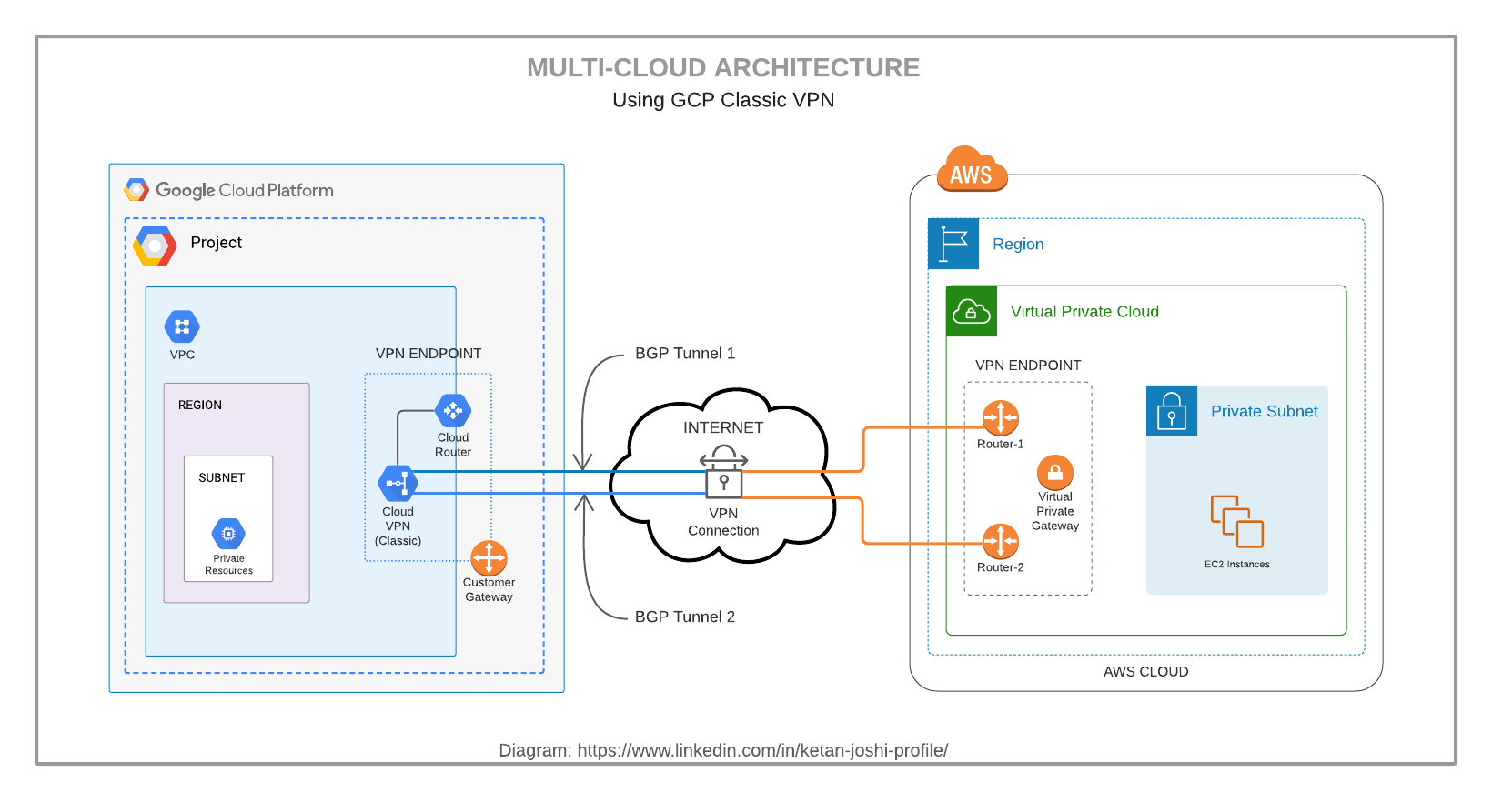
How does multi-cloud help with GCC data residency and sovereign cloud requirements and where can it make compliance harder?
Multi-cloud helps when you use sovereign and in-country regions for regulated data and offload non-sensitive workloads to global regions with clear controls. It becomes harder when teams casually spread regulated data across providers without mapping PDPL, UAE DP Law and QCB expectations up front.
When Multi-Cloud Helps GCC Organizations
Resilience and Business Continuity Across Regions and Providers
For banks, telcos or utilities, multi-cloud can reduce the blast radius of regional outages, cyber incidents or data centre failures. A Riyadh fintech might keep core transaction processing in a sovereign cloud while using a secondary hyperscaler region for warm DR, ensuring business continuity even under extreme scenarios.
Regulatory Flexibility and Cross-Border Workloads
Multi-cloud lets you keep regulated customer data in KSA, UAE or Qatar while running global-facing channels, AI inference or partner integrations elsewhere. Properly designed, this separation supports cloud portability and vendor lock-in reduction, while showing regulators that you know exactly which data moves, under which contracts and controls.
Negotiation Power, Innovation and Avoiding Deep Lock-In
CIOs with credible options across two providers can negotiate better pricing, support and roadmap commitments. They can also pilot new AI, analytics or confidential computing services where they appear first, then standardise what works something we explore in more depth in our confidential computing in GCC banks and government guide.
When Multi-Cloud Hurts in MENA: Cost, Complexity and Risk
Hidden Costs: Duplicated Services, Network Egress, Tool Sprawl
Every extra cloud adds a second (or third) set of network, security, observability, backup and FinOps tools, plus cross-cloud traffic charges. Without strong financial governance, multi-cloud quickly erodes the savings that drew you to cloud in the first place.
Complexity, Skills Gaps and Operating Model Challenges
Multi-cloud without solid platform, SRE and security teams often leads to misconfigurations, inconsistent IAM and unmonitored data flows. In GCC markets where senior cloud security and zero trust skills are scarce, this increases outage and breach risk just as regulators tighten enforcement.
Red Flags: When Multi-Cloud Hurts More Than It Helps
Red flags include: monthly cloud spend below ~USD 30–50k; mostly SaaS consumption; no dedicated platform team; and no clear regulatory requirement for multi-region or multi-provider DR. In these cases, you’re usually better off investing in stronger single-cloud controls, IAM and observability—topics we also cover in our cloud IAM security guide.
Sector-Specific Multi-Cloud: Banks, Government, Healthcare and Utilities
Designing Multi-Cloud for Banks and Fintech Under Sector Rules
Under frameworks from Saudi Central Bank (SAMA), Qatar Central Bank and UAE central banking rules, most Gulf banks keep core ledgers and payment systems in sovereign or in-country regions. Multi-cloud is typically used for channels, analytics, AI and innovation sandboxes, with strict controls around data copies, encryption and vendor oversight. Our sharia-compliant digital banking guide explores this in more detail for Islamic fintech.
Government, Smart City and National ID Workloads
Smart city platforms in Abu Dhabi, Dubai or Doha may use multi-cloud for IoT, AI and citizen apps, but core identity platforms like UAE Pass or Qatar Digital ID usually stay on sovereign clouds. Public-sector leaders often prioritise cloud sovereignty and lawful interception readiness over aggressive multi-cloud use.
Healthcare, Telco, Utilities and Critical Infrastructure
Healthcare records, telco OSS/BSS and critical infrastructure systems often mix on-prem, sovereign cloud and a single hyperscaler, only using multi-cloud for analytics or DR. Here the priority is stable operations and compliance, not chasing every new feature on every platform.
Best Practices and Roadmap.
6-Step Roadmap for GCC CIOs
Classify data and map laws
Use national schemes and PDPL / UAE DP Law / QCB rules to group workloads by residency and sensitivity.
Pick an anchor cloud
Choose your main provider and region(s), including sovereign options where needed.
Design a sovereign landing zone
Build a standard, compliant baseline for networking, IAM, logging and encryption.
Evaluate second providers
Only add a second cloud where specific resilience, AI or portability needs justify it.
Design DR and portability paths
Decide what actually fails over where, and how you’ll keep configs and data consistent.
Pilot, then scale
Start with 1–2 use cases, measure cost and complexity, then expand—or consciously stop.

Governance, FinOps and Security Controls for Multi-Cloud
Successful GCC multi-cloud programs invest early in central guardrails: landing zones, shared monitoring and logging, zero-trust identity, and multi-cloud FinOps that understands egress, discounts and reserved capacity. Many teams lean on partners while building in-house skills, guided by resources like our GCC data localization requirements overview.
Build vs Partner.
Most organizations don’t need to build everything themselves. Regional integrators, telco clouds and specialist consultancies can help design “GCC-smart” architectures, while your own team focuses on products and journeys. If you’d like to explore how our broader software development and cloud services can support your roadmap, we’re happy to compare options openly.
Concluding Remarks
Are You Ready for Multi-Cloud?
You’re likely ready if you have: regulated workloads that truly need cross-provider resilience; monthly spend that justifies the overhead; and a platform/SRE team that can operate more than one cloud safely. If not, optimising a single cloud or simple hybrid model may deliver more value with less risk than forcing a complex multi cloud strategy.
Recommended Next Conversation with Your Team
Your next internal workshop agenda might cover: current data maps and laws, anchor cloud health check, DR gaps, and candidate workloads for selective multi-cloud. From there, you can decide whether to stay simple or engage a partner to co-design something more ambitious.
If you’re wrestling with multi-cloud decisions for KSA, UAE or Qatar, you don’t have to figure it out alone. The team at Mak It Solutions already supports banks, governments and fast-growing digital businesses with GCC-ready cloud, mobile and analytics platforms. Book a conversation via our contact page and we’ll help you stress-test your current roadmap against real GCC regulations, costs and skills.
FAQs
Q : Is multi-cloud allowed for Saudi banks under SAMA and PDPL rules, or do core systems have to stay on a sovereign cloud?
A : Saudi banks can use public cloud and even multi-cloud, but regulators such as SAMA expect strict controls, prior approvals and clear data residency for core systems. In practice, ledgers and payment rails usually stay on sovereign or in-kingdom infrastructure, while channels, analytics and AI pilots use carefully scoped cloud workloads. PDPL and NDMO guidance make cross-border transfers an exception, not the default, so architectures must prove which data stays in KSA and how offshore copies are protected.
Q : How do UAE government entities balance TDRA cloud-first policies with data residency when using more than one cloud provider?
A : UAE entities typically adopt a “sovereign-first, multi-cloud second” approach. Sensitive workloads remain on federal or emirate sovereign clouds, while less sensitive services may run on global regions as long as cross-border rules, contracts and encryption meet Federal Decree-Law 45/2021 requirements. TDRA and the UAE Data Office expect documented data maps, transfer mechanisms and security controls, so any multi-cloud design starts with classification and lawful transfer justifications not with technology choices.
Q : Can Qatar banks run analytics on foreign regions if production data stays in Qatar Cloud under Qatar Central Bank regulations?
A : Qatar Central Bank’s cloud and data protection regulations let banks use cloud services, but they emphasise in-country storage, strong security and careful management of any data that leaves Qatar. Many banks therefore keep production data in Qatar Cloud or approved local providers, then move only anonymised or tokenised datasets to foreign regions for advanced analytics or AI. Contracts, logging and audit trails must show exactly what crosses borders, under which controls and for how long.
Q : What is the best multi-cloud approach for a mid-sized retailer in Riyadh or Dubai spending less than USD 50k per month on cloud?
A : For most mid-sized retailers at this spend level, the best approach is usually a strong single cloud with hybrid connectivity rather than full multi-cloud. Focus on resilient architecture across regions, solid IAM, backups and observability, and perhaps a second provider only for specialised SaaS or CDNs. This keeps operational complexity low while still supporting omnichannel e-commerce, mobile apps and analytics areas where partners like Mak It Solutions already help GCC retailers design secure, scalable platforms.
Q : How should GCC organizations handle logging, monitoring and lawful interception requirements in a multi-cloud environment?
A : GCC regulators increasingly expect consistent logging, monitoring and lawful interception capabilities, regardless of how many clouds you use. A practical pattern is to centralise logs and security telemetry into one sovereign or in-country platform, using standardised schemas and retention policies aligned with PDPL, UAE DP Law or QCB rules. Network designs should allow lawful interception where required, while encryption, key management and access controls prevent over-collection or misuse. Getting this right often needs a mix of legal, compliance and cloud architecture expertise, not just tooling.