


Digital Identity in GCC: How UAE Pass Is Rewriting Access
Digital Identity in GCC: How UAE Pass Is Rewriting Access
Digital Identity in GCC: How UAE Pass Is Rewriting Access
Digital identity in GCC means using secure national mobile ID and eID wallet apps like UAE Pass, Saudi Nafath/Absher and Qatar’s QDI to prove who you are online, log into services and sign documents digitally. In Dubai, Riyadh and Doha, these platforms are quickly becoming the default way to access government portals, complete remote KYC and use everyday services without plastic cards or office visits.
Introduction
The way people prove “who they are” is changing fast in the Gulf. Where residents once carried plastic IDs, waited at service centers and juggled dozens of usernames, digital identity in GCC countries is bringing all of that into national mobile apps like UAE Pass, Nafath and Qatar’s QDI.
For governments, banks and telecoms, this shift promises smoother KYC, lower fraud and better data control but it also raises questions around security, data residency and cross-border recognition. This guide explains what digital identity in the GCC really means, maps the key national platforms and shows how product and compliance teams in Riyadh, Dubai and Doha can integrate them safely.
If your team wants to turn these concepts into real applications, a GCC-focused partner like Mak It Solutions can help you design secure, compliant journeys from day one.
What “Digital Identity in the GCC” Really Means
From physical ID cards to mobile eID wallets
In practice, digital identity in the GCC means replacing plastic ID cards and manual signatures with mobile ID / eID wallet apps issued or trusted by the state. These apps hold a verified digital copy of your national ID or iqama plus cryptographic keys so you can log in, prove your identity and apply an electronic signature with legal validity.
Instead of photocopying a card, a citizen or resident in Dubai, Riyadh or Doha scans their face or enters a PIN, and the national system confirms their identity to the service provider. Over time, this “ID on your phone” becomes the primary way you interact with both government and private-sector services.
How GCC governments, banks and telecoms use digital identity
For governments, national digital identity platforms are the backbone of smart city and e-government strategies, powering single sign-on for government services across ministries and cities. Banks and fintechs use them to perform remote KYC and digital onboarding, pulling verified data such as name, ID number and sometimes address. Telcos use them to verify customers for SIM registration and number portability.
In retail, logistics and travel, digital IDs are increasingly supporting identity checks for BNPL, courier KYC and airport journeys especially in hubs like Dubai, Riyadh and Doha.
Why 2020–2025 became the tipping point for GCC digital ID
Between 2020 and 2025, several trends converged: COVID-era remote services, national data strategies and new personal-data laws. Saudi Arabia launched SDAIA and its National Data Management Office (NDMO) framework, while the UAE rolled out its Personal Data Protection Law and accelerated UAE Pass adoption.
At the same time, Qatar’s QDI app, Kuwait Mobile ID, Bahrain’s eKey and Oman’s THEQA mobile identity gained traction, giving every GCC capital at least one national digital identity platform in production.
National Digital ID Platforms Across the GCC
UAE Pass unified login and e-signature for citizens, residents and visitors
What is UAE Pass and how does it work as a national digital identity in the UAE?
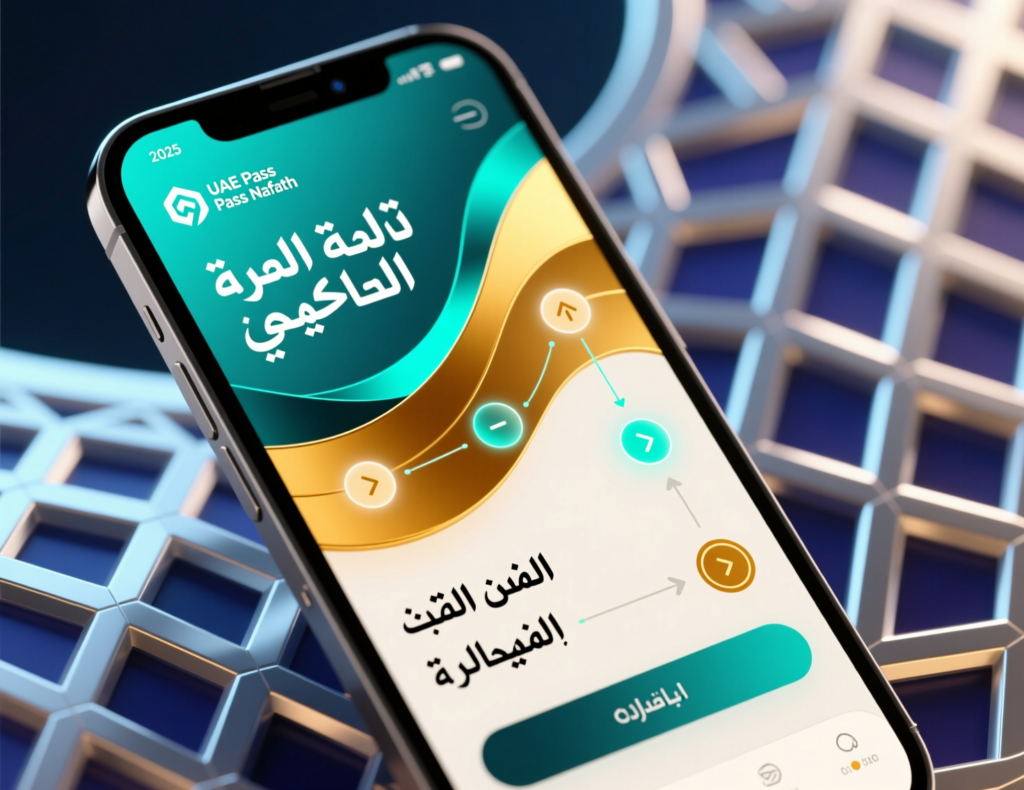
UAE Pass is the UAE’s national digital identity and digital signature solution, allowing citizens, residents and even visitors to log into federal and local portals with one account instead of many passwords. It supports strong authentication (including biometrics) and lets users sign documents digitally with legal effect, replacing many in-person signatures.
In Dubai, Abu Dhabi and Sharjah, UAE Pass underpins the ambitions of Digital Dubai and the wider “Digital UAE” agenda from municipality services to utility payments and business licensing. For product teams, UAE Pass effectively acts as a government-backed SSO layer and e-sign engine.
Saudi Nafath & Absher digital identity from digital iqama to everyday login
Saudi Arabia’s digital identity stack revolves around Absher (Ministry of Interior portal) and Nafath, a cross-government login app run with SDAIA. Absher manages official records and services like iqama renewal; Nafath acts as the secure “front door” that lets users approve logins and transactions via mobile.
What is the difference between Nafath, Absher digital identity and the physical iqama in Saudi Arabia?
The physical iqama remains the legal ID card, especially for checkpoints and some offline checks, while Absher holds your identity data and services, and Nafath provides real-time digital authentication derived from that data. Together, they form a digital iqama that can be used for many logins and e-services, but residents are still advised to carry the physical card when travelling or dealing with some authorities.
Qatar QDI and emerging digital IDs in Oman, Bahrain and Kuwait
Qatar’s QDI app from the Ministry of Interior provides a digital version of the QID card and tools to log into government portals like Hukoomi and sign transactions electronically.
Across the wider GCC, Bahrain’s eKey, Oman’s THEQA and digital identity service from ROP, and Kuwait Mobile ID play a similar role, enabling secure login and digital signatures across public and private e-services in Manama, Muscat and Kuwait City.
From E-Government Services to Everyday Life
Government services visas, resident ID renewals, traffic, healthcare and smart city portals
In Dubai, Abu Dhabi and Sharjah, UAE Pass is the default login for portals that handle visa services, Emirates ID updates, traffic fines and health appointments. In Riyadh, Jeddah and Dammam, residents rely on Nafath + Absher for iqama renewal, driving services and many Ministry of Interior workflows. In Doha, QDI and Hukoomi are gradually becoming the primary access point for immigration and civil services.
For governments, this reduces queuing, paperwork and fraud. For residents and citizens, it means “one app, many doors” to the state.
Digital identity for KYC and remote onboarding in GCC banks and fintechs
How do GCC digital identity systems like UAE Pass and Nafath support remote KYC for banks and fintechs?
Banks in Riyadh and Dubai can request user consent to pull verified identity data from UAE Pass or Nafath, then combine it with selfie checks and AML screening to complete remote KYC. This can cut onboarding time from days to minutes and improve match rates versus manual document uploads, as noted by regional integration case studies and e-sign vendors.
Fintechs in Doha, ADGM and DIFC sandboxes increasingly use these identities to open accounts, issue cards and onboard merchants without asking customers to re-enter data that the state already verified.
Travel, cross-border services and the promise of GCC-wide recognition
Today, national digital IDs are mostly used inside each country. However, as Gulf Cooperation Council (GCC) integration deepens, there is clear potential for cross-border identity. Imagine a resident of Dubai logging into a fintech in Riyadh using UAE Pass, or a Qatari citizen accessing Manama services with QDI.
Airports in Dubai, Doha and Riyadh already use biometrics and e-gates; tying these into national IDs and regional agreements could create smoother travel and trade flows across the region.
Security, Privacy and Data Residency Rules in the GCC
Who regulates digital identity?
Behind each app sits a web of regulators. In Saudi Arabia, SDAIA and NDMO set data-governance rules, while SAMA supervises how banks use digital identity for e-KYC and payments. In the UAE, TDRA and ICP oversee UAE Pass, telecom networks and population registers, and sector regulators (like health or education) set additional rules.
In Qatar, the Qatar Central Bank (QCB) publishes e-KYC expectations for banks and fintechs, while the Ministry of Interior and digital government teams govern QDI and Hukoomi. For companies, understanding this multi-regulator landscape is crucial before integrating digital IDs into products.
Data residency, encryption and cybersecurity baselines in KSA, UAE and Qatar
Most GCC regimes require sensitive personal data to be stored in-country or in approved cloud regions, such as AWS Riyadh, AWS Bahrain, Azure UAE North and GCP Doha. NDMO standards in Saudi and PDPL-style rules in the UAE set baselines for encryption, logging, data minimisation and consent.
To stay compliant, many organisations host UAE Pass or Nafath-integrated apps in local clouds, segment identity data and perform regular security assessments — often with specialist providers such as Mak It Solutions’ custom web development and security services.
SIM swap, device theft, social engineering and how national IDs respond
Digital identity increases convenience but concentrates risk. SIM swap fraud, compromised email, malware and social engineering can all be used to hijack accounts. To mitigate this, GCC ID platforms rely on strong device binding, biometrics, in-app confirmation screens and secure cryptographic keys instead of SMS OTP alone.
Users in Riyadh, Dubai or Doha should still enable device-level security (PIN, biometrics), avoid sharing one-time codes and promptly revoke access if a phone is lost. Institutions must treat national digital ID as a strong factor, not a magic shield combining it with risk scoring and transaction monitoring.
Integrating UAE Pass, Nafath and QDI into Private-Sector Apps
Integration options SSO, APIs, SDKs and vendor platforms using GCC national IDs
For developers, national IDs typically expose modern SSO (OAuth2 / OpenID Connect) and API / SDK options. UAE Pass provides a developer portal with toolkits for authentication and digital-signature integration, while Saudi’s Nafath offers single sign-on flows documented by SDAIA.
You can integrate these directly or via regtech / KYC platforms that aggregate multiple GCC identity sources. A technology partner like Mak It Solutions’ services team can help architect these flows, handle token management and ensure alignment with local regulations.
Step-by-step integration journey for a GCC fintech using UAE Pass or Nafath
Clarify use cases and regulators
Decide whether you’ll use digital identity only for login, or also for KYC and e-signatures. Map which regulators apply (e.g., SAMA in Riyadh, DFSA/DIFC or ADGM in the UAE, QCB in Doha).
Register and onboard as a service provider
Apply to become an approved UAE Pass or Nafath relying party, complete security questionnaires and set up test credentials.
Design bilingual, Arabic-first user journeys
Map login and onboarding screens in Arabic and English, keeping flows simple for mobile users.
Implement, test and harden the integration
Use the official SDKs or OpenID Connect endpoints, perform penetration tests and verify that data residency and logging meet KSA / UAE / Qatar expectations.
Monitor, iterate and expand
Track drop-offs, fraud attempts and regulator updates. Over time, extend digital ID usage to higher-value actions like e-signatures or cross-channel authentication.
Arabic-first UX, bilingual flows and accessibility for GCC users
A good GCC identity experience feels native. That means right-to-left layouts, Arabic-first content with clear English translations, and terminology that matches what users see in UAE Pass, Nafath or QDI. Forms should minimise manual typing and rely on pre-filled verified data wherever possible.
In cities like Dubai, Riyadh and Doha, users are mobile-first. Lightweight screens, clear error messages and accessible fonts matter as much as cryptography. Here, collaborating with a UX-aware dev house like Mak It Solutions can significantly improve adoption.
What’s Next for Digital Identity in GCC Markets
From OTPs to biometrics and passkeys authentication trends in the region
The Gulf is moving away from password + SMS OTP toward biometrics, device-bound keys and passkeys. UAE Pass, QDI, Kuwait Mobile ID and THEQA increasingly rely on device security and biometric checks, matching global trends in FIDO-style authentication.
Over the next few years, expect more banks in Dubai, Riyadh and Doha to adopt passwordless login flows, where national digital identity plus device biometrics replace traditional credentials entirely.
Cross-GCC interoperability, digital identity wallets and regional data-sharing debates
Policymakers across the GCC are already discussing how to reuse identity data securely across borders while respecting each country’s data-residency laws. Concepts such as GCC-wide digital identity wallets and “trust frameworks” between regulators (SAMA, QCB, TDRA and others) are on the table.
The challenge is balancing frictionless trade and travel with privacy and sovereignty. Cloud regions in Bahrain, UAE and Qatar will play a big role in hosting shared services that still keep data logically or physically local.
Strategic takeaways for leaders in Riyadh, Dubai and Doha
For leaders in Riyadh, Dubai, Doha and secondary hubs like Jeddah, Sharjah, Dammam, Manama and Muscat three actions stand out:
Accept national digital IDs everywhere you can, starting with login and KYC.
Rebuild journeys around mobile-first, Arabic-first flows, not old portal thinking.
Invest early in data governance, mapping NDMO, TDRA, QCB and other rules to your stack.
If you’re unsure where to start, a discovery workshop with a regional partner such as Mak It Solutions’ web development experts can quickly surface gaps and a practical roadmap.
Concluding Remarks
UAE Pass, Saudi Nafath/Absher and Qatar’s QDI show how digital identity in GCC markets is shifting from plastic cards and counters to secure mobile IDs that power e-government, fintech and everyday life. They also highlight the importance of getting security, data residency and UX right.
As a quick internal checklist, GCC teams should:
Audit where digital ID could replace weak logins and manual KYC.
Map local regulators and data-residency requirements against current hosting.
Plan a phased integration of UAE Pass, Nafath, QDI and other GCC IDs into web and mobile apps.
For ongoing news and analysis, you can follow specialist coverage at news.uppersetup.com and when you’re ready to turn strategy into a live, compliant platform, collaborate with Mak It Solutions to design and build your GCC-ready identity journeys.( Click Here’s )
If you’re a product, compliance or technology lead in Dubai, Riyadh or Doha, this is the moment to move from “watching” digital identity to actively using it. Mak It Solutions can help you assess your current apps, prioritise use cases and integrate UAE Pass, Nafath, QDI and other GCC IDs into secure, bilingual user flows.
Visit Mak It Solutions to explore our core services and web development capabilities, or reach out for a tailored GCC digital identity roadmap for your bank, fintech, government entity or growing SaaS product.
FAQs
Q : Is UAE Pass mandatory for accessing all Dubai government services, or are there exceptions?
A : UAE Pass is increasingly the default login for Dubai and UAE federal e-services, and many key portals now require it for full functionality. However, there are still exceptions: some legacy sites support guest access, classic username/password or in-person visits for certain transactions. Over time, more services will move to UAE Pass-only access as TDRA, ICP and Digital Dubai standardise identity across channels, but residents who are not yet enrolled can usually still complete urgent tasks via call centres or service centres while they activate the app and complete verified registration.
Q : Can Saudi residents rely only on the Absher digital ID instead of carrying their plastic iqama in daily life?
A : Absher and Nafath provide a powerful digital iqama that is accepted in many contexts, especially for online services and some on-the-ground checks. However, Saudi regulations still treat the physical iqama as the primary proof of residence, especially at borders, checkpoints or in situations where connectivity is limited. Residents in Riyadh, Jeddah or Dammam should think of Absher/Nafath as a convenient and often accepted complement, not a full legal replacement, unless the Ministry of Interior explicitly updates the rules to allow purely digital identification in specific scenarios.
Q : Does Qatar’s QDI app replace the physical QID card for identity checks at government offices and airports?
A : QDI offers a secure digital version of the QID, and is recognised for many e-government services and some in-person verifications. In Doha, you’ll increasingly see desks and kiosks that accept QDI for check-in or ticketing, and the app is designed to support trusted electronic transactions across portals like Hukoomi. That said, for international travel and certain formal procedures, the physical QID and passport remain essential. Until the Ministry of Interior and airport authorities formally state that QDI alone is sufficient, residents should treat it as a powerful digital companion, not a full physical replacement.
Q : How secure is it to log in to my GCC bank or fintech app using UAE Pass or Nafath instead of a username and password?
A : For most users, UAE Pass and Nafath are more secure than traditional usernames and passwords because they rely on device binding, strong cryptography and, often, biometrics. Authentication is performed by national identity infrastructure overseen by bodies like TDRA, SDAIA and SAMA, which follow strict cybersecurity and data-governance frameworks. That said, security also depends on your phone hygiene: setting a strong device PIN, avoiding unofficial app stores and reporting lost devices quickly are still critical steps to prevent account takeover.
Q : Can a company in Dubai or Riyadh onboard customers from other GCC countries using their national digital IDs (UAE Pass, QDI, Bahrain eKey, Kuwait Mobile ID)?
A : Technically, it is possible to design journeys that accept multiple GCC digital IDs, and some regtech vendors already aggregate these sources. However, legal and regulatory acceptance varies: SAMA, QCB, TDRA and other authorities may impose additional checks when onboarding foreign residents or citizens, even if their identity is verified via a trusted national app. Companies in Dubai and Riyadh should define clear policies, consult local regulations and test interoperability in controlled pilots before relying solely on another country’s digital identity for full KYC.