


GCC Guide to Cybersecurity Startups in the Middle East
GCC Guide to Cybersecurity Startups in the Middle East
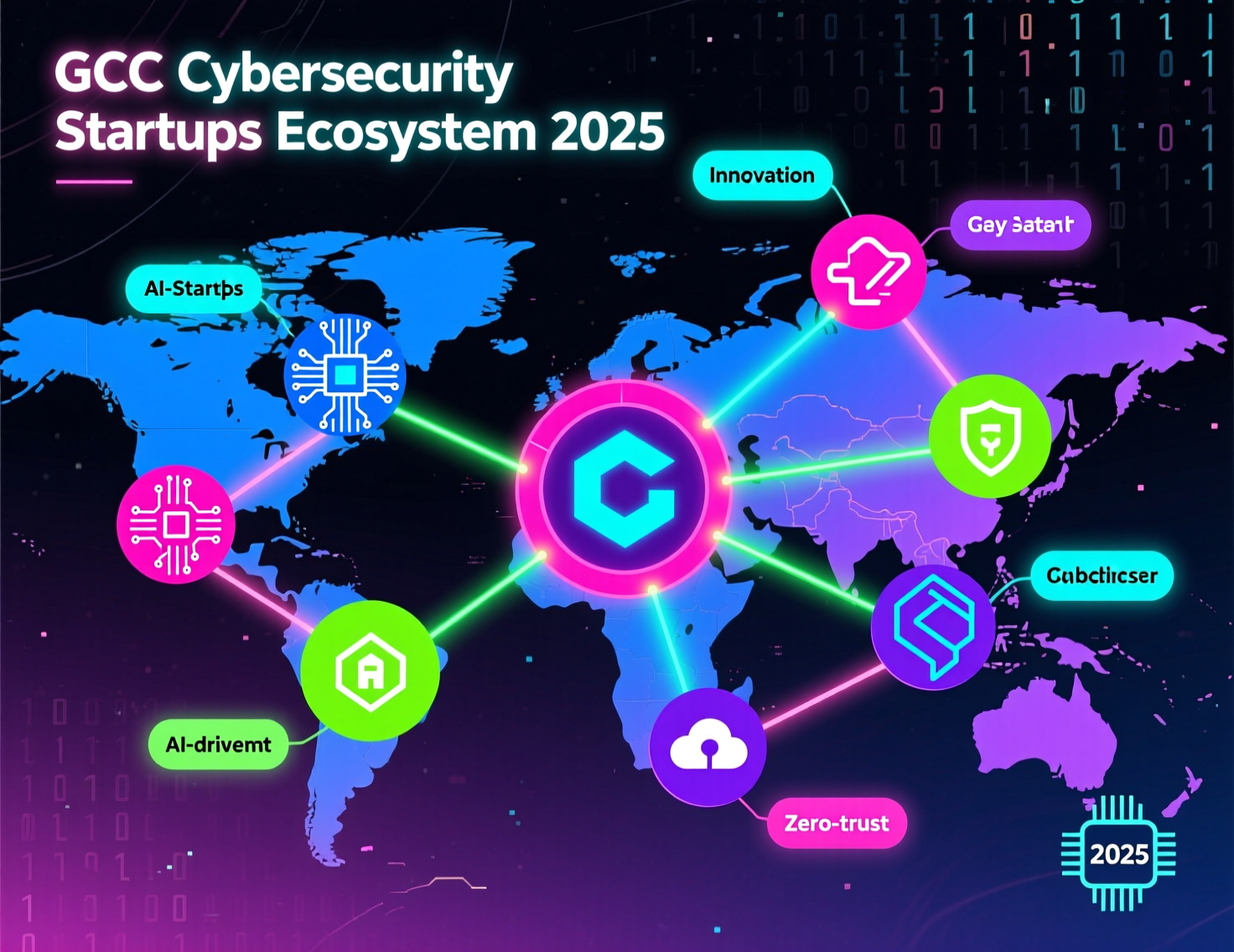
Cybersecurity Startups in the Middle East: GCC Playbook
Cybersecurity startups in the Middle East are scaling quickly as Saudi Arabia, the UAE and Qatar digitise government, finance and critical infrastructure while facing increasingly sophisticated threats. For GCC founders and investors, the core opportunity is to build Arabic-first, regulation-aligned, data-resident security products that fit local authorities such as NCA, TDRA and NCSA while remaining export-ready across the wider Middle East digital defense ecosystem.
Introduction
Cyberattacks on GCC banks, oil & gas operators and government agencies have surged in recent years from ransomware on large enterprises to phishing campaigns targeting ministries in Riyadh, Dubai and Doha. In response, cybersecurity startups in the Middle East are stepping in to protect cloud-native apps, OT/ICS environments and critical infrastructure, often with Arabic-first products and local compliance baked in from day one.
Saudi Vision 2030, the UAE National Cybersecurity Strategy and Qatar’s National Cyber Security Strategy 2024–2030 are accelerating digitisation of government and critical services. At the same time, regulators are demanding stronger cyber resilience from critical infrastructure and financial systems. Below, we map the startup ecosystem, funding flows, government programs and next-gen AI/agentic SOC themes shaping Saudi, UAE, Qatar and the wider GCC.
What Is Happening With Cybersecurity Startups in the Middle East?
Definition of Middle East cybersecurity startups in a GCC context
In this context, “cybersecurity startups in the Middle East” usually means product-led or highly specialised service companies founded in the last 5–10 years, building scalable solutions such as SOC platforms, threat intel, OT/ICS monitoring or identity security. They are different from classic MSSPs or systems integrators that mainly resell and implement global vendors; instead, they create their own intellectual property, often with SaaS, subscription or managed detection and response (MDR) models.
Most activity clusters in Saudi Arabia, UAE and Qatar, with growing nodes in Kuwait, Bahrain (Manama) and Oman (Muscat). Media, reports and big events like Black Hat MEA and GISEC increasingly use the phrase “Middle East cybersecurity startups” to describe this new generation of regional vendors.
What is driving the rise of cybersecurity startups in the Middle East and GCC?
The rise of cybersecurity startups in the Middle East and GCC is driven by rapid cloud adoption, aggressive government digitisation, fintech/open banking, OT/ICS security needs in oil & gas and AI-powered threats that traditional tools cannot handle. At the same time, sovereign wealth funds, national cybersecurity strategies and a shortage of in-house cyber talent are creating space for local, specialised vendors.
Across Riyadh, Dubai, Abu Dhabi and Doha, governments are pushing e-services, smart cities and digital IDs, while banks and fintechs adopt open banking and instant payments. National cybersecurity authorities such as Saudi’s NCA, the UAE Cybersecurity Council and Qatar’s NCSA publish frameworks and strategies that create clear compliance targets, encouraging founders to build products mapped directly to local controls and standards.
GCC cyber threat landscape for startups and SMEs
The GCC cyber threat landscape for startups and SMEs is dominated by ransomware, business email compromise (BEC), supply chain attacks on SaaS providers and OT disruptions affecting energy and utilities. Smaller organisations in Riyadh, Jeddah, Dubai, Sharjah, Abu Dhabi and Doha are attractive targets because they are digitising fast but often lack mature in-house SOC teams.
As a result, many SMEs increasingly turn to regional vendors for managed security services (MSSP) in GCC markets, MDR and Arabic-first security awareness rather than relying only on large global suites. Local startups can offer faster response times, tailored compliance mapping (e.g., SAMA and QCB rules for fintech) and on-the-ground relationships with regulators and telecom operators.
GCC Cybersecurity Startup Ecosystem and Funding Flows
Mapping the GCC cybersecurity startup ecosystem
The Middle East digital defense ecosystem is now anchored around a few powerful hubs:
Riyadh
Black Hat MEA, NCA presence and strong Vision 2030 capital make it the most intense security hub in the region.
Dubai & Abu Dhabi
GISEC Global, Gitex, North Star and hubs like DIFC, ADGM and Hub71 attract AI-driven security startups serving regional HQs and cross-border customers.
Doha
Qatar Science & Technology Park (QSTP) and Tasmu Digital Valley support niche startups aligned with smart cities, stadiums and energy.
Examples often cited as regional anchors include Cognna in Saudi (AI-driven SOC), SpiderSilk and Andalusia Labs in the UAE (offensive security and digital asset risk), and emerging players such as Updive CCS in Qatar focusing on cloud and compliance. Around them, Manama, Muscat and Kuwait City leverage these hubs through regional deployments and channel partnerships.
Middle East cybersecurity startups funding and investors
Funding for cybersecurity startups in the Middle East typically starts with angel and seed rounds from local angels and family offices, followed by Series A–B led by GCC venture funds. Saudi’s PIF-linked funds and STV, Abu Dhabi and Dubai funds, and Mubadala-backed vehicles play a major role in scaling regional cyber vendors.
Many investors emphasise “halal tech investment in Middle East cybersecurity”, structuring deals to be Sharia-compliant, especially when family offices in Riyadh, Jeddah or Kuwait City are involved. Fintech-oriented startups that secure banks and payment rails also benefit from alignment with Vision 2030, UAE financial free zones and Qatar’s push for a data-driven economy.
Government-backed cyber accelerators and startup programs in MENA
Several government-backed cybersecurity accelerators in MENA now provide the scaffolding for this ecosystem.
NCA-linked innovation initiatives and sector programs in Saudi Arabia.
UAE Cybersecurity Council and TDRA-affiliated programs, often linked to GISEC, North Star and national cloud and telecom projects.
Qatar’s NCSA and Q-CERT working with QSTP and national smart city programmes to support cyber startups aligned to the National Cyber Security Strategy 2024–2030.
These programs provide grants, pilot opportunities with ministries and national companies, and access to cloud credits from hyperscalers.
Government Strategies, Regulators and Compliance: The GCC “Trust Layer”
How Saudi’s NCA and Vision 2030 shape cybersecurity startups
Saudi’s National Cybersecurity Authority (NCA) is the national reference for cybersecurity and issues frameworks such as the Essential Cybersecurity Controls and Critical Systems Cybersecurity Controls for critical infrastructure.Cybersecurity startups align their products and documentation to these controls, as well as Digital Government Authority requirements for government cloud and SAMA regulations for banks and open banking platforms.
For founders in Riyadh, designing solutions that explicitly map to NCA domains, log retention rules and incident-response expectations is now a core differentiator when selling to ministries, oil & gas operators and major Vision 2030 programmes.
UAE National Cybersecurity Strategy, TDRA and the UAE Cybersecurity Council
The UAE National Cybersecurity Strategy, overseen by TDRA and the UAE Cybersecurity Council, aims to create a safe and strong cyber infrastructure that empowers citizens and businesses. For startups, this offers regulatory clarity around telco networks, cloud, data protection and digital ID platforms such as UAE Pass.
Combined with business-friendly free zones like DIFC and ADGM, this environment makes it easier for cybersecurity startups to serve regional banks, insurers, digital asset firms and logistics players from Dubai or Abu Dhabi while still meeting local rules.

How do Qatar’s NCSA and Q-CERT support local cybersecurity innovation and startups?
Qatar’s NCSA and Q-CERT are the guardians of the new National Cyber Security Strategy 2024–2030, which focuses on resilience, legislation, data-driven growth and talent.Working with QSTP and Tasmu Digital Valley, they help cybersecurity startups plug into national projects around smart cities, transport, energy and FIFA World Cup legacy infrastructure.
For Doha-based teams, this means early access to complex use cases (stadiums, metro, ports), strong public-sector demand and the ability to export solutions to other GCC markets.

Saudi, UAE, Qatar and the Wider GCC
How are Saudi cybersecurity startups aligning with NCA and Vision 2030 requirements?
Saudi cybersecurity startups align with NCA and Vision 2030 requirements by building products mapped to NCA frameworks, hosting workloads in Saudi data centres, offering Arabic-first interfaces and focusing on critical sectors like oil & gas, government and banking. They frequently support SAMA and open banking security rules, ensuring logging, encryption and incident response meet local expectations.
In practice, this translates into OT/ICS security platforms for the Aramco ecosystem, cloud-native SOC services for government cloud and MDR offerings aimed at enterprises in Riyadh and Jeddah that need continuous monitoring aligned with national standards.
Why is the UAE becoming a hub for cybersecurity startups and AI-driven security solutions?
The UAE is becoming a hub for cybersecurity startups and AI-driven security solutions because Dubai and Abu Dhabi act as regional HQs, provide pro-startup regulation and free zones, and actively invest in AI and quantum technology. Events like GISEC and Gitex, combined with North Star and Hub71, create a continuous pipeline of pilots and partnerships with banks, airlines, logistics and digital asset players.
Startups such as SpiderSilk (offensive security) and Andalusia Labs (digital asset risk) sit alongside established players like Help AG, forming an ecosystem of offensive, defensive and compliance-focused solutions that serve both the UAE and wider GCC.
Qatar and the rest of the GCC
Qatar’s cybersecurity startups often grow out of national projects smart cities, energy networks, stadium and transport systems and are supported by QSTP and government innovation grants. Across Bahrain, Kuwait and Oman, smaller but strategic markets lean on regional vendors for fintech protection (e.g., open banking in Bahrain), logistics, and smart ports and free zones.
GCC-wide startups design their platforms to be easily localised for NCA, TDRA, NCSA, SAMA, QCB and other regulators, switching compliance “profiles” per country while maintaining one core product.
AI, Agentic SOC and Next-Gen Themes in GCC Cybersecurity Startups
AI cybersecurity startups in the Middle East
AI cybersecurity startups in the Middle East are building AI SOC and agentic security operations platforms that triage alerts, automate playbooks and perform autonomous threat hunting across hybrid clouds. Saudi and UAE accelerators now back companies that use machine learning to spot anomalies in OT networks, fintech transactions and government e-services.
These products are often sold as managed offerings to overstretched CISOs in Riyadh, Dubai, Abu Dhabi and Doha who need AI to augment limited human teams.
Quantum, OT/ICS and digital asset security as new frontiers
New frontiers are emerging in quantum-resistant cryptography, OT/ICS security for oil & gas and utilities, and digital asset security. Research partnerships in the UAE and Saudi explore quantum-safe approaches for government and financial networks, while OT-focused startups protect refineries, pipelines and desalination plants.
In DIFC and ADGM, digital asset and Web3 security startups secure exchanges, custodians and digital banks, aligning with regional financial regulators and open banking frameworks in both KSA and UAE.
Arabic-first cybersecurity platforms and MSSPs for GCC companies
Many founders are betting on “Arabic-first, English-ready” cybersecurity dashboards, reporting and awareness training. MSSPs and MDR providers built specifically for GCC culture and regulation offer bilingual SOC reports, Arabic phishing simulations and playbooks tuned for local procurement and escalation paths.
This localisation gives them a clear edge over generic global tools when selling to ministries, regulators, national oil companies and Sharia-compliant banks that need both compliance and cultural fit.
How GCC Cybersecurity Startups Can Build Compliance Ready, Data-Resident Products
Step-by-step roadmap to launching a GCC-ready cybersecurity startup
Choose your beachhead market. Decide whether to start in Saudi, UAE or Qatar based on your core vertical—e.g., OT/ICS and government in KSA, fintech and digital assets in Dubai/Abu Dhabi, or smart-city and energy projects in Doha.
Map your regulators
Identify NCA, Digital Government Authority and SAMA in Saudi; TDRA and the UAE Cybersecurity Council in the UAE; NCSA, Q-CERT and QCB in Qatar, plus sectoral regulators in finance, energy and telecom.
Design your data residency plan
Select local cloud regions like AWS Bahrain, Azure UAE Central and GCP Doha, or build hybrid models combining regional data centres with global analytics.
Build your GCC go-to-market
Use events such as Black Hat MEA in Riyadh and GISEC in Dubai, partner with local integrators and consider free-zone entities in DIFC, ADGM or QFC to serve cross-border customers efficiently.
How can GCC startups build cybersecurity products that meet data residency and compliance rules?
To build compliance-ready products, GCC startups should start with a simple checklist: keep regulated data in-region, encrypt at rest and in transit, implement strong access control, and provide regulators with clear logging and lawful interception capabilities where required. For fintech, this means aligning with SAMA and QCB expectations on transaction monitoring, API security and incident reporting; for government and oil & gas, it means mapping NCA, TDRA and NCSA controls into product features, dashboards and documentation.
Architecturally, founders should design for tenant separation, in-country log storage, regional key management and transparent breach-notification workflows so that CISOs can demonstrate ongoing compliance during audits.
Best practices and common mistakes for Middle East cybersecurity startups
Best practices
Engage legal and compliance advisers early, not after your first RFP.
Offer bilingual (Arabic/English) UX, documentation and support.
Prioritise region-first roadmaps support NCA, TDRA, NCSA/Q-CERT and UAE Pass integrations before chasing distant markets.
Partner with local cloud and development teams (for example, a specialist web development service provider like Mak It Solutions) to harden your SaaS and ship faster.
Common mistakes
Copy-pasting US/EU models without considering GCC procurement cycles or data-localisation rules.
Ignoring Arabic UX and localisation, which weakens adoption in ministries and regulators.
Underestimating the slow but powerful sales motion of government and critical-infrastructure buyers.
Nothing here is legal, regulatory or financial advice. Always consult qualified advisers before making investment, product or compliance decisions.
If you are a founder, CISO or investor, the next step is to benchmark your roadmap against these realities, validate your first GCC market and connect with experienced partners who can help design, build and scale your product.
If you’re planning to launch or scale cybersecurity startups in the Middle East, you don’t need to navigate the GCC alone. Mak It Solutions can help you design compliant, cloud-native platforms, build secure web and mobile apps and localise your product experience for Saudi, UAE, Qatar and the wider region.
From MVP build to multi-country rollout, our team supports everything from custom web development and mobile app development to business intelligence dashboards and digital marketing for cybersecurity startups so you can focus on winning regulators, customers and investors.
FAQs
Q : Which GCC city is best to launch a cybersecurity startup: Riyadh, Dubai, Abu Dhabi or Doha?
A : Riyadh is ideal if your focus is on government, oil & gas and large enterprises under Saudi Vision 2030 and NCA frameworks, with strong access to local capital. Dubai and Abu Dhabi work well for founders targeting regional HQs, fintech, logistics and digital assets, helped by DIFC/ADGM and the UAE Cybersecurity Council’s supportive ecosystem. Doha is attractive for niche plays around smart cities, energy and large national projects shaped by Qatar’s National Cyber Security Strategy 2024–2030 and NCSA. The “best” hub depends on your sector, regulatory comfort and desired customer profile.
Q : Do Saudi cybersecurity startups need to host data inside the Kingdom to work with government or regulated sectors?
A : In most cases, yes government entities and many regulated sectors expect sensitive or classified data and logs to remain inside Saudi Arabia, aligned with NCA frameworks and Digital Government Authority policies. For banks and fintechs, SAMA’s regulations and open banking frameworks further reinforce strong data-residency, encryption and incident-reporting requirements. While some non-critical workloads can leverage nearby regions such as AWS Bahrain, serious government or CNI engagements usually require in-Kingdom hosting and clear documentation of where data, keys and logs reside.
Q : Are cybersecurity startups allowed to operate from free zones like DIFC or ADGM while serving customers across the wider GCC?
A : Yes, many cybersecurity startups base their holding companies or primary offices in DIFC or ADGM and then serve customers across Saudi, Qatar, Kuwait, Bahrain and Oman. Free zones provide investor-friendly legal systems and access to financial and digital-asset ecosystems, while still allowing data centres and infrastructure to live in specific GCC countries for compliance reasons. Founders must still respect each country’s cybersecurity and data-protection rules such as NCA requirements in Saudi or TDRA and the UAE Cybersecurity Council standards when dealing with regulated workloads.
Q : How can Qatar-based cybersecurity startups win contracts with regional enterprises beyond Doha?
A : Qatar-based startups can expand beyond Doha by productising the expertise they gain from smart-city, energy and FIFA legacy projects and packaging it for regional markets. Building clear compliance profiles for NCA, TDRA and other regulators, offering Arabic/English support and partnering with resellers in Riyadh, Dubai and Kuwait City can unlock regional RFPs. Participation in regional events like Black Hat MEA and GISEC, backed by NCSA and Q-CERT credibility under the 2024–2030 National Cyber Security Strategy, helps position Qatari firms as serious GCC-wide players.
Q : What incentives or grants are available for cybersecurity startups in the GCC (Saudi, UAE, Qatar and others)?
A : Saudi Arabia offers grants, sandboxes and corporate innovation programs linked to Vision 2030, often connected to NCA-aligned initiatives and sector regulators like SAMA. In the UAE, founders can access incentives from free zones (DIFC, ADGM), TDRA-linked innovation programs, the UAE Cybersecurity Council ecosystem and national startup funds. Qatar’s QSTP, Tasmu Digital Valley and NCSA-aligned projects provide grants, subsidised office space and pilot opportunities under the National Cyber Security Strategy 2024–2030. Across the wider GCC, additional support exists in Bahrain, Kuwait and Oman via fintech sandboxes, startup visas and digital-economy funds.