


How Virtual Reality Is Changing Social Interaction Now
How Virtual Reality Is Changing Social Interaction Now

How Virtual Reality Is Changing Social Interaction Now
Virtual reality is changing social interaction by turning flat feeds and video calls into shared 3D spaces where people appear as avatars, use body language and feel physically co-present. Across the US, UK and Europe this “social VR” is already used for friends’ hangouts, classes, work meetings and events, blending immersive online interaction with everyday communities. For brands, universities and enterprises, the real opportunity is to design these spaces responsibly so they deepen connection rather than simply adding more screen time.
Virtual reality is changing social interaction by moving us from scrolling 2D feeds to stepping into shared 3D spaces where we feel “there” with other people. In these social VR environments, avatars, spatial audio and shared context make conversations feel closer to real life than a chat thread or video call. For organisations in the US, UK, Germany and wider Europe, this shift opens up new ways to design communities, learning, events and brand experiences if they can navigate the risks.
Introduction
In barely a decade, we’ve gone from typed chat rooms and social feeds to immersive social presence in virtual worlds. Teenagers in Austin or Manchester are spending evenings in VRChat or Rec Room the way earlier generations used on-campus lounges or malls. Meanwhile, enterprises in Berlin or New York are piloting VR collaboration and training environments for globally distributed teams.
The number of people using VR worldwide is now well above 170 million, with tens of millions in the United States alone. Global AR/VR software and headset markets are growing at double-digit rates, signalling that immersive and mixed reality social experiences will keep expanding not just for gaming, but for work, education and events.The key question is no longer whether VR will affect social interaction, but how leaders shape it responsibly.
What Is Social VR & How Is Virtual Reality Changing Social Interaction?
Social VR platforms turn online interaction into shared, 3D spaces where people appear as avatars, talk with spatial audio, use gestures and co-create experiences in real time. Unlike traditional social media, where interaction is mostly text and video in a feed, social VR feels like being in the same room—even when someone is in San Francisco and another in Munich.
From Text Feeds to Shared 3D Social Spaces
Online interaction evolved from IRC-style chat rooms to social networks, then to livestreams and video calls. Social VR is the next step: instead of commenting under a post, you and your friends spawn into a virtual rooftop in London or a club in Berlin and talk “face to face” as avatars.
In the US, adoption has been heavily gaming-led via platforms like VRChat, Rec Room and Roblox-style worlds. In Germany and the wider EU, you see more industrial, cultural and research pilots alongside entertainment virtual factory twins, galleries in Paris or Amsterdam, and EU-funded experiments.
Core Features of Social VR Platforms
Most social VR platforms share a few building blocks:
Avatars with expressive faces and hand tracking
Spatial audio so voices sound closer or further away based on proximity
Haptics on some headsets and controllers for touch-like feedback
Persistent worlds that evolve over time
People use these worlds for casual hangouts, coworking, concerts, meetups and role-play communities. Meta Horizon Worlds, VRChat, Rec Room and Altspace-style environments sit alongside enterprise tools built for VR meetings and workshops.
Layering Social Experiences onto the Real World
Augmented reality sits on a spectrum with VR. Social AR filters and lenses on Snapchat, Instagram and TikTok turn everyday moments into lightweight mixed reality social experiences. At events in New York, London or Berlin, attendees might scan QR codes to unlock shared AR art or games layered over the venue.
Headsets like Apple Vision Pro and Meta Quest now support “mixed reality”, letting users pin browsers, whiteboards or friends’ avatars into their real living room. On the web side, progressive web apps (PWAs) increasingly integrate AR and VR elements, bridging classic websites with spatial computing and the 3D internet. (Mak it Solutions)

The Psychology of Presence.
VR changes relationships by increasing social presence: the feeling of being physically co-present with someone else. When you can see an avatar turn toward you, step closer or gesture while speaking, your brain treats that interaction more like face-to-face contact than a chat or grid of video tiles. This can deepen friendship and empathy, but it can also intensify negative encounters.
Social Presence and Avatar-Based Communication
“Social presence” matters because trust, empathy and collaboration all depend on feeling that other people are really there with you. In VR, avatar-based communication combines eye direction (or head direction), hand gestures and spatial audio. That means a student in Seattle can present to a UK cohort and still “feel the room” when people cluster closer or nod.
Early studies suggest that avatar-based VR exposure can help some people with social anxiety practice difficult interactions in safer, controlled settings, with promising reductions in anxiety symptoms. (JMIR Mental Health)
Friendships, Identity and Belonging in VR Communities
Social VR communities often act as “third places” for niche interests like a particular anime, tabletop game or music subculture. A shy teen in Texas can find friends in London and Hamburg who share the same identity and use VR meetups as a regular social anchor.
These spaces also enable identity play: users may present as different genders, species or styles, which can be liberating for some neurodivergent or marginalised users across US–UK–EU regions. Long-lived groups form around recurring events weekly Berlin-based VR tech meetups, or London comedy nights and start to resemble real-world hobby clubs.
Mental Health, Loneliness and Social Anxiety in Immersive Worlds
On the positive side, VR can reduce loneliness by offering social support groups, peer meetups and therapy pilots including several NHS-linked programmes and EU research projects. (Department of Experimental Psychology) In the US, HIPAA-compliant VR therapy tools are emerging for phobias and social anxiety, often as part of clinical psychology practices.
But there are risks: cybersickness, overuse and intense negative interactions can harm wellbeing, particularly for teens. As clinical-grade VR exposure therapies scale, providers need strong governance, clear informed consent and alignment with HIPAA and national health regulations. This article is for general information only and is not medical advice; anyone considering VR-based therapy should speak with a qualified clinician.
Metaverse Platforms.
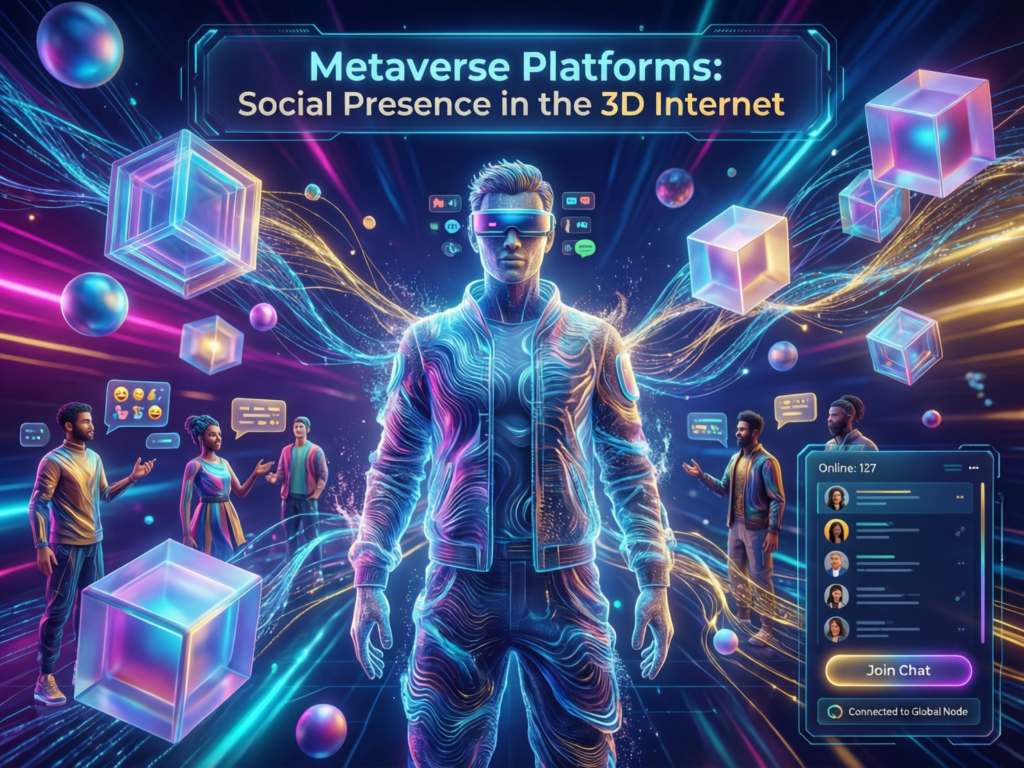
The “metaverse” is less a single app and more a network of immersive platforms where people attend events, shop, work and play in persistent, social 3D spaces. Today, most users experience this through games and virtual worlds, but enterprise and cultural use cases are growing across the US, UK and EU.
What People Actually Do in the Metaverse Today
In practice, people play games, attend concerts, watch parties, co-work and explore virtual tourism experiences. Think Gorillaz-style concerts in Fortnite Creative, branded fan hubs, or Burning Man-style festivals rebuilt in VR after legacy platforms shut down.
Some of these experiences are fully immersive VR; others are browser or mobile “metaverse” spaces that feel more like 3D social apps on a screen. For most brands, the accessible path is browser-first worlds with optional headset support.
Socializing in the Metaverse vs Traditional Social Media
Compared with feed-based social media, metaverse interaction is:
Synchronous and embodied, not asynchronous likes and comments
More emotionally intense, because of co-presence and shared context
Less about broadcasting, more about co-creating spaces and events
For fandoms and creator economies whether K-pop fans in London, Bundesliga fans in Munich, or gaming communities in Austin this shifts parasocial relationships into shared experiences, where creators host live, interactive sessions in spatial environments. This is one of the clearest examples of how virtual reality is changing social interaction for global audiences.
Regional Trends in the US, UK, Germany & Wider EU
US
Strong platform and creator ecosystem from Silicon Valley and Seattle, with experiments in enterprise collaboration and virtual events.
UK
London-based virtual events, media tie-ins, fintech and Open Banking-linked experiences, plus a growing layer of metaverse agencies.
Germany/EU
“Metaverse Deutschland” initiatives, Industrie 4.0 pilots and cultural institutions in Paris, Amsterdam and Barcelona exploring virtual museums and tourism.
How AR and VR Are Changing Interaction for Work, Learning & Events
Across US, UK and European organisations, AR and VR are reshaping how remote teams collaborate, how students learn and how events run. The big shift is from static content and video meetings to spatial collaboration and shared 3D environments.
Immersive Collaboration for Remote and Hybrid Teams
VR meetings feel more like being in a room than staring at a grid of faces. Teams can stand around a 3D model, use spatial whiteboards or walk through a digital twin of a factory floor. For US enterprises and EU-based remote teams, this can improve onboarding, design reviews and cross-border collaboration.
Security teams will look for familiar signals: SOC 2, ISO 27001 and clear data residency guarantees for European users just as they already do for cloud and analytics platforms. (Mak it Solutions)
VR Classrooms, Campus Tours and Professional Training
Universities in London, Manchester or Boston can use VR for STEM labs, language learning and campus tours, while German “Industrie 4.0” projects use VR to simulate machine maintenance or safety drills. In healthcare, NHS-style pilots in England and Scottish/European research projects are exploring immersive training and therapy.
Education-focused VR stats point to millions more headsets being used for learning and training by 2028, with one industry forecast suggesting headset volumes could grow by around 25% between 2024 and 2028.
Virtual Events, Conferences and Tourism Experiences
Hybrid conferences now add VR networking lounges or “digital twin” venues so attendees from San Francisco, London or Berlin can mingle in the same virtual space. Cultural institutions in Paris and Barcelona experiment with virtual galleries and tourism experiences that visitors can explore via browser or headset.
Event organisers evaluate platforms on scalability, accessibility, GDPR/DSGVO compliance and payment security aligned with PCI DSS.
How Brands Use AR & VR to Create More Human Social Experiences
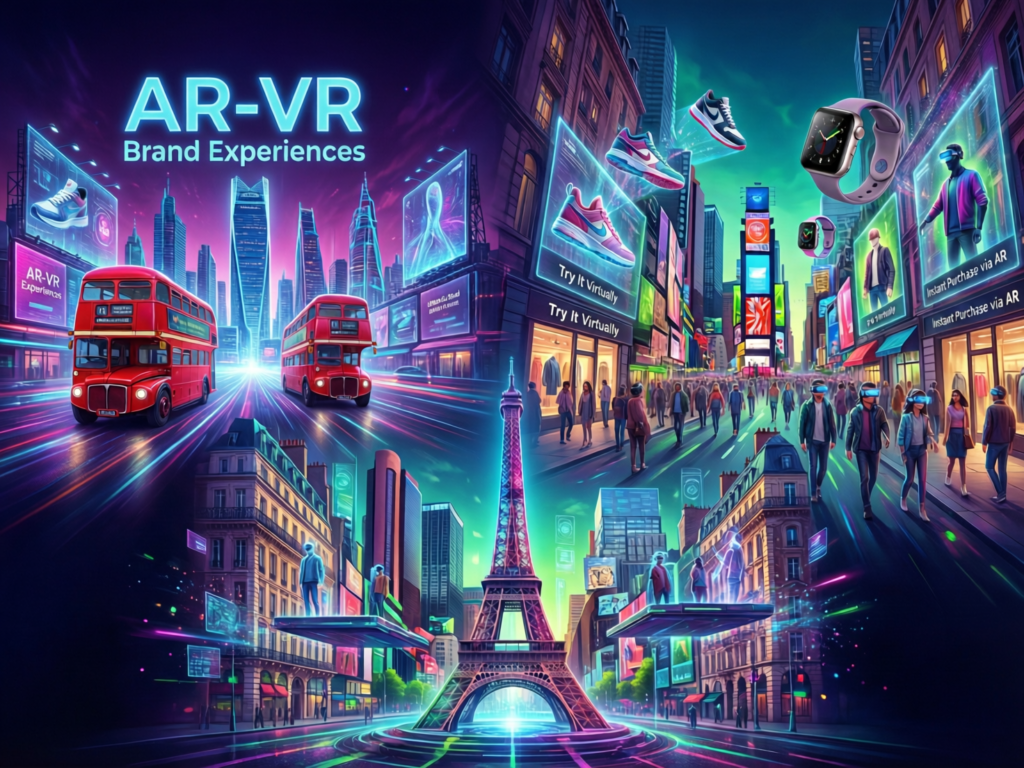
Brands are moving from gimmicky AR filters toward deeper, more social AR/VR experiences that invite play, co-creation and community. For younger US, UK and EU audiences, these immersive formats can feel more “real” than static social ads.
From AR Filters to Spatial Commerce and Pop-Up Worlds
Marketers still use AR filters for campaigns and product try-ons but increasingly tie them to spatial commerce and pop-up worlds. Think:
Virtual try-on for cosmetics in New York
London fashion pop-ups that extend into AR scavenger hunts
German or Dutch retailers running seasonal metaverse stores for loyal customers
These worlds often build on existing web and mobile stacks (for example, React Native and cross-platform mobile apps combined with WebXR experiences), which fits well with Mak It Solutions’ mobile and front-end development services. (Mak it Solutions)
Designing AR/VR Campaigns That Feel Social, Not Gimmicky
Strong AR/VR campaigns.
Prioritise co-presence and shared goals (e.g., collaborative quests)
Offer low-friction onboarding across headsets, phones and browsers
Match formats to personas—American teens vs UK professionals vs EU tourists
Measure community health, not just impressions
Brands often partner with specialised XR or metaverse agencies, while using internal analytics, real-time data and unstructured data insights to track engagement and sentiment. (Mak it Solutions)
Data, Consent and Trust in Immersive Brand Experiences
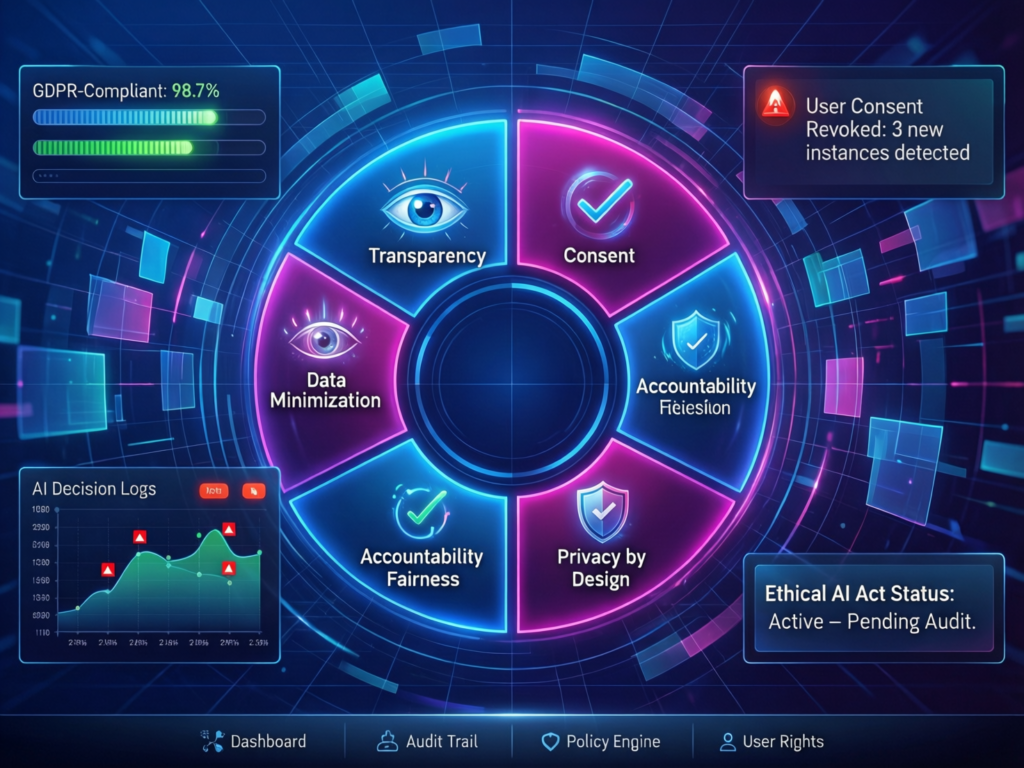
Immersive experiences collect richer data movement, gaze, sometimes biometrics. Under GDPR/DSGVO, UK-GDPR and ePrivacy rules, much of this is likely to be sensitive personal data that requires explicit consent, minimisation and strong security.
Financial or Open Banking-style experiences in Germany fall under BaFin expectations and PCI DSS for payments. That means brands must design clear consent flows, privacy dashboards and audit-ready logs aligned with SOC 2 / ISO 27001 practices, just as they do for traditional SaaS.
Risks, Ethics & Regulation in Immersive Social Tech
As social VR and metaverse platforms scale, safety, privacy and equity become central not optional. The regulatory picture is tightening across the EU, UK and US sectoral regimes.
Privacy, Biometric Data and Global Regulation
VR and AR can capture gaze, body movement, heart rate and voice cues. Under GDPR and UK-GDPR, this can count as sensitive data, subject to stricter legal bases and security requirements. The EU AI Act adds extra obligations for high-risk AI systems, including some biometric and behavioural applications in immersive tech.
Cross-border data transfers (for example, EU users on US-hosted platforms) require mechanisms like adequacy decisions or standard contractual clauses, plus careful attention to data residency for EU, UK and sometimes German BaFin-regulated workloads.
Safety, Harassment and Wellbeing in Social VR Spaces
Harassment, trolling and child safety risks can feel more intense in VR because of embodied presence. Platforms are experimenting with:
Personal boundaries and “safe bubbles”
Easy blocking and muting
AI-driven moderation for voice and behaviour
In the UK, Ofcom’s online safety remit intersects with immersive worlds, while the EU’s Digital Services Act shapes platform responsibility and risk assessments.
Designing Inclusive, Ethical Metaverse Experiences
Ethical immersive design includes:
Accessibility (subtitles, motion sickness mitigation, alternative inputs)
Diverse avatar options and inclusive defaults for global users
Transparent governance, community guidelines and regular transparency reports
For leadership teams, this is not just ethics it’s risk management and brand protection across the US, UK and EU.
How Organisations Should Experiment with Social VR Today
The safest route for most organisations is to start small, with clear objectives, inclusive pilots and strong safeguards, then scale what works. That applies whether you’re a university in London, a manufacturer in Munich or a healthcare provider in New York.
Key Questions Before Launching an AR/VR Social Experience
Before you start, align on.
Who you’re serving (teens, employees, customers, patients)
What problem you’re solving (engagement, training, community, recruitment)
Which constraints you must honour (GDPR/UK-GDPR, HIPAA, accessibility, cross-border data rules)
Document these early; they will shape platform choice and architecture, just as they do in broader cloud and analytics roadmaps. (Mak it Solutions)
Pilot Ideas for US, UK and EU Teams
Practical pilots might include:
Internal VR meetups for distributed teams (browser-first, optional headsets)
Small customer communities for product feedback
Student collaborations linking US campuses with UK/EU universities
Localised trials: London virtual events, Berlin industrial demos, New York creator collabs
Use VR headsets where immersion matters (training, design reviews) and browser/mobile mixed reality for reach and accessibility.
Measuring Impact on Community, Engagement and Revenue
Treat immersive pilots like any serious product experiment.
Track time spent together, repeat attendance, NPS, learning outcomes and conversion lift
Combine numbers with qualitative feedback on belonging and perceived usefulness
Capture evidence and case studies to strengthen your EEAT (Experience, Expertise, Authoritativeness, Trustworthiness) signals in public content
Over time, this data will justify broader investment or tell you where VR is not the right fit and a mobile, web or analytics-led approach (for example, PWAs or BI dashboards) is more effective. (Mak it Solutions)
Key Takeaways
Social VR moves us from 2D feeds to embodied, immersive online interaction, showing how virtual reality is changing social interaction for people across the US, UK and EU.
Metaverse platforms today are mostly networks of gaming, events and collaboration spaces rather than a single app, with strong regional differences in adoption patterns.
AR and VR already power real use cases in education, healthcare, manufacturing and events—and can fit alongside existing web, mobile and analytics investments.
Privacy, biometric data and safety are critical: GDPR/DSGVO, UK-GDPR, the EU AI Act, HIPAA and PCI DSS all shape how immersive experiences must be designed.
The most effective brand and organisational strategies start with small, well-governed pilots, clear success metrics and inclusive, accessible design.
Mak It Solutions can help you connect AR/VR experiments with robust cloud, mobile and data platforms so you can scale safely across the US, UK, Germany and wider Europe.
If you’re exploring how virtual reality is changing social interaction for your customers, students or employees, you don’t need to guess. Mak It Solutions can help you evaluate platforms, design safe pilots and connect AR/VR experiences with your existing mobile apps, web stack and analytics.
Start with a focused, evidence-based experiment whether that’s a virtual classroom, an immersive training module or a spatial community space and let our team help you measure what actually works. Reach out via the Mak It Solutions website to book a short consultation and outline your first AR/VR social pilot.( Click Here’s )
FAQs
Q : Can virtual reality really help reduce loneliness and social anxiety for teens and students?
A : Yes used carefully, VR can help some teens and students feel less isolated by giving them safe places to meet friends, join groups and practise social situations. Several clinical trials and NHS-style pilots show VR exposure and skills training can reduce social anxiety symptoms when delivered with structured programmes and professional oversight. However, VR is not a cure-all: overuse, harassment or poor moderation can make things worse, so parents, schools and clinicians need clear boundaries and safeguards.
Q : Which social VR platforms are safest for families in the US, UK and EU?
A : Safety in social VR depends on both platform features and how families use them. Look for platforms with age-appropriate spaces, strong parental controls, easy blocking/muting and clear reporting tools plus compliance with GDPR/UK-GDPR for European users. Meta Quest’s family controls, curated spaces in Rec Room and age-gated experiences in some metaverse platforms are a start, but parents should still supervise headset time and discuss online behaviour, just as they would for YouTube or TikTok.
Q : How much does it cost for a brand to run a small VR or metaverse event compared with a traditional webinar?
A : Costs vary widely. A simple browser-based 3D meetup with avatars can be priced similarly to premium webinar tools, while fully custom VR worlds with 3D assets, gamification and integrations can run into five- or six-figure budgets. You’ll need to budget for platform licences, creative production, technical integration, moderation and analytics. For many US, UK and EU brands, a good starting point is a lightweight, browser-first environment plus optional headset support, then scale investment based on engagement and conversion metrics.
Q : Do EU privacy laws like GDPR apply if our metaverse platform is hosted on US servers but has European users?
A : Yes. GDPR and UK-GDPR generally apply if you target or monitor users in the EU or UK, regardless of where your servers sit. Hosting in US regions adds cross-border transfer requirements (such as standard contractual clauses), and some German or sectoral regulators like BaFin may expect EU or local data residency for financial or highly sensitive workloads. For immersive platforms that collect movement, gaze or biometric data, you’ll likely need explicit consent, strong security controls and clear documentation.
Q : What hardware do users actually need (and prefer) for social VR—headsets, smartphones or browsers?
A : Right now, usage is split. Dedicated headsets (like Meta Quest or Apple Vision Pro) offer the most immersive social presence but remain a niche compared with smartphones and laptops, with global headset shipments still in the tens of millions per year.Many users prefer browser or mobile access for convenience, especially in Europe where device diversity is high. The most resilient strategy is cross-device: design experiences that feel good on browsers and phones, then add optional VR modes for power users and high-value scenarios like training or design reviews.