
Low-Code No-Code Platforms and the Future of Developer Jobs
Low-Code No-Code Platforms and the Future of Developer Jobs
Low-Code No-Code Platforms and the Future of Developer Jobs
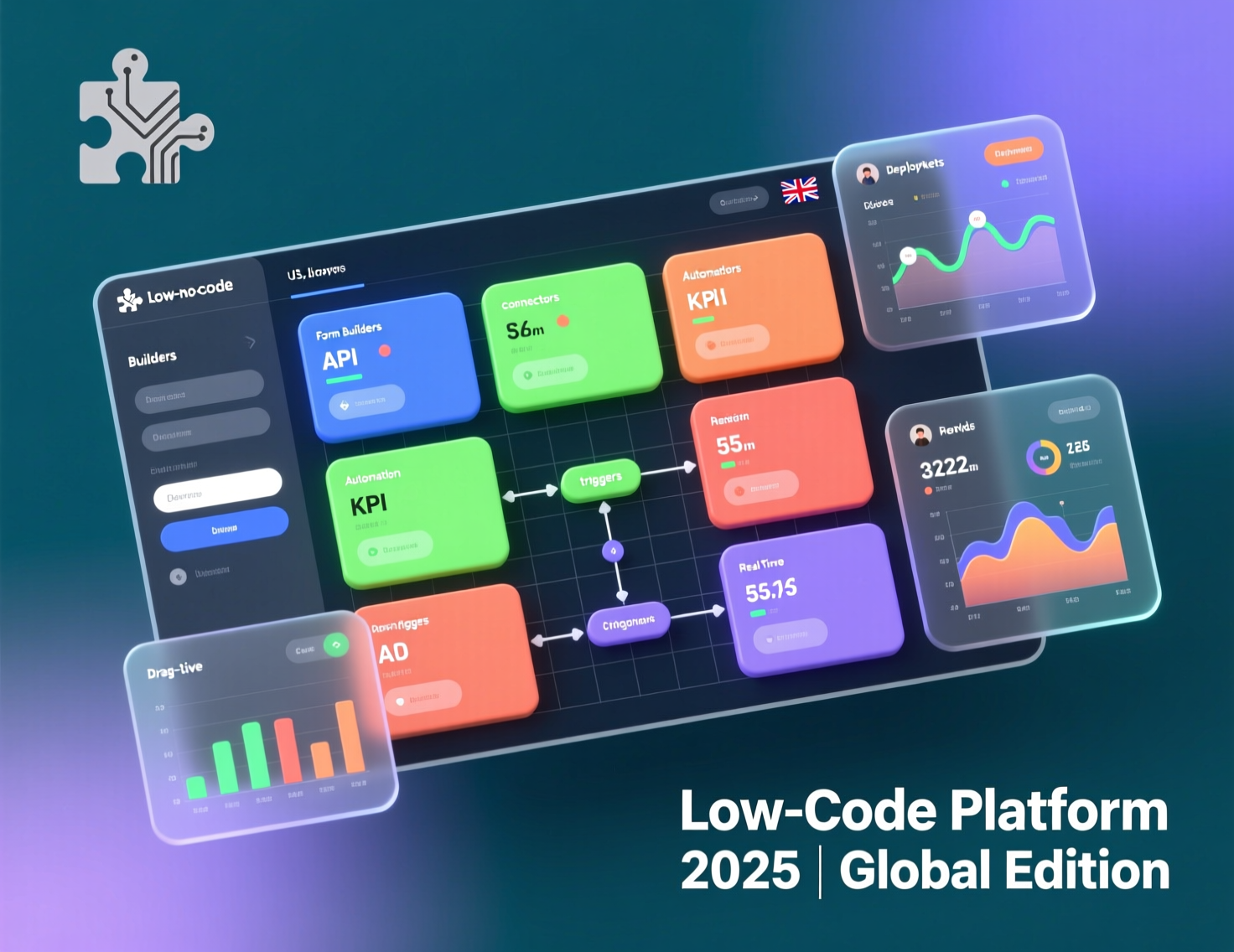
Low-code no-code platforms use visual builders and prebuilt components so teams can ship business apps much faster than with hand-coded development. In the US, UK and EU they’re reshaping developer jobs by automating repetitive UI and workflow work and enabling citizen developers, while professional developers still handle complex architectures, integrations and governance. In practice, low-code no-code platforms augment developer teams rather than replace them.
Introduction
Low-code no-code platforms promise app delivery in weeks instead of months, which is why CIOs in New York, London, Berlin and across the EU are taking them seriously. Developer shortages, rising expectations and tighter regulation make anything that speeds up software delivery worth a hard look.
This guide breaks down what low-code no-code platforms actually are, how they affect developer jobs, how to govern citizen development, and how organisations in the US, UK, Germany and wider Europe can choose and scale these tools in a realistic way.
Low-Code No-Code Platforms in 2025.
Low-code no-code platforms are visual, rapid application development tools that let developers and business users build apps with drag-and-drop components, workflows and templates instead of writing every line of code. In 2025, they sit at the heart of digital transformation because they ease developer shortages while helping organisations clear backlogs and modernise legacy workflows.
Analysts now expect the global low-code market to grow at around 30–35% CAGR this decade, with estimates that low-code development technologies will exceed roughly $30–40B in annual spend in the mid-2020s. At the same time, Gartner and others forecast that 70–75% of new applications will involve low-code by 2026, up from roughly a quarter in 2020.This shift is especially visible in US and UK banks, German manufacturers, and EU public-sector digital programmes facing talent shortages and rising expectations.
Why Low-Code No-Code Is Exploding in the US, UK, and Europe
Adoption of low-code no-code platforms is exploding because enterprises in the US, UK and Europe face the same three pressures: developer scarcity, aggressive transformation targets, and heavy compliance demands.
In New York or San Francisco, low-code helps teams prototype workflow automation software around CRMs or ERPs without waiting for full-stack capacity. In London or Manchester, UK banks use low-code to quickly respond to Open Banking and PSD2 changes, while keeping core systems stable. In Berlin, Munich and Frankfurt, German firms lean on enterprise low-code application platforms (LCAPs) to digitise paper-heavy processes while staying DSGVO-konform (GDPR-compliant).
From Spreadsheets to Enterprise Apps: How LC/NC Evolved
Low-code no-code started life as “super spreadsheets” and form builders that let power users wire together simple databases and workflows. Over the last decade, those tools evolved into robust platforms with API connectors, role-based security, environments, DevOps hooks and observability.
Today, Microsoft Power Apps, SAP Build on SAP BTP, Mendix, OutSystems and Appian position themselves as strategic enterprise platforms rather than side tools. Citizen development has gone from experiment to mainstream: one Forrester snapshot found nearly 40% of firms already use low-code to empower business users, with another quarter planning to follow.
Key Players and Ecosystems: Microsoft, SAP, AWS, and Beyond
For enterprises in the US, UK and EU, the low-code no-code landscape clusters around a few ecosystems:
Microsoft Power Platform (Power Apps, Power Automate, Power Pages) tightly integrated with Azure, Microsoft 365 and Dynamics very common in NHS trusts, UK councils, and US mid-market firms.
SAP Build / SAP BTP for extending SAP S/4HANA, SuccessFactors and other SAP workloads with visual application builders.
AWS with services like AWS Honeycode, AppFabric integrations and serverless backends that pair well with open-source low-code front-ends such as Appsmith.
Mendix, OutSystems, Appian as enterprise LCAPs with strong workflow automation, case management and mobile/web delivery.
In reality, most large organisations end up with a multi-platform mix: some Power Apps for internal workflows, a Mendix or OutSystems layer for complex use cases, and open-source tools for developer-led experiments.
What Are Low-Code and No-Code Platforms?
Low-code and no-code platforms are software development environments that provide visual application builders, prebuilt components and configuration instead of writing all logic in traditional languages like Java, C# or JavaScript. Traditional development still underpins them, but it’s abstracted away: the platform generates code, manages infrastructure and handles much of the plumbing.
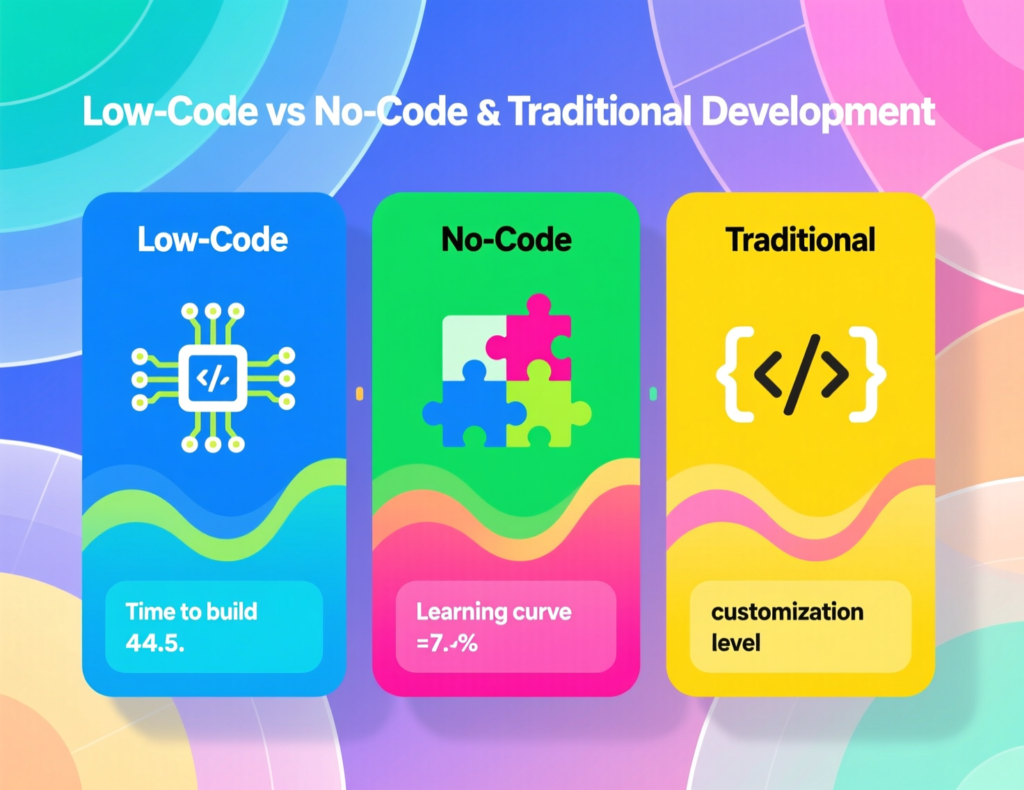
Low-Code vs No-Code vs Traditional Development
Low-code tools target professional developers, offering visual flows plus the option to drop into code (JavaScript, C#, Java) or custom connectors.
No-code tools are designed for non-developers, with drag-and-drop UIs, simple logic and opinionated integrations—ideal for forms, approval flows and internal dashboards.
Traditional development gives maximum control and performance, but requires more time, specialised skills and full lifecycle ownership.
In real projects, teams in the US, UK and EU often combine all three: no-code for simple intake forms, low-code for workflow orchestration, and traditional code where performance, security, or unique IP matter.
Core Features: Visual Builders, Templates, and Workflow Automation
Most low-code no-code platforms share a common feature set:
Visual application builder for screens, data models, and navigation
Workflow automation engines for approvals, SLAs, notifications and integrations
Connectors & APIs to systems like Salesforce, SAP, core banking systems or NHS EPRs
Templates & accelerators for common scenarios (KYC onboarding, service desk, customer portals)
DevOps & governance: environments, ALM pipelines, role-based access and audit logs
From a buyer’s point of view, these platforms are not just page builders they are rapid application development tools that encapsulate years of platform engineering into configurable building blocks.
Benefits and Drawbacks for US, UK, and EU Organisations
Benefits across geographies look similar:
Faster time-to-market and backlog reduction
Better alignment between business and IT
Lower initial build costs versus bespoke development
But there are trade-offs:
Lock-in to a specific platform and cloud region (important for GDPR data residency, UK-GDPR and BaFin rules).
Limits on extreme customisation and performance-sensitive workloads
New risks from unmanaged citizen development
For a US healthcare provider under HIPAA, or a UK bank under FCA and PCI DSS, the question isn’t “Is low-code safe?” but “Which platform lets us enforce our security, privacy and audit controls centrally?”
Will Low-Code No-Code Platforms Replace Developers?
Low-code no-code platforms will not replace developers, but they will change what developers work on and who else can build software. They automate a chunk of UI and workflow boilerplate, freeing professional developers to focus on architecture, integration, security and reusable APIs.
Which Developer Tasks Are Most Exposed to Automation?
The tasks most exposed to low-code automation include:
CRUD data-entry apps around a standard data model
Simple approval workflows and status dashboards
“Shadow IT” spreadsheets turned into basic apps
Integration glue that’s now achievable with visual workflows
IDC and other analysts estimate that low-code tools are increasingly being used for new apps and feature work across the lifecycle, with some forecasts putting low-code at over 60–70% of net-new business apps by the mid-2020s.For developers, that means less repetitive form wiring and more focus on robust, reusable services and event-driven backends.
Why Complex Enterprise Systems Still Need Professional Developers
Even the most advanced low-code platform cannot replace experts designing:
High-scale, low-latency APIs for real-time trading or streaming
Complex domain models (e.g. multi-country tax, reinsurance, credit risk)
Security architectures for HIPAA, PCI DSS or BaFin-regulated banks
Zero-downtime migrations, multi-region failover and resilience patterns
Most mission-critical systems in US banks, NHS trusts, German insurers or EU public agencies still run on core platforms (Java, .NET, COBOL, SAP). Low-code is used as an experience and workflow layer on top, not a full replacement of the core.
How Low-Code No-Code Affects Developer Roles in the US, UK, and Germany
In the US, developers increasingly act as platform engineers and API product owners, exposing secure building blocks that citizen developers consume.
In the UK, especially in London financial services and NHS trusts, devs split time between custom builds and governing low-code environments for Open Banking, e-Referrals and internal workflow automation.
In Germany, with strong works councils and DSGVO expectations, developers often become the guardians of compliant architectures choosing German or EU data centres, managing encryption and designing patterns that keep citizen development safe.
The Future of Developer Careers in a Low-Code No-Code World
Low-code no-code platforms are best seen as a career accelerator for developers who lean into architecture, cloud, security and AI. Gartner expects AI-native and low-code platforms to evolve software engineering teams into smaller, high-impact units augmented by automation rather than expanded armies of coders.
New Hybrid Roles: Developer-Architects, Platform Owners, and Citizen-Dev Coaches
We are already seeing new roles in US, UK and EU organisations:
Developer-Architects who set patterns, reference architectures and reusable components on a chosen LCAP.
Platform Owners responsible for Power Platform, Mendix, OutSystems or Appian governance, cost optimisation and roadmap.
Citizen-development coaches embedded in business units, helping product owners and analysts build safely.
These roles sit at the intersection of engineering, product and governance exactly where senior developers can create more leverage than just committing code.
Skills Developers Should Double-Down On (APIs, Security, Cloud, AI)
For long-term relevance in the US, UK and EU markets, developers should deepen:
API and integration design (REST, GraphQL, event streams) feeding low-code apps
Security and privacy engineering for GDPR/DSGVO, UK-GDPR, HIPAA and PCI DSS.
Cloud architecture across AWS, Azure and Google Cloud—including region selection, networking and identity (Makitsol)
AI-assisted development (GitHub Copilot, platform-native AI builders) and how they interact with low-code
LC/NC experience on your CV should read as “delivered production systems in a complex environment”, not “played with a drag-and-drop tool”. Employers in New York, London, Berlin or Amsterdam want evidence that you can design maintainable solutions, not just click wizards.
How to Position LC/NC Experience on Your CV in US, UK, and EU Markets
When listing LC/NC experience for US, UK or EU roles
Emphasise outcomes: reduced time-to-market, backlog reduction, cost savings
Specify platforms: e.g. “Built KYC workflow on Power Apps + Power Automate for a UK bank under Open Banking/PSD2.”
Highlight integration & governance: SSO, data residency, audit, change management
For German and EU markets, reference DSGVO/GDPR and, where relevant, BaFin or EBA expectations for outsourcing and cloud risk
This positions you as a modern engineer who uses the right tool for the job, not someone who only knows a proprietary visual builder.
Citizen Development and Governance.
Citizen development means business users in operations, finance or clinical teams building apps and workflows with low-code no-code platforms under IT’s guardrails. Done right, it scales delivery; done badly, it creates security and compliance headachesForrester has even warned that unmanaged citizen development could contribute to headline breaches.
What Is Citizen Development and Where It Works Best
Citizen development works best when:
Use cases are local and workflow-centric (e.g. NHS Trust clinics organising referrals, a US claims team improving intake)
There is a clear data boundary (e.g. internal HR processes, non-production data)
IT provides templates, training and review
Good candidates include internal portals, checklists, lightweight approval tools and reporting front-ends wired into existing APIs. Poor candidates include core banking systems, medical device software or high-frequency trading engines.
Guardrails: IT Governance, SOC 2, ISO 27001, and GDPR/DSGVO Compliance
To keep citizen development safe in US, UK and EU organisations, IT should define guardrails that align with:
ISO 27001 and SOC 2 controls for access, logging and change management
GDPR/DSGVO and UK-GDPR requirements for lawful basis, minimisation and data subject rights .
HIPAA rules in US healthcare around protected health information
PCI DSS obligations for payment card data
Practically, that means standard data classifications, approved connectors, environment strategies (dev/test/prod), mandatory reviews for high-risk apps, and tying LC/NC environments into central identity and logging.
Governance Models in Regulated Industries (NHS, BaFin Banks, US Healthcare)
In NHS trusts, successful citizen development programmes often create a low-code Centre of Excellence that prebuilds templates for clinics and admin teams, with strict PHI boundaries.
In BaFin-regulated German banks, low-code is usually limited to workflows and portals on top of core banking systems, with clear outsourcing assessments and cloud contracts.
In US healthcare, HIPAA and emerging cybersecurity expectations mean LC/NC platforms must be evaluated like any other vendor BAAs, encryption, zero-trust networking and regular risk assessments are non-negotiable.
Real-World Low-Code No-Code Use Cases Across Industries
Across banking, healthcare, and enterprise automation, low-code no-code platforms increasingly sit beside traditional development rather than replacing it.
Banking and Fintech: From KYC Workflows to Open Banking APIs
In US, UK and EU banking
KYC and onboarding workflows built with Power Apps, Appian or OutSystems orchestrate data collection, ID verification and approvals.
Open Banking / PSD2 journeys use low-code as a presentation and orchestration layer over regulated APIs.
Internal risk, compliance and reporting tools are ideal low-code candidates because they change constantly with new regulations.
German and EU banks often combine enterprise LCAPs with standard API gateways, ensuring that even citizen-built apps consume vetted services rather than talking directly to core systems.
Healthcare and Public Sector: NHS Trusts, EU e-Health, US HIPAA Environments
Healthcare and public sector organisations use low-code no-code platforms to:
Build clinic-facing portals and referral dashboards in NHS trusts
Create e-government forms and workflows for EU municipalities (permits, benefits, citizen requests)
Deliver care-management and case tracking tools in US health systems, under HIPAA security safeguards
Here, the value comes from translating paper forms and email-based workflows into auditable, secure digital flows—without waiting years for a full custom build.
Enterprise Automation: ERP Extensions, Workflow Apps, and Line-of-Business Tools
In large enterprises across New York, London, Paris, Amsterdam or Dublin, low-code no-code shines in:
ERP extensions around SAP or Oracle (extra validation screens, specialised reports)
Line-of-business tools for HR, finance, procurement and operations
Cross-system workflows (e.g. Salesforce + SAP + internal APIs)
This is where low-code overlaps heavily with workflow automation software and iPaaS-style integrations. Smart teams design reusable API layers and events, then let LC/NC handle orchestration and UX.
Choosing the Right Low-Code No-Code Platform
Choosing the right low-code no-code platform in the US, UK or EU starts with clarifying your compliance posture, existing cloud stack, and developer preferences. There is no global winner only the platform that fits your architecture, skills and governance model.
Key Evaluation Criteria: Security, Data Residency, and Integrations
When evaluating platforms like Power Apps, Mendix, OutSystems, Appian, SAP Build or Appsmith, focus on:
Security & identity: SSO, RBAC, MFA, audit trails, network isolation
Data residency & sovereignty: available regions (e.g. Azure UK South, AWS eu-central-1 Frankfurt, EU sovereign clouds) and support for customer-managed keys (Makitsol)
Integration depth: quality of connectors and how easily developers can add new APIs
DevOps & lifecycle: branching, versioning, testing, monitoring, rollback
Total cost of ownership: licensing plus infra, support, and training
This is also where a partner like Mak It Solutions can help benchmark platforms against your existing web, mobile and analytics investments. (Makitsol)
Comparing Enterprise Platforms: Power Apps, Mendix, OutSystems, Appian, SAP, and Others
At a high level
Microsoft Power Apps great for Microsoft-centric shops (O365, Azure, Dynamics)
Mendix / OutSystems strong multi-experience (web + mobile), enterprise-grade LCAP, good for greenfield plus legacy modernisation
Appian excels in case management and workflow-heavy processes (BFSI, public sector)
SAP Build / SAP BTP best fit if SAP is your core ERP and you want tight integration
Open-source tools (e.g. Appsmith) attractive for dev-heavy teams wanting control, especially when combined with serverless or containerised backends
Gartner’s latest Magic Quadrant highlights how quickly vendors are infusing AI into these platforms, making governance and skills even more central to platform choice.
US vs UK vs EU/German Requirements: Pricing, Hosting, and Compliance
US buyers often emphasise HIPAA, SOC 2, and FedRAMP where public sector is involved, and are comfortable with US cloud regions.
UK teams care about UK-GDPR, Data Protection Act 2018 and NHS-specific frameworks, plus UK Azure/AWS regions.
Germany/EU put heavy weight on DSGVO, local hosting (Frankfurt, Berlin, Paris, Amsterdam, Dublin) and, in BFSI, BaFin and EBA guidance on outsourcing.
Pricing can also differ by region and licensing model (per-user vs per-app vs capacity), so TCO modelling is essential before committing.
Build a Joint Developer Business Strategy Around Low-Code
A sustainable low-code no-code strategy is a joint project between IT and the business, not an IT side experiment or a free-for-all “apps for everyone” programme.
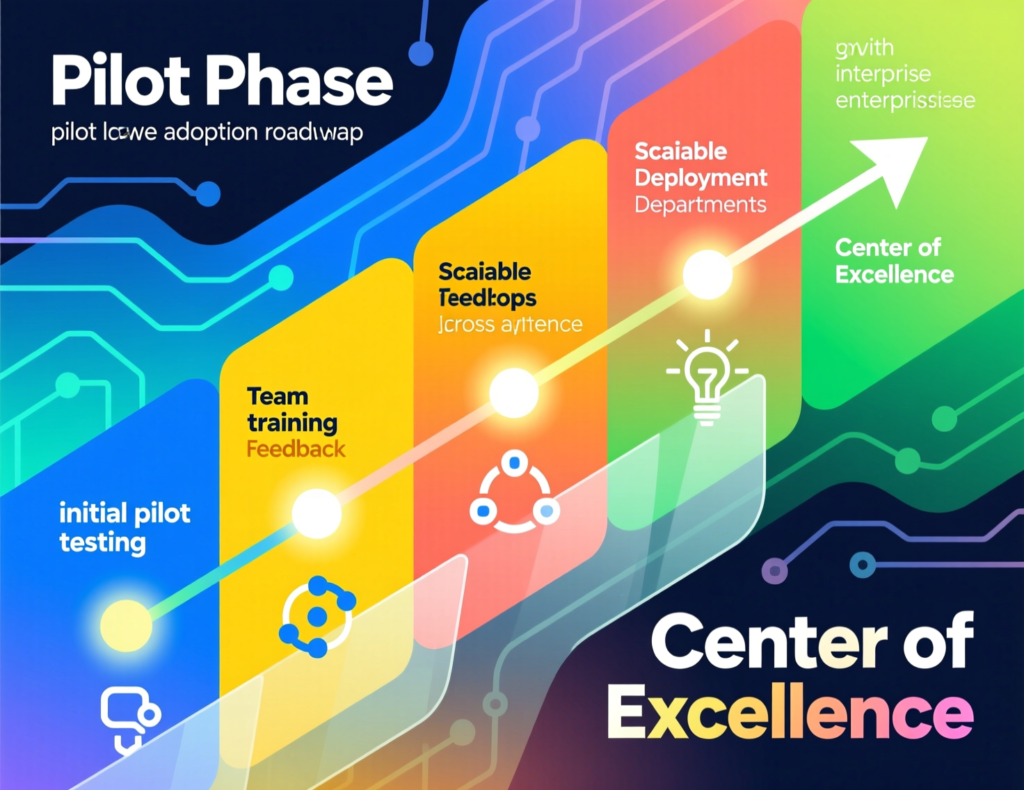
Practical Adoption Roadmap: From Pilot Project to Centre of Excellence
A pragmatic roadmap usually moves through.
Discovery & platform shortlist
Assess use cases, compliance, and cloud stack; run a structured evaluation of 2–3 platforms.
Pilot projects
Deliver 1–3 real apps (e.g. internal workflow + reporting dashboard) with a joint dev–business squad.
Guardrails & playbooks
Define environments, data classifications, connectors, review processes and training.
Citizen dev enablement
Onboard selected business users with templates, office hours and support.
Centre of Excellence (CoE)
Formalise governance, metrics and continuous improvement for LC/NC across the organisation.
This is where a consulting partner familiar with cloud, web and data such as Mak It Solutions’ web development and BI practices can accelerate adoption. (Makitsol)
KPIs to Track
Track KPIs that make the impact of low-code no-code visible:
Time-to-market for new apps (idea → production)
Backlog reduction and number of citizen-built apps adopted
Reuse of APIs and components versus one-off builds
Compliance metrics (audit findings, policy exceptions, data incidents)
User satisfaction and adoption in key departments
Some studies suggest that teams adopting low-code can cut delivery times for certain classes of apps by 50–70% while improving stakeholder satisfaction.
When to Use Low-Code No-Code vs Hiring More Developers
As a rule of thumb:
Use low-code no-code when business logic is changing fast, integration complexity is moderate, and compliance risks are manageable.
Invest in more traditional development when you need deep customisation, extreme scale, or when software itself is your competitive moat.
Combine both when you want developers to provide stable APIs and event streams, then let LC/NC handle front-line workflows and experimentation.
If you’re wrestling with platform choice, developer capacity, or governance around low-code no-code platforms, you don’t have to solve it alone. Mak It Solutions combines modern web development, mobile apps, cloud architecture and data analytics experience to design LC/NC strategies that actually work in regulated US, UK and EU environments. Explore how our web development and cloud consulting teams can help you run a focused pilot, set guardrails and scale a low-code Centre of Excellence that your developers and business users both trust. (Makitsol)
FAQs
Q : Are low-code no-code platforms a good career path for junior developers and recent graduates?
A : Yes used correctly, low-code no-code platforms are a strong career booster for juniors, not a dead end. For graduates in the US, UK or EU, working on LC/NC projects exposes you quickly to requirements gathering, UX, integrations and real business processes. The key is to also build solid foundations in programming, databases, APIs and cloud so hiring managers see you as a modern engineer rather than a tool operator.
Q : How do low-code platforms affect software developer salaries in the US, UK, and Germany?
A : Low-code platforms have not pushed developer salaries down; if anything, they increase demand for engineers who can architect and govern them. In US hubs like San Francisco and Seattle, devs who can combine cloud, APIs and LC/NC often command a premium compared to purely “forms-and-buttons” roles. In the UK and Germany, employers look for developers who understand compliance (GDPR/DSGVO, UK-GDPR) and enterprise integration; those skills, plus low-code experience, tend to support mid-to-senior salary bands rather than entry-level pay.
Q : Can low-code no-code platforms meet GDPR/DSGVO and UK-GDPR data protection requirements?
A : Yes, many enterprise-grade low-code no-code platforms can support GDPR/DSGVO and UK-GDPR compliance, but it depends on how you configure and govern them. You still need to choose appropriate EU/UK regions, define data retention and access controls, document processing activities, and honour data subject rights. Platforms like Power Apps, Mendix, OutSystems and Appian offer features such as encryption, role-based access and auditing—but organisations remain responsible as controllers and must align their usage with GDPR and UK ICO guidance.
Q : What are the main risks of unmanaged citizen development in large enterprises?
A : The biggest risks are security holes, compliance breaches and unmaintainable “shadow apps.” Without governance, business users may connect to sensitive systems, mishandle personal data, or bypass change management. Forrester has warned that poorly governed citizen development could contribute to major data breaches, especially where non-technical users build workflows around sensitive data. To manage this, large enterprises in the US, UK and EU establish policies, approved connectors, mandatory reviews and a central Centre of Excellence for low-code no-code platforms.
Q : Which types of applications should you avoid building with low-code or no-code tools?
A : Avoid using low-code no-code platforms for ultra-low-latency trading engines, embedded medical device software, real-time industrial control, or applications where every microsecond and byte of memory matters. These scenarios usually need highly optimised code, specialised runtimes and tight control over infrastructure. You should also be cautious about building core systems-of-record (e.g. core banking, primary EHRs) entirely on LC/NC unless the platform is explicitly designed and certified for that purpose. In most US, UK, German and EU organisations, low-code works best for workflows, portals and extensions on top of those core systems.