


Phishing Attacks in the Middle East: Arabic Scams in GCC
Phishing Attacks in the Middle East: Arabic Scams in GCC
Phishing Attacks in the Middle East: Arabic Scams in GCC
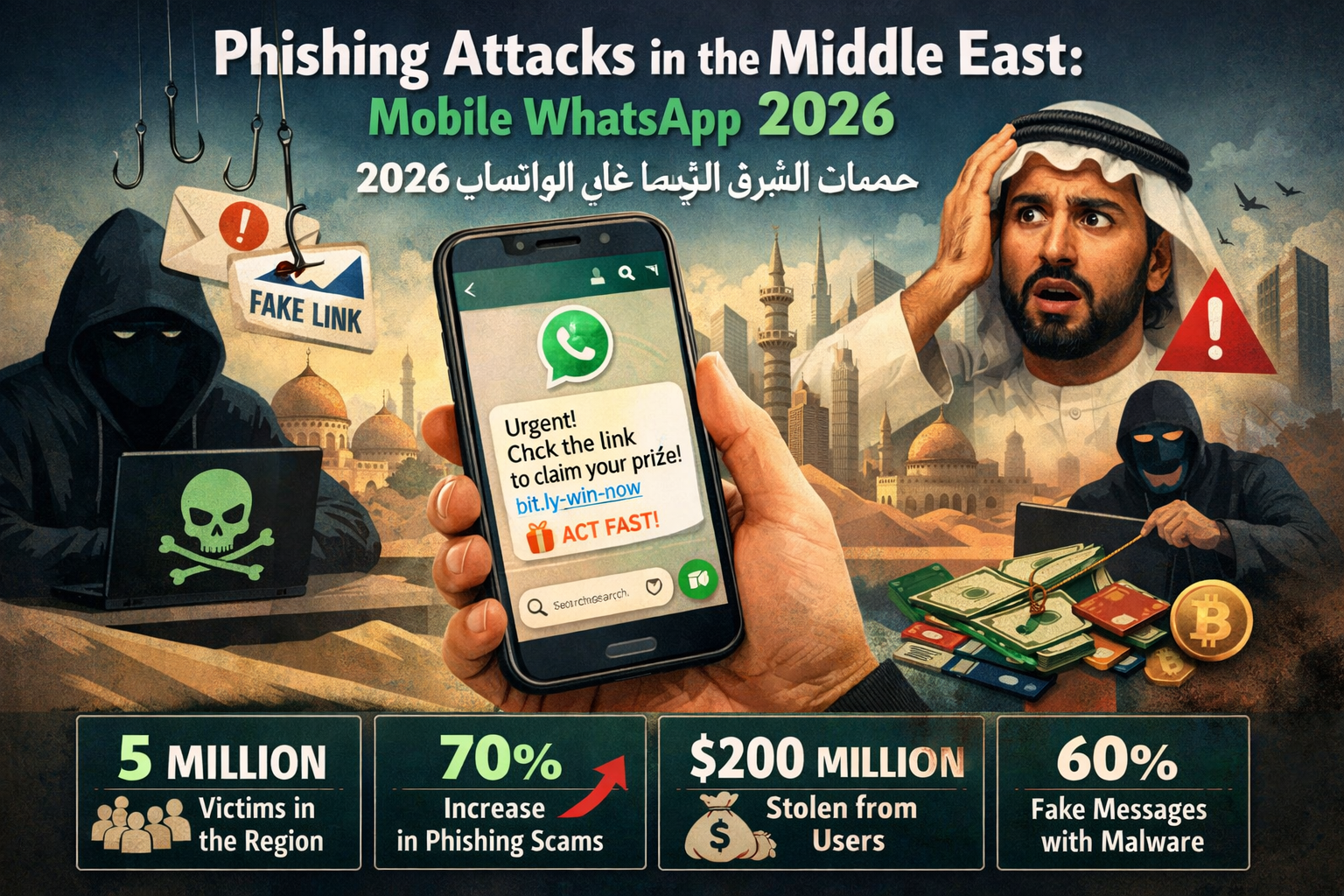
Phishing attacks in the Middle East increasingly use Arabic language, local culture and mobile apps to trick users in KSA, UAE and Qatar into sharing logins, OTPs and money. To stay safe, always distrust unexpected links, verify messages through official apps or hotlines, and report suspicious activity immediately to your bank or national cyber authorities.
An aunt in Dubai gets a WhatsApp voice note in warm Gulf-accent Arabic: “Mabrook! You won a prize from your telecom. Click this link in 5 minutes or lose it.” By the time her son in Riyadh checks her phone, thousands of riyals have already left her account.
This is what phishing attacks in the Middle East look like now: Arabic messages, local logos, and believable stories tailored to GCC families, expats and small businesses. For users in KSA, UAE and Qatar, the biggest danger isn’t “hackers in hoodies” it’s social engineering tricks landing in everyday SMS, WhatsApp and banking apps.
In this guide, we unpack how scams are localised for Arabic speakers, where people are actually getting hit, and what Saudi-friendly phishing awareness training for Arabic speakers should include for both families and organisations.
Understanding Phishing Attacks in the Middle East
What Makes Phishing Attacks in the Middle East Unique?
Compared to Europe or the US, phishing in Saudi Arabia, United Arab Emirates, Qatar and the wider GCC is highly mobile-first, bilingual and culture-aware. Attackers mix Arabic, “broken Arabic” and English, copy local bank and government branding, and target users on prepaid phones, salary cards and popular local wallets – not just email inboxes.
You’ll also see more spear phishing and targeted attacks in GCC organisations, especially in sectors like fintech, government, logistics and retail, where a single stolen login can unlock payroll data, customs portals or supplier payments.
Social Engineering Basics Behind Arabic Phishing Scams
Behind every message is the same lifecycle.
Lure emotional or urgent hook (prize, blocked card, family emergency)
Engagement link, QR, callback number or WhatsApp chat.
Credential harvesting and account takeover in banking apps users type OTPs, passwords or card data into fake forms.
Monetisation instant transfers, card-not-present payments, SIM swap or selling access.
In the GCC, attackers lean heavily on respect for authority, family obligations and religious giving to push people through this path faster.
Snapshot of Recent Trends in KSA, UAE and Qatar
Banks and regulators across the region report sharp increases in smishing and vishing scams in mobile-first markets, especially those impersonating banks, courts, police and delivery companies. Campaigns now rotate quickly between KSA, UAE and Qatar, reusing Arabic templates but swapping logos and links.
For organisations, business email compromise (BEC) in the Middle East is shifting from classic “CEO fraud” to more subtle invoice and supplier scams, often combined with phone calls from Arabic-speaking attackers.
Arabic Phishing Patterns and Social Engineering Tactics in the GCC
How Do Social Engineering Attacks in the GCC Exploit Arabic Language, Culture and Trust?
Social engineering attacks in the GCC exploit Arabic language and culture by mimicking local dialects, using family and religious phrases, and referencing real ministries, banks and charities. Attackers know that users trust “salaam alaikum” voice notes, formal fus-ha SMS from “authorities,” and messages that mention tribe, family or community obligations.
Common patterns include
Switching between Gulf dialect and Modern Standard Arabic to sound “official but friendly”.
Using family titles like “khali”, “bent ‘amm”, “um Ahmed” to lower suspicion.
Dropping Quranic verses or charity language to make fake zakat or donation links feel safe.
Cultural Hooks.
Scammers lean on themes that matter deeply in Kuwait, KSA and beyond.
Family & tribe: “Your brother had an accident in Jeddah send money now,” with a local IBAN.
Religion & charity: fake Ramadan zakat and Eid donation links, especially to “urgent cases” in Gaza or Yemen.
Authority: calls pretending to be from traffic police, immigration or courts threatening fines, deportation or travel bans.
These stories push victims to act before thinking, especially elders or new expats who may be unfamiliar with local cybercrime reporting channels.
AI-Generated Arabic Phishing Messages and Deepfake Voices
Generative AI now produces convincing Arabic in multiple dialects, plus cloned voices that sound like a relative or a real bank agent. Attackers use AI to generate hundreds of variants of a UAE WhatsApp Arabic prize scam message example, all with slightly different wording and links, making traditional filters less effective.
We’re also seeing early cases where deepfake voices impersonate HR, finance or suppliers in internal vishing calls to push urgent transfers.
Channels and Lures: SMS, WhatsApp, Email and Social Apps
How Can Saudi, UAE and Qatar Users Verify if an SMS or WhatsApp Message Is a Phishing Attempt?
Saudi, UAE and Qatar users should treat every unexpected SMS or WhatsApp link as suspicious until proven safe. Never trust a message just because it’s in Arabic, uses your full name or shows a local sender ID; instead, verify through your bank or government app, or by calling official hotlines from their website, not from the message.
Quick checks.
Look for spelling mistakes, “broken Arabic” and generic greetings.
Check the URL carefully real banks don’t use random domains or URL shorteners.
Confirm any payment, fine or prize directly in the official app or portal.
Common WhatsApp and SMS Phishing Patterns in the GCC
Across Bahrain, KSA and UAE, the same lures repeat.
“Your shipment is held pay small customs fee” links.
“Your mada card / salary card is blocked click to re-activate.”
Fake telecom or mall prize draws, often including a Qatar Arabic SMS phishing about winning iPhone.
In coastal cities like Jeddah, scammers also impersonate logistics and port agents, targeting SMEs that live on fast shipments.
Email, Instagram and Snapchat Phishing Targeting Arabic Speakers
Younger users get hit more on Instagram and Snapchat: fake influencer giveaways, “brand collaboration” DMs and account recovery traps that steal login codes. On email, classic BEC and password reset scams still exist, but they now mix Arabic and English, and often arrive immediately after an SMS or WhatsApp contact to feel more “official.”
Banking, Fintech and Government Service Phishing in KSA, UAE and Qatar
What Are the Most Common Arabic Phishing Lures Targeting Bank Customers in KSA and UAE?
The most common Arabic lures against bank customers in KSA and UAE pretend to fix urgent security issues: “card blocked,” “suspicious international transfer,” or “account will be frozen in 2 hours.” Victims are rushed to click fake bank links or share OTPs on the phone, giving criminals full access to online banking or mobile apps.
Examples include
Fake mada or credit card limit increase forms.
SMS mimicking Saudi Central Bank (SAMA) updates to gain trust.
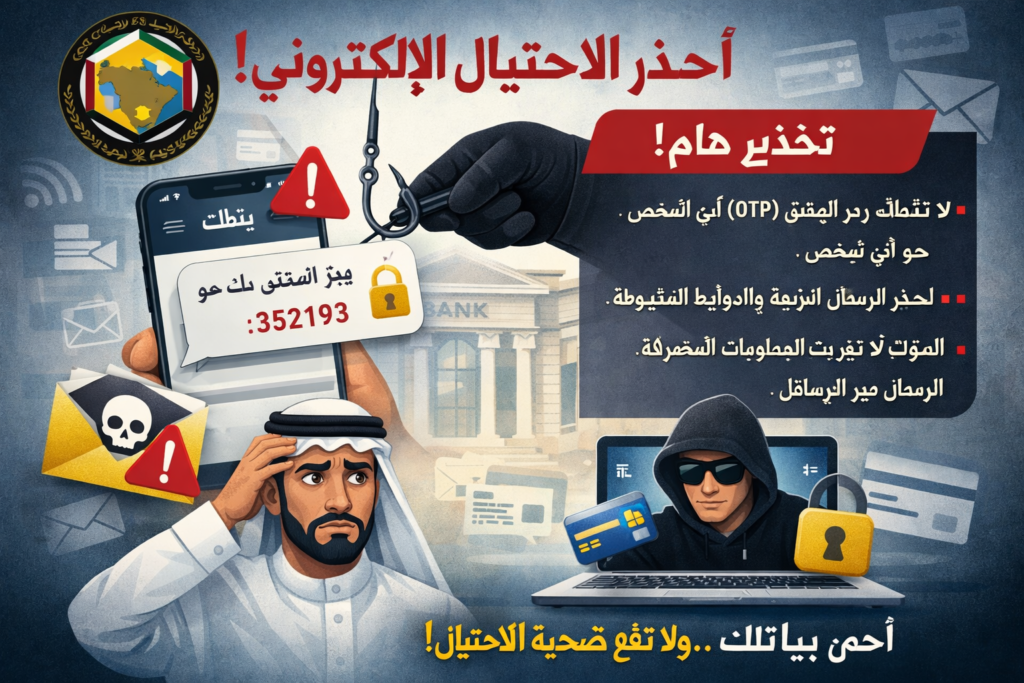
Calls claiming to be “fraud teams” asking you to read OTPs “to cancel the transaction.”
Phishing Against Online Banking, Wallets and Salary Cards in the GCC
Fintechs, payroll providers and neobanks across Oman, KSA and UAE see attacks that blend app notifications, SMS and email. Criminals target salary cards, remittance apps and Open Banking KSA APIs by tricking users into approving connections or sharing consent tokens.
For CISOs, this means combining phishing defences with fraud analytics, risk-based authentication and secure DevSecOps areas covered in depth in Mak It’s own DevSecOps in Middle East guidance.
Fake Government Portals, Digital ID and E-Service Phishing
As more services move online, scammers copy portals like UAE visa systems, traffic fine pages and court payment sites. Attacks spoof UAE Pass, Qatar Digital ID, or local e-gov logins, leading to identity theft and fake fine payments.
Regulated entities in Abu Dhabi Global Market (ADGM) and Dubai International Financial Centre (DIFC) must be especially careful: compromised portals or customer logins can quickly turn into cross-border fraud cases involving multiple regulators.
GCC Controls, Training and Compliance Against Phishing
Phishing Simulation and Awareness Training for Arabic-Speaking Staff
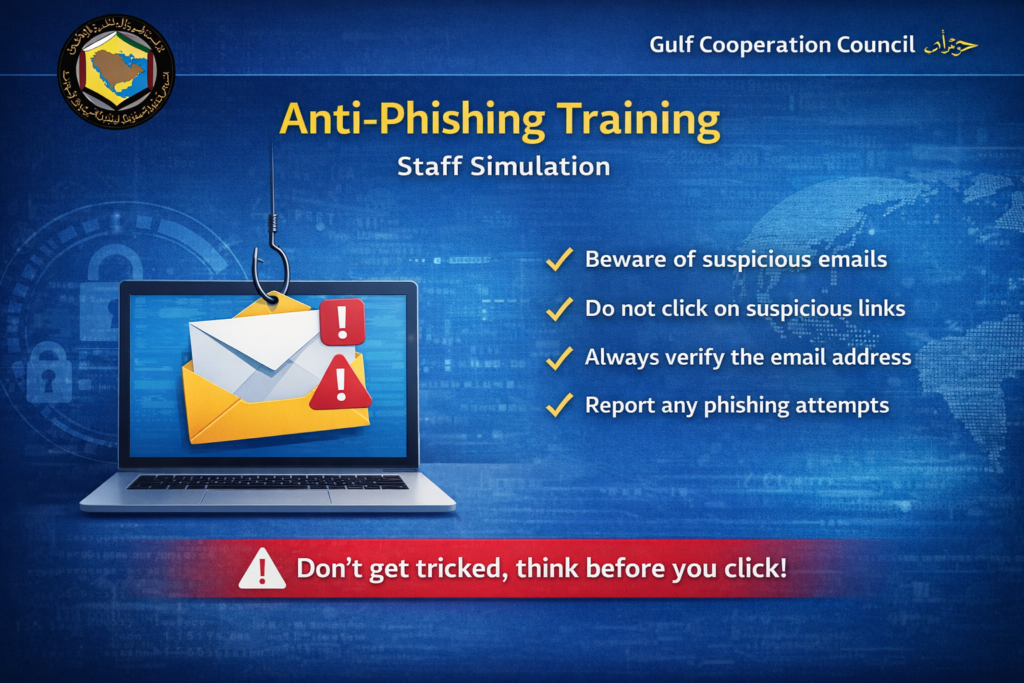
For banks, fintech and government teams, real change comes from live phishing simulations and ongoing awareness not one-off PowerPoints. Campaigns should include Arabic-first content, Gulf scenarios and mobile-focused tests, reaching staff in branches from Abu Dhabi to small logistics offices in industrial zones.
This is where partners like Mak It Solutions can combine training with app security, analytics and content localisation to run Saudi-friendly phishing awareness training for Arabic speakers.
Real GCC scenarios to include.
A Doha SME receiving fake customs-fee SMS for an urgent shipment.
A Riyadh fintech startup following SAMA’s fraud guidance while rolling out in-app scam warnings.
A Dubai e-commerce brand scaling mobile apps while educating customers about OTP sharing and app store imposters.
Aligning Anti-Phishing Controls With GCC Regulators and Frameworks
Security teams should map controls to local regulators: Telecommunications and Digital Government Regulatory Authority (TDRA) for SMS/telecom abuse, Qatar Central Bank (QCB) for financial fraud reporting, and frameworks from National Cybersecurity Authority (NCA) for cyber maturity.
In KSA, the National Data Management Office (NDMO) also links phishing defences to data governance and privacy, while the UAE Cybersecurity Council pushes national awareness campaigns.
Building a Human-Centric Security Culture in Middle East Organisations
Technical controls matter, but culture wins. Middle East organisations should make it easy to report suspicious messages (one-tap buttons in apps, dedicated WhatsApp hotlines), praise staff for reporting “false alarms,” and share anonymised stories of near misses.
For data residency and logging, many GCC companies now keep phishing simulation data and security logs in cloud regions like Amazon Web Services Bahrain, Microsoft Azure UAE Central, or Google Cloud Platform Doha to meet local expectations around sovereignty.
What Should Users and Companies in KSA, UAE and Qatar Do After a Phishing Attempt?
What Steps Should a User in KSA, UAE or Qatar Take After Clicking on a Suspicious Phishing Link?
If you’ve clicked a suspicious link, stay calm but act fast. Do not enter any more data; instead, secure your accounts, inform your bank or wallet provider, and report the incident to national cyber channels so they can block domains and warn other users.
Step-by-step for users.
Disconnect
Close the page, and if needed, turn off Wi-Fi/data.
Change passwords
Start with email and banking apps; enable 2FA wherever possible.
Contact your bank/fintech
Use the official app or hotline, and ask them to monitor or freeze risky transactions.
Scan devices
Run an updated antivirus or security scan on your phone and laptop.
Report
Use official cybercrime portals or hotlines in your country.
Incident Response Basics for GCC Companies After a Social Engineering Attack
For companies, treat every successful phishing click as a mini-incident: isolate affected accounts, reset credentials, review logs for unusual activity and check whether any payments or data exports occurred.
Then trigger your internal playbook: notify your SOC, legal and privacy teams, log the incident, and, where required by law or contract, notify affected customers and regulators in KSA, UAE or Qatar.
When to Involve Banks, Regulators and Law Enforcement in the GCC
Involve banks immediately if money, salary cards or customer accounts might be impacted. Next, consider mandatory notifications to bodies like National Cyber Security Agency (NCSA) or national CERTs if citizen data or critical services are involved.
For larger cases that cross borders (e.g., fraud across Doha, Dubai and Riyadh), coordinate with law-enforcement cybercrime units and sector regulators (such as SAMA or QCB) early instead of trying to fix everything quietly.
Last Words
Phishing attacks in the Middle East will keep evolving because they work: they speak Arabic, mirror local culture and follow users onto the apps they trust most. For families, the priority is simple habits never sharing OTPs, double-checking links, and treating “too good to be true” messages as red flags.
For CISOs and founders, the real differentiator is building human-centric defences: Arabic-first training, realistic simulations, and controls aligned to SAMA, TDRA, QCB and other GCC regulators. If you want help designing that journey from secure apps to staff awareness Mak It Solutions can support you end-to-end, from secure development to continuous cyber education.
This guide is for general awareness only and does not replace legal, regulatory or financial advice. Always follow the latest guidance from your own regulators, banks and internal security teams.
If you’re responsible for security, risk or digital products in KSA, UAE or Qatar and you’re worried about Arabic phishing scams, you don’t have to solve it alone. Reach out to Mak It Solutions to review your current exposure, design Arabic-first simulations, and align your controls with GCC regulators.
Whether you’re a fintech in Riyadh, an e-commerce brand in Dubai, or a government-linked entity in Doha, our team can help you build a practical, human-focused anti-phishing roadmap tailored to your users, systems and budget.( Click Here’s )
FAQs
Q : Is it legal for banks in KSA to ask for my OTP or PIN over phone or WhatsApp?
A : No. Banks in KSA and the wider GCC should never ask for your full PIN, CVV or one-time password (OTP) over phone, SMS or WhatsApp. Under guidance from bodies like the Saudi Central Bank (SAMA), customers are expected to keep this data secret; sharing it can shift liability and make refunds harder. If anyone claiming to be from a bank asks for OTPs or full card details, hang up and call the official hotline printed on your card or in your mobile banking app. ([Wikipedia][8])
Q : How can I report a phishing SMS claiming to be from a telecom operator in the UAE?
A : In the UAE, you can report fake telecom and prize SMS by forwarding them to your operator’s spam number and reporting through channels promoted by TDRA and the UAE Cybersecurity Council. Many banks and telcos also let you report phishing directly in their apps or via specific email addresses. Whenever possible, include a screenshot and the sender’s number. After reporting, block the sender and warn family members, especially elders who are more likely to trust Arabic messages mentioning prizes or bill issues.
Q : What should Qatar employees do if a phishing email targets their work account?
A : If you’re in Qatar and receive a suspicious work email, do not click any links or open attachments. Use your company’s “Report phishing” button or forward the message to your IT/SOC team, then wait for guidance. They may ask you to reset passwords, log out from all devices and confirm recent activity. For serious incidents, organisations may also coordinate with the National Cyber Security Agency (NCSA) or QCB for regulated sectors like banking and fintech. Regular awareness sessions and simulations are essential so staff recognise these emails early and react consistently.
Q : Are Arabic phishing scams more common during Ramadan and Eid in the GCC?
A : Yes, many GCC regulators and banks warn that scams spike during Ramadan and Eid. Attackers exploit increased charity giving, gift purchases and travel, sending fake donation links, airline offers and “Eid bonus” notifications via SMS and WhatsApp. During these periods, always verify charity campaigns through official sites or approved platforms and double-check any message about bonuses, allowances or refunds with HR or your bank. Following national awareness campaigns from bodies like SAMA, NCA, TDRA and QCB during these months can help you and your family stay ahead of seasonal scam patterns.
Q : Can expats in Dubai, Riyadh or Doha get official help after losing money to an online phishing scam?
A : Expats absolutely can and should seek official help. Start with your bank or wallet provider to try to block or reverse transactions, then file a report with local cybercrime units or police in cities like Dubai, Riyadh or Doha. Many GCC countries now have online portals and hotlines for reporting digital fraud, and regulators increasingly expect banks and fintechs to support victims, especially in large or repeated scams. Keep all evidence (screenshots, chat logs, SMS) and, where relevant, mention regulator guidance such as that from SAMA, QCB or the UAE Cybersecurity Council when you escalate your case.