
Public Private Tech Partnerships in MENA for Vision 2030
Public Private Tech Partnerships in MENA for Vision 2030
Public Private Tech Partnerships in MENA for Vision 2030
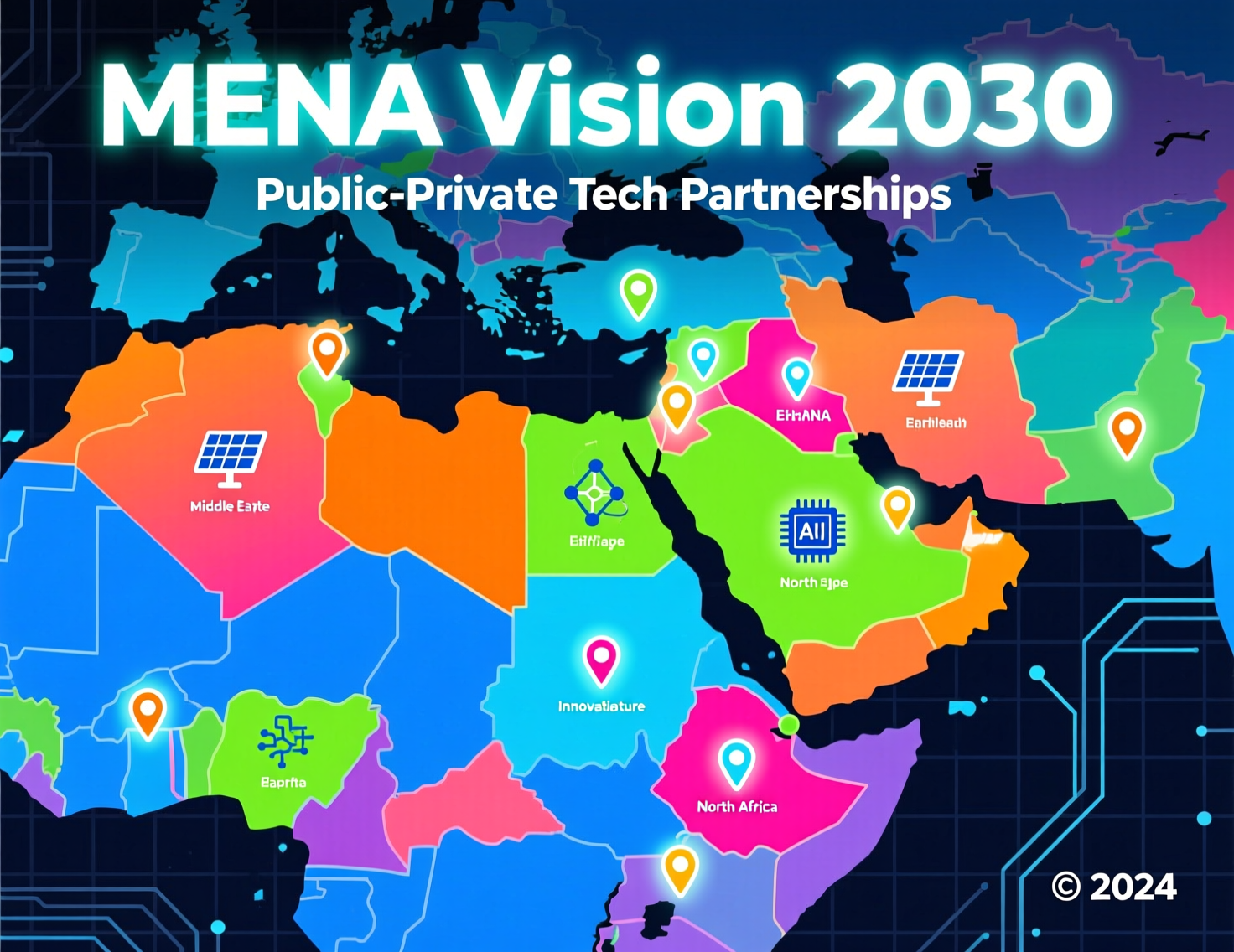
Public private tech partnerships in MENA bring together governments and technology companies to co-design and deliver digital government services, smart city platforms, and fintech infrastructure aligned with national visions. In Saudi Arabia, the UAE, and Qatar, these partnerships are central to implementing Vision 2030, We the UAE 2031, and Qatar National Vision 2030 by accelerating digital transformation while managing risk, compliance, and data residency.
Introduction
Across Saudi Arabia, the UAE, Qatar, Kuwait, Bahrain, and Oman, citizens now expect fast, mobile-first, Arabic–English government services that feel as smooth as banking or ride-hailing apps. To meet these expectations, ministries can’t build everything alone: they need technology partners for cloud, AI, cybersecurity, UX, and multilingual support.
For GCC governments, public private tech partnerships in MENA are the practical way to combine policy authority with private-sector speed, cloud infrastructure, and specialized skills. That’s especially true for complex digital government transformation projects such as digital identity, e-payments, and open data portals.
Defining Public Private Tech Partnerships in a MENA Context
In the MENA context, public private tech partnerships (PPPs) are structured collaborations where a government entity and a tech company share investment, risk, governance, and long-term KPIs to deliver digital platforms or services. Unlike classic PPPs built around toll roads or power plants, tech PPPs focus on platforms: digital identity, smart city dashboards, open banking APIs, AI analytics, and citizen-service portals.
Contracts may take the form of multi-year platform build-and-operate deals, outcome-based SaaS agreements, or sandbox initiatives that run pilots before a full rollout. The common thread is government technology collaboration with a clear public-service mandate.
Quick Snapshot.
Saudi Arabia uses PPPs to implement Vision 2030’s digital-government and smart-city priorities, supported by entities like SDAIA and the Digital Government Authority (DGA). The UAE does something similar under We the UAE 2031, with TDRA steering digital government and smart city initiatives across Dubai, Abu Dhabi, and Sharjah. Qatar aligns PPPs with Qatar National Vision 2030 and its Digital Agenda 2030 through programs such as TASMU Smart Qatar and Hukoomi.
Kuwait City, Manama, and Muscat are also expanding PPP-style collaborations, often leveraging AWS Bahrain, Azure UAE Central, and the Google Cloud Doha region as regional infrastructure backbones.
How Public Private Tech Partnerships in MENA Support Digital Government
What Are Public Private Tech Partnerships in MENA and How Do They Support Digital Government?
Public private tech partnerships in MENA are long-term collaborations where ministries, regulators, and municipalities co-invest with tech companies to design, build, and operate digital services. These partnerships support digital government by turning policy goals like cashless payments, paperless licensing, or smart mobility into live platforms used every day by residents and businesses.
In Saudi Arabia, PPPs support Vision 2030 by powering digital-by-default government portals and data-driven decision-making. In the UAE, PPP projects under TDRA and local digital authorities use platforms like UAE Pass to give citizens a single digital identity and login across thousands of services. In Qatar, PPPs underpin Hukoomi e-services and TASMU smart city use cases in transport, health, sports, and logistics.
Vision 2030, We the UAE 2031, and Qatar National Vision 2030 Alignment
Saudi Vision 2030
Positions digital government and fintech as engines of a diversified economy, backed by SDAIA and DGA to unlock data and AI partnerships.
We the UAE 2031
Frames digital government as core to a “world-leading, results-driven” state, with TDRA leading transformation projects and platforms such as UAE Pass.
Qatar National Vision 2030
Uses Digital Agenda 2030 and TASMU to shift Doha toward a smart, knowledge-based economy and “Smart Qatar” infrastructure.
For searchers, these are the core Saudi Vision 2030 public private tech partnership projects, UAE govtech PPP opportunities for startups, and Qatar’s smart city PPP tracks.
Core Benefits for Governments, Citizens, and Tech Companies
Governments
Faster delivery, access to advanced cloud and AI tooling, and shared investment in smart city infrastructure partnerships.
Citizens & residents
Simpler journeys across visas, payments, licenses, and health services through unified digital identity and mobile apps.
Tech companies & startups
Structured MENA innovation ecosystem pathways sandboxes, paid pilots, and long-term operations contracts instead of one-off projects.
Policy and Regulatory Foundations in KSA, UAE, and Qatar
Key PPP and Tech Regulations in Saudi Arabia, UAE, and Qatar
Each country layers PPP frameworks on top of digital and data regulations:
Saudi Arabia combines PPP law with sector regulations and data rules from NDMO and DGA.
The UAE adds TDRA guidance and emirate-level digital policies in Dubai and Abu Dhabi.
Qatar aligns PPPs with financial regulation (QCB) and initiatives like Digital Agenda 2030.
For foreign vendors, the message is clear: you must design PPP proposals around local data, cloud, and cybersecurity rules, not just generic global templates.
How SAMA, TDRA, QCB, NDMO, and DGA Shape Fintech and GovTech PPPs
SAMA (Saudi Central Bank)
Sets fintech licensing rules and leads the Open Banking Framework and Open Banking Lab, giving banks and fintechs a regulated way to build new services.
TDRA
Regulates telecom and digital government, sponsors UAE-wide digital initiatives, and frames how entities plug into the national digital infrastructure.
QCB
Oversees fintech and payment innovation in Doha, coordinating with Qatar’s broader smart city agenda.
NDMO and DGA in Saudi Arabia set data-classification, residency, and cybersecurity baselines that any fintech or govtech PPP must respect.
Data Residency, Cybersecurity, and Arabic English UX Requirements
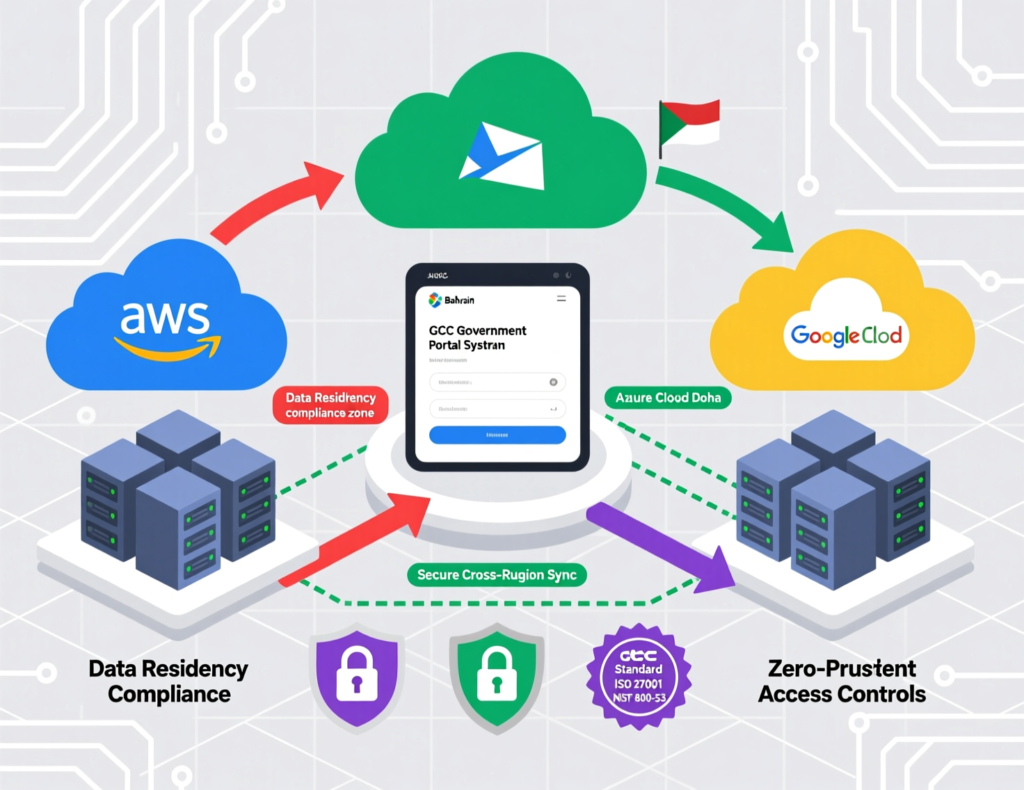
Data residency pushes many PPP deployments toward AWS Bahrain, Azure UAE Central (Abu Dhabi / UAE North Dubai), and the Google Cloud Doha region, which all provide in-region hosting for sensitive workloads.
At the application layer, ministries typically expect:
Arabic-first interfaces, with high-quality English versions
Accessibility across low-end Android devices
Compliance with national cybersecurity frameworks and, where relevant, with global benchmarks like those referenced by EU or TDRA guidance
This is where partners like Mak It Solutions can help architect secure back-end systems and multilingual front ends via services such as web development, back-end development, and React Native app development for GCC audiences.
GovTech and Innovation Programs Powering PPPs in the GCC
Why Saudi Arabia and the UAE Use PPP Models to Accelerate Vision 2030 and Smart City Innovation
Saudi Arabia and the UAE rely on PPP models because national visions are ambitious, time-bound, and technology-heavy. Partnering with cloud providers, fintechs, and platform companies lets them share risk, bring in specialist talent, and shorten the cycle from “strategy document” to live smart services in Riyadh, Jeddah, NEOM, Dubai, Abu Dhabi, and Sharjah.
For smart city and govtech use cases like AI-powered traffic management or digital courts PPP models also help governments avoid owning all the technology risk as platforms evolve.
Flagship GovTech Programs.
SDAIA
Drives national AI, data analytics, and digital inclusion programs tying data to Vision 2030 outcomes.
Digital Dubai & Abu Dhabi Digital Authority
Coordinate open data, digital identity, and city services, often via PPPs with global and regional tech firms.
ADGM & DIFC
Provide fintech-friendly regulatory sandboxes where banks, startups, and vendors test new products under regulatory supervision.
QSTP & Qatar Foundation
Anchor R&D-heavy collaborations and pilots aligned with Qatar National Vision 2030 and TASMU Smart Qatar.
MENA GovTech Accelerators, Regulatory Sandboxes, and Pilot Programs for Startups
Across Riyadh, Dubai, Abu Dhabi, and Doha, startups can join government-backed accelerators, SAMA or CMA fintech sandboxes, ADGM/DIFC innovation programs, and TASMU’s Smart Qatar use cases. These are the main entry points for tech startups working with government rather than going straight into complex tenders.
For many founders, GCC smart city PPP tenders for IT companies become realistic only after a successful pilot or sandbox phase.
Smart City and Digital Infrastructure Partnerships Across Riyadh, Dubai, and Doha
Smart City PPPs in Riyadh, NEOM, Dubai, Abu Dhabi, and Doha
Riyadh & Jeddah
Mobility, traffic analytics, and digital permitting platforms built with cloud and AI partners.
NEOM
A mega-project structured around international PPPs in energy, mobility, and cognitive cities.
Dubai & Abu Dhabi
Long-running smart city programs involving transport, ports, tourism, and public safety platforms in partnership with global vendors.
Doha
TASMU Smart Qatar and Lusail/Msheireb initiatives link ministries, QCB, and private partners around smart transport, logistics, and health.
Kuwait, Bahrain, and Oman are following similar paths, often leveraging cross-border vendors and regional cloud infrastructure.
Digital Identity, Open Banking, and Cloud Infrastructure as PPP Anchors
Digital identity and open banking are now core PPP anchors.
UAE Pass provides a unified national digital identity used to access thousands of services across the UAE.
Open Banking KSA enables secure data-sharing between banks and fintechs via standards set by SAMA’s Open Banking Framework.
Qatar Digital ID & Hukoomi knit together services for residents via a central e-government gateway.
All of these sit on top of sovereign-respecting cloud regions such as AWS Bahrain, Azure UAE Central, and Google Cloud Doha, which are now central to PPP discussions about data sovereignty.
Case Snapshots.
Riyadh fintech startup
A SAMA-regulated startup partners with a ministry to deliver cashless transport payments, integrating open-banking APIs and fare cards.
Dubai e-commerce brand
A Dubai-based retailer works with Dubai Government entities and cloud partners to build a mobile app that plugs into UAE Pass, local payment gateways, and cross-emirate logistics.
Doha SME
A Doha cybersecurity SME collaborates with TASMU and MCIT to harden smart city platforms hosted in the Google Cloud Doha region, meeting QCB and Qatar Digital Agenda requirements.
How GCC Tech Startups and Global Firms Can Engage in Public Private Tech Partnerships
How Can Tech Startups in the GCC Qualify for Government Innovation and GovTech Partnership Programs?
GCC startups typically qualify for govtech programs when they show clear alignment with national visions, credible security and compliance, and a working product that solves a real public-sector problem. Founders in Riyadh, Dubai, Abu Dhabi, Doha, Kuwait City, Manama, and Muscat should map their solutions to Vision 2030, We the UAE 2031, or Qatar National Vision 2030 priorities and demonstrate local presence or strong local partners.
Participation often starts with accelerators, challenge programs, or regulatory sandboxes before moving into competitive RFPs and long-term PPP contracts.
Step-by-Step Playbook.
Map national and city priorities
Identify where your product fits: smart mobility in Riyadh, digital identity add-ons in Dubai, or AI analytics for Doha’s TASMU.
Localize product and UX
Ensure Arabic–English interfaces, GCC payment rails, and data residency options across AWS Bahrain, Azure UAE Central, or GCP Doha.
Align with regulators early
Engage SAMA, TDRA, or QCB guidance (or local consultants) to validate compliance assumptions before pilots.
Join accelerators and sandboxes
Apply to fintech and govtech sandboxes in ADGM/DIFC, SAMA/CMA, or QSTP to run proof-of-concept projects with real data.
Prepare for RFPs and PPP structures
Build reusable documentation security packs, data-flow diagrams, pricing models, and KPIs—to respond quickly to PPP tenders.
Structuring Saudi-Friendly and UAE-Friendly PPP Models for International Tech Firms
International vendors should typically.
Set up or partner with a local entity in KSA or UAE
Offer in-region hosting, ideally on Saudi or UAE data centers, or at least nearby GCC cloud regions
Provide strong Arabic UX and local support hours
Be flexible on pricing models (e.g., outcome-based or revenue-share) in sectors like transport, health, and education
Here, an experienced implementation partner like Mak It Solutions can provide back-end development, business intelligence, and front-end/web teams who understand both GCC requirements and global engineering best practices.
Risks, Governance, and Success Factors for MENA Tech PPPs
Shared Risks in Digital Transformation PPPs for Governments and Tech Companies
Delivery risk
Underestimating user adoption or integration complexity, especially when legacy systems exist in ministries.
Political and strategy risk
Leadership changes or shifting priorities across Vision 2030 and equivalent programs.
Cybersecurity and resilience
Critical infrastructure and citizen data must be protected against increasingly sophisticated threats, with clear incident-response playbooks.
Governance Models, KPIs, and Long-Term Partnership Management in the GCC
Successful PPPs in Riyadh, Dubai, or Doha tend to use:
Joint steering committees with both government and vendor decision-makers
Transparent KPIs: uptime, service adoption, transaction volumes, and user satisfaction scores
Phased rollouts with pilots, staged expansion, and continuous improvement based on analytics and citizen feedback
For complex platforms, GCC governments often ask for local support centers plus clear escalation paths that align with national cybersecurity and digital government authorities (DGA, TDRA, MCIT).
Checklist for Saudi, UAE, and Qatar Leaders Planning New Tech PPPs
Is the project directly mapped to Vision 2030, We the UAE 2031, or Qatar National Vision 2030?
Have SAMA/TDRA/QCB and national data authorities been consulted early?
Is there a cloud and data-residency strategy (AWS Bahrain, Azure UAE, GCP Doha)?
Are Arabic–English UX, accessibility, and mobile performance built into requirements?
Do we have a realistic procurement, pilot, and change-management plan?
Leaders who can confidently answer “yes” to these questions are ready to go to market and invite both GCC tech startups and global partners into structured public private tech partnerships in MENA.
If you’re planning or bidding on public private tech partnerships in MENA, you don’t just need code you need a GCC-ready digital strategy. Mak It Solutions can help you map national-vision priorities to real platforms, architect compliant cloud and data setups, and deliver Arabic English user experiences that citizens actually use.
Whether you’re a ministry, authority, or tech vendor, our team can support you from early discovery through full-scale deployment across web, mobile, and data platforms tailored to Saudi Arabia, the UAE, and Qatar.( Click Here’s )
FAQs
Q : Is it possible for foreign tech companies to join Saudi public private partnerships under Vision 2030 rules?
A : Yes, foreign tech companies can join Saudi PPPs, especially when they bring capabilities that support Vision 2030 priorities like smart cities, fintech, health, and logistics. Typically, they must either establish a local entity or partner with a Saudi company, host data in approved regions, and comply with SAMA, NDMO, and DGA requirements. Many successful PPPs in Riyadh, Jeddah, and NEOM mix international platforms with local implementation partners to ensure Arabic UX, on-the-ground support, and regulatory alignment with Saudi Vision 2030.
Q : How do UAE free zones like ADGM and DIFC support fintech PPPs with regulators such as TDRA?
A : ADGM in Abu Dhabi and DIFC in Dubai provide innovation-friendly legal environments, fintech sandboxes, and special licensing regimes that sit alongside federal and emirate regulations. While TDRA oversees telecom and digital government at the national level, these free zones allow banks and fintechs to run controlled pilots with clear regulatory oversight and access to investors. Startups often test solutions in ADGM/DIFC first, then use those results to join broader PPPs with UAE ministries, authorities, and city governments aligned with We the UAE 2031.
Q : What kinds of smart city PPP projects are most common in Doha and across Qatar National Vision 2030?
A : In Doha, common PPP projects involve smart transport (traffic and public transport optimization), logistics hubs, digital health, and smart sports infrastructure linked to TASMU Smart Qatar and the World Cup legacy. Many of these use cases run on top of the TASMU Central Platform and the Google Cloud Doha region, combining local ministries, MCIT, QCB, and private tech firms.These projects aim to deliver Qatar National Vision 2030 goals around sustainability, human development, and a knowledge-based economy.
Q : Are there special PPP opportunities for GCC SMEs and family businesses in digital government projects?
A : Yes. Many GCC digital government projects intentionally reserve room for local SMEs and family businesses as implementation partners, especially in software customization, integration, cybersecurity, and content production. In Saudi Arabia, for example, Vision 2030 emphasizes SME participation and local content in government contracts. Similarly, UAE and Qatar programs often require larger international vendors to subcontract to local firms registered in Dubai, Abu Dhabi, or Doha. Working with a trusted delivery partner like Mak It Solutions can help SMEs meet technical, security, and bilingual UX expectations so they can win roles in govtech PPP consortia.
Q : How do data residency requirements in Saudi Arabia, UAE, and Qatar affect cloud-based PPP solutions?
A : Data residency rules in the GCC usually require sensitive government and financial data to remain within national borders or at least within approved regional jurisdictions. That’s why many PPP solutions rely on AWS Bahrain, Azure UAE Central/UAE North, or Google Cloud’s Doha region, which offer in-region hosting and support for sovereign data strategies.Regulators such as SAMA, TDRA, and QCB expect ministries and vendors to document where data is stored, how it is encrypted, and how cross-border access is controlled. Getting this right early is critical for PPP approvals and long-term compliance.