


Quantum Computing’s Future Impact on Web Development
Quantum Computing’s Future Impact on Web Development

Quantum Computing’s Future Impact on Web Development
Quantum computing is moving from theory to tooling, and its ripple effects are already hitting the web stack. For most teams, the most visible quantum computing impact on web development will not be exotic algorithms—it will be cryptography changes, browser/network updates, and new cloud workflows that touch how apps authenticate, encrypt, and integrate. In August 2024 NIST finalized the first wave of post-quantum cryptography (PQC) standards—ML-KEM (Kyber), ML-DSA (Dilithium), and SLH-DSA (SPHINCS+) kicking off an Internet-wide migration that web developers cannot ignore.
At the same time, major platforms are experimenting in production: Chrome added a hybrid X25519+Kyber key exchange, while Cloudflare and others began rolling out PQC in real traffic. These aren’t science projects; they’re gradual defaults.
This article translates the headlines into a clear roadmap for builders: what changes in TLS and WebAuthn, where the quantum computing impact on web development will surface first, how to evaluate performance trade-offs, and how to experiment safely with quantum services (AWS Braket, Azure Quantum) without overhauling your stack. We’ll end with a practical migration checklist you can start this sprint.
The signal from the noise: what “quantum” really means for web teams (now)
In the near term, the quantum computing impact on web development is about defensive engineering more than “speedups.” NIST’s PQC standards provide drop-in replacements for key exchange (ML-KEM) and signatures (ML-DSA/SLH-DSA). Expect hybrid handshakes and larger keys/certificates, but similar user experience when done right.
Key takeaways for devs:
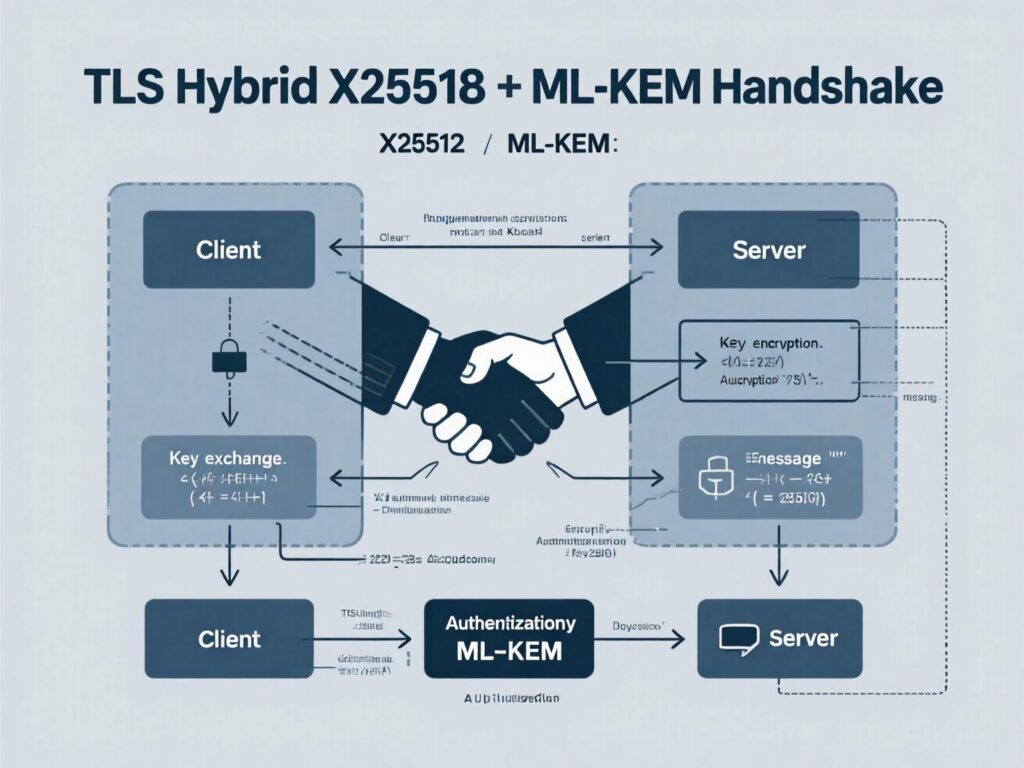
TLS 1.3 hybrid key exchange (e.g., X25519+ML-KEM) is progressing through IETF drafts; Chrome started shipping a Kyber hybrid (X25519Kyber768) flows.
Cloud networks are enabling PQC on edge↔origin and internal links; Cloudflare’s rollouts cover Workers
fetch()and origin connections.Government guidance says: inventory & plan now (“harvest-now, decrypt-later” is a real risk). CISA/NIST/NSA published migration steps for owners of web-facing systems.
Where the quantum computing impact on web development starts: TLS & certs
TLS handshakes. Hybrid key exchanges combine classical + PQC to stay secure even if one component is broken. The IETF hybrid-design draft outlines patterns for TLS 1.3 that vendors are converging on. In practice, you’ll enable a hybrid KEX in your termination layer/CDN and verify browser support.
Certificates & PKI. The IETF LAMPS group is standardizing ML-KEM in X.509 certificates. Expect transitional periods with dual-alg cert chains and larger handshake payloads. Build crypto agility into your cert automation (ACME, rotation pipelines).
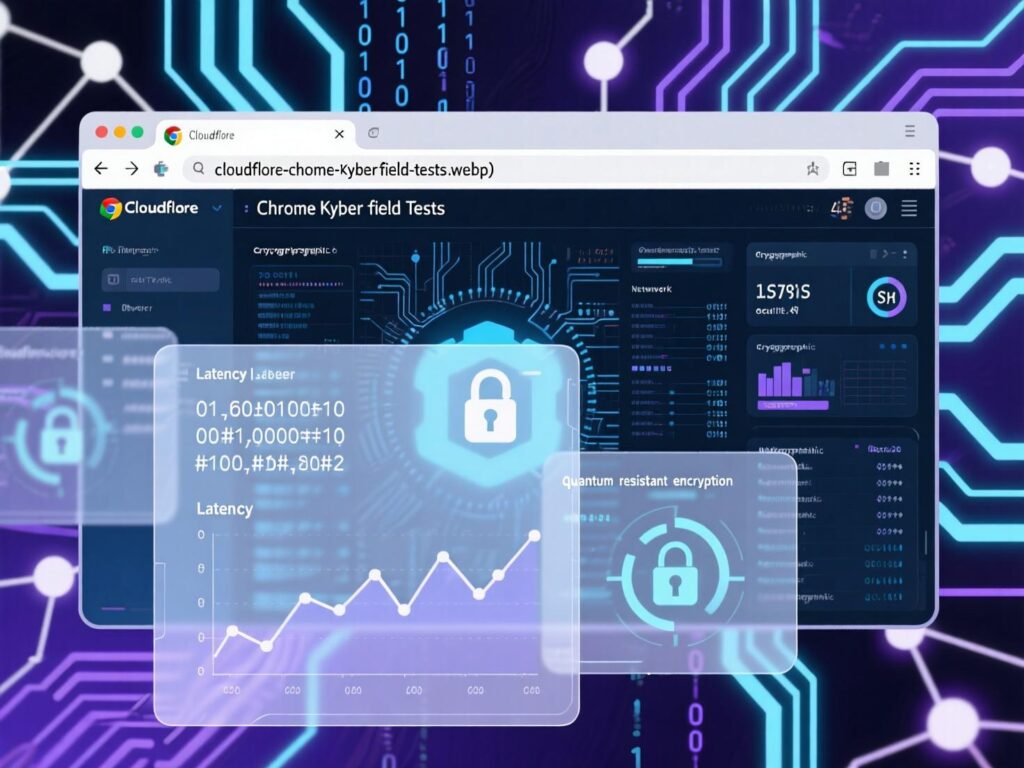
Performance reality. PQC adds bytes, but field tests show minimal impact on user-perceived latency at Internet scale when deployed as hybrids and with modern TCP/TLS stacks. Cloudflare measurements and independent studies indicate hybrid handshakes can be near-indistinguishable from control connections in many settings.
WebAuthn, passkeys, and identity: what changes next?
Authentication is shifting too. The FIDO Alliance has published guidance to navigate PQC adoption for WebAuthn/FIDO2 without breaking usability or backward compatibility think signature negotiation and crypto-agile authenticators. For web devs integrating passkeys, track PQC-capable signature schemes as browsers and authenticators add support.
Research communities are also exploring PQC-ready account recovery and hybrid signatures for WebAuthn. Keep your identity layer modular (IdP config, metadata services) so you can swap in PQ primitives as the ecosystem matures.
Developer tooling: how to experiment (safely) without rewriting your app
You don’t need a quantum computer to feel the quantum computing impact on web development. You need quantum-aware workflows.
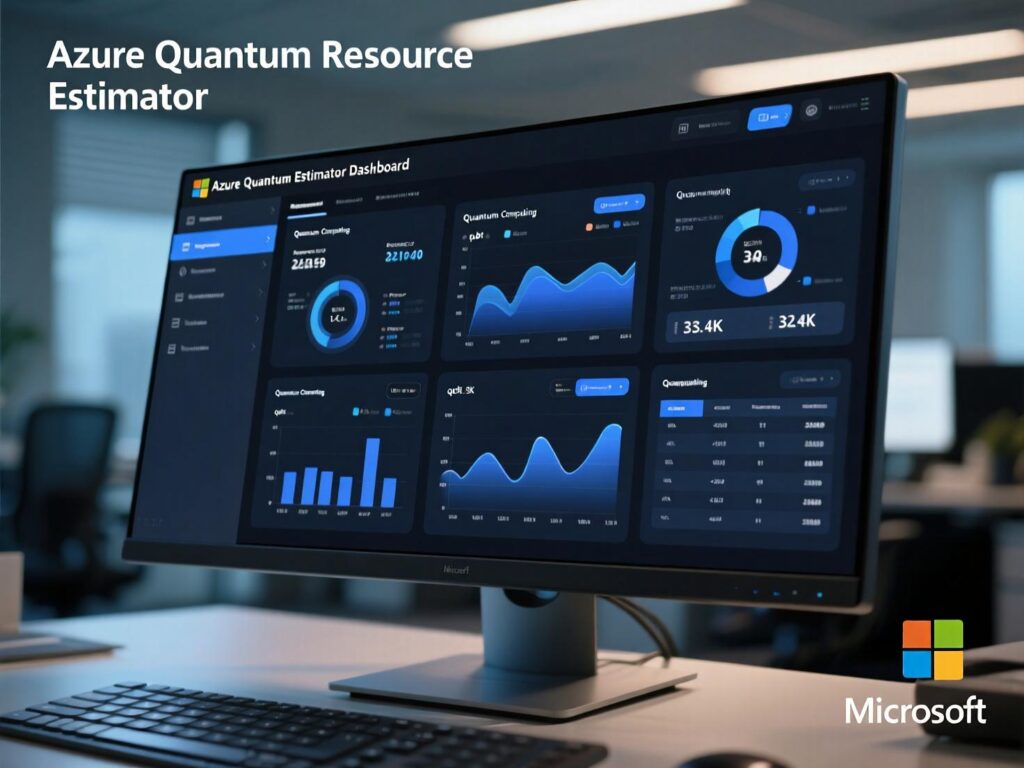
Azure Quantum Resource Estimator: estimate qubits/runtime for hypothetical fault-tolerant workloads—useful for architects considering future services.
AWS Braket Hybrid Jobs: run hybrid classical/quantum experiments (e.g., Python + PennyLane) via managed jobs; helpful for R&D teams exploring optimization or materials use-cases behind APIs that web apps might one day call.
For most web backends, these are pure services you’d call them like any ML API. Keep them behind feature flags and treat them as lab features.
Reality check: “quantum advantage” timelines
Recent peer-reviewed work shows useful pre-fault-tolerant results on 127-qubit hardware (IBM) and progress toward below-threshold error correction (Google), but this doesn’t translate into front-end page loads—yet. The quantum computing impact on web development is mostly security-driven today; performance/recommender wins (e.g., QAOA/QML) will materialize via cloud services years before they hit your JS bundle.
Two concise case studies
Case Study 1 — Cloudflare PQC rollouts (2023–2024).
Cloudflare enabled hybrid key exchange from browsers to edge and rolled out X25519+Kyber toward origin servers and Workers fetch() calls. For developers on Cloudflare, much of the migration is “platform-led” with minimal application changes still, you must test clients, bots, and mTLS tooling.
Case Study 2 — AWS Transfer Family (2025).
AWS added hybrid post-quantum key exchange for SFTP/SSH, aligning with emerging IETF drafts. This is a concrete example of file transfer flows often powering web uploads/CDN fills—getting PQC without an app rewrite. Teams validated interop by enabling a PQC policy and testing compliant clients. AWS Documentation
Practical migration plan for web teams (12-month horizon)
Create a crypto inventory:
enumerate TLS endpoints, cert chains, WebAuthn usage, API clients, bots, IoT updaters, and any long-lived encrypted data. Follow CISA’s migration playbooks.
Enable hybrid TLS where supported:
on your CDN/edge/ingress (Nginx/Envoy vendor builds, Cloudflare/Akamai features). Track IETF hybrid TLS drafts for interoperability.
Adopt crypto agility:
ensure your code doesn’t hard-code curves or algorithms; centralize crypto policies so swapping ECDSA→ML-DSA or adding hybrid KEX is a config change.
Plan for larger artifacts:
PQC increases key/cert sizes; verify handshake sizes, initial congestion windows, and Time-to-First-Byte under real-world RTT/loss. Use published test methods.
Update CI/CD & monitoring:
add synthetic checks for PQC cipher suites; log TLS key share parameters; alert on downgrade to classical-only.
Coordinate identity:
monitor FIDO/WebAuthn PQC updates; keep passkey libraries and IdPs crypto-agile per FIDO guidance.
Educate stakeholders:
explain “harvest-now, decrypt-later” risk and regulatory timelines; point to NIST FIPS 203/204/205 as the new baseline.
Beyond security: where quantum could touch product features
While security leads the parade, R&D teams can prototype features that downstream web apps consume:
Search & recommendations: explore quantum-inspired optimization for ranking or logistics tasks via cloud quantum services—results exposed to the web as APIs.
Simulation-as-a-service: materials/adsorption simulations for sustainability/IoT products; the web front-end remains unchanged while backends call quantum providers.
Analytics: keep an eye on “quantum utility” studies indicating where noisy devices already help on niche tasks; mature versions will look like any other HTTP/JSON service your app calls.
Standards & browser/platform timeline to watch
NIST: Final FIPS for ML-KEM/ML-DSA/SLH-DSA published Aug 13, 2024 (HQC selected 2025). These are the anchor standards vendors will target.
Browsers: Chrome enabled X25519Kyber768 hybrid in 2023 versions; expect more stable hybrid modes as drafts advance.
IETF: Hybrid TLS design and LAMPS PQC certificates drafts are active—key for cert chains and handshakes across the web.
Platform docs: Cloud and edge providers continue publishing PQC rollouts and tuning guides—follow your vendor’s recommendations.
Bottom Lines
The quantum computing impact on web development will be remembered first for a global cryptography migration not for JavaScript rewriting. Your priorities: inventory cryptography, enable hybrid TLS where available, make your identity layer crypto-agile, and test performance under larger handshake payloads. Treat quantum services like any other backend capability: experiment behind feature flags, expose via APIs, and measure user impact.
Most teams can progress this quarter by turning on platform features, hardening CI/CD checks, and aligning with NIST and IETF guidance. Do that, and you’ll insulate customers from “harvest-now, decrypt-later,” while keeping your stack ready for future algorithms and cloud-hosted quantum utilities. That’s how web teams turn hype into engineering: secure the funnel today, and prototype tomorrow’s capabilities where they belong in the backend.
CTA: Need hands-on help building a PQC-ready roadmap, testing hybrid TLS, and updating WebAuthn flows? Book a technical workshop with our team to get a prioritized 90-day plan.
FAQs
Q : How soon will developers feel the quantum shift on the web?
A : Primarily through PQC rollouts already underway (new TLS key exchanges, larger certs) and evolving WebAuthn guidance. It’s a 2024–2027 migration wave rather than an overnight switch, led by browsers, CDNs, and major clouds.
Q : How do I enable post-quantum TLS on my stack?
A : Use your edge/ingress settings for hybrid key exchange (X25519+ML-KEM) and test interop with major clients. Track IETF hybrid TLS drafts and vendor docs; many providers expose toggles or policies.
Q : How will PQC affect page speed and Core Web Vitals?
A : Expect slightly larger handshakes, but studies and field tests suggest negligible impact when tuned; cache warmup and TCP settings matter more. Measure in your RTTs.
Q : How can WebAuthn/passkeys remain quantum-safe?
A : Follow FIDO Alliance guidance on crypto agility and prepare for PQC signature negotiation. Keep IdP and authenticator firmware updated.
Q : How does “harvest-now, decrypt-later” affect us?
A : Attackers can store encrypted traffic today and decrypt later when CRQCs arrive. Migrating protocols and data-at-rest to PQC mitigates this risk.
Q : How can we experiment with quantum without changing our app?
A : Use cloud services like Azure Quantum’s Resource Estimator or AWS Braket Hybrid Jobs in backend R&D; surface results to the web via APIs.
Q : How do certificates change with PQC?
A : Expect X.509 updates and larger artifacts; the IETF LAMPS draft covers ML-KEM certificates. Plan for dual-alg chains during transition.
Q : How should we prioritize migration work?
A : Inventory → enable hybrid TLS on public endpoints → update CI/CD and monitoring → plan identity upgrades → performance test in realistic conditions using published methodologies.