

React Native in 2025: Where It Shines
React Native in 2025 is no longer the “experimental cross-platform” bet it once was it’s a production-proven choice for fast, native-feeling apps with a unified JavaScript/TypeScript codebase. Two milestones changed the game: the New Architecture (Fabric + TurboModules + bridgeless JSI) and the maturing ecosystem around Expo, toolchains, and libraries. With React Native in 2025, teams ship high-quality iOS and Android apps faster, maintain fewer separate stacks, and benefit from React’s thriving developer base. The latest releases improve type safety (Strict TypeScript API), remove brittle deep imports, and make the New Architecture the default experience, aligning React Native more closely with modern React. React Native+2React Native+2
If you’re weighing React Native versus fully native or alternative cross-platform frameworks, this guide cuts through the noise. We’ll pinpoint where React Native shines, what 2025-era tooling looks like, and how real teams (like Shopify) are migrating large codebases to the New Architecture while keeping weekly releases. We’ll also outline scenarios where another path may be a better fit.
Where React Native Shines in 2025
Speed to market with native quality
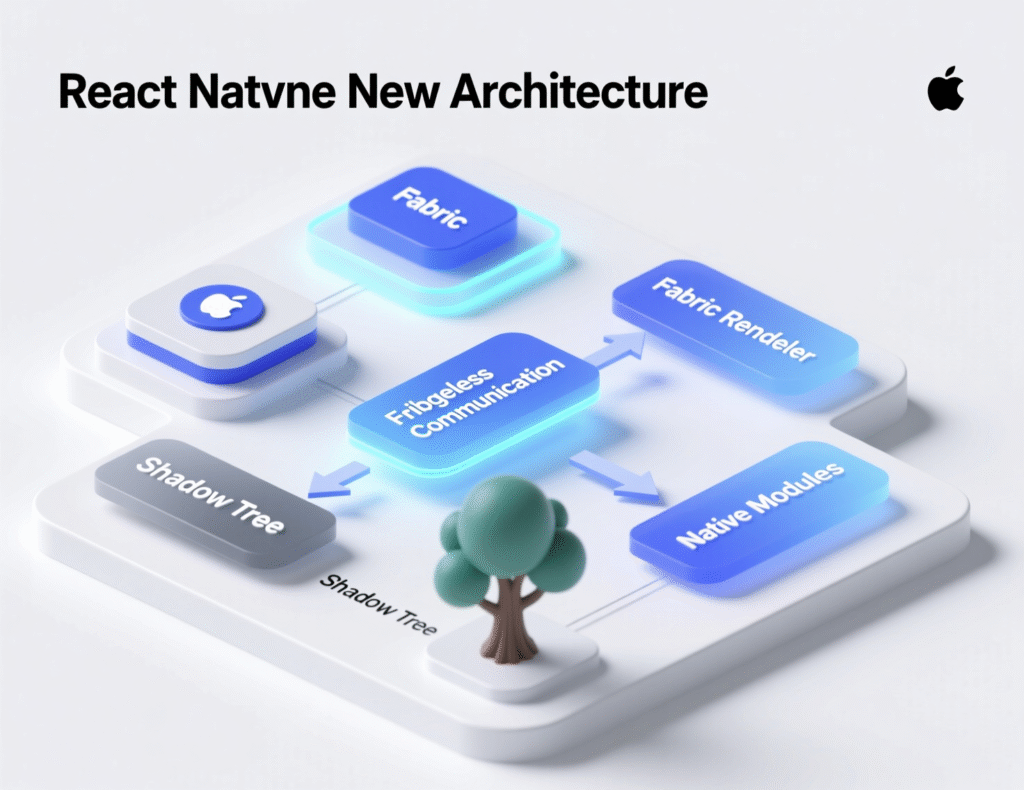
A single codebase for iOS and Android means fewer duplicated features, less coordination overhead, and faster iteration. The Fabric renderer improves UI performance and predictability, while TurboModules and JSI (bridgeless) reduce latency between JS and native, minimizing the notorious “bridge bottleneck.” Since 0.76, the New Architecture is enabled by default for new projects, so you benefit out of the box.
Mature performance tooling and components
The ecosystem now includes serious performance-first choices like FlashList v2 (Shopify) for massive, buttery-smooth lists without guessy item sizes rewritten for the New Architecture. Paired with Reanimated 3/4 for UI-thread animations, devs can achieve reliable 60fps experiences on mid-range hardware.
Type-safe APIs and cleaner imports
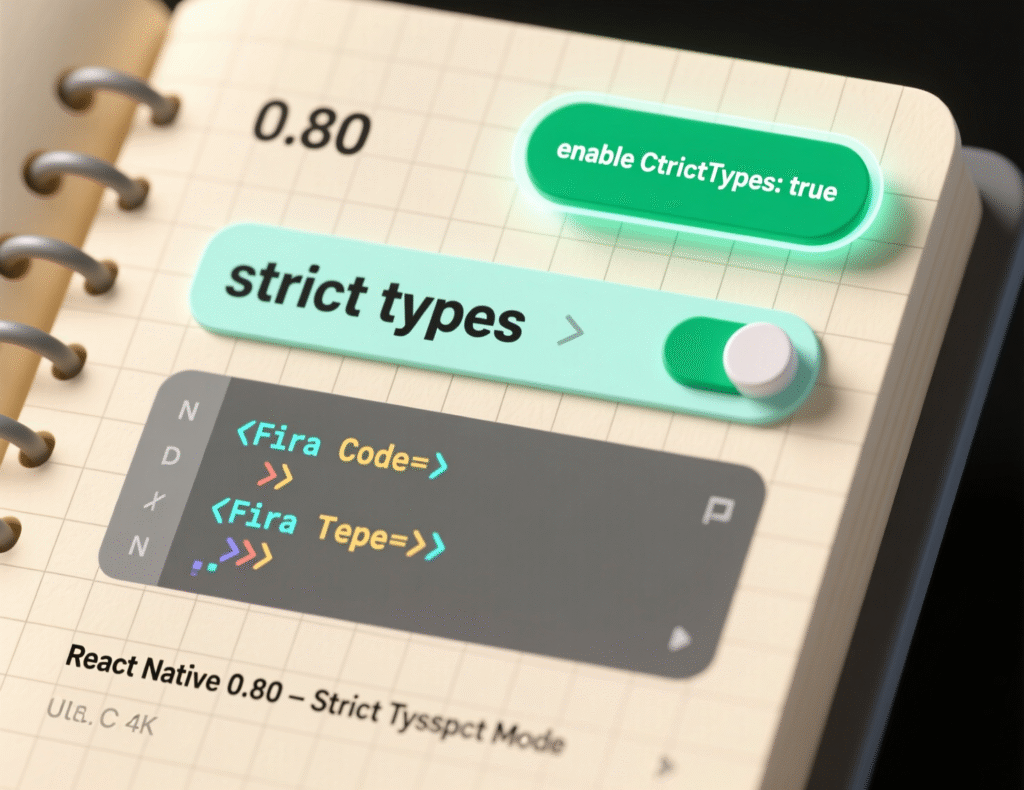
React Native 0.80 deprecates deep imports and introduces an opt-in Strict TypeScript API, laying groundwork for a stable public JS API and dependable types fewer footguns, better DX, and clearer upgrade paths.
A batteries-included release pipeline with Expo
Expo’s EAS services (Build, Submit, and OTA Updates) give teams CI/CD and over-the-air JavaScript updates for quick fixes between store releases without sacrificing app-store compliance. As of SDK 53, Expo packages support the New Architecture (including bridgeless), aligning with React Native in 2025.
Enterprise-grade case studies
Shopify publicly documents five years of React Native at scale and recent migrations of Shopify Mobile and POS to the New Architecture while maintaining weekly releases across hundreds of screens and modules. Meta’s Hermes engine continues to optimize cold start and memory for mass-market devices. These aren’t toy apps.
What’s New in React Native (2024–2025) That Matters
New Architecture by default (0.76+) for new projects; bridgeless was on by default when New Arch is enabled starting 0.74 reducing marshaling overhead and unlocking modern React features.
0.80 (June 12, 2025): deprecates deep imports and ships the Strict TS API; freezes legacy pathways to speed convergence on a stable JS API.
Ecosystem catch-up: Expo SDKs fully support the New Architecture; community libs (FlashList v2, Reanimated 4) align with bridgeless/JSI.
React Native in 2025: Best-Fit Use Cases
Multi-platform product lines with shared React talent
When your org already ships React on web, React Native lets the same teams share patterns, state management, and UI paradigms, accelerating roadmap delivery across mobile. For greenfield apps or MVPs that must hit both platforms fast, React Native in 2025 is a strong default.
Content, commerce, and marketplace apps
List-heavy apps (feeds, catalogs, bookings) benefit from FlashList v2 and stable navigation stacks (React Navigation / Expo Router). With EAS Update, product teams ship micro-iterations safely between store releases.
Enterprise apps with frequent releases
If your org requires weekly or bi-weekly releases with feature flags and A/B tests, the JS update pipeline and shared codebase reduce operational friction while maintaining native integrations via TurboModules.
Cross-platform + desktop ambitions
React Native’s Windows/macOS projects continue to evolve, making RN attractive for internal tools and enterprise surfaces that might extend beyond mobile.
Where React Native May Not Be the Best Fit
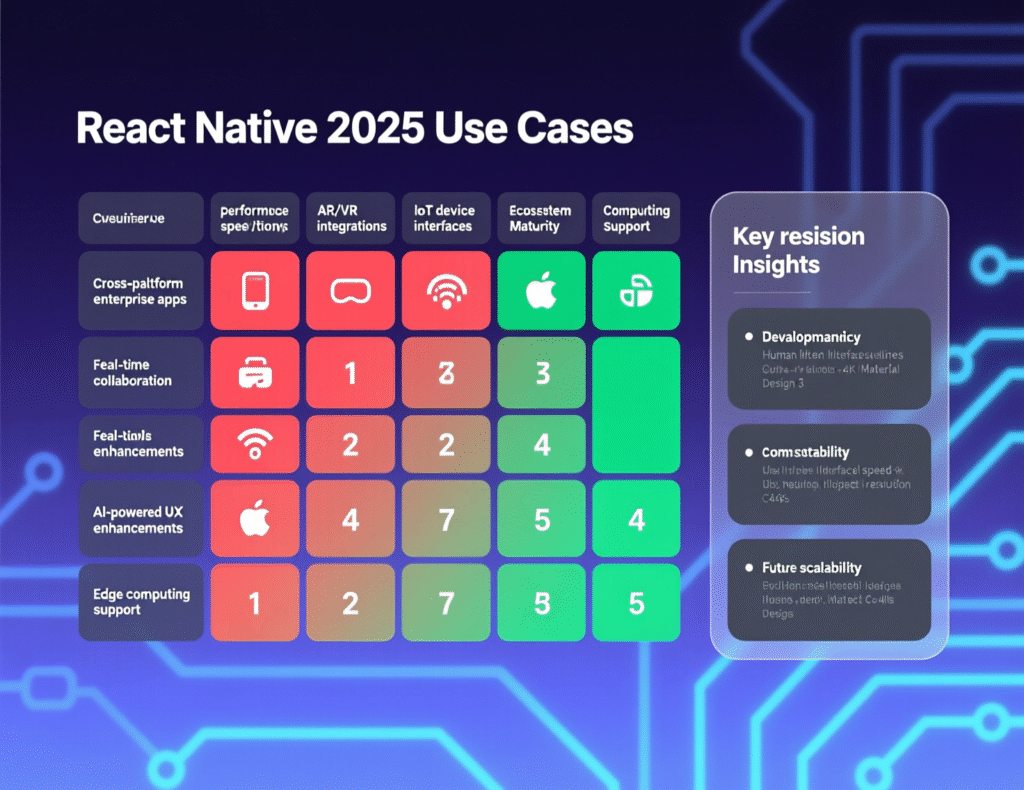
Ultra-low-level graphics, AR/VR, or heavy real-time 3D
Where you’ll live in custom native rendering pipelines; full native or game engines typically win.Tiny, platform-specific apps
Where shared code offers little value and native UIs are trivial.Cutting-edge platform features
Immediately on day one of OS releases bridging often arrives quickly, but pure native can access them first.
Real-World Examples (2025)
Shopify
Five years in, Shopify reports ongoing success with React Native and has migrated Shopify Mobile and POS to the New Architecture, powering thousands of list views with FlashList v2 a rewrite for New Arch precision and lower jank.Meta/Hermes
Hermes remains the default JS engine in the RN ecosystem, designed for fast cold starts and low memory on mass-market Android.
Developer Experience in 2025
TypeScript by default mindset
The Strict TypeScript API (opt-in now) moves RN closer to an accurately defined, stable surface. Combined with modern ESLint and React 19.1 support, day-to-day dev feels more predictable.
Expo Router & modern navigation
URL-like, file-based routing (Router v3+) streamlines navigation, colocation, and code splitting for web/hybrid scenarios.
OTA + Store releases together
Use EAS Build/Submit for store binaries and EAS Update for non-native fixes. Ship small UI tweaks or bug fixes in hours instead of waiting for review cycles.
React Native vs Alternatives in 2025 (Quick Take)
React Native and Flutter remain the two leaders. Surveys and GitHub stars often show Flutter slightly ahead in raw popularity, but adoption is close and both are thriving. The decision usually comes down to team skills and target surfaces. If you already run React on web or want deeper JavaScript/TypeScript leverage, React Native fits naturally.
Getting the Most from React Native in 2025
Start New Architecture from day one.
Avoid legacy bridging; keep modules Turbo-ready.
Adopt FlashList v2
For any meaningful lists; test on low-end Android hardware.
Opt into Strict TS API
And remove deep imports to future-proof your code.
Use EAS + OTA
For a stable release cadence and small fixes between store builds.
Benchmark early
Real devices, startup times, interaction FPS, and memory.
Own your native boundaries
Keep platform-specific code in well-typed modules; avoid leaky abstractions.
To Sum Up
React Native in 2025 combines native-level UX with web-speed iteration. The New Architecture (now default for new projects) delivers lower JS↔︎native latency and a modern render path in Fabric. Paired with a TypeScript-first direction and a robust Expo toolchain for CI/CD and OTA, React Native stands out for multi-platform product teams who value speed, consistency, and shared expertise. Companies like Shopify demonstrate that even massive apps can migrate to the New Architecture while maintaining rapid releases and measurable performance wins.
If your roadmap leans on shared React talent, fast iteration, and native integrations without a full duplicate stack, React Native is likely the right call. Next step: pilot a thin vertical slice (auth, home feed, product listing) with New Architecture, FlashList v2, and EAS Update—and measure before you commit.
CTA: Want an actionable migration or greenfield plan? Get a free 45-minute technical scoping checklist tailored to your app’s screens, APIs, and performance targets.
FAQs
Q1 . How does React Native’s New Architecture improve performance in 2025?
A : It removes the old async “bridge,” enabling JSI/bridgeless calls and the Fabric renderer for faster, predictable UI, especially under heavy interactions and large lists. Shopify and Expo now align tooling for it.
Highlights: Fabric renderer, TurboModules, bridgeless.
Q2 . How mature is React Native for large apps?
A : Very. Shopify documents multi-year success and a 2025 migration of major apps (Mobile, POS) to the New Architecture while maintaining weekly releases.
Enterprise proof with public write-ups.
Q3 . How does React Native compare to Flutter in 2025?
A : Both are strong. Many metrics show Flutter slightly ahead in popularity, but React Native fits teams with React/TS skills and web+mobile code reuse goals. Evaluate by skills, libraries, and surfaces.
Trade-offs: skills, ecosystem, rendering.
Q4 . How can I ship hotfixes without app-store delays?
A : Use Expo EAS Update to push JS/asset updates over the air between store releases (no native changes).
OTA fits non-native changes only.
Q5 . How do I adopt the Strict TypeScript API?
A : Upgrade to RN ≥0.80 and opt in via tsconfig.json (customConditions: ["react-native-strict-api"]). Remove deep imports and fix types.
Deprecation warnings guide changes.
Q6 . How does React Native handle list performance now?
A : Use FlashList v2, designed for New Arch; it removes sizing guesswork and improves FPS on low-end devices.
5× UI-thread FPS claims come from FlashList docs.
Q7 . How can I integrate platform-specific features?
A : Wrap them in TurboModules and call via JSI. Keep native boundaries narrow and typed; test on both platforms.
New Arch lowers call overhead.
Q8 . How do Windows or desktop targets fit?
A : React Native for Windows/macOS continues to evolve; it’s viable for some enterprise/internal tools alongside mobile.
Check RNW support policy.
Q9 . How can teams avoid regressions when upgrading?
A : Upgrade incrementally (Expo SDKs pair with specific RN versions), run E2E tests, and follow RN release notes.
Cadence: ~6 RN releases in 2025.