


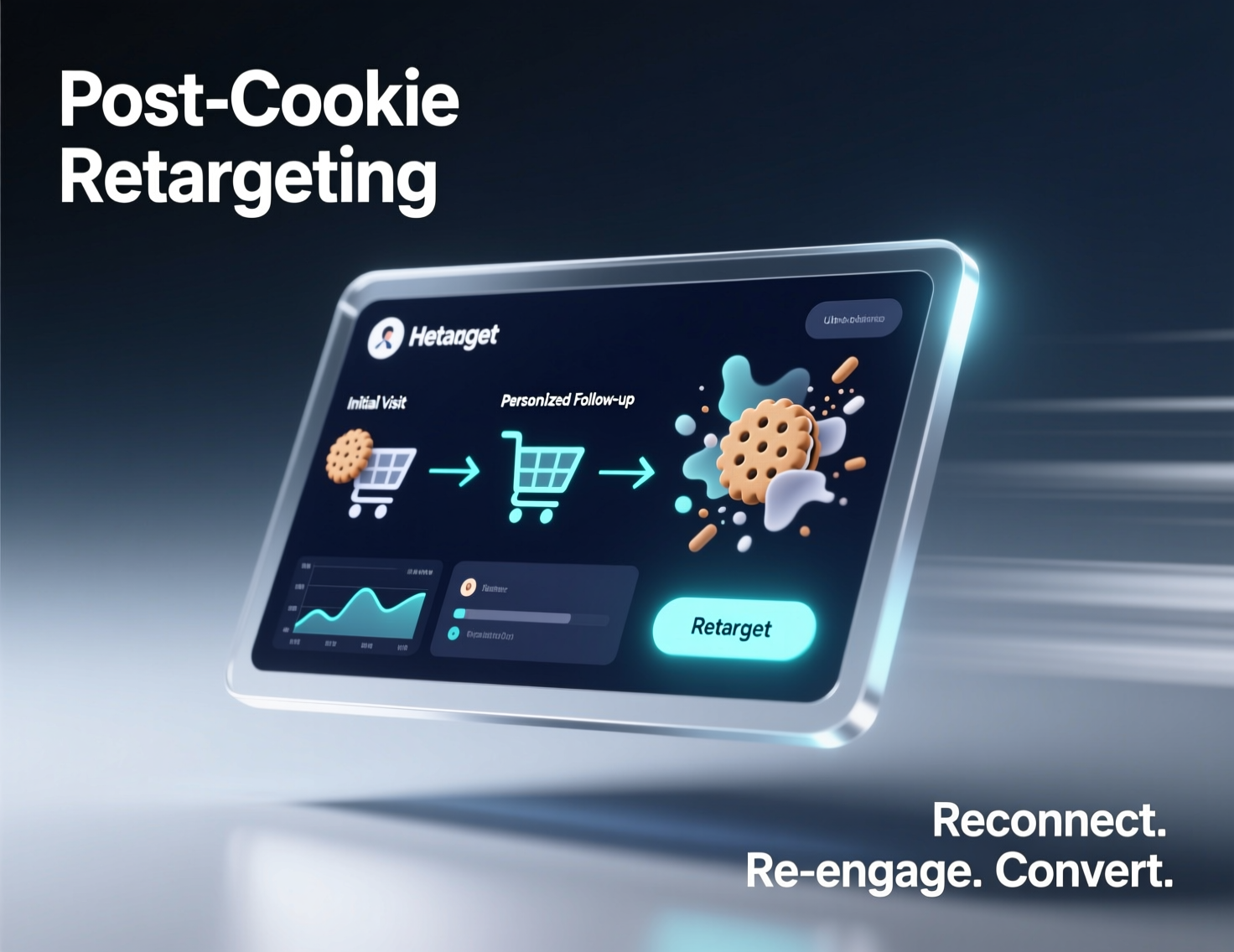
Retargeting in a Post-Cookie World
Retargeting remains one of the most reliable ways to recover conversions and raise ROAS, but its foundations have shifted. Safari and Firefox blocked third-party cookies long ago, and Chrome has tied retargeting to privacy-preserving APIs and consent requirements. Advertisers who relied on cross-site tracking now face signal loss, shorter look-back windows, and stricter measurement. Yet retargeting hasn’t died it’s evolving. With first-party data, the Privacy Sandbox (Topics & Protected Audience), clean-room collaboration, server-side tagging, and consent-aware modeling, brands can rebuild performance while respecting user privacy.
In this guide, you’ll learn how retargeting works in a post-cookie world, where the gaps are, and which tactics actually lift conversions today. We’ll cover Topics API for interest-based ads, the Protected Audience API (PAAPI) for remarketing use cases, Consent Mode v2 and CMP requirements in Europe, data clean rooms for safe matching, and practical audience strategies across Google, Meta, and retail media. You’ll also get step-by-step deployment tips, sample measurement frameworks, and real-world examples so you can design retargeting programs that perform now and adapt as privacy standards continue to mature.
Note
Chrome’s current guidance points to Privacy Sandbox technologies—Topics and Protected Audience for interest-based ads and remarketing respectively, with timelines managed on its official pages. Privacy Sandbox+2Privacy Sandbox+2
What Changed and Why It Matters for Retargeting
Third-party cookies are tightly controlled in Chrome and absent in Safari/Firefox, which removes legacy cross-site lists and degrades multi-site retargeting. Google’s own guidance highlights Sandbox APIs to support key use cases while limiting cross-site tracking.
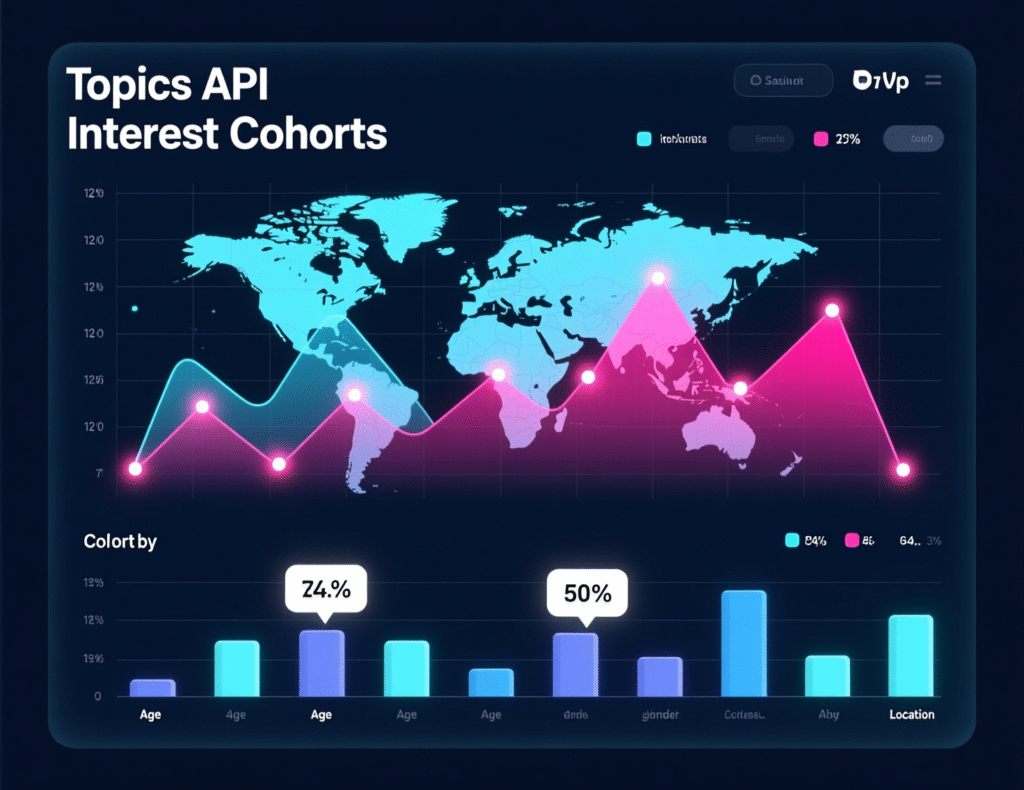
Topics API enables interest-based advertising without sharing specific site histories. It surfaces a small set of coarse “topics” from recent browsing; ad tech can request topics to improve relevance.
Protected Audience API (PAAPI) aims to preserve remarketing via on-device auctions. Your retargeting creatives/logic run inside the browser, reducing cross-site tracking risk.
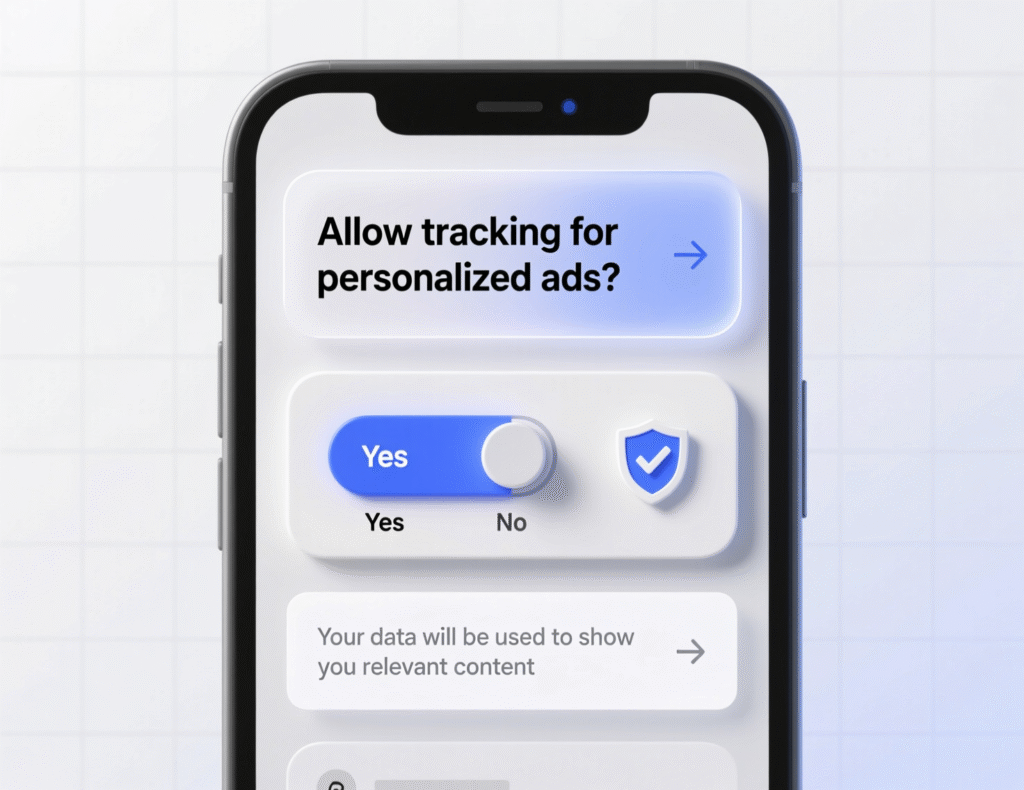
Consent Mode v2 + certified CMPs are now required to serve personalized ads to users in the EEA/UK (and Switzerland) and to keep Google measurement compliant. This directly affects retargeting eligibility and modeled conversions.
Bottom line
Traditional pixel-only retargeting isn’t enough. Privacy-preserving targeting and consent-aware measurement are now table stakes.
The New Building Blocks of Post-Cookie Retargeting
First-Party Data as Your Durable Core
Collect consented emails, phone numbers, and event data (views, carts, leads) via your site/app and loyalty programs.
Use server-side tagging to improve data quality and reduce client-side loss.
Map events to standardized schemas (e.g., product_view, add_to_cart) for better retargeting portability.
Topics API for Interest-Based Reach
Use Topics when you need privacy-friendly retargeting-adjacent reach—e.g., to re-engage broad interest cohorts after top-funnel visits.
Test blended setups: seed with first-party audiences, expand with Topics cohorts to offset shrinking lists.
Protected Audience API (PAAPI) for Remarketing
Rebuild classic “viewed but didn’t convert” retargeting with on-device auctions.
Work through platforms/DSPs that expose PAAPI features so you don’t own low-level code.
Expect differences: smaller list sizes, delayed reporting, and creative decisioning inside the browser.
Consent Mode v2 + CMP Requirements
In the EEA/UK/CH you must integrate a TCF-certified CMP to run personalized advertising and maintain retargeting eligibility. Consent signals also govern modeling for conversions.
Clean Rooms & Modeled Measurement
Data clean rooms (e.g., Google’s Ads Data Hub) let you join aggregated, event-level ad data with your first-party data without exposing user-level PII—useful for retargeting insights, frequency, and overlap analysis.
On Meta, Aggregated Event Measurement (AEM) continues to constrain event prioritization and attribution a reminder to keep retargeting strategies consent-aware and modeled.
Audience Recipes That Still Work
Consent-Backed Lifecycle Retargeting
Who
Users who accepted ads/analytics.
How
Server-side events + PAAPI lists for “viewed product,” “abandoned cart,” “quote started,” etc.
Why it works
Strongest intent; high match rate; compliant retargeting with measurable lift.
Topic-Augmented Re-Engagement
Who
high-value content viewers lacking identifiers.
How
expand with Topics interest cohorts that align to your taxonomy (e.g., “Fitness & Running”).
Why it works
replaces some lost cross-site retargeting reach while preserving privacy.
Clean-Room Look-Alikes
Who
Converted customers (hash-matched) + publishers/retailers via clean room.
How
Overlap analysis -> seed audiences for retargeting-like reach (prospecting/recapture).
Why it works
High intent without third-party cookies; respects governance.
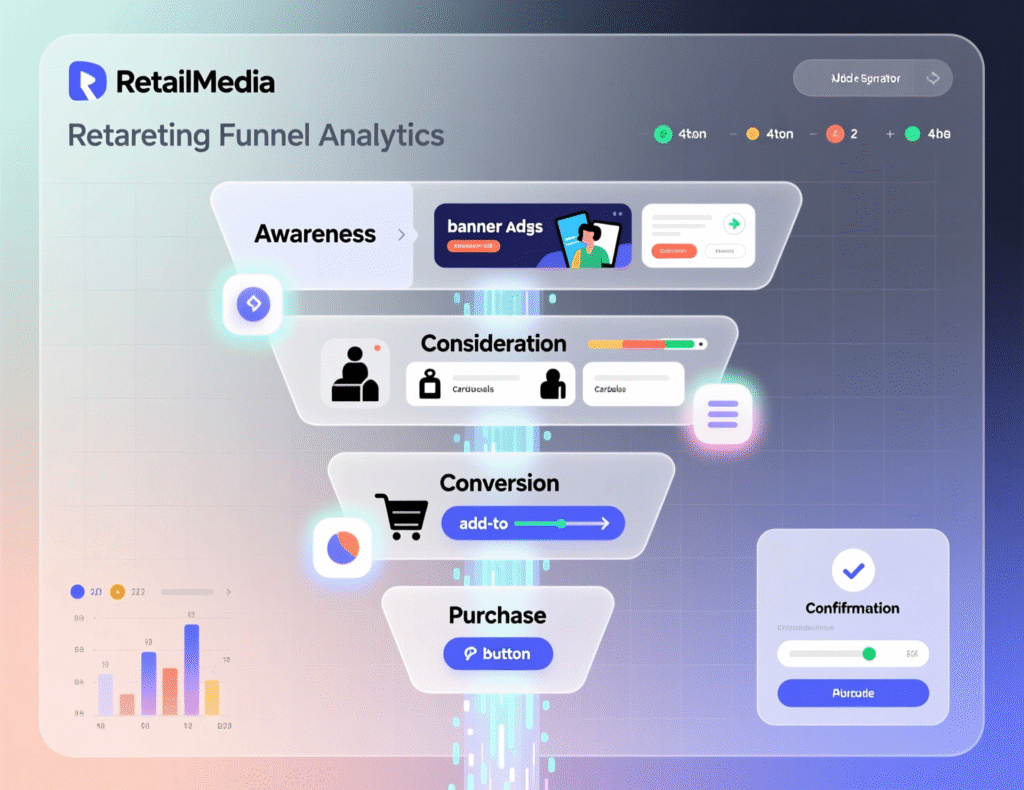
Retail Media Cart Abandoners
Who
Your brand’s shoppers on retailer sites.
How
Retailer’s on-site and off-site audiences + your creative.
Why it works
Logged-in identity; persistent event data. Retail media investments keep rising globally.

Measurement & Attribution in 2025
Model-First, Not Pixel-Only
Expect delayed and aggregated reporting. Embrace modeled conversions and incrementality tests.
In Google’s stack, accurate consent signals and enhanced conversions feed modeling that supports retargeting optimization.
Practical KPI Framework
Primary
CAC/ROAS by audience type (consented PAAPI lists vs Topics).
Secondary
Frequency, recency, overlap (from clean rooms).
Guardrails
Consent rate, modeled share of conversions, and % traffic eligible for retargeting.
Case Studies (Brief)
DTC Apparel Brand (EU, $20M ARR)
Problem
Post-iOS and consent changes shrank retargeting lists by ~35% (internal estimate—VERIFY LIVE).
Fix
Implemented CMP (TCF), Consent Mode v2, server-side GTM; shifted to PAAPI lists for abandoners; layered Topics for upper-mid funnel.
Result
18% lift in retargeting CVR and +12% blended ROAS over 8 weeks (modeled + observed; internal estimate VERIFY LIVE)
Global SaaS
Problem
Cookie loss reduced high-funnel list growth and view-through value.
Fix
Deployed Ads Data Hub for cohort analysis, built content-topic mapping for Topics, and ran PAAPI for “trial-started, no activation.”
Result
14% lower CAC on retargeting cohorts and improved reach quality (estimate—VERIFY LIVE).
Implementation Checklist (Condensed)
Consent foundation
Add a TCF-certified CMP; pass consent to Google (Consent Mode v2).
Verify EEA/UK/CH coverage and policy strings.
Event quality
Server-side tagging for key retargeting events (view, add_to_cart, purchase/lead).
Enhanced Conversions / Advanced Matching (hashed identifiers).
Audiences
PAAPI remarketing lists; Topics categories mapped to content clusters.
Measurement
Modeled conversions; clean room for overlap/incrementality; MMM for validation.
Creative & frequency
On-device creative logic for PAAPI; cap frequency at the cohort level.
Risks & Realities
Timelines evolve.
Follow Chrome’s official Privacy Sandbox status pages and your ad platforms’ deprecation updates do not rely on rumor.
Regional fragmentation.
EEA/UK rules differ from US; consent signals determine retargeting eligibility.
Attribution humility.
Expect more modeled data; triangulate with lift tests and clean-room analysis.
Bottom Lines
The end of “follow-me-around” tracking doesn’t end retargeting; it upgrades it. Winning teams lean into first-party data, consent orchestration, Privacy Sandbox APIs (Topics for interest, PAAPI for remarketing), clean rooms for collaboration, and model-first measurement. As platforms continue to refine timelines and enforcement, the brands that standardize events, test incrementally, and align creative with privacy-preserving cohorts will outperform.
Start with consent and event quality, rebuild retargeting lists via PAAPI, use Topics to widen privacy-safe reach, and quantify impact with modeled conversions and lift studies. Keep your stack flexible, your governance rigorous, and your learning agenda active.
CTA
Want a tailored post-cookie retargeting roadmap for your stack (Google/Meta/retail media)? Request our free 45-minute audit checklist and we’ll outline your next 90-day plan.
FAQs
Q1) How does retargeting work without third-party cookies?
A . Modern retargeting uses first-party data, consent signals, and privacy APIs. PAAPI enables on-device auctions for remarketing, while Topics supports interest-based expansion through coarse taxonomies. Clean rooms and modeled conversions help fill measurement gaps.
Q2) How do I prepare my site for post-cookie retargeting?
A . Deploy a TCF-certified CMP, enable Consent Mode v2, move key events server-side, and map audiences to PAAPI/Topics. Validate effectiveness using incrementality tests.
Q3) How does Google’s Topics API affect audience quality?
A . Topics provides a limited set of interest signals without exposing site-level history. Expect broader, less granular cohorts than legacy retargeting lists—best used to augment reach.
Q4) How can I measure retargeting if data is aggregated?
A . Use modeled conversions, clean-room overlap analysis, and holdout tests. In Google’s ecosystem, having valid consent improves modeling accuracy and attribution quality.
Q5) How is Meta impacted?
A . Meta’s Aggregated Event Measurement restricts event prioritization and attribution windows. Ensure you send high-quality server events and align your retargeting logic with these constraints.
Q6) How do clean rooms help retargeting?
A . Clean rooms enable privacy-safe joins between your first-party data and platform/publisher data, creating high-intent cohorts and managing frequency without exposing raw PII.
Q7) How does Consent Mode v2 affect eligibility?
A . Without valid consent in EEA/UK/CH, personalized ads including retargeting are restricted, and performance measurement relies more heavily on modeled conversions.
Q8) How can retail media replace some lost retargeting?
A . Retail media networks use logged-in identity and rich first-party data, supporting cart/browse-based retargeting both on-site and off-site with strong purchase intent.
Q9) How should I set budgets for post-cookie retargeting?
A . Segment budgets by cohort type consented PAAPI, Topics, and clean-room look-alikes. Allocate based on incremental lift and modeled ROAS, and review monthly for optimization.