
Sharia-Compliant Digital Banking in the GCC
Sharia-Compliant Digital Banking in the GCC
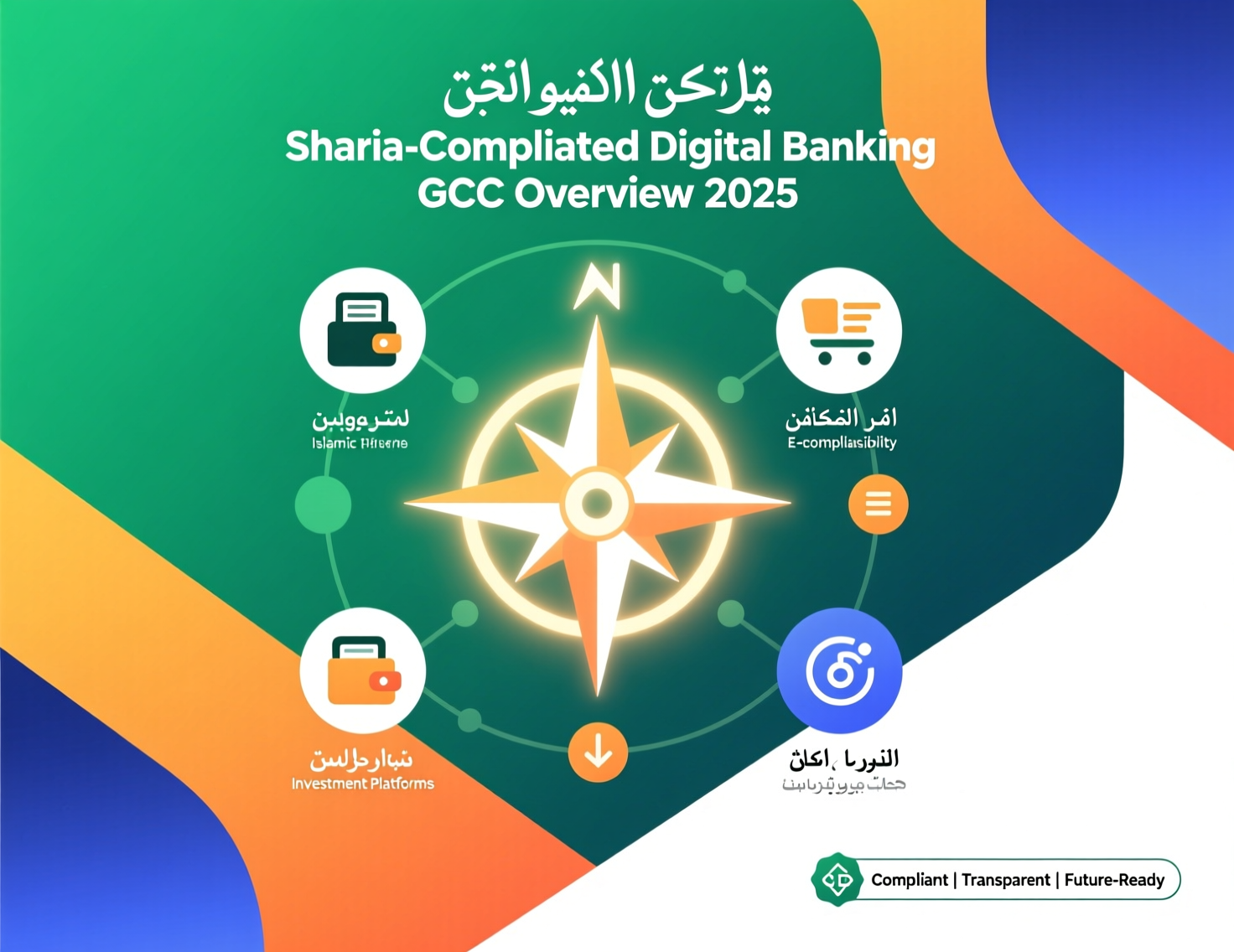
Sharia-Compliant Digital Banking in the GCC
Sharia-compliant digital banking in the GCC means delivering mobile and online banking that fully follows Islamic finance principles such as avoiding riba (interest), excessive uncertainty and unethical sectors, while using digital channels end-to-end.
For banks and fintech teams in Saudi Arabia, the UAE and Qatar, that means combining Sharia-approved products, strong governance and local regulations with Arabic-first, mobile-first UX so customers can trust every transaction is halal and compliant.
Introduction
Across Riyadh, Dubai and Doha, sharia-compliant digital banking has moved from “nice to have” to default expectation. Customers want the ease of a mobile app, but with the reassurance that every payment, savings product or financing offer is fully aligned with Islamic principles and local rules.
For many Islamic banks, fintech founders and product teams, the challenge is clear: how do you move fast on digital journeys while staying aligned with Sharia boards, SAMA or the Central Bank of the UAE, and strict data-residency policies in Saudi, UAE and Qatar? Arabic-first UX, Islamic contracts, licensing, cloud regions and open banking all collide in the same roadmap.
This guide gives GCC teams a practical playbook: a clear explanation of sharia-compliant digital banking in the GCC, an overview of regulations in Saudi Arabia, the UAE and Qatar, and a concrete roadmap to launch or optimise Islamic digital products with confidence.
What Is Sharia-Compliant Digital Banking in the GCC?
What is sharia-compliant digital banking and how is it different from conventional banking in the GCC?
In the GCC, sharia-compliant digital banking means offering banking services primarily through apps and online platforms while structuring every product under recognised Islamic finance contracts such as Murabaha, Ijara or Mudaraba. Unlike conventional banks, revenue comes from asset-backed trading, leasing, fees and shared profit rather than interest, and the whole journey is overseen by Sharia governance approved by local regulators.
Core Definition of Sharia-Compliant Digital Banking
At its core, sharia-compliant digital banking in the GCC blends two layers.
Digital-first delivery account opening, onboarding, payments, cards and financing managed via mobile and web, similar to any modern Islamic neobank experience.
Islamic finance backbone every product is structured to avoid riba (interest), excessive gharar (uncertainty) and prohibited sectors, while following standards from bodies such as AAOIFI and national Sharia authorities.
Digital-only Islamic banks licensed under Saudi Central Bank (SAMA) guidelines, for example, are expected to operate mainly through digital channels while still meeting full banking and Sharia standards.
How It Differs from Conventional Digital Banking
Conventional digital banking apps in the Middle East usually monetise via interest-bearing lending, overdrafts and conventional credit cards. In sharia-compliant setups:
Interest is replaced with profit rates, rentals or shared returns under contracts like Murabaha and Ijara.
Fee structures are transparent, avoiding hidden charges and speculative elements.
Risk is shared more equitably between customer and institution.
In Saudi Arabia, for example, Islamic digital players are licensed under the same banking laws but apply Sharia-compliant product structures. In the UAE, the Central Bank and its Higher Sharia Authority set standards for licensed Islamic financial activities.
Key Sharia Principles Applied to Apps and Online Journeys
On-screen, Sharia principles show up in very practical ways.
Asset-backing
Financing journeys clearly reference the underlying asset (car, home, inventory) and show how profit is calculated.
Transparency
Arabic and English disclosures explain risks, fees and timelines in plain language.
Ethical filters
Investment or wealth screens avoid haram sectors and can be branded as “ethical finance apps Middle East”.
Contract clarity
Users see whether they are entering Murabaha, Ijara or Mudaraba before they tap “agree”.
For GCC customers, especially in Riyadh, Jeddah, Dubai and Doha, this visible transparency is often what turns app downloads into long-term trust.
Regulation and Sharia Governance in Saudi, UAE and Qatar
Saudi Arabia.
Saudi Arabia’s digital banking and Islamic fintech landscape is driven by SAMA’s licensing criteria and additional guidelines for digital-only banks, which set minimum capital, governance and technology requirements.
Fintech Saudi and SAMA’s Regulatory Sandbox give startups room to test halal banking solutions online such as Islamic BNPL or micro-savings before going fully live.
For investment and robo-advisory journeys, the Capital Market Authority (CMA) is key, especially when structuring sharia-compliant investment apps that can sit alongside banking products in a single interface.
UAE.
In the UAE, the Central Bank sets rules for Islamic banks and payment institutions, and its Higher Sharia Authority defines the overarching Sharia governance framework that all Islamic financial institutions must follow.
Free zones like ADGM in Abu Dhabi and DIFC in Dubai add specialised fintech and digital-bank licences, often used by cross-border platforms.
The Telecommunications and Digital Government Regulatory Authority (TDRA) signals expectations on data handling and digital identities, which directly affect eKYC and onboarding journeys for Islamic banking apps.
Qatar.
Qatar Central Bank (QCB) runs a formal Regulatory Sandbox to test innovative fintech solutions in a controlled environment, including sharia-compliant propositions.
Qatar FinTech Hub, backed by Qatar Development Bank, operates incubator and accelerator programs that nurture early-stage Islamic finance ideas and partnerships with players like Qatar Islamic Bank (QIB).
Why GCC Regulators Are Actively Encouraging Islamic Fintech
Across the region, regulators see Islamic fintech as a tool to.
Support financial inclusion for youth, SMEs and even visitors (SAMA now allows visitors to open bank accounts using a Visitor ID)
Deliver Vision 2030-style digital transformation in Saudi Arabia
Attract FDI and technology investment into hubs like Dubai, Abu Dhabi and Doha.
For product teams, this translates into clear frameworks—but also strict expectations. The Central Bank of the UAE has already fined banks and restricted new customer onboarding where Sharia and AML governance fell short, signalling that “compliant” is non-negotiable.(
Islamic Fintech Apps and Journeys in Saudi, UAE and Qatar
What kinds of Islamic fintech apps are available today in Saudi Arabia, the UAE and Qatar?
Across Saudi, the UAE and Qatar, customers already use sharia-compliant fintech apps for everyday payments, salary cards, savings, zakat calculations, investment and SME financing. Many of these sit on top of licensed Islamic banks or operate via regulated BNPL and payment structures that have been reviewed by local Sharia boards.
Retail Apps
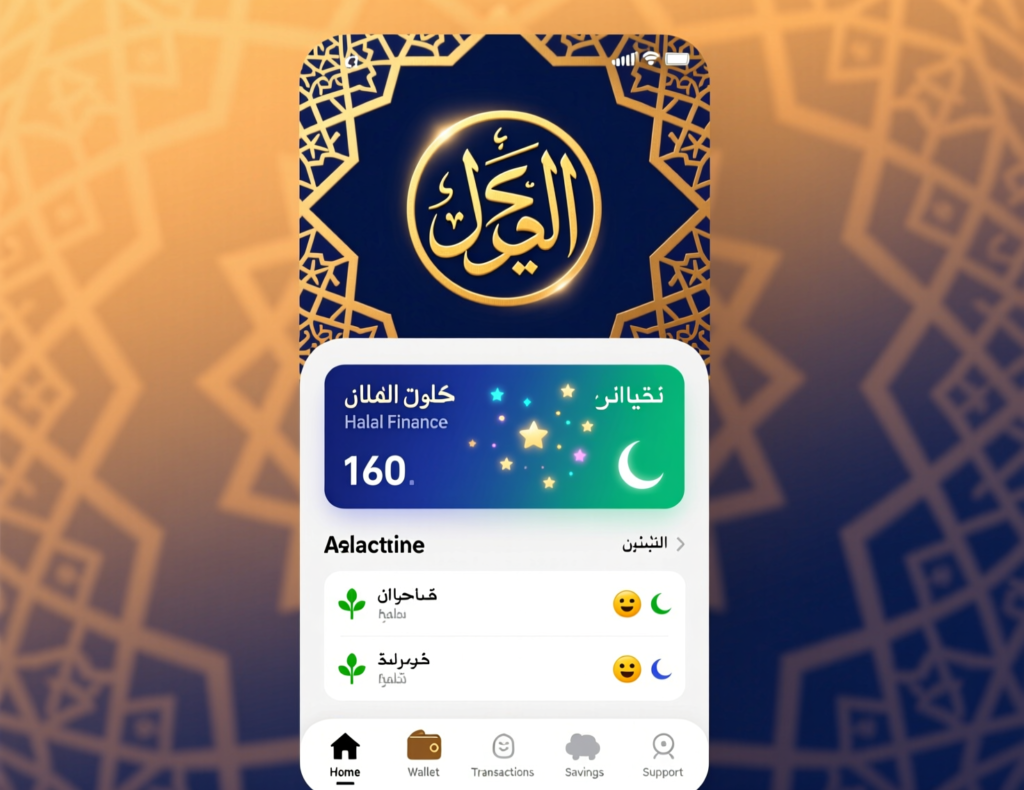
In Riyadh and Jeddah, a “Saudi-friendly sharia-compliant fintech app” typically offers:
Sharia-compliant debit or virtual cards
Salary accounts and budgeting tools
Round-up or micro-savings features
Zakat and sadaqah calculators linked to approved charities
Halal robo-advisory or curated portfolios
In Dubai and Abu Dhabi, Islamic banking app users often combine everyday accounts with global remittances and halal investing into regional and international markets.
SME and Corporate Use Cases: BNPL, Trade and Remittances
For SMEs across Dammam, Sharjah and Doha, Islamic BNPL and instalment plans help smooth cashflow without turning to interest-bearing overdrafts. BNPL providers can structure purchases as Murabaha or Ijara, with clear profit caps and transparent schedules.
Trade and supply-chain platforms integrate sharia-compliant payment gateway services for cross-border collections, while remittance apps serving expat workers ensure FX and fees are fully disclosed and governed by both Sharia boards and regulators such as SAMA, CBUAE and QCB.
A typical example: a Dubai e-commerce brand uses an Islamic BNPL plugin at checkout, while a Doha-based SME taps a local Islamic fintech working out of the GCP Doha region for inventory financing and automated reconciliation.
Why GCC Customers Prefer Mobile-First Islamic Banking
Most GCC customers now expect mobile-first journeys. What makes them choose Islamic apps over conventional ones is a mix of:
Visible Sharia branding and governance (named scholars, Sharia board summaries)
Arabic-first UX with smooth bilingual switching
Simple, transparent pricing
Seamless integrations with wallets, QR payments and local rails
Saudi millennials may look for youth-focused features and integrations with lifestyle apps. UAE professionals often expect multi-currency capabilities. Qatar’s customers care about strong local anchoring and clear links to major Islamic banks.
Designing Arabic-First, Bilingual UX for Islamic Banking Apps
Arabic-first doesn’t just mean translating labels. It includes:
Right-to-left layouts that still feel modern and “fintech”
Clear, culturally-aware iconography for contracts and investments
Content explaining Sharia concepts in both Arabic and English
Flows that adapt to different ID types (e.g., GCC nationals, residents, visitors)
Teams that combine UX research with local Sharia scholars often achieve higher activation and trust than those who simply “skin” a generic Western banking app.
How Islamic Digital Banks Keep Every Transaction Sharia-Compliant
Product Structures and Contracts Behind the App
Behind every clean card or financing screen, there is usually a structured Islamic contract:
Murabaha: cost-plus sale for asset purchase (cars, electronics, inventory).
Ijara: lease-based contracts, often for vehicles or equipment.
Mudaraba / Musharaka: profit-and-loss sharing structures for investment or partnership-based finance.
Your UI should make it obvious which structure applies, what the profit rate is and how schedules are calculated.
Sharia Boards, Audits and Ongoing Monitoring
In Saudi, the UAE and Qatar, Sharia governance is not just internal; it is closely supervised by regulators. The UAE’s Higher Sharia Authority and national Sharia governance standards, for instance, define how internal Sharia committees should be structured and how often they must report.
QCB’s sandbox guidance makes clear that even experimental fintechs must operate under proper oversight and within defined risk parameters.
For digital banks, this typically means:
Documented Sharia review of each new feature
Regular Sharia and financial audits
Clear escalation processes for potential non-compliance
Using AI, Automation and RegTech Without Breaking Sharia
AI and automation can help Islamic banks provided they don’t replace human Sharia judgment:
AI tools can pre-screen transactions and counterparties for Sharia compliance.
RegTech solutions can automate reporting to SAMA, CBUAE and QCB.
Knowledge systems can store fatwas, product rulings and versions for auditability.
But ultimate responsibility sits with Sharia boards and management. AI should support, not override, scholars or regulators.
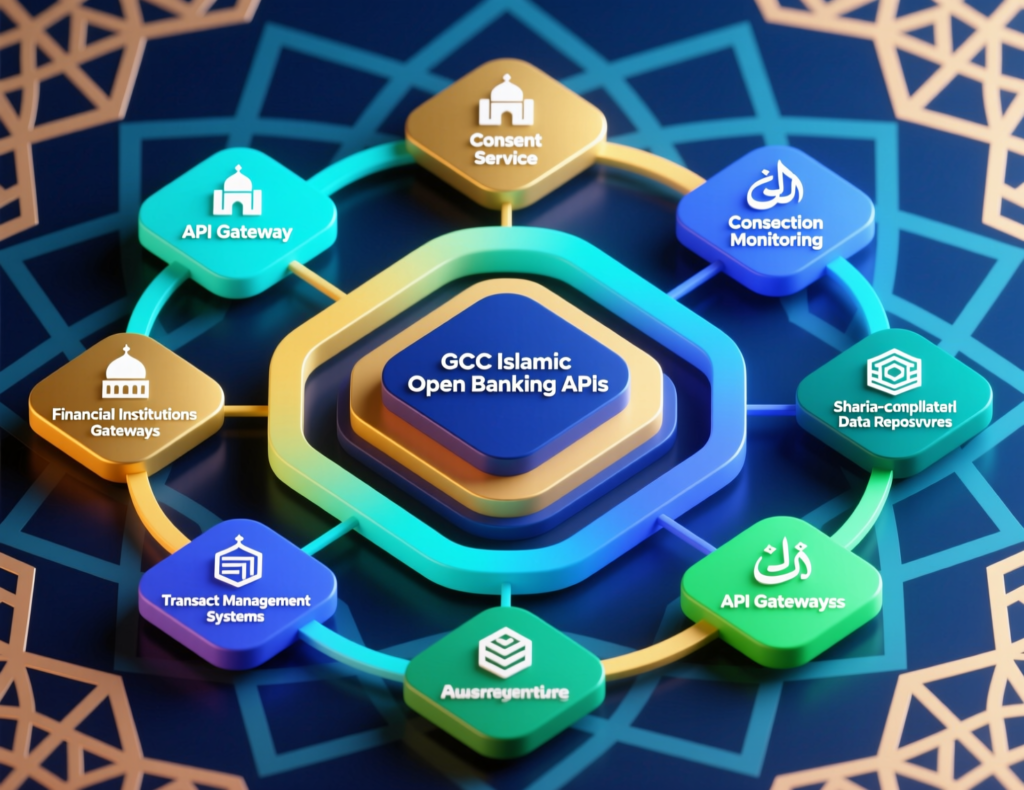
Open Banking and APIs for Islamic Finance in the GCC
How can open banking and APIs help Islamic banks launch new halal products faster in Saudi, UAE and Qatar?
Open banking and APIs allow Islamic banks to securely share customer-permissioned data and services with trusted third parties, enabling faster launches of halal products like account aggregators, zakat calculators or Islamic robo-advisors. In Saudi Arabia, SAMA’s Open Banking Framework and recent updates around payment initiation services are already enabling new Sharia-compliant fintech partnerships, with the UAE and Qatar rolling out similar initiatives.
Where Open Banking Stands in Saudi, UAE and Qatar Today
Saudi Arabia has one of the most advanced frameworks in the region. SAMA’s multi-phase Open Banking Program started with account information services, followed by payment initiation, all aligned with Saudi Vision 2030’s innovation agenda.
The UAE is moving via pilot schemes and free-zone initiatives in ADGM and DIFC, tying open banking to broader digital-identity and data-sharing frameworks. Qatar, meanwhile, is using its fintech ecosystem and sandbox to test data-sharing models that can be layered onto QCB-regulated institutions.
Practical Halal Use Cases Powered by APIs
For Islamic institutions, APIs can power:
Halal account aggregation show all Islamic and conventional accounts, while highlighting Sharia-compliant products.
Zakat and donation optimisation aggregate income and assets to calculate zakat and suggest partners.
SME scoring and trade finance use transaction data to offer Murabaha-based working capital.
Ethical robo-advisors filter investments through Islamic screening rules.
Build, Partner or White-Label?
GCC teams usually face three options:
Build their own API platform and developer portal.
Partner with specialised Islamic core banking or API aggregators.
White-label a proven Islamic fintech stack, customising UX and language.
For many banks in Riyadh, Dubai and Doha, a hybrid approach works best owning sensitive rails but partnering where speed and specialist expertise matter. This is where working with implementation partners like Mak It Solutions can accelerate delivery while staying compliant.
GCC Market Opportunity, Costs and Launch Roadmap
Market Size and Growth.
Islamic finance already represents a large share of banking assets in Saudi Arabia and Qatar, and a significant, fast-growing segment in the UAE. With Vision 2030, Google Pay and global wallets going live in Saudi Arabia, and major fintech incentives in Qatar, regulators are clearly signalling that digital is the future of Islamic finance, not a side channel.
Cost and Timeline Levers for Launching Islamic Digital Products
Your cost and speed to market will depend on.
Licensing scope (full digital bank vs. e-money or finance company)
Existing core banking (modern API-ready vs. legacy)
Cloud choice & data residency – e.g., AWS Bahrain, Azure UAE Central or GCP Doha for local data hosting
Number of markets (Saudi only vs. Saudi + UAE + Qatar)
Depth of Arabic-first UX and integrations (national ID, eKYC, payment rails)
Planning these early with an experienced partner like Mak It Solutions can reduce costly rework.
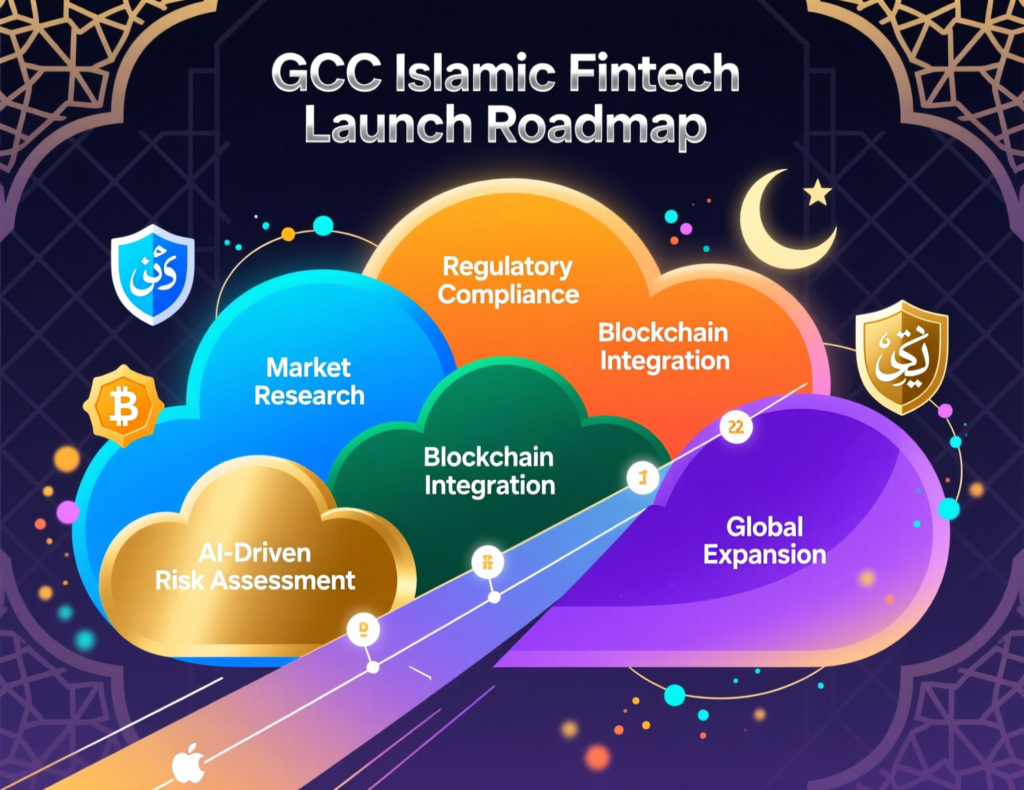
6-Step Roadmap to Launch a Sharia-Compliant Digital Journey
Define your target segment and priority market – retail, SME or expats; start with Riyadh, Dubai or Doha based on your strongest regulatory and distribution fit.
Map regulators and licences – SAMA/CMA (KSA), Central Bank of the UAE plus ADGM/DIFC, QCB (Qatar), and clarify whether you need a full bank, finance, or payment licence.
Design Sharia-compliant products with scholars and a Sharia board agree on contracts, profit rates, screening rules and customer disclosures.
Select core banking, APIs, cloud region and data residency approach align AWS Bahrain, Azure UAE Central or GCP Doha choices with national data rules.
Integrate KYC, payment rails, open banking and Arabic-first UX connect to local ID systems, instant payment rails and GCC open banking where available.
Set up Sharia governance, monitoring dashboards and go-live plan track Sharia KPIs, regulatory reports and product analytics from day one.
When to Bring in a Specialist Islamic Fintech Partner
You should seriously consider a specialist partner when:
You are planning multi-country rollout across Saudi, UAE and Qatar.
You need Islamic modules integrated into existing conventional cores.
Open banking, BNPL, wallets and cross-border remittances all converge in one roadmap.
In these cases, working with a team like Mak It Solutions who understand both GCC regulation and cloud-native architectures—can save months of trial and error.
Final Words
Sharia-compliant digital banking in the GCC is no longer experimental. Supported by SAMA, the Central Bank of the UAE, QCB and ambitious national visions, Islamic fintech is becoming the standard way individuals and businesses want to bank across Riyadh, Dubai, Abu Dhabi and Doha.
For GCC banks, fintechs and regulators, the opportunity is to turn this momentum into sustainable, compliant and customer-loved products combining Sharia, regulation, cloud and Arabic-first UX in a single, well-governed digital journey.
If you’re planning an Islamic fintech app, digital-only bank or halal BNPL product in Saudi, the UAE or Qatar, you don’t have to figure it out alone. The team at Mak It Solutions can help you validate your vision, map regulators, choose the right stack and design Arabic-first journeys that your Sharia board will happily sign off.
Book a strategy call with our GCC-focused services team and turn your sharia-compliant digital banking idea into a live, market-ready product.
FAQs
Q : Is sharia-compliant digital banking fully approved by SAMA and the Central Bank of the UAE?
A : Yes provided you hold the right licence and meet all regulatory and Sharia governance requirements. In Saudi Arabia, SAMA has issued specific licensing criteria and additional guidelines for digital-only banks, and Islamic banks operate under its supervision like any other bank. In the UAE, the Central Bank and its Higher Sharia Authority set detailed Sharia governance standards for Islamic financial institutions, and can fine or restrict banks that fail to comply, as seen in recent enforcement actions. Sharia-compliant digital banking is therefore fully legitimate, but never “light touch”.
Q : Can GCC expats open an Islamic digital bank account from abroad?
A : In many cases, yes especially in the UAE and, increasingly, Saudi Arabia—provided the customer passes KYC checks and meets residency or visitor requirements. SAMA has recently allowed visitors to open bank accounts using a Visitor ID, a step that supports financial inclusion and tourism.The Central Bank of the UAE also allows banks and fintechs to onboard non-residents under strict AML and Sharia governance rules. Exact eligibility varies by institution and licence, so expats should always check with the specific Islamic bank or digital platform.
Q : How do Islamic BNPL and instalment plans work in Qatar compared to Saudi and UAE?
A : Across the GCC, Islamic BNPL is generally structured using Murabaha or similar contracts, where the provider buys the item and sells it to the customer at a known profit, paid in instalments. In Saudi and the UAE, SAMA and CBUAE expect clear disclosures and proper Sharia governance around these products, especially when they are embedded into e-commerce journeys. Qatar’s QCB Sandbox and Qatar FinTech Hub provide a controlled environment to test BNPL and instalment models tailored to Qatari consumers and merchants.
Q : What data residency rules apply if a GCC Islamic bank uses cloud services outside its home country?
A : Data residency is a critical issue for both conventional and Islamic banks. Saudi Arabia, the UAE and Qatar all expect sensitive financial and personal data to follow national data-protection and sometimes explicit localisation rules, which often means using in-region cloud locations like AWS Bahrain, Azure UAE Central or GCP Doha. Regulators such as SAMA, the Central Bank of the UAE and QCB typically require banks to demonstrate where data is stored, how it is protected and how cross-border access is controlled. Early alignment with national frameworks and Saudi Vision 2030 digital goals reduces rework later.
Q : Do Islamic banking apps in the GCC support both Arabic and English interfaces by default?
A : Most leading Islamic banking apps in the GCC now support at least Arabic and English, and in the UAE sometimes additional languages, but it is not legally “automatic”—it’s a design and product choice. Regulators like TDRA in the UAE encourage accessible digital services in Arabic, and customer demand in Riyadh, Dubai and Doha makes bilingual journeys almost essential for adoption. For banks positioning themselves as modern, customer-centric and aligned with national visions, investing in Arabic-first, bilingual UX is no longer optional; it’s part of the trust equation for sharia-compliant digital banking.