


Table of Contents
ToggleShopify vs WooCommerce
Choosing between Shopify vs WooCommerce can feel like a fork in the road: one path favors speed and an all-in-one stack; the other offers control and open-source flexibility. In 2025, the differences are clearer than ever. Shopify’s hosted platform provides fast setup, PCI-compliant checkout, and a massive app ecosystem. WooCommerce, built on WordPress, delivers deep customization and ownership—your stack, your rules.
This guide breaks down Shopify vs WooCommerce across pricing and fees, ease of use, payments and checkout, SEO, scalability, and ecosystem. You’ll also see real-world examples, a quick decision framework, and geo-specific tips. By the end, you’ll know when Shopify vs WooCommerce is the right call and what to budget, build, and optimize first.
Snapshot: As of September 2025, W3Techs reports WooCommerce used by 8.9% of all websites (12.5% CMS share) vs Shopify at 4.8% (6.7% CMS share). That’s overall web usage, not “stores only.” Shopify still wins on “interest over time” in many regions per Google Trends analyses.
Shopify vs WooCommerce at a Glance (2025)
Type:
Shopify: Hosted SaaS (all-in-one).
WooCommerce: WordPress plugin (self-hosted, open source).
Start-up speed:
Shopify: Fast; turnkey.
WooCommerce: Setup varies by host and stack.
Pricing (platform):
Shopify: Basic $29, Grow $79, Advanced $299 (annual billing, core card rates vary).
WooCommerce: Core plugin free; typical quality hosting ~$20/mo (~$250/yr) + domain + optional paid extensions.
Payments:
Shopify Payments built-in; third-party gateways incur extra transaction fees (2% / 1% / 0.6% on Basic/Grow/Advanced).
WooCommerce: Multiple gateways; WooPayments is “pay-as-you-go” (rates vary by region); conversion fee historically +1–2% to FX rate.
Apps & plugins:
Shopify App Store: “Over 8,000” apps (official messaging).
WordPress ecosystem: 60k+ free plugins (plus premium).
Market usage (web-wide): WooCommerce > Shopify (web share), but this includes non-store sites and partial installs.
Pricing & Total Cost of Ownership (TCO): Shopify vs WooCommerce Pricing
Shopify has transparent plan tiers: Basic ($29), Grow ($79), Advanced ($299) when billed yearly. Card rates and third-party payment provider fees vary by plan; using Shopify Payments avoids those extra third-party fees on most payment types. Note: stores created on or after May 12, 2025 incur third-party transaction fees on the gift card/store credit portion of orders.
WooCommerce
WooCommerce is free to install but not free to run. Expect hosting (~$20/mo) for solid performance, plus any paid extensions (subscriptions, bookings, advanced shipping, analytics, etc.). WooPayments is usage-based; FX conversion historically adds 1–2% over mid-market rates (country-specific pricing applies). WooCommerce+2WooCommerce+2
Bottom line on costs
Low-complexity stores needing speed often find Shopify’s predictable bundle economical.
Complex catalogs, custom workflows, or content-heavy sites may achieve lower TCO on WooCommerce (especially if you already run WordPress and have in-house dev/ops).
Ease of Use vs Flexibility: Shopify vs WooCommerce Usability
Shopify wins for setup speed and a guided onboarding flow. Merchants get hosting, security, and PCI compliance out of the box; configuration lives in one admin. Multiple independent reviews continue to highlight Shopify’s ease-of-use in 2025.
WooCommerce offers deep control—file system access, custom post types, hooks, and an ocean of WordPress plugins. You’ll handle hosting, updates, backups, caching/CDN, and security policies (or pay a managed host/agency). For teams comfortable with WordPress, that flexibility is a feature, not a bug.
Payments, Checkout & Conversion
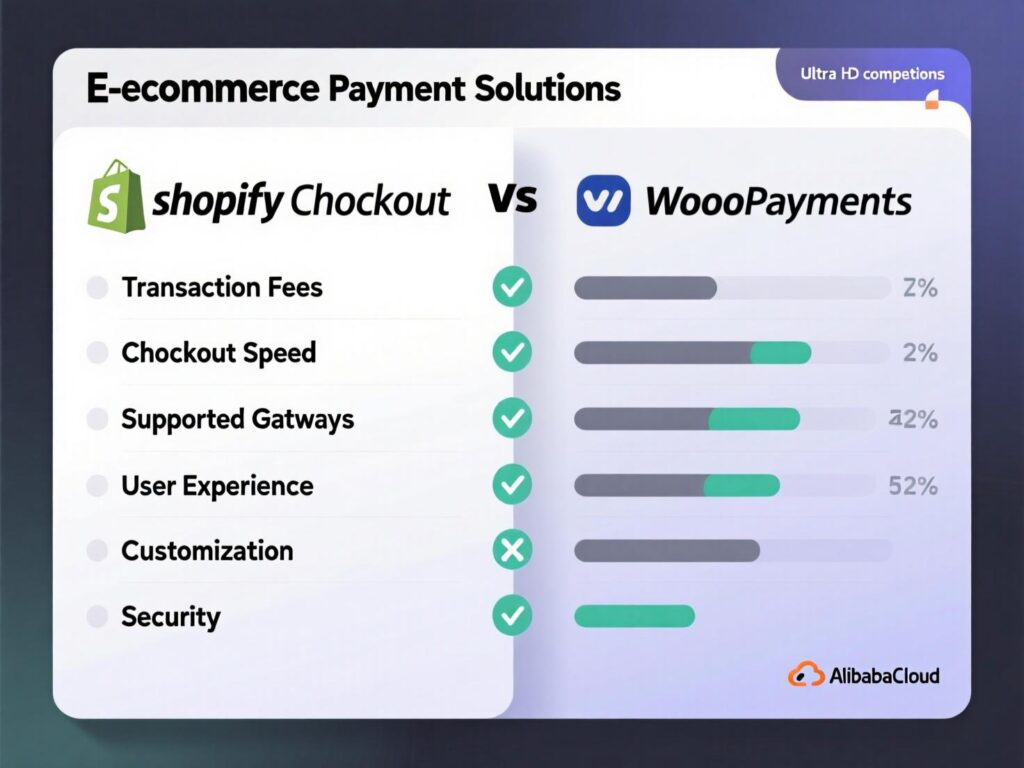
Shopify Payments is turnkey and tightly integrated. Shopify states its checkout outperforms WooCommerce’s by 17% in a global study—marketing-sourced but directionally aligned with many merchants’ experiences. Use of third-party gateways adds an extra fee depending on plan. Online card rates typically 2.5%–2.9% + $0.30 per transaction depending on plan.
WooCommerce supports a wide range of gateways. WooPayments is “pay as you go,” no monthly fee; exact rates vary by country and payment method. International FX may include 1–2% on top of the mid-market rate (historical model).
If you sell cross-border, Shopify also lists additional fees for duties/currency services (e.g., cross-border transaction fees for markets), which can impact margins. Factor these into your pricing.
SEO & Content: Shopify vs WooCommerce for Organic Growth
Both platforms can rank. Shopify offers clean URLs, sitemaps, structured data via apps/themes, and fast hosting. WooCommerce (WordPress) provides deeper SEO control via plugins like Yoast/RankMath, custom taxonomies, and full editorial workflows helpful for content-led growth. Independent comparisons often credit WooCommerce with more technical SEO flexibility, while noting Shopify’s strong baseline and app ecosystem.
Scalability & Performance
Shopify’s global infrastructure scales without you tuning servers, making flash-sale resilience simpler—illustrated by brands like Gymshark migrating to Shopify Plus after outage pain on another stack.
WooCommerce scales with the quality of your hosting, caching/CDN, and engineering. With a good managed host and performance budget, it can handle substantial traffic—especially for content-commerce hybrids.
Apps, Plugins & Integrations
Shopify App Store: Official messaging cites “over 8,000” apps for customization. Third-party trackers show even higher counts in 2025, but use the official figure for conservative planning.
WordPress ecosystem: 60,000+ free plugins plus premium marketplaces. Vet carefully; plugin quality varies.
## Market Landscape
W3Techs (updated daily) shows WooCommerce powering 8.9% of all websites (12.5% CMS share) vs Shopify at 4.8% (6.7% CMS share). Keep in mind: this reflects all sites, not active stores only. It remains common for Google Trends to show higher search interest for “Shopify” vs “WooCommerce,” indicating brand demand rather than definitive platform superiority.
Real-World Examples
Case Study (Shopify): Gymshark
After a major Black Friday outage on a different platform, Gymshark replatformed to Shopify Plus for scalable checkout and global growth—citing resilience during traffic spikes and operational simplicity across online/offline experiences.
Case Snapshot (Shopify): Kylie-led brands
Multiple well-known beauty brands (e.g., Kylie Cosmetics, KHY by Kylie Jenner) operate on Shopify Plus, leveraging a stack of marketing, CX, and analytics apps for velocity and launch cadence.
(If you prefer open source and own your stack, similar scale is possible on WooCommerce with the right hosting/engineering. But your team shoulders ops.)
How to Choose: A 7-Step Mini-Framework
Speed to launch:
If you need to sell next week, Shopify.
Customization depth:
If you need atypical product rules/workflows, WooCommerce.
Payments:
If you require niche gateways or custom routing, WooCommerce is often easier; if you prefer an all-in-one processor, Shopify Payments is simple.
International/Cross-border:
Model FX and duties/conversion fees; both can do it, but fees differ.
Team skills:
WordPress/devOps chops? WooCommerce. Lean team? Shopify.
TCO:
Price out 12 months including apps/plugins, gateways, and dev/ops.
Content strategy:
Heavy editorial? WooCommerce; mixed content/commerce? Either.
Localization buckets (GEO tips)
United States: Emphasize tax automation, POS, and BNPL. Phrase: “Shopify vs WooCommerce for US tax and POS.”
United Kingdom: Focus on VAT handling, Royal Mail/DHL integrations. Phrase: “Shopify vs WooCommerce for UK VAT & shipping.”
India: Prioritize UPI gateways, COD workflows, GST invoicing. Phrase: “Shopify vs WooCommerce for UPI & GST.”
To Sum Up
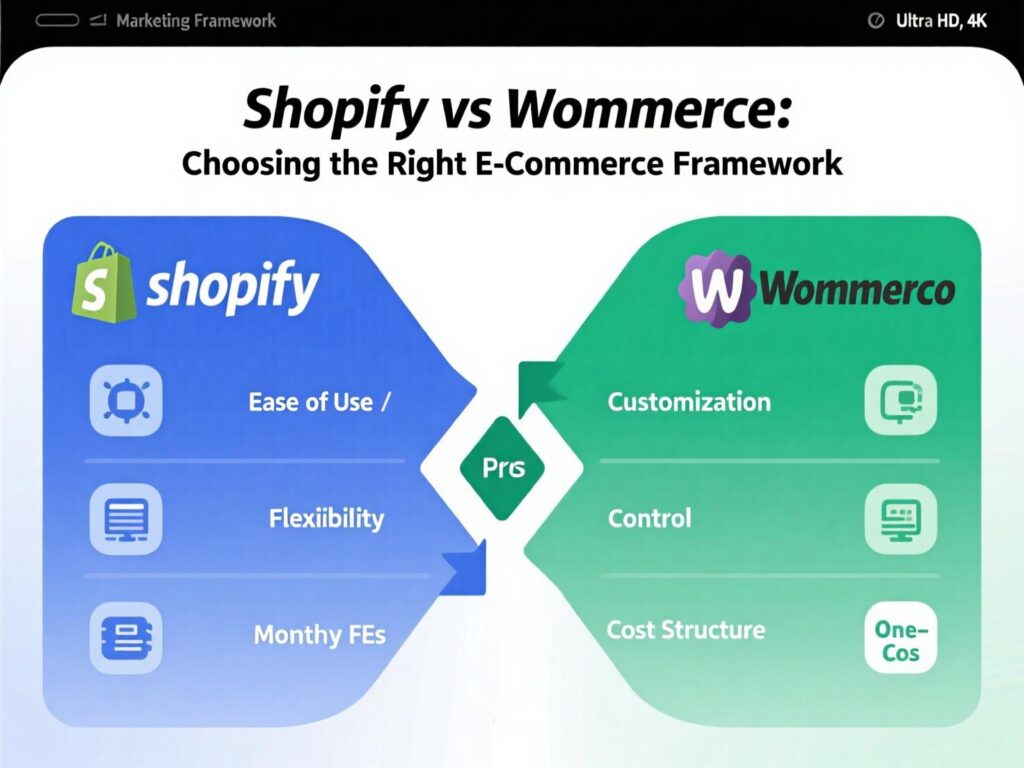
If you prioritize speed, a unified stack, and proven scalability,Shopifyis the safer bet—especially when your team is lean or you plan aggressive multichannel growth. If you need a tailored, content-heavy experience with deep technical control, WooCommerce (on quality hosting) can be more adaptable and cost-effective in the long run. The smartest path is to map your next 12 months of requirements and test critical workflows before committing.
Call to Action: Want a personalized Shopify vs WooCommerce roadmap (pricing, tech stack, SEO plan) for your store? Request a quick brief, and we’ll outline the optimal build and migration steps for your goals.
FAQs
1) How do I decide between Shopify vs WooCommerce quickly?
A : Start with launch urgency and in-house skills. If you need speed and low-ops, choose Shopify. If you own WordPress talent and need deep customization, WooCommerce. Then model 12-month costs (plans, payment fees, apps or plugins, hosting, dev/ops).
2) How does pricing differ for Shopify vs WooCommerce?
A : Shopify has fixed plans ($29/$79/$299 billed annually) plus processing/transaction fees depending on plan and gateway. WooCommerce is free but requires hosting (~$20/mo) and often paid extensions. TCO depends on your stack and scale.
3) How can I handle international fees on both platforms?
A : Shopify lists separate cross-border fees (markets, duties, conversion). WooPayments uses a pay-as-you-go model; prior FX method added 1–2% over mid-market rates. Always model margins before expanding.
4) How do payments compare for Shopify vs WooCommerce?
A : Shopify Payments is built-in; third-party gateways add extra % fees by plan. WooCommerce supports many gateways; WooPayments charges per-use with country-specific rates.
5) How does SEO differ in Shopify vs WooCommerce?
A : Both can rank. WooCommerce offers more granular SEO control via WordPress plugins; Shopify provides a strong baseline with apps and fast hosting. Choose based on content strategy and technical needs.
6) How scalable is WooCommerce compared to Shopify?
A : Shopify’s hosted infra scales without server tuning and is proven in high-traffic events (e.g., Gymshark on Plus). WooCommerce scales with hosting/CDN/engineering—entirely feasible, but ops are yours.
7) How long does it take to launch on each?
A : Shopify can be production-ready within days. WooCommerce timelines vary depending on hosting, theme dev, integrations, and QA.
8) How many apps/plugins do I really need?
A : Use as few as necessary. Shopify’s store cites “over 8,000” apps; WordPress lists 60k+ free plugins. Vet for security, updates, and support; avoid bloat.
9) How can I switch later if I choose wrong?
A : Both platforms have migration tools/services. Budget for data mapping (products, orders, customers), URL redirects/SEO, and QA before cutover.
Hello! We are a group of skilled developers and programmers.
Hello! We are a group of skilled developers and programmers.
We have experience in working with different platforms, systems, and devices to create products that are compatible and accessible.