
Smart City IoT Dubai and NEOM for GCC Residents
Smart City IoT Dubai and NEOM for GCC Residents

Smart City IoT Dubai and NEOM Changing Urban Life
Smart city IoT in Dubai and NEOM connects sensors, 5G networks, data platforms and AI to deliver seamless services for residents and expats across transport, utilities, safety and government. For people living and investing in Saudi Arabia, the UAE and Qatar, this means more convenient, safer and more sustainable daily life while still respecting local data-residency, privacy and regulatory requirements.
Introduction
In just one generation, the Gulf has shifted from low-rise desert towns to skylines like Dubai Marina and the emerging NEOM in northwest Saudi Arabia. Today, smart city IoT Dubai and NEOM signal the next leap: cities where traffic lights, buildings, ports, payments and even streetlights quietly talk to each other in real time. For GCC residents, this isn’t science fiction; it’s the invisible infrastructure behind smoother commutes, less paperwork and safer neighbourhoods.
Why Dubai and NEOM Are the Smart City Icons of the Middle East
Dubai has spent over a decade turning “Smart Dubai” into a full urban strategy, starting with the Dubai Internet of Things (IoT) Strategy and Digital Dubai data platforms. NEOM, backed by Saudi Vision 2030, is going even further by designing “cognitive cities” that use 5G, edge computing and AI from day one. Together, they have become reference points for GCC policymakers, investors and startup founders planning the next wave of smart city projects.
What This Means If You Live, Work or Invest in the GCC
If you live in Riyadh, Dubai, Doha or Lusail, smart city IoT already touches your life, whether you’re paying a toll, renewing residency or finding parking through an app. This guide walks through how smart city IoT works in Dubai and NEOM, what it means for everyday life across the GCC, and how data, regulation and cloud choices shape everything. You’ll also get a practical roadmap for other GCC cities and vendors, plus real scenarios where partners like Mak It Solutions help turn pilots into production-grade platforms.
How Smart City IoT in Dubai and NEOM Is Redefining Urban Life
What “Smart City IoT” Really Means in the Middle East
In a GCC context, smart city IoT is a connected layer of sensors, cameras, meters, cards, wearables and apps feeding data into secure city platforms. That data powers services such as dynamic tolling on Sheikh Zayed Road, predictive maintenance of Riyadh’s new metro or smart irrigation in parks in Doha and Abu Dhabi. For residents, the technology fades into the background and simply feels like “the city just works better.”
Two Different Paths to the Same Connected Future
Dubai is upgrading an existing, busy city integrating IoT into RTA buses, DEWA smart meters, airports and free zones on top of legacy infrastructure. NEOM, by contrast, is greenfield: The Line, Oxagon and Trojena are designed so transport, utilities and buildings are digital twins first and physical assets second. ([Setup in Oman][3]) Both paths matter because many GCC cities (Riyadh, Jeddah, Doha, Lusail, Abu Dhabi) are hybrids, with historic districts alongside newly planned smart zones.
Key Benefits for GCC Residents.
For GCC families and expats, smart city IoT means fewer queues, smarter mobility and safer streets – from app-based parking in Dubai to automated emergency response in NEOM’s cognitive districts. It also supports regional sustainability goals, using real-time analytics to cut power consumption in towers, optimise district cooling in Jeddah or manage water stress in Oman and Bahrain.
Dubai Smart City IoT.
Dubai Internet of Things Strategy and Digital Dubai Platforms
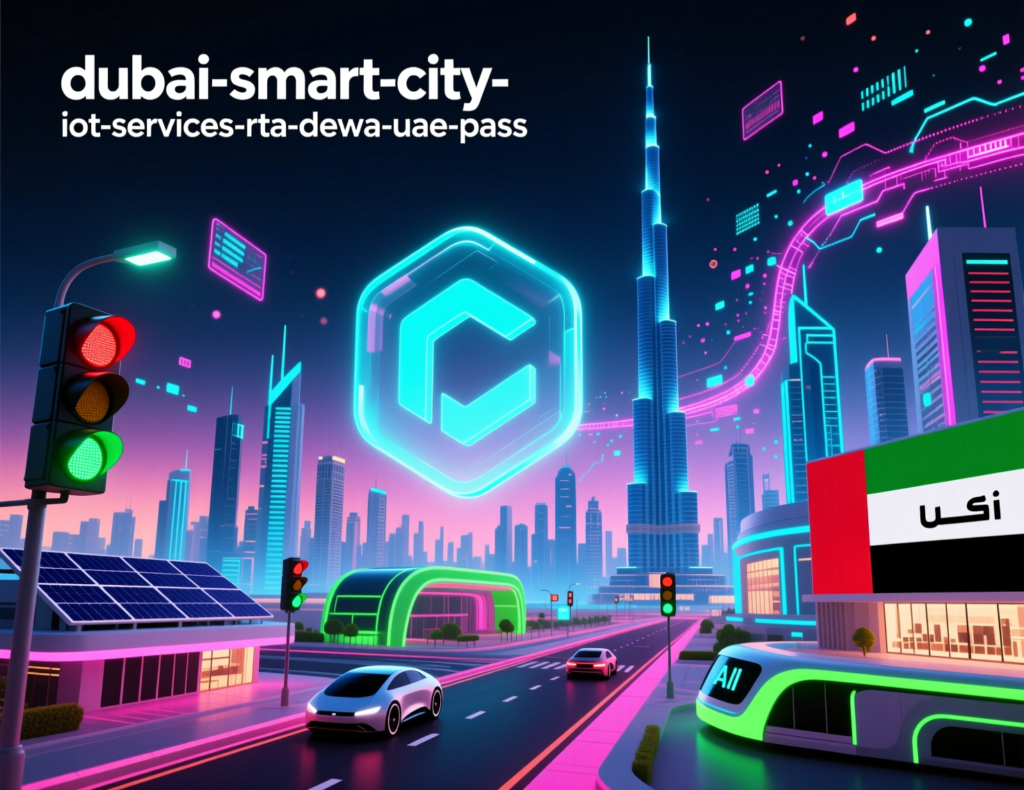
Dubai’s IoT Strategy aims to create one of the world’s most advanced IoT ecosystems, built around secure data-sharing and strong governance. Digital Dubai and the Dubai Data Initiative coordinate standards, data catalogues and APIs so that government entities, utilities and private-sector partners can plug into common platforms instead of building siloed systems. For businesses, working with a technology partner like Mak It Solutions’ GCC-focused services helps ensure these integrations respect local regulations, cultural expectations and Arabic-first UX.
Real IoT Use Cases in Dubai: RTA Mobility, DEWA Utilities, Public Safety
On the ground, residents already feel smart city IoT every day. RTA uses sensors, cameras and AI to manage traffic signals, public transport fleets and metro capacity. DEWA links smart meters with analytics so households can track and cut energy use. Citywide CCTV plus environmental sensors help authorities respond faster to incidents and heatwaves. These are live examples of AI-powered public services in Middle East cities, not just pilot showcases for conferences.
How AI and IoT Power Seamless Services Like UAE Pass and Smart Government
UAE Pass, the national digital identity, lets over 11 million users access thousands of public and private services with one login and digital signature instead of maintaining dozens of separate accounts. Behind the scenes, IoT devices, secure APIs and AI models authenticate users, trigger workflows and monitor fraud. When you renew residency, register a vehicle or pay Dubai traffic fines through an app, you’re effectively using smart city IoT without thinking about it often on systems built by teams similar to Mak It Solutions’ web development experts.
NEOM’s Cognitive City.
How NEOM Uses IoT, AI and 5G to Build a “Cognitive” City from Scratch
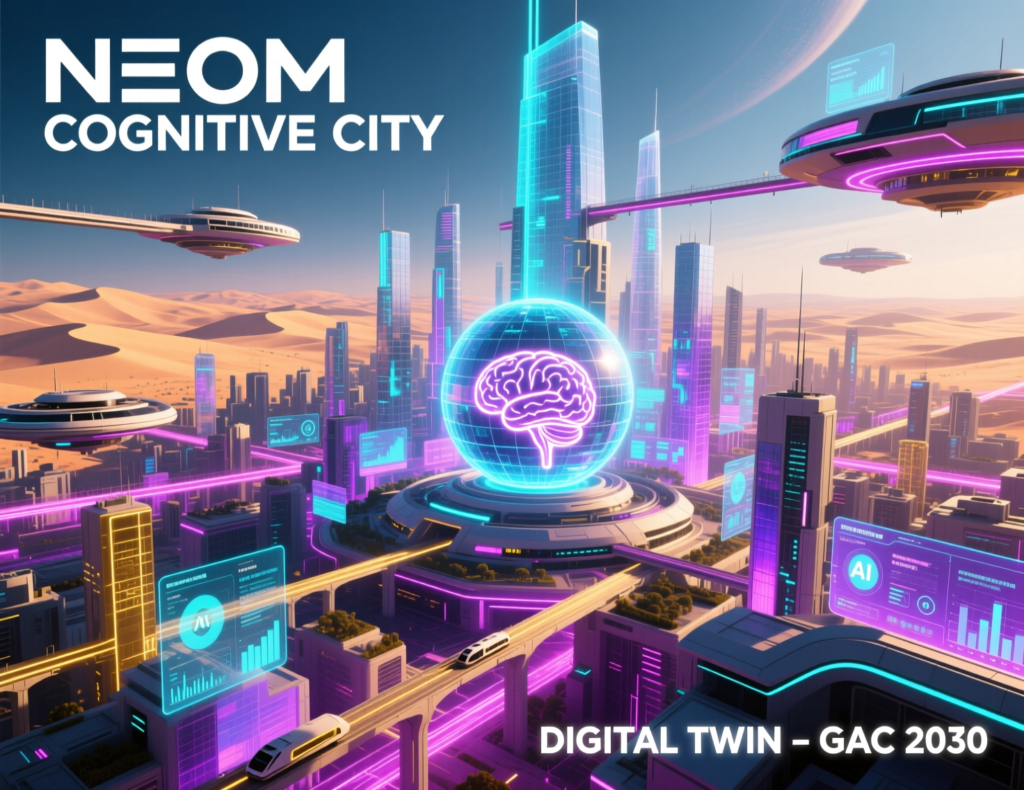
NEOM’s technology and digital sector is building energy-efficient data centres, a 5G+ backbone and AI/robotics platforms as the foundation of all services. Instead of just reacting to events, NEOM’s “cognitive city” aims to predict needs adjusting traffic flows, indoor cooling or logistics automatically based on data patterns.
The Line, Oxagon and Trojena: Digital Twins and Sensor-Driven Experiences
Each NEOM region has its own digital twin. The Line focuses on high-density linear mobility, Oxagon on ports and advanced manufacturing, and Trojena on tourism and outdoor experiences. Sensors capture everything from crowd movement to environmental conditions, feeding analytics that help design safer, more engaging experiences for residents and visitors – including families from KSA, the UAE and Qatar planning weekend trips.
NEOM in Saudi Vision 2030 and the Wider KSA Smart City Portfolio
NEOM sits alongside other Vision 2030 smart projects like Riyadh’s digital transformation, Jeddah waterfront redevelopment and Qiddiya entertainment city. SDAIA and its National Data Management Office (NDMO) set cross-cutting standards for data governance, privacy and AI use across these initiatives. For Saudi-based organisations, any smart city IoT Dubai and NEOM–style solution needs to align with NDMO policies and national data strategies from day one.
How Smart City IoT Changes Daily Life for Residents and Expats
Autonomous Mobility, Smart Parking and Real-Time Traffic
Imagine leaving your apartment in Dubai or NEOM: your app tells you when the autonomous shuttle arrives, guides you to the closest smart parking zone and adjusts your route based on live data from city sensors and cameras. In Riyadh and Doha, similar platforms use real-time analytics to reduce congestion and travel times, while integrating with payment wallets and transit passes that feel familiar to residents and expats.
Home, Work and Leisure: Smart Buildings, Retail and Entertainment in Dubai and NEOM
At home, IoT-enabled buildings in Dubai Marina or NEOM’s residential clusters optimise cooling, lighting and security a big deal in the Gulf’s climate. In malls and retail districts from Jeddah to Lusail, beacons and cameras personalise offers and manage footfall. Theme parks and sports venues use sensor data to manage queues, safety and energy use all examples of urban digital infrastructure in the GCC that blend convenience with operational efficiency.
Arabic-First, Bilingual and Inclusive Digital Services for GCC Communities
For any GCC smart city to succeed, services must work equally well in Arabic and English. Platforms like UAE Pass, Saudi digital ID and Qatar’s Hukoomi portals are built with bilingual interfaces, strong accessibility and mobile-first design. GCC governments increasingly expect vendors to deliver Arabic-first content, from IoT dashboards to citizen apps something regional partners like Mak It Solutions design for by default when working with public-sector and regulated clients.
Data, Governance and GCC Regulations Shaping Smart Cities
How Saudi and UAE Data-Privacy and Residency Rules Shape Smart City Design
Saudi Arabia’s NDMO and SDAIA, and the UAE’s TDRA and Digital Dubai, set strict rules around data minimisation, residency and cross-border transfers. This influences where smart city platforms are hosted (for example, AWS Bahrain, Azure UAE Central, GCP Doha) and how personal data from sensors and apps is processed. Any smart city IoT Dubai and NEOM project should start with a clear data-classification and residency model, not treat compliance as an afterthought.
Digital Identity and Cybersecurity.
Digital identity systems like UAE Pass, Saudi’s unified digital ID and Qatar’s digital government sit at the heart of secure city services. They combine strong authentication, consent management and encryption with IoT security controls at the device and network layer. As more services move to passkeys and biometrics, cyber-resilience becomes a core KPI for regulators and operators alike, especially in critical city functions.
Fintech, Transport and Critical Infrastructure Under SAMA, QCB and Other Regulators
Financial, mobility and utilities applications in smart cities often fall under central banks and sector regulators such as SAMA in Saudi Arabia, the Central Bank of the UAE and QCB in Qatar. These bodies issue rules on payments, open banking, consumer protection and operational risk that affect how IoT-powered tolling, ticketing or energy billing can be implemented. For GCC vendors, this means fintech-related features in smart city platforms must align with both smart city regulations and financial regulations from day one.
What Other GCC Cities Can Learn from Dubai and NEOM
Lessons for Riyadh, Abu Dhabi, Doha and Lusail Smart City Programs
Riyadh, Abu Dhabi, Doha and Lusail can borrow three big lessons: build strong data governance early, prioritise citizen experience and insist on interoperable platforms instead of siloed systems. Partnering with regional specialists like Mak It Solutions’ smart digital services helps align urban projects with local culture, Arabic UX and GCC compliance requirements, whether the project is a new waterfront district or a digital upgrade of an existing neighbourhood.
Why GCC Governments Are Investing Heavily in IoT-Based Smart City Infrastructure
From Saudi Vision 2030 and Dubai Economic Agenda 2033 to Qatar National Vision 2030, governments see smart city IoT as a way to diversify economies, attract talent and improve quality of life. Investments flow into fibre, 5G, cloud regions, open data platforms and urban digital twins enabling data-driven city governance across transport, health, logistics and e-commerce.
From Pilot Projects to Scaled Urban IoT Platforms
For GCC cities and vendors, a simple, realistic roadmap looks like this.
Clarify vision and governance define outcomes, roles, data policies and KPIs aligned with national visions.
Run focused pilots choose one or two high-impact domains such as smart mobility or waste, with clear success metrics.
Standardise platforms and data consolidate successful pilots onto shared IoT, integration and analytics layers.
Scale across districts and verticals extend to new areas (health, education, logistics) and other cities.
Continuously optimise with AI use predictive models and digital twins for scenario planning and operational excellence.
Throughout this journey, trusted implementation partners like Mak It Solutions can help architect secure integrations, modern web and mobile interfaces and long-term support models tuned to GCC regulations and user behaviour.
Wrapping It Up
Dubai and NEOM as Blueprints for the Next Wave of GCC Smart Cities
Dubai and NEOM show how smart city IoT can turn ambitious visions into everyday benefits: smoother movement, less paperwork, safer streets and more sustainable resource use. Their approaches aren’t identical, but both demonstrate that IoT, data and AI only succeed when aligned with governance, culture and human experience. For any smart city IoT Dubai and NEOM–inspired initiative in the GCC, that balance is the real success metric.
What This Means for GCC Residents, Startups and Technology Partners
For residents, expect your city whether Riyadh, Abu Dhabi, Doha, Jeddah, Lusail or Muscat to feel more connected and personalised over the next few years. For startups, system integrators and vendors, this is the moment to specialise in compliant IoT, cloud-native platforms and Arabic-first UX. Collaborating with a regional partner like Mak It Solutions can help you design, build and scale solutions that are ready for Dubai, NEOM and the wider GCC smart city ecosystem.
Note
This article shares general information about smart city trends and regulations in the GCC. It is not legal, financial or investment advice; always consult qualified advisors for decisions about specific projects or transactions.
If you’re planning or contributing to a smart city initiative in Saudi Arabia, the UAE, Qatar or the wider GCC, you don’t need to navigate the complexity alone. The team at Mak It Solutions can help you turn ideas into secure, user-friendly platforms – from web and mobile experiences to backend IoT integrations. Explore our technology and digital services for GCC organisations and request a tailored consultation to discuss your Dubai, NEOM or regional smart city roadmap.
FAQs
Q : Is NEOM considered a smart city under Saudi Vision 2030, or something different?
A : NEOM is more than a classic “smart city”; Saudi authorities describe it as a cognitive city that uses AI and advanced analytics to anticipate needs rather than just react to data. It still relies on familiar smart city components sensors, 5G networks, cloud platforms and strict data-governance rules set by SDAIA and the NDMO but the ambition is to go further in personalisation and automation. In practice, it sits within the wider Saudi Vision 2030 portfolio alongside digital projects in Riyadh, Jeddah and Qiddiya, and must comply with the same national data-management controls and regulations.
Q : How do Dubai and NEOM compare with Lusail smart city in Qatar?
A : Lusail in Qatar, Dubai in the UAE and NEOM in Saudi Arabia share a focus on connected transport, energy-efficient buildings and integrated digital services, but they differ in maturity and scope. Dubai is a live, global hub where IoT overlays decades of existing infrastructure; Lusail is a planned new city integrated into Qatar National Vision 2030 and linked with Doha’s wider digital government platforms; NEOM is an even more experimental megaproject, with entire districts like The Line and Oxagon based on digital twins from day one. Together they offer regional benchmarks for policymakers, regulators and partners such as QCB, SAMA and TDRA when designing new projects.
Q : Can GCC startups join smart city IoT projects in Dubai and NEOM, or are they only for large vendors?
A : GCC startups are increasingly welcome in smart city ecosystems, especially in niche areas such as mobility apps, energy-analytics dashboards, Arabic NLP, digital identity experiences and cybersecurity tools. Dubai often runs accelerator programs and sandboxes in coordination with Digital Dubai and sector regulators, while NEOM and other Vision 2030 projects in KSA invite local and regional innovators into pilots and proof-of-concepts. The key for startups is to align with regulatory expectations from bodies like SAMA or TDRA and partner with experienced integrators such as Mak It Solutions to meet enterprise-grade security and compliance requirements.
Q : What skills do engineers and tech professionals in Saudi and UAE need to work on smart city IoT projects?
A : Engineers targeting smart city roles in Riyadh, Jeddah, Dubai or Abu Dhabi typically need a mix of cloud skills (AWS Bahrain, Azure UAE Central, GCP Doha), IoT platforms, data engineering, AI/ML and strong cybersecurity fundamentals. Knowledge of local regulations issued by SDAIA, NDMO, TDRA and sector regulators is increasingly important, as many roles involve handling sensitive personal or financial data. Arabic and English communication skills help when working across public-sector teams and international vendors. Partnering with experienced delivery firms like Mak It Solutions can also expose talent to real GCC smart city implementations.
Q : Are there special rules for foreign investors joining smart city projects in Dubai, Abu Dhabi or NEOM?
A : Foreign investors usually need to navigate both general investment frameworks and sector-specific rules for telecoms, data hosting, fintech, transport or critical infrastructure. In Dubai and Abu Dhabi, this may involve free-zone regulations, TDRA requirements for telecom and cloud services and Central Bank guidelines for financial applications. In Saudi Arabia, Vision 2030 projects like NEOM operate under investment frameworks designed to attract foreign capital while still meeting national security and data-sovereignty goals overseen by entities such as SDAIA and SAMA. Working with local legal advisors and GCC-based implementation partners significantly reduces risk and speeds up approvals.