
Super Apps in the Middle East: GCC’s Next Power Play
Super Apps in the Middle East: GCC’s Next Power Play
Super Apps in the Middle East: GCC’s Next Power Play
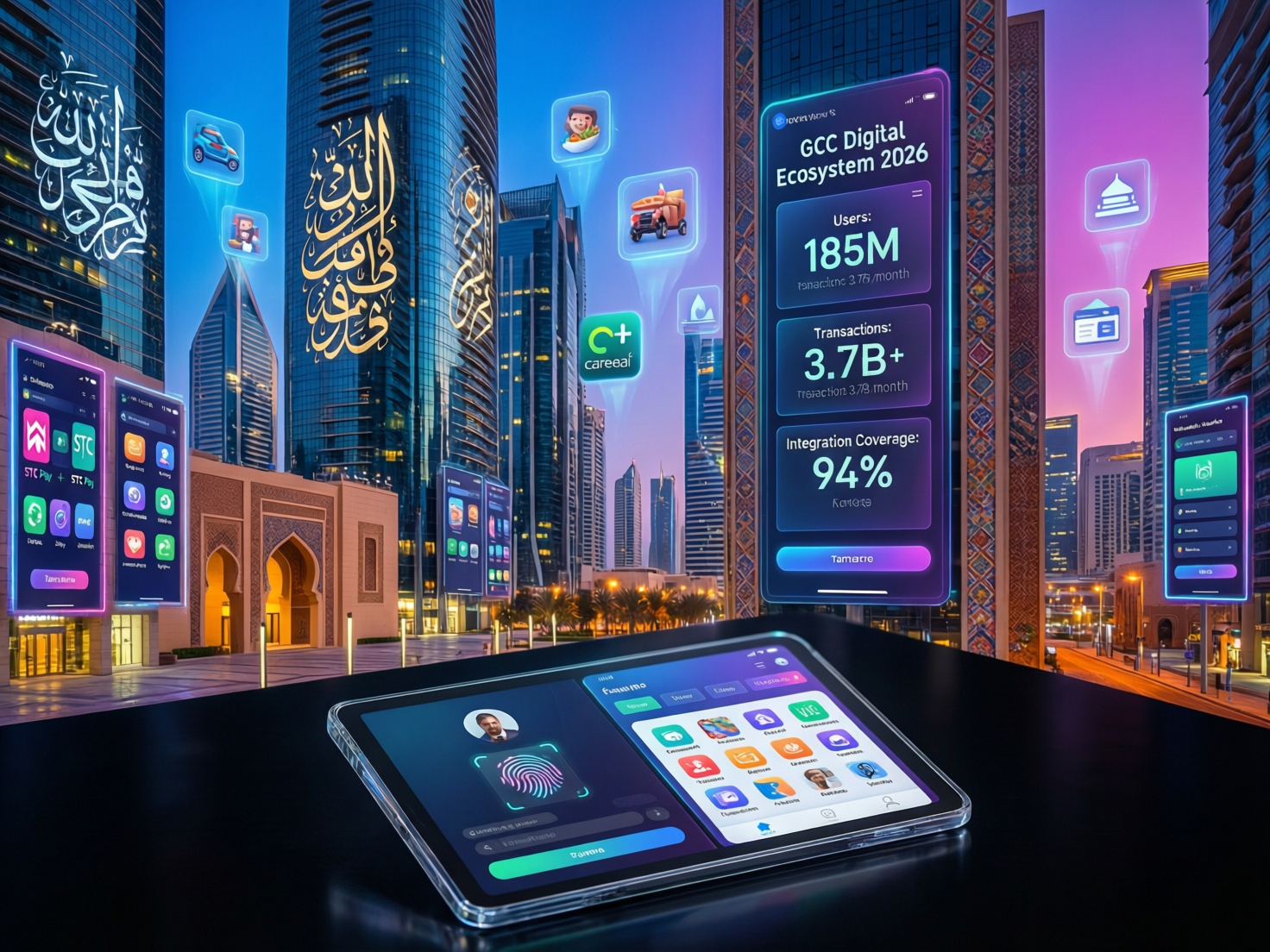
Super apps in the Middle East are multi-service mobile platforms, like Careem or stc pay, that bundle rides, food, shopping, bills and digital wallets into one experience tailored to Arabic and expat users. In GCC cities such as Riyadh, Dubai and Doha, they reduce app fatigue, simplify payments and KYC, and give telcos, banks and founders a powerful way to own more of the daily customer journey.
Introduction
In Riyadh, Dubai and Doha, many users already live inside “one app to rule them all”: they book a ride, order mandi, top up mobile credit, pay DEWA or SEC bills, and send money home without ever leaving Careem, Noon or stc pay. Careem now positions itself as “the everything app” for the region, bundling rides, food, groceries and payments in a single interface.
Super apps in the Middle East are multi-service mobile platforms that combine everyday services with a digital wallet in one experience, designed for Arabic speakers and expats. In GCC hubs like Riyadh, Dubai and Doha, they cut app fatigue, consolidate payments and KYC, and help banks, telcos and founders capture more of each customer’s daily life.
For GCC users, the pain points are clear: too many apps, fragmented loyalty points, and repeating KYC checks every time you sign up for a new wallet or buy-now-pay-later service. For GCC businesses, the question is whether to build their own super app, partner with existing platforms, or plug in as mini-apps within a larger ecosystem exactly the kind of strategic choice consultants like Mak It Solutions can help untangle.
What Are Super Apps in the Middle East?
From WeChat to Careem: How the Super App Model Reached the GCC
Globally, the super app idea was made famous by WeChat and Grab: one icon on your phone that handles messaging, mobility, payments and mini-apps. In the GCC, Careem brought the model to life by expanding from ride-hailing into food, groceries, courier and bill payments across the UAE, Saudi Arabia and Qatar.
Around it, a multi-service super app ecosystem has emerged: Noon layers fast commerce (Noon Minutes) over e-commerce, Talabat and Deliveroo stitch together food and grocery journeys, and stc pay, e& money and Beyon Money add financial “super app for payments and everyday services” capabilities from Manama to Jeddah.
What Makes a Super App Different from a Normal Mobile App?
A normal mobile app solves one job: ride-hailing, grocery delivery, or bill payment. Super apps in the Middle East stitch many of these into a single, logged-in experience with one KYC profile, an embedded wallet, and a marketplace of mini-apps running on shared identity and payments.
They typically offer.
Rides, taxis and mobility services
Food and grocery delivery (the classic mobility-and-delivery super app pattern in the GCC)
Embedded digital wallet with cards, local rails and remittances
Bills, government fees, top-ups and sometimes BNPL or micro-credit
Loyalty, cashback and points across all services
That bundled, API-driven fabric is what open banking integration for super apps will increasingly plug into.
Why GCC Users Want “One App for Everything”
Digital wallet adoption in the GCC is rising fast, helped by near-universal smartphone penetration and large expat populations that send frequent remittances. Studies point to smartphone penetration above 90% in many GCC countries, and telco wallets already leading the digital wallet space.
In Riyadh, a young Saudi might combine Careem for rides, Noon Minutes for quick groceries, and STC Bank (formerly stc pay) for daily spend; in Dubai, a Filipino expat might use Careem, Talabat and e& money; in Doha, a Qatari professional might mix Snoonu, Ooredoo Money and a traditional bank app. Locals and expats both want fewer logins, fewer apps, and a single interface that “just works” in Arabic and English.
GCC Super App Landscape: Who’s Competing to Win?
Mobility-Native Super Apps.
Careem is the clearest example of a mobility-native super app in the GCC: from Dubai and Abu Dhabi to Riyadh, Jeddah and Doha, it bundles rides, food, groceries and payments in one app. Talabat, Deliveroo and Snoonu don’t call themselves super apps, but their dense delivery networks and subscription programs make them “super app adjacent” for food-first journeys.
For founders, integrating as a mini-app inside mobility and delivery super apps in the GCC can be faster than building a new user base from scratch especially for niche services like home cleaning, home healthcare or local logistics.
Fintech-Native Super Apps.
This is where telco-led fintech in the Middle East shines. In Saudi Arabia, stc pay has transitioned into STC Bank, the Kingdom’s first digital bank, regulated by SAMA and scaling from wallet to full banking services. In the UAE, e& money sits on top of Etisalat’s customer base, while in Bahrain, Beyon Money positions itself as a financial super app aggregating accounts, cards and cross-border payments.
Together, these GCC telecom-led super apps STC Bank (stc pay), e& money and Beyon Money are fighting for “share of wallet” across mobility, commerce and lifestyle.
E-Commerce & Everyday Services.
Noon, backed by Saudi’s PIF, has grown into a regional e-commerce giant in Saudi Arabia, the UAE and beyond, adding groceries, Noon Minutes rapid delivery, and even at-home services via partnerships.
Around it, ADGM and DIFC host fintechs building vertical super apps in logistics, government services or lifestyle. A Dubai startup might specialise in SME logistics; a Riyadh health-tech venture could build a mini-app for clinic bookings; a Muscat or Kuwait City player could focus on last-mile delivery for supermarkets.
Regulation, Data & Trust for GCC Super Apps
SAMA Open Banking, NDMO and PDPL for Super Apps
In Saudi Arabia, the Saudi Central Bank (SAMA) has rolled out an Open Banking Framework in phases, covering account information and payment initiation services and setting detailed API and security standards for banks and fintechs.
On data, the National Data Management Office (NDMO) and the Personal Data Protection Law (PDPL) establish strict rules for consent, cross-border data transfers and keeping sensitive data within KSA borders. For super apps, that means clear data-sharing agreements between mini-apps, strong audit trails, and in many cases Saudi-hosted infrastructure for example choosing AWS Middle East (Bahrain) or the new AWS Middle East (UAE) regions while carefully handling Saudi data residency requirements.
UAE: TDRA Rules, Digital Trust Services and Data Residency
In the UAE, the Telecommunications and Digital Government Regulatory Authority (TDRA) oversees telecom and many aspects of digital regulation, including Internet Access Management (IAM) policies that shape what content can be distributed through platforms and apps. Super apps operating in Dubai, Abu Dhabi or Sharjah need to navigate not only federal data-protection laws but also TDRA guidelines on content and digital services.
For sensitive financial and identity data, large players increasingly favour local hosting in Azure UAE regions or AWS me-central-1 (UAE), aligning with government preferences for data residency in-country. (Amazon Web Services, Inc.)
Qatar and Wider GCC.
Qatar Central Bank (QCB) has launched a digital bank framework and an active fintech sandbox, signalling strong support for wallets, open banking and super-app-style innovation. Qatar also hosts the Google Cloud Doha region, the first Google Cloud region in the GCC, giving Doha-based super apps a clear option for in-country cloud hosting.
Across Bahrain, Kuwait and Oman, licensing, open-banking rules and data-hosting expectations differ. Founders scaling regionally need a regulatory matrix and often separate deployments per country — exactly the type of playbook a partner like Mak It Solutions’ GCC services team would help design.
How to Build a Super App for GCC Users
Build, Partner or Plug In? Strategic Paths for GCC Startups
In practice, GCC founders have three paths:
Build their own super app (Careem- or Noon-style)
Partner as a featured mini-app inside Careem, Noon, STC Bank, e& money or Beyon Money
Provide infrastructure (APIs, risk, KYC, loyalty) to power other people’s super apps
In Riyadh and Dubai, where customer acquisition is expensive, many early-stage fintech and mobility founders choose to integrate into existing platforms first, then graduate to their own branded apps once unit economics improve often supported by strategy and architecture sprints with firms like Mak It Solutions.
Super App Architecture and Data Strategy for the GCC
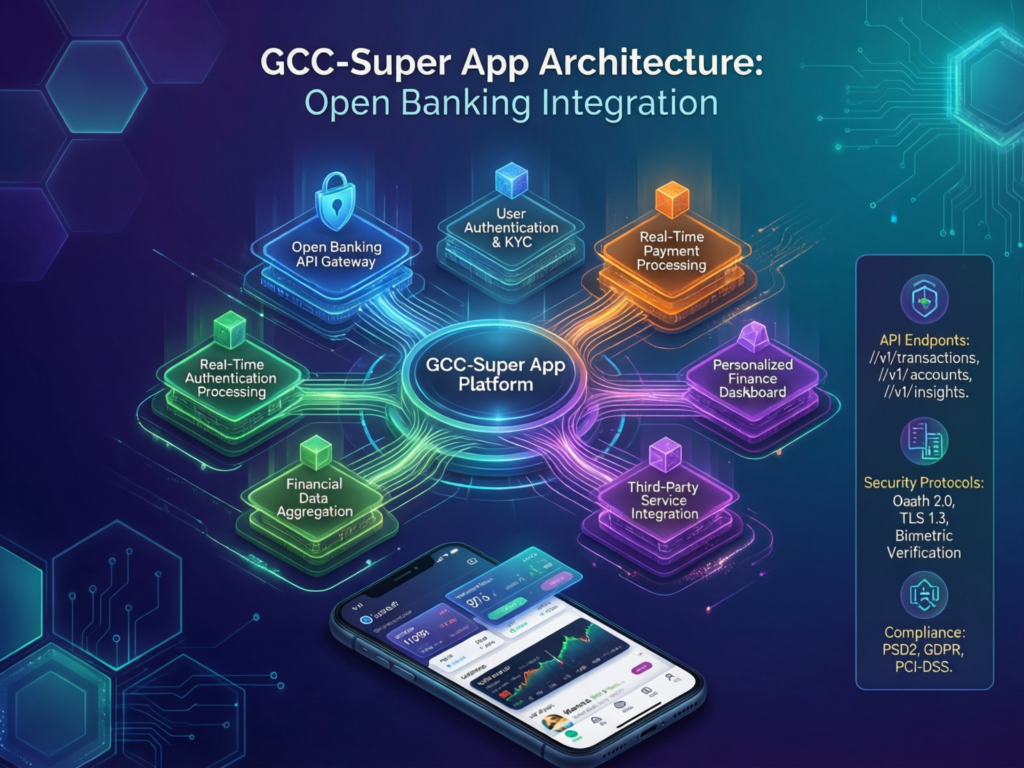
Technically, a robust GCC super app is modular and API-first:
A core identity and KYC service compliant with SAMA, TDRA and QCB expectations
Payments and wallet modules built for open banking integration for super apps
Micro-frontends or mini-apps for rides, food, logistics, services and government tasks
Strong Arabic UX and RTL design, plus support for English, Urdu, Hindi and Tagalog
Data residency is critical: Saudi workloads may sit in KSA-aligned regions and follow NDMO standards; UAE workloads in local cloud regions; Qatar workloads in Doha’s Google Cloud region or Azure Qatar Central. (Google Cloud)
Cost, Timeline and Team Profile.
Roughly, going from a single-purpose app to a Careem-like super app in the UAE or Saudi Arabia can take 9–18 months, a multi-million-dollar budget and a cross-functional team:
Product and growth leads for GCC consumer insights
Engineering and DevOps for cloud-native, multi-region deployment
Compliance and InfoSec focused on SAMA, TDRA, QCB, NDMO and PDPL
Partnerships team to secure mini-apps and anchor merchants
A Riyadh fintech, a Dubai logistics startup and a Doha SME will all take different routes which is why many bring in external partners like Mak It Solutions’ services to run discovery, architecture and rollout phases.
GCC best-practice snapshots.
Riyadh fintech: builds a SAMA-licensed wallet, hosts in KSA-aligned regions, and exposes APIs to larger super apps.
Dubai e-commerce brand: plugs into Careem and Noon for discovery and last-mile, while owning its own app for loyalty.
Doha SME: deploys in the Qatar Google Cloud region to keep data local while integrating with QCB-approved payment gateways.
Why GCC Telcos and Banks Are Racing into Super Apps
From Telcos to “Techcos”: stc, e&, Ooredoo and Others
GCC telcos are shifting from pure connectivity to “techco” models. stc in Saudi Arabia, e& in the UAE and Ooredoo in Qatar all see super apps as a way to move from SIM cards to daily financial and lifestyle relationships from topping up data to paying rent, school fees and government bills.
These telco-led fintech plays sit at the heart of national digital-economy agendas (Saudi Vision 2030, UAE Digital Government, Qatar National Vision 2030), making them natural partners for governments and regulators.
Monetising Attention.
Once a user spends hours per week inside one super app, monetisation follows:
Cross-selling credit, Takaful, travel and commerce
Charging merchants for promotions and sponsored placement
Building loyalty programs and “halal-friendly” cashback structures
Data, when handled under PDPL, UAE data laws and QCB frameworks, powers segmentation and personalisation. For founders, the opportunity is to specialise in risk, loyalty, AI-driven recommendations or cross-border remittances then integrate into bigger super app platforms and into clients via partners like Mak It Solutions.
Why the GCC Is More Super-App-Friendly Than Europe or the US
Compared with Europe or the US, GCC markets have:
Higher smartphone penetration and mobile-first behaviour.
Young, urban populations and large expat communities
Strong government support for digital identity, instant payments and fintech
This combination makes the region unusually friendly to super apps in the Middle East, where regulators actively shape digital wallet and open-banking standards instead of merely tolerating them.
Will One Super App Rule the GCC, or Many?
Single Champion vs Multi-Super-App Future
Could one app own the entire GCC? Theoretically yes if a single platform solved mobility, payments, e-commerce and government services across KSA, UAE, Qatar, Bahrain, Kuwait and Oman, while aligning with all regulators. In reality, fragmented rules, different national strategies and strong incumbents make a multi-super-app future more likely.
Careem might dominate mobility bundles; Noon in e-commerce; telcos in wallets and identity; banks in regulated savings and credit.
What GCC Consumer Behaviour Tells Us So Far
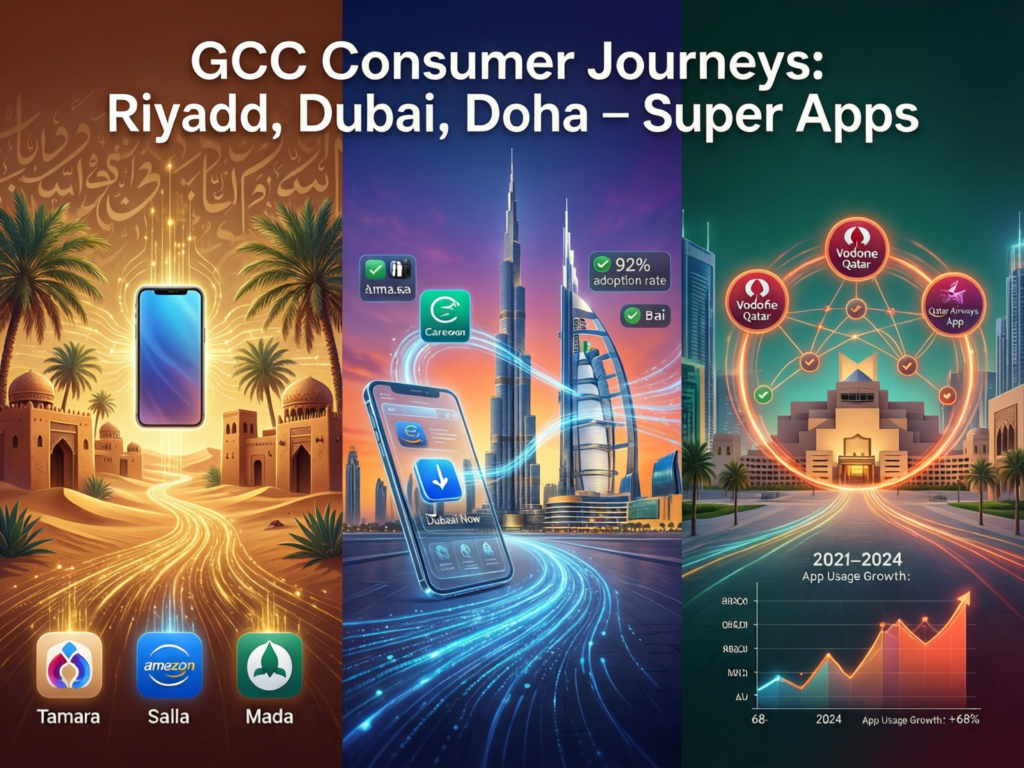
Behaviour in Riyadh vs Dubai vs Doha already suggests a “multi-home” reality: users switch between Careem, Noon, Talabat, bank apps and local wallets depending on the task. Loyalty exists, but it’s pragmatic whichever app has the promo, cashback or service needed right now.
For product teams, the real competition isn’t just other super apps in the Middle East; it’s low-friction, context-aware experiences that feel native to Arabic, English and the realities of expat life.
Strategic Plays for Founders, Telcos and Banks in the Next 3–5 Years
Over the next 3–5 years, expect more consolidation (M&A), mini-app marketplaces inside major platforms and deeper open-banking rails. There’s still room to win in specific “jobs to be done”: SME finance, B2B logistics, cross-border remittances, healthcare and education.
Founders, telcos and banks that move now with clear regulatory strategy, cloud-region planning and Arabic-first UX are best placed to lead. This is exactly where a GCC-centric partner like Mak It Solutions can help you choose whether to build, partner or plug in.
Bottom Lines
Super apps in the Middle East have evolved from simple ride-hailing or wallet apps into powerful ecosystems linking mobility, food, retail, bills and finance across Riyadh, Dubai, Doha and beyond. Regulation by SAMA, TDRA, QCB and others is tightening, but also providing clarity around open banking, data residency and digital identity.
The GCC will likely remain a hotbed for super apps versus other regions, thanks to young populations, state-backed digital agendas and rapid cloud adoption in AWS Bahrain, UAE regions and GCP Doha. If you’re a founder, telco or bank in KSA, the UAE or Qatar, now is the time to decide your super app strategy and teams like Mak It Solutions can help you turn that strategy into a real, GCC-ready product roadmap.
This content is for general information only and does not constitute legal, financial or regulatory advice. Always seek professional guidance before making regulated business or investment decisions.
If you’re exploring super apps in the Middle East whether as a full platform, mini-app or infrastructure provider you don’t have to figure it out alone. The team at Mak It Solutions can help you map regulations, cloud regions and user journeys across Riyadh, Dubai, Doha and the wider GCC.
Reach out to our services team to book a consultation, review your current app or design a build-vs-partner-vs-plug-in roadmap tailored to KSA, the UAE and Qatar. Let’s turn your idea into a GCC-ready super app strategy.
FAQs
Q : Is Careem considered a super app in the UAE and Saudi Arabia, or just a ride-hailing app?
A : Careem started in Dubai as a ride-hailing app, but today it’s widely seen as a super app in the Middle East because it combines rides, food delivery, groceries, bill payments and payments inside one experience across the UAE, Saudi Arabia and other markets. In Riyadh and Jeddah, users can book a car, order dinner and pay with a wallet without leaving the app. In the UAE, Careem works alongside TDRA-regulated telecom and data frameworks, while still complying with local banking and payments rules through licensed partners. Over time, its mini-app approach and integrations are likely to deepen, especially as open-banking rails mature in KSA and beyond.
Q : Can a startup in Riyadh or Dubai integrate with stc pay or e& money instead of building its own super app?
A : Yes. For many early-stage companies in Riyadh or Dubai, integrating into telco-led wallets like STC Bank (stc pay) or e& money is more realistic than launching a competing super app from day one. These platforms already operate under SAMA (in KSA) or Central Bank/TDRA oversight (in the UAE), which means they bring licensed payment rails, KYC and risk controls you can plug into. A typical path is to validate your service as a mini-app or merchant integration first, then consider a standalone app once you have product market fit. Working with a regional technology partner such as Mak It Solutions can help you choose the right APIs, compliance scope and commercial model.
Q : Are GCC super apps allowed to store user data outside Saudi, the UAE or Qatar under current rules?
A : Cross-border data storage is tightly regulated, especially for financial and government-related data. In Saudi Arabia, NDMO and the PDPL set strong expectations that many categories of personal and government data remain within KSA or be handled under strict safeguards. In the UAE, TDRA-linked policies and federal data-protection laws govern how telecom, content and some digital services manage and transfer data; in Qatar, QCB and national strategies encourage in-country hosting, supported by the Doha Google Cloud region. Practically, most serious GCC super apps adopt a “local-first” data-residency strategy, using AWS Bahrain, AWS UAE or GCP Doha, and only moving data across borders where clearly allowed.
Q : How do super apps serve expats differently from local citizens in Dubai and Doha?
A : In cities like Dubai and Doha, expats often rely on super apps for remittances, international cards, bilingual interfaces and services tuned to shift work or freelancing. Wallets like Beyon Money and regional telco apps put special focus on cross-border payments, FX rates and quick KYC journeys that work with passports or resident cards. Local citizens, by contrast, may care more about seamless integration with national ID, government e-services and offers aligned with domestic banks and loyalty schemes. Regulators such as TDRA and QCB push for inclusive access while controlling risk and content, so a well-designed GCC super app usually offers language, UX and financial products that work well for both locals and expats.
Q : Which sectors in Qatar, Bahrain and Oman are most ready for super app models over the next 3–5 years?
A : In Qatar, fintech (payments, wallets and open-banking-style services) and logistics look especially promising thanks to QCB’s digital bank framework and active sandbox. Bahrain already has a strong digital-finance cluster and is likely to see more financial super apps and B2B platforms building on Beyon Money–style models. Oman and Kuwait may move more gradually but offer attractive opportunities in mobility, food delivery, last-mile logistics and SME finance as cloud regions and regulatory sandboxes expand. Across all three, alignment with national visions and central-bank rules is essential, so sector bets should be made alongside a clear regulatory roadmap — something partners like Mak It Solutions can help structure.