
Technical SEO Checklist for Arabic GCC Websites
Technical SEO Checklist for Arabic GCC Websites
Technical SEO Checklist for Arabic GCC Websites
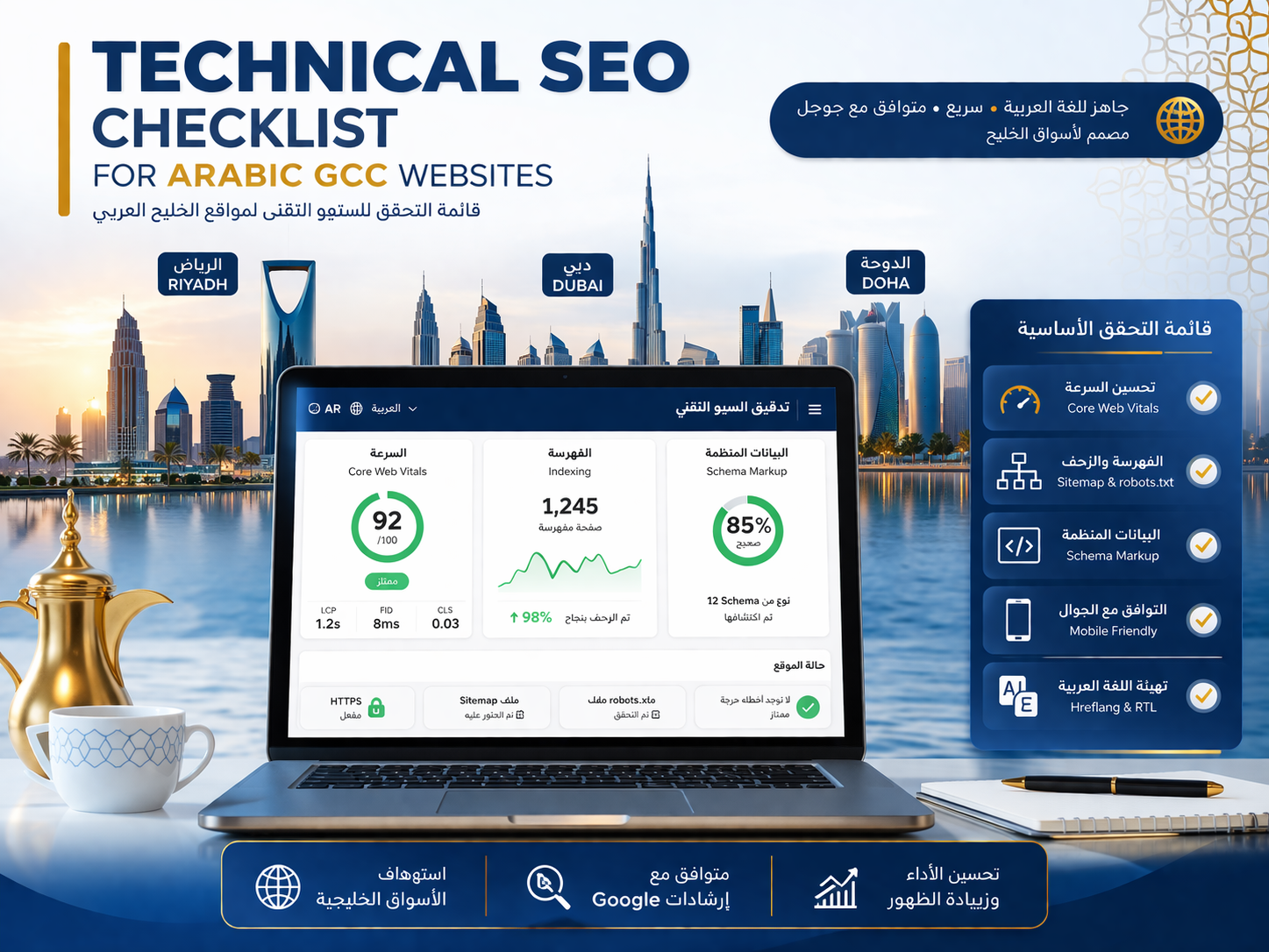
If your Arabic website is slow, hard to crawl, or sending mixed signals to search engines, even strong content can struggle to rank. A solid technical SEO checklist helps GCC websites improve mobile performance, fix indexing issues, and strengthen schema so search engines can understand the site with more confidence.
For businesses targeting Saudi Arabia, the UAE, and Qatar, the biggest technical wins usually come from three areas first: faster Arabic mobile pages, cleaner bilingual indexing, and valid structured data. Once those are in place, visibility becomes much easier to grow.
Why a Technical SEO Checklist Matters for GCC Websites
Many websites in Riyadh, Dubai, Abu Dhabi, Jeddah, and Doha do not lose search visibility because the content is poor. They lose it because the technical setup underneath the content is weak.
That usually shows up in familiar ways.
Slow Arabic pages on mobile
Heavy fonts and scripts delaying load time
Broken or missing schema
Arabic and English pages competing with each other
Canonical or indexing mistakes after redesigns
JavaScript-heavy pages that render badly for crawlers
For GCC businesses, technical SEO is not just a backend exercise. It directly affects trust, discoverability, and conversion.
What a Technical SEO Checklist Should Cover
A practical technical SEO checklist for Arabic GCC websites should focus on four core areas:
Crawlability
Search engines need to access important pages without hitting blocked resources, broken links, or weak internal linking.
Indexation
The right pages should be indexed, while duplicate, outdated, or staging pages stay out of search results.
Core Web Vitals and speed
Users need a fast, stable experience, especially on mobile connections across Saudi Arabia, the UAE, and Qatar.
Structured data
Schema helps search engines understand your business, services, FAQs, and site structure more clearly.
That foundation matters across industries, including fintech, retail, logistics, healthcare, and public-sector digital projects.
Why Arabic UX, RTL Layouts, and Bilingual SEO Need Extra Attention
Arabic websites come with technical requirements that many global templates do not handle well out of the box.
RTL rendering, Arabic font delivery, mirrored layouts, and bilingual architecture can all create performance or duplication issues. In practice, this is where many GCC websites start leaking SEO value without realizing it.
A few common examples.
Arabic fonts loading too late and causing layout shifts
Both Arabic and English assets loading on the same page
Incorrect canonical tags between language versions
Poor hreflang implementation
UI components that work in English but break visually in Arabic
For users in the GCC, a technically polished Arabic experience often feels more trustworthy. That matters even more in sectors where authority and credibility shape clicks.
Fix Speed and Core Web Vitals First
When technical SEO problems pile up, speed is usually one of the first places to start.
How Core Web Vitals affect Arabic GCC websites
If your hero section loads slowly, buttons respond late, or content jumps while the page is loading, users notice immediately. On Arabic-first sites, those issues are often more visible because fonts, sliders, and UI elements tend to be heavier.
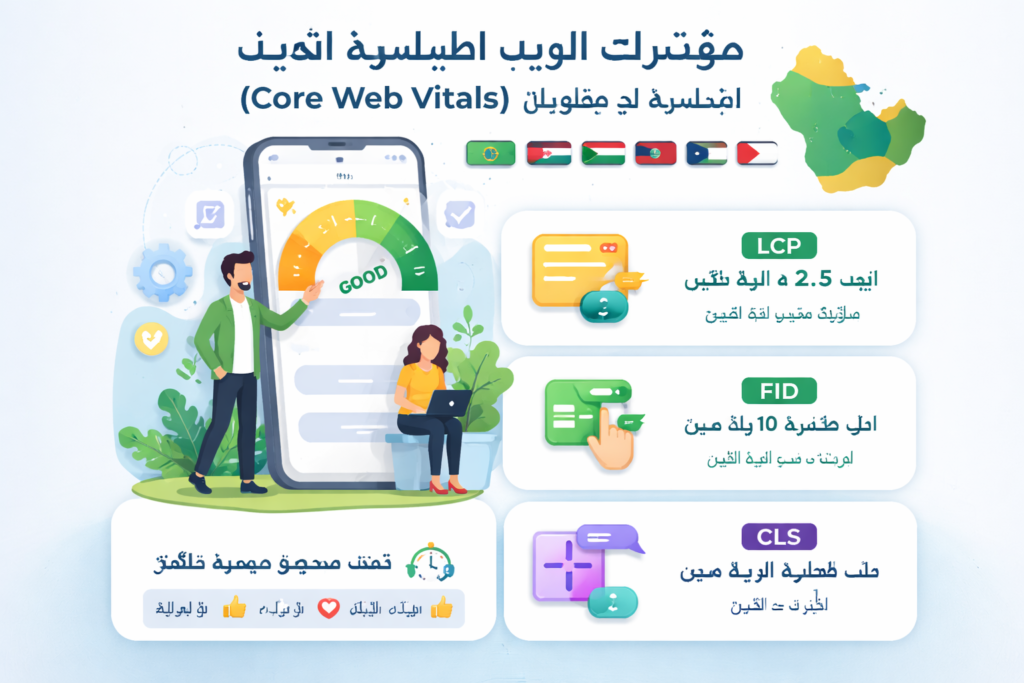
The three signals to watch are.
LCP for loading performance
INP for interaction responsiveness
CLS for visual stability
A weak score in any of these can hurt both user experience and search performance.
Common causes of slow Arabic pages
Most GCC websites dealing with poor performance run into the same technical problems.
Oversized Arabic webfonts
Uncompressed hero images and banners
Too many third-party tags
JavaScript-heavy templates
Sliders and animations above the fold
Loading both language bundles together
Poor caching and asset delivery
A Dubai e-commerce store may feel this on category and product pages. A Riyadh fintech company may see it on onboarding or app landing pages. A Doha business site may notice it on service pages that look polished but load too late.
Speed improvements that usually make the biggest difference
Start with the fixes that protect both performance and Arabic UX.
Convert heavy images to modern formats
Subset Arabic fonts where possible
Defer non-critical JavaScript
Reduce tag manager clutter
Reserve space for banners, images, and embeds
Audit mobile templates before desktop-first ones
Prioritize high-conversion pages first
A good rule is simple: fix the pages that drive leads and revenue before polishing everything else.
Improve Crawlability and Indexing Before Rankings Slip
A site can look perfect to users and still confuse search engines.
Check the basics first
Before chasing advanced issues, review the essentials.
XML sitemap coverage
Canonical tags
Noindex directives
Redirect chains
Broken internal links
Many GCC websites accidentally keep old canonicals after migration, block useful assets, or leave staging URLs exposed. These problems are easy to miss and expensive to ignore.
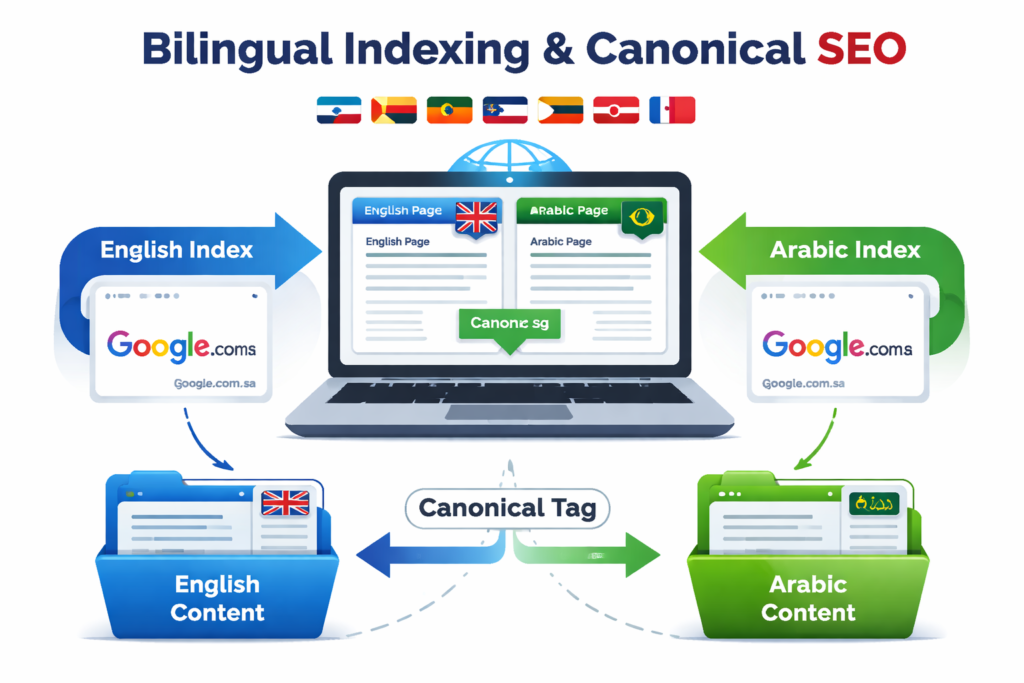
Fix Arabic and English duplication issues
Bilingual indexing problems are some of the most common technical SEO issues in the region.
If Arabic and English pages are too similar, badly tagged, or canonicals point across languages in the wrong way, search engines can struggle to understand which page belongs in which search result.
The cleanest setup usually includes.
Clear language folders or subdirectories
Self-referencing canonicals on each version
Consistent hreflang implementation
Internal links that match the right language page
Sitemaps that reflect the live language architecture
This matters even more in competitive UAE search results, where technical mistakes are exposed quickly.
Watch for JavaScript render issues
Modern websites often rely on frameworks that look complete in the browser but remain incomplete to crawlers.
This is especially relevant for.
Headless sites
React-based frontends
Dynamic filters
JS-heavy product or service pages
If important content only appears after scripts run, indexing can become unreliable. For enterprise, fintech, or government-facing websites in Abu Dhabi or Doha, rendered HTML should expose critical content clearly from the start.
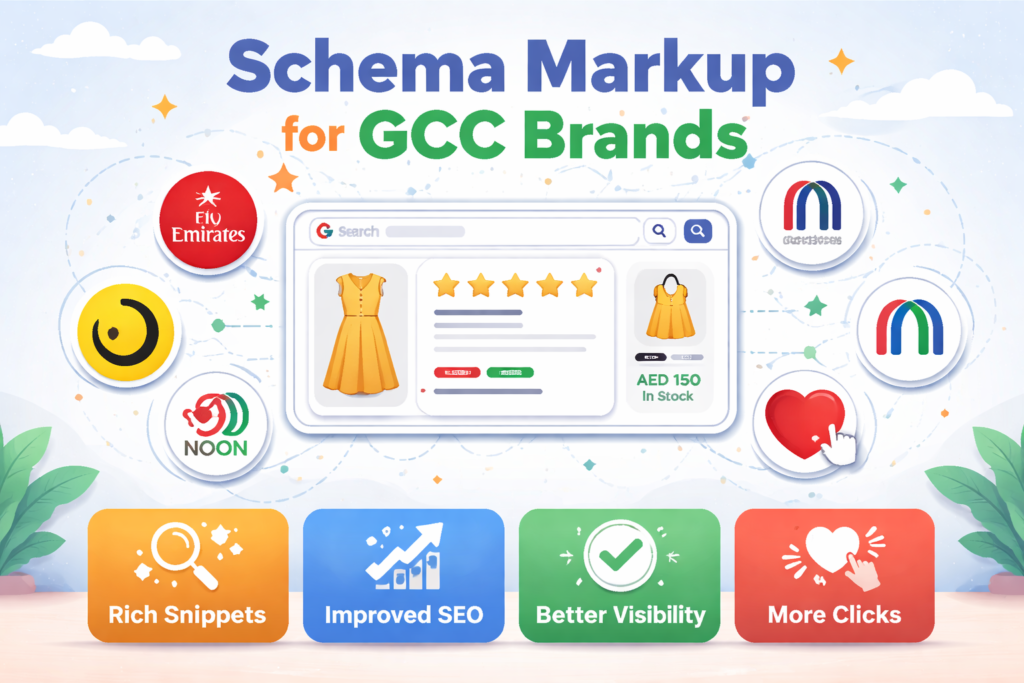
Use Schema to Strengthen Rich Results and AEO
Structured data is one of the most practical parts of a strong technical SEO checklist, especially for businesses that want better visibility in rich results and AI-generated summaries.
Schema types to prioritize first
Most GCC business websites do not need overly complex markup at the start. The best first layer is usually.
Organization
FAQ
Breadcrumb
LocalBusiness
These help search engines understand who you are, what the page covers, and how the site is organized.
For a local business in Riyadh or Dubai, Breadcrumb and LocalBusiness schema can add clarity quickly. For service-led websites, FAQ schema can reinforce answer-focused visibility.
Why schema matters for GCC brands
Schema supports entity understanding. That means search engines can connect your company, services, FAQs, and brand details into a more consistent picture.
In competitive UAE SERPs, that extra clarity can help. In trust-sensitive Saudi sectors, it can support credibility. In Qatar, where many businesses still have room to improve technical foundations, strong schema can create earlier gains than expected.
Keep validation part of the workflow
Even useful schema becomes a problem if it is broken, outdated, or disconnected from visible page content.
Make validation routine
Check markup after every deployment
Retest templates when content blocks change
Keep schema aligned with what users can actually see
Review eligibility if rich results disappear
One broken property can be enough to remove a page from rich result eligibility.
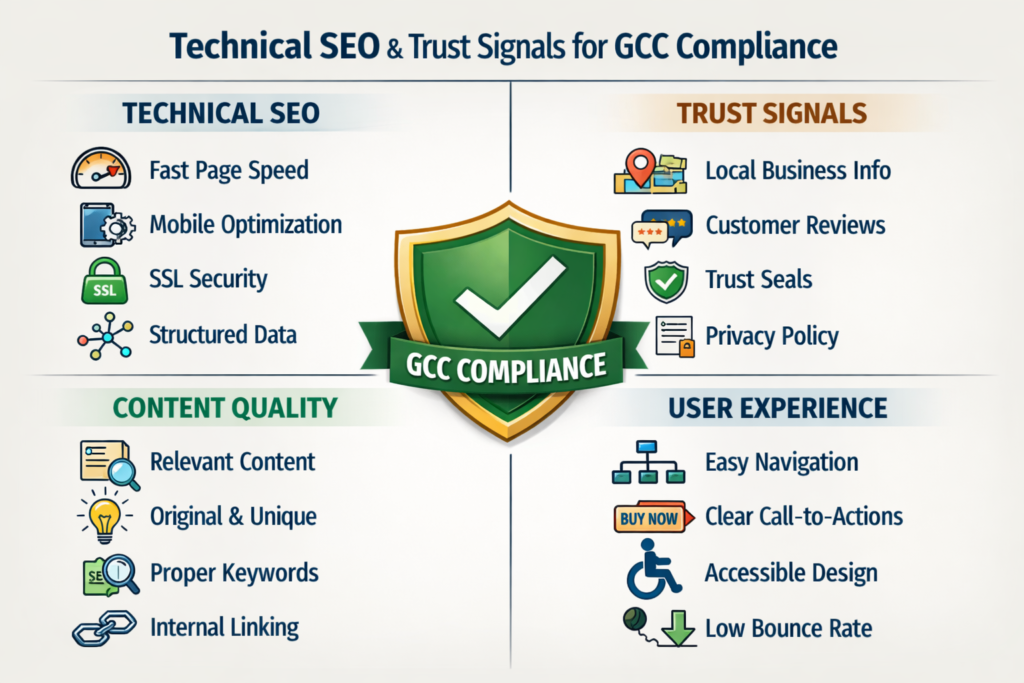
Align Technical SEO With GCC Trust and Compliance Context
In the GCC, technical trust often overlaps with institutional trust.
That does not mean every page needs compliance language. It means regulated sectors should build technical SEO in a way that supports authority, clarity, and governance.
Where regional trust signals matter most
Depending on the sector, businesses may need to reflect recognized regional frameworks and institutions, such as.
SAMA for Saudi fintech and financial services
NDMO / SDAIA for Saudi data governance context
TDRA for UAE digital and telecom-adjacent environments
QCB for Qatar financial institutions
For users, these references reinforce legitimacy. For brands, they support a more credible digital presence.
Data residency and cloud-region expectations
Many GCC organizations also care about where systems are hosted and how infrastructure planning affects latency, resilience, and trust.
Regional cloud planning can matter for both performance and user confidence, especially where the audience expects stronger local or regional infrastructure alignment.
From a technical strategy perspective, that affects.
Site speed
Architecture decisions
Regional performance
Governance conversations
Trust for enterprise and public-sector buyers
It is not a legal shortcut, but it is part of the broader technical picture.
Region-Specific Priorities for Saudi Arabia, UAE, and Qatar
Not every GCC market behaves the same way.
Saudi Arabia
Saudi websites often need stronger Arabic-first optimization, cleaner mobile experiences, and trust-focused technical signals. This is especially important for fintech, healthcare, and government-linked ecosystems where users expect reliability from the first click.
United Arab Emirates
UAE search results are often more crowded, especially in Dubai and Abu Dhabi. That makes schema readiness, clean bilingual architecture, and strong technical governance more important. Small technical weaknesses are easier for competitors to exploit.
Qatar
Qatar can present a faster route to authority when technical issues are fixed early. For many businesses, improving indexing, schema, and localized service pages creates momentum sooner than expected.
A Simple Monthly Technical SEO Checklist
A monthly routine is often enough to prevent small technical issues from turning into ranking losses.
Review this every month
Crawl errors and blocked resources
Indexed vs non-indexed key URLs
Canonical consistency
XML sitemap accuracy
Core Web Vitals on major templates
Schema validation
Internal linking to priority pages
Template changes affecting Arabic or English sections
What to fix first
Do not treat all issues equally. Prioritize in this order.
Performance problems on high-value pages
Indexing and canonical errors
Renderability issues
Broken or missing schema
Internal linking and template consistency
That order usually produces the strongest SEO impact with the least wasted effort.
In-house vs agency support
If your team can manage developers, read logs, and test templates confidently, routine technical SEO can stay in-house.
If the website spans multiple languages, multiple GCC markets, or regulated sectors, outside support is often the faster and safer path. That is especially true when technical SEO intersects with UX, infrastructure, and compliance expectations.
Final Thoughts
A strong technical SEO checklist gives Arabic GCC websites a more stable foundation for growth. It helps search engines crawl the right pages, index the right versions, understand the business more clearly, and deliver a faster experience to users in Saudi Arabia, the UAE, and Qatar.
For many GCC brands, technical SEO is not the last thing to fix. It is the layer that makes every other SEO effort work better. Whether you are improving a Riyadh fintech site, a Dubai e-commerce platform, or a Doha service business, better speed, cleaner indexing, and stronger schema usually deliver the earliest and most durable gains.
To turn this into action, review your current setup, audit your highest-value pages first, and build a repeatable workflow around your technical SEO checklist.( Click Here’s )
FAQs
Q : Is a technical SEO checklist different for Saudi Arabic websites?
A : Yes. Saudi websites often need a stronger Arabic-first focus than generic international sites. That includes RTL rendering, Arabic font performance, mobile speed, bilingual canonicals, and trust signals relevant to regulated sectors.
Q : How can UAE businesses fix bilingual indexing issues?
A : Start with clear Arabic and English URL structures, self-referencing canonicals, correct hreflang use, and internal links that point to the right language version. Then verify that key content appears in rendered HTML without depending too heavily on JavaScript.
Q : What schema markup should Qatar company websites add first?
A : Most Qatar company websites should start with Organization, Breadcrumb, FAQ, and Local Business schema where relevant. These types are easier to maintain and give search engines the clearest baseline understanding of the business.
Q : Do Arabic RTL websites affect Core Web Vitals?
A : Arabic RTL itself is not the issue. The problem usually comes from how fonts, mirrored layouts, scripts, and unstable UI components are implemented. With better engineering, Arabic UX can remain rich without hurting performance.
Q : How often should GCC businesses run a technical SEO audit?
A : A focused review every month and a deeper audit every quarter is a practical cadence for most businesses. That is usually enough to catch indexing, performance, schema, and bilingual architecture issues before they spread across the site.