
Web Development Trends in the Middle East for KSA & UAE
Web Development Trends in the Middle East for KSA & UAE
Web Development Trends in the Middle East for KSA & UAE
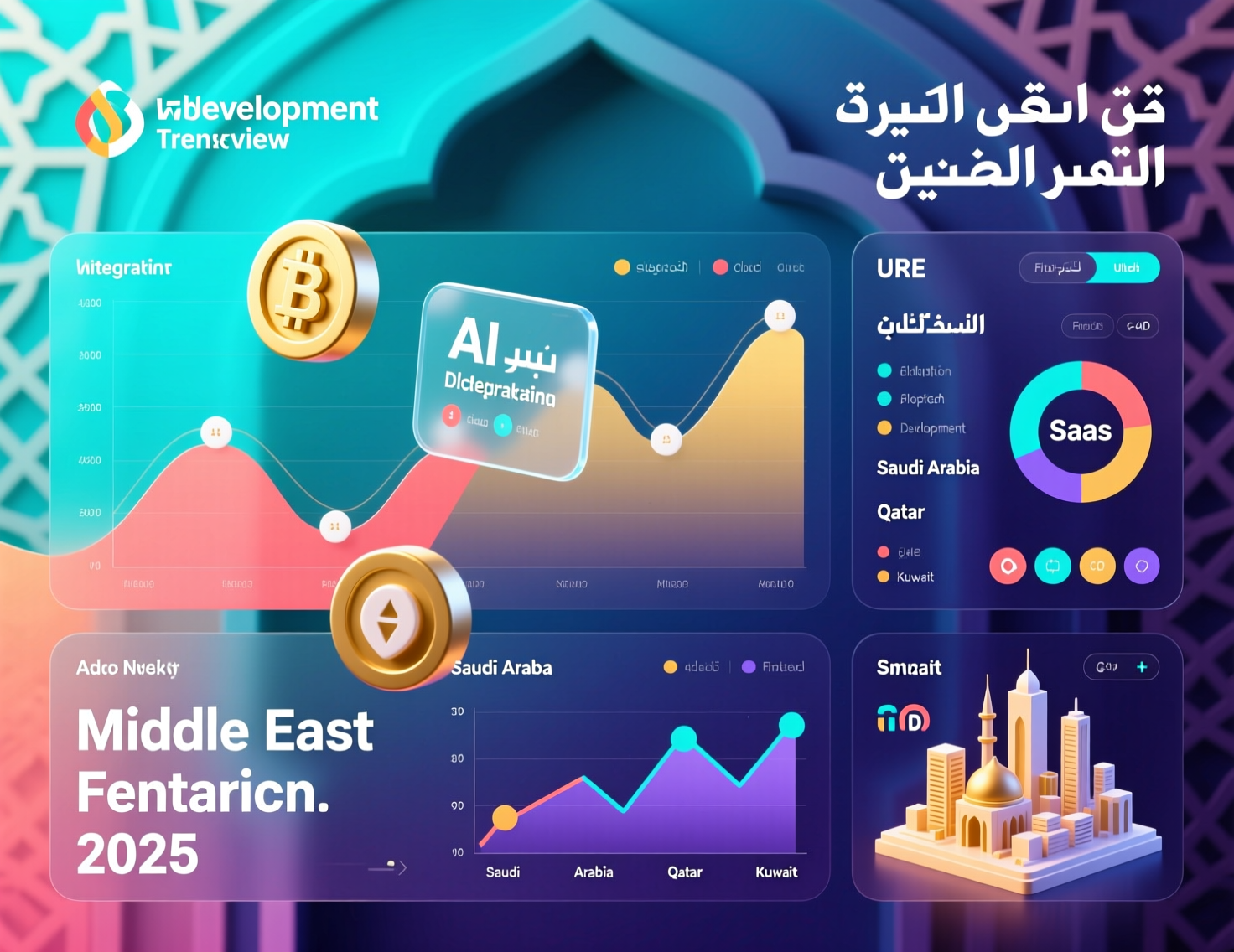
Web development trends in the Middle East are shifting toward Arabic-first, mobile-led, compliant platforms that feel like super apps, not static brochures. For KSA, UAE and Qatar, that means right-to-left (RTL) Arabic interfaces, PWAs, bilingual government-grade UX, and modern stacks that respect data residency, security and performance needs.
Introduction
GCC users live on their phones. In Riyadh, Dubai and Doha especially, people expect Arabic-first, app-like web experiences that load instantly and feel as smooth as their favourite super apps. When we talk about web development trends in the Middle East, we’re really talking about how well your site matches these everyday behaviours.
Yet many corporate and government websites in the region still behave like outdated “brochure sites” or literal translations that ignore how GCC citizens actually browse, pay and interact online.
For Saudi Vision 2030 programmes, the UAE’s digital government agenda and Qatar’s Digital Government Strategy, the website or portal is now the front door to critical services. A weak web experience directly impacts trust, lead generation, citizen adoption and even how international partners perceive your organisation. GCC digital transformation and online services are no longer optional they are the operating system of the region’s growth.
In this GCC playbook, we’ll unpack the key web development trends in the Middle East: Arabic-first / RTL and bilingual UX, mobile-first Arabic UX patterns and PWAs, accessibility and compliance, modern stacks (headless, Jamstack, AI), data residency and performance and how to choose the right partner to build all of this with you.
Key Web Development Trends in the Middle East
What are the most important web development trends in the Middle East for 2025–2026?
The most important web development trends in the Middle East for 2025–2026 are Arabic-first/RTL UX, mobile-first and PWA experiences, accessibility and compliance by design, headless and API-first architectures, and in-region hosting that respects data residency. Together, these trends shift GCC websites from static brochures into secure, mission-critical platforms for finance, government, logistics and ecommerce.
How GCC user behaviour shapes modern web experiences
Across KSA, UAE and Qatar, most ecommerce and social traffic now comes from mobile devices, and users expect super-app style journeys: login once, pay quickly, and track everything in one place. They move seamlessly between Arabic and English, especially in hubs like Riyadh, Jeddah, Dubai and Doha, and they tend to trust official digital channelsgov.sa, .gov.ae, Hukoomi when they feel fast, secure and easy to use.
From “brochure sites” to mission-critical platforms
Modern GCC sites now power fintech onboarding, open banking journeys, smart government portals, logistics tracking, travel bookings and healthcare scheduling. When a DGA-compliant Saudi portal fails, citizen adoption stalls; when a Dubai travel platform is slow, bookings drop. For tech leaders, delaying modernization means higher support costs, weaker analytics, and lost credibility with regulators and customers.
Arabic-First, RTL & Bilingual UX in GCC Websites
What does Arabic-first, right-to-left web design look like in modern GCC websites?
Arabic-first web design goes beyond translation; it starts with Arabic content, layouts and journeys, and then adapts to English. A modern right-to-left (RTL) Arabic interface flips grids, aligns hierarchies properly, mirrors icons, and uses culturally aware imagery that feels native in Riyadh, Dubai and Doha, while still offering a polished English experience for expats and global partners.
Bilingual Arabic English UX for government and enterprise portals
Bilingual GCC government websites need more than a language toggle in the header. KSA, UAE and Qatar portals must keep full content parity between Arabic and English, preserve consistent navigation paths, and avoid forcing users to switch languages just to complete a task. UAE government website design best practices using Design System 2.0, for example, emphasize standard components, accessible typography and predictable layouts across languages.
Practical RTL & Arabic UX guidelines for GCC teams
GCC teams should standardise on RTL-ready components, choose Arabic-friendly fonts with good legibility, and localise error messages, forms and validation patterns in Arabic. Build screen reader support for Arabic content and align with frameworks such as the UAE Design System 2.0 and internal design systems to keep experiences consistent. If you work with an external partner, ensure they have real Arabic-first case studies, not just “translated” themes.
Mobile-First & Progressive Web Apps in GCC
Why are GCC businesses shifting from native apps to progressive web apps?
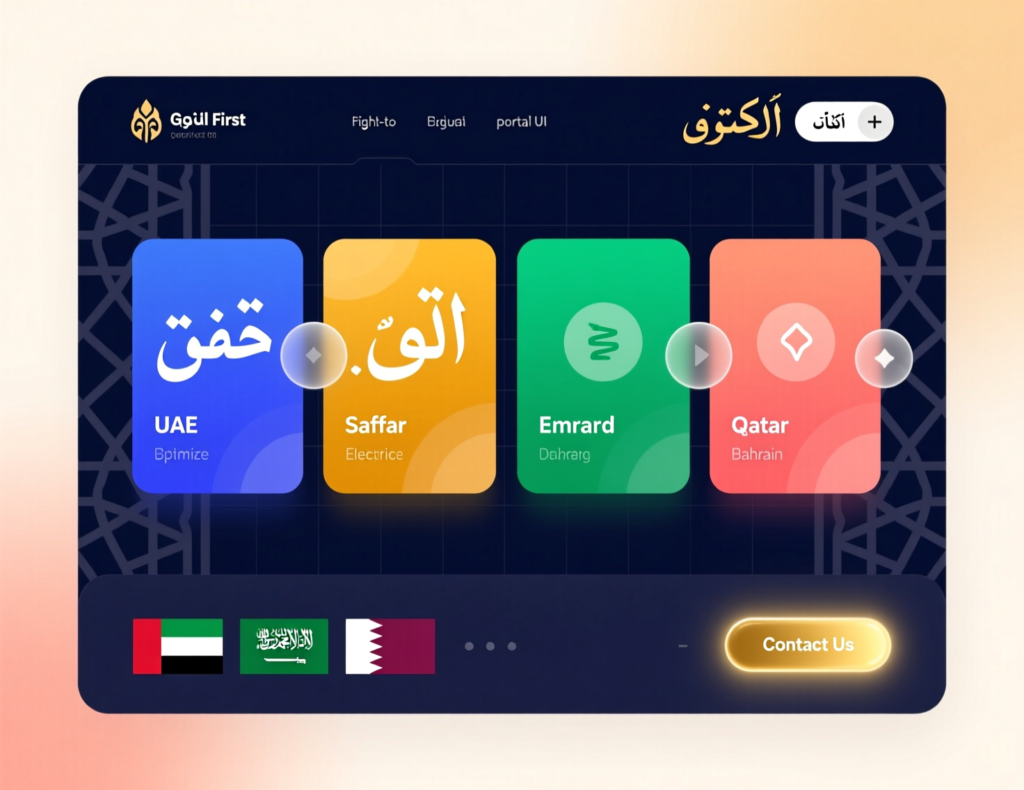
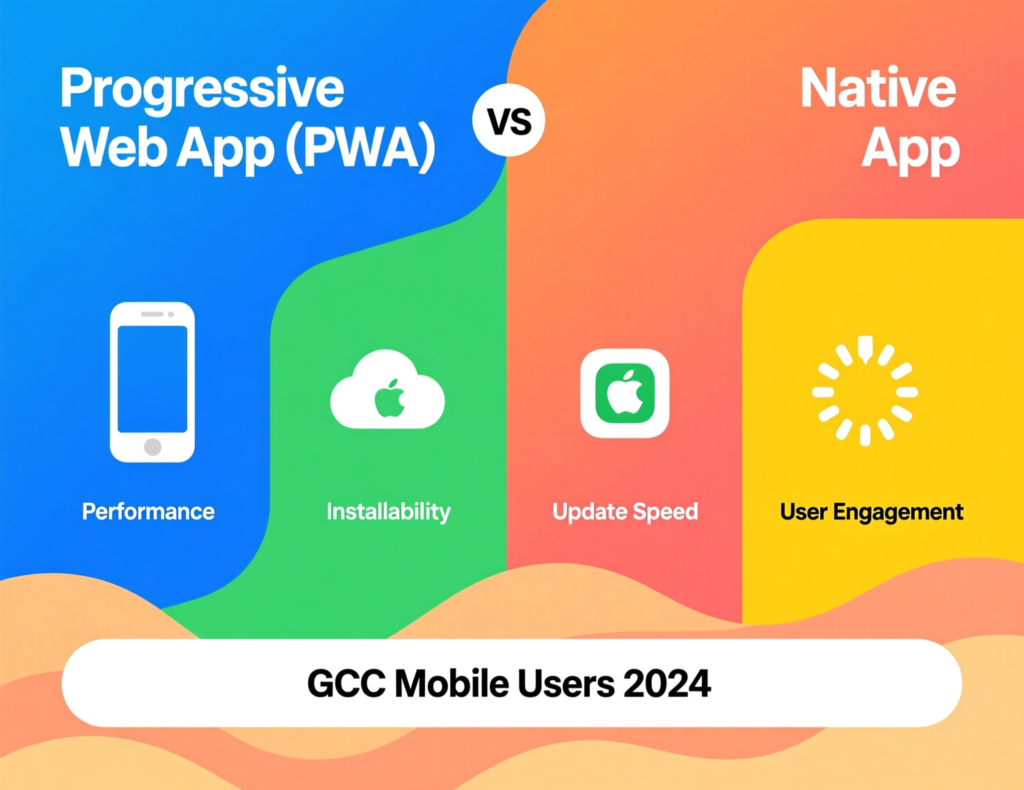
GCC businesses are shifting from native apps to progressive web apps (PWAs) because users are tired of heavy installs, app store friction and constant updates. PWAs deliver app-like experiences in the browser with offline support, push notifications and home-screen icons while reducing the cost of multi platform native development and working reliably on variable mobile networks across KSA, UAE, Qatar and the wider GCC.
PWA vs native app in Saudi Arabia, UAE and Qatar
For ecommerce in Dubai or Abu Dhabi, a PWA often wins: it loads quickly from search, adds to home screen, and offers secure payments without forcing an app store step. In Saudi Arabia, regulated government and banking apps may still require native solutions for deeper OS integrations, but citizen portals and self-service dashboards can run beautifully as PWAs. For many Vision 2030 projects, a hybrid approach native where mandatory, PWA for broad reach works best.
Real PWA use cases in GCC
Imagine a Riyadh ecommerce brand using a PWA to keep carts available offline and sync orders when the network returns, or a Dubai travel platform that lets users manage bookings even on airport Wi-Fi. A Doha SME can deploy a PWA for internal logistics tracking, while GCC fintech and Islamic banking providers can use PWAs for secure, step-by-step onboarding flows that comply with SAMA, TDRA and QCB rules.
Compliance, Accessibility & Government Frameworks in KSA, UAE and Qatar
How Saudi, UAE and Qatar government UX guidelines impact web and portal design
Digital Government Authority (DGA) standards, NDMO data governance in Saudi Arabia, TDRA guidelines and the UAE Design System 2.0, plus Qatar’s MCIT and Hukoomi frameworks, all push teams toward structured content, clear information architecture and inclusive service journeys. (tdra.gov.ae) Aligning your portal with these frameworks early avoids rework during security reviews or accessibility audits.
Web accessibility for Arabic-speaking users in GCC
Web accessibility for Arabic-speaking users means mapping WCAG 2.1/2.2 to local standards like Qatar’s Mada e-Accessibility framework and UAE’s national digital accessibility policy. This includes proper semantic HTML for Arabic, logical tab order in bidirectional layouts, clear colour contrast for Arabic scripts, and error messages that are understandable to non-technical audiences. Accessibility is increasingly part of regulator and RFP checklists across the region.
Data residency, security and hosting for GCC web apps
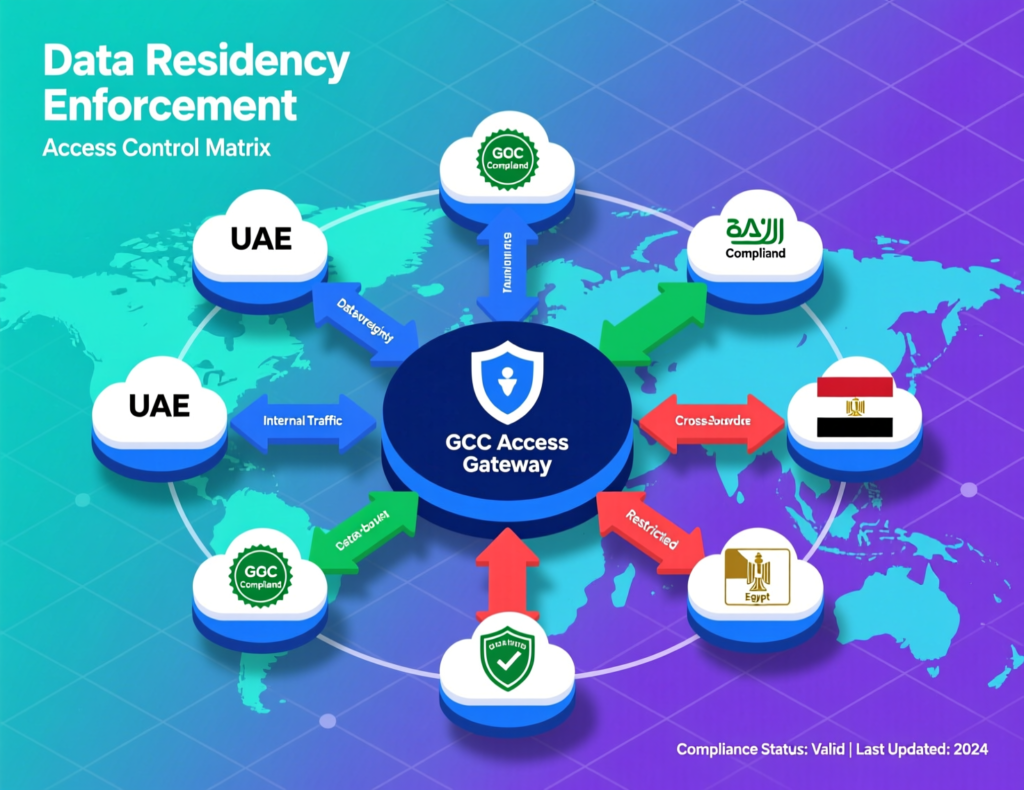
For finance and government, SAMA, ADGM/DIFC and QCB expect strong data residency and security controls. Many teams combine AWS Bahrain, Azure UAE Central and GCP’s Doha region to keep latency low and data closer to home while still leveraging hyperscaler services. Leveraging expert partners for architecture and modern web development services helps balance compliance, cost and performance. (makitsol.com)
Future Web Stack in the Middle East: Headless, AI & Performance
Headless CMS & Jamstack for Arabic and bilingual GCC sites
Headless CMS and Jamstack architectures fit GCC realities: you can manage Arabic, English and even Urdu or French content centrally, then publish it to websites, PWAs, kiosks or mobile apps. API-first stacks make it easier to integrate with DGA services, banking APIs or logistics platforms, while static or edge-rendered pages improve resilience under high traffic from national campaigns.
AI-powered personalization for Middle East ecommerce and services
AI-powered recommendations, search and chat can adapt content by language, city and intent showing different promotions in Riyadh vs Jeddah, or prioritising Arabic help content for new users. For regulated sectors, AI must respect SAMA, TDRA and QCB data-privacy expectations; keep training data and logs within approved regions and avoid sending sensitive identifiers to third-party APIs without clear consent and contracts.
Web performance optimization for users in Riyadh, Dubai and Doha
Performance still wins or loses the user. Combine a regional CDN, smart image optimisation for Arabic-heavy content and Core Web Vitals monitoring to keep experiences fast on low-end Android devices in Dammam or Sharjah. For technical foundations like SSR vs static generation, articles such as Mak It Solutions’ guide on server-side rendering vs static generation can help you choose the right strategy per route. (makitsol.com)
How to Choose the Right Web Development Partner in the Middle East
Key questions GCC tech leaders should ask potential agencies
Ask agencies about their track record with Arabic-first / RTL design, bilingual GCC government websites, DGA/TDRA/MCIT compliance, PWA delivery and data residency. Request case studies in fintech, government, retail, logistics or travel not just generic templates. Look for clear processes, from UX research with Arabic audiences to testing on real devices in Riyadh, Dubai, Abu Dhabi and Doha.
How costs and timelines differ between Saudi, UAE and Qatar projects
Saudi government projects often involve longer procurement cycles, deeper security reviews and formal alignment with DGA and NDMO standards. UAE enterprise builds typically move faster but expect tighter UX and branding requirements, often referencing the UAE Design System 2.0. Qatar organisations may prioritise Hukoomi and Mada alignment, especially for public-facing services, with their own legal and hosting expectations layered on top.
Step-by-step roadmap to modernise your GCC website or portal
Audit your current site for UX, performance, accessibility and content gaps.
Research with Arabic and English-speaking users in KSA, UAE and Qatar.
Analyse compliance against DGA, TDRA, MCIT, SAMA, QCB and Mada expectations.
Choose a stack (PWA, headless CMS, API-first) and prioritise a pilot journey.
Roll out and optimise, measuring conversions, adoption and Core Web Vitals quarterly.
Deep-dive resources like Mak It Solutions’ WordPress vs Webflow vs Wix comparison and Webflow development services can help you pick the right platform mix for your roadmap. (makitsol.com)
Summary & GCC-Focused.
Recap of the top web development trends in the Middle East
In short, web development trends in the Middle East for 2025–2026 centre on Arabic-first, mobile-first, compliant and high-performing platforms. From PWAs and headless CMS to AI-powered personalization and in-region hosting, the organisations that move beyond brochure sites will better serve citizens and customers across KSA, UAE, Qatar, Kuwait, Bahrain and Oman.
What GCC digital teams should do in the next 90 days
In the next 90 days, run a UX and accessibility audit, test a PWA proof-of-concept for a key journey, and hold a compliance workshop with security and legal. Review your architecture for data residency, explore headless options and shortlist partners with deep GCC case studies. Even small moves like improving indexing and sitemaps can start with resources such as Mak It Solutions’ guides on indexing controls and Wix website development for growing brands. (makitsol.com)
Invite to engage
If you’re responsible for digital in Riyadh, Dubai, Abu Dhabi or Doha, you don’t have to navigate all of this alone. A focused workshop with a GCC-experienced team can turn regulations and buzzwords into a concrete roadmap for your website or portal.

Mak It Solutions helps organisations move from legacy sites to modern, GCC-ready platforms that are fast, compliant and built around Arabic-first UX.
Whether you need a new PWA, a headless rebuild or just a structured audit, our team can support you across discovery, design, development and rollout. Explore our web designing services and broader web development services, then reach out for a consultation tailored to your KSA, UAE or Qatar roadmap. (makitsol.com)
FAQs
Q : Is Arabic-first, RTL website design required for government portals in Saudi Arabia and the UAE?
A : Arabic-first, RTL website design is effectively required for federal and most regional government portals in Saudi Arabia and the UAE, because citizens expect Arabic as the primary language and regulators emphasise inclusive access. DGA in KSA and TDRA in the UAE both push for clear Arabic interfaces, accessible content and consistent design systems, including the UAE Design System 2.0 for federal sites.
Q : Can PWAs be used for official government services in GCC countries, or are native apps still mandatory?
A : PWAs can absolutely be used for many official government services in the GCC, especially for information portals, appointment booking, status tracking and general self-service journeys. Native apps are still common where deeper OS integration, hardware access or offline identity flows are needed. In practice, many digital government teams experiment with both: PWAs for broad reach and web accessibility for Arabic-speaking users, and native apps for specialised or high-security scenarios aligned with DGA, TDRA or MCIT policies.
Q : How strict are Saudi and UAE data residency rules for hosting fintech or banking web applications?
A : Saudi Arabia and the UAE both apply strict data residency and security expectations for fintech and banking web apps, overseen by regulators such as SAMA in KSA and ADGM/DIFC in the UAE. Critical financial and identity data is generally expected to stay within approved regions or licensed infrastructures, whether that is a Saudi sovereign cloud or nearby hyperscaler regions like AWS Bahrain or Azure UAE Central. Architecture decisions should be validated with legal and compliance teams before launch.
Q : What accessibility standards do Qatar organisations need to follow for Arabic-language websites?
A : Qatar organisations are encouraged to follow WCAG 2.1/2.2 guidelines while aligning with local e-Accessibility efforts led by Mada and initiatives under MCIT and the Hukoomi platform. Practically, that means ensuring screen reader compatibility for Arabic content, strong colour contrast, keyboard navigation and clear error messaging. For public sector and quasi-government entities, accessibility is becoming a formal part of digital transformation projects and RFPs, especially for Arabic-language citizen services.
Q : How often should GCC businesses update their websites to stay aligned with new digital government and UX guidelines?
A : Most GCC businesses should treat their website as a living product, not a one-off project. A good baseline is to perform UX, accessibility and performance reviews at least annually and every 6–9 months for sectors tightly connected to Vision 2030, UAE 2031 or Qatar’s national strategies. When regulators such as DGA, TDRA or QCB release new frameworks or security requirements, plan a targeted update cycle to close gaps quickly rather than waiting for a full redesign.