


WebAssembly and Its Future in Browsers
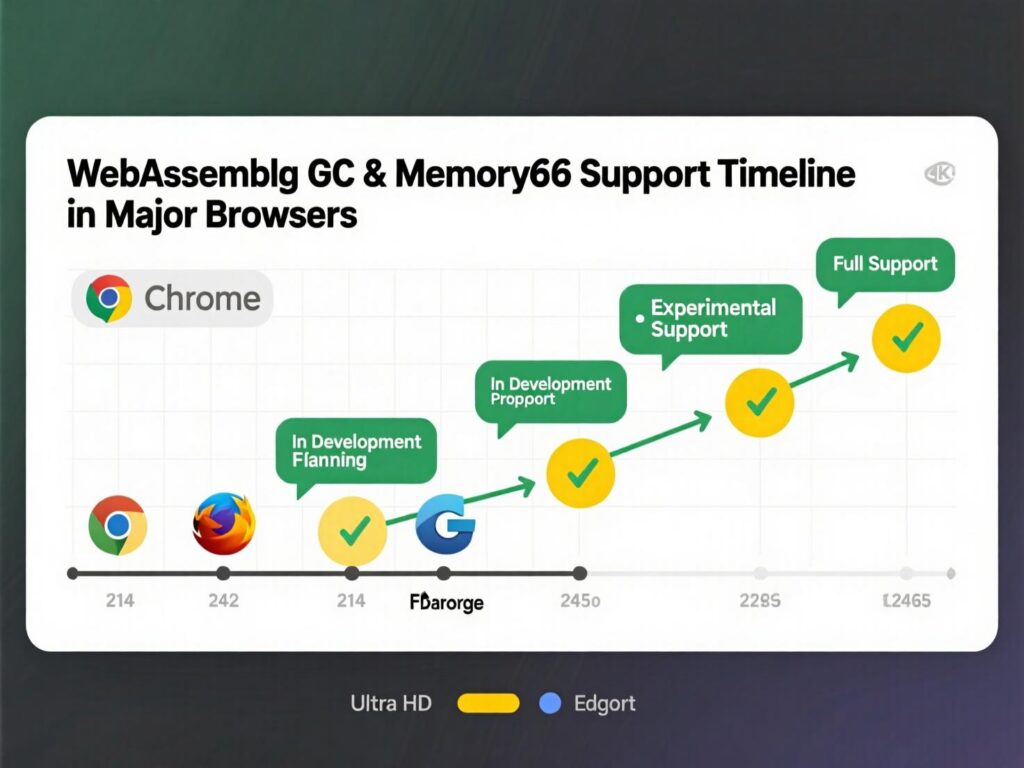
WebAssembly has moved far beyond an experimental compile target. In 2025, WebAssembly sits alongside JavaScript as a first-class way to deliver high-performance experiences on the open web powering graphics editors, CAD, AI inference, games, and even full IDEs. Over the last two years, browsers landed pivotal capabilities: WasmGC (garbage collection) shipped broadly, enabling GC-based languages like Kotlin/Dart to run efficiently; Memory64 arrived to break the 4GB barrier; and threading is usable with cross-origin isolation. These upgrades are not just incremental—they unlock new classes of apps that were previously impractical. Chrome shipped WasmGC in M119 after the proposal hit W3C phase-4; Firefox followed in 120; and Safari added WasmGC in 18.2, bringing parity across all major engines (Chromium/V8, SpiderMonkey, and WebKit).
This article distills where WebAssembly stands in browsers today, what the WASI and Component Model mean for the web, and how these pieces fit together with emerging workloads like local AI via WebGPU. You’ll also find concrete examples, a readiness checklist, and an FAQ to help teams plan migrations or green-field builds. If you’re deciding when to bet on WebAssembly and how deep to go this guide shows how to do it pragmatically in 2025.
Why WebAssembly matters (still)
For teams facing performance ceilings in JavaScript, WebAssembly offers predictable, near-native execution, strong sandboxing, and a clear path to reuse C/C++/Rust or Kotlin codebases. It complements JS rather than replacing it: use JS for UI and web APIs; offload hot loops, parsers, geometry, codecs, or ML kernels to WebAssembly. MDN’s definition remains apt: a compact, assembly-like binary designed to run at near-native speed in modern browsers and alongside JavaScript.
Real-world examples
Figma reported a 3× faster load time after moving critical rendering paths to WebAssembly, later writing about keeping the app fast as they ironed out Wasm-related bugs.
Adobe Photoshop on the web used Emscripten + WebAssembly to bring a large C++ codebase to browsers, with additional engineering for files larger than wasm32’s address space.
Browser capabilities you can rely on in 2025
WasmGC (Garbage Collection)
What it is: Enables efficient execution of GC languages (Kotlin, Dart, etc.) without heavy glue layers.
Status: Standardized and shipped across all major browsers (Chrome 119+, Firefox 120+, Safari 18.2+). This makes Kotlin/Wasm viable for production web targets.
Why it matters: Smaller payloads and faster start times for GC languages vs. Wasm+JS interop shims. Flutter and Kotlin teams have demos and docs targeting WasmGC.
Memory64
What it is: 64-bit linear memory addresses; practical access to >4GB address spaces.
Status: Landed in Chrome 133/Edge 133 and Firefox 134 in early 2025; used to unblock larger datasets (e.g., local AI models, massive images).
Why it matters: Larger in-browser workloads (scientific viz, high-res imaging, model weights) become feasible without brittle chunking strategies.
Threads (SharedArrayBuffer)
What it is: True parallelism for WebAssembly via threads and atomics.
Status: Broadly available but requires cross-origin isolation (COOP/COEP) to safely enable SharedArrayBuffer. Plan for crossOriginIsolated and audit third-party resources accordingly.
Why it matters: CPU-bound workloads (layout engines, rasterization, compression) can scale across cores in the browser.
WASI and the Component Model what they mean for browsers
While WASI primarily targets outside-the-browser runtimes, its design pressure shapes WebAssembly everywhere. WASI 0.2 (Preview 2) launched in January 2024, pivoting the ecosystem to dot-releases and introducing “worlds” and broader interface coverage.
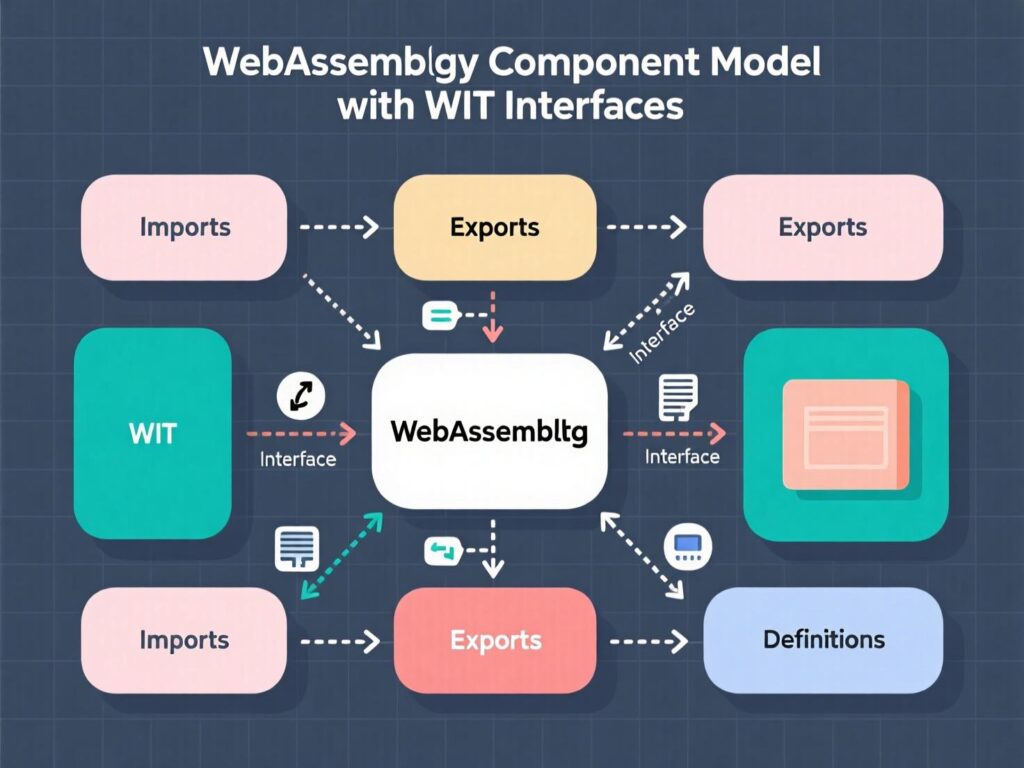
The WebAssembly Component Model standardizes how Wasm units describe types, import/export interfaces (WIT), and compose polyglot systems. Think of it as the missing “package and ABI” layer: components written in different languages can interoperate reliably without bespoke glue. In web contexts, this promises cleaner module boundaries, friendlier bindings, and better toolchains for mixture of JS + Wasm languages.
The spec and surrounding tooling are active and evolving through 2025 (you can track open issues and proposals). Expect growing library ecosystems and bindings across languages (e.g., Go helpers) as the model matures.
The near future: what to plan for (2025–2027)
Polyglot components on the web
As the Component Model stabilizes, expect UI frameworks and libraries that ship composable WebAssembly components with typed interfaces, reducing JS ↔ Wasm impedance and enabling multi-language apps.Bigger local AI
With Memory64 and WebGPU, browsers can host larger on-device models (vision, audio, small LLMs) with privacy benefits and lower latency. Chrome’s platform team flagged Memory64 explicitly in their 2024 recap as an enabler for bigger models in 2025.GC-language renaissance
Kotlin/Wasm, Dart/Wasm, and other GC languages will feel increasingly “native” in the browser thanks to WasmGC. Tooling and debugging will keep improving as vendors iterate.Better debugging & DX
Expect more mature DevTools integrations (heap snapshots, sourcemaps, symbolication), faster local compiles, and templated Component Model projects.Edge synergy
The same WebAssembly module can run client-side and at the edge (Cloudflare/Fastly/wasmCloud). WASI 0.2 + components are already in production-ready platforms, tightening the browser ↔ edge loop for low-latency apps.
Practical readiness checklist (for engineering teams)
Choose your language wisely: C/C++/Rust for peak performance; Kotlin/Dart when productivity and shared code matter—now viable thanks to WasmGC.
Plan for cross-origin isolation if you need threads: set COOP/COEP headers, audit third-party scripts, and serve cross-origin resources with CORP.Target Memory64 only when needed: It increases pointer size and memory footprint. Use it for datasets >4GB or model loading. Assess browser versions in your audience first.
Keep JS in the loop: Use JS for DOM, Web APIs, and app glue. Use WebAssembly for hot paths; keep interop call counts low to avoid overhead.
Adopt a multi-tier build: Produce: (1) baseline Wasm32 build; (2) optional Memory64 build; (3) feature-detected code paths (SIMD/threads).
Measure cold start: Size, compression (Brotli), streaming compilation, and lazy-loading matter more than raw compute.
Invest in profiling: browser DevTools +
perf+ flamegraphs on native builds before porting.Test on iOS Safari early: memory pressure and scheduling differ on mobile.
Case study #1: Figma’s fast path
The Figma team publicized a 3× load-time improvement after moving critical rendering logic to WebAssembly, and later described additional wins as they refactored the renderer and fixed Wasm-related issues. Takeaways: move the right code (hot loops, geometry), batch JS↔Wasm calls, and profile relentlessly.
Case study #2: Photoshop on the web
Adobe ported large C++ code to WebAssembly using Emscripten and tackled constraints like wasm32 addressing by designing chunked approaches for >4GB files and optimizing memory paths. The result is a production web app that demonstrates how heavyweight desktop-class features can live directly in the browser. web.devChrome for Developers
Common gotchas (and how to avoid them)
Threads not working? You likely lack cross-origin isolation or a third-party asset lacks proper CORP headers. Fix your headers and audit dependencies.
Interop bottlenecks: Too many small JS↔Wasm calls can negate gains. Redesign APIs to pass bulk buffers or batched commands.
Mobile memory pressure: Even with Memory64, mobile browsers can kill tabs under pressure. Stream, chunk, and free aggressively.
Feature detection: Use
wasm-feature-detectand progressive enhancement; don’t hard-fail on older engines.

Final Thoughts
The story of WebAssembly in browsers has shifted from “if” to “how.” With WasmGC, Memory64, and threads widely available and the Component Model paving a polyglot future teams can confidently ship ambitious, performance-critical features to the open web. The smartest approach is pragmatic: keep JS for the DOM and ergonomics; move the compute-intensive heart to WebAssembly; adopt cross-origin isolation where needed; and instrument everything.
Over the next two years, expect stronger libraries, better debugging, and a growing set of frameworks that hide today’s rough edges. If you’re evaluating WebAssembly for the first time, start small (a single hot loop or codec). If you’re already invested, explore components and Memory64 where they truly pay off. The browser has never been more capable WebAssembly ensures your app can meet it.
CTA: Want an implementation checklist tailored to your stack? Reach out for a quick technical assessment of your use case and a phased migration plan to WebAssembly.
FAQs
Q : How does WebAssembly compare to JavaScript performance in real apps?
A : WebAssembly offers predictable, near-native speed for compute-heavy code (parsing, codecs, geometry), while JS remains ideal for UI and web APIs. Many teams mix both for best results, as seen with Figma and Photoshop.
Schema expander: Use cases: rendering pipelines, encoders/decoders, ML kernels; keep DOM logic in JS.
Q : How can I enable WebAssembly threads in my web app?
A : Serve with COOP/COEP headers to become crossOriginIsolated, ensure third-party resources have CORP, then compile with threads enabled (Emscripten/LLVM flags).
Schema expander: Validate crossOriginIsolated===true; test workers across target browsers.
Q : How does WasmGC change language choices for the web?
A : With WasmGC shipped across major browsers, GC languages (Kotlin, Dart) can run efficiently, reducing glue code and payload sizes compared to older approaches.
Schema expander: Consider Kotlin/Wasm if you value shared business logic across platforms.
Q : How big can my in-browser dataset be with Memory64?
A : Memory64 removes the 4GB linear memory cap in WebAssembly, enabling larger models and datasets when supported (Chrome/Edge 133+, Firefox 134+). Mind memory pressure and device limits.
Schema expander: Feature-detect; ship a fallback wasm32 build.
Q : How does the Component Model help web developers?
A : It standardizes typed interfaces and composition so multi-language WebAssembly components can interoperate cleanly, with fewer custom bindings and easier reuse.
Schema expander: Watch for libraries distributing WIT-described components.
Q : How do I decide what to port to WebAssembly first?
A : Profile first. Move hot loops (CPU-bound) or third-party native libs. Keep DOM and app state in JS. Start with a self-contained module and measure cold-start + steady-state.
Q: How can WebAssembly help with on-device AI in browsers?
A: Together with WebGPU and Memory64, WebAssembly can run larger models locally for privacy and low latency e.g., vision filters or summarizers.
Schema expander: Quantize weights; stream/load on demand; test on mobile.
Q : How does WebAssembly affect SEO or Core Web Vitals?
A : It can improve interaction readiness if you prevent main-thread blockage, keep bundles small (Brotli), and stream compile. Measure LCP/INP/CLS in real-user monitoring.
Q : How can I ship Kotlin to WebAssembly for the browser?
A : Use Kotlin/Wasm targets; with WasmGC in all major browsers since Dec 2024, Kotlin apps run broadly. Integrate with JS for DOM.
Schema expander: See Kotlin docs for wasm target setup and troubleshooting.