
Beyond Firewalls: Human-Centred Cyber Awareness in GCC
Beyond Firewalls: Human-Centred Cyber Awareness in GCC

Cyber Security Awareness in the Middle East & GCC Firms
For GCC companies, the biggest cyber risk is no longer missing firewalls but everyday human behaviour: weak passwords, rushed clicks and trust in “friendly” messages. Regulators such as NCA, SAMA, the UAE Cybersecurity Council, TDRA and QCB are pushing Saudi, UAE and Qatar organisations to embed continuous, bilingual cyber security awareness in the Middle East into daily work, not just an annual e-learning course.
Introduction
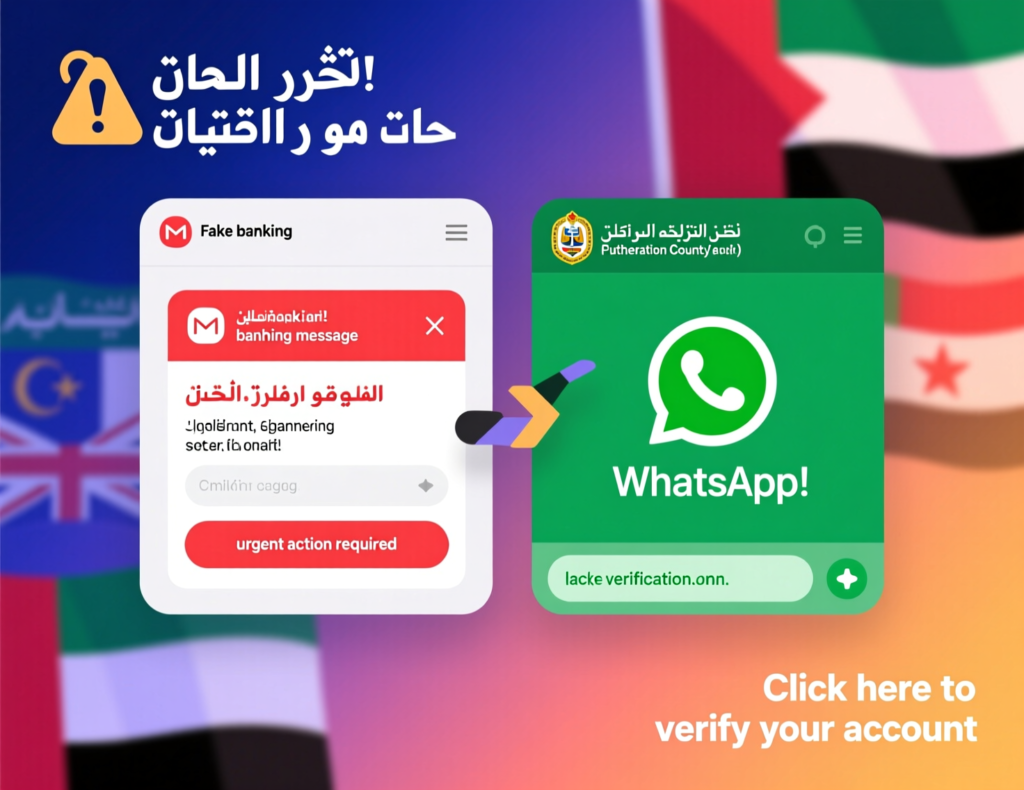
When the UAE Cybersecurity Council warns that nearly 98% of cyberattacks exploit human weaknesses, it captures a reality every GCC CISO already recognises: the breach usually starts with a person, not a missing appliance.In Riyadh, Dubai and Doha, boards are investing millions in SOCs, cloud and endpoint tools, yet staff still click on fake “bank alerts” and share OTPs over WhatsApp.
At the same time, regulators are raising the bar. NCA’s Essential Cybersecurity Controls in Saudi Arabia, SAMA’s Cyber Security Framework for financial institutions, the UAE Cybersecurity Council with TDRA, and Qatar’s National Cyber Security Agency with QCB’s “Stay Aware” campaigns all explicitly emphasise human-factor controls and awareness.
In other words, cyber security awareness in the Middle East has become a strategic control. The focus is shifting from “do we have the right tools?” to “are our people making the right decisions?” Below, we unpack the most common human errors behind incidents, why regulators care so much, and how to design practical, bilingual awareness programmes that actually change behaviour across Saudi Arabia, UAE and Qatar.
What are the most common human errors causing cyber incidents in Middle East companies?
For most GCC organisations, human mistakes fall into a predictable set of patterns: weak or reused passwords, falling for phishing and social engineering, oversharing on messaging apps, and mishandling sensitive data. In practice, these behaviours open the door for credential theft, account takeover, ransomware and fraud across banks, government entities and SMEs.
Typical human errors in Riyadh, Dubai and Doha include:
Weak, shared or reused passwords and poorly protected MFA
Clicking phishing links in Arabic/English emails or SMS
Sharing OTPs or account details over WhatsApp and voice calls
Using personal cloud apps to move client or citizen data
Plugging unknown USBs into corporate laptops
From weak passwords to WhatsApp scams: everyday habits putting GCC firms at risk
In Saudi and UAE financial services, attackers often start with simple password spraying against O365 or core banking portals, then pivot using social engineering on relationship managers via WhatsApp or voice calls. Open banking APIs in KSA and the UAE widen the attack surface, especially where staff approve connections too quickly or reuse credentials between test and production environments.
In Dubai logistics and e-commerce companies, staff routinely mix personal and corporate channels: exporting reports to personal Gmail, sharing shipment details in family WhatsApp groups, or installing unvetted browser extensions. In Doha, SMEs with limited IT teams sometimes store contracts in personal cloud drives, undermining data residency commitments even when infrastructure is hosted in AWS Middle East (Bahrain), Middle East (UAE), Azure UAE or the Doha Google Cloud region.
Why 98% of breaches start with people
The UAE Cyber Security Council’s Cyber Pulse campaign repeatedly highlights that social engineering is involved in almost all modern attacks, especially fake bank messages, job offers, delivery updates and QR codes. In Riyadh, attackers mimic NCA or SAMA branding; in Dubai, they impersonate delivery firms and government portals; in Doha, they ride on QCB and National Cyber Security Agency messaging by spoofing “security verification” emails.
For GCC businesses, the pattern is clear: if a scam looks “locally familiar” and blends Arabic and English well, employees are more likely to trust it. That’s why generic, English-only awareness slides do little to reduce real risk.
Human error vs malicious insiders in Saudi, UAE and Qatar
Boards in Riyadh, Dubai and Doha often worry about malicious insiders, but most incidents are still accidental: mis-addressed emails, misconfigured cloud storage, or staff bypassing policy to “get the job done”. Intentional insiders exist especially around fraud in financial services but awareness programmes should first address the much larger population of well-meaning employees who simply haven’t been trained using realistic, GCC-specific scenarios.
Why do Saudi and UAE regulators emphasise cyber security awareness programs for employees?
Across the Middle East, regulators increasingly treat employees as a formal control, not a soft issue for HR. NCA’s Essential Cybersecurity Controls and SAMA’s Cyber Security Framework explicitly reference ongoing training, testing and culture as minimum expectations, particularly for critical sectors like banking and capital markets.
NCA controls, SAMA cyber security framework and what they expect from your staff in KSA
NCA’s ECC requires Saudi organisations to establish awareness and training programmes that reach all staff, reinforce policies and reduce the likelihood of internal and external threats. SAMA’s Cyber Security Framework pushes banks and fintechs to ensure employees understand their security responsibilities, can spot social engineering and know how to report suspicious activity.
For a Riyadh bank, that means moving beyond a yearly LMS course to scenario-based drills: simulated payment fraud emails to operations teams, WhatsApp-style phishing tests for relationship managers, and role-specific micro-modules for treasury, call-centre and branch staff.
Turning public campaigns into corporate obligations
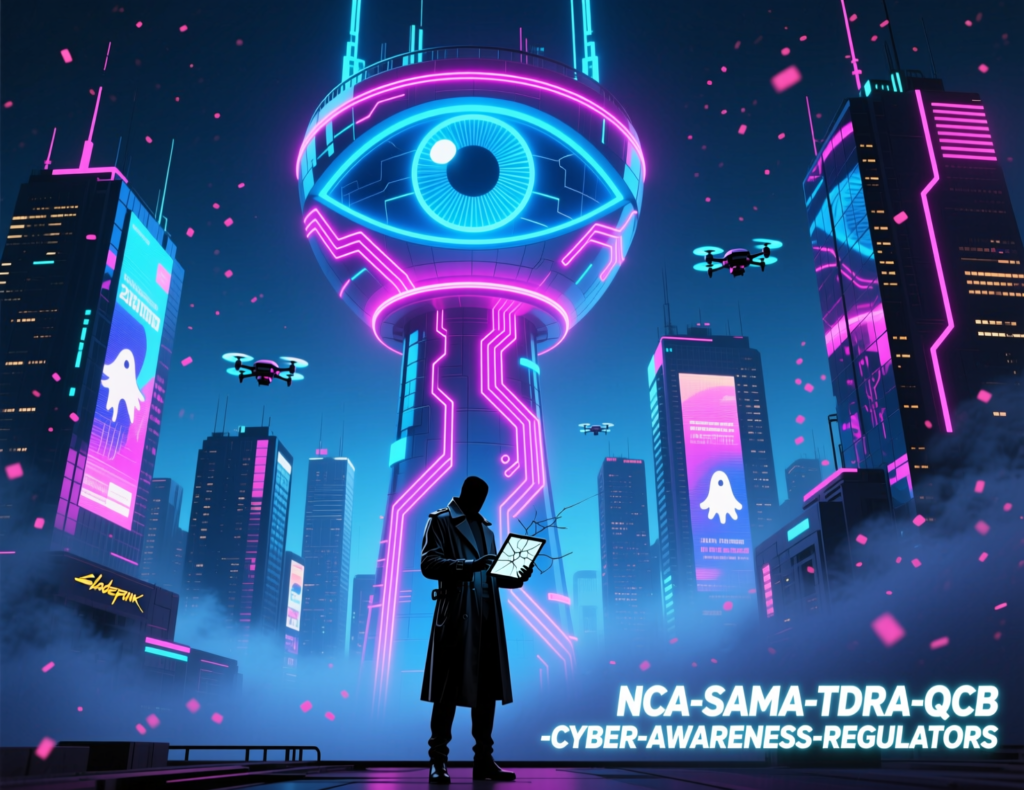
In the UAE, the Cybersecurity Council works with TDRA and other agencies to run year-long public campaigns like Cyber Pulse, warning that social engineering and human error drive most attacks. UAE’s data protection law (PDPL) and sectoral regulations then require organisations to protect personal data with appropriate technical and organisational measures explicitly including staff training and awareness.
For Dubai and Abu Dhabi companies, this means aligning internal campaigns with public messaging: reusing “Be cautious”-style slogans in intranets, integrating security moments into team meetings, and tracking participation across Arabic-first frontline teams.
QCB and the National Cyber Security Agency
Qatar’s National Cyber Security Agency and Qatar Central Bank have been ramping up large-scale initiatives like the “Stay Aware” National Awareness Campaign for Information Security, emphasising fraud prevention and a security-conscious culture across the country. For Doha-based banks, oil & gas operators and logistics firms, this translates into pressure to demonstrate regular staff training, internal campaigns and phishing simulations aligned to QCB’s expectations.
How can GCC organizations move beyond annual training and build a real security culture?
To build a real security culture, GCC organisations need continuous, role-based nudges instead of one-off slides: managers modelling secure behaviour, HR embedding security in onboarding, and micro-learning delivered in Arabic and English at the point of risk. The goal is to make secure behaviour the easiest behaviour for busy staff in Riyadh, Dubai and Doha.
Practical ways to move beyond annual e-learning:
Give line managers clear cyber ownership and talking points
Use monthly phishing simulations and “just-in-time” tips
Offer short, mobile-friendly modules in Arabic and English
Tie awareness metrics to KPIs and performance reviews
What role do managers and HR teams play in reducing phishing and social engineering risks in GCC firms?
In Middle Eastern companies, staff often take their cue from their direct manager, not the CISO. If a Riyadh sales manager ignores phishing drills or shares passwords with an assistant, the whole team follows. HR teams in Dubai and Doha can embed cyber security awareness programmes into onboarding, promotion criteria and leadership programmes, making “security as part of professionalism” explicit for employees.
From one-off awareness days to continuous nudges and micro-learning
Instead of a single “Cyber Day”, leading GCC organisations schedule quarterly campaigns, monthly phishing tests and weekly micro-tips delivered via Teams, email or mobile apps. Short, scenario-based modules for open banking teams, call centres or clinic receptionists drive behaviour change far more than generic, hour-long courses.
A simple culture-change roadmap for GCC organisations:
Map your human risk baseline use phishing simulations and quick surveys.
Define clear responsibilities CISO, HR, line managers, internal comms.
Design role-based content focused on real scams staff actually see.
Deliver in Arabic and English mobile-first, with 5–10 minute modules.
Measure, report, refine track click-rates, reporting rates and policy breaches.
Designing Arabic-English friendly experiences and data-resident workflows for Riyadh, Dubai and Doha teams
For frontline staff in Jeddah branches or Muscat logistics hubs, Arabic-first UX is critical. Training, phishing templates and policies should be bilingual, not “English primary, Arabic later”. Data-resident workflows using AWS Middle East (Bahrain), Middle East (UAE), Azure UAE regions and the Doha Google Cloud region help CISOs meet NCA, TDRA and Qatar data-sovereignty expectations while still supporting modern awareness platforms. (Amazon Web Services, Inc.)
Partnering with a technical team like Mak It Solutions to align awareness journeys with secure web development services and internal portals ensures that security messages are built into the tools people actually use. (makitsol.com)
Designing cyber security awareness programs for Saudi, UAE and Qatar companies
Once culture and ownership are clear, you can design structured cyber security awareness programmes in the Middle East tailored to each country’s regulatory landscape and language mix. Here’s how many GCC organisations approach it.
Saudi-friendly cyber security awareness program under NCA and SAMA rules
For Saudi banks and listed companies under SAMA and CMA, awareness programmes typically include:
Annual baseline courses aligned to NCA ECC domains and SAMA CSF
Quarterly phishing simulations themed around local scams and Arabic content
Policy attestations for high-risk roles (treasury, trading, payments)
Targeted refreshers after incidents or regulator findings
Many organisations integrate awareness reporting into broader business intelligence dashboards so executives in Riyadh and Dammam can see trends at a glance. (makitsol.com)
UAE corporate cyber training for Arabic-speaking staff in Dubai and Abu Dhabi
In the UAE, cyber awareness programmes often connect to privacy and compliance initiatives around PDPL and international frameworks like ISO/IEC 27001. Dubai and Abu Dhabi companies blend:
Short, mobile-friendly modules for Arabic-speaking staff in government entities
Sector-specific scenarios (e.g., UAE Pass phishing for government, fintech scams for DIFC/ADGM firms)
Internal comms campaigns echoing UAE Cybersecurity Council messaging and TDRA guidance
These programmes can be delivered via existing HR and learning systems, often supported by digital marketing style engagement tactics—A/B testing subject lines, segmenting audiences and optimising click-through on training content. (makitsol.com)
Cyber security awareness course Doha for SMEs and sector-specific needs
In Qatar, many SMEs in logistics, healthcare and professional services are still early in their cyber journey. A practical Doha-focused programme might include:
Core course on phishing, password hygiene and data handling
Industry-specific modules (e.g., patient data for clinics, SWIFT fraud for finance)
Alignment with QCB’s “Stay Aware” campaign messaging for customer-facing teams
Cloud-first SMEs can work with a partner like Mak It Solutions to integrate awareness journeys into their mobile apps and client-facing portals, nudging users and employees at the right moment. (makitsol.com)
Why are campaigns like UAE’s public cyber awareness initiatives a signal for private-sector behavior change?
Public campaigns are often a preview of regulatory and market expectations. When the UAE Cyber Security Council invests in year-long initiatives highlighting that 98% of attacks exploit human error, it sends a message to boards: if the public is being trained, your staff must keep pace or risk being the weakest link.
What public messaging teaches GCC companies
Simple, repeated messages like “Don’t share your OTP” or “Verify the sender” work because they are short, emotional and tied to real money loss. Banks in Riyadh and Dubai mirror these in SMS alerts, app notifications and IVR prompts. Internal campaigns can borrow the same patterns: one clear message in Arabic and English, repeated across posters, intranet banners and login pages instead of long policy documents.
How banks, oil & gas and government entities in GCC protect open banking and national digital ID users
Riyadh fintech under SAMA uses simulated open-banking consent screens to train staff and customers not to authorise third-party access blindly.
Dubai government entities train call-centre staff to validate UAE Pass usage and spot suspicious account recovery requests.
Doha banks use QCB’s “Stay Aware” themes in branch training, teaching tellers and call-centre agents how to talk to customers about smishing and vishing.
Using phishing simulations and gamified challenges to mirror real attacks seen in Riyadh, Dubai and Doha
The most effective simulations mimic local reality: Arabic-English mix, local logos and emotionally charged hooks like salary delays, fines or family emergencies. Gamified team challenges—such as department-level “report the phish” leaderboards—can be promoted via your SEO-driven internal knowledge hubs and HR portals so that staff see cyber hygiene as a shared game, not a compliance burden. (makitsol.com)
How can Middle Eastern companies measure the ROI of cyber security awareness and behavior-change programs?
Measuring ROI starts with linking human-factor metrics to real business outcomes: fewer successful phishing incidents, reduced fraud losses, better audit results and improved regulator findings. GCC boards care far more about reduced incidents and regulator comfort than course completion rates alone.
Key ROI levers for GCC boards include.
Drop in successful phishing or fraud cases
Increase in reported suspicious emails and incidents
Improved NCA/SAMA/TDRA/QCB audit outcomes
Lower downtime and recovery costs after incidents
Linking awareness metrics to incident reduction, fraud losses and regulator findings
NCA ECC, SAMA’s Cyber Security Framework and QCB campaigns all encourage organisations to track and evidence effective training and awareness.A Riyadh bank might track fraud losses before and after targeted training for call-centre staff; a Dubai e-commerce firm might monitor the fall in account-takeover cases after password awareness and MFA rollout; a Doha SME might measure how many staff actively report suspected phishing each month.
What GCC boards and audit committees want to see in cyber awareness reporting
Boards in Saudi Arabia, UAE and Qatar typically expect concise dashboards rather than technical reports:
Heatmaps of high-risk teams by phishing-click and report rates
Trends in incidents linked to human error vs. technology
Alignment with regulatory frameworks and ISO controls
Well-designed business intelligence and digital marketing analytics stacks can help CISOs present these metrics in board-friendly formats. (makitsol.com)
Benchmarking costs and timelines for programs in Saudi Arabia, UAE and Qatar
Budgets vary widely, but mid-sized organisations in Riyadh, Dubai or Doha commonly invest a modest fraction of their overall cyber spend often less than a single major incident would cost—in awareness and behaviour-change initiatives. Typical timelines are:
3–6 months to stand up a basic bilingual program and phishing simulations
12–18 months to show clear reductions in click-rates and improved reporting
24+ months to embed cyber resilience into culture and HR processes
When combined with robust technical controls and secure web development and mobile apps, sustained awareness programmes generally yield a strong risk-reduction ROI. (makitsol.com) These examples are for general information only and should be considered alongside your own legal, compliance and risk advice.
Conclusion
Cyber security awareness in the Middle East is no longer a “nice-to-have” but a regulatory and commercial necessity. The biggest threats facing banks, government entities, healthcare providers and logistics companies across Riyadh, Dubai and Doha come from everyday human behaviour exploited by social engineering not from exotic zero-day exploits.
Regulators like NCA, SAMA, the UAE Cybersecurity Council, TDRA and QCB are sending a consistent signal: leadership must treat staff as a formal security control, with continuous, bilingual training and measurable culture change. Organisations that move beyond annual training towards ongoing micro-learning, realistic simulations and data-resident platforms will build a more cyber-resilient culture and gain regulator and customer trust.
If you’re responsible for cyber security in a Saudi, UAE or Qatar organisation, the next step isn’t another firewall it’s an honest audit of your human factor. The Mak It Solutions team can help you design bilingual, GCC-tuned awareness journeys integrated into your existing services and platforms, from internal portals to customer-facing apps. (makitsol.com)
Ready to turn “users as a risk” into “people as a defence layer”? Contact Mak It Solutions to explore a tailored cyber security awareness roadmap for your teams in Riyadh, Dubai, Abu Dhabi and Doha. (makitsol.com)
FAQs
Q : Is cyber security awareness training mandatory under Saudi NCA or SAMA rules?
A : Neither NCA nor SAMA publishes a simple “awareness is mandatory” one-liner, but both clearly expect ongoing training as part of compliance. NCA’s Essential Cybersecurity Controls require Saudi organisations to implement awareness and training measures covering threats, policies and incident reporting. The SAMA Cyber Security Framework for banks and fintechs also emphasises regular staff training as part of operational controls and risk management. In practice, any SAMA-regulated bank in Riyadh or Jeddah that cannot evidence structured awareness programmes will face difficult questions in audits, and this expectation aligns with Saudi Vision 2030’s push for a secure digital economy.
Q : How often should Dubai or Abu Dhabi companies run phishing simulations for employees?
A : Most UAE organisations aiming for good practice run phishing simulations at least quarterly, and higher-risk sectors like banking or government often shift to monthly campaigns. This cadence aligns with the UAE Cybersecurity Council’s view that social engineering is a constant threat and that citizens and employees alike need ongoing reminders, not one-time warnings. TDRA-regulated entities and government organisations in Dubai and Abu Dhabi typically pair these simulations with short, Arabic-English follow-up tips, ensuring lessons are reinforced in both languages while supporting national digital transformation initiatives.
Q : What cyber awareness topics are most critical for banks regulated by SAMA and QCB?
A : For SAMA and QCB-regulated banks, the priority topics are phishing and social engineering, secure handling of customer data, strong authentication (including MFA and OTPs), and fraud prevention across online and mobile channels. Staff in Riyadh branches must be able to recognise fraudulent transfer requests and suspicious open-banking consents, while call-centre teams in Doha should understand QCB’s “Stay Aware” themes around financial fraud and data privacy. Training should also cover incident reporting, so frontline employees escalate quickly when they see red flags.
Q : Can GCC companies deliver cyber security awareness in both Arabic and English without losing depth?
A : Yes many of the most successful GCC programmes are explicitly bilingual. The key is to design content in parallel, not translate it as an afterthought. For example, a Dubai entity might create short Arabic and English videos that use the same realistic UAE scenarios (UAE Pass, local delivery scams) and distribute them through existing HR and digital marketing channels. (makitsol.com) In Saudi Arabia, aligning Arabic-first content with NCA and SAMA terminology builds credibility with regulators and staff. In Qatar, referencing QCB’s “Stay Aware” campaign in both languages makes the training feel familiar and locally anchored.
Q : What is a realistic annual budget for cyber security awareness programs in mid-sized Riyadh or Doha firms?
A : Budgets vary by sector and risk appetite, but many mid-sized organisations in Riyadh or Doha allocate a small percentage of their overall security spend often comparable to the cost of one serious incident recovery. A typical range might cover a SaaS awareness platform, phishing simulations, content localisation and internal communications support. Over 12–24 months, organisations frequently see reduced phishing-click rates, fewer fraud incidents and smoother regulator interactions, especially with SAMA, QCB and the National Cyber Security Agency focusing on culture and awareness. When combined with broader digital investments, such as and web development, awareness spending supports the region’s Vision 2030 and Qatar National Vision 2030 ambitions for secure digital economies.