


Conversational AI for Customer Service: From Hype to ROI
Conversational AI for Customer Service: From Hype to ROI
Conversational AI for Customer Service: From Hype to ROI
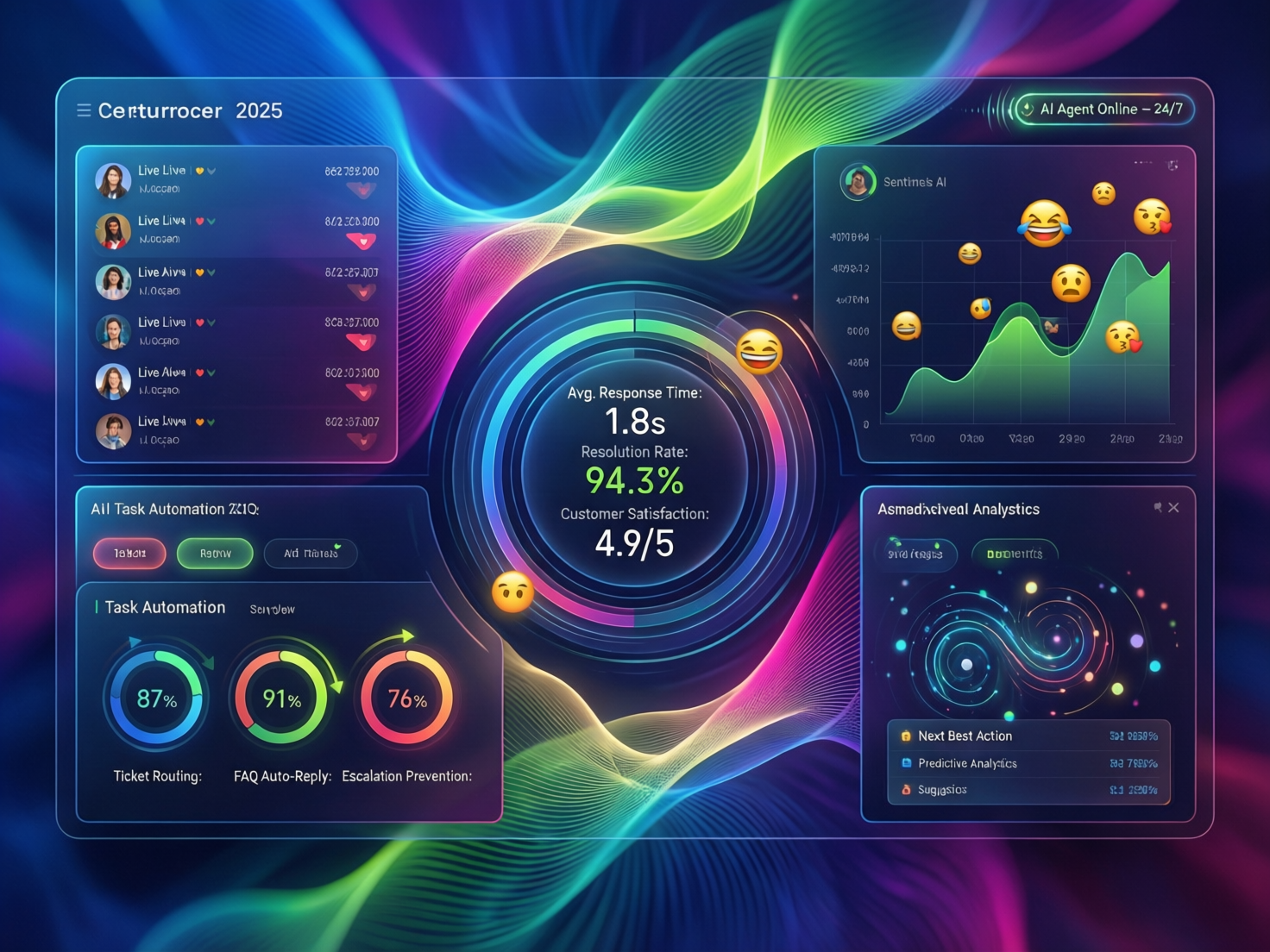
Conversational AI for customer service uses natural language processing and generative AI so customers can resolve issues in their own words over chat, email, voice and social channels, with seamless handoff to human agents when needed. Done well, it deflects repetitive tickets, shortens handle times and boosts CSAT, while staying compliant with GDPR/DSGVO, UK-GDPR, HIPAA and PCI DSS across the US, UK, Germany and the wider EU.
Introduction.
For years, “chatbot” was a dirty word in customer service endless menus, “sorry, I didn’t get that,” and no way to reach a human. In 2025, conversational AI for customer service is finally changing that picture for brands in the United States, United Kingdom, Germany and across the European Union.
Modern AI customer service chatbots can hold natural conversations, look up account data, and summarise calls for busy agents, all while staying inside strict rules like GDPR/DSGVO, UK-GDPR, HIPAA and PCI DSS. Instead of replacing your team, the best deployments turn AI into a virtual colleague: automating Tier-1 work and feeding rich context to human agents in New York, London or Berlin.
In this guide, we’ll unpack when conversational AI works, where it still fails, and how to choose, implement and scale the right platform without blowing up trust, compliance or your contact centre culture.
What Is Conversational AI for Customer Service?
Conversational AI for customer service uses NLP, machine learning and generative AI so customers can talk to bots in their own words across chat, email, voice and social channels. Unlike old rule-based bots, these AI-powered virtual agents understand intent, keep context across turns and escalate complex issues to human agents with full history attached.
Core Components NLP, NLU, NLG & Integrations
In plain language.
Natural Language Processing (NLP) breaks customer messages into tokens and structure, so the system can parse what’s being said.
Natural Language Understanding (NLU) figures out intent (“track my order,” “cancel my contract”) and key entities (order ID, date, product).
Natural Language Generation (NLG) turns internal data and templates into human-like responses, often powered by large language models.
On their own, these models are just clever text engines. The magic for customer service happens when they’re wired into your CRM and helpdesk stack: Salesforce Service Cloud, Zendesk, Intercom, HubSpot, Insightly, ServiceNow, Shopify and more. The AI customer service chatbot becomes an AI-powered virtual agent, not a glorified FAQ widget. It can:
Look up tickets and orders in Zendesk or Salesforce
Create or update cases in ServiceNow
Pull product data from Shopify, Magento or WooCommerce
This stack integration is also where Mak It Solutions often helps clients designing integrations and back-end APIs that keep the bot’s answers accurate and auditable, instead of “hallucinated.”
How Conversational AI Works in a Real Support Journey
A simple journey might look like this.
Website chat
A customer lands on your ecommerce site in San Francisco and types “Where’s my order?” into the chat widget.
Authentication
The bot asks for email or order number, calls your order API, and verifies the customer.
Resolution
It returns live tracking info, offers to change delivery slots, or initiates a return all through conversational steps.
Escalation
If the customer says “this is my third delay, I want a refund,” the bot recognises frustration and hands off to a human with full context, notes and sentiment.
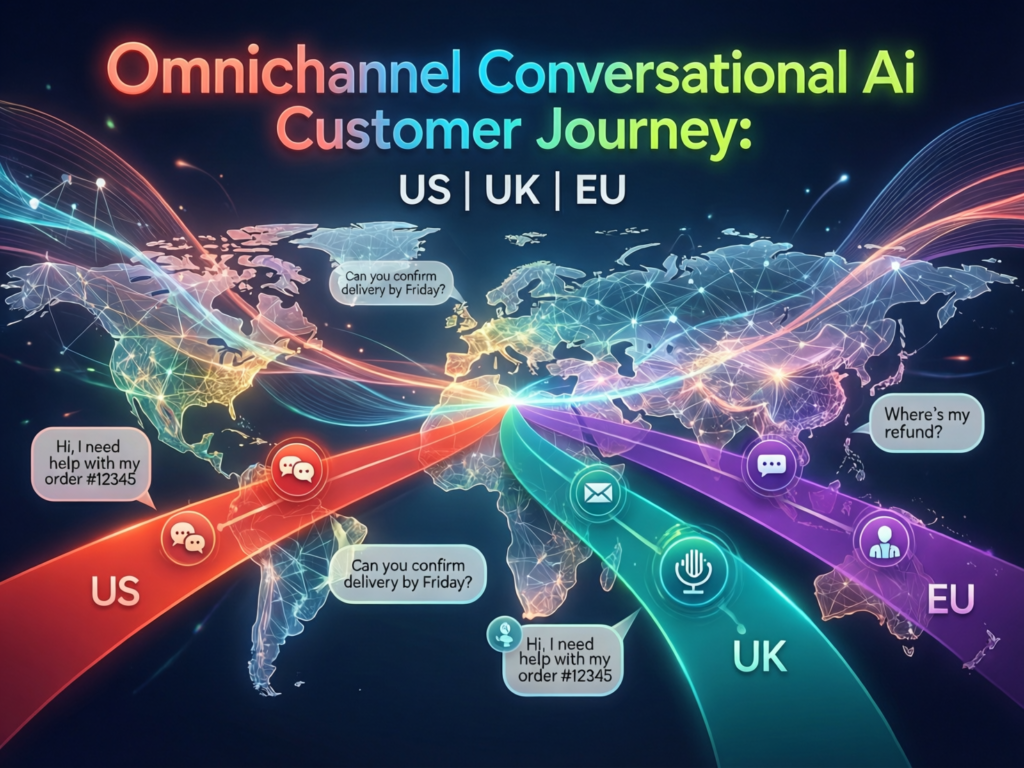
Exactly the same brain can run omnichannel flows on WhatsApp, SMS, Facebook Messenger or voice IVR. A UK telco in Manchester might let customers top up prepaid plans over WhatsApp, while a German bank in Frankfurt uses a DSGVO-aware bot on secure web chat to handle balance checks and card freezes under PSD2/Open Banking rules.
Why Now? The 2025 CX & AI Inflection Point
Several forces make 2025 a tipping point.
AI is maturing fast
Forecasts suggest AI will touch virtually all customer interactions in the next few years, as “AI agents” replace legacy chatbots.
The market is exploding
The global call center AI market generated close to USD 2 billion in revenue in 2024 and is projected to more than triple by 2030.
Adoption is mainstream
Around 80% of companies are already using or planning to adopt AI-powered chatbots for customer service by 2025.
Add to that: agent shortages, 24/7 expectations in New York and London, and cost pressure across EU contact centres, and the business case becomes obvious. Vendors like Salesforce, IBM, Vonage, Dialpad, Gorgias, Cognigy, PolyAI and Synthflow AI now offer production-ready building blocks from virtual agents to full AI contact centre modernisation.
Conversational AI vs Old Rule-Based Chatbots
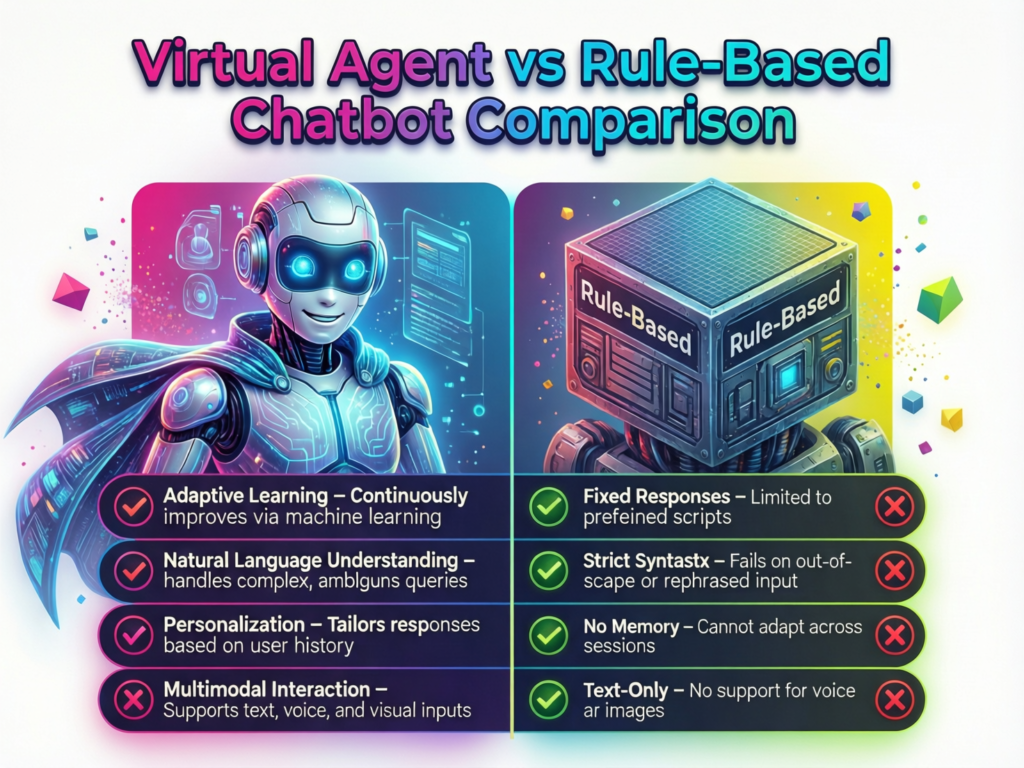
Traditional chatbots follow rigid, rule-based scripts; modern conversational AI understands intent, handles nuance and learns from data, so it’s dramatically better at resolving complex queries. In practice, this means fewer dead ends, fewer “sorry, I didn’t understand,” and more first-contact resolutions in US, UK and EU contact centres.
Traditional Chatbots vs AI Chatbots: Key Differences
You can think of old menu/keyword bots as interactive phone trees.
Predefined buttons or keywords (“1 = billing”)
Little or no memory of previous messages
Limited language support and almost no handling of typos or slang
By contrast, intent-based and generative bots.
Accept free text or voice in multiple languages
Detect intent and entities even when phrased differently
Carry context across the conversation (and across channels)
Generate tailored replies, not just pre-written snippets
Voice-first providers like PolyAI and Synthflow AI extend this to phone calls, plugging into CCaaS platforms such as Genesys, Five9 or Amazon Connect so customers in London or Berlin can speak naturally instead of “Press 3 for support.”
Examples of Conversational AI in Customer Service
A few grounded use cases.
US ecommerce (Gorgias-style): order tracking, returns, sizing advice, personalised recommendations based on browsing and purchase history.
UK banking: card freezes, balance checks and basic transfers through secure chat or voice, under PSD2/Open Banking and FCA expectations.
German telecom: contract changes, billing queries and troubleshooting in German, with flows designed around DSGVO and BaFin guidance.
On the generative AI side, many teams now use AI to:
Search knowledge bases across Zendesk or Confluence
Draft empathetic email and chat responses
Summarise long calls and chats for CRM notes
Will AI Replace Human Agents or Make Them Better?
Most evidence so far points to augmentation, not full replacement especially for regulated sectors. AI agents can resolve a large portion of routine enquiries, but customers still prefer humans for complex emotional issues. ([aiprm.com][5])
The sweet spot is human-in-the-loop AI customer service.
AI handles Tier-1 tickets (password resets, order status, FAQs)
An agent-assist panel suggests replies, macros and next-best actions.
When AI hands off, the agent sees full context, sentiment and history, so they can focus on empathy and problem-solving instead of repetitive data entry.
Key Capabilities of Modern AI Customer Service Chatbots
A modern AI customer service chatbot should understand free text and voice, integrate deeply with your CRM and ticketing systems, support multiple languages, offer easy human handoff and robust analytics, and meet your sector’s security and compliance requirements.
Must-Have Features.
When you shortlist platforms, look for.
Strong NLP/NLU intent recognition, entity extraction and context memory across multi-turn conversations.
Personalisation access to profile, segment and behaviour data to tailor offers and tone.
Omnichannel routing one brain across web, mobile apps, WhatsApp, Facebook, SMS and voice IVR.
Self-service + “click-to-human” customers can reach a person at any time without fighting the bot.
Analytics deflection, containment, CSAT, topic clustering, drop-off points and quality monitoring.
This is where Mak It Solutions often combines React Native mobile apps, Next.js web interfaces and back-end APIs to create consistent experiences across channels, so customers don’t feel like they’re talking to five different bots.
Integrations with Zendesk, Salesforce, Shopify & More
Real value comes from customer service AI chatbot integrations:
CRMs: Salesforce, HubSpot, Insightly
Helpdesks: Zendesk, Freshdesk, Intercom, ServiceNow
Ecommerce: Shopify, Magento, WooCommerce
For US brands, you’ll care about HIPAA or PCI DSS readiness; for EU brands, you’ll care about GDPR, BaFin and local data residency. Many platforms now offer US vs EU hosting regions, and some provide EU-only data residency or even on-prem options for banks in Frankfurt or Amsterdam.
Voice-Based Conversational AI for Call Centers
Voice bots from providers like PolyAI and Synthflow AI can sit in front of or alongside existing CCaaS systems Genesys, Five9, Amazon Connect, Vonage or Dialpad to answer high-volume, low-complexity calls.
Benefits for US/UK contact centres include:
Shorter queues and average speed of answer
24/7 coverage without hiring night shifts in New York or Manchester
Automatic call summaries into Salesforce or Zendesk
In Germany and wider EU, you’ll also weigh.
Language quality in German, French, Dutch and Nordics
Call recording and retention policies
DSGVO-compliant consent and transparency for voice analytics
Conversational AI for Customer Service ROI
Conversational AI drives ROI by deflecting a large share of routine inquiries, reducing handle times, increasing first-contact resolution and improving CSAT/NPS often paying back within months, not years. Well-executed deployments in ecommerce and banking report cost reductions of up to 30–50% for specific queues, with some vendors claiming even higher savings. Actual results will vary by stack, use case mix and execution quality, so treat all ROI numbers as directional, not guarantees.
Core Metrics Deflection, AHT, CSAT, NPS & Revenue
Your KPI framework should at least track.
Deflection / containment rate % of sessions fully handled by AI.
Average Handle Time (AHT) for both human-only and AI-assisted tickets.
First Contact Resolution (FCR) whether AI or agent solves the issue first time.
CSAT / NPS customer satisfaction and loyalty impact vs human-only flows.
Revenue metrics upsell/cross-sell and cart recovery in ecommerce and retail banking.
To quantify “reduce support costs with conversational AI”, multiply deflected volume by your fully loaded cost per contact, then factor in AI platform and implementation costs. Many teams now build a simple ROI calculator, which Mak It Solutions can help embed into your BI stack so finance and CX leaders see gains in one dashboard.
Sample ROI Models for US, UK and EU Brands
For illustration.
US ecommerce brand (New York): deflects a significant share of chat and email tickets for order tracking and returns, cutting Tier-1 support hours and funding 24/7 coverage.
UK high street retailer (London): uses an AI virtual agent to extend hours to 10pm with the same headcount; AHT on AI-assisted chats drops noticeably as agent tools mature.
German bank (Frankfurt): reduces call centre volume on card and balance queries while demonstrating improved control to BaFin via detailed audit logs and EU-only hosting.
Case Study Snapshots.
Vendors like Vonage, Cognigy and PolyAI share case studies where:
Ticket volumes drop by double digits
Wait times shrink from minutes to seconds
CSAT remains stable or improves once AI is tuned for tone and clarity
The pattern across US, UK, Germany and EU: start with narrow, high-volume intents, measure results obsessively, then expand.
This section is for general information only and not financial advice; always work with your own finance and legal teams before making investment decisions.
Data Protection, Compliance & Trust by Region
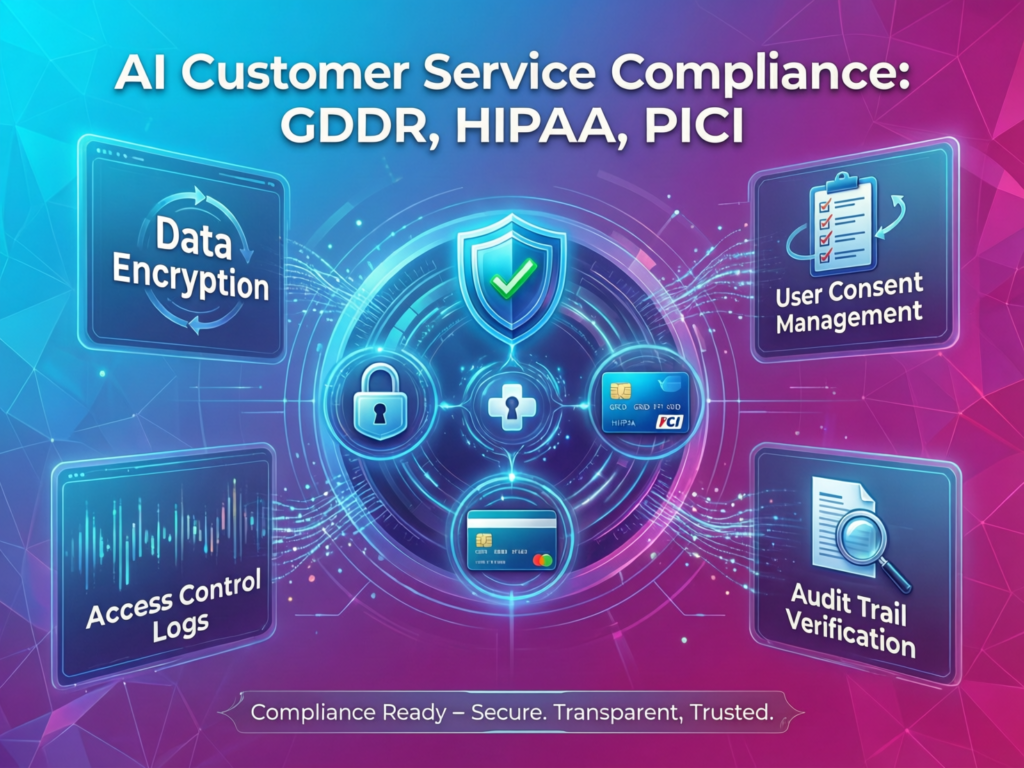
To deploy AI chatbots safely, brands must align with GDPR/DSGVO, UK-GDPR, HIPAA, PCI DSS and sector rules from regulators like BaFin and the FCA, while ensuring transparent disclosure, consent and strong security controls. The more sensitive the data (health, banking, identity), the tighter your guardrails must be.
GDPR, UK-GDPR & DSGVO Essentials for AI Support
Under GDPR and UK-GDPR, your AI customer service chatbot is just another processing activity but one with higher risk. Key principles include:
Lawful basis (usually contract or legitimate interest, sometimes consent)
Data minimisation collect only what’s needed for support
Storage limitation clear retention schedules for logs and transcripts
DPIAs for high-risk AI systems
For EU and especially German brands, pay attention to.
DSGVO implementation and guidance from local authorities
BaFin expectations for banks using AI in customer channels
EU data residency – AI workloads staying in EU regions or sovereign clouds
In the UK, the ICO offers detailed guidance on AI and data protection, including fairness, explainability and governance essential reading for UK contact centres rolling out AI.
Sector-Specific Requirements: HIPAA, PCI DSS, SOC 2, ISO 27001
US healthcare (HIPAA)
AI chatbots that handle PHI must comply with the HIPAA Privacy and Security Rules, including BAAs, access controls and audit trails.
UK healthcare (NHS/NHSX)
Similar expectations around confidentiality, explainability and robust security reviews.
Payments & ecommerce (PCI DSS)
avoid exposing full card data in chat; if you must, use tokenisation and PCI-compliant providers.
Security frameworks (SOC 2, ISO 27001)
Use them as filters when choosing AI vendors and implementation partners, especially for banks and insurers.
Building Customer Trust with Transparent AI
Trust is as much UX as it is legal.
Clearly disclose when customers are talking to AI and when a human joins.
Offer easy escape hatches to humans (buttons, keywords like “agent”).
Use plain language to explain how transcripts are used, how long data is stored, and whether conversations train models.
UK and EU regulators increasingly expect robust governance around AI explainability and fairness; getting ahead of this is a competitive advantage, not just a compliance chore.
How to Implement Conversational AI Without Replacing Humans
The safest path is to start small: pick one high-volume use case, involve your frontline agents in design, integrate with your existing tools, and roll out in phases with clear escalation to humans. Done this way, conversational AI for customer service becomes a co-pilot for your team, not a threat.
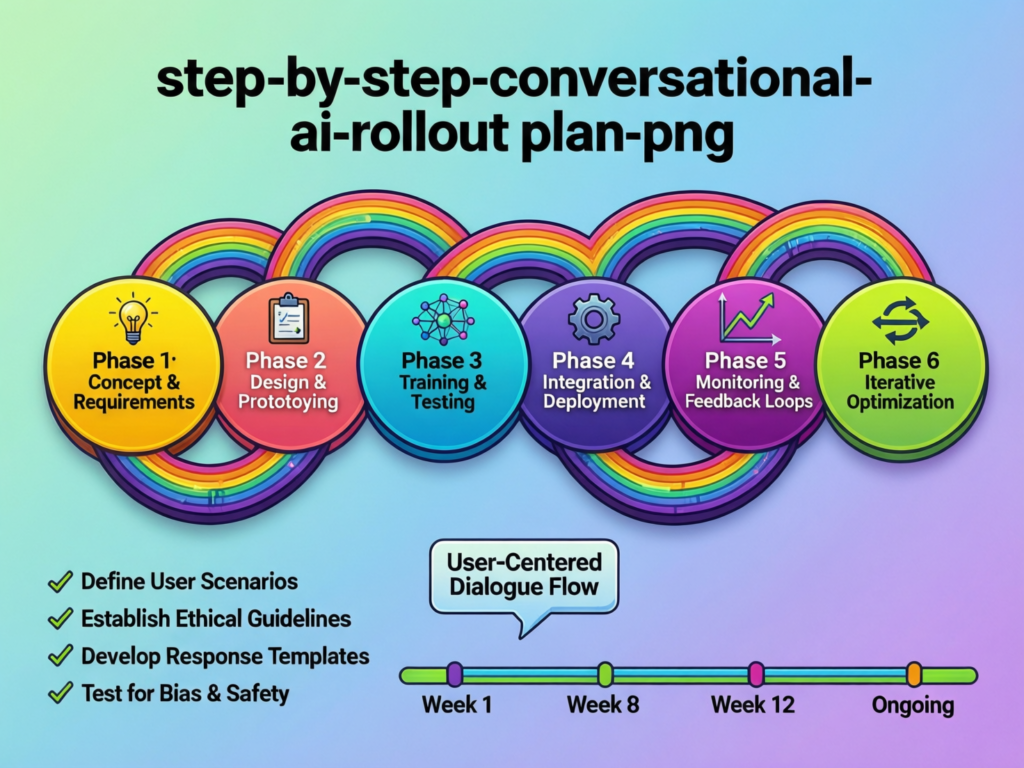
Step-by-Step Rollout Plan
Discovery
Map your top intents by volume and complexity across channels. For many brands this is order status, password resets, billing questions and appointment changes.
Design
Draft conversation flows, knowledge base content, escalation rules and safety guardrails (what the bot must never do or say).
Pilot
Launch in one channel (often website chat) and one region say US traffic only under close monitoring with human supervisors.
Scale
Once KPIs hold, expand to UK, Germany and wider EU markets, add more languages and integrate deeper into your CCaaS and CRM stack.
Mak It Solutions often pairs this with fast MVP builds using agile methods and modern frameworks so you can test real conversations quickly rather than debating flows on slides for months.
Human-in-the-Loop & Agent Assist Models
To keep humans central:
Roll out agent co-pilots firstAI suggesting responses and summaries inside Zendesk or Salesforce before you expose AI directly to customers.
Give supervisors quality dashboards across AI and human interactions.
Train agents to collaborate with AI, editing suggestions and flagging gaps that product and data teams can fix.
Common Pitfalls and How to Avoid Them
Over-automating sensitive journeys complaints, cancellations and high-value fraud disputes should usually default to humans.
Ignoring German/EU data residency especially for finance and healthcare.
Underinvesting in analytics and optimisation AI needs tuning; treat it like a product, not a one-off deployment.
Choosing the Right Conversational AI Platform
The best conversational AI platform for your customer service is the one that fits your tech stack, GEO compliance needs, channels and use cases—not the one with the longest feature list. A good fit in New York might be a poor fit in Frankfurt if data residency, language quality or BaFin guidance is ignored.
Evaluation Criteria: Fit for US, UK, Germany & EU
Consider.
Languages: robust US/UK English, German and other EU languages you serve (French, Dutch, Nordics).
Hosting & data residency: US vs EU regions, EU-only or sovereign hosting, and on-prem options for highly regulated sectors.
Local references: proven deployments with startups in San Francisco, scale-ups in London or Manchester, and corporates in Berlin, Munich or Frankfurt.
Combine this with cloud strategy decisions you may already be making across AWS, Azure and Google Cloud.
Comparing Platforms, Tools & “No-Code” Options
Broadly, you’ll see three categories.
Contact-centre suites (Salesforce, Vonage, Dialpad) with embedded AI.
Specialised conversational AI vendors (Cognigy, PolyAI, hello-charles) that plug into your existing telephony and CRMs.
No-code/low-code builders that let CX teams design flows and bots visually.
Use no-code tools for quick pilots and narrow use cases; lean on specialised vendors or Mak It Solutions’ custom development when you need deeper integration, complex compliance, or multi-region rollouts.
Next Steps: Pilot, Measure, Then Scale
Define one clear use case and 3–5 success metrics (deflection, AHT, CSAT, revenue uplift). Run a focused 60–90 day pilot in one region (e.g. UK website chat), iterate weekly with agent feedback, then scale what works to US, Germany and wider EU.
Key Takeaways
Conversational AI for customer service is a step change from legacy rule-based chatbots, using NLP and generative AI to understand intent and keep context across channels.
ROI comes from deflecting routine contacts, reducing handle time and enabling AI-assisted agents—not from trying to replace your frontline team entirely.
Compliance isn’t optional: align with GDPR/DSGVO, UK-GDPR, HIPAA, PCI DSS and sector rules (BaFin, FCA, NHS/NHSX) while being transparent about how AI uses customer data.
A safe rollout starts with one high-volume use case, human-in-the-loop workflows, and strong analytics to keep improving over time.
Platform choice should follow your stack, governance and GEO needs, not pure hype; pilots on real traffic beat paper RFPs every time.
If you’re exploring conversational AI for customer service and want a grounded, ROI-focused plan not another vendor demo Mak It Solutions can help. Our team combines AI, cloud, web and mobile expertise to design compliant, omnichannel support experiences for US, UK, German and EU brands.
Ready to see what a 60–90 day pilot could look like for your organisation? Reach out to Mak It Solutions to request a scoped estimate or book a short consultation on your customer service AI roadmap.( Click Here’s )
FAQs
Q : How long does it take to deploy an AI customer service chatbot in a mid-sized company?
A : For a mid-sized company, a focused conversational AI pilot can often go live in 8–12 weeks, assuming your CRM and helpdesk integrations are clear and your knowledge base is in decent shape. Full multi-channel rollout across web, mobile, WhatsApp and voice typically takes several additional phases to refine flows, tune models and align legal, security and operations—plan for 4–9 months to reach a mature, stable deployment.
Q : What KPIs should US, UK and EU contact centres track to measure conversational AI success?
A : Core KPIs include deflection/containment rate, AHT (for both AI-assisted and human-only contacts), FCR, CSAT and NPS. Many US and EU teams also track agent productivity, queue times, and revenue metrics like upsell, cross-sell and cart recovery in AI-powered journeys. For regulated sectors, add compliance KPIs such as audit log completeness, DPIA status and incident rates related to AI misrouting or disclosure errors.
Q : Can small businesses afford conversational AI for customer service, or is it only for enterprises?
A : Conversational AI used to be an enterprise toy, but usage-based pricing and no-code tools have opened it up to small businesses. A boutique ecommerce brand in Amsterdam or Manchester can start with a narrow AI chatbot embedded into Shopify or WooCommerce, paying per conversation or seat rather than huge licences. The key is to avoid over-engineering: automate a few high-volume queries first, prove value, then gradually layer in more integration and channels as you grow.
Q : How do AI chatbots handle multiple languages (English, German and other European languages) in one customer support operation?
A : Modern conversational AI platforms can detect language automatically and route to the right model or prompt, often within a single virtual agent. You’ll still need native-speaking reviewers to tune tone and idioms in English, German and other EU languages, and to check regulatory nuances (for example, German BaFin and DSGVO expectations versus UK-GDPR and ICO guidance). Many brands also keep a human “backstop” for complex or sensitive cases in each language, especially for banking and healthcare.
Q : What’s the difference between embedding an AI chatbot into Zendesk or Salesforce vs using a standalone conversational AI platform?
A : Embedding AI directly into Zendesk or Salesforce gives you tight integration, simpler admin and native analytics, which is ideal for many US and UK teams starting out. A standalone conversational AI platform typically offers richer orchestration, better omnichannel routing, advanced NLU and more flexible data residency options important for German or EU-regulated organisations. In practice, enterprises often combine both: the standalone platform handles conversations, while Zendesk or Salesforce remains the system of record for tickets and customer data.