



Incident Response Runbook for GCC Teams
A strong incident response runbook helps GCC companies respond to cyber attacks without panic, confusion, or delayed decisions. For teams in Saudi Arabia, the UAE, and Qatar, it also supports regulator-aware escalation, bilingual communication, evidence preservation, and safer recovery.
In simple terms, it tells your SOC, IT, legal, leadership, PR, and customer support teams exactly what to do when ransomware, account takeover, cloud exposure, or data leakage hits. The goal is not only to stop the attack, but to protect operations, customers, and trust.
What Is an Incident Response Runbook?
An incident response runbook is a practical, step-by-step guide for handling a cyber incident from detection to recovery. It defines who acts, who approves, what evidence to preserve, when to escalate, and how to communicate.
For GCC companies, the runbook should reflect local realities such as Arabic-English stakeholders, cloud data residency, sector-specific regulations, and fast executive decision-making.
Incident Response Runbook vs Cyber Incident Response Plan
A cyber incident response plan explains the overall policy. It covers governance, roles, risk appetite, approval flows, and responsibilities.
The runbook is more hands-on. It tells the SOC analyst what to check, the CISO who to notify, legal what evidence to preserve, and leadership when to brief the board.
Why GCC Security Teams Need a Practical Runbook
A fintech in Riyadh, an e-commerce brand in Dubai, or a logistics company in Doha cannot afford hours of confusion during a live cyber incident.
A practical runbook helps teams.
Confirm and classify incidents faster
Contain ransomware or account takeover before it spreads
Preserve logs and evidence properly
Escalate to legal, executives, and regulators with less delay
Keep customer communication calm, clear, and consistent
It also supports broader digital resilience across secure web platforms, mobile apps, and cloud-based services such as modern web development for SEO, speed, and growth and mobile app development services.
The First 24 Hours After a Cyber Attack
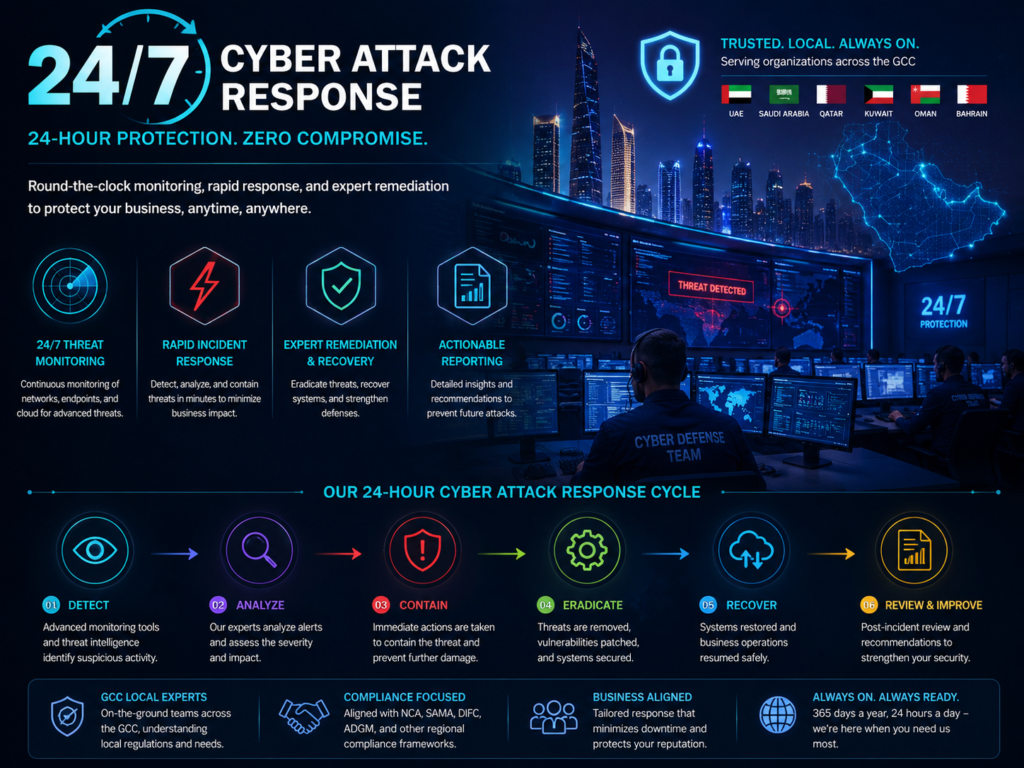
The first 24 hours should focus on confirming the incident, limiting damage, preserving evidence, briefing decision-makers, and preparing regulator-aware communication.
Speed matters, but rushed action can create new problems. Deleting files, restarting systems, or making public statements too early can weaken forensic evidence and increase legal risk.
Detect, Verify, and Classify
Start with facts.
Check alerts from SIEM, EDR, cloud logs, identity platforms, payment systems, firewalls, and customer support reports. Then classify the incident type and severity.
Common categories include.
Ransomware
Business email compromise
Data breach
Insider misuse
API abuse
Cloud misconfiguration
Privileged account compromise
At this stage, the priority is clarity. What happened? Which systems are affected? Is the incident active? Could customer data be involved?
Contain the Threat
Once the incident is confirmed, contain it carefully.
Containment may include disabling compromised accounts, isolating infected endpoints, rotating API keys, blocking malicious IPs, pausing risky integrations, and protecting backups.
For example, a Dubai e-commerce company may need to freeze suspicious checkout activity while keeping clean storefront services online through its e-commerce solution.
Avoid making broad changes without coordination. If customer-facing applications are involved, bring in the teams responsible for React Native development services or front-end development services before pushing emergency fixes.
Escalate, Preserve Evidence, and Prepare Updates
By this point, leadership needs a clear picture.
Preserve logs, affected files, memory images, admin activity, endpoint alerts, cloud audit trails, and user access records. Keep evidence organized and access-controlled.
Prepare an executive brief that explains.
What happened
What is confirmed
What is still unknown
Which systems or users are affected
Whether customer data may be involved
What containment steps have been taken
What decisions are needed next
For GCC teams, this update should be understandable to technical and non-technical leaders. In many cases, Arabic and English versions should be prepared early.
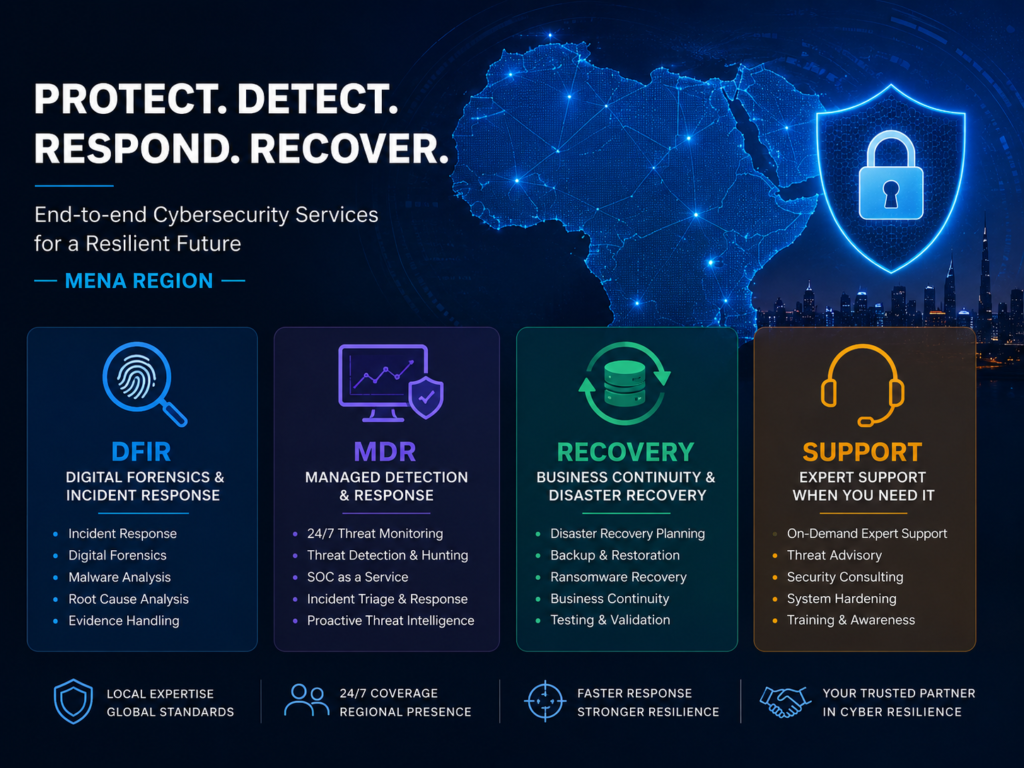
Saudi, UAE, and Qatar Compliance Considerations
Cyber incident reporting in Saudi Arabia, the UAE, and Qatar should be handled through a documented escalation matrix, legal review, regulator mapping, and evidence-backed updates.
Financial services, government, healthcare, payment platforms, and critical infrastructure usually face higher expectations than general businesses.
Saudi Arabia.
In Saudi Arabia, regulated organizations should align their incident response runbook with relevant cybersecurity and data governance expectations.
For financial institutions, fintech platforms, payments, lending, insurance, and banking-related services, SAMA’s cybersecurity expectations are especially important. Companies should also consider NCA controls and NDMO-related data governance where applicable.
UAE.
In the UAE, companies in Dubai and Abu Dhabi should map incident response to TDRA, aeCERT, DIFC, ADGM, and sector-specific requirements where relevant.
The UAE’s cybersecurity strategy focuses on safer, more resilient digital infrastructure for citizens, businesses, and government services.
Qatar.
In Qatar, Doha-based businesses should consider NCSA, Q-CERT, QCB, and sector-specific reporting expectations.
For banks, insurers, payment service providers, and other regulated firms, evidence quality, governance, and recovery readiness matter.
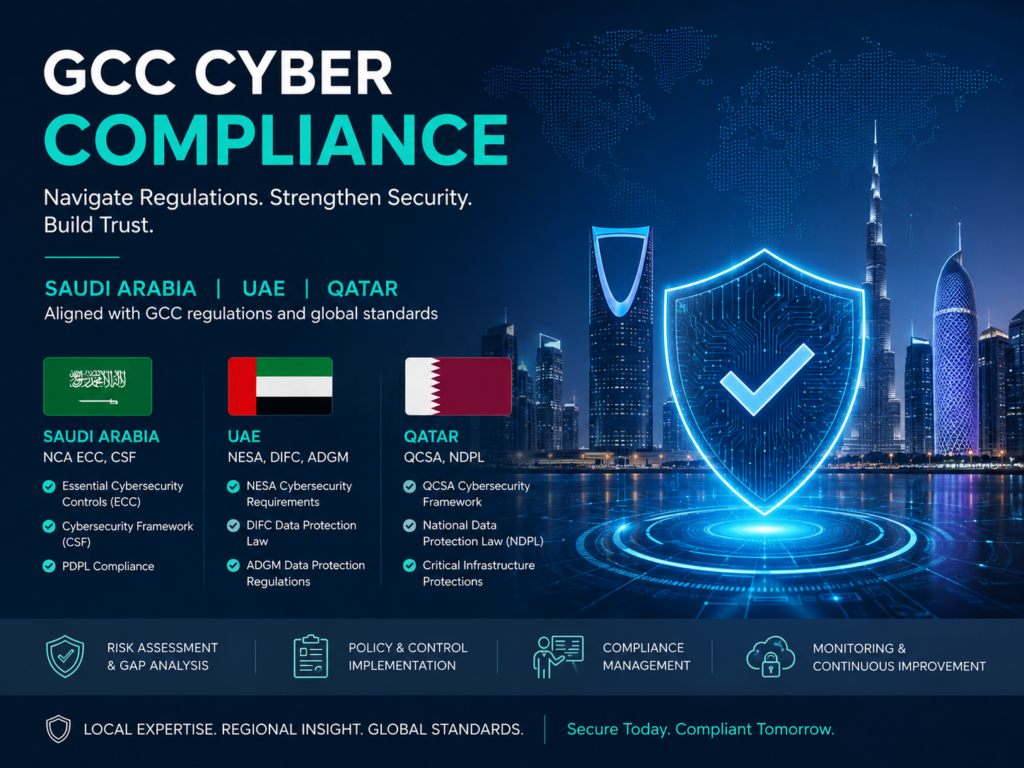
Building a GCC Incident Response Escalation Matrix
A strong escalation matrix removes hesitation. Everyone should know who owns technical containment, legal risk, customer messaging, regulator coordination, and board approval.
Internal Escalation
Define severity levels clearly.
A low-severity malware alert may stay with SOC and IT. A confirmed breach involving customer data should reach the CISO, CEO, legal, compliance, and communications team within defined time windows.
Key internal roles usually include.
SOC analyst
IT operations lead
CISO or security head
CEO or executive sponsor
Legal counsel
Compliance lead
PR and communications
Customer support lead
Board representative, if required
External Escalation
External escalation paths should be documented before an incident happens.
This may include regulators, cyber insurance providers, cloud providers, managed detection and response teams, digital forensics partners, payment processors, and critical software vendors.
For GCC businesses using AWS Bahrain, Azure UAE regions, or Google Cloud Doha, cloud-provider escalation should be tested and documented in advance.
Arabic-English Communication
Cyber incidents often involve local customers, international vendors, regulators, cloud platforms, executives, and support teams.
That is why GCC companies should prepare Arabic and English templates for.
Customer notifications
Executive updates
Regulator summaries
Employee instructions
Vendor coordination
Media holding statements
Clear communication reduces panic. It also helps prevent technical teams from saying one thing while customer support says another.
Incident Response Runbook Checklist for GCC Companies
A runbook should be easy to use under pressure. Long policy documents are useful for governance, but incident teams need checklists they can follow quickly.
Technical Checklist
Include checks for.
Identity and access logs
Endpoint alerts
Firewall and network activity
Cloud audit logs
Database access
API traffic
Privileged accounts
Backup integrity
Third-party integrations
Recent deployments or code changes
For application-heavy companies, the runbook should also include secure code review and backend checks across services such as PHP web development.
Legal and Compliance Checklist
Legal and compliance teams should confirm:
What type of data may be affected
Which jurisdictions are involved
Whether regulated customer categories are impacted
Which regulator paths may apply
Contractual notification duties
Cyber insurance requirements
Evidence custody and access control
Public communication approval steps
Do not issue public updates before legal and executive review unless a specific obligation requires immediate notice.
Customer and Board Communication Checklist
Prepare a simple board brief and a customer-ready message.
The board brief should focus on impact, risk, decisions, and recovery status. Customer communication should explain what happened, what data may be affected, what actions were taken, and what users should do next.
Keep the tone calm, sincere, and accountable.
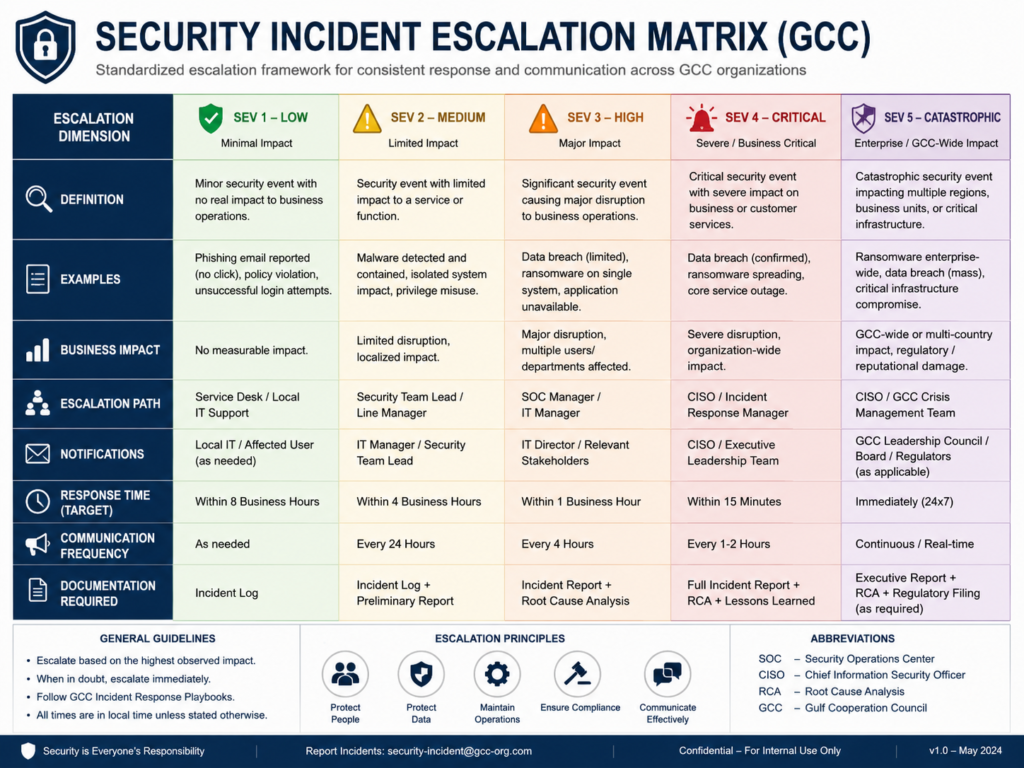
DFIR, MDR, and Recovery Support Across MENA
Some incidents can be handled internally. Others need outside help.
When to Bring in DFIR Experts
Bring in digital forensics and incident response experts when.
Ransomware is spreading
Sensitive data may be exposed
Privileged accounts are compromised
Internal teams lack forensic capacity
Regulators or insurers may request evidence
The root cause is unclear
Managed detection and response support can also help when teams need 24/7 monitoring across Riyadh, Dubai, Abu Dhabi, Doha, Jeddah, or wider MENA operations.
Choosing Incident Response Support in Riyadh, Dubai, and Doha
Choose partners who understand GCC compliance, cloud architecture, bilingual communication, and board-level reporting.
Mak It Solutions can support broader resilience through services, secure application delivery, cloud-aware development, and GCC-focused technology guidance.
Recovery Planning
Recovery is not just restoring systems.
A proper recovery process includes root-cause analysis, patching, access review, hardening, phishing awareness, backup validation, architecture improvements, and post-incident reporting.
The final question should not only be, “Are we back online?”
It should be, “Are we safer than we were before?”
How to Keep Your Incident Response Runbook Ready
A runbook becomes weak when it is treated as a one-time document. It must be tested, updated, and owned.
Test with Tabletop Exercises
Run tabletop exercises every quarter or after major infrastructure changes.
Useful GCC-focused scenarios include.
Riyadh fintech ransomware attack
Dubai e-commerce account takeover
Doha cloud data exposure
UAE customer data leak through a third-party integration
Saudi privileged account compromise
The test should include SOC, IT, legal, executives, communications, and customer support.
Update Contacts and Regulator Paths
Keep key details current.
Emergency phone numbers
Executive backups
Legal contacts
DFIR partner contacts
Cloud support routes
Regulator escalation paths
API owners
Payment provider contacts
System owners
Outdated contacts can waste the first critical hour.
Align with Data Residency and Board Reporting
A GCC-ready incident response runbook should reflect culture, language, data location, sector rules, and leadership expectations.
It should be detailed enough for technical teams and simple enough for executives under pressure.
Final Take
A cyber incident can move fast, but your response does not have to be chaotic. A well-built incident response runbook gives GCC teams a clear way to detect, contain, escalate, communicate, and recover with confidence.
For Saudi Arabia, the UAE, and Qatar, the strongest runbooks combine technical detail with legal awareness, bilingual communication, cloud readiness, and executive clarity.
Contact Mak It Solutions to build a custom GCC incident response runbook, review your cloud and application risks, or plan a practical cyber resilience strategy for your organization. ( Click Here’s )
FAQs
Q : What is an incident response runbook?
A : An incident response runbook is a step-by-step guide that explains how a company should respond during a cyber incident. It covers detection, containment, escalation, communication, evidence preservation, and recovery.
Q : Is an incident response runbook required for Saudi companies?
A : For many Saudi organizations, especially government, critical infrastructure, and regulated financial firms, a documented incident response runbook is a practical necessity. The exact requirement depends on the sector, but it is strong evidence of cybersecurity readiness.
Q : How often should a UAE company test its cyber incident response checklist?
A : A UAE company should test its cyber incident response checklist at least quarterly and after major changes such as cloud migration, payment system updates, mobile app launches, or mergers. Testing should include technical, legal, executive, and customer communication steps.
Q : Who should approve breach communication in Qatar?
A : In Qatar, breach communication should usually be approved by the CEO or delegated executive, legal counsel, CISO, compliance lead, and communications team. Regulated entities should also consider QCB or sector-specific expectations.
Q : Can one GCC incident response runbook support Arabic and English teams?
A : Yes. A GCC incident response runbook should support both Arabic and English stakeholders because incidents often involve local customers, global vendors, regulators, cloud providers, and internal teams.