
Zero Trust Roadmap for SMEs in GCC
GCC businesses are growing through cloud apps, remote teams, mobile tools, and SaaS platforms. That makes a zero trust roadmap for SMEs more important than ever, especially for companies in Saudi Arabia, the UAE, and Qatar handling customer, payment, or operational data.
A practical zero trust roadmap helps SMEs verify every user, device, app, and access request before trust is granted. It reduces phishing risk, limits unnecessary access, improves cloud security, and supports stronger compliance habits without forcing small teams into enterprise-level complexity.
What Is a Zero Trust Roadmap for SMEs?
Zero Trust means one simple thing: do not trust automatically. Always verify.
That applies when an employee opens email, a vendor logs into a dashboard, a finance manager accesses a banking portal, or a developer connects to production systems. Identity, device health, access level, and risk should all be checked before access is allowed.
For SMEs in Riyadh, Jeddah, Dubai, Abu Dhabi, and Doha, a roadmap keeps security practical. Instead of buying random tools, the business can focus on the risks that usually cause real damage.
Stolen passwords
Shared admin accounts
Weak remote access
Unmanaged laptops and mobiles
Over-permissioned SaaS users
Poor cloud storage settings
Vendor accounts with too much access
A good zero trust roadmap for SMEs includes MFA, least privilege access, device checks, secure SaaS permissions, backups, endpoint protection, identity verification, and basic monitoring.
SMEs building new platforms can also connect security planning with custom web development support and broader IT service planning.
Why GCC SMEs Need Zero Trust Now
Many SMEs in the GCC are moving faster than their security policies.
A Riyadh fintech may connect to banking APIs. A Dubai e-commerce brand may manage payments, inventory, and customer support through SaaS tools. A Doha SME may depend on remote staff, mobile devices, and cloud storage.
That speed creates opportunity, but it also opens weak points. One reused password, one old employee account, or one poorly configured admin dashboard can become a serious business risk.
Zero Trust helps SMEs build security around how work actually happens: people use cloud apps, teams work from different locations, and sensitive data moves across devices and platforms.
It is not about buying every expensive cybersecurity product at once. In practice, it means building trust carefully, one control at a time.
Secure Identity and Employee Access
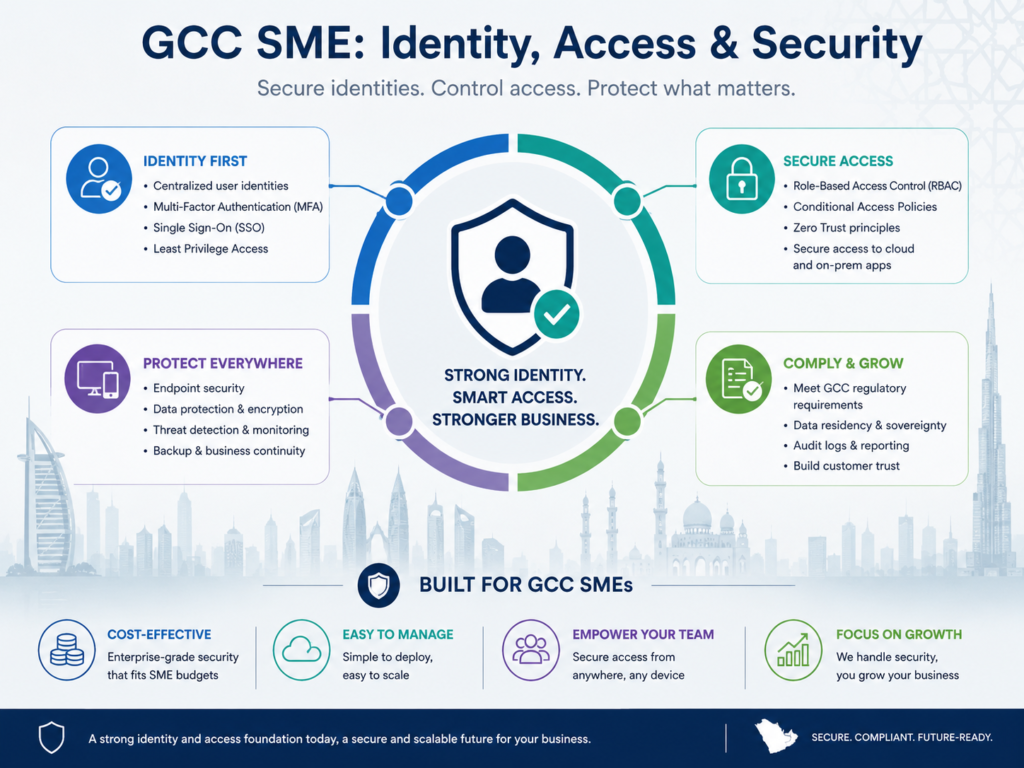
Start with Multi-Factor Authentication
MFA should be the first major control in your roadmap.
Enable it for.
Email accounts
Microsoft 365 or Google Workspace
Cloud dashboards
Banking portals
CRM and HR tools
Accounting systems
Admin accounts
Developer platforms
For a Saudi fintech or payment-related business, MFA is more than a login feature. It supports a stronger security culture in environments where regulated cybersecurity expectations matter. SAMA’s Cyber Security Framework is designed to support mature cybersecurity controls for supervised financial institutions.
Apply Least Privilege Access
Least privilege means employees only get the access they need to do their job.
A Dubai sales team does not need full finance access. A Doha warehouse user should not control cloud billing. A Jeddah marketing assistant should not manage admin permissions.
Start by creating simple roles.
| Team | Typical Access Needed |
|---|---|
| Finance | Accounting, banking, invoices |
| Sales | CRM, proposals, customer records |
| HR | Employee files, payroll tools |
| Operations | Inventory, logistics, support systems |
| Admin/IT | User management, security settings |
Keep admin access separate from normal daily-use accounts.
Remove Shared Accounts
Shared accounts make incidents harder to investigate. They also make offboarding messy.
Use named accounts for every employee and vendor. Then review access regularly. A simple user review every quarter can stop old accounts from becoming open doors.
Your access checklist should include.
Disable old employee accounts
Remove unused vendor accounts
Separate admin users from normal users
Review permissions every quarter
Keep an offboarding checklist for resignations and role changes
Protect Devices, Remote Teams, and Cloud Apps
Check Devices Before Allowing Access
A secure login is not enough if the device is risky.
Before access is allowed, company laptops and mobiles should have.
Screen locks
Device encryption
Updated operating systems
Antivirus or EDR
Secure browsers
Remote wipe where possible
For SMEs with mobile-first services, mobile app development services should also include secure login flows, session controls, and device trust checks.
Secure Remote and Hybrid Work
Remote work is now normal across Riyadh, Dubai, Abu Dhabi, and Doha. That means access rules need to work beyond the office.
Useful controls include.
Conditional access
Login alerts
Location-based warnings
Secure Wi-Fi guidance
Device compliance checks
Risk-based sign-in rules
VPNs can still help, but many SMEs now need more than a VPN. Identity-aware access checks the person, device, location, and risk level before allowing a session.
Protect SaaS and Cloud Applications
Most SMEs depend on SaaS every day.
Review access in.
Microsoft 365
Google Workspace
CRM systems
Accounting tools
ERP platforms
Support desks
Project management tools
Cloud storage
A Dubai e-commerce business using e-commerce development support should secure payment workflows, inventory systems, customer service dashboards, and admin panels together.
Build GCC Compliance into the Roadmap
Zero Trust is not only a technical model. For GCC SMEs, it can also support better governance, customer confidence, and audit readiness.
Saudi Arabia.
Saudi SMEs serving fintech, government, logistics, or cloud-based sectors should treat access security as a trust signal.
SAMA’s cybersecurity guidance matters for supervised financial institutions, while broader Saudi cybersecurity and data governance expectations make identity controls, monitoring, and policy documentation important.
In practice, Saudi SMEs should document.
Who can access sensitive systems
How admin access is approved
How user access is reviewed
How incidents are reported
Where business and customer data is stored
UAE.
UAE SMEs in Dubai and Abu Dhabi should connect Zero Trust with customer data protection, secure access, and regulated business needs.
TDRA’s UAE CERT initiative focuses on improving information security practices and protecting UAE ICT infrastructure, which makes secure identity, monitoring, and awareness training highly relevant for SMEs.
For businesses connected to ADGM, DIFC, finance, e-commerce, or professional services, Zero Trust can help reduce account takeover risk and improve access governance.
Qatar.
For Qatar SMEs, especially in payments and financial services, QCB expectations should be considered early. QCB has published information and cybersecurity regulations for payment service providers, including fraud detection, response, and reporting requirements.
NCSA Qatar also plays a national role in strengthening cybersecurity awareness and digital protection.
For SMEs in Doha, the practical starting point is simple: verify users, protect devices, control SaaS permissions, and document how access is managed.
Manage Data Residency, Cloud Security, and Arabic UX
Why Data Residency Matters
Data residency affects where customer, payment, health, and operational data is stored.
SMEs should know.
Which data is sensitive
Where that data is stored
Who can access it
How backups are protected
Which cloud regions support the business need
This is especially important for companies serving customers across Saudi Arabia, the UAE, and Qatar.
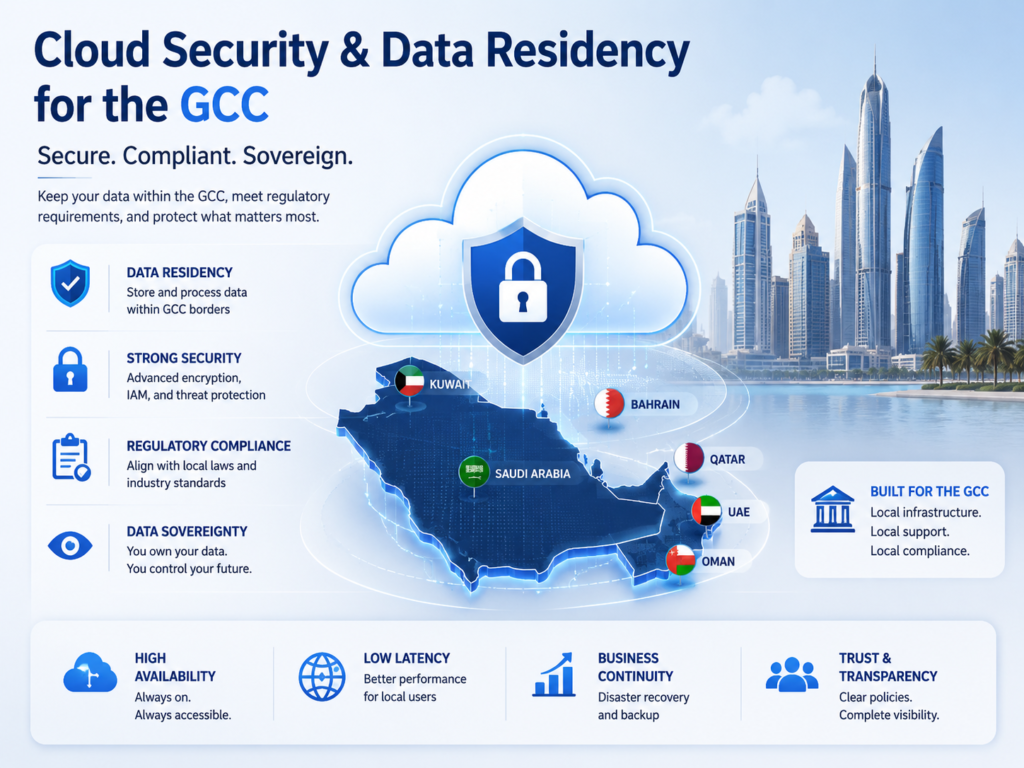
Cloud Regions to Consider in GCC Planning
Cloud architecture should match business, latency, and compliance needs.
AWS lists Middle East regions in Bahrain and the UAE, with Saudi Arabia listed among announced future regions. Microsoft Azure lists UAE and Qatar regions in its regional infrastructure documentation. Google Cloud lists Middle East locations including Doha and Dammam in its cloud location documentation.
For SMEs, the point is not to choose a region blindly. The better approach is to map data type, customer location, backup needs, and compliance exposure before deciding where workloads should sit.
Arabic UX and Secure User Adoption
Security fails when employees do not understand it.
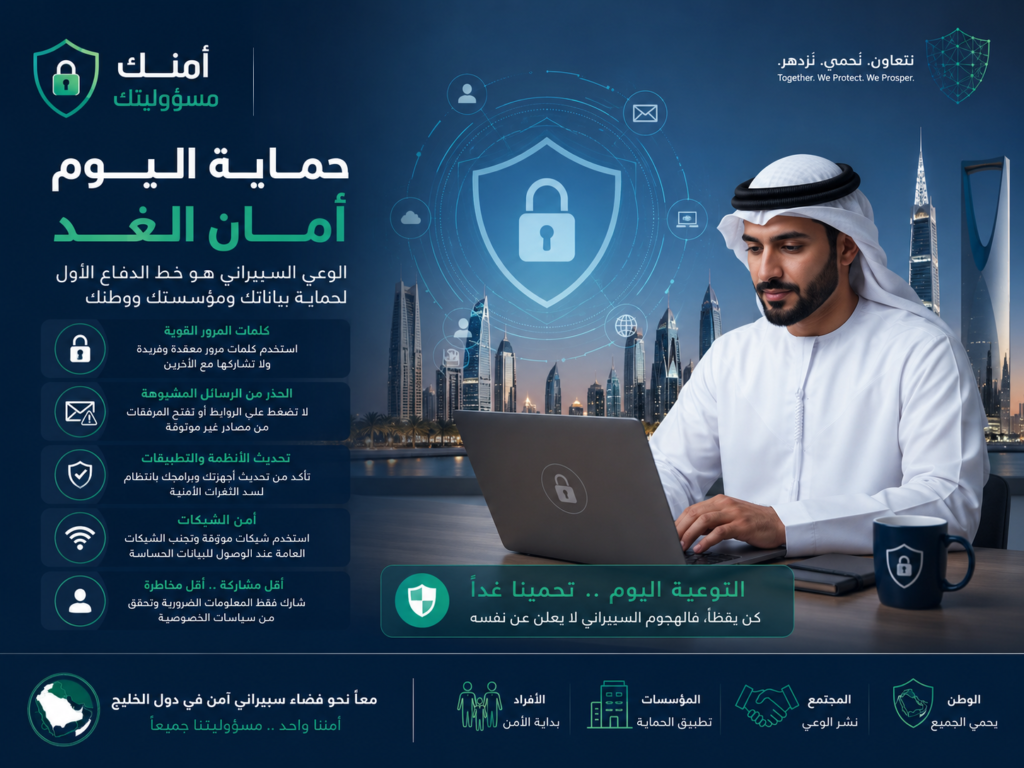
Arabic login instructions, bilingual awareness training, and culturally familiar onboarding can make security easier to follow. This is especially useful for teams where some employees are more comfortable with Arabic and others work mostly in English.
Good security adoption includes.
Clear MFA setup instructions
Simple phishing examples
Arabic-English onboarding screens
Easy incident reporting steps
Short refresher training
Create a Practical 90-Day Zero Trust Roadmap
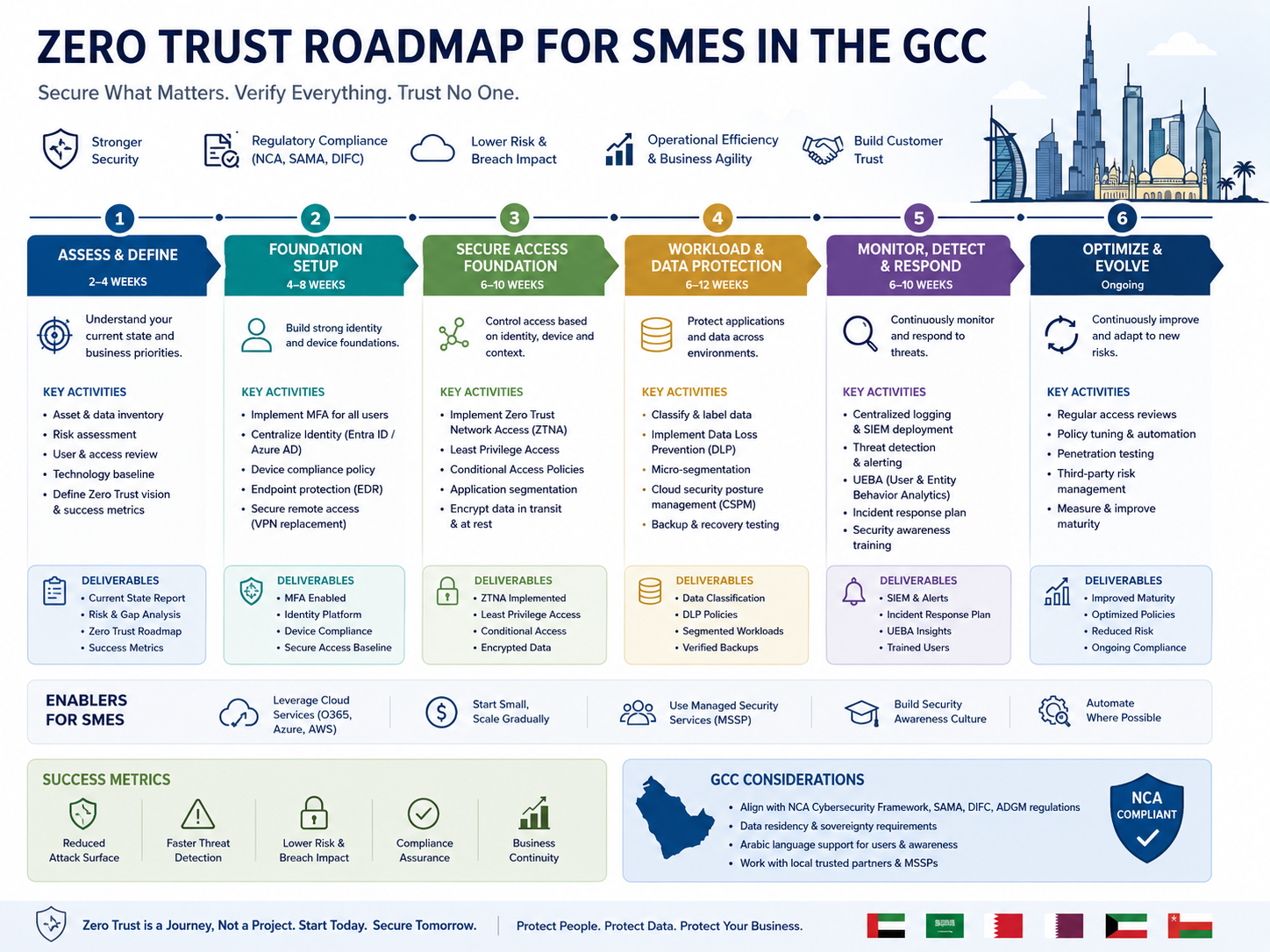
A zero trust roadmap for SMEs works best when it is phased. Start with the biggest risks, then build gradually.
Fix the Biggest Access Risks
Focus on identity and email first.
Actions to complete.
Enable MFA
Disable old accounts
Secure email access
Identify admin users
Remove shared logins
Document cloud and SaaS apps
Review finance and banking access
A Riyadh fintech startup, for example, can begin with stronger access controls before investing in advanced security platforms.
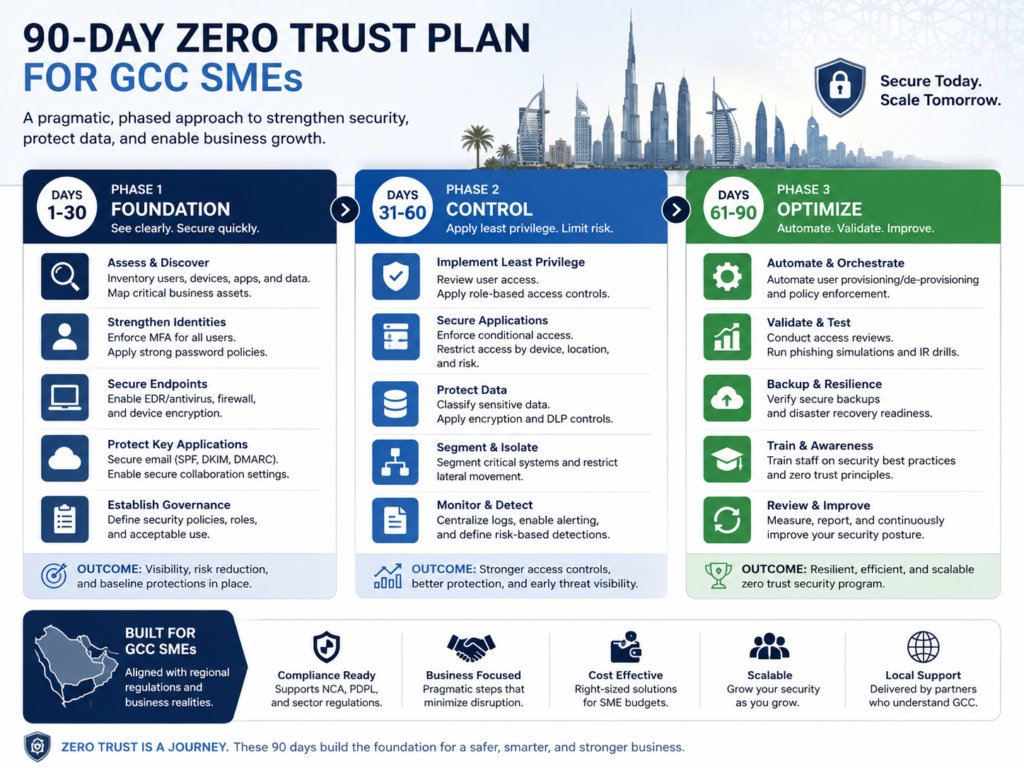
Add Device and Cloud Controls
Once identity is stronger, move to devices and SaaS permissions.
Actions to complete.
Enforce device updates
Add conditional access
Review SaaS permissions
Improve backup settings
Check cloud storage exposure
Require screen locks and encryption
Review admin dashboards
A Dubai e-commerce brand scaling mobile apps can combine this with React Native development and secure API access.
Monitor, Review, and Improve
The final phase is about visibility and response.
Actions to complete.
Review access logs
Monitor risky logins
Run phishing awareness training
Prepare an incident checklist
Review vendor access
Test account recovery steps
Schedule the next access review
A Doha SME using regional cloud services can improve data residency planning while keeping users, devices, and apps verified.
How Much Does Zero Trust Cost for GCC SMEs?
Zero Trust does not have to start with a large budget.
Low-cost controls include.
MFA
Password managers
Admin separation
Access reviews
Secure backups
Employee training
Basic endpoint protection
The cost rises when the business needs managed detection, advanced monitoring, identity governance, compliance support, or 24/7 response.
SMEs should consider managed security or consulting when they handle payments, health data, government contracts, AI workflows, or sensitive customer records. Mak It Solutions’ SOC vs MDR vs XDR guide can help buyers compare managed security options.
Costs vary by user count, cloud stack, industry, audit exposure, and vendor maturity. Fintech in Riyadh, regulated trade in Abu Dhabi, and financial services in Doha often need stronger controls than a small internal office setup.
Final Take
GCC SMEs do not need enterprise complexity to begin Zero Trust.
Start with users. Then secure devices. Then control cloud apps. After that, monitor activity, review vendors, and align policies with local compliance expectations.
A practical zero trust roadmap for SMEs helps businesses in Saudi Arabia, the UAE, and Qatar reduce phishing risk, protect customer data, and improve cloud security step by step.
For deeper planning, businesses can also review AI agent identity security, software supply chain security, and incident response planning.
Need a practical zero trust roadmap for SMEs in Saudi Arabia, the UAE, or Qatar? Contact Mak It Solutions to assess your access, cloud, device, and compliance gaps.
You can explore our services or contact the team for a custom GCC security strategy.
FAQs
Q : Is Zero Trust suitable for small businesses in Saudi Arabia?
A : Yes. Saudi SMEs can start with MFA, access reviews, secure admin accounts, and endpoint updates. Fintech and regulated businesses should also align early with stronger cybersecurity control expectations.
Q : Do UAE SMEs need MFA for all employees?
A : Yes, especially for email, finance tools, admin dashboards, HR systems, and cloud platforms. For SMEs in Dubai and Abu Dhabi, MFA is one of the simplest ways to reduce phishing and account takeover risk.
Q : What should Qatar SMEs secure first: users, devices, or cloud apps?
A : Start with users, then devices, then cloud apps. Identity is usually the easiest first win because stolen credentials are common. After that, secure laptops and mobiles, then review SaaS permissions.
Q : How can GCC SMEs apply least privilege access without complex tools?
A : Use role-based access groups for finance, sales, operations, HR, and admin users. Remove permissions that are not needed and review access every quarter.
Q : Does Zero Trust help protect customer data in Riyadh, Dubai, and Doha?
A : Yes. Zero Trust limits unnecessary access to customer data and improves control over users, devices, SaaS tools, and cloud systems. This is useful for e-commerce, fintech, health, logistics, and professional services businesses.