


Arabic SEO Strategy: A New Opportunity for GCC Brands
Arabic SEO Strategy: A New Opportunity for GCC Brands
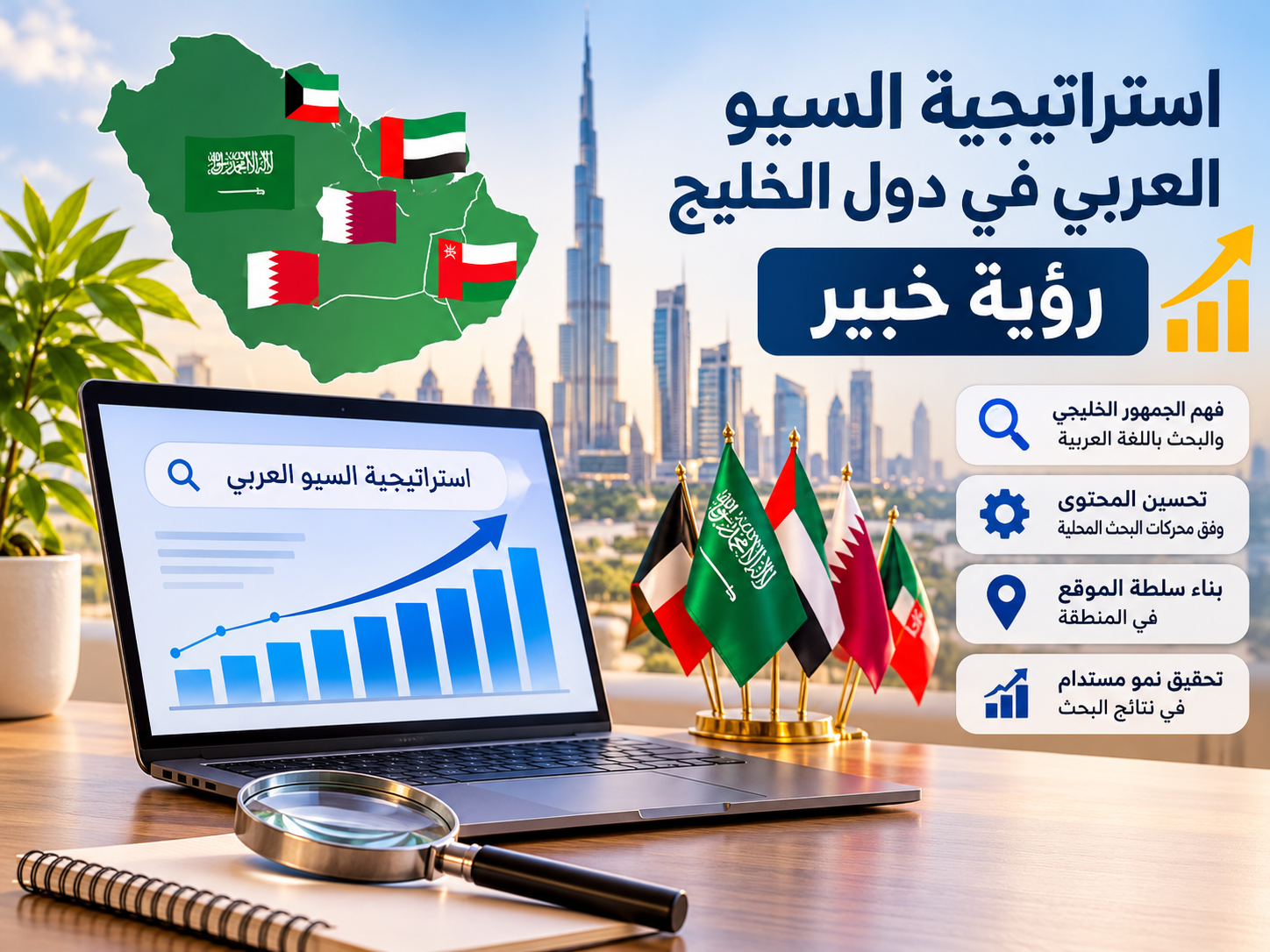
Arabic SEO Strategy: A New Opportunity for GCC Brands
What if your next opportunity in Arabic search isn’t another translated blog post, but an original insight from someone who truly understands your industry?
For businesses targeting Saudi Arabia, the UAE, and Qatar, a successful Arabic SEO strategy goes beyond translating English content. It combines original expert knowledge, locally relevant information, and technical SEO to answer the questions GCC audiences are actually searching for.
Expert commentary pages help businesses demonstrate subject knowledge, build credibility, and create useful Arabic-language resources. When supported by reliable evidence and proper optimization, these pages can strengthen organic search visibility and attract relevant audiences.
What Is Expert Commentary in an Arabic SEO Strategy?
Arabic expert commentary refers to original content featuring professional insights, expert interviews, informed opinions, or evidence-based industry analysis created for Arabic-speaking readers.
Rather than repeating information already available online, these pages provide specialist perspectives that help audiences understand complex topics and make informed decisions.
How Arabic Expert Commentary Pages Work
Expert commentary pages address specific audience questions using knowledge from qualified professionals.
For example, a Saudi fintech specialist could explain developments in digital payments, combining practical industry observations with official information from the Saudi Central Bank.
The resulting content offers something more valuable than a direct translation: context, professional interpretation, and relevance to local readers.
This approach can be especially useful in industries where accuracy, trust, and regional knowledge influence purchasing decisions.
Expert Commentary vs. Traditional Arabic Blog Content
Both traditional blogs and expert-led articles have a place in an Arabic content strategy. Their main differences involve depth, originality, and the type of information they provide.
|
Traditional Arabic Blog |
Arabic Expert Commentary |
|---|---|
| Summarizes existing information | Offers original professional insights |
| May rely on translated material | Uses relevant regional expertise |
| Often covers introductory topics | Addresses specialized audience questions |
| May provide limited source attribution | Highlights identifiable experts and evidence |
| Focuses on general education | Adds professional interpretation and context |
Traditional articles work well for introductory explanations and general searches. Expert commentary becomes particularly valuable when readers need specialized knowledge or detailed answers.
Why Local Expertise Matters to GCC Search Audiences
Arabic-speaking markets share a language, but their search behavior, business environments, and customer expectations are not identical.
A business owner in Riyadh may approach a technology investment differently from a retailer in Dubai or a consultancy in Doha.
Local expertise helps content address those differences without relying on generic regional assumptions.
An effective SEO optimization approach should therefore consider regional terminology, audience intent, and the questions customers ask in each market.
Why Arabic Expert Commentary Matters for GCC SEO
Expert-led Arabic content gives GCC businesses an opportunity to publish information that reflects their markets, industries, and customers.
Its value becomes clearer when examining individual countries.
Saudi Arabia.
Saudi Arabia offers opportunities for expert commentary in fintech, digital commerce, logistics, and technology sectors connected to the country’s Vision 2030 priorities.
Consider a Riyadh consultancy interviewing a qualified professional about digital transformation challenges affecting businesses in Riyadh and Jeddah.
Instead of publishing another broad article about digital transformation, the consultancy could address practical questions about implementation, operational challenges, and relevant Saudi business considerations.
The result would be content shaped around actual professional knowledge rather than general international examples.
UAE.
Many businesses in Dubai and Abu Dhabi serve audiences who search in both Arabic and English.
An Arabic expert commentary SEO strategy in Dubai can support these audiences through independently useful, localized content.
For example, a Dubai e-commerce company could publish Arabic interviews with retail specialists about mobile shopping preferences and customer experience.
It could also connect that commentary with relevant e-commerce development resources.
The goal is not simply to duplicate English material. It is to offer Arabic-speaking readers information that feels relevant to their needs and market.
Qatar.
An Arabic SEO content strategy for Qatar businesses should focus on locally relevant professional questions.
A Doha technology consultancy, for example, could interview experienced specialists about the challenges small and medium-sized enterprises face when adopting digital tools.
The commentary could explain common implementation concerns, practical considerations, and the importance of making informed technology decisions.
Related business intelligence solutions could provide readers with additional resources.
These scenarios illustrate possible content approaches rather than verified business case studies.
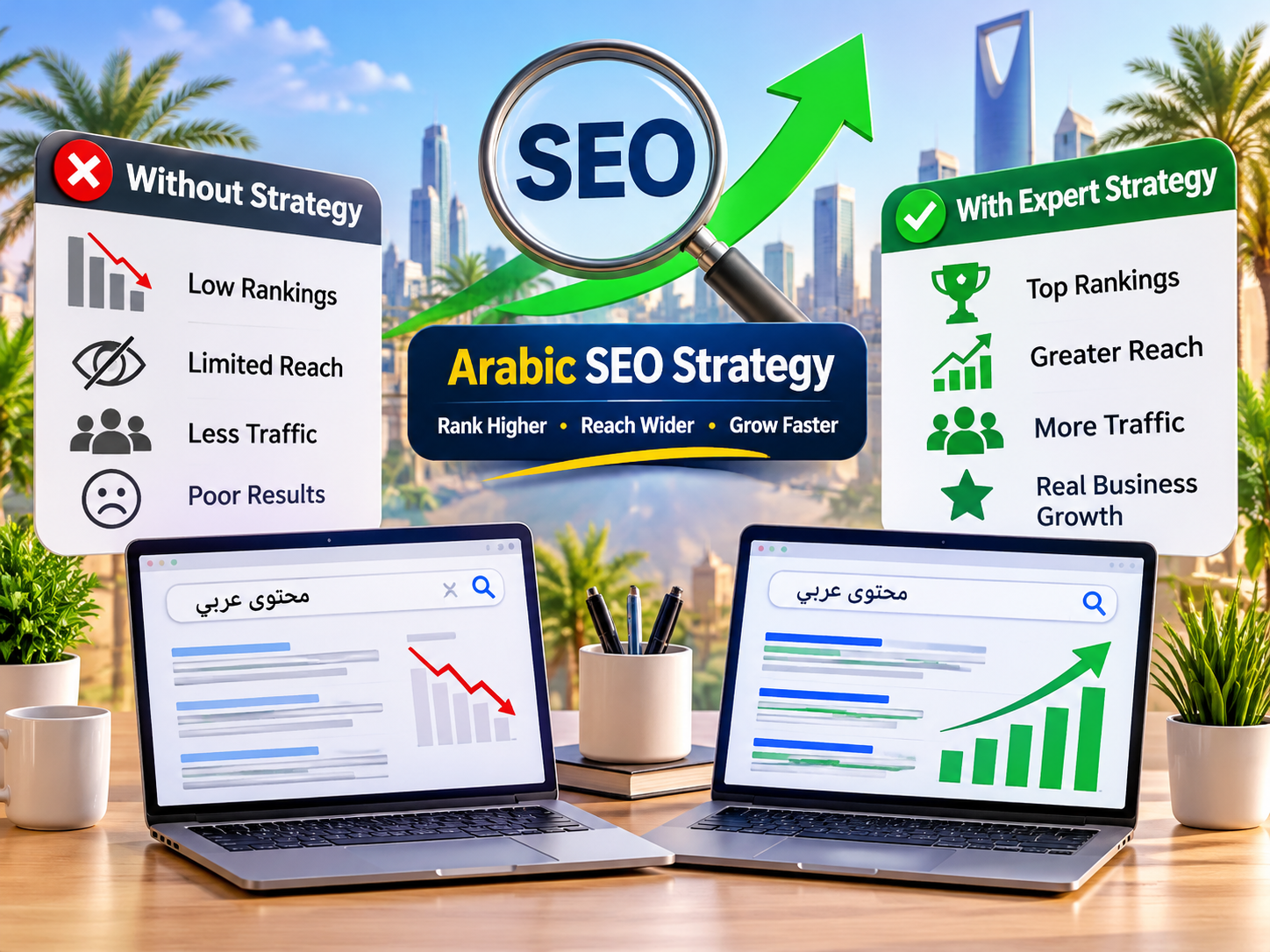
Building Trust, E-E-A-T and Regional Compliance
Publishing an expert interview does not automatically make a page authoritative.
The information still needs to be accurate, clearly attributed, and supported by relevant evidence.
Expert Credentials, Original Evidence and Editorial Review
Strong expert commentary begins with contributors who have verifiable subject knowledge.
Before publication, editors should confirm the contributor’s qualifications, review factual claims, and ensure sources are credible.
Google’s people-first content guidance emphasizes creating original, helpful, trustworthy content for readers.
The E-E-A-T framework refers to experience, expertise, authoritativeness, and trustworthiness.
It is not a standalone numerical ranking score. Instead, it provides a useful way to evaluate whether content demonstrates the qualities readers should expect from reliable information.
For GCC businesses, this means identifying experts clearly, explaining their relevance to the topic, and distinguishing professional opinions from verified facts.
Saudi, UAE and Qatar Regulatory Contexts
Regulated industries require particular editorial care.
For financial commentary in Saudi Arabia, relevant publications from the Saudi Central Bank (SAMA) may provide important supporting information.
Financial content for Qatar can similarly refer to the Qatar Central Bank when appropriate.
In the UAE, technology-related articles may use official information from the Telecommunications and Digital Government Regulatory Authority (TDRA). Certain financial topics may also require references to ADGM or DIFC authorities.
Saudi data-governance discussions may involve guidance from the National Data Management Office (NDMO).
These organizations have different responsibilities, so editors must identify the correct authority for each subject.
Expert commentary should not present opinions as regulatory requirements or imply that ordinary editorial publication automatically requires government approval.
Data Privacy, Arabic UX and Responsible Publication
Credible publishing also depends on how information is collected and presented.
Editors should obtain interview consent, confirm quotation permissions, protect personal information, and establish a process for correcting errors.
Arabic-language pages must also provide a comfortable reading experience.
That includes accurate right-to-left formatting, legible typography, accessible navigation, and mobile-friendly layouts.
Professional front-end development can help businesses deliver readable Arabic content across different devices.
Arabic Expert Commentary Use Cases for GCC Brands
Expert commentary can support different industries without relying on the same content formula.
The strongest opportunities usually come from topics where local knowledge adds genuine value.
Fintech Commentary for Saudi Arabia and Qatar
Fintech companies frequently need to explain technical concepts clearly while maintaining accuracy.
A Riyadh fintech startup might interview a qualified payments specialist about open banking, supported by relevant SAMA publications.
A Doha consultancy could develop similar educational content using appropriate Qatar Central Bank references.
In both cases, the expert contribution should help readers understand the topic without presenting speculation as established financial or regulatory guidance.
Government and Technology Commentary for UAE Audiences
UAE technology professionals can provide useful commentary on artificial intelligence adoption, digital identity, and digital public services.
Official TDRA resources can help editors establish an accurate foundation for relevant topics.
A technology company could then publish a specialist interview addressing implementation considerations, business applications, or common misconceptions.
Once published, these resources can be shared through relevant digital marketing campaigns to reach interested audiences.
Retail and Logistics Insights Across GCC Markets
Retail and logistics businesses can also benefit from expert-led content.
A Dubai retailer might interview a logistics professional about delivery expectations and customer experience.
A Saudi e-commerce business could publish commentary about Arabic-language customer support and regional shopping preferences.
Companies targeting Kuwait, Bahrain, and Oman can apply similar methods while adapting their content to each country’s audience.
The important distinction is to use genuine local knowledge rather than recycling identical claims across different markets.
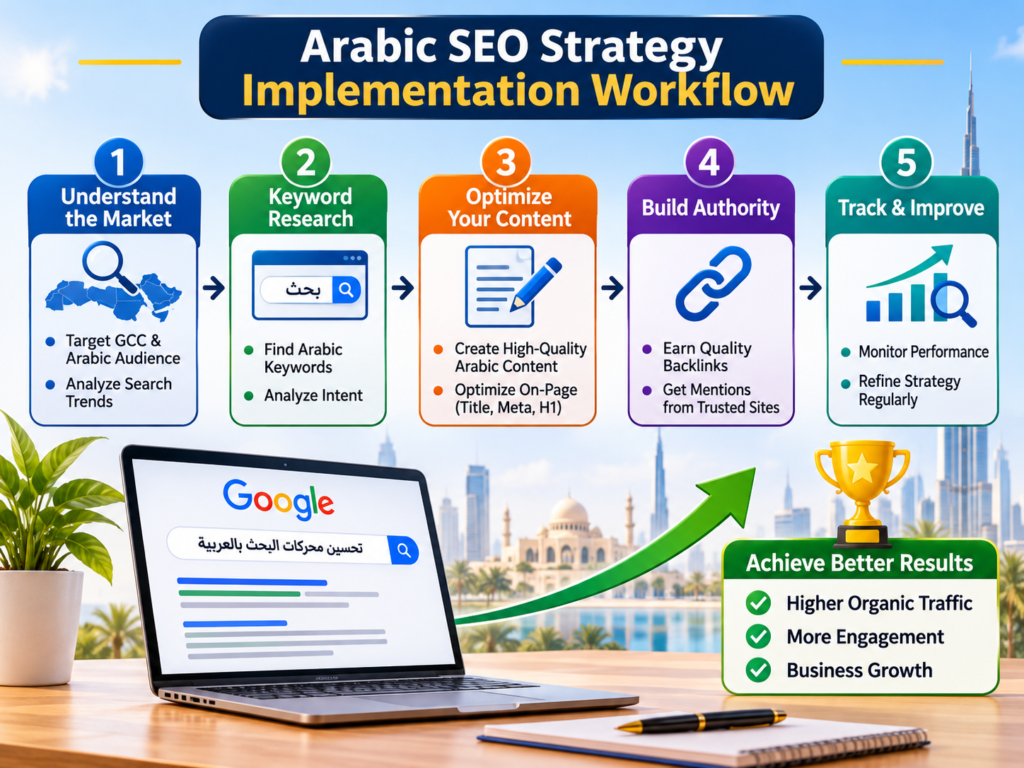
How to Create and Optimize Arabic Expert Commentary Pages
An effective Arabic SEO strategy needs more than a knowledgeable interviewee. Research, content quality, localization, and measurement must work together.
The following workflow provides a practical starting point.
Research GCC Keywords and Recruit Credible Experts
Begin by identifying what your intended audience wants to know.
Research Arabic-script searches alongside relevant English phrases. Compare regional terminology and look for questions that existing content does not answer well.
Then identify professionals with verifiable experience in those subjects.
The SEO strategist and editor should produce an approved keyword brief and expert shortlist before content development begins.
This keeps the article focused on real audience needs rather than simply publishing an interview because an expert is available.
Localize Arabic Content and Technical SEO
Choose language that matches the target audience.
Modern Standard Arabic is often suitable for professional and educational content, while locally familiar expressions may make certain topics clearer.
Localization should include terminology, examples, headings, navigation, and the overall reading experience.
For multilingual websites, technical implementation matters just as much.
Create crawlable URLs for meaningful language versions, use appropriate hreflang annotations, optimize metadata, and maintain relevant internal links.
Google’s localized-page guidance offers implementation recommendations.
Businesses using WordPress may also benefit from specialized WordPress development support when customization is required.
The Arabic editor and developer should review and test the page before publication.
Publish, Distribute and Measure Performance
Once the content is fact-checked and approved, publish it with appropriate article information and clear expert attribution.
Share it through relevant industry channels and conduct targeted digital PR outreach where appropriate.
Use Google Search Console and website analytics to evaluate performance.
Monitor organic impressions, clicks, engaged visits, qualified inquiries, and relevant external citations.
The content marketer and analyst should review results regularly and identify opportunities to improve the page.
Publishing is the beginning of evaluation, not the end of the process.
Cost, Timeline and Measuring Arabic SEO Success
Expert commentary can range from a straightforward professional interview to a detailed industry report.
The required investment depends on the scope of the project.
What Influences Content Production Costs in GCC Markets?
Production costs vary based on expert availability, research requirements, Arabic editing, transcription, technical implementation, and distribution.
A concise specialist Q&A generally requires fewer resources than an independently researched report involving multiple contributors.
Businesses should evaluate editorial quality and relevance alongside production costs.
Lower-priced content offers limited value if it lacks original insight or requires extensive corrections.
How Long Does Implementation and SEO Evaluation Take?
The production timeline depends on interview scheduling, editorial complexity, approvals, and website requirements.
Search indexing and organic performance follow separate timelines.
A page may be published successfully without immediately gaining meaningful search visibility.
No credible SEO provider can guarantee instant rankings, a specific number of leads, or inclusion in AI-generated search answers.
KPIs for Organic Traffic, AI Visibility and Qualified Leads
Performance measurement should focus on outcomes that matter to the business.
Useful indicators include organic search impressions, clicks, engaged sessions, relevant backlinks, and qualified leads.
Businesses can also record observable citations or mentions in AI-powered search experiences. However, such appearances should be treated as measurable observations rather than guaranteed results.
For more structured analysis, business intelligence services can help organize performance data and support reporting.
Over time, these insights can guide editorial improvements and identify topics worth expanding.
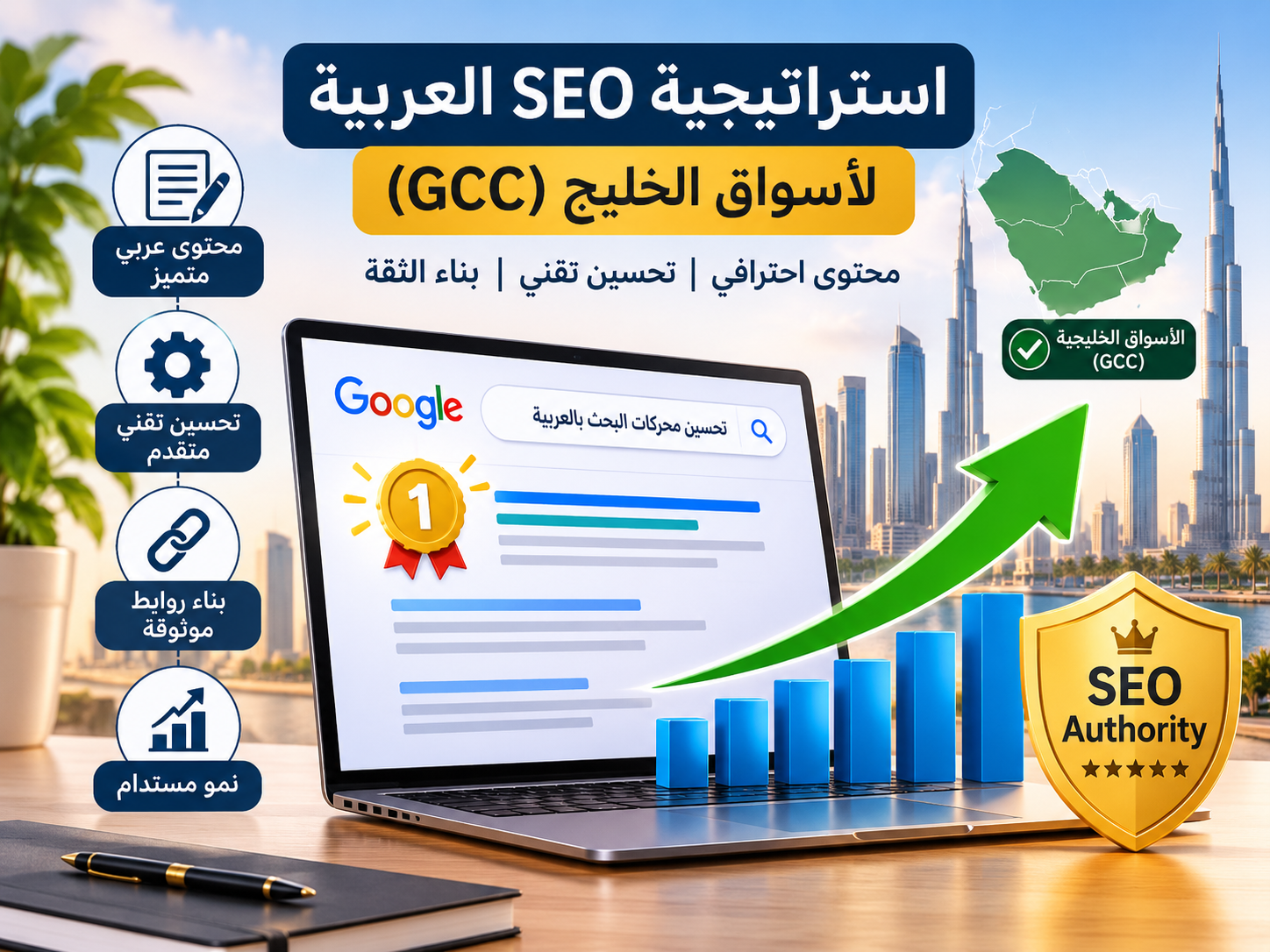
Concluding Remarks
Expert-led Arabic content offers GCC businesses a practical way to move beyond generic translations and publish information that reflects local markets.
For organizations targeting Saudi Arabia, the UAE, Qatar, and neighboring GCC countries, a successful Arabic SEO strategy depends on credible contributors, original research, culturally appropriate language, and technically sound publishing.
The objective is not simply to produce more Arabic pages. It is to create resources that answer meaningful questions, demonstrate genuine knowledge, and earn readers’ trust.
With consistent measurement and editorial improvements, expert commentary can become a valuable part of a long-term regional content strategy. ( Click Here’s )
Ready to develop an Arabic SEO strategy that reflects your expertise and your customers’ needs?
Explore Mak It Solutions’ services or book a consultation to discuss expert-led content opportunities for your business.
Request a customized GCC Arabic SEO content audit to identify opportunities across Saudi Arabia, the UAE, and Qatar.
FAQs
Q : Is Modern Standard Arabic better than Saudi dialect for SEO?
A : Modern Standard Arabic is often appropriate for professional, technical, and educational content because it is widely understood.
However, Saudi-specific terminology can improve relevance when it matches actual search behavior. Businesses in Riyadh and Jeddah should research audience queries and prioritize clear, natural language rather than assuming one variety performs better in every situation.
Q : Should Dubai businesses publish Arabic and English expert articles on separate URLs?
A : Yes, separate crawlable URLs are generally recommended when a website offers meaningful Arabic and English versions.
Each version should contain properly localized content, metadata, and internal links. Appropriate hreflang annotations help search engines understand the relationship between language alternatives.
Q : Can Qatar consultancies publish Arabic expert interviews without an English version?
A : Yes. An Arabic-only interview can be useful and discoverable when the target audience primarily searches in Arabic.
The page should feature reliable information, clear attribution, and accessible formatting. An English version can be added if audience research identifies sufficient demand.
Q : Which Arabic keyword research methods work best for Kuwait and Bahrain?
A : Combine Arabic keyword discovery, customer questions, competitor analysis, local terminology, and Google Search Console data.
Businesses should validate search intent separately for Kuwait and Bahrain rather than assuming identical Arabic keywords serve identical needs in both markets.
Q : How should Oman businesses select experts for Arabic thought leadership content?
A : Omani businesses should prioritize relevant experience, genuine subject knowledge, and the ability to explain industry issues accurately.
Verify credentials, obtain interview consent, review factual claims, and clearly distinguish expert opinions from official guidance.