


Google AI Mode SEO: What Actually Matters in 2026
Google AI Mode SEO: What Actually Matters in 2026
Google AI Mode SEO: What Actually Matters in 2026
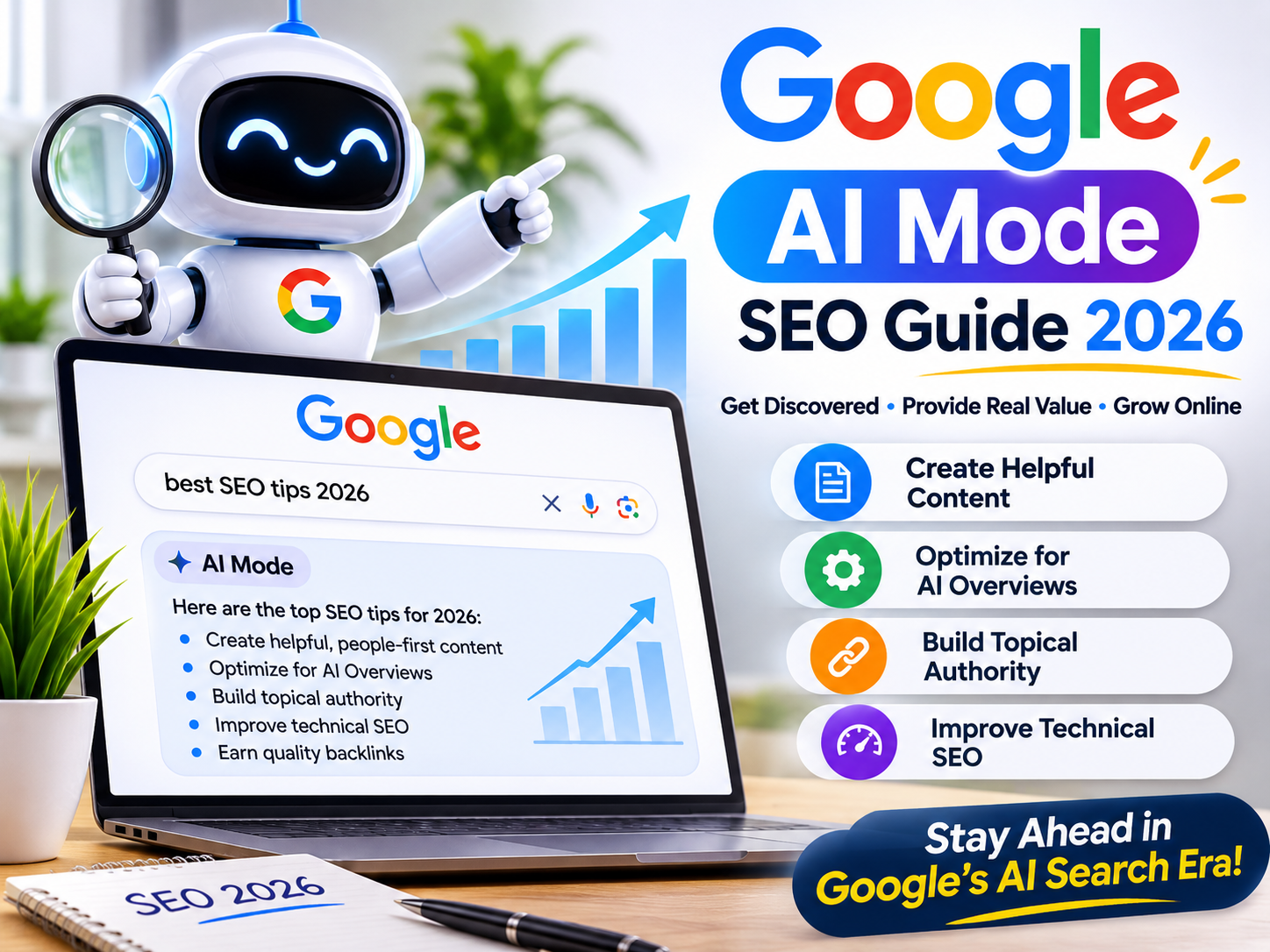
Google AI Mode SEO is changing how businesses earn visibility in search. Google can now help users investigate complex questions, compare products, and explore recommendations through conversational, AI-generated responses. For businesses, appearing in those answers creates another opportunity to reach potential customers.
Google AI Mode SEO means optimizing your website so its content can be discovered, understood, and potentially referenced in Google’s AI-powered search experience. The essentials remain familiar: crawlable pages, original content, credible information, strong technical SEO, and accurate performance measurement.
According to Google’s official AI search guidance, traditional SEO practices remain relevant for AI Mode and AI Overviews. There are no special technical requirements or guaranteed tricks for getting cited.
Google for Developers+1
The shift is worth paying attention to. A 2025 Pew Research Center study found that approximately 18% of analyzed Google searches displayed AI-generated summaries. Although this finding concerns AI Overviews rather than AI Mode specifically, it illustrates how AI is changing search behavior.
Pew Research Center
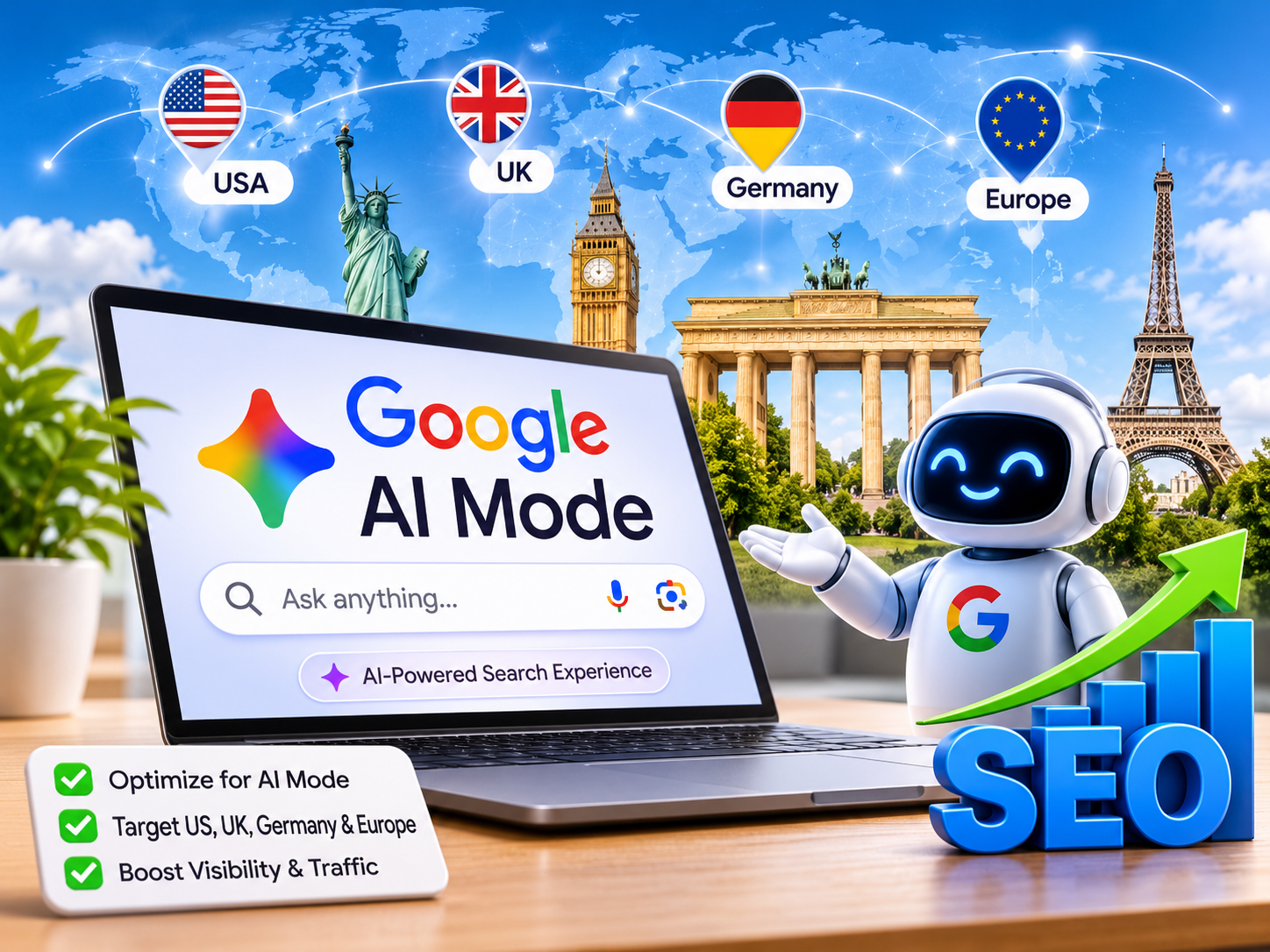
For businesses in the USA, UK, Germany, and across Europe, the goal is not simply to appear in AI-generated answers. It is to earn relevant visibility that contributes to qualified traffic, leads, and measurable business growth.
What Is Google AI Mode SEO, and How Does It Work?
Google AI Mode SEO focuses on making website content accessible, useful, and relevant to the questions people ask through Google’s AI-powered search tools.
Unlike traditional search, which commonly displays ranked links, AI Mode can support conversational research and explore multiple aspects of a topic.
Google AI Mode vs. AI Overviews vs. Traditional Search
| Search experience | What it does |
|---|---|
| Traditional Google Search | Displays ranked results relevant to a search query |
| AI Overviews | Provides AI-generated summaries with supporting links |
| Google AI Mode | Supports deeper conversational research, comparisons, and follow-up questions |
AI Mode can be particularly helpful when users need to evaluate several connected questions before making a decision.
How Query Fan-Out and AI Retrieval Work
Google uses a technique called query fan-out to explore multiple related searches when developing AI-powered answers.
Consider someone searching for the best enterprise SaaS platform. That single question might involve separate considerations such as pricing, security, scalability, implementation requirements, and integrations.
AI systems can retrieve information from different sources to address these aspects.
Retrieval-augmented generation (RAG) is a broader approach that uses retrieved information to support generated answers. However, Google’s AI search experiences may use different models and retrieval techniques, so they should not be treated as one identical RAG system.
Why Traditional SEO Still Matters
A technically inaccessible website is unlikely to benefit from any search experience.
Google confirms that pages must be indexed and eligible to appear in Search with a snippet before they can qualify as supporting links in AI Mode or AI Overviews. Eligibility does not guarantee selection.
Google for Developers
That makes effective technical and on-page SEO essential.
Clear site architecture, descriptive internal links, relevant content, and reliable page rendering remain important regardless of how search results are presented.
How to Optimize for Google AI Mode.
Improving Google AI Mode SEO starts with the same question that guides effective traditional optimization: Does this page genuinely help the person searching?
Google’s guidance emphasizes unique, non-commodity content alongside established technical and content practices.
Google for Developers
Here are the priorities worth focusing on.
Make Your Website Crawlable and Indexable
Search engines need reliable access to your important pages.
Check that your website.
Allows appropriate Googlebot access through robots.txt and server settings.
Uses accurate XML sitemaps and canonical URLs.
Avoids unintended noindex directives.
Provides descriptive internal links.
Makes essential information accessible as readable text.
Does not unnecessarily restrict search snippets.
JavaScript-heavy websites should also ensure that important information is available in rendered content.
When rendering, infrastructure, or architecture problems prevent reliable crawling, professional web development services can help address those barriers.
Publish Original Content That Offers Real Value
Generic articles repeating familiar advice provide little differentiation.
A more useful approach is to publish information readers cannot easily find elsewhere.
For a SaaS company, that could include an implementation case study explaining the architecture used, integration challenges encountered, and documented results.
For a consultancy, it might involve practical comparisons, technical explanations, or original research.
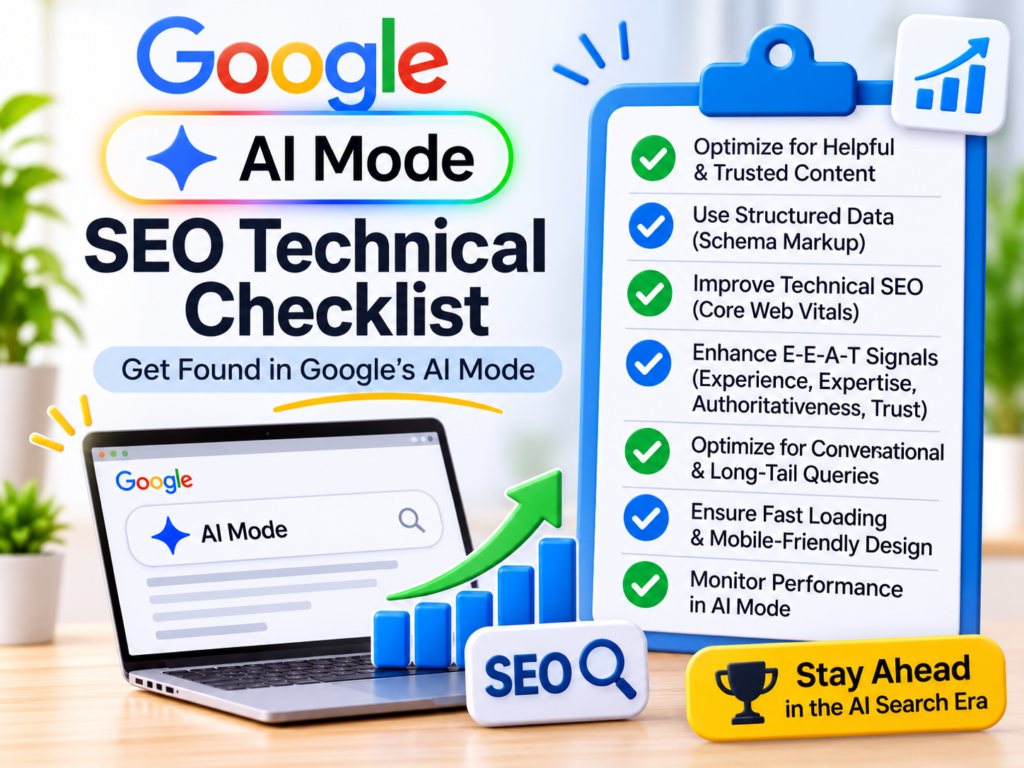
Google’s E-E-A-T framework—Experience, Expertise, Authoritativeness, and Trustworthiness provides a useful lens for evaluating content quality. It is not a single numerical ranking factor.
Independent research also suggests that traditional rankings and AI citations overlap. A 2025 Semrush analysis reported that approximately 52% of AI Overview sources also appeared among the top 10 organic results in its dataset.
That is an observation about AI Overviews, not a fixed formula for AI Mode citations.
Answer Questions Clearly and Completely
Readers should not have to search through several paragraphs to find the main answer.
Start important sections with a concise explanation, then expand with relevant examples, comparisons, and supporting details.
For instance, a software comparison page should explain not only which solutions exist but also their strengths, limitations, typical use cases, and evaluation criteria.
Clear writing benefits readers first. It also makes the information easier for search systems to interpret.
Keep Facts and Supporting Evidence Current
Outdated pricing, unsupported statistics, and inaccurate product claims weaken credibility.
Review high-priority pages regularly and update them when meaningful information changes.
Where appropriate, reference primary documentation, official regulations, original research, and verified product information.
Avoid changing publication dates purely to make old material appear new.
Use Structured Data and Helpful Visual Content
Relevant structured data can clarify page information and support eligibility for certain Google Search features.
However, Google does not require special AI schema markup for AI Mode visibility.
Images, diagrams, tables, and videos can also help people understand technical or complex topics.
For WordPress businesses, regular reviews of metadata, templates, structured data, and rendered content should form part of the WordPress website development workflow.
Connect Related Content Through Internal Links
A well-organized website makes it easier for visitors and search engines to discover related information.
Link relevant service pages, educational guides, case studies, and supporting resources where they naturally help readers.
Avoid adding links simply to reach a target quantity.
For organizations managing several marketing channels, a coordinated digital marketing strategy can keep SEO, content, and conversion goals aligned.
Measure Results Beyond AI Citations
An AI citation is a visibility signal, not automatically a business success.
Track how search exposure relates to organic visits, engaged users, qualified leads, and conversions.
A smaller number of relevant visitors who become customers can be more valuable than a large number of impressions without meaningful engagement.
Google AI Mode Ranking Factors, Citations, and Common Myths
One of the biggest misconceptions about Google AI Mode SEO is that high organic rankings automatically secure citations in AI-generated answers.
They do not.
AI Mode can explore supporting questions and reference pages that provide information for specific parts of an answer.
A software website might rank well for a broad comparison query, while AI Mode references other sources for security details, pricing, or technical documentation.
What Google Confirms vs. What Research Suggests
| SEO claim | Evidence status |
|---|---|
| Pages need indexing and snippet eligibility to qualify as supporting links | Google-confirmed |
| Traditional organic rankings overlap with AI citations | Supported by independent research |
| Special AI schema guarantees citations | Unsupported |
| An agency can guarantee AI Mode citation placement | Unsupported |
| Original, useful content matters | Consistent with Google’s guidance |
Google’s official requirements should carry more weight than unsupported promises about secret AI ranking formulas.
Do llms.txt, Content Chunking, and Special Schema Help?
Some AI SEO discussions recommend creating llms.txt files, breaking every paragraph into small chunks, or implementing specialized AI markup.
Google’s generative AI optimization guide makes the distinction clear.
llms.txt is not needed for Google Search visibility or rankings.
Artificially dividing content into tiny chunks is not required.
No special Schema.org markup is necessary for AI search inclusion.
These techniques should not replace valuable content or sound technical SEO.
Google for Developers
Google also discontinued FAQ rich results beginning May 7, 2026. An FAQ section can still improve the reader experience, but FAQ markup should not be promoted as a way to earn those discontinued search features.
Google for Developers
How to Measure Google AI Mode SEO Performance and ROI
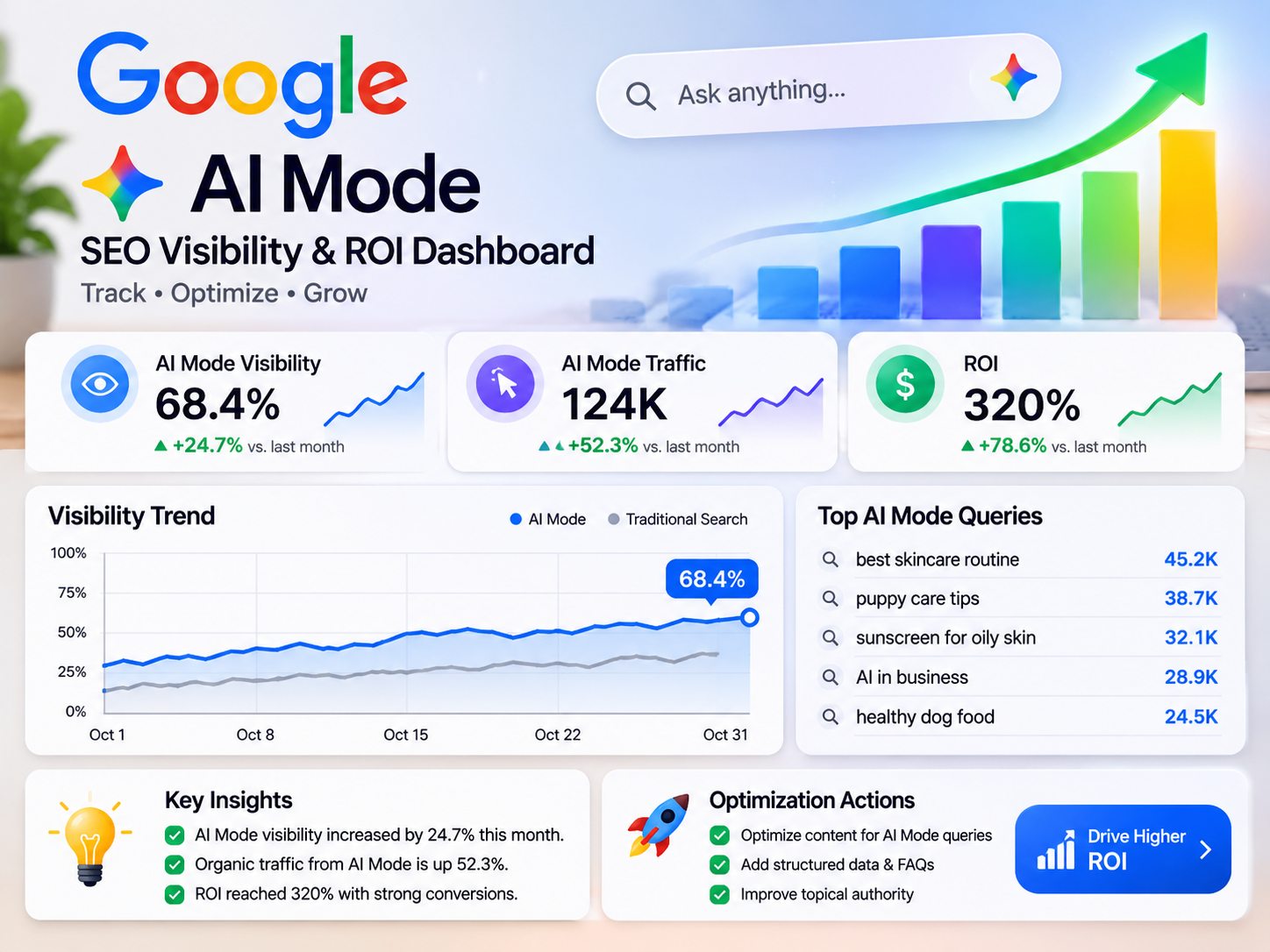
Measuring AI search visibility has become more practical, but no single metric tells the complete story.
Businesses should combine Google Search Console data, citation monitoring, website analytics, and customer conversion reporting.
Google Search Console’s Generative AI Reports
Google introduced dedicated generative AI performance reporting on June 3, 2026, and announced worldwide rollout completion on August 31, 2026.
The reports provide visibility information for supported generative AI features, including.
Impressions within AI-powered search experiences.
URLs appearing in those experiences.
Geographic performance.
Date-based trends.
Device information where supported.
These reports complement overall Search performance rather than replacing it. They also do not provide a complete explanation of every AI-generated citation or resulting customer decision.
Google for Developers
Why AI Impressions and Website Clicks Are Different
Visibility does not necessarily translate into website traffic.
Pew Research Center’s 2025 study found that users clicked traditional search results during approximately 8% of visits involving AI summaries, compared with 15% when those summaries were absent.
Pew Research Center
Importantly, these figures describe AI Overview search behavior, not standalone Google AI Mode click-through rates.
The practical lesson is to avoid judging AI SEO solely through impressions.
KPIs Worth Monitoring
| KPI | What it tells you |
|---|---|
| AI feature impressions | Visibility in supported AI search features |
| Sampled citation presence | Whether tracked AI answers reference your site |
| Organic clicks | Visits from search |
| Engaged sessions | How visitors interact with the website |
| Qualified leads | Whether relevant prospects are reaching the business |
| Conversion rate | How effectively visits support business goals |
Google Analytics 4 can help connect website engagement with conversions, while Search Console provides search visibility data.
Organizations needing more advanced reporting can integrate this information into business intelligence and analytics workflows.
The important distinction is between being seen and achieving something commercially valuable.
Google AI Mode SEO for USA, UK, Germany, and Europe
International SEO requires more than publishing the same English-language content across different markets.
Search intent, terminology, competition, customer expectations, and privacy obligations can vary considerably.
USA.
Consider a SaaS provider targeting enterprise buyers in New York.
General feature descriptions may do little to distinguish its website from competing platforms.
Detailed implementation examples, technical comparisons, security documentation, and verifiable customer outcomes can provide more valuable information.
The emphasis should be on answering the questions American customers actually ask during their research.
UK.
A London-based software consultancy may need content addressing UK terminology, procurement expectations, and relevant regulatory considerations.
Measurement practices also require attention.
Businesses collecting or analyzing personal data should consider applicable UK GDPR and electronic communications requirements.
The UK Information Commissioner’s Office provides official guidance.
Germany and the EU.
For companies targeting Berlin, Munich, or broader European markets, language localization can strongly influence content relevance.
German-language content should reflect genuine customer intent rather than rely entirely on direct translations of English keywords.
Where appropriate, implement hreflang annotations to help Google identify alternate language or regional versions.
Companies must also consider applicable EU GDPR requirements when handling personal information. The European Commission’s data protection resources provide useful regulatory context.
Privacy compliance is a legal and operational responsibility. It should not be presented as a direct Google AI Mode ranking factor.
Your 30-Day Google AI Mode SEO Action Plan
A 30-day plan provides a manageable way to improve your technical foundations, content usefulness, and reporting.
It is an implementation schedule, not a guarantee of rankings or citations.
Days 1–7
Audit and establish your baseline
Check indexing, crawlability, technical errors, internal links, and existing Search Console performance. Identify priority pages and record current AI visibility where available.
Days 8–21
Improve content and regional relevance
Update important pages with clear answers, original insights, credible sources, and useful examples. Adapt high-value content to target markets where customer needs differ.
Days 22–30
Measure and refine
Compare available metrics against your baseline. Review sampled citations, organic visits, engagement, and qualified leads. Identify improvements to carry into your next review cycle.
Continue reviewing performance monthly rather than reacting to every isolated change in AI-generated results.
Concluding Remarks
Google AI Mode SEO is an evolution of search optimization, not a reason to abandon established SEO practices.
Businesses that invest in accessible websites, useful original content, credible information, and consistent measurement are better equipped to adapt as AI-powered search develops.
Rather than chasing every new AI SEO tactic, focus on improving the information your customers actually need and measuring the outcomes that matter to your business.
Ready to assess your website’s AI search visibility?
At Mak It Solutions, we help businesses evaluate technical SEO, content opportunities, and performance measurement across their target markets.
Request a scoped SEO assessment to identify practical improvements for your Google AI Mode SEO strategy.
Key Takeaways
Traditional SEO remains the foundation for Google AI Mode visibility.
Original content, practical expertise, and credible evidence can differentiate your website.
Strong organic rankings do not guarantee citations in AI-generated answers.
Google’s 2026 reporting features make AI search visibility easier to monitor.
SEO strategies for the USA, UK, Germany, and EU should account for local language and customer intent.
Qualified leads and conversions matter more than citation counts alone.
Avoid paid services promising guaranteed AI Mode placements or secret ranking shortcuts.
FAQs
Q : Can a new website appear in Google AI Mode without strong backlinks?
A : Yes. Google does not specify a minimum backlink requirement for AI Mode inclusion. New websites can qualify when their pages meet Search eligibility requirements and offer relevant, useful information.
Strong technical foundations, original expertise, and legitimate industry relationships support broader SEO efforts.
Q : Does updating old content improve Google AI Mode visibility?
A : Updating outdated content can improve its accuracy, relevance, and usefulness.
Focus on substantive improvements such as original research, better explanations, verified examples, and current references. Changing the publication date alone does not guarantee improved visibility.
Q : Do small businesses need paid AI SEO tools in 2026?
A : No. Google Search Console, Google Analytics 4, manual citation checks, and a basic tracking spreadsheet provide a practical starting point.
Paid tools such as Semrush and Ahrefs may become useful for larger websites or businesses tracking multiple markets.
Q : Should UK and German websites publish separate AI search content?
A : Separate content can be beneficial when audiences have meaningfully different languages, terminology, regulations, or search intentions.
Conduct regional keyword research, localize information accurately, and use appropriate hreflang annotations for alternate versions.
Q : How often should businesses review AI search visibility?
A : Monthly reviews are a reasonable starting point for many small and medium-sized businesses.
Larger or highly competitive websites may benefit from more frequent checks. Use consistent queries and measurement methods, and avoid making major changes based on isolated citation fluctuations.