
AI SEO for MENA Tech Companies in Saudi & UAE
AI SEO for MENA Tech Companies in Saudi & UAE
AI SEO for MENA Tech Companies in Saudi & UAE
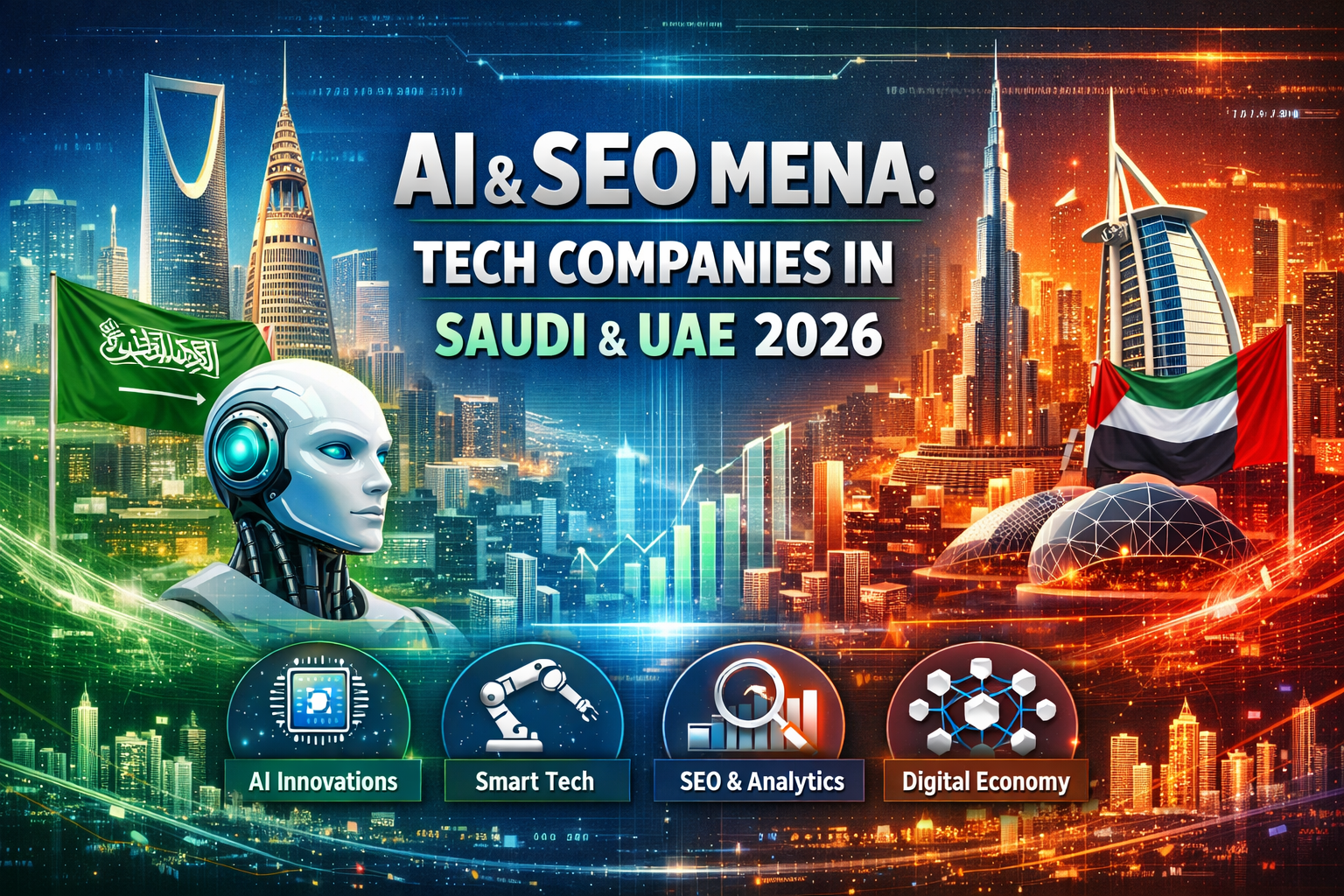
For GCC brands, AI SEO for MENA tech companies means creating pages that Google’s AI systems can understand, trust, and quote. In Saudi Arabia, the UAE, and Qatar, that usually comes down to four things: clear structure, bilingual usability, strong technical SEO, and local trust signals that match how buyers and regulators think.
Ranking on page one still matters. It just is not enough on its own anymore.
In 2026, many tech companies across Riyadh, Dubai, Abu Dhabi, and Doha are seeing the same pattern: rankings look fine, but visibility feels weaker. That happens because AI-driven search results now summarize, compare, and surface brands before a user ever clicks. If your content is vague, overly promotional, or hard to interpret, you can lose attention even when you technically rank well.
That is exactly why AI SEO for MENA tech companies has become a serious growth channel, not a side experiment.
What AI SEO Means for MENA Tech Companies in 2026
Classic SEO focuses on rankings, keywords, links, and crawlability. AI SEO builds on that foundation, but adds another layer: helping search engines confidently understand who you are, what you offer, where you operate, and why your content is trustworthy enough to cite in answer-style results.
For MENA tech brands, especially in Saudi Arabia, the UAE, and Qatar, that shift changes how pages should be written and structured. It is no longer enough to publish a broad service page and hope it ranks. The content has to explain one problem clearly, answer it directly, and support that answer with proof, internal context, and clean architecture.
This matters even more in sectors like.
Fintech
SaaS
Logistics
Health tech
Govtech
Enterprise IT services
These are not impulse-buy categories. Buyers compare vendors carefully, often across both Arabic and English touchpoints, and they expect a level of clarity that generic SEO copy usually fails to deliver.
Why GCC Tech Brands Are Losing Clicks Even When They Rank
A lot of regional teams are still investing in traditional SEO alone. That helps with rankings, but it does not automatically make a page the source AI systems rely on.
Here is where the gap usually appears.
The page ranks, but the intro is too generic
The product or service is not tied clearly to the company entity
The content is long, but thin on useful answers
Arabic and English versions feel disconnected
The page lacks schema, internal support, or trust signals
In practice, a competitor with clearer summaries, better internal links, and stronger structured signals can become the brand AI surfaces first, even if your page has been online longer.
That is why page-one visibility no longer guarantees discovery in markets like Riyadh, Dubai, or Doha.
The Core AI SEO Framework for Saudi, UAE, and Qatar
The strongest approach to AI SEO for MENA tech companies is usually built on three layers: entity clarity, answer-first content, and technical strength.
Build entity-rich content around your company, product, market, and use case
Your site should make it immediately obvious.
Who you serve
What problem you solve
Which industries you focus on
Which GCC markets you understand
Why your solution is relevant locally
For example, a Riyadh fintech startup should connect its messaging to Saudi payments, trust, compliance awareness, and Arabic-first user journeys. A Dubai SaaS company should explain its deployment model, ideal buyer profile, and business outcomes without hiding behind buzzwords. A Doha-based B2B platform should make a clear case for local support, data considerations, and regional relevance.
When AI systems read your site, they should not have to guess how your brand, service, geography, and expertise connect.

Structure pages for direct answers, summaries, comparisons, and trust
Answer-first formatting matters more than ever.
A strong service or solution page should usually include.
A direct answer near the top
A short summary of the problem and solution
Use-case sections
Comparison-style language where relevant
FAQs tied to real buyer questions
Trust cues such as industry fit, process clarity, or implementation detail
This is where many MENA tech brands improve quickly. They already have the knowledge, but the page is written like a brochure instead of a useful decision-support asset.
Internal links also help here. Natural connections to supporting pages such as technical SEO guidance for Arabic GCC websites, schema strategy for AI search, and multilingual SEO for Saudi and UAE sites strengthen topical context and help search engines understand the broader expertise cluster.
Strengthen technical SEO for AI-answer eligibility
AI-friendly content still depends on classic technical health.
That includes.
Fast-loading pages
Crawlable navigation
Clean internal linking
Valid structured data
Smart indexation control
Duplicate prevention
Clear Arabic-English architecture
Hreflang logic where needed
For bilingual GCC websites, technical issues often create silent losses. A page may look fine to users, but weak internal structure, duplicate localization, or inconsistent language signals can reduce how well search engines interpret it.
That is why content and development teams need to work together. Supporting capabilities like front-end development services, back-end development services, web design foundations, and mobile app development services often play a bigger role in search performance than brands expect.
How Compliance and Trust Signals Shape AI SEO in the GCC
In the GCC, trust is not just a branding issue. It directly affects how convincing your content feels to both users and search systems.
That is especially true in regulated or enterprise-heavy sectors.
A fintech page aimed at Saudi buyers should sound precise, responsible, and grounded in real business context. A UAE govtech or digital identity platform should reflect a mature trust posture. A Qatar-based financial product should avoid inflated claims and explain its value in practical terms.
The goal is not to sound legalistic. The goal is to sound credible.
What compliance-aware messaging looks like
Strong compliance-aware messaging usually includes.
Clear product explanations
Understandable security language
Realistic benefit statements
Transparent implementation details
Thoughtful references to governance, privacy, or hosting expectations
Local relevance without empty name-dropping
For example, mentioning data residency can be useful when it matters to enterprise procurement. But it should be framed through user benefit, not just infrastructure jargon. Buyers want to understand what that means for latency, procurement comfort, support readiness, and operational trust.
In Saudi Arabia, the UAE, and Qatar, many buyers are more sensitive to trust signals than global templates assume. That is one reason generic imported SaaS copy often underperforms in the region.

Arabic-English Content Strategy for AI Search in MENA
Many GCC buying journeys are bilingual from the start.
A founder may search in English. An operations lead may prefer Arabic. A procurement team may switch between both. That means your content architecture should not treat Arabic as an afterthought or a mirrored copy of the English site.
The strongest bilingual strategy is not just translation. It is structured consistency.
What that looks like in practice
Your Arabic and English content should align on.
Core service naming
Company descriptions
Industry positioning
Internal linking logic
Conversion paths
FAQ intent
Page purpose
This helps search engines connect the dots across languages. It also improves user confidence, especially in Saudi Arabia, where Arabic-first UX often carries more weight, and in UAE or Qatar environments where mixed-language decision-making is common.
It also helps to connect main commercial pages with relevant educational assets such as AI agents for GCC businesses, human-in-the-loop AI workflows, and your broader services hub.
Avoid this common localization mistake
Do not create three nearly identical pages by swapping only city or country names.
That usually weakens quality, creates duplication risk, and makes the site less trustworthy. A better approach is to keep one strong core page, then localize.
Examples
Proof points
FAQs
Terminology
Buyer context
Regional use cases
That gives you localization without clutter.

Regional Playbook for Riyadh, Dubai, Abu Dhabi, and Doha
Not all GCC markets respond the same way. The foundation of AI SEO for MENA tech companies stays consistent, but execution should reflect local buying behavior.
Riyadh: authority, Arabic UX, and trust-led discovery
Saudi buyers often respond well to clarity, authority, and Arabic-friendly experiences. In fintech, enterprise services, and government-adjacent sectors, trust signals matter early. Pages should feel grounded, specific, and easy to verify.
What usually works well.
Arabic-aware UX
Direct, confident messaging
Clear explanation of the buyer problem
Trust cues without hype
Local examples that feel relevant to Saudi business reality
Dubai and Abu Dhabi.
The UAE is more competitive in many tech categories, especially SaaS, digital services, and startup-focused solutions. Buyers often compare several options fast, so vague value propositions disappear quickly.
What usually helps here.
Strong answer-first intros
Clear positioning
Comparison-ready sections
Commercial clarity
Better page design and scanning experience
For fintech and regulated B2B categories, a more mature digital-trust tone is also important.
Doha.
Qatar may bring fewer searches in some categories, but the intent can be stronger. That gives focused brands a real opening.
A smaller content footprint can still perform well when the pages are.
Specific
Trustworthy
Well linked internally
Built around clear buyer needs
Localized without overcomplication
From a small business point of view, this is often good news. You do not always need a huge content machine to compete. You need sharper assets.
Best Practices to Rank in Google AI Answers for MENA Tech Companies
The brands most likely to win AI-driven visibility are usually the ones that make their pages easier to summarize, compare, and trust.
Here are the habits that matter most:
Publish one clear page for one clear buyer problem
Do not overload a page with every service, use case, and audience. Focus it.
A Riyadh fintech onboarding page, a Dubai e-commerce UX explainer, and a Doha data-residency service page will usually outperform a generic all-in-one pitch page.
Add concise answer sections and FAQ blocks
Search systems favor content that is easy to extract and interpret.
Use.
Short direct answers
Scannable subheadings
FAQ sections
Summary paragraphs
Comparison snippets
Clear next-step CTAs
Use schema where it genuinely helps
Schema does not replace content quality, but it supports interpretation. FAQ, organization, and service-related structured data can all reinforce page clarity when implemented properly.
Improve internal linking across your expertise cluster
A strong article should not live alone. Connect it to service pages, supporting explainers, and adjacent topics so search engines can see the full context of your expertise.
Measure more than clicks
AI-influenced search often impacts discovery before the final click. So success should be tracked through a wider lens, including.
Search visibility quality
Assisted conversions
Branded search lift
Time on key pages
Lead quality
Citation-style brand mentions in search experiences
What MENA Tech Teams Should Prioritize in the Next 90 Days
If your current search presence feels fragmented, start here:
Rewrite top service pages with clearer answer-first intros
Tighten Arabic-English structure and entity consistency
Add FAQs where buyers genuinely need reassurance
Improve internal links between commercial and educational pages
Audit schema, crawlability, and duplicate issues
Refresh trust messaging for regulated or enterprise audiences
That sequence is practical, manageable, and usually high impact.

Concluding Remarks
The big shift is simple: visibility is moving from ranking alone to ranking plus understanding plus trust.
That is why AI SEO for MENA tech companies matters now. In Saudi Arabia, the UAE, and Qatar, the brands that win are the ones that make their expertise easier for both humans and AI systems to understand. They publish focused pages, support them with technical strength, build bilingual clarity, and localize trust without sounding forced.
For teams across Riyadh, Dubai, Abu Dhabi, and Doha, this is not the time to rely on generic SEO playbooks. It is the time to build a GCC-ready search presence that is structured, credible, and conversion-aware.
If your brand wants stronger AI visibility in the region, start by auditing your core pages, reviewing your bilingual content architecture, and aligning your search strategy with how modern buyers actually discover and evaluate solutions. You can also explore Mak It Solutions’ Search Engine Optimization services or contact the team for a strategy shaped around GCC trust signals, technical health, and growth-ready content.( Click Here’s )
FAQs
Q : Is AI SEO different for Saudi tech companies than for UAE startups?
A : Yes. The fundamentals stay the same, but execution changes. Saudi brands often need stronger Arabic-first UX, clearer trust signals, and more compliance-aware messaging, especially in finance or public-sector-related categories. UAE startups usually face heavier competition, so clearer differentiation and stronger answer-first formatting matter more.
Q : Can Qatar fintech companies rank in AI answers without a large content team?
A : Yes. In many cases, a smaller team can compete with a focused set of high-quality pages. One strong solution page, one trust page, a useful FAQ section, and a few supporting internal links can outperform a larger but unfocused content library.
Q : Does Arabic content help GCC brands appear in AI-driven search results?
A : Often, yes. But translation alone is not enough. The real advantage comes from strong bilingual architecture, consistent entities, and a user experience that treats Arabic as part of the strategy, not a secondary layer.
Q : What trust signals matter most for fintech SEO in Riyadh, Dubai, and Doha?
A : The strongest signals are the ones users can actually understand: clear product explanations, realistic claims, leadership visibility, security language in plain terms, data-residency context where relevant, and messaging that reflects regulated-market expectations.
Q : Should MENA SaaS brands optimize for AI answers and classic SEO at the same time?
A : Yes. The best-performing pages support both. Classic SEO helps with crawlability, rankings, and discovery, while AI-focused optimization makes the content easier to summarize, compare, and cite. Treating them as separate strategies usually leads to weaker results.