


AI Training Data Privacy in MENA for KSA & UAE
AI Training Data Privacy in MENA for KSA & UAE
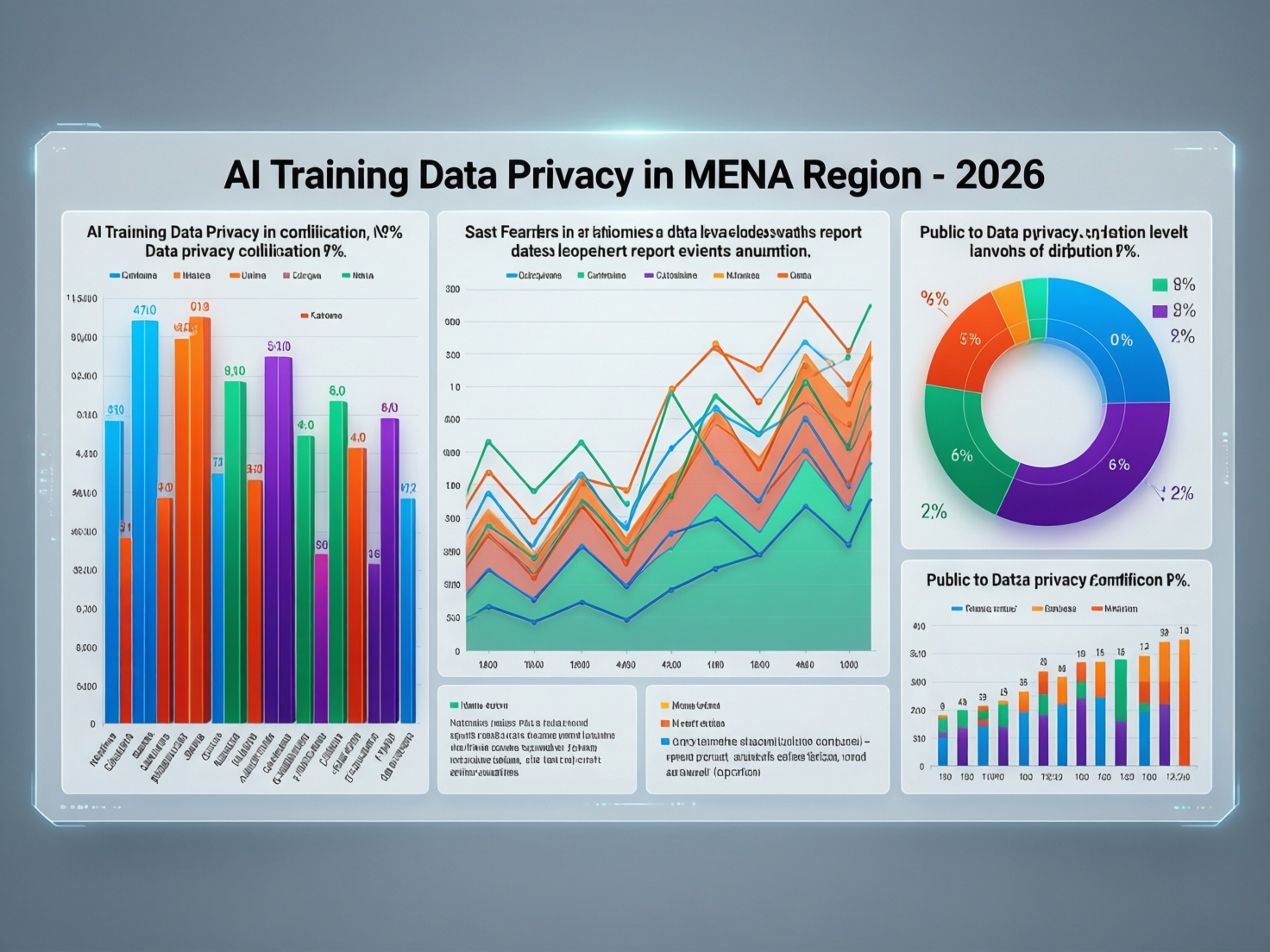
AI Training Data Privacy in MENA for KSA & UAE
AI training data privacy in MENA means applying Saudi, UAE and Qatar data protection laws directly to the datasets, pipelines and cloud regions used to train AI models. For GCC teams, this requires mapping personal data, running DPIAs, and designing cloud and vendor strategies that respect PDPL, UAE PDPL and Qatar PDPPL while still enabling fast AI innovation.
Introduction
Across Saudi Arabia, the United Arab Emirates and Qatar, AI projects are moving from PowerPoint to production from Riyadh credit-scoring engines to Dubai chatbots and Doha smart-city platforms. Yet the biggest hidden risk is often not the model, but the AI training data privacy in MENA: who you train on, where that data sits, and how long it is kept.
AI training data privacy in MENA means applying national data protection laws to the full lifecycle of your datasets, not just to your front-end apps or websites. For GCC tech, legal and compliance teams, that translates into clear data inventories, proper lawful bases, DPIAs for high-risk models and cloud designs that respect local data residency expectations while still leveraging global GPU capacity.
In this GCC-focused playbook, you’ll get.
A plain-English overview of Saudi PDPL, UAE PDPL and Qatar’s PDPPL,
Practical DPIA and governance checklists, and
GCC-specific examples for banks, health providers, government entities and fast-moving startups.
Understanding AI Training Data Privacy in MENA
What counts as AI training data in real GCC projects?
In real GCC projects, AI training data usually includes anything you feed into a model to learn patterns: CRM records, call-centre recordings in Arabic and English, transaction logs, support tickets and even government open data. Personal and sensitive data typically sits in these source systems, then flows into feature stores and data lakes used for training, separate from test sets and production inputs.
For example, a Riyadh fintech may use years of customer transactions and risk labels to train fraud models, while masking or removing fields that are not needed for model performance.
How AI training data risk is different from normal app data
Normal app data is accessed case by case; training data is aggregated at scale and often reused across many models. That creates different risks:
Model memorisation of rare records,
Re-identification when you combine multiple datasets, and
Profiling that feeds into automated decisions on credit, employment or government services.
In sectors like banking, telecoms and government, a single poorly governed training dataset can trigger regulatory investigations, damages claims and serious reputational harm.
Typical AI use cases in Riyadh, Dubai and Doha
You’ll already find fraud detection, credit scoring, customer-service bots, churn prediction and logistics optimisation running in production across Riyadh, Dubai, Abu Dhabi, Doha and Jeddah. Fintechs use transaction graphs to spot money laundering; logistics firms route trucks across ports; ministries analyse citizen feedback at scale.
In all of these, regulators increasingly expect privacy-by-design in the training pipeline data minimisation, strong access control and documented assessments rather than treating AI experiments as “sandbox” exceptions.
MENA Data Privacy Laws Affecting AI Training Data
What are the main data privacy laws that affect AI training data in MENA?
For AI training datasets in MENA, the core laws are Saudi Arabia’s Personal Data Protection Law (PDPL), overseen by SDAIA,the UAE’s Federal Decree-Law No. 45 of 2021 on Personal Data Protection (UAE PDPL), and Qatar’s Law No. 13 of 2016 on the Protection of Personal Data (often called the PDPPL).Emerging frameworks in Kuwait and Oman are moving in the same direction, with GDPR-inspired concepts and local sovereignty themes.
Training a model on customer data is almost always “processing” and, for scoring or segmentation, typically also “profiling” or “automated decision-making” under these laws.
Comparing PDPL, UAE PDPL and Qatar PDPPL for AI use cases
All three laws require a lawful basis (such as consent, contract or legitimate interest/necessary interest), purpose limitation, data minimisation, security and respect for data subject rights. PDPL and UAE PDPL anticipate data protection impact assessments (DPIAs) or similar risk assessments for high-risk processing like large-scale profiling, while Qatar’s PDPPL is supplemented by detailed regulatory guidance that pushes organisations to assess and mitigate privacy risks.
Each regime also has explicit cross-border transfer chapters, critical when training models in non-GCC cloud regions.
Role of sector regulators and free zones in AI data privacy
On top of horizontal privacy laws, sector regulators add extra layers. For banks and fintechs, the Saudi Central Bank (SAMA), UAE Central Bank and Qatar Central Bank issue rules on outsourcing, cloud and data residency that directly shape AI architectures. Telecoms and digital services in the UAE fall under the Telecommunications and Digital Government Regulatory Authority (TDRA).
Free zones such as DIFC and ADGM have their own GDPR-style data protection regimes that can apply to AI startups licensed there, creating multi-layered compliance. For GCC teams, that means AI training data privacy in MENA is never just “one law”—it’s a stack of obligations that all need to be reflected in model and pipeline design.
Country Focus: Saudi Arabia, UAE and Qatar
Saudi PDPL for AI training data: from SDAIA guidance to NDMO governance
Under Saudi PDPL, using customer data from banks, telcos or e-commerce platforms to train AI on Saudi residents is fully within scope: you need a lawful basis, clear notices, security controls and (often) a DPIA for high-risk profiling. SDAIA’s implementing regulations and NDMO data governance controls emphasise classification, minimum-necessary data and controls for cross-border transfers, especially when using hyperscalers.
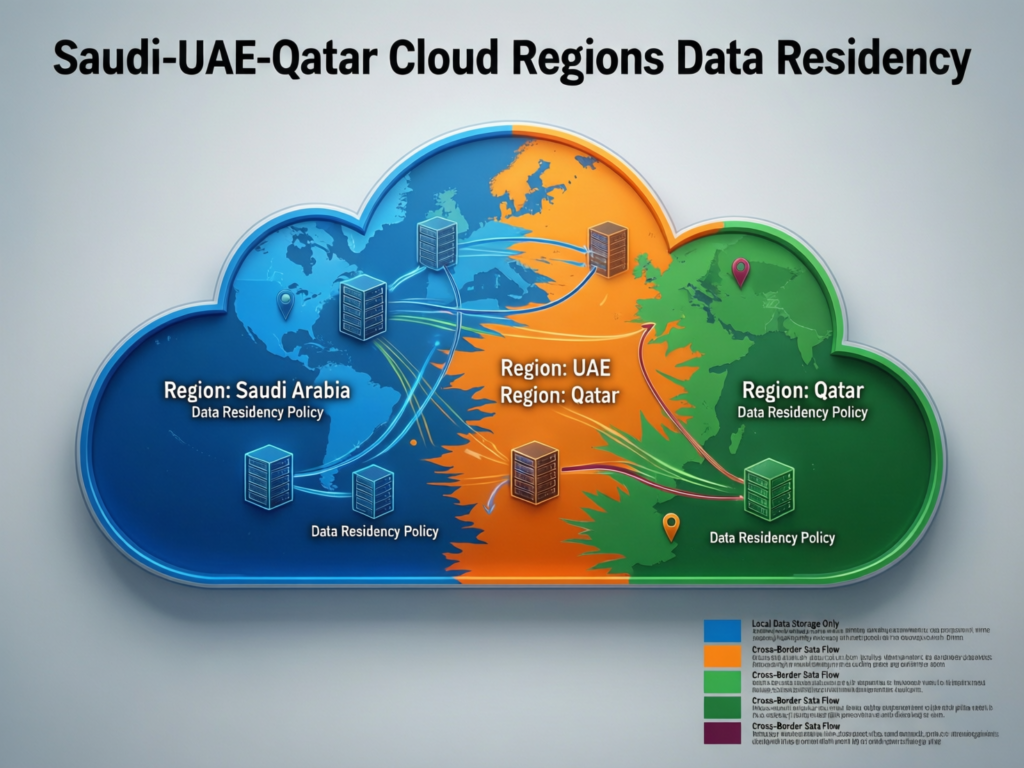
For Open Banking and fraud analytics, SAMA’s cloud, outsourcing and data rules all need to be mapped into model design and monitoring. In practice, that means:
documenting which data fields feed your models,
classifying their sensitivity, and
showing exactly where those datasets reside and how they move during training.
How can UAE companies anonymise or pseudonymise AI training data to meet PDPL requirements?
UAE PDPL expects controllers to minimise personal data, use pseudonymisation where possible and apply strong security around any identifiable training data. In practice, UAE companies often:
Strip direct identifiers,
Hash or tokenise national IDs and phone numbers,
Aggregate events and limit history windows, and
Keep re-identification keys in a separate, tightly controlled environment.
Mainland entities follow UAE PDPL, while AI firms based in DIFC or ADGM must also respect the free zones’ own data-protection laws, which typically require DPIAs, records of processing and stricter rules on automated decision-making. For AI training data privacy in MENA, that often means one product, multiple overlapping DPIA and documentation sets.
How should Qatar organisations run DPIAs for AI projects using customer data?
Qatar’s PDPPL and related guidelines expect careful assessment when processing could significantly affect individuals such as credit scoring, behavioural profiling or health analytics. A Qatar AI DPIA usually covers:
Detailed data mapping,
Legal basis and purpose,
Categories of individuals and risks (for example, misuse of National Vision 2030-related smart-city data),
Security and access controls,
Cross-border transfers, and
Specific mitigations such as data minimisation, consent flows or opt-outs.
For regulated sectors, Qatar Central Bank or Qatar Financial Centre rules may add additional documentation expectations, so it helps to design one DPIA approach that can satisfy both privacy and sector regulators.
Cross-Border AI Training Data and Data Residency in GCC
How do Saudi PDPL rules apply to AI training datasets stored in foreign cloud regions?
Saudi PDPL allows cross-border transfers only under defined conditions, such as ensuring an adequate level of protection, using appropriate safeguards or meeting specific exceptions, all subject to SDAIA and implementing regulations.(SDAIA)
For AI training, that usually means:
keeping primary datasets in Saudi or regional data centres,
applying classification and minimisation to those datasets, and
allowing only controlled exports for example, subsets of pseudonymised features to non-GCC GPU clusters with contractual and technical safeguards.
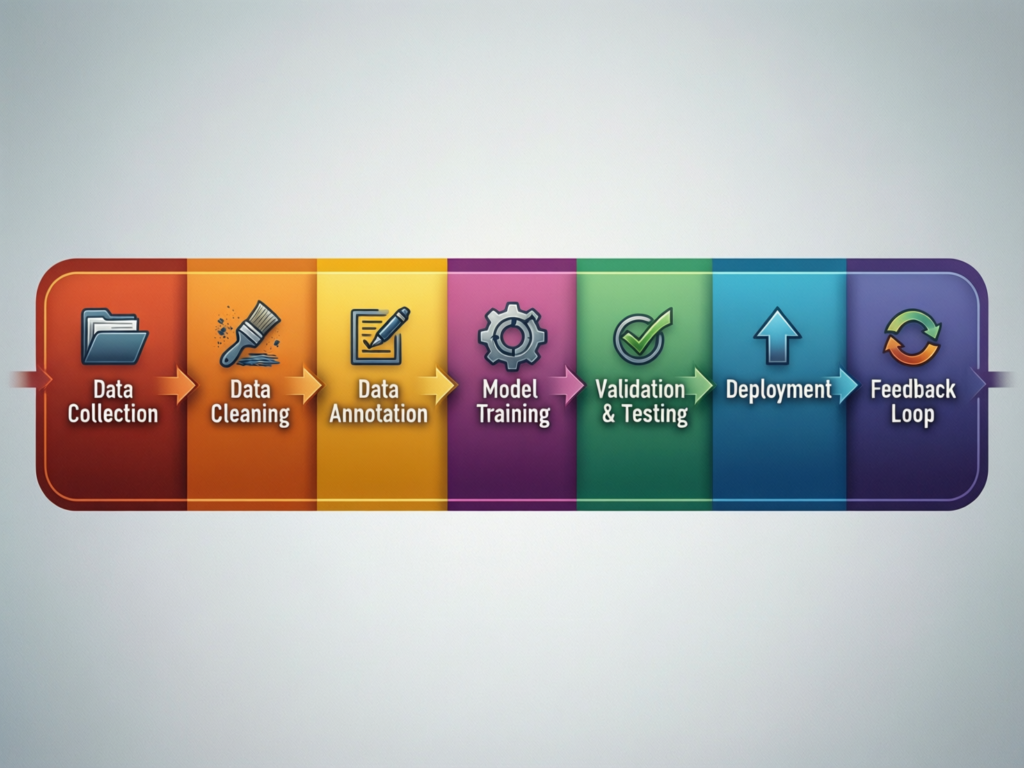
Why do GCC regulators focus so much on cross-border transfers of AI training data?
GCC regulators see cross-border AI training as a sovereignty and cybersecurity question as much as a privacy one. Concerns include foreign government access, onward transfers within multinational vendors, and concentration risk if critical citizen data sits entirely in a handful of global data centres.
That’s why central banks, TDRA-style digital regulators and national cyber agencies tie cloud and AI approvals to strong governance, local logging and the ability to audit how training data moves between regions and subprocessors.
Designing GCC-friendly data residency for AI projects
A common pattern is.
Store raw personal data in-country or in GCC (for example on AWS Middle East (Bahrain), AWS UAE, Azure UAE Central in Abu Dhabi, or the Google Cloud Doha region)
keep backups in regional zones, and
only export minimised, pseudonymised datasets to EU/US regions when absolutely required.
Bahrain often provides a convenient GCC hub, while Qatar-focused workloads increasingly prefer Doha to align with local sovereignty initiatives. This is exactly the kind of architecture discussed in Mak It’s own guide to multi-cloud strategy in the Middle East.
Practical Steps to Govern AI Training Data in MENA
What practical steps can MENA startups take to govern AI training data while still innovating quickly?
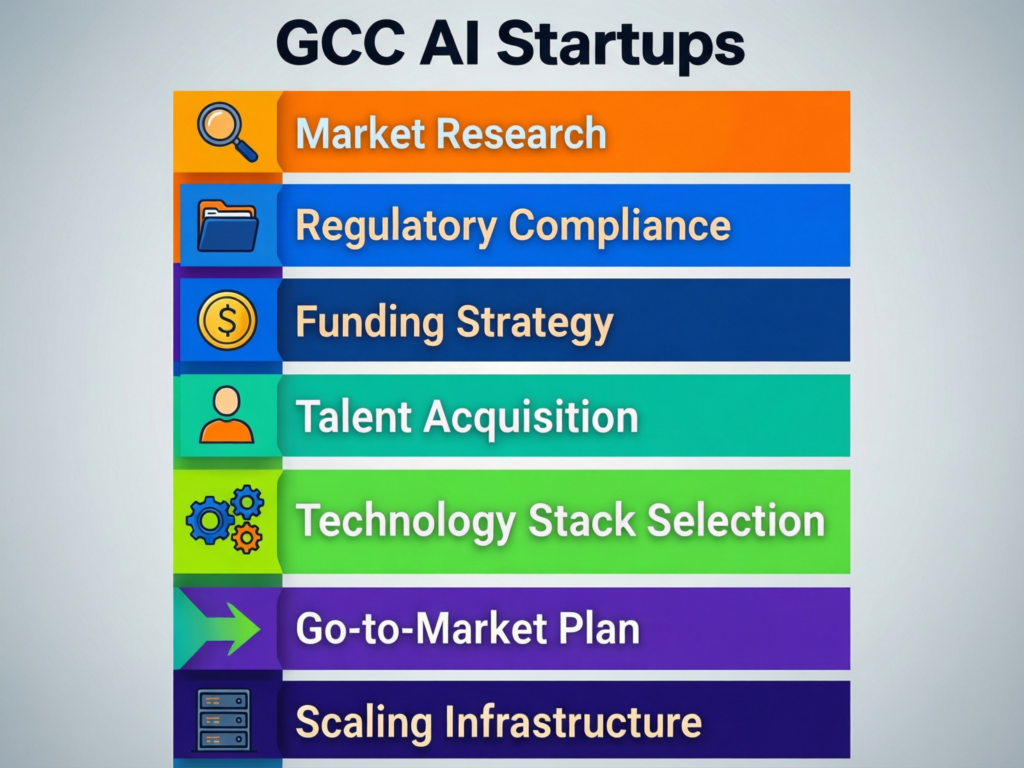
For startups and scale-ups, a “minimum viable” governance loop can be.
Create a simple AI data inventory and map systems feeding each model.
Assign lawful bases and purposes per use case.
Run a lightweight data protection impact assessment (DPIA) for machine learning models that look high-risk.
Minimise data before training and define retention periods.
Check AI and cloud vendors for data-location, retraining and deletion clauses.
Implement basic technical safeguards (encryption, RBAC, logging)
Review the register quarterly and before any new cross-border transfer.
These steps keep AI training data privacy in MENA manageable even for lean product and legal teams.
Map and classify personal data used in AI models
Start with an inventory focused on AI: list sources (CRM, core banking, call-centre, web or mobile apps), categories of personal and sensitive data, linkage to data subjects and any special groups such as children.
For each AI use case, define why you process the data (contract, consent, legitimate/necessary interest) and document exclusions for example, excluding unnecessary free-text notes or location trails from training sets.
Run DPIAs and record decisions for high-risk AI use cases
For PDPL, UAE PDPL and Qatar PDPPL projects, a DPIA template can be quite short but structured: describe the model, the data, the impact on people and your mitigations. Note where you considered alternatives such as synthetic or anonymised data and why you chose your current approach.
Store DPIAs with your wider compliance records so regulators or your own board can see how you balanced innovation with personal data protection for AI systems in GCC.
Build an AI vendor due diligence checklist for GCC
When buying AI tools, foundation models or data-labelling services, ask vendors:
where exactly training data is stored,
which subprocessors and cloud regions are used,
how retraining on your data is controlled,
how deletion works, and
what support they offer for access and deletion requests.
Align contracts with PDPL/UAE PDPL/Qatar PDPPL, but also with outsourcing guidance from SAMA, TDRA and central banks. Over time, plug this checklist into your broader web development and integration projects so AI is covered by your standard procurement playbooks.
Technical Controls and Sector Use Cases for GCC AI Projects
Data minimisation, anonymisation and pseudonymisation for AI in GCC
In practice, fully anonymised data (where individuals are no longer identifiable) is hard to guarantee, especially with rich behavioural logs. Most GCC teams therefore combine strong pseudonymisation tokens, keyed hashes, aggregation with strict access control and contractual limits on re-identification.
Mixed Arabic/English datasets and voice logs benefit from pre-processing: redacting names and phone numbers from transcripts, dropping location precision and truncating long histories that are not needed for model quality.
Secure data pipelines, logging and access controls for AI training
Security expectations from central banks, health authorities and digital regulators flow straight into AI pipelines. Encryption in transit and at rest, network segmentation between raw and curated zones, role-based access control (RBAC) tied to job functions, and immutable logs for training and inference are now table stakes.
Those logs become essential evidence if a regulator in Riyadh, Dubai or Doha asks how a specific model was trained or which data sources were used.
Sector examples: fintech, health and government AI in GCC
Fintech
A Riyadh neo-bank building PDPL-compliant fraud models aligns SAMA’s outsourcing and cloud rules with PDPL transfer conditions, documenting every cross-border movement of Open Banking data.
Health
A Dubai or Doha hospital using AI diagnostics keeps identifiable images and clinical notes in-country, and trains models on carefully de-identified copies under health-data and telecom/digital rules.
Government & smart cities
City-level AI in Riyadh, Dubai, Abu Dhabi and Doha combines IoT, CCTV and digital ID systems like UAE Pass or Qatar Digital ID, but routes them through privacy-preserving, data-minimised architectures designed to withstand scrutiny under national visions and cyber frameworks.
Best practices and next steps for GCC tech and legal teams
A pragmatic AI data governance framework for GCC doesn’t have to be heavy. Start with an AI data inventory, a DPIA register, a cross-border transfer log and a vendor checklist, then plug them into your existing SEO and analytics reporting so leaders see both risk and value.
From there, schedule.
An internal workshop,
A quick-gap assessment against PDPL/UAE PDPL/Qatar PDPPL,
A pilot DPIA on one high-impact model, and
A focused vendor contract review
steps that teams across Kuwait, Oman, Bahrain, Saudi, UAE and Qatar can realistically execute in months, not years.
If you want AI to succeed in MENA, you have to treat AI training data privacy in MENA as a core design constraint, not a last-minute legal review. Saudi PDPL, UAE PDPL and Qatar’s PDPPL all assume that training data, profiling and automated decision-making are in scope and regulators, from SAMA to TDRA to Qatar Central Bank, are watching AI deployments closely.
The good news is that disciplined but lightweight steps data mapping, DPIAs, smart cloud region choices and vendor governance are achievable even for small product and legal teams. If you’d like a bilingual team that already lives in this world to review your stack, Mak It can combine AI-savvy engineering, web and app delivery and GCC compliance thinking to help you move faster with less risk.

If your team in KSA, UAE, Qatar or the wider GCC is planning serious AI models, this is the right moment to make training-data privacy part of your architecture, not just your paperwork. The team at Mak It Solutions can help you align AI pipelines with PDPL/UAE PDPL/Qatar PDPPL while still shipping features quickly whether that’s through secure web platforms, mobile apps or multi-cloud data backends.
Reach out to discuss a customised workshop, DPIA template pack or an end-to-end AI data governance roadmap tailored to your sector and countries.( Click Here’s )
FAQs
Q : Is AI training data considered personal data under Saudi PDPL if it is pseudonymised?
A : Under Saudi PDPL, pseudonymised data usually still counts as personal data if you or another party can reasonably re-identify individuals using additional information. So training datasets where you’ve hashed IDs or removed names, but kept linkable transaction histories, remain in scope and must meet PDPL requirements on lawful basis, purpose limitation, security and cross-border transfers. For a fintech regulated by SAMA and contributing to Saudi Vision 2030 digital goals, that means applying PDPL controls end to end even when analysts only see tokens rather than “real” customer names.
Q : Can UAE companies use EU-based cloud providers to train models on local customer data?
A : Yes, many UAE companies use EU-based cloud regions to train AI models, but they must comply with UAE PDPL transfer conditions, which require appropriate safeguards and often contractual or technical protections. Controllers should assess whether EU laws and provider practices offer protection broadly equivalent to UAE PDPL, and consider encryption, pseudonymisation and limited data scopes before export. Telecoms and public-sector workloads need to consider TDRA and other sector rules too, particularly around data residency and routing, so legal, security and architecture teams should jointly sign off any EU training setup.
Q : Do Qatar data protection rules apply when AI training data is sourced from public social media?
A : Qatar’s PDPPL can still apply when training data comes from public social media if individuals are identifiable, because the law focuses on “personal data” rather than secrecy. Scraping large volumes of public posts, handles or images to train sentiment or risk-scoring models may therefore require a lawful basis, transparency in your privacy notices and technical safeguards to avoid over-profiling. Organisations aligned with Qatar National Vision 2030 should also consider reputational expectations: even if some uses are legally arguable, regulators and the public may view opaque scraping as inconsistent with responsible AI commitments.
Q : What records should KSA and UAE organisations keep to prove AI training data compliance during an audit?
A : Typically auditors in KSA and UAE expect to see a register of AI use cases, data inventories showing which systems feed each model, DPIAs or equivalent risk assessments, records of processing, and logs of cross-border transfers and vendor assessments. PDPL and UAE PDPL both stress accountability and documentation of controls, so simply “doing the right thing” is not enough. Linking these records to SAMA, TDRA or central-bank cloud approvals helps demonstrate that AI models sit within an already-governed environment rather than operating as disconnected experiments.
Q : How can GCC banks and fintechs safely use Open Banking data for AI model training?
A : GCC banks and fintechs should first classify Open Banking feeds as high-sensitivity financial data, then apply strict access controls and minimisation before using them for AI training. Cross-border transfers of this data for model training need to meet both privacy-law and Open Banking-framework requirements especially in Saudi Arabia under SAMA rules and PDPL, and in the UAE under central-bank and TDRA expectations. Combining strong pseudonymisation, robust contractual safeguards with any external AI vendors, and regular model-risk reviews helps institutions support innovation while staying within the spirit and letter of regional Open Banking regimes.