Blogs
10 Ecommerce Website Features UAE Stores Need
Content Editor · November 20, 2026 · 13 min read
Direct answer
Do UAE online stores need Arabic product descriptions?
Yes. UAE consumer-protection requirements include providing specified product or service information, specifications, and contractual details in Arabic.
A successful online store needs more than attractive design. The right ecommerce website features UAE businesses implement can make shopping easier, improve customer confidence, and reduce the problems that cause…
10 Ecommerce Website Features UAE Stores Need
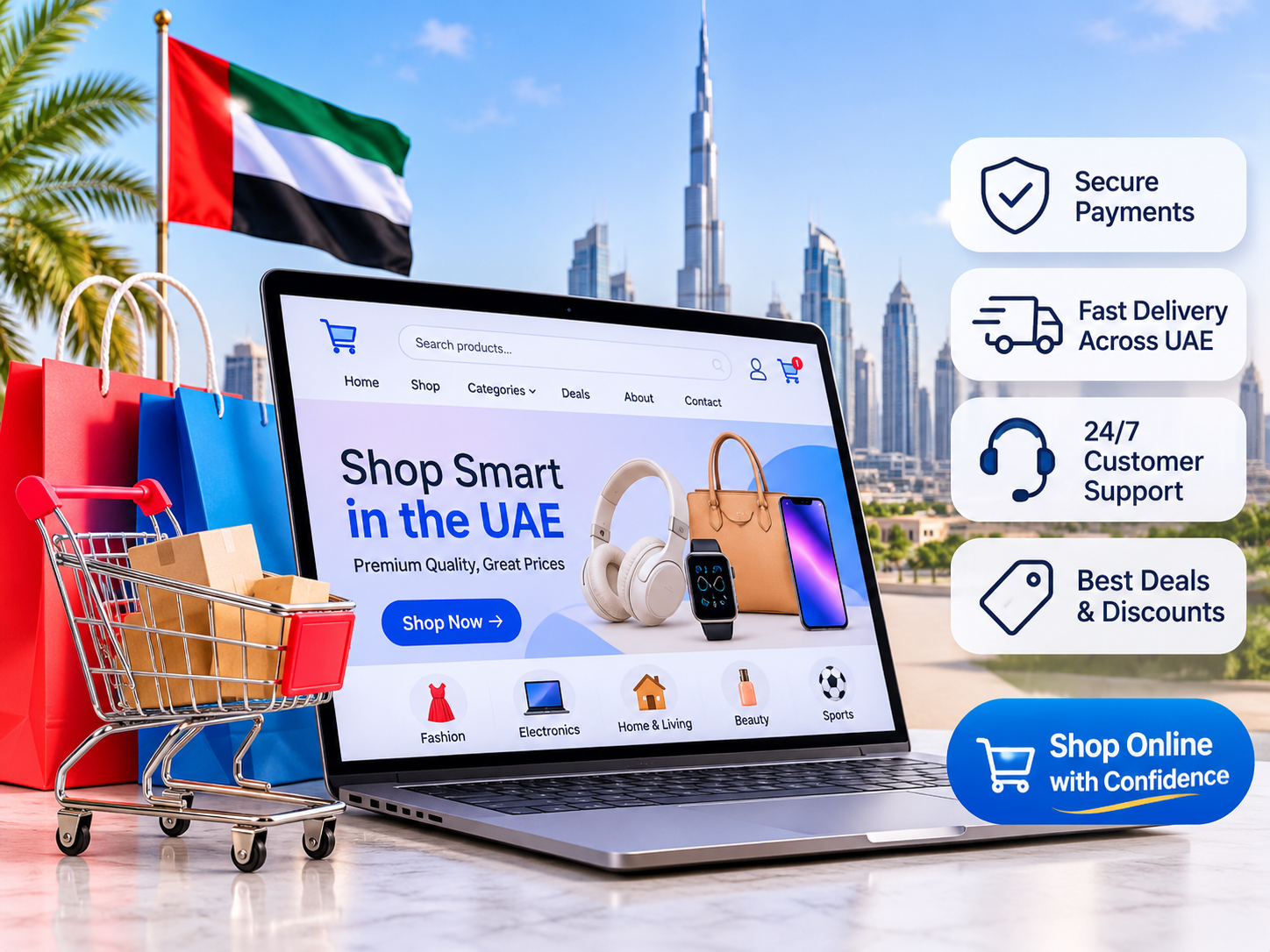
A successful online store needs more than attractive design. The right ecommerce website features UAE businesses implement can make shopping easier, improve customer confidence, and reduce the problems that cause abandoned purchases.
For online retailers in Dubai, Abu Dhabi, Sharjah, and across the UAE, the essentials include mobile-friendly design, Arabic and English support, secure payments, simple checkout, informative product pages, delivery tracking, responsive customer support, inventory management, SEO, and transparent policies.
These features also provide a practical foundation for businesses planning to expand into Saudi Arabia, Qatar, and other GCC markets.
Mobile-First Design and Arabic UX for UAE Shoppers
Mobile shopping should feel effortless. Customers need to browse products, compare options, and complete payments without struggling with small buttons or complicated navigation.
Mobile-First Responsive Design
A mobile-first e-commerce website adapts naturally to smartphones, tablets, and desktop screens.
For example, a Dubai fashion retailer can improve its mobile shopping experience with larger product images, touch-friendly filters, readable descriptions, and an easily accessible shopping cart.
Important mobile design elements include.
Fast-loading product and category pages.
Clear navigation and product search.
Responsive product images and layouts.
Easy-to-use filters and sorting options.
Touch-friendly buttons and checkout forms.
A consistent shopping experience across devices.
Practical tip.
Test your website on actual smartphones instead of relying entirely on desktop previews.
Professional responsive web development can help ensure your store works consistently across different screen sizes.
Arabic and English Language Support
A bilingual e-commerce website helps UAE businesses serve Arabic-speaking customers alongside English-speaking residents and international shoppers.
However, effective localization requires more than adding a language-switching button.
Your website should support.
Arabic right-to-left (RTL) layouts.
English left-to-right (LTR) navigation.
Accurately translated product descriptions.
Localized checkout fields and error messages.
Clearly explained delivery and return policies.
Consistent pricing and product information across languages.
Arabic content also has legal significance. The UAE's consumer-protection framework requires registered e-commerce suppliers to provide specified product, service, and transaction information in Arabic.
For example, an Arabic-speaking customer shopping from Abu Dhabi should be able to understand product specifications, payment conditions, and warranty details without relying on machine translation.
Best practice.
Review translations with a qualified Arabic speaker and test the complete shopping journey in both languages.
Secure Payments and Faster Checkout in the UAE
Customers may like your products but still abandon their carts if checkout feels complicated or payment options are limited.
Reliable payment processing and a straightforward checkout experience are essential for turning shopping interest into completed orders.
Secure UAE Payment Gateway Integration
A secure payment gateway allows customers to pay conveniently while helping merchants manage transaction security.
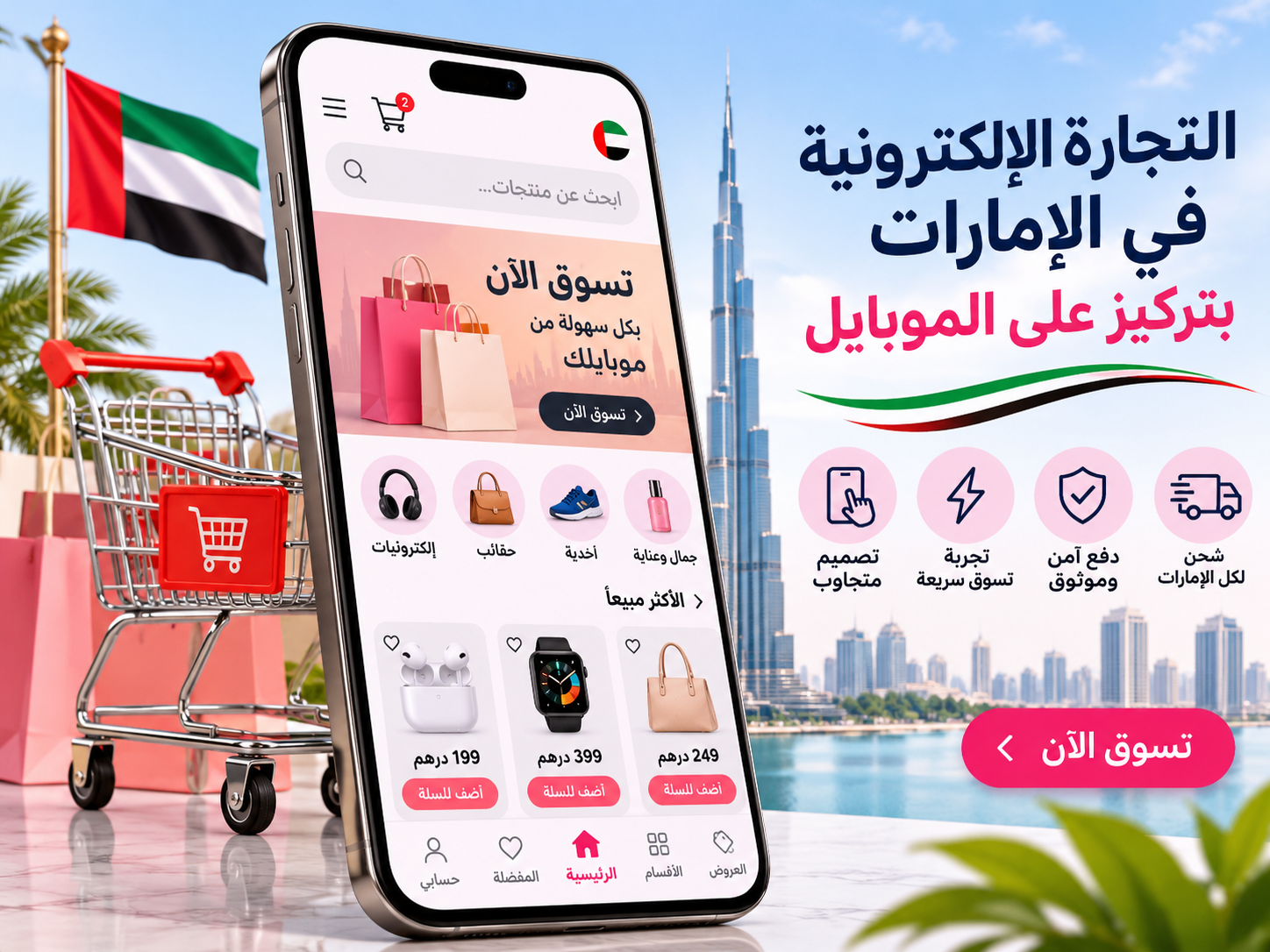
UAE e-commerce businesses should evaluate payment options such as.
Visa and Mastercard.
Apple Pay, where supported.
Buy now, pay later (BNPL) services such as Tabby and Tamara.
Cash on delivery (COD), where operationally practical.
Payment providers such as Telr, PayTabs, and Checkout.com may be worth evaluating, depending on business eligibility and integration requirements.
When choosing a provider, compare transaction fees, settlement arrangements, security controls, supported currencies, and the payment methods available to your customers.
Use HTTPS, reputable payment integrations, and hosted or tokenized payment processing. Avoid storing sensitive card information unnecessarily.
Fast and Simple Checkout
A complicated checkout process creates unnecessary friction.
Imagine a customer purchasing electronics from a Dubai retailer. If delivery charges appear only at the final payment screen, the unexpected cost may discourage the purchase.
Effective checkout optimization includes.
Guest checkout without mandatory registration.
Minimal form fields.
Address autocomplete where available.
Clear AED pricing and delivery charges.
Multiple suitable payment methods.
Visible return and refund information.
A simple order-confirmation process.
Customers should understand what they are buying, how much they will pay, and when their order is expected to arrive.
UAE Checkout Options Compared With Saudi Arabia and Qatar
Payment requirements vary across GCC markets.
|
Market |
Currency |
Payment considerations |
|---|---|---|
|
UAE |
AED |
Cards, supported digital wallets, BNPL, COD |
|
Saudi Arabia |
SAR |
Cards, mada, and supported local payment methods |
|
Qatar |
QAR |
Cards and locally supported payment gateways |
Saudi Arabia's central bank, SAMA, and Qatar Central Bank oversee relevant regulated payment activities in their respective markets.
Businesses planning GCC expansion should check merchant eligibility, currency support, and payment compatibility separately for each country.
A gateway that works for a UAE storefront may require additional arrangements before supporting customers in Riyadh or Doha.
Product Pages and SEO Features That Help UAE Stores Sell
Customers cannot physically inspect products when shopping online. Your website must provide enough information to help them make confident purchasing decisions.
Clear product pages and effective search optimization work together to improve product discovery and shopping experiences.
High-Quality Product Pages, Images, and Reviews
Well-designed product pages answer common questions before customers need to contact your support team.
For example, an Abu Dhabi electronics store should clearly display technical specifications, compatibility information, warranty conditions, and delivery estimates.
An effective product page includes.
High-resolution images showing important details.
Accurate product names and descriptions.
Transparent AED pricing.
Product variants, sizes, or specifications.
Current stock availability.
Authentic customer ratings and reviews.
Delivery estimates and return conditions.
Clear add-to-cart buttons.
For fashion and beauty products, additional details such as size guides, ingredients, shades, or usage instructions can make comparisons easier.
Avoid generic descriptions copied across multiple products. Original, accurate content helps customers understand what makes each item relevant.
SEO-Friendly Website Structure and Fast Loading
A visually impressive online store offers limited value if potential customers struggle to find it through search engines.
E-commerce SEO helps search engines understand product categories, individual product pages, and the services your business offers.
Important technical and on-page SEO features include:
Descriptive product and category URLs.
Unique SEO titles and meta descriptions.
Optimized images with descriptive ALT text.
Fast-loading pages and Core Web Vitals monitoring.
Relevant product structured data.
Logical internal linking.
Arabic and English URLs with appropriate hreflang annotations.
Clear navigation, product search, and category organization.
For example, a Dubai skincare retailer might organize products by skin concern, product type, and brand rather than placing everything in one large category.
Businesses serving different emirates can also create useful delivery-information pages explaining genuine differences in delivery coverage or service availability.
Avoid publishing repetitive location pages created only to rank for city-specific keywords.
Explore technical SEO and search optimization services if your store needs stronger foundations for organic product discovery.
Delivery, Customer Support, and Inventory Management
An online purchase does not end when a customer completes checkout.
Delivery communication, responsive support, and accurate stock information all contribute to a dependable shopping experience.
Local Shipping and Real-Time Order Tracking
Customers want to know whether delivery is available in their area and when they can expect their purchases.
A reliable shipping integration connects checkout with your fulfillment and delivery workflows.
Useful shipping features include:
Delivery availability by location.
Accurate delivery charges.
Estimated delivery windows.
Shipent tracking links.
Autmated order-status notifications.
Clear procedures for returns and failed deliveries.
For example, a UAE retailer may offer different delivery estimates for Dubai, Abu Dhabi, and other emirates based on its actual courier coverage.
Businesses planning to sell into Saudi Arabia or Qatar should also consider cross-border shipping, customs documentation, additional charges, and local fulfillment options.
Practical tip.
Display realistic delivery estimates rather than making promises your logistics provider cannot consistently meet.
WhatsApp Integration and Responsive Customer Support
Quick customer communication can resolve questions that might otherwise prevent a purchase.
WhatsApp Business is a practical support channel for many UAE retailers, especially when customers want clarification about product availability, delivery, or order status.
A Dubai beauty retailer, for example, could use WhatsApp to answer questions about shades, product suitability, and shipping availability.
A reliable support setup should include.
Clearly visible contact options.
WhatsApp Business integration.
Arabic and English support where appropriate.
Published customer service hours.
A helpful FAQ section.
A process for handling complaints and refunds.
Automated chatbots can assist with common questions, but customers should have access to human support when their concerns require further attention.
For businesses exploring automation, customer chatbot solutions may help manage routine inquiries alongside existing support processes.
Inventory and Order Management Systems
Accurate inventory management becomes increasingly important as an online store receives more orders.
Without reliable stock synchronization, customers may purchase products that are no longer available.
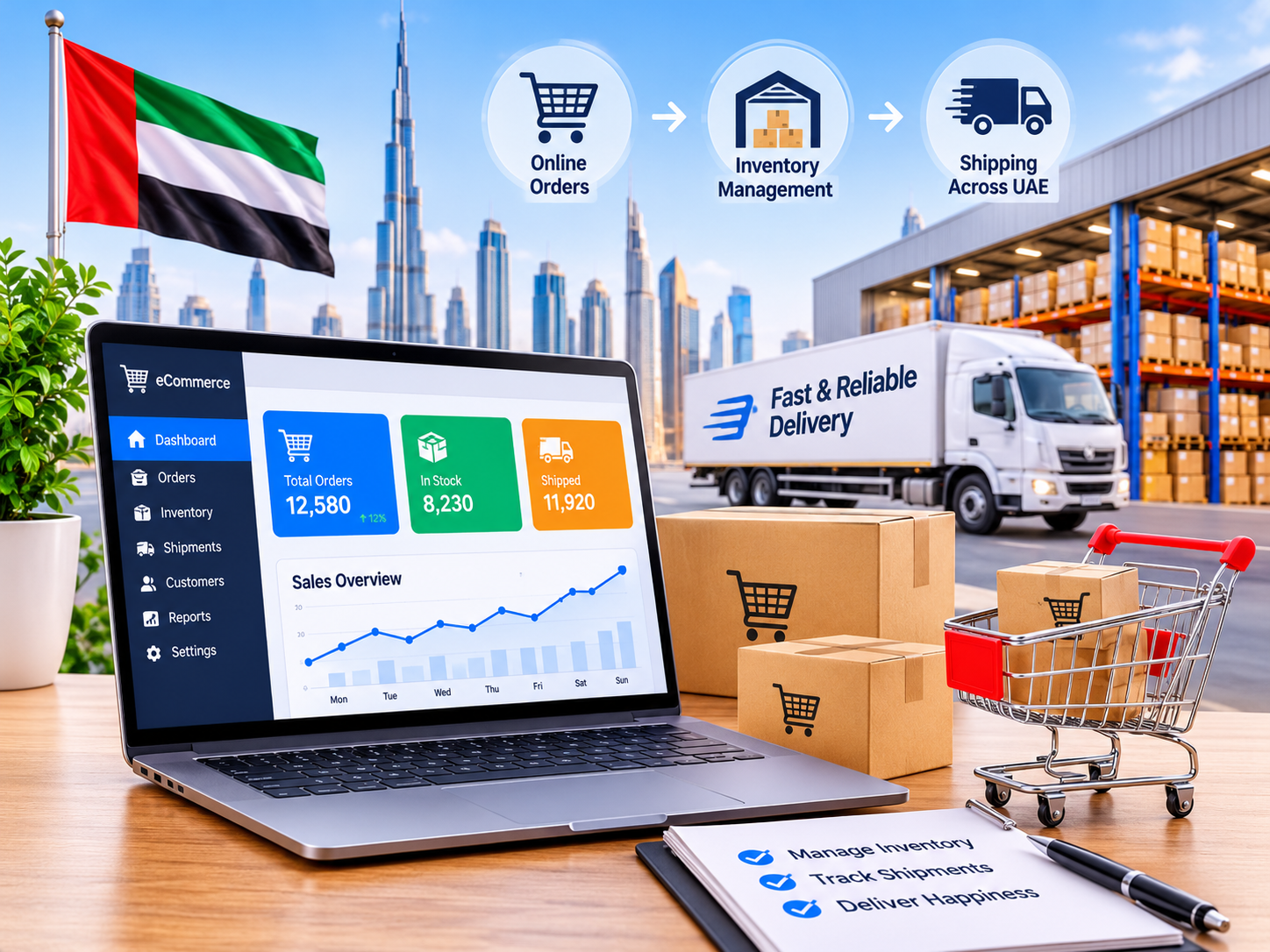
Essential inventory and order-management features include:
Automatic stock updates.
Low-stock notifications.
Order processing and fulfillment statuses.
Returns and cancellation handling.
Connections with compatible POS systems.
Inventory synchronization across physical and online stores.
For example, an Abu Dhabi retailer operating both a physical showroom and an online store can connect inventory systems to keep product availability consistent across channels.
Shopify and WooCommerce can support these workflows through appropriate configurations, software, and integrations.
If you are considering regional growth, the Shopify setup guide for GCC businesses provides additional platform-planning context.
Website Security, Customer Trust, and UAE Compliance
Security and transparency should be part of your website from the beginning.
Customers need to know who operates the store, how their information is handled, and what happens if a purchase does not meet expectations.
Clear Privacy, Returns, and Trust Information
Trustworthy e-commerce websites make important business information easy to find.
Your store should clearly display.
Business identity and contact details.
Privacy and data-handling policies.
Return, refund, and cancellation conditions.
Delivery terms and applicable charges.
Warranty information where relevant.
Secure payment options.
Customer support and complaint procedures.
Avoid unsupported marketing claims such as "100% secure" or "government approved."
Customers are better served by accurate policies, transparent pricing, and reliable service than vague promises.
UAE E-Commerce Laws, VAT, and Arabic Disclosures
UAE merchants must consider applicable licensing, consumer-protection, data-privacy, and tax requirements.
Important legal references include:
Federal Decree-Law No. 14 of 2023.
Governs trade conducted through modern technological means, including relevant e-commerce activities.
Federal Law No. 15 of 2020 on Consumer Protection, as amended.
Addresses consumer rights and supplier obligations, including specified Arabic-language information and invoice requirements.
UAE Value Added Tax.
The standard VAT rate is 5%, although exemptions, zero-rating provisions, registration thresholds, and other conditions can affect individual businesses. Consult the Federal Tax Authority for applicable guidance.
Licensing and personal-data obligations also depend on your activities, business structure, and jurisdiction.
Businesses operating under DIFC or ADGM frameworks may need additional jurisdiction-specific assessments.
Important.
E-commerce regulations can change. Confirm the rules relevant to your business before launching or entering a new market. This overview is general information, not legal or tax advice.
Compliance Considerations for Saudi Arabia and Qatar
Expanding into other GCC markets requires more than translating product descriptions.
For Saudi Arabia, merchants should review applicable ZATCA tax and invoicing requirements, data-protection obligations, consumer rules, and relevant payment arrangements under SAMA oversight.
For Qatar, businesses should assess local licensing, consumer protection, payment compatibility, and relevant guidance from the Ministry of Communications and Information Technology.
The Qatar MCIT e-commerce guidelines offer practical guidance covering website operations and customer confidence.
The key is to review each market individually rather than assuming that UAE business processes automatically satisfy regional requirements.
How to Prioritize E-Commerce Website Features Before Launching in UAE
Not every online store needs advanced personalization, sophisticated automation, or a custom-built platform immediately.
A more practical approach is to establish the essential shopping and operational features before investing in additional functionality.
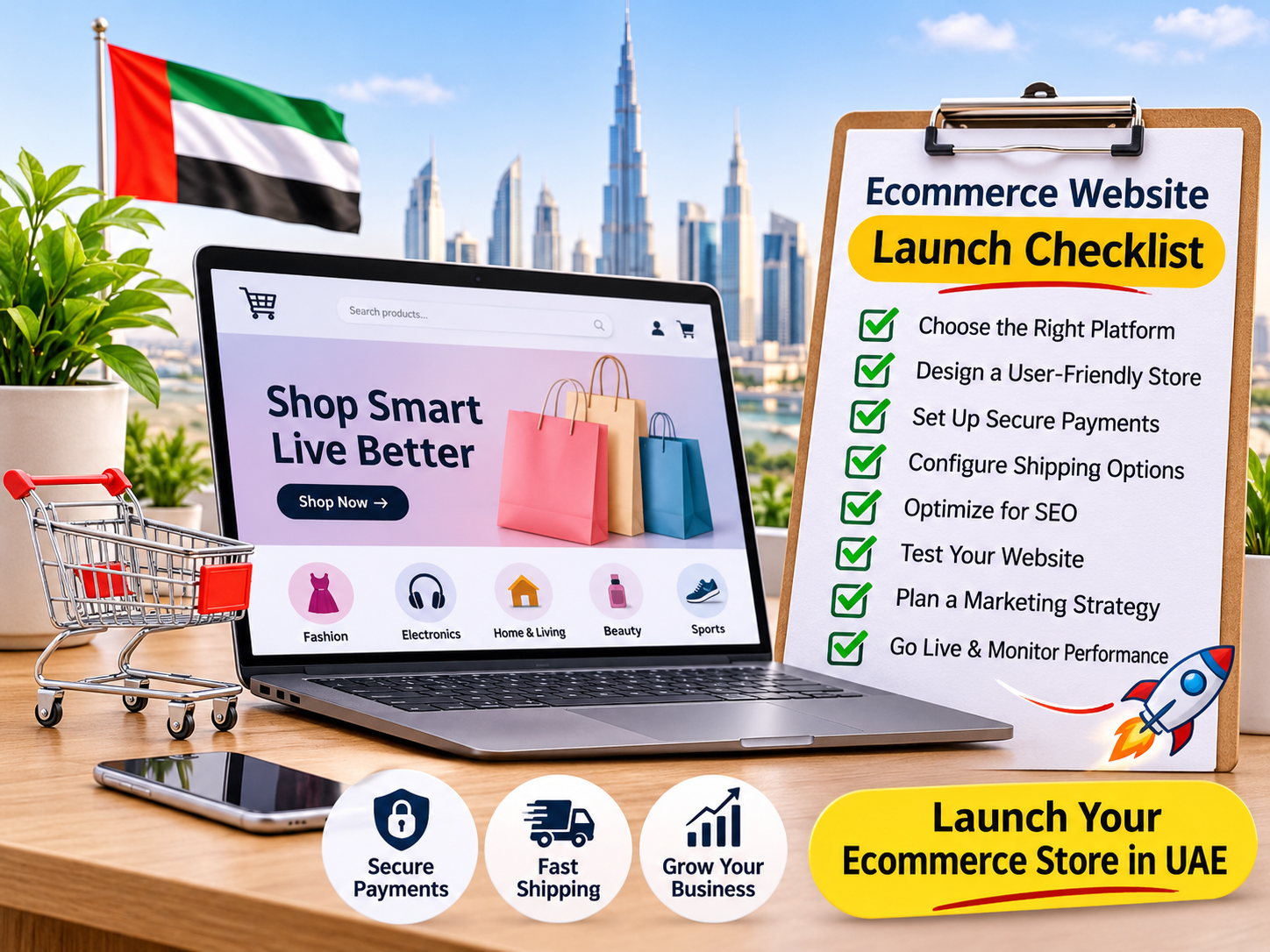
UAE E-Commerce Website Launch Checklist
Use this checklist when preparing your store for launch.
Launch essentials
0 of 6 complete
Once your foundation is dependable, consider introducing loyalty programs, personalized recommendations, advanced analytics, or other features supported by actual customer demand.
E-Commerce Website Development Cost and Timeline in UAE
The cost of e-commerce website development in the UAE depends on the project's requirements.
Important factors include.
Number and complexity of products.
Shopify, WooCommerce, or custom platform selection
Arabic and English localization.
Design customization.
Payment, shipping, and POS integrations.
Inventory and order-management requirements.
SEO implementation.
Testing, maintenance, and ongoing support.
Template-based stores may require less initial development than custom-built platforms, although complex integrations and localization can increase implementation effort.
Businesses should request a detailed project scope, understand recurring costs, and evaluate maintenance requirements before choosing a development approach.
Explore Mak It Solutions' e-commerce development services for additional implementation options.
Choosing a UAE Development Partner With GCC Expansion in Mind
A suitable development partner should understand your customer experience, operational requirements, and future growth plans.
Look for demonstrated experience in multilingual websites, payment integrations, mobile performance, technical SEO, and post-launch support.
Ask potential partners how they approach testing, data security, platform maintenance, and future integrations.
Reviewing a relevant e-commerce website relaunch case study may also help you understand how development challenges are managed.
If expansion into Riyadh, Jeddah, or Doha is part of your business strategy, discuss regional currency support, localization, and fulfillment requirements early in the project.
Final Thoughts
The essential ecommerce website features UAE businesses need are not simply technical additions. They shape how customers discover products, evaluate your store, complete purchases, and receive their orders. Mak It Sol
Mobile-friendly design, accurate Arabic content, secure payment options, informative product pages, dependable fulfillment, and transparent policies create a stronger foundation for online retail.
You do not need every advanced feature at launch. Focus on a reliable shopping experience, monitor customer behavior, and improve your store as demand grows.
Planning a new online store in Dubai, Abu Dhabi, or elsewhere in the UAE?
Contact Mak It Solutions to discuss your website requirements, explore e-commerce development options, or request a strategy tailored to your UAE business and potential GCC expansion.
FAQs
Retailers should ensure essential Arabic information is accurate and consistent with other language versions. Translation quality is particularly important for product specifications, warranties, and payment conditions.
However, merchants should compare completed deliveries, failed delivery expenses, return rates, and operational costs before offering COD widely. Testing it in selected delivery zones may help determine whether it is commercially worthwhile.
Businesses should review applicable Saudi tax and consumer-protection requirements, SAR pricing, Arabic information, customs, shipping arrangements, and payment compatibility.
The right platform depends on your requirements for RTL layouts, QAR pricing, payment gateways, inventory management, and delivery workflows. Test the complete bilingual checkout experience before launching.
The system should update stock availability when items are sold, returned, or transferred between locations. Testing inventory synchronization helps reduce overselling and improve order accuracy.
Frequently asked questions
Quick answers related to this article.
Comments
Join the discussion. Comments are moderated.
No comments yet. Be the first to share a thought.
Building something related?
Tell us about your product goals — we’ll respond with a clear next step.
Discuss your project