Blogs
Best Payment Gateways in Saudi Arabia and UAE (2026)
Content Editor · November 25, 2026 · 12 min read
Direct answer
Can Saudi Arabian e-commerce websites accept mada and Apple Pay through one payment gateway?
Yes. Providers such as Moyasar support both mada and Apple Pay through their payment infrastructure. Merchants should verify the provider's regulatory status and complete the necessary account activation, website verification and technical configuration.
Choosing the best payment gateways in Saudi Arabia and UAE is about more than finding the lowest transaction fees. Your payment provider directly affects checkout conversions, customer trust, transaction security and…
Best Payment Gateways in Saudi Arabia and UAE (2026)
Choosing the best payment gateways in Saudi Arabia and UAE is about more than finding the lowest transaction fees. Your payment provider directly affects checkout conversions, customer trust, transaction security and business growth.
Moyasar, HyperPay, Geidea and PayTabs are strong options for Saudi Arabian businesses, while Stripe, Telr, Network International and Checkout.com are worth considering for UAE merchants. Amazon Payment Services, Tap Payments and MyFatoorah also offer payment solutions for businesses expanding across the GCC.
The right choice depends on your business location, preferred payment methods, transaction volume and e-commerce platform.
For an online store in Riyadh, Dubai or Doha, a secure, localized checkout can make the difference between a completed purchase and an abandoned cart.
What Is a Payment Gateway and How Does It Work in GCC E-Commerce?
A payment gateway is a technology that securely transfers payment information for authorization, allowing businesses to accept online payments through websites and mobile applications.
How Online Payment Processing Works
When a customer makes an online purchase, the payment gateway securely communicates transaction information for authorization. The payment processor facilitates the transaction, while the acquiring institution manages merchant settlement.
Some payment service providers combine these functions within a single platform, simplifying payment management for businesses.
Why Local Payment Gateways Matter in Saudi Arabia and UAE
Payment preferences vary across Gulf markets. In Saudi Arabia, mada acceptance is an important consideration, while UAE businesses serving international customers need reliable international card processing.
Supporting familiar payment methods, Arabic checkout interfaces and local currencies can reduce unnecessary friction during checkout.
Essential Features of a GCC E-Commerce Payment Gateway
Look for a payment provider that offers.
Local and international payment acceptance.
Mobile-friendly checkout.
Fraud detection and transaction authentication.
E-commerce plugins and API integration.
Refund and chargeback management.
Multi-currency payment capabilities.
Transparent settlement reporting.
These features become particularly important as your business expands into new GCC markets.
11 Best Payment Gateways in Saudi Arabia and UAE
Not every payment gateway serves the same business needs. Some focus on local merchants, while others are better suited to international transactions, subscription businesses or enterprise retailers.
Best Payment Gateways for Saudi Arabian E-Commerce Websites
Moyasar.
A practical option for Saudi startups and SMEs looking for mada, Apple Pay and online card payment integration.
HyperPay.
Worth considering for growing retailers that require regional payment processing and scalable integration capabilities.
Geidea.
Suitable for businesses looking to connect online and physical retail payment experiences.
PayTabs.
A regional payment provider to evaluate when building an online store with plans for GCC expansion.
Best Payment Gateways for E-Commerce Websites in UAE
Stripe.
An option for SaaS platforms, subscription businesses and online stores requiring developer-friendly payment integration.
Telr.
Worth exploring for small and medium-sized businesses seeking regional payment solutions.
Network International.
A potential choice for established retailers with more extensive payment processing requirements.
Checkout.com.
Suited to consideration by larger businesses with complex or international payment needs.
Amazon Payment Services.
A regional payment solution for merchants targeting Middle Eastern markets.
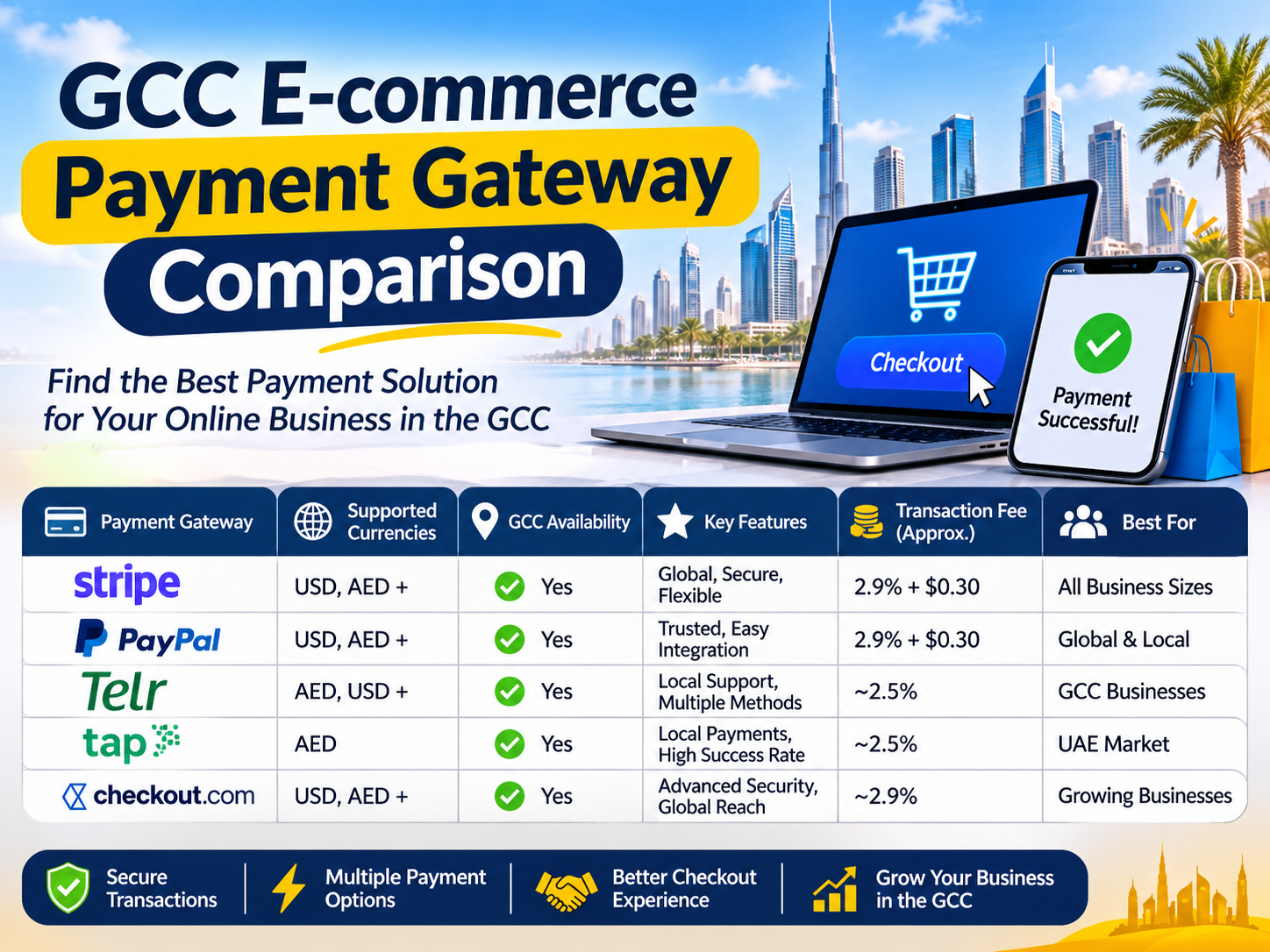
Best Payment Gateways for Cross-Border GCC E-Commerce
Tap Payments.
Worth evaluating for businesses that need access to regional payment methods across multiple Gulf markets.
MyFatoorah.
An option for SMEs seeking localized payment capabilities and regional expansion.
Qatar-based businesses can also explore local alternatives such as SkipCash and Dibsy, depending on their merchant requirements.
Top 11 GCC Payment Gateways Compared
|
Payment gateway |
Primary market |
Payment methods to evaluate |
Suitable for |
|---|---|---|---|
|
Moyasar |
Saudi Arabia |
mada, Apple Pay |
Startups and SMEs |
|
HyperPay |
Saudi Arabia, GCC |
mada, cards |
Growing retailers |
|
Geidea |
Saudi Arabia, UAE |
mada, cards |
Omnichannel retailers |
|
PayTabs |
GCC |
Cards, mada |
Regional e-commerce |
|
Stripe |
UAE |
Cards, Apple Pay |
SaaS and international stores |
|
Telr |
UAE, Saudi Arabia |
Cards, Tabby |
Small businesses |
|
Network International |
UAE, MENA |
Cards, digital wallets |
Established retailers |
|
Checkout.com |
Saudi Arabia, UAE |
Cards, local methods |
Enterprises |
|
Amazon Payment Services |
MENA |
Cards, mada |
Regional merchants |
|
Tap Payments |
GCC |
mada, KNET, BENEFIT |
Cross-border stores |
|
MyFatoorah |
GCC |
mada, KNET, Qatar debit cards |
SMEs |
Payment method availability depends on the merchant's registered country, business activity, provider agreement and account activation.
Consult official provider documentation, such as Moyasar's payment integration documentation, before making your final decision.
This comparison is a commercial shortlist rather than an independently tested performance ranking.
Local Payment Methods Your GCC E-Commerce Website Should Support
Customers should be able to complete purchases using payment methods they already know and trust. A localized checkout is particularly valuable when selling across multiple Gulf countries.
mada, Apple Pay and BNPL Solutions in Saudi Arabia
Saudi Arabian e-commerce businesses should evaluate support for.
Mada
Visa
Mastercard
Apple Pay
Tabby
Tamara
Businesses can also assess eligible STC Bank payment services separately.
Buy now, pay later (BNPL) solutions may provide additional payment flexibility, although eligibility, integration requirements and merchant fees vary.
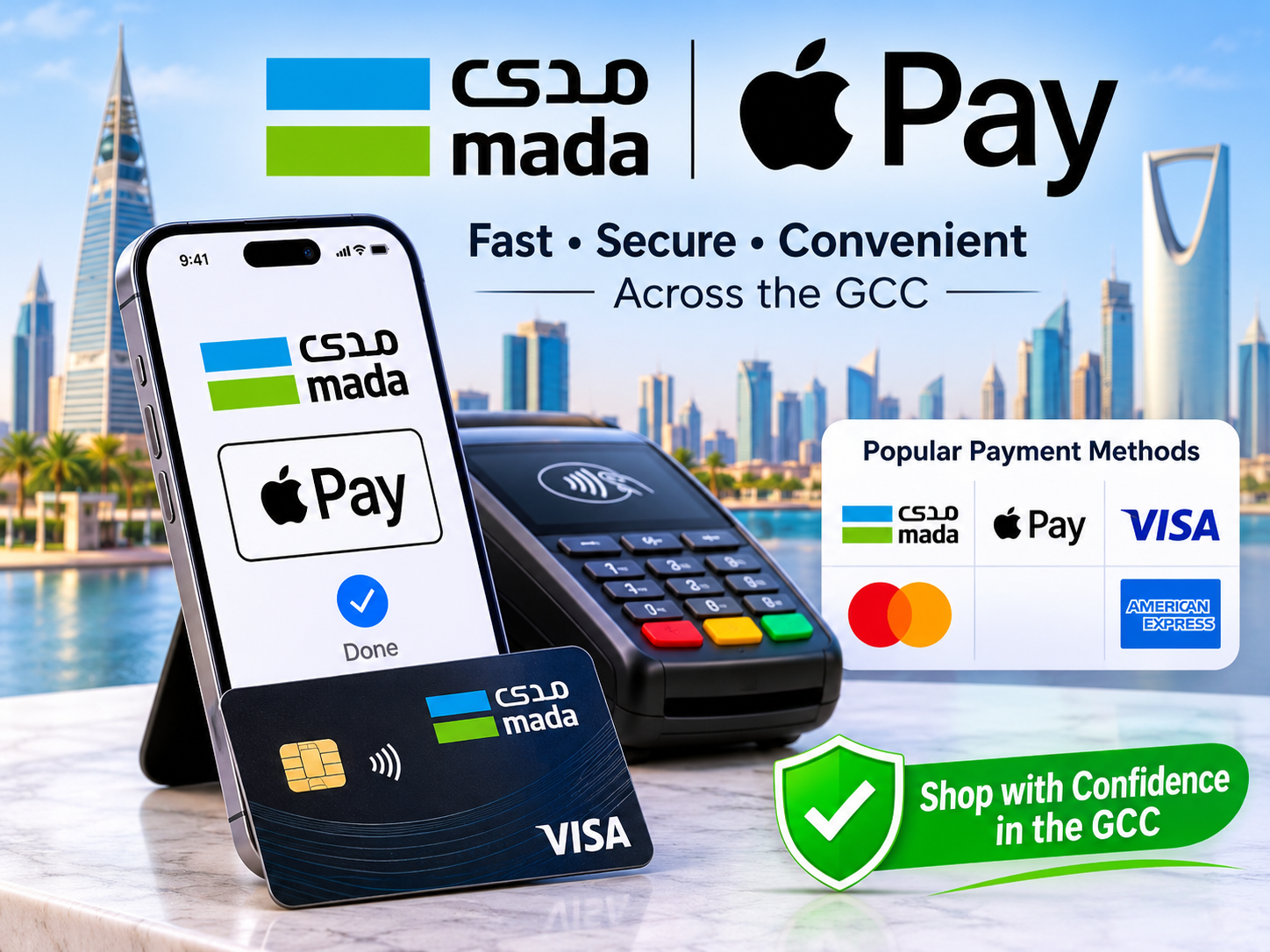
Local and International Payment Methods in UAE
UAE online stores should prioritize international card acceptance, mobile wallets such as Apple Pay, and eligible local payment options such as Jaywan.
Businesses targeting both residents and international customers should pay particular attention to currency compatibility and mobile checkout usability.
Professional mobile app development can help businesses create a more consistent payment experience across mobile platforms.
Payment Methods for Qatar and Wider GCC Markets
The following payment methods are worth evaluating when expanding into Gulf markets.
🇸🇦
Saudi Arabia
mada, Apple Pay, Tabby, Tamara
SAR
🇦🇪
United Arab Emirates
Jaywan, international cards, Apple Pay
AED
🇶🇦
Qatar
QPay, local debit cards
QAR
🇰🇼
Kuwait
KNET
KWD
🇧🇭
Bahrain
BENEFIT
BHD
🇴🇲
Oman
OmanNet
OMR
Remember that card networks, digital wallets and BNPL services are payment methods. They are not interchangeable with payment gateways.
Your provider must support the relevant payment method and enable it for your merchant account.
Payment Gateway Fees in Saudi Arabia and UAE.
Payment gateway fees in Saudi Arabia and UAE generally include percentage-based transaction charges, fixed processing fees and, depending on the provider, monthly subscription costs.
International transactions, currency conversion and chargebacks can increase the total cost of accepting payments online.
Payment Gateway Transaction Fees in Saudi Arabia
When comparing Saudi payment providers, request details about mada transaction rates, international card processing charges, setup fees and settlement conditions in Saudi riyals.
Providers such as Telr offer country-specific merchant pricing. Request a quotation based on your registered business location and expected transaction volume.
Payment Gateway Pricing and Merchant Fees in UAE
As a pricing reference, Stripe UAE's standard domestic card rate cited in this comparison is 2.9% + AED 1 per successful transaction.
Additional charges may apply to international cards and currency conversion.
Check the official Stripe UAE pricing page for current rates before selecting a provider.
How to Compare the Total Cost of Payment Gateways in the GCC
A low advertised transaction rate does not necessarily mean lower overall processing costs.
Consider:
Monthly subscriptions and setup charges.
Domestic and international transaction fees.
Currency conversion charges.
Refund and chargeback fees.
Settlement charges.
Applicable VAT.
For businesses processing frequent, low-value orders, fixed transaction fees can be particularly important.
Monthly Payment Gateway Cost Calculator
Use this illustrative calculator to estimate monthly payment processing expenses based on your expected sales and transaction volume.
Payment gateway cost calculator
1,750 SAR
1,250 SAR
500 SAR
For example, a business processing monthly sales of 50,000 SAR across 500 transactions at a hypothetical rate of 2.5% plus SAR 1 per transaction would pay approximately 1,750 SAR in monthly processing fees.
Using business intelligence solutions can help you monitor transaction expenses, payment approval rates and overall checkout performance.
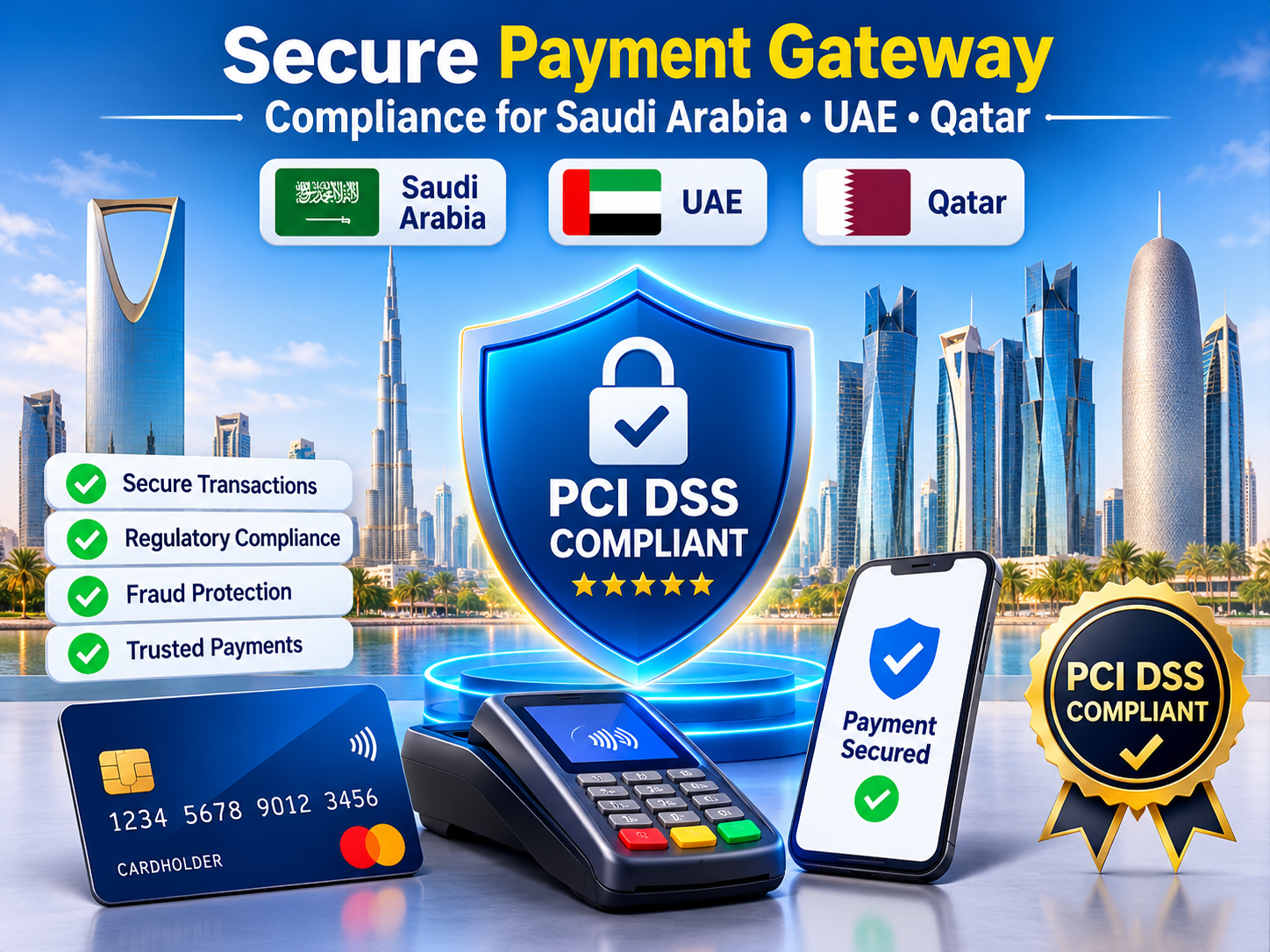
Payment Gateway Security and Compliance in Saudi Arabia, UAE and Qatar
Payment security is a fundamental part of running an e-commerce business. A compromised checkout or unreliable payment integration can expose businesses to financial losses, reputational damage and regulatory risks.
Choose a payment provider with appropriate regulatory authorization, secure payment infrastructure and clearly defined data protection responsibilities.
SAMA Licensing and Payment Compliance in Saudi Arabia
Saudi Arabian businesses should verify the regulatory status of their chosen payment provider through the Saudi Central Bank's licensed payment providers register.
Merchants should also consider Saudi Arabia's Personal Data Protection Law (PDPL), relevant SDAIA guidelines and applicable NDMO requirements when handling customer information.
The regulatory requirements depend on the provider's activities and the nature of the payment services being offered.
CBUAE Regulations and Payment Security in the UAE
The Central Bank of the UAE (CBUAE) regulates relevant retail payment services and card schemes under its applicable regulatory framework.
Businesses operating within ADGM or DIFC may also need to consider separate regulatory requirements, depending on their activities.
Refer to the CBUAE licensing resources when evaluating payment providers and their authorization arrangements.
Customer data protection, merchant verification and secure transaction handling should remain priorities throughout the integration process.
QCB Regulations and International Payment Security Standards
Businesses operating in Qatar should consider Qatar Central Bank requirements when selecting payment providers and integrating local payment methods.
Across GCC markets, important payment security measures include:
Payment Card Industry Data Security Standard (PCI DSS)
3D Secure transaction authentication.
Payment tokenization.
Encrypted communication.
Fraud detection and transaction monitoring.
Secure handling of customer information.
Using a PCI DSS-compliant payment provider can help reduce certain security risks, but merchants must still meet their own applicable compliance obligations.
How to Choose and Integrate the Best Payment Gateway for Your E-Commerce Website
The ideal payment gateway should fit your current business requirements without creating unnecessary limitations as your store grows.
Start with your target markets, customer payment preferences, technical infrastructure and expected transaction volume.
Choosing a Payment Gateway Based on Business Size and Industry
Different business models require different payment capabilities.
|
Business type |
Payment gateway priorities |
|---|---|
|
Startups |
Affordable pricing and straightforward onboarding |
|
Small businesses |
Local payment acceptance and easy integration |
|
Growing retailers |
Reliable settlements and scalable processing |
|
SaaS businesses |
Recurring billing and subscription management |
|
Enterprises |
Advanced APIs, fraud prevention and reporting |
|
Cross-border stores |
Multiple currencies and international payments |
For subscription-based businesses, scalable SaaS development solutions can help integrate recurring billing, automated invoicing and subscription management.
Payment Gateway Integration with Shopify, WooCommerce, Salla and Zid
Your e-commerce platform plays an important role in determining which payment providers you can integrate.
Consider these illustrative regional business scenarios.
Riyadh, Saudi Arabia.
A fashion retailer using Salla or Zid may prioritize mada and Apple Pay to accommodate local payment preferences.
Dubai, UAE.
A Shopify store selling to international customers may require international card acceptance, mobile wallets and multi-currency checkout capabilities.
Doha, Qatar.
A WooCommerce-based small business may prioritize local debit card acceptance, straightforward refunds and settlement in Qatari riyals.
Before signing a merchant agreement, confirm that your preferred payment provider supports your platform, business registration country and required payment methods.
Professional web development services can help businesses implement supported plugins, hosted checkout pages and custom payment APIs.
Step-by-Step Payment Gateway Integration for GCC Businesses
Define business requirements
Identify markets, currencies, preferred payment methods and expected transaction volumes.
Shortlist payment gateway providers
Compare pricing, merchant eligibility, regulatory status and platform compatibility.
Complete merchant registration
Submit the required business documents, banking details and Know Your Customer (KYC) information
Integrate the payment gateway
Configure the supported e-commerce plugin, hosted checkout or payment API.
Test payment functionality
Validate successful and failed transactions, refunds, authentication and mobile checkout behavior before going live.
Launch and monitor performance
Track payment approval rates, settlement records, transaction expenses and checkout abandonment.
Payment integration should not end at launch. Regular monitoring helps identify technical issues and opportunities to improve the customer experience.
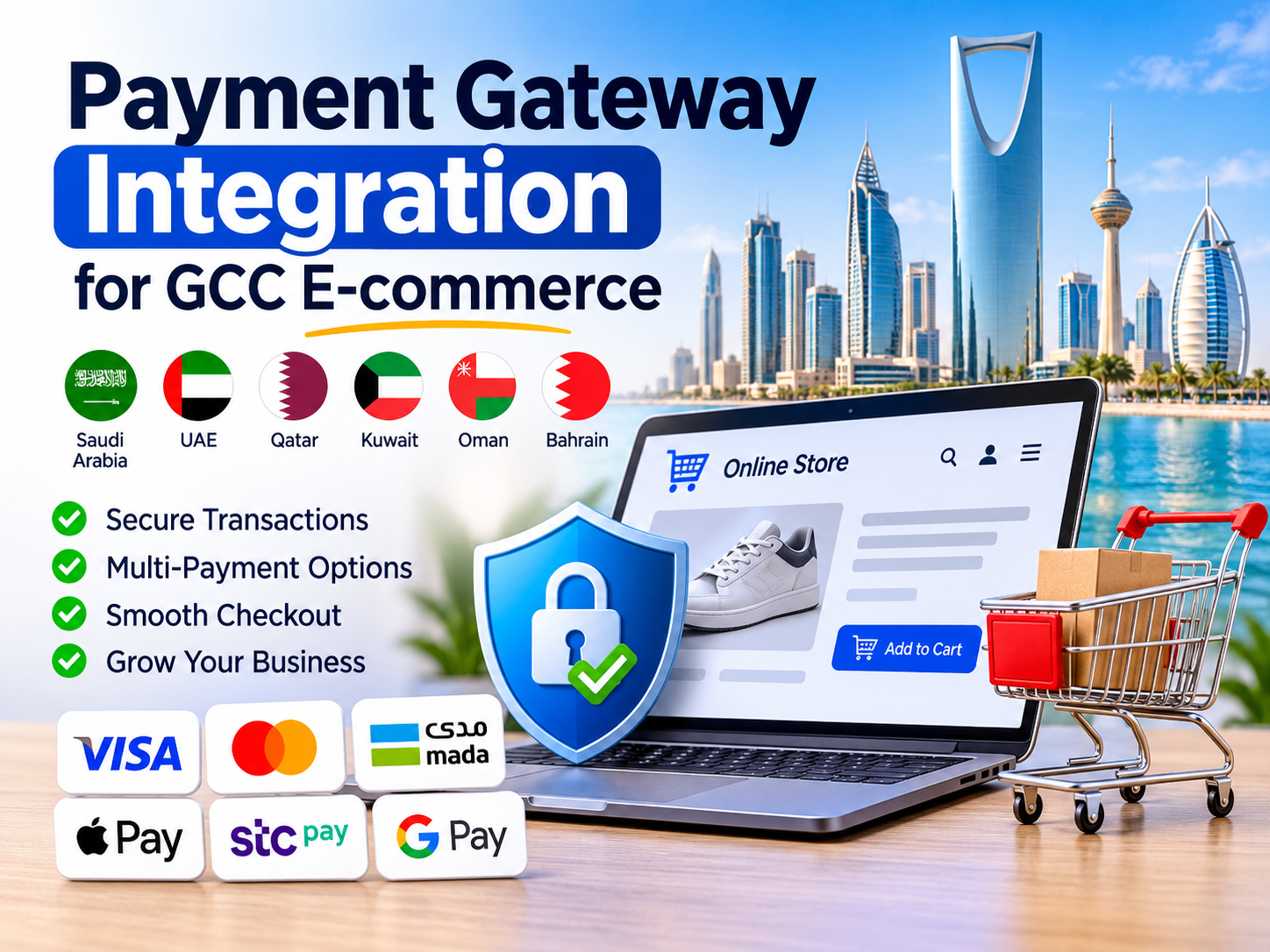
Final Recommendations.
The best payment gateways in Saudi Arabia and UAE are not necessarily the providers with the lowest advertised fees or the greatest number of features. The right solution is the one that meets your customers' payment preferences, supports your business model and provides reliable, secure transaction processing.
For Saudi businesses, Moyasar, HyperPay, Geidea and PayTabs are worth shortlisting. UAE merchants can evaluate Stripe, Telr, Network International and Checkout.com, while businesses targeting wider GCC markets can also consider Tap Payments, MyFatoorah and Amazon Payment Services.
Before making a decision, compare actual merchant pricing, regulatory arrangements, settlement conditions and integration capabilities. Mak It Sol
Professional e-commerce development services can help bring these requirements together into a secure, localized shopping experience.
Planning to launch an online store or upgrade your existing payment infrastructure in Saudi Arabia, UAE or Qatar?
At Mak It Solutions, we help businesses develop scalable e-commerce platforms, integrate regional payment methods and build customer-friendly checkout experiences aligned with their technical requirements.
Contact our development team to discuss your GCC e-commerce project and payment gateway integration requirements.
Payment provider fees, supported payment methods, merchant eligibility and regulatory requirements may change. Confirm current information directly with your chosen provider and relevant regulatory authority before entering a merchant agreement.
FAQs
Frequently asked questions
Quick answers related to this article.
Comments
Join the discussion. Comments are moderated.
No comments yet. Be the first to share a thought.
Building something related?
Tell us about your product goals — we’ll respond with a clear next step.
Discuss your project