

Digital Product Passport GCC: Build Brand Trust
Digital Product Passport GCC: Build Brand Trust
Digital Product Passport GCC: Build Brand Trust
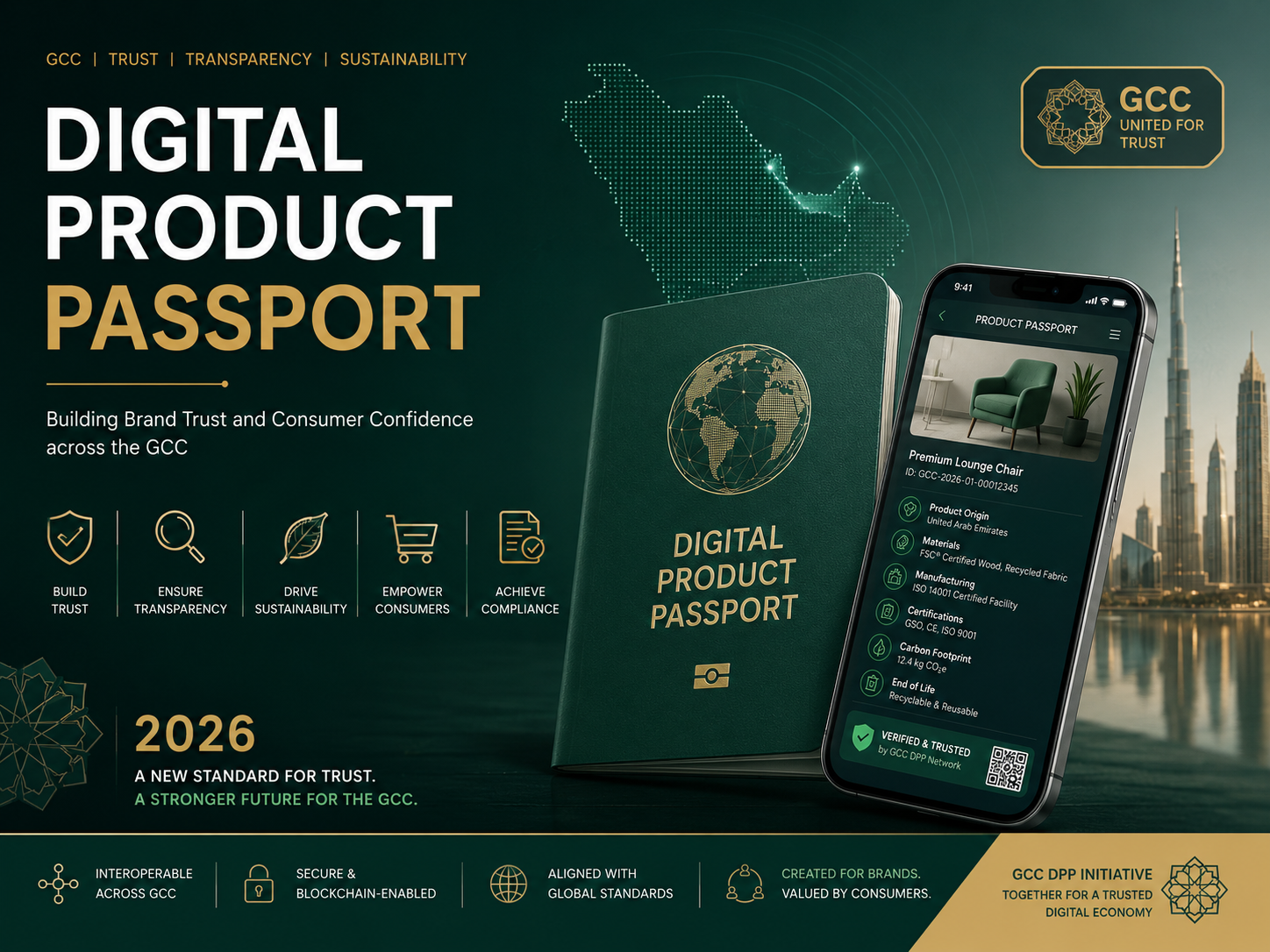
A digital product passport GCC strategy helps Saudi, UAE, and Qatar brands prove product origin, authenticity, ownership history, and supply-chain trust. In 2026, it matters because buyers, retailers, regulators, and AI-driven search systems are moving toward proof-based trust: verified product data, clear ownership records, and transparent claims.
For GCC brands, this is not just a compliance topic. It is a practical way to fight counterfeits, support premium pricing, and make customers feel safer before they buy.
Why Provenance Is Now a GCC Brand Trust Issue
For brands in Saudi Arabia, the UAE, and Qatar, digital product passport GCC planning is becoming a real trust layer. Customers in Riyadh, Dubai, Abu Dhabi, Doha, and Jeddah are dealing with counterfeit products, unclear imports, AI-generated misinformation, and higher expectations around transparency.
The EU’s Digital Product Passport is also pushing product transparency into the mainstream. The European Commission describes the Digital Product Passport as a key part of the 2024 Ecodesign for Sustainable Products Regulation, designed to store and share relevant product data.
That matters for GCC brands selling into Europe, luxury channels, marketplaces, and regulated product categories. Buyers are no longer satisfied with “trust us.” They want proof they can scan, check, and understand.
What Is a Digital Product Passport in the GCC?
Digital Product Passport Explained for GCC Brands
A digital product passport is a product-level record that can show details such as.
Product origin
Materials and ingredients
Batch or serial number
Certifications
Authenticity status
Warranty and ownership history
Repair, recycling, or lifecycle information
For GCC rollout, brands can connect these passports to secure web platforms, bilingual product pages, QR codes, NFC tags, and mobile-first verification journeys.
How Digital Provenance Differs from Basic Traceability
Traceability shows where a product moved.
Provenance goes deeper. It shows where the product came from, who handled it, what changed, and whether the claim is trustworthy.
For example, a traceability record may show that a perfume moved from a warehouse to a Riyadh retailer. A provenance record can also confirm the batch, authorized seller, production source, certificate, and whether the item is genuine.
Why 2026 Makes Provenance Urgent for Saudi, UAE, and Qatar Brands
In 2026, GCC brands face a more proof-driven market. Exporters, luxury sellers, fintech-linked marketplaces, ecommerce brands, and health retailers all need stronger ways to verify authenticity.
A Saudi perfume brand, UAE fashion marketplace, or Qatar health retailer can use a digital product passport to reduce disputes, protect customers, and strengthen confidence at the point of sale.
Why Digital Provenance Matters for GCC Brand Trust
Fighting Counterfeits in Riyadh, Dubai, and Doha Markets
Counterfeits can damage reputation quickly, especially in cosmetics, luxury goods, food, pharma, fashion, and electronics.
A verified digital passport lets customers scan before buying and confirm whether the product is genuine. This is especially useful in marketplaces where buyers may not know whether a seller is authorized.
Building Customer Confidence with QR, NFC, and Secure Product IDs
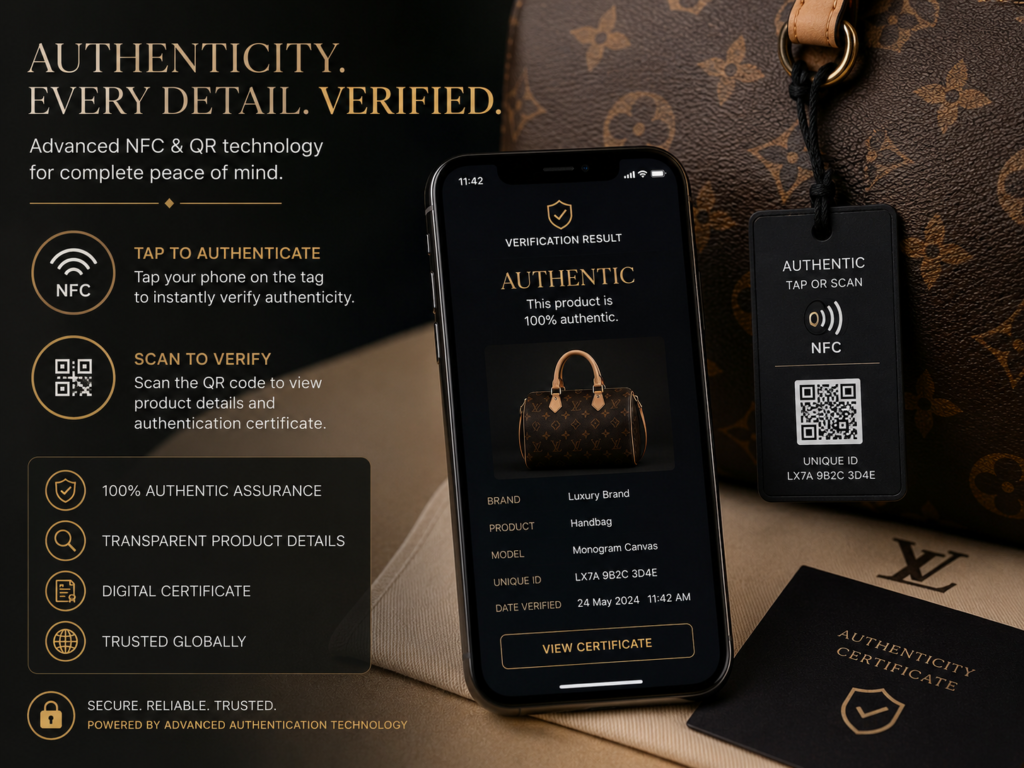
QR codes, NFC tags, secure serial IDs, and blockchain-backed records can guide buyers to a product verification page.
For example, a Dubai ecommerce brand can connect secure product IDs with e-commerce development and a mobile-friendly verification flow. The buyer scans the product, checks the batch, sees the warranty, and confirms the item is authentic.
Simple. Fast. Trust-building.
Protecting Premium and Luxury Brands in the UAE and Saudi Arabia
Premium brands in Dubai Mall, Riyadh ecommerce, and Doha boutiques can use NFC tags for high-value items. The goal is not to add technology for show. The goal is to give customers proof they can understand in seconds.
For luxury, beauty, jewelry, perfumes, watches, and designer fashion, that small scan can protect both the buyer and the brand.
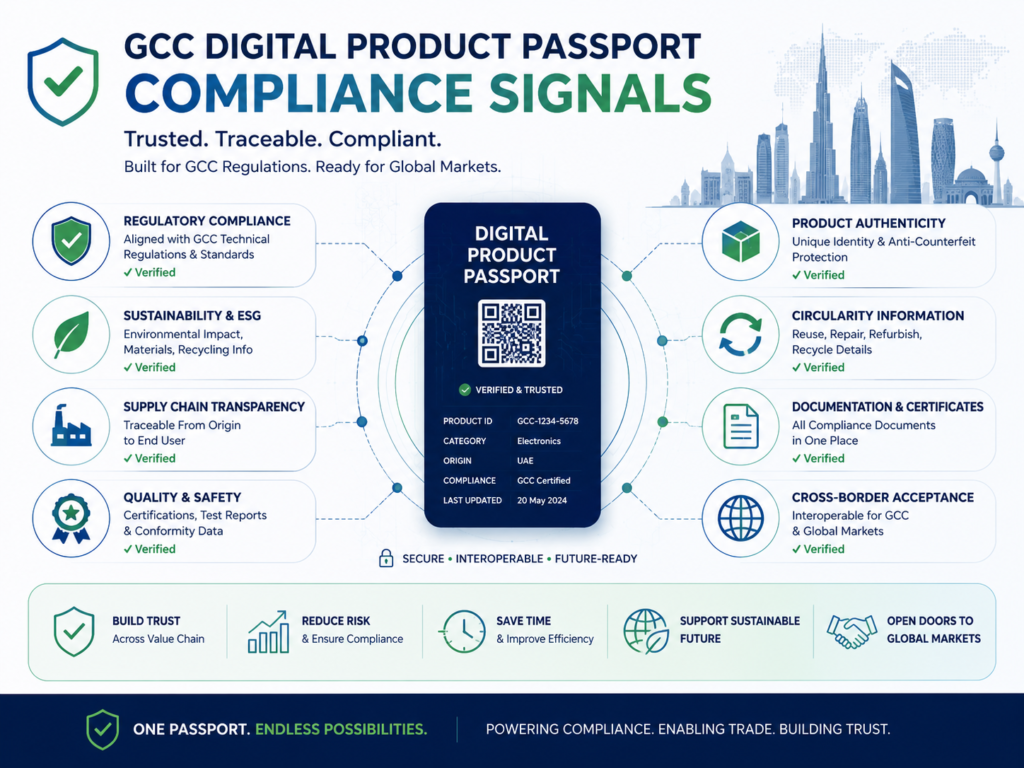
Digital Product Passport GCC Compliance Signals
Saudi Arabia.
Saudi provenance systems should be designed with data governance, consent, privacy, and security in mind.
The National Data Management Office, under SDAIA, develops policies, governance mechanisms, standards, and controls for data and AI. SAMA’s open banking policy also shows how consent-based trusted data sharing has become a serious part of Saudi digital trust, with customer data shared securely only when customers give explicit and informed consent.
For brands, the lesson is clear: product data should be useful, but it should also be controlled, secure, and limited to what customers and partners need.
UAE.
In the UAE, provenance fits naturally with digital identity and regulated innovation.
TDRA describes UAE Pass as the first secure national digital identity for UAE citizens, residents, and visitors. It supports access to online services, digital signing, document verification, and official digital documents.
That matters because UAE customers are already familiar with trusted digital journeys. A digital product passport should feel just as clear: scan, verify, understand, and act.
Qatar.
Qatar brands should align product verification with the country’s wider digital trust direction.
QCB’s financial-sector strategy focuses on building a sustainable and resilient financial sector that supports Qatar’s growth ambitions. Qatar Digital Identity also supports trusted electronic transactions, including digital signing and access to government portals.
For Doha retailers and marketplaces, this creates a strong environment for secure product verification, warranty checks, and digital customer support.
How GCC Brands Can Use Provenance Across Products and Content
Product Authenticity Verification for Ecommerce and Retail
A customer scans a product package and sees.
Genuine or suspicious status
Batch number
Warranty status
Origin details
Authorized seller information
Safety notices
Return or support instructions
This works well for retail, marketplaces, luxury products, and mobile app development projects where verification is part of the customer journey.
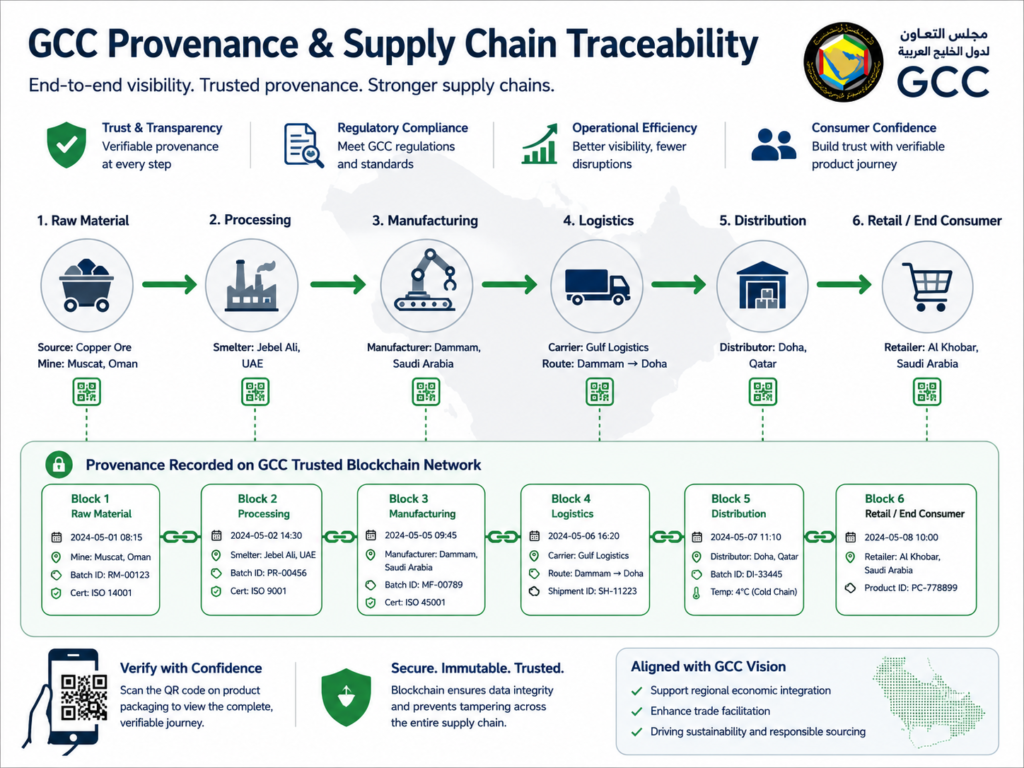
Supply Chain Traceability for Logistics, Halal, and ESG Claims
For logistics, halal-friendly claims, and ESG reporting, provenance can record supplier data, warehouse events, certificates, customs-ready product details, and sustainability notes.
Cloud planning also matters. GCC brands may need to consider regional infrastructure, residency expectations, backup strategy, and provider availability before launching. AWS lists Middle East cloud regions as part of its global infrastructure, while Microsoft also identifies Qatar and UAE regional cloud availability across its infrastructure documentation.
The practical point: do not treat hosting as an afterthought. Product trust depends on secure, reliable, and region-aware systems.
AI Content Authenticity for Campaigns, Influencers, and Brand Safety
Digital provenance is not only for physical products. It also applies to content.
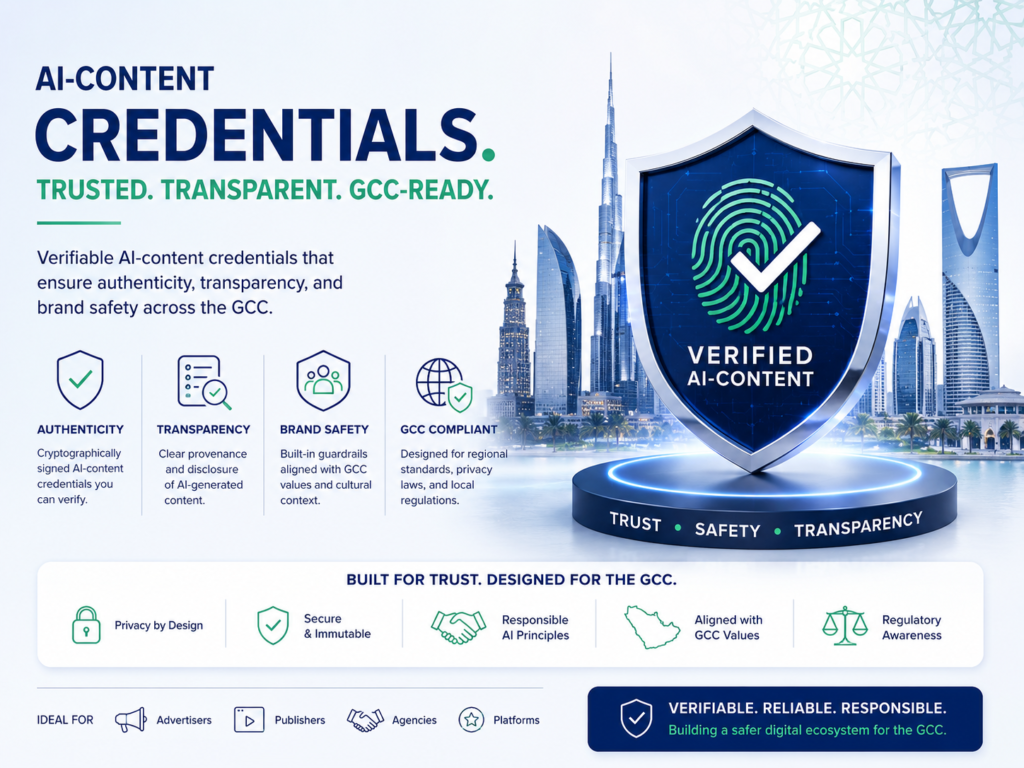
C2PA provides an open technical standard that helps publishers, creators, and consumers establish the origin and edits of digital content. For GCC brands, this can help verify campaign images, influencer assets, product photos, executive videos, and AI-assisted media.
As AI-generated content becomes more common, brands that can prove what is real, edited, approved, or synthetic will have an advantage.
How to Build a Digital Provenance Roadmap in the GCC
Identify High-Risk Products and Content Assets
Start with the assets most likely to create risk.
Counterfeited SKUs
Premium products
Regulated categories
Export goods
Influencer campaigns
Executive videos
Warranty-heavy products
Marketplace listings
You do not need to passport everything on day one. Start where trust problems cost the most.
Choose the Right Verification Layer
Different products need different verification layers.
| Use Case | Best-Fit Verification Layer |
|---|---|
| Everyday retail products | QR code |
| Premium or luxury products | NFC tag |
| High-risk supply chains | Secure serial IDs + audit trail |
| Ownership or resale records | Blockchain-backed records |
| AI campaign assets | Content Credentials |
| Bilingual customer journeys | Arabic-English verification pages |
A scalable setup may need Next.js development, Python integration work, ERP or PIM connections, and analytics dashboards.
Localize for Arabic UX, Data Residency, and GCC Compliance
Arabic UX is essential.
Verification pages should be bilingual, fast, mobile-first, and culturally clear. A weak English-only page can reduce trust, especially for products involving safety, halal-friendly claims, luxury authenticity, or warranty support.
Strong front-end development can make the experience smooth for customers scanning from a store shelf, ecommerce package, or mobile app.
Costs, Risks, and Best Practices for GCC Brands
What Affects Digital Product Passport Cost in GCC Markets?
Cost depends on the complexity of the rollout. Key factors include.
Number of SKUs
QR or NFC tagging
ERP, PIM, or ecommerce integration
Blockchain or non-blockchain architecture
Certificate management
Arabic-English content setup
Analytics and fraud monitoring
Regional hosting and backup planning
Customer support workflows
A small pilot may only need QR-based verification and a simple dashboard. A luxury or regulated rollout may need NFC, secure IDs, ownership records, and stronger integrations.
Common Mistakes GCC Brands Should Avoid
Avoid these mistakes.
Making the message “blockchain-first” instead of customer-first
Using weak Arabic copy
Publishing ESG or halal-friendly claims without proof
Showing too much technical data to customers
Ignoring data governance
Launching without staff and customer education
Using QR codes that are easy to copy without backend checks
The best systems feel simple to the customer and strong behind the scenes.
Best Practices for Riyadh, Dubai, Abu Dhabi, and Doha Rollouts
Pilot first.
A Riyadh marketplace may begin with high-risk sellers and SAMA-style trust principles. A Dubai ecommerce brand may start with app-based verification for premium products. A Doha SME may begin with QR passports, warranty checks, and cloud-region planning.
Support the rollout with digital marketing strategy and SEO visibility support so customers understand why verification matters.
The Future of Digital Provenance for GCC Brands
From Product Passports to AI-Era Brand Proof
Digital product passports are part of a bigger shift.
The future of brand trust will connect products, content, identity, ownership, warranties, customer service, and compliance signals. In practice, this means one brand proof layer may support many use cases: ecommerce trust, retail verification, resale, influencer content, and after-sales support.
Why GCC Exporters Should Prepare Early
GCC exporters selling into Europe or premium global channels should prepare early. The EU’s direction on product transparency is already clear, and buyers in global markets are becoming more comfortable asking for verified product data.
Even when a specific deadline does not yet apply to a product category, preparation can reduce future pressure.
Final Thoughts
For Saudi, UAE, and Qatar brands, digital provenance is no longer only a compliance idea. It is becoming a competitive trust advantage.
A strong digital product passport GCC strategy can help brands prove authenticity, reduce counterfeit risk, support premium positioning, and give customers confidence before and after purchase.
Mak It Solutions can help you assess product authenticity risks, plan a GCC-ready verification roadmap, and build Arabic-first digital passport experiences.
Contact Mak It Solutions to book a consultation or request a custom digital product passport GCC strategy for your brand.
FAQs
Q : Is a digital product passport required for Saudi brands exporting to Europe?
A : Saudi brands exporting to Europe should prepare for Digital Product Passport expectations under EU product transparency rules. Requirements depend on product category and timeline, so exporters should monitor official EU updates instead of assuming one deadline applies to all products.
Q : Can UAE ecommerce brands use QR codes for product authenticity verification?
A : Yes. UAE ecommerce brands can use QR codes to connect customers to product authenticity pages showing batch details, warranty status, certification, and return guidance. For higher-value goods, QR can be combined with NFC or secure serial IDs.
Q : What is the role of Arabic UX in GCC product verification?
A : Arabic UX improves trust because customers understand verification steps in their own language. This is especially important for safety, halal-friendly claims, warranties, luxury authenticity, and support instructions.
Q : How can Qatar retail brands prove product authenticity online?
A : Qatar retail brands can use QR or NFC verification, digital product passports, secure ownership records, and customer-facing certificate pages. A Doha retailer can show origin, authorized seller status, warranty, and after-sales support in one scan.
Q : Should luxury brands in Dubai use NFC or blockchain for authentication?
A : Luxury brands in Dubai should often use NFC for customer-facing authentication because it feels premium and is harder to copy than a visible QR code. Blockchain can be useful behind the scenes when brands need tamper-resistant ownership, resale, or supply-chain records.