Digital Twins for Mega Projects in UAE & Saudi
Digital Twins for Mega Projects in UAE & Saudi
Digital Twins for Mega Projects in UAE & Saudi
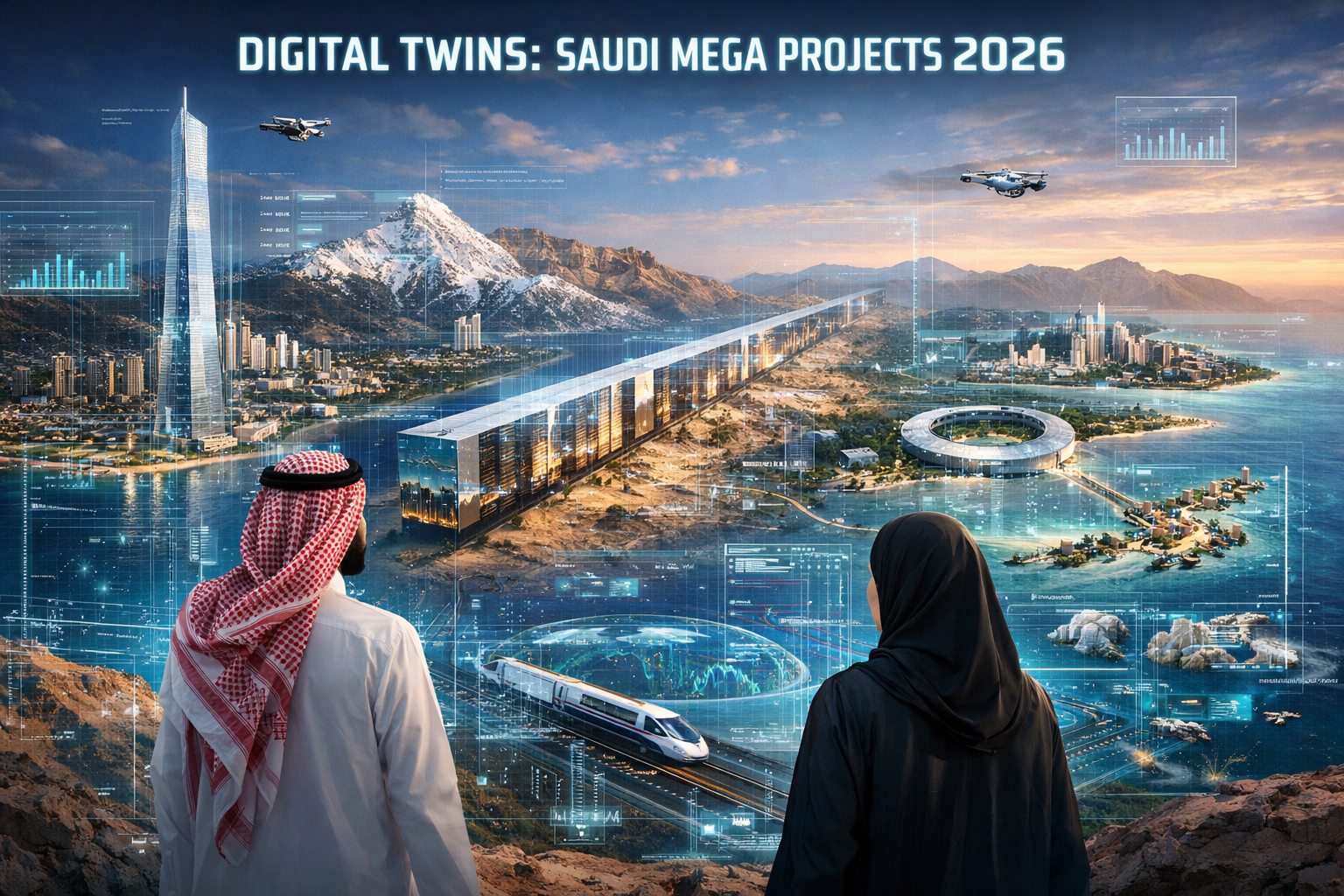
Digital twins for mega projects in Saudi 2026 have moved well beyond polished 3D visuals. For owners, PMOs, contractors, and operators across Saudi Arabia, the UAE, and Qatar, the real value now comes from connecting BIM, GIS, IoT, operational data, and governance controls into one working environment.
That matters because GCC mega developments are no longer asking whether digital twins are useful. They are asking how fast those twins can improve delivery visibility, handover readiness, predictive maintenance, and long-term asset performance. In practical terms, a successful digital twin helps teams in Riyadh, Dubai, Abu Dhabi, and Doha make better decisions with less guesswork.
As major programs scale under Saudi Vision 2030 and wider Gulf digital transformation efforts, the competitive edge is no longer the model itself. It is the ability to turn fragmented project data into a live, trusted operational system.
What digital twins for mega projects mean in 2026
From static BIM models to live operational twins
A BIM model shows what is designed and built. A digital twin goes further by adding live context such as progress updates, sensor feeds, utility performance, maintenance signals, and operational conditions.
For Saudi giga projects and other GCC infrastructure programs, that shift is significant. It changes the model from a design reference into a real decision-support layer that continues to deliver value during construction, handover, and operations.
Why 2026 is about execution, not presentation
The market has matured. Buyers in the GCC are less interested in impressive dashboards that look good in a boardroom but do little on site. They want measurable outcomes.
That usually means.
Better progress tracking
Earlier delay detection
Stronger handover quality
Predictive maintenance support
Clearer asset lifecycle visibility
Reliable data governance
In other words, digital twins for mega projects in Saudi 2026 are being judged on delivery value, not innovation theater.
Where digital twins fit across the asset lifecycle
The strongest programs do not stop at design coordination. They extend across the full lifecycle:
Design: model coordination, clash review, planning inputs
Construction: schedule tracking, issue management, site visibility
Handover: asset data validation, documentation readiness, workflow continuity
Operations: maintenance planning, utility performance, operational analytics
This is where connected capabilities such as business intelligence services and multi cloud strategy planning become especially useful for portfolio-level reporting and scale.
Why Saudi Arabia, the UAE, and Qatar are accelerating adoption
Saudi Arabia.
Saudi Arabia is the clearest driver of this shift. Large developments in Riyadh, Jeddah, and NEOM require coordination across transport, utilities, logistics, mixed-use districts, and public infrastructure.
That level of complexity makes disconnected systems hard to manage. A live digital twin helps owners bring multiple contractors, packages, asset types, and operational stakeholders into one environment. In practice, that is far more valuable than relying on isolated models or static reporting packs.
For Saudi-based programs, this also aligns naturally with Vision 2030 delivery priorities and the growing expectation for stronger digital governance.
UAE
The UAE often moves faster when it comes to enterprise platform adoption. Buyers in Dubai and Abu Dhabi typically expect production-ready systems, not concept-stage pilots.
That changes the conversation. Instead of asking whether digital twins are possible, UAE buyers usually focus on integration quality, deployment flexibility, security, Arabic UX, and how the platform fits regulated or commercially mature environments.
Qatar
Qatar is also an important market, especially for transport, utilities, and public-sector use cases. With Digital Agenda 2030 highlighting digital twins as a priority area, the opportunity is not limited to real estate. It extends into infrastructure planning, service delivery, and city-scale coordination.
For teams in Doha, the strongest use cases tend to be the ones that combine interoperability, operational visibility, and public-service readiness.
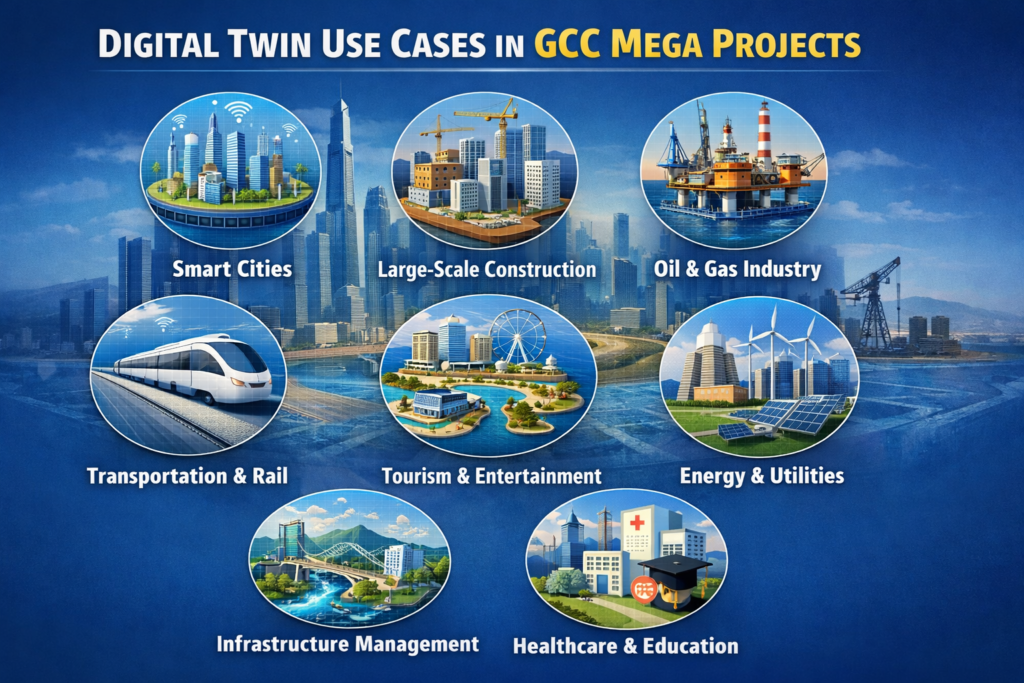
The biggest use cases for GCC mega projects
Progress tracking and construction visibility
This is often the fastest-value use case. Owners want a clear view of what was planned, what was completed, and where risk is building.
A Riyadh project office, for example, can combine drone capture, BIM progress markers, schedule data, and field updates to produce a more reliable picture of live delivery status. That reduces reporting blind spots and gives leadership a clearer basis for action.
Predictive maintenance and asset lifecycle management
Digital twins become even more valuable after practical completion. Instead of handing operators a pile of static files, teams can transfer a usable digital environment that supports real maintenance workflows.
For example, a district cooling network in Abu Dhabi or a utility corridor in Doha can use sensor data and asset logic to detect anomalies earlier, prioritize interventions, and reduce unplanned downtime.
That is also why cloud security guidance for GCC teams and sovereign cloud decision-making matter. Operational twins can hold highly sensitive infrastructure data, and that raises the importance of secure hosting, access control, and governance.
Handover readiness
Many projects still struggle at handover because asset data is incomplete, inconsistent, or too difficult for operations teams to use. A digital twin can reduce that friction by linking models, equipment data, workflows, and operational requirements earlier in the process.
This is one of the most overlooked benefits in mega developments. Better handover means faster time to operational value.
Urban-scale coordination across districts
For mixed-use districts, transport corridors, logistics hubs, ports, and utility-heavy developments, digital twins help teams understand how systems affect one another.
A logistics-focused environment such as a port or special economic zone may need mobility, warehousing, utilities, and maintenance data to work together. Without a unified twin environment, decisions become slower and more fragmented.
BIM, GIS, IoT, and AI: the new GCC digital twin stack
BIM-to-operations workflows are now essential
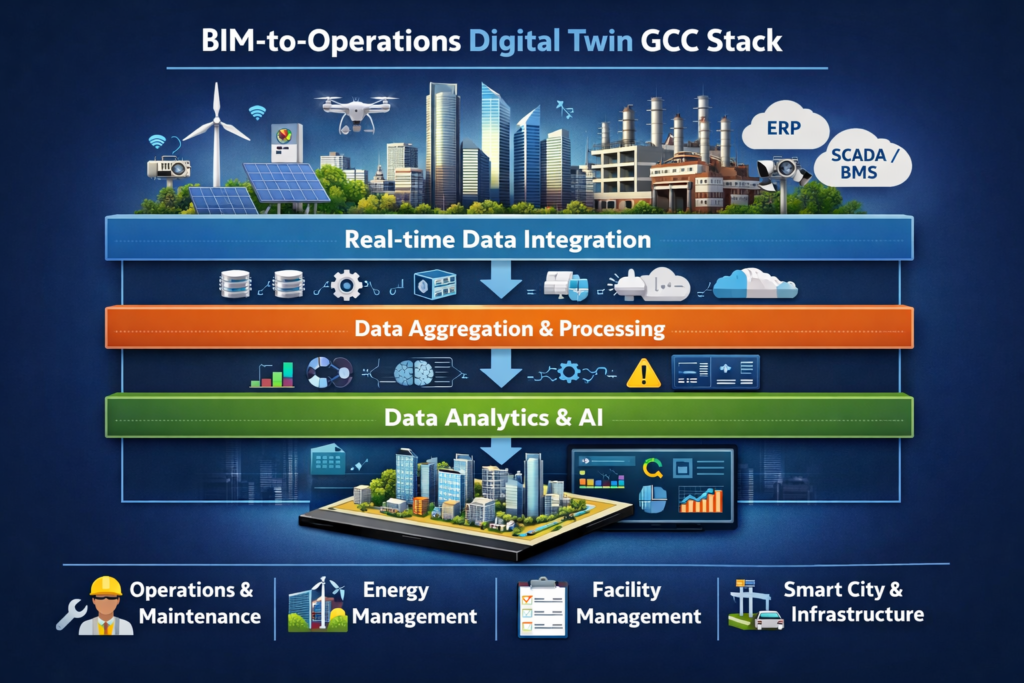
One of the most important changes in the market is the move from BIM deliverables to BIM-to-operations workflows.
Owners increasingly expect consultants, EPCs, and operators to think beyond model delivery. They want structured asset data, classification consistency, maintenance relevance, and usable interfaces after construction ends. A model viewer alone is no longer enough.
That is why connected layers such as web development services, SaaS platform capability, and business dashboards matter so much.
GIS gives location context
GIS brings spatial intelligence into the twin. That becomes especially useful when developments include roads, utilities, districts, public realm, logistics corridors, or environmental dependencies.
For GCC mega projects, GIS is not a nice extra. It is often what makes the twin usable beyond the building level.
IoT and field systems make the twin live
A real digital twin needs live inputs. That can include:
IoT sensors
CMMS or ERP systems
Utility monitoring data
Field issue workflows
Schedule feedsEnergy and service response data
Without those layers, the platform may still look sophisticated, but it will not behave like a true operational twin.
AI adds forecasting and decision support
The AI discussion in 2026 is becoming more practical. Buyers are not impressed by AI labels alone. They want to know whether AI actually helps forecast delay risk, detect maintenance anomalies, simulate demand, or prioritize interventions.
In practice, the useful question is simple: does the AI layer work with trusted data, produce explainable outputs, and fit regional hosting and governance requirements? If not, it is unlikely to create lasting value.
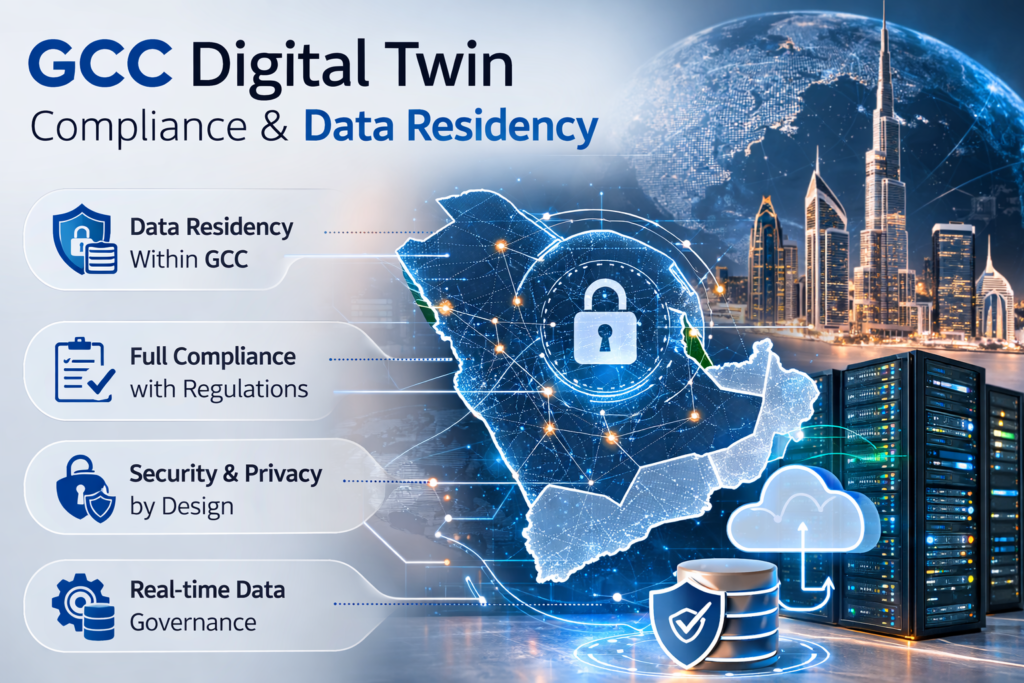
GCC compliance, data residency, and trust requirements
Saudi Arabia
Saudi buyers increasingly evaluate digital twin platforms through a governance lens. Data quality, auditability, hosting, access control, and sharing rules all matter.
That is why NDMO-style governance expectations and local hosting signals carry weight, especially in government-linked or highly regulated environments. For many Saudi stakeholders, trust is not a separate conversation from functionality. It is part of the buying criteria from the beginning.
UAE
In the UAE, teams often assess whether a platform fits broader digital-government and enterprise expectations. Secure deployment pathways, regional support, bilingual usability, and operational resilience all affect platform choice.
This is particularly relevant in sectors where innovation moves quickly but governance standards remain high.
Qatar
Qatar programs often place strong emphasis on secure interoperability and public-sector usability. Even when a project is not part of the financial sector, resilience and control expectations still influence buyer thinking.
For infrastructure teams in Doha, the winning platform is usually the one that balances usability with trusted deployment.
How to evaluate a digital twin platform for GCC mega developments
Choosing a platform is not just a technical decision. It is an operating model decision. Before moving forward, owners should pressure-test a few areas carefully.
Ask about integration depth
Can the platform connect BIM, GIS, IoT, ERP, and asset systems without excessive custom work? Integration claims are common. Proven workflows are what matter.
Check Arabic UX and bilingual workflows
Arabic dashboards and bilingual interfaces should not be treated as cosmetic extras. In Saudi Arabia especially, they can make a major difference in adoption, reporting quality, training, and long-term operations.
Compare deployment options carefully
Buyers should compare SaaS, sovereign, and hybrid models based on:
Hosting region
Disaster recovery
Data ownership
Cross-border transfer exposure
Local support capacity
Security controls
Exit rights
This is where cloud disaster recovery planning should be part of the evaluation from day one, not added later.
Watch for impressive demos with weak operational depth
This remains one of the biggest warning signs. A polished dashboard can still hide weak integration logic, poor handover workflows, unclear asset structures, or thin security controls.
If a vendor cannot show how the platform works under real delivery and operational conditions, that is a serious red flag.
What project owners should do next in 2026
Start with one high-value use case
Do not begin with a full-city ambition. Start with one measurable problem:
Progress tracking for one package
Predictive maintenance for one asset class
Handover readiness for one district
That approach is usually more effective for both large Saudi programs and smaller GCC owner teams.
Align PMO, IT, operations, and compliance early
Many digital twin programs struggle because delivery teams, IT, cybersecurity, and operations work in parallel instead of together. The strongest outcomes happen when those groups align early around data, workflows, hosting, access, and governance.
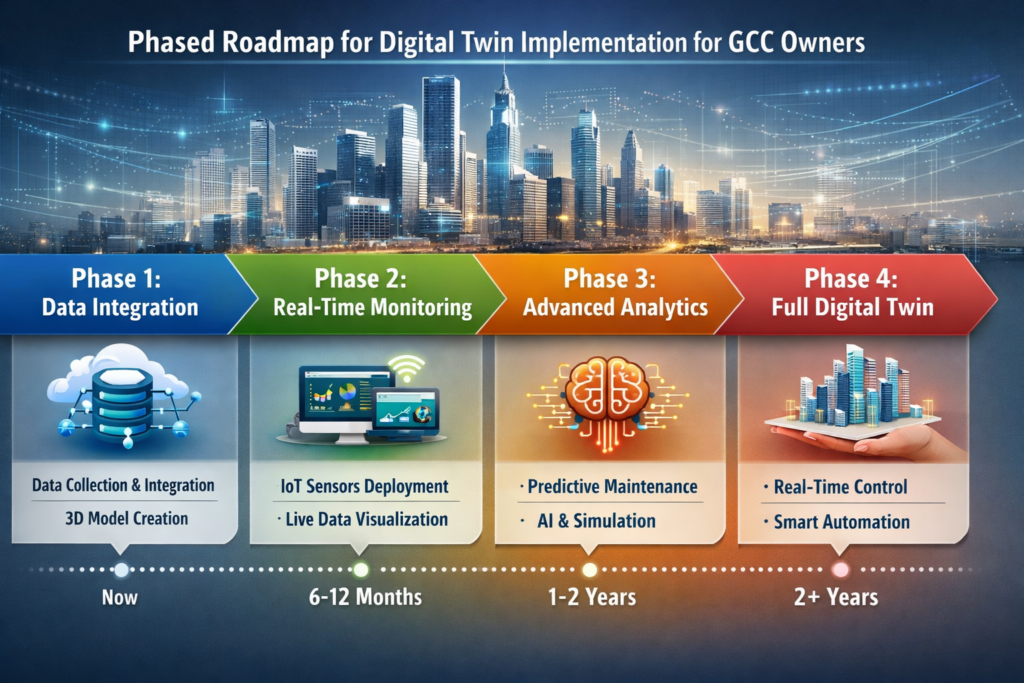
Build in phases
The most realistic path is usually:
Pilot
Integrate
Govern
Scale
That phased model fits the reality of GCC mega developments far better than trying to deploy everything at once.
Final Thoughts
Digital twins for mega projects in Saudi 2026 are no longer optional innovation pieces for slide decks. They are becoming practical operating environments for construction visibility, handover readiness, maintenance performance, and portfolio-level decision-making.
For project owners across Saudi Arabia, the UAE, and Qatar, the real opportunity is not to build the most visually impressive twin. It is to build one that is useful, governable, bilingual where needed, and ready for real operations.
If your team is reviewing platform architecture, data residency, Arabic UX, or phased rollout planning, explore Mak It Solutions’ broader services, smart city digital twin strategy, and public-private tech partnerships to shape a roadmap that fits GCC delivery realities.( Click Here’s )
FAQ
Q : Is a digital twin required for Saudi mega projects or only recommended?
A : A digital twin is not universally mandated across all Saudi projects, but for large and complex developments it is increasingly treated as strategically necessary. The pressure usually comes from delivery complexity, governance needs, and long-term operational performance rather than from a single blanket rule.
Q : How do UAE teams compare BIM software with a digital twin platform?
A : Most UAE buyers separate design coordination from operational intelligence. BIM tools support design, coordination, and documentation, while a digital twin platform is judged on live integrations, analytics, workflows, bilingual usability, and operational decision support.
Q : Can Qatar public-sector projects use digital twins for transport and utilities planning?
A : Yes. Qatar is a strong fit for those use cases because digital twins can combine GIS, infrastructure models, and operational data in one secure environment. That makes them highly relevant for transport, utilities, and district-scale planning.
Q : What data residency issues matter most for digital twin platforms in the GCC?
A : The main concerns are hosting location, data ownership, cross-border transfers, disaster recovery, access control, encryption, auditability, and exit rights. Residency matters, but it should always be evaluated alongside governance and resilience.
Q : Do GCC mega developments need Arabic dashboards and bilingual interfaces from day one?
A : In most cases, yes. Bilingual environments support wider adoption across contractors, operators, government stakeholders, and frontline teams. In Saudi Arabia especially, Arabic UX should be planned into the workflow from the start rather than added later.
[…] cities across Saudi Arabia, the UAE, and Qatar rely on connected devices to keep transport, utilities, buildings, surveillance, and […]