
Digital Wallets in GCC: Is Cash Finally Fading
Digital Wallets in GCC: Is Cash Finally Fading
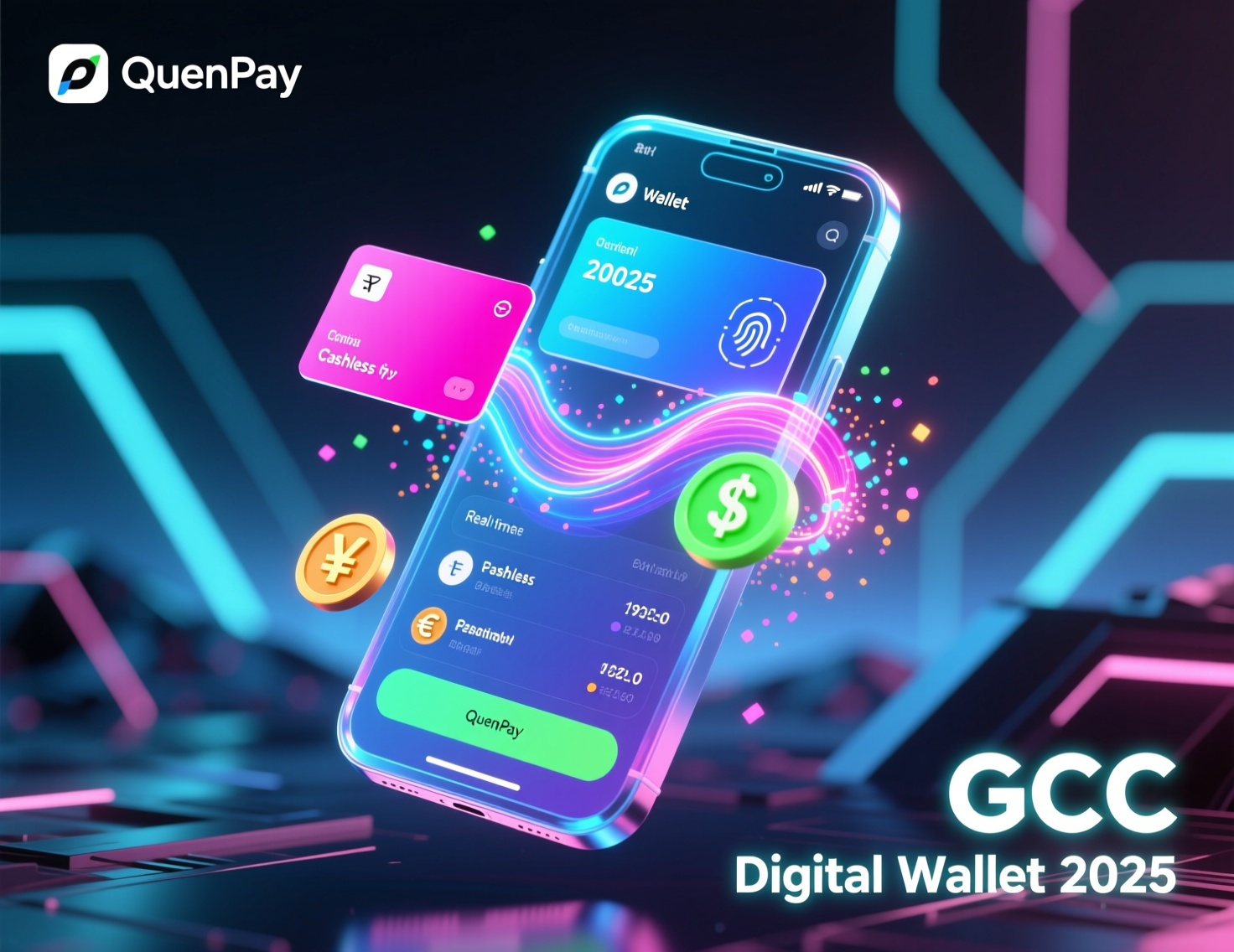
Digital Wallets in GCC: Is Cash Finally Fading?
Digital wallets in GCC are reshaping how people in Saudi Arabia, UAE and Qatar pay for groceries, bills, transport and remittances, but cash still matters for tips, small shops and older segments. For founders and professionals, the real opportunity is to design compliant, Arabic-first digital wallets in GCC that make everyday life “cash-light” rather than 100% cashless.
Introduction
Walk through a mall in Riyadh or Dubai and you’ll see phones tapping terminals, QR codes on café counters and riders paying for deliveries without touching a single riyal or dirham. Yet in the same cities, housemaids are still paid in cash, street vendors prefer notes, and some Doha corner shops only trust physical money.
Here’s a grounded look at digital wallets in GCC: what they are, who runs them, how far the “cashless society” in the Gulf has really come, and what regulators like SAMA, the Central Bank of UAE and QCB expect from you. If you’re building fintech, e-commerce, logistics or public-sector services in Saudi, UAE or Qatar, treat this as a practical, regulator-aware guide to going “cash-light” in the region.
What Digital Wallets Really Mean in the GCC
Bank Apps vs Standalone Digital Wallets in GCC
In the GCC, the main difference between bank apps and standalone digital wallets is straightforward: bank apps sit directly on a full bank account, while standalone wallets are licensed payment or e-money products that hold a limited stored balance and connect to cards, accounts or telco balances. In real life, residents use both: the bank app for salary and savings, and one or more digital wallets in GCC for day-to-day spending, rewards and remittances.
A typical mobile banking vs digital wallets in GCC setup might be: a Riyadh salary account with a mada card, the bank’s app, plus wallets like STC Pay or urpay. In the UAE, many residents rely on FAB’s Payit, Emirates NBD’s apps, and Apple Pay or Google Pay on top. In Qatar, Ooredoo Money, QNB Pay and wallets built on the Qatar Mobile Payment (QMP) scheme are common. Across the Gulf, wallets increasingly plug into national card schemes and real-time rails, forming part of a wider GCC digital payments infrastructure rather than isolated apps.
Key Wallet Players in Saudi, UAE and Qatar
Saudi Arabia (KSA)
STC Pay (now a digital bank), urpay, local bank wallets, Apple Pay and Google Pay (recently launched under SAMA oversight).
UAE
Payit, e& money, bank apps from Emirates NBD, ADIB and others, plus Apple/Google/Samsung Pay integrated with contactless cards.
Qatar
Ooredoo Money, QMP-enabled bank wallets like QNB and Doha Bank, all focused heavily on QR code payments in Middle East malls and small shops.
Arabic-First UX, Bilingual Support and Super-App Behaviour
For GCC users, “good” wallet UX usually means: Arabic as default (with clean English fallback), simple IBAN and mobile number transfers, local billers (traffic fines, telecom, utilities), plus offers that match everyday life, not Silicon Valley norms. Many wallets are evolving into super-apps: adding ride-hailing, food delivery, payroll cards for domestic staff and mini-stores.
If you’re planning wallet or app development, this is where strong mobile app development services and web development services strategy from partners like Mak It Solutions becomes critical for localization, performance and long-term scalability.
Are GCC Countries Actually Going Cashless?
Saudi Arabia: Vision 2030 Targets and E-Payment Penetration
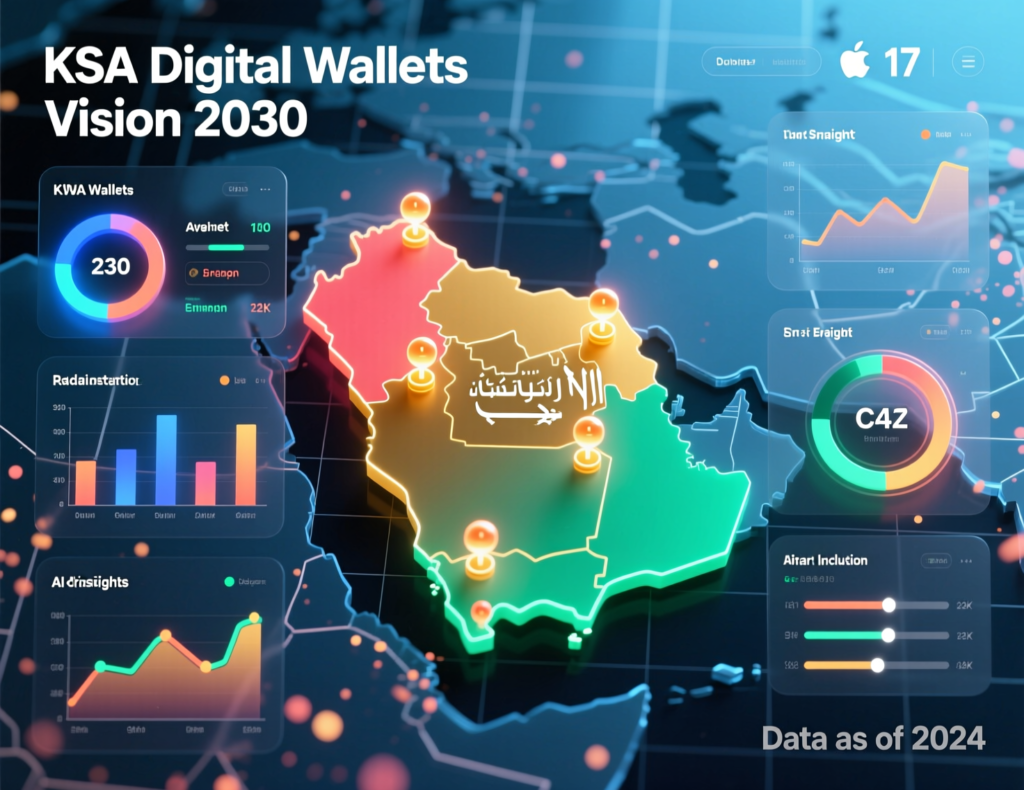
Saudi’s Vision 2030 set a 70% non-cash target for consumer payments; SAMA data shows digital payments already reached around 70% of retail transactions in 2023, ahead of schedule. Contactless penetration is above 90%, and mada-linked cards plus wallets dominate supermarkets, pharmacies and gas stations.
Cash is still visible in Dammam or Jeddah in traditional markets and for domestic staff salaries, but the direction is clear: for many urban Saudis, a cashless society in the Gulf is already a “cash-light” reality.
UAE: Contactless, Tourists and Everyday Tap-to-Pay
In the UAE, contactless usage is extremely high, with over 80% penetration, and about half the population reportedly using mobile wallets for daily spending. Dubai and Abu Dhabi tourists tap cards or phones on metro gates, in taxis and at global retail chains, while residents stack UAE cashless payment apps for bills, school fees and e-commerce.
Still, some Sharjah or Ajman small merchants prefer cash to avoid MDR fees or complex reconciliation. For founders, that friction is exactly where better wallet UX, pricing and merchant tools can win market share.
Qatar and the Wider Gulf: QMP, Telco Wallets and Bank Apps
Qatar Central Bank’s Qatar Mobile Payment (QMP) system created a national QR standard that lets any licensed wallet or bank app pay any QMP merchant instantly by QR code. Ooredoo Money, QNB and other providers ride on this rail.
Elsewhere, Bahrain leverages its role as an AWS region for cloud-native fintechs, Kuwait City banks push card and app usage, and Oman and Muscat are gradually expanding QR and contactless in government and retail. Across the wider Gulf, cash is shrinking but far from gone especially in traditional markets and among lower-income or older users.
Regulation, Security and Trust: SAMA, UAE Central Bank, QCB
Saudi and UAE regulators require digital wallets to perform robust KYC, screen against sanctions lists, monitor transactions for AML and protect customer data with strict security and data-residency controls. Under Saudi’s PDPL and NDMO standards, exporting personal data abroad is tightly controlled, while UAE frameworks expect strong encryption, access controls and clear consent for data use. (SDAIA)
For users in Riyadh, Dubai or Doha, the take-away is simple: if a wallet is properly licensed, its operator has already jumped through serious regulatory hoops.
Who Regulates Digital Wallets in Saudi, UAE and Qatar?
Saudi Arabia
SAMA licenses payment institutions and digital banks, while NDMO and SDAIA steer data policies.
UAE
The Central Bank of UAE (CBUAE) supervises payment systems, with TDRA handling telecom/digital identity layers; ADGM (FSRA) and DIFC (DFSA) provide fintech-friendly free-zone regimes.
Qatar
QCB oversees banks and QMP, issuing rules for wallet licensing, settlement and QR schemes.
For founders, this means your wallet stack, even if built with global tools, must align with local licensing regimes from day one.
KYC, AML and Data Residency Rules in the GCC
Across GCC, basic KYC means tying wallets to verified identity (iqama, Emirates ID, QID) and local mobile numbers, with tiered limits for unverified or semi-verified users. AML frameworks demand monitoring patterns like unusual remittances or high-risk corridors.
Data-residency rules increasingly expect personal and payment data to stay in-region: many teams combine AWS Bahrain, Azure UAE Central and GCP Doha to keep data close to Riyadh, Dubai and Doha while leveraging hyperscale features. (Mak it Solutions)
Turning Compliance into a Trust Advantage for Wallets
Instead of seeing compliance as a burden, GCC fintechs use it as a brand story: local hosting, clear privacy policies in Arabic, visible references to SAMA/CBUAE/QCB approvals and security certifications on websites.
Well-architected backends (for example, using a modern, modular approach rather than a brittle monolith) also make audits easier topics Mak It Solutions covers in depth in its guidance on architecture choices and backend services. (Mak it Solutions)
Living (Mostly) Cashless in Riyadh, Dubai and Doha
Residents in Saudi or UAE can live mostly cashless by combining a local bank app, a licensed wallet (like STC Pay, urpay or Payit) and a scheme wallet such as Apple Pay or Google Pay. This three-layer “stack” covers almost all bills, groceries, transport and remittances, while cash is kept only for tips and edge cases.
Setting Up Your GCC Digital Wallet Stack
Choose your primary bank app in KSA, UAE or Qatar and activate online banking and contactless cards.
Add a licensed local wallet (e.g., STC Pay, urpay, Payit, Ooredoo Money) that’s clearly regulated by SAMA, CBUAE or QCB.
Enable Apple Pay or Google Pay on your phone and connect your main cards for tap-to-pay.
Configure key billers and remittances: government portals, utilities, telecom, and your main remittance corridors (e.g., Riyadh → Karachi or Dubai → Cairo).
If you need help designing this kind of stack into your product, Mak It Solutions can support with mobile app development services and secure API design tailored to GCC markets. (Mak it Solutions)
Using Wallets for Bills, Groceries, Transport and Remittances
In Riyadh, residents routinely pay SADAD bills, visa fees and traffic fines via bank apps or wallets; in Dubai, RTA, Salik and utilities are all wallet-friendly; in Doha, QMP QR codes appear at cafés and retail. Groceries, ride-hailing, food delivery and last-mile logistics are now default wallet categories, and many wallets offer low-cost remittances directly to Pakistan, India, Philippines or Egypt.
For founders, integrating these journeys in a single, well-designed interface is where web development trends for KSA & UAE and smart UX come together. (Mak it Solutions)
Where Cash Still Wins Tips, Small Merchants and Edge Cases
Cash still dominates in some situations: tips for drivers and domestic staff, very small retailers who dislike MDR fees, and segments of older or unbanked residents. In parts of Jeddah, Sharjah or old Doha, shops may prefer notes especially for tiny ticket sizes or late-night transactions.
For now, GCC is realistically “cash-light”: residents carry a small cash buffer while expecting wallets to work almost everywhere else.
Merchants, SMEs and the Economics of Going Cashless
What It Takes for a Café in Dubai or Riyadh to Accept Wallets
A small café in Riyadh or Dubai typically needs an acquiring relationship (via a bank, Geidea, HyperPay, etc.), a POS or SoftPOS app, and connections to schemes like mada, Visa, Mastercard and national wallets. Onboarding includes KYC for the business, settlement accounts and fee negotiations.
The upside: lower cash-handling risk, easier reconciliation and access to tourists and young locals who barely use cash.
QR Codes, SoftPOS and Telco Wallets for Small Businesses
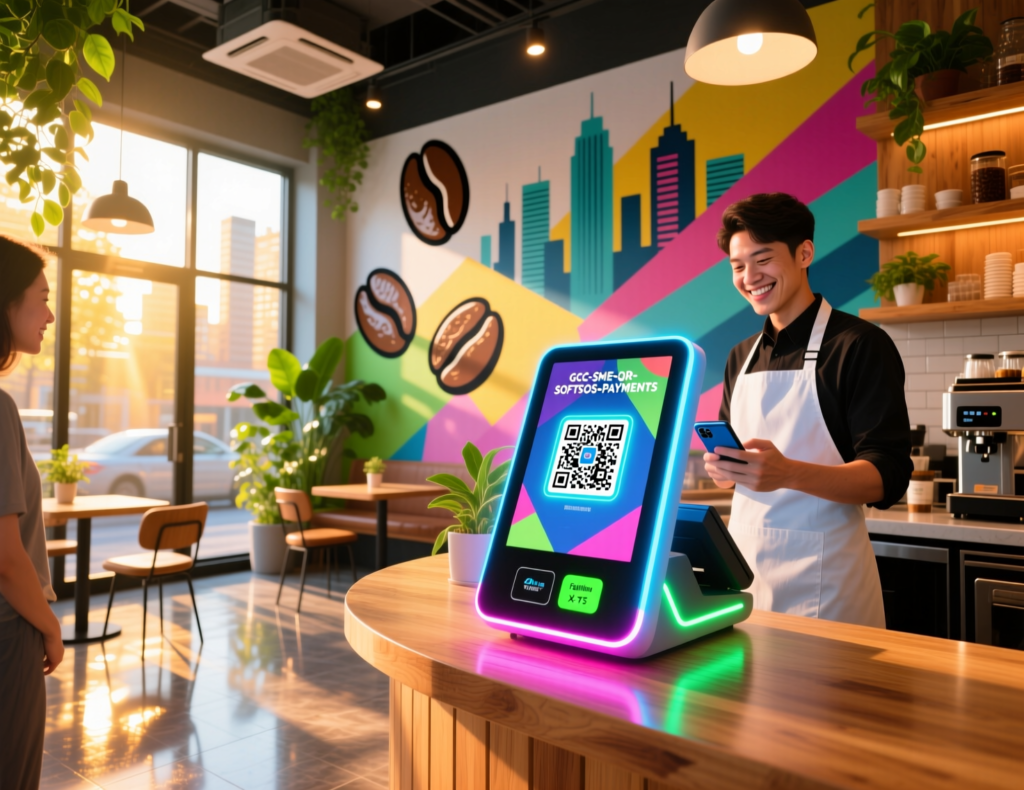
QR and SoftPOS are transforming micro-merchants across GCC. Instead of a bulky terminal, a Doha delivery driver can show a QMP QR, a Dubai salon can accept tap-to-pay on a smartphone, and a Riyadh food truck can use telco wallets for payroll and payouts.
For SMEs, combining these options with smart reporting dashboards something Mak It Solutions often implements via business intelligence services can radically simplify finance operations. (Mak it Solutions)
Impact on Cash Handling, Reconciliation and Informal Cash Use
Once wallets are widely accepted, owners spend less time counting drawers or worrying about missing cash, but more time reading digital reports. Informal cash payments don’t disappear, but they become visible trade-offs: “Do I want the convenience and trust of digital, or the opacity of cash?”
For GCC regulators, this transparency is a feature, not a bug.
What’s Next for Digital Wallets in the GCC?
From Wallets to Super Apps and Embedded Finance
We’re already seeing wallets integrate savings pots, BNPL, micro-insurance and salary cards for blue-collar workers. Retailers embed checkout wallets into their own apps; logistics and marketplaces issue merchant wallets for payouts.
Choosing scalable architectures microservices where needed, well-designed APIs and strong front-end frameworks is critical here, and Mak It Solutions’ experience with React, Vue, GraphQL and similar stacks is directly relevant. (Mak it Solutions)
Open Banking, Instant Payments and Cross-GCC Interoperability
Open banking pilots in Saudi and Bahrain, plus instant payment schemes, will make account-to-wallet and wallet-to-wallet transfers faster and cheaper. Over the next 3–5 years, expect more cross-GCC interoperability so a Manama or Muscat user can pay seamlessly in Riyadh, Dubai or Doha using familiar rails.
What Founders and Leaders Should Watch Over the Next 3–5 Years
Three practical scenarios to watch.
A Riyadh fintech startup building a SAMA-licensed wallet that runs entirely on AWS Bahrain and Azure UAE Central to satisfy PDPL and latency goals.
A Dubai e-commerce brand turning its checkout into a mini-wallet, integrating local wallets, Apple/Google Pay and loyalty points.
A Doha SME moving from spreadsheet accounting to a cloud wallet + BI stack hosted in GCP Doha, making QMP QR sales fully traceable.
For each, you need the same core ingredients: compliant infrastructure, localized UX and a clear go-to-market plan supported by strong SEO/AEO areas where Mak It Solutions already helps GCC-focused teams through its SEO services and broader digital solutions portfolio. (Mak it Solutions)
Outlook
The reality is simple: the cashless GCC narrative is exciting, but what we have today is a cash-light Gulf. Saudi, UAE and Qatar residents increasingly rely on digital wallets in GCC cities for daily life, while keeping cash for a shrinking set of edge uses.
For product teams, that means designing hybrid journeys, building on compliant rails and planning for a future where wallets, open banking and instant payments blur together. Now is the time to audit your digital wallet strategy, architecture and regulatory posture before your users outgrow your current stack.
If you’re planning or scaling digital wallets in GCC whether for fintech, government, logistics or retail Mak It Solutions can help you design the right mix of UX, architecture and compliance. Our team has already written about GCC hosting, data residency and modern web stacks, and we turn that insight into real products.
Explore our full range of software development and digital services at Mak It Solutions services page, then reach out via the contact page for a tailored consultation on your Saudi, UAE or Qatar wallet roadmap.
FAQs
Q : Can foreigners and expats use Saudi digital wallets like STC Pay or urpay without a local bank account?
A : In many cases, expats in Saudi can open SAMA-licensed wallets such as STC Pay or urpay using their iqama, local mobile number and basic KYC, even if their primary salary account is with another bank. Limits are usually tiered: lighter KYC = lower limits; full KYC = higher limits and remittance access. Some providers still require a local bank account for top-ups or salary deposits, while others allow cash-in via ATMs or agents. Always check the latest eligibility rules on the provider’s website and SAMA’s guidance, as Vision 2030 continues to evolve foreigner access to e-payments.
Q : Which digital wallets in UAE work best for tourists paying in Dubai and Abu Dhabi?
A : Tourists typically rely on a mix of their home-country cards plus UAE wallets and global schemes. Because contactless penetration is so high in the UAE, most visitors can use Apple Pay or Google Pay anywhere that accepts Visa or Mastercard. Some banks allow “lite” wallets or prepaid cards that non-residents can top up easily, and QR or SoftPOS options are growing thanks to initiatives by CBUAE and local banks. For many short-term visitors, the “best” UAE cashless payment app is simply the one that works with their existing card, supports transport and taxis, and charges minimal FX fees.
Q : Is it allowed to pay housemaid or driver salaries using mobile money in Qatar or the wider GCC?
A : Legally, you must follow each country’s labour and wage-protection rules. In Qatar, QCB and labour authorities encourage electronic wage transfers via bank accounts or approved digital channels; QMP-enabled wallets and payroll cards can be part of that, as long as the worker can access cash when needed. In Saudi and UAE, wage protection systems (WPS) often expect salaries to go through regulated bank or payroll channels, though domestic staff may still be paid in cash in practice. Over time, expect more governments to explicitly promote compliant wallet-based wage payments aligned with Vision 2030 and similar national programmes.
Q : Do small shops in Riyadh or Doha need a full POS terminal to accept QR or digital wallet payments?
A : Not necessarily. A Riyadh or Doha micro-merchant can start with a smartphone-based SoftPOS app from an acquirer, or a printed QR code linked to a QMP or local wallet merchant account, instead of a traditional POS terminal. These setups usually come with lower upfront costs, quick onboarding and app-based dashboards for reconciliation. However, they still require full merchant KYC and must integrate with licensed acquirers under SAMA or QCB rules. For higher volumes or more complex reporting, a dedicated POS terminal may still make sense, especially in malls or high-traffic locations.
Q : How do GCC data residency rules affect where digital wallet providers can host their customer data?
A : GCC data-residency rules, such as Saudi’s PDPL and NDMO standards, increasingly expect sensitive customer and payment data to stay within national or regional borders.For a digital wallet, that often means using in-region cloud regions like AWS Bahrain, Azure UAE Central or GCP Doha and keeping production databases there, while using global regions only for anonymised analytics or backups under strict controls. Regulators like SAMA, QCB and, in the UAE, sectoral bodies and free-zone authorities may require you to document where data lives and how it’s protected. Early architectural choices—made with expert partners can prevent painful migrations later.