
Ethical Data Collection in 2025: Trust, Rights, Revenue
Ethical Data Collection in 2025: Trust, Rights, Revenue
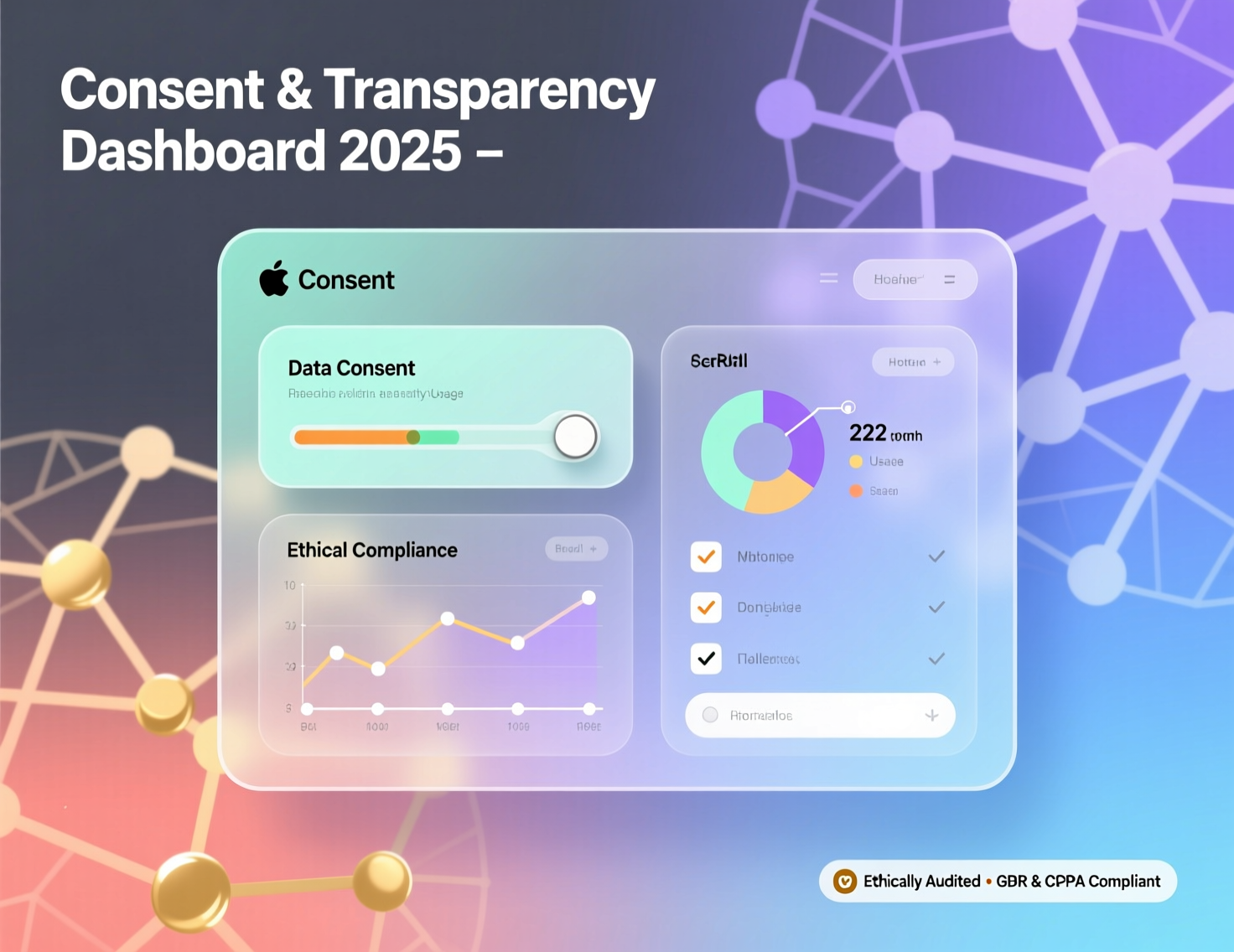
Ethical Data Collection in 2025: Trust, Rights, Revenue
Ethical data collection means gathering and using personal data in ways that are transparent, consent-based, fair and limited to what’s genuinely necessary going beyond the bare minimum required by law. In 2025, doing this well is a competitive advantage: brands that give US, UK and EU consumers real control over their data reduce legal risk, build trust, and unlock higher-quality first-party data that drives long-term revenue.
Introduction
If 2018 was the year everyone added a cookie banner, 2025 is the year consumers decide which brands they actually trust with their data.
Between AI personalisation, cross-device tracking, and data brokers, people in New York, London and Berlin are tired of “creepy” targeting and unreadable privacy policies. At the same time, regulators from Washington D.C. to Brussels and the ICO in the UK are stepping up enforcement and updating rules for an AI-first world.
Ethical data collection is how you move beyond “we comply with GDPR and CCPA” to “we respect your rights and prove it.” Done well, it lets you meet GDPR / UK-GDPR / CCPA and new laws like the UK Data (Use and Access) Act 2025 (DUAA), while building a cleaner, more valuable first-party data strategy.
This guide breaks down what ethical data collection actually is, what rights consumers now have in the US, UK, Germany and wider EU, and how to turn privacy-by-design into a growth engine for your marketing, product and analytics.
What Is Ethical Data Collection?
Clear Definition of Ethical Data Collection
Ethical data collection means gathering and using personal data in ways that are transparent, fair, consent-based and proportionate, going beyond minimum legal requirements. In practice, that means you clearly explain what you’re collecting, why, for how long, and on what legal basis and you give people simple, meaningful ways to say no.
Where generic “data collection” often means hoovering up as much information as possible “just in case,” ethical data collection uses purpose limitation and data minimization as guardrails. You only collect the data you truly need to provide or improve a service, secure it properly, and avoid secondary uses that would surprise or harm your users.
Ethics vs Basic Legal Compliance
Legal compliance sets the floor; ethical data collection sets the bar. Meeting GDPR, UK-GDPR or CCPA means you’re operating within what’s allowed. Ethical collection means you actively protect autonomy, reduce bias and prevent harm even where the law is silent.
For example, a company in San Francisco can technically meet CCPA while still nudging users toward “accept all” or using dark patterns to discourage opt-out. An ethical approach makes the same choice screens easy, balanced and honest, even if that means fewer tracking consents in the short term.
Core Principles: Transparency, Consent, Minimization, Accountability
Most data ethics frameworks boil down to a few core principles.
Transparency
Plain language notices, layered explanations and real-time prompts when you collect something sensitive.
Informed consent
Opt-in where required, opt-out where appropriate, and absolutely no pre-checked boxes or bundled consent.
Data minimization
Collect the least you need, store it for the shortest time, and aggregate or anonymize whenever possible.
Fairness & bias reduction
Regularly test whether your data or AI personalisation harms certain groups.
Security & accountability
Encryption, access controls, audits and clear ownership (e.g., a DPO or privacy lead).
Ethical data collection simply means you live these principles instead of treating them as compliance slideware.
Consumer Data Privacy Rights & Control in US, UK, Germany & EU
Key Rights Under GDPR, UK-GDPR and DUAA 2025
Under EU GDPR and Germany’s Bundesdatenschutzgesetz/DSGVO, individuals can access their data, correct it, delete it, restrict processing, port it elsewhere, and object to certain uses like direct marketing. UK-GDPR and the Data Protection Act 2018 mirror these rights, and the new DUAA 2025 tweaks how organisations can use and share data while still requiring fairness and transparency.
DUAA aims to “make things easier for organisations” without removing core rights, with changes phased in from June 2025 to June 2026. That matters for sectors like Open Banking, where FCA and BaFin already expect strong governance over consented data-sharing in London and Frankfurt.

US State Privacy Laws.
In the US, there’s still no single GDPR-style federal law. Instead, marketers in New York or Austin face a patchwork of state privacy laws like California’s CCPA/CPRA, Colorado and Virginia statutes, and sector-specific rules like HIPAA for health data.
CCPA/CPRA gives Californians rights to know what’s collected, access it, correct it, delete it, and opt out of “sale” and targeted advertising. As of April 2025, around 21 states have passed comprehensive consumer privacy laws, each with its own definitions, notice requirements and enforcement patterns.
Are Consumers Finally Gaining Real Control?
Consumers now have strong legal rights to access, control and delete data in Europe and many US states, but complex policies, dark patterns and patchy enforcement mean “real” control is still evolving.
Trust data backs this up: Cisco’s 2024 survey found 75% of consumers would not buy from organisations they don’t trust with their data, and 53% are now aware of their national privacy laws up 17 points since 2019. Yet many still struggle to exercise those rights across dozens of devices, apps and intermediaries like data brokers.
Why Ethical Data Collection Matters for Trust, Brand & Revenue
From Privacy Risk to Trust Engine.
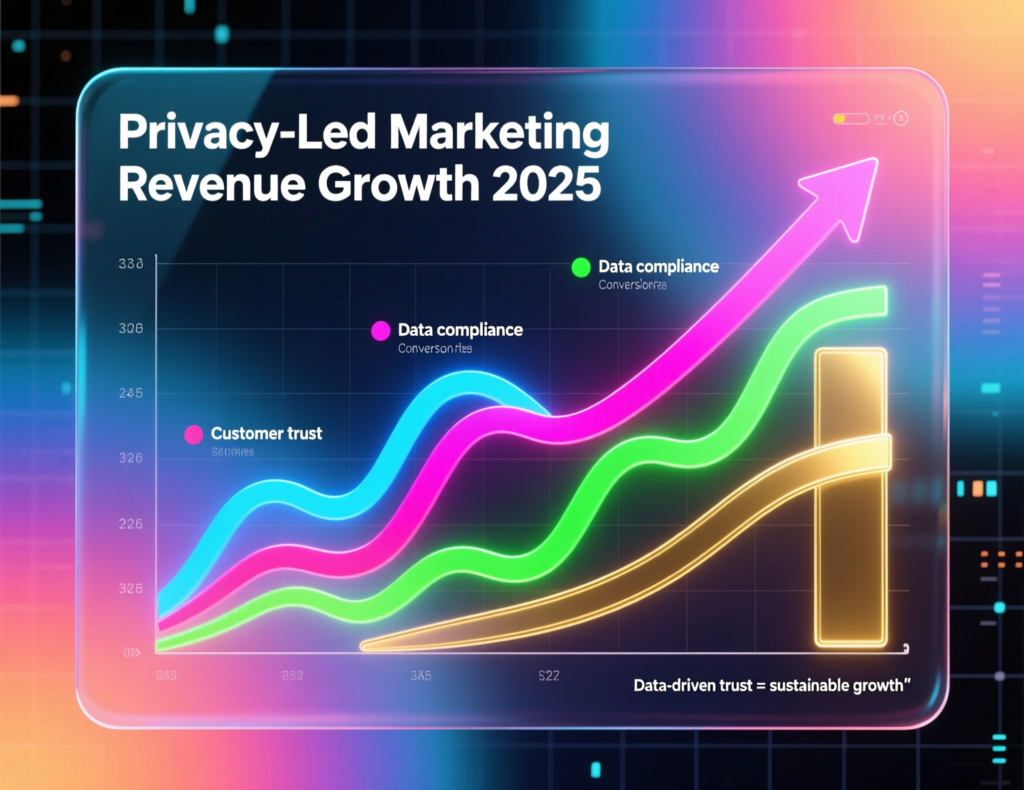
Ethical data collection reduces legal and reputational risk while increasing customer trust, which directly supports retention and long-term revenue. In markets like New York, London and Berlin, privacy has become a top buying criterion: PwC reports that around 83% of consumers see data protection as a primary driver of trust.
High-trust brands see better consent opt-in rates, more accurate first-party data, and higher engagement with preference centres and loyalty programs. When users feel in control, they’re more likely to share details that improve personalisation and less likely to churn when a competitor promises “more private” services.
Apple, NHS, BaFin-Regulated Firms.
Apple has built a marketing narrative around privacy, from App Tracking Transparency prompts to privacy nutrition labels in its app stores. That’s not altruism: it differentiates Apple in crowded US and EU device markets.
In the UK, the NHS national data opt-out and ICO scrutiny of health data use show how sensitive sectors must make consent and opt-out crystal clear. In Germany, BaFin-regulated financial institutions in Frankfurt or Munich face stringent expectations on data governance and outsourcing, reinforcing that “ethische Datenerhebung nach DSGVO für Online-Shops” and fintechs alike is now a basic licence to operate.
Recent rulings like Austria’s Supreme Court decision against Meta’s ad model requiring full access to personal data and rejecting poorly informed consent underline that regulators are willing to challenge global platforms when user control is undermined.
Metrics That Prove Ethics Pays Off
To show executives that ethical data collection isn’t just a “legal cost,” track:
Consent opt-in rates (overall and by region)
Preference-centre usage and profile completion
Complaint and DSR volumes (and resolution times)
Unsubscribe vs “opt-down” choices in email and SMS
Customer lifetime value and churn by consent status
Over time, you should see higher-quality data and better ROI from privacy-led marketing than from third-party tracking tricks that regulators and browsers are phasing out anyway.

Ethical Data Collection Practices in Marketing & Product
Designing Consent, Preference & Opt-Out Flows
Companies can put consumers in control by using plain-language consent, granular preferences, always-visible opt-out and easy self-service portals instead of buried settings.
For websites and apps in the US, UK and EU.
Use layered cookie banners with “Accept”, “Reject” and “Customize” at the same visual level.
Offer granular toggles (e.g., “analytics”, “personalisation”, “ads”) instead of one massive “marketing” bucket.
In mobile apps (iOS/Android), align with platform prompts like ATT and provide in-app privacy dashboards.
Make unsubscribe links and tracking opt-out visible in every email and add “opt-down” options for fewer, more relevant messages.
For Mak It Solutions style products PWAs, mobile apps, SaaS dashboards ethical consent UX should be part of your front-end development and web designing process, not a legal afterthought. (Makitsol)
First-Party Data Strategy & Data Minimization
Browsers are killing third-party cookies, and regulators are suspicious of opaque adtech chains. That’s pushing marketers in San Francisco or Manchester towards first-party, consented data strategies.
A robust first-party data strategy:
Maps where you collect data (web, mobile apps, support tickets, IoT devices).
Defines minimum viable datasets at signup or checkout (no more 20-field forms “just because”).
Applies strong security frameworks like PCI DSS for payments and SOC 2 / ISO 27001 for cloud and SaaS infrastructure.
Mak It Solutions’ business intelligence and mobile app development services can then build privacy-respecting analytics pipelines around this cleaner, minimised dataset. (Makitsol)
Privacy by Design in Campaigns, Research & AI Personalisation
Privacy by design means you assume every campaign, user research study or AI recommendation system could go wrong and you mitigate upfront.
Examples
Ecommerce in San Francisco
Use server-side, anonymised analytics (Matomo-style) with A/B testing that doesn’t rely on third-party cookies.
Fintech in London
Apply strict purpose limitation and strong pseudonymisation to transaction data used for fraud detection vs marketing.
SaaS in Berlin
Document lawful bases for each dataset feeding AI personalisation under GDPR and the upcoming EU AI Act, and give admins the ability to disable certain signals for privacy-sensitive customers.
Navigating Regulations & AI.
How New Privacy & AI Laws Reshape Data Collection
New privacy and AI rules in the US, UK and EU are tightening expectations around consent, purpose limitation and explainability, forcing companies to redesign data collection around user control and clear lawful bases.
Deloitte’s 2024 Connected Consumer survey found around 84% of consumers want governments to do more to regulate how companies collect and use data, especially in AI contexts.That public pressure sits behind reforms like the EU’s AI Act, UK DUAA and new state laws in the US.
US Patchwork, UK DUAA, EU GDPR/DSGVO & AI Act
US
A growing patchwork of state privacy laws, FTC enforcement, sector-specific rules like HIPAA, and emerging AI governance guidelines.
UK
DUAA 2025 adjusts existing UK-GDPR and DPA 2018 to encourage innovation and digital identity schemes, while the ICO warns that rights and fairness remain non-negotiable.
EU/Germany
GDPR/DSGVO remains the core framework, but proposals under the “Digital Omnibus” and AI Act aim to simplify some processes while civil society warns of weakened safeguards.
For teams in Berlin, Frankfurt or Brussels, this means you can’t treat AI data collection as “separate” from privacy they’re converging into one risk and compliance conversation.
NHS, Open Banking, Adtech & Data Brokers
High-risk sectors illustrate where ethical data collection is being tested most.
NHS and health
The UK’s national data opt-out and ICO enforcement around health records show why health orgs must make access, opt-out and transparency simple.
Open Banking / PSD2
Banks and fintechs under BaFin or FCA supervision must demonstrate clear customer consent and tight API governance for data-sharing.
Adtech & data brokers
Ongoing EU rulings against Meta and stricter scrutiny of data brokers are pushing the industry towards explicit consent and away from “legitimate interest” for behavioural ads.
From Compliance to Competitive Edge.
7-Step Roadmap to Ethical Data Collection.
A practical roadmap you can apply whether you’re a Berlin SaaS scale-up or a London charity.
Map data flows
Catalogue what you collect, from where (web, apps, CRM, IoT) and where it goes.
Define purposes
For each dataset, write one clear primary purpose and challenge anything that feels vague or defensive.
Choose lawful bases
Map consent, contract, legitimate interests and other bases to each purpose and region (GDPR vs CCPA).
Redesign consent UX
Implement privacy-first banners, forms and in-product prompts that pass the “grandma test.”
Implement preference centres
Let users manage interests, communication channels and key data uses in one place.
Tighten security
Align with SOC 2 / ISO 27001, and for payments with PCI DSS, to minimise breach fallout.
Set up governance
Create a privacy or data ethics committee and bake reviews into product and campaign lifecycles.
Note
This article is for general information only and is not legal or financial advice. Always consult qualified counsel for decisions about GDPR, CCPA or other regulations.
Choosing the Right Tools, CMPs & Partners
When selecting consent management platforms (CMPs), CDPs, analytics or security partners.
Check GDPR/CCPA support, geo-targeting and evidence logs for consent.
Ensure API integration with your web, mobile app and BI stack.
Look for strong data residency options for EU customers (e.g., Frankfurt / Berlin regions).
Validate vendor certifications (SOC 2, ISO 27001) and roadmap alignment with AI and DUAA/AI Act changes.
If you already work with Mak It Solutions on digital marketing, mobile apps or business intelligence, aligning your CMP and analytics choices with your existing stack can reduce cost and complexity.
Communicating Your Ethics Story to Customers & Regulators
Ethical data collection only creates value if people know about it. That means.
Clear, human privacy pages that explain rights and choices with examples for US, UK and EU users.
Prominent security and compliance badges (SOC 2, ISO 27001, PCI DSS) with short, honest explanations.
Case studies: e.g., a New York fintech using privacy-by-design for open banking, a London charity protecting vulnerable donors, or a Munich SaaS platform offering GDPR-friendly analytics.
When the ICO, BaFin or a US state AG comes knocking, this same documentation becomes evidence that you treat privacy as strategy, not a checkbox.

Bottom Lines
The data economy is shifting from extraction to a consented value exchange. Instead of squeezing every data point out of users, high-performing brands in the US, UK, Germany and across the EU are building products and campaigns that assume people have rights, dignity and limits.
Ethical data collection is how you honour those rights while still growing faster: better-quality first-party data, leaner tech stacks, fewer regulatory shocks and deeper trust. Now is the moment to audit your current data collection, redesign consent and preferences, and align your tools and partners with a rights-first, AI-ready strategy.
If you’re unsure whether your current tracking, CRM and AI personalisation are truly ethical or just “technically compliant” this is the right time to fix it. Mak It Solutions can help you map your data flows, redesign consent UX, and build privacy-led analytics for customers in the US, UK, Germany and the wider EU.
Ready to turn compliance into competitive edge? Reach out to Mak It Solutions to schedule a privacy and data ethics audit across your web, mobile and BI stack and get a concrete roadmap you can execute in the next 90 days. ( Click Here’s )
FAQs
Q : How much personal data is “too much” to collect from customers at signup or checkout?
A : A good rule of thumb is to only collect what you need to deliver the service the customer expects and meet legal obligations like invoicing or fraud prevention. Asking for extra fields “just in case” — such as detailed demographics for a simple newsletter signup — usually violates the data minimization principle and can reduce completion rates. For ecommerce checkouts in Berlin or New York, focus on essentials (delivery, payment, contact) and make optional profiling data clearly marked as such, with a clear explanation of the benefit to the customer.
Q : Can small businesses realistically be both fully compliant and ethical with limited resources?
A : Yes, but it requires prioritisation. Small businesses in Manchester or Austin rarely need enterprise-level tooling to be ethical; they need shorter forms, clearer privacy notices, a simple cookie banner and a way to handle access and deletion requests. Many modern SaaS tools (email platforms, CRMs, ecommerce engines) already offer GDPR/CCPA-friendly features if you configure them correctly. The ethical step is choosing defaults that favour user control, even if it means a little less data in the short term.
Q : What’s the difference between first-party, second-party and third-party data in ethical data collection?
A : First-party data is information you collect directly from your users via your own channels (website, app, support), typically with clear consent or another strong lawful basis. Second-party data is someone else’s first-party data that you access via partnership, often in tightly governed B2B data-sharing deals like Open Banking. Third-party data usually comes from aggregators and brokers who collect data across many sites and apps, often without users fully understanding the chain. From an ethical perspective, first-party data is easiest to justify, second-party requires strong contracts and transparency, and third-party data is now heavily scrutinised in the EU and UK.
Q : How do AI personalisation and recommendation engines impact ethical data collection standards?
A : AI personalisation magnifies the impact of your data practices because small biases or opaque profiling can affect millions of users in seconds. Under GDPR, UK-GDPR and the upcoming EU AI Act, companies using AI for profiling or automated decision-making must be especially clear about purposes, lawful bases and user rights to object or seek human review. Ethical data collection for AI means collecting fewer, better-quality signals, actively testing for discrimination, and allowing users in London, Munich or San Francisco to opt out of certain types of profiling without losing basic service.
Q : What steps should a company take after a data breach to rebuild consumer trust ethically?
A : After a breach, ethical behaviour starts with fast, honest communication. Notify affected users quickly, explain what happened in plain language and outline immediate steps they can take (such as password changes or credit monitoring). Then describe the security measures you’re implementing for example, moving to ISO 27001–aligned controls or improving encryption and access management. Report to regulators like the ICO, BaFin or relevant US state AGs where required, and publish a post-mortem that shows you’ve learned from the incident. Companies that respond transparently and fix root causes often regain trust faster than those that minimise or delay.