


Future of NFTs and Web3: Dead Fad or Next Layer
Future of NFTs and Web3: Dead Fad or Next Layer
Future of NFTs and Web3: Dead Fad or Next Layer
In 2025, NFTs and Web3 aren’t dead the speculative JPEG bubble is. What survived is a smaller, more regulated layer of digital ownership in Web3 powering gaming, ticketing, loyalty, tokenized assets (RWAs) and identity across the US, UK, Germany and wider Europe.
If you’re wondering about the future of NFTs and Web3, think less “get-rich-quick collectibles” and more “under-the-hood infrastructure” quietly embedded into games, apps and enterprise systems.
Introduction
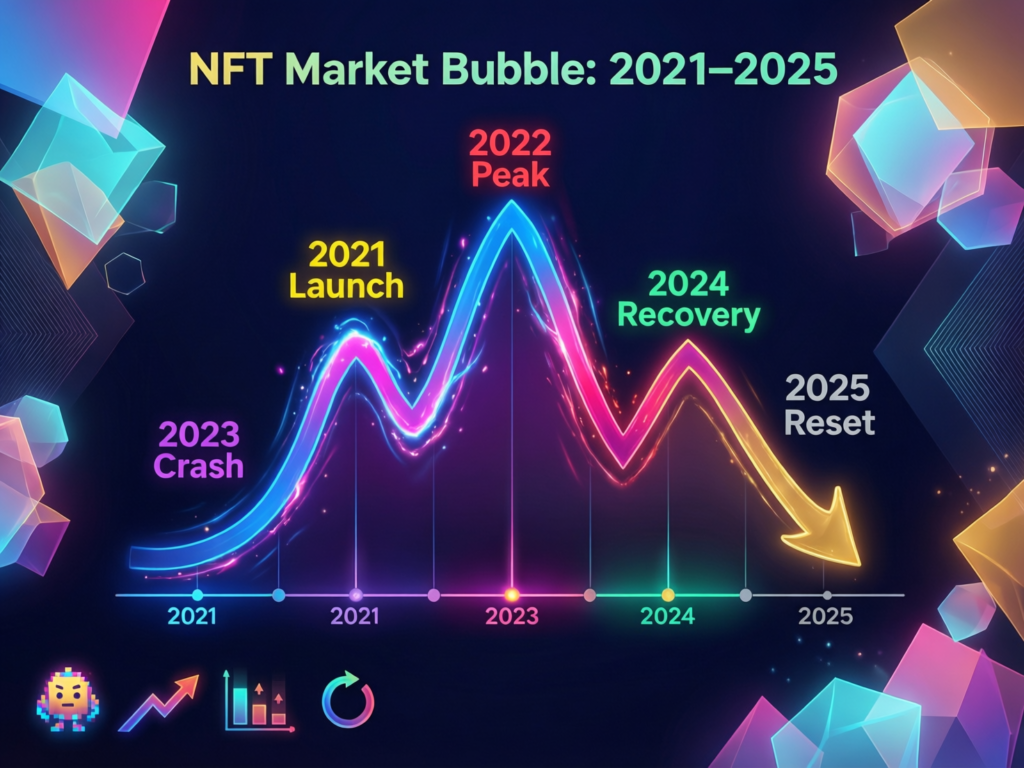
In 2021, NFTs were everywhere: celebrity drops, cartoon profile pictures, and eye-watering auction prices. By 2023–2024, trading volumes had collapsed more than 90% from their peak, with quarterly sales falling from billions of dollars to under $1B as buyers and sellers left the market. That crash is why 2025 feels like the verdict year and why so many headlines ask: “are NFTs dead?”
Here’s the sober version: the future of NFTs and Web3 in 2025 looks less like a gold rush and more like plumbing. The action is in regulated infrastructure, real-world integrations, and focused use cases in gaming, ticketing, loyalty, tokenized assets and identity. We’ll walk through what actually happened from 2021–2025, how regional markets in the US, UK, Germany and Europe differ, which use cases still make sense, and how investors, brands and builders should think about strategy.
If you’re a product, data or growth lead at a brand in New York, London, Berlin or elsewhere in the EU, treat this as your post-hype field guide – not financial advice, but a practical place to start.
Future of NFTs and Web3 in 2025.
Micro-answer: NFTs aren’t dead in 2025; speculative JPEG flipping is. The future of NFTs and Web3 is in regulated, utility-driven use cases across gaming, ticketing, loyalty, real-world assets (RWAs) and identity, increasingly embedded into normal apps and cloud stacks rather than hyped as standalone products.
TL;DR Are NFTs dead in 2025?
When you see “are NFTs dead in 2025?” headlines, they’re usually talking about prices, not infrastructure and usage. Trading volumes and market cap have indeed crashed: several analyses suggest NFT market cap fell roughly 70% in 2025, from around $9B to about $2.5B, while sales volumes dropped more than a third year-on-year.
But under the surface, NFT infrastructure didn’t disappear. Wallets, NFT-ready blockchains, API providers, marketplaces and analytics tools still serve hundreds of thousands of active users every month, even if that’s a fraction of the 2021 peak. Many “blue-chip” collections lost most of their floor price, but some gaming assets, curated art projects and utility-heavy collections kept steady communities.
So: the fad cycle ended; the tech stayed. NFTs are shrinking back from mainstream headlines into the stack: content management, identity, loyalty and ticketing systems you don’t necessarily market as “Web3” at all.
How Web3 survived the NFT crash
If you only zoomed in on NFTs, Web3 might look doomed. But Web3’s future in 2025 is increasingly defined by infrastructure:
Smart contract platforms and L2s that make transactions cheap enough for micro-use cases
Smart wallets and account abstraction that hide seed phrases and gas from end-users
DeFi and RWAs (tokenized T-bills, real estate, invoices) that use NFT-like standards for ownership and collateral
Decentralized identity and credentials using NFTs and verifiable credentials for logins, KYC and access control
In practice, NFTs have become one module in a broader Web3 stack, not “the whole story.” On-chain games run in browser and mobile apps; Web3 loyalty platforms integrate with AWS or other cloud providers; tokenized assets use a mix of fungible tokens and NFT-style receipts.
If you’re planning a new platform with Mak It Solutions or another dev partner, this is the pattern: NFTs as a backend primitive, not the marketing headline – similar to how a database or CDN works behind your web development or mobile app development project. (Mak it Solutions)
From Bubble to Reset What Happened to NFTs 2021–2025
Micro-answer: Between 2021 and 2025, NFT supply exploded, revenues fell, volumes normalized, and the market shifted from speculative art drops to utility, gaming and enterprise pilots that treat NFTs as one tool among many.
2021–2022: Mania, blue-chip collections and retail FOMO
The 2021–2022 cycle was defined by.
Profile-picture collections (PFPs) turning into status symbols on Twitter and Discord
Celebrity drops and auction headlines from New York, Miami and Art Basel Miami Beach
“Blue-chip” collections trading like luxury goods, with seven-figure sales at major auction houses
Most retail users treated NFTs as short-term flips, not long-term digital ownership in Web3. Floor prices were often driven more by speculation and leverage than by any meaningful NFT utility vs collectibles distinction.
2023–2024 crash: volume collapse and “NFTs after the crash”
By late 2022 and into 2023–2024, the macro picture flipped: crypto prices fell, liquidity dried up, and NFT volume followed. Some data providers estimate a >60% drop in monthly NFT sales through 2023, with 2024 becoming the worst year on record for traders as quarterly volumes slid below $1B.
The result.
Floor prices on many collections trended towards zero
Smaller marketplaces, mobile TV apps and niche NFT products shut down
Supply kept growing (over 1.3B NFTs minted by 2025 in some datasets), even as sales volumes fell by a third or more
US and UK media fixated on the sharp crash “NFTs are over” became an easy narrative. But what actually died was over-financialization and unsustainable mints, not the core concept.
2025 stabilization.
By early 2025, the dust had settled. The people and projects still building tended to fall into a few buckets:
Gaming NFTs where assets feel like DLC or skins, not day-trading instruments
Curated digital art with strong galleries, museums and serious collectors behind them
NFT ticketing and loyalty pilots for sports, music and retail brands in the US, UK and EU
Tokenized assets and RWAs like art, real estate or IP rights, often with institutional partners
Wealthy collectors, Web3-native brands and serious protocol teams remained the core participants. For them, digital ownership in Web3 – provable, composable ownership of digital or real-world assets – is the durable concept that outlives the hype cycle.
NFT Market 2025 Outlook by Region (US, UK, Germany, Europe)
Micro-answer
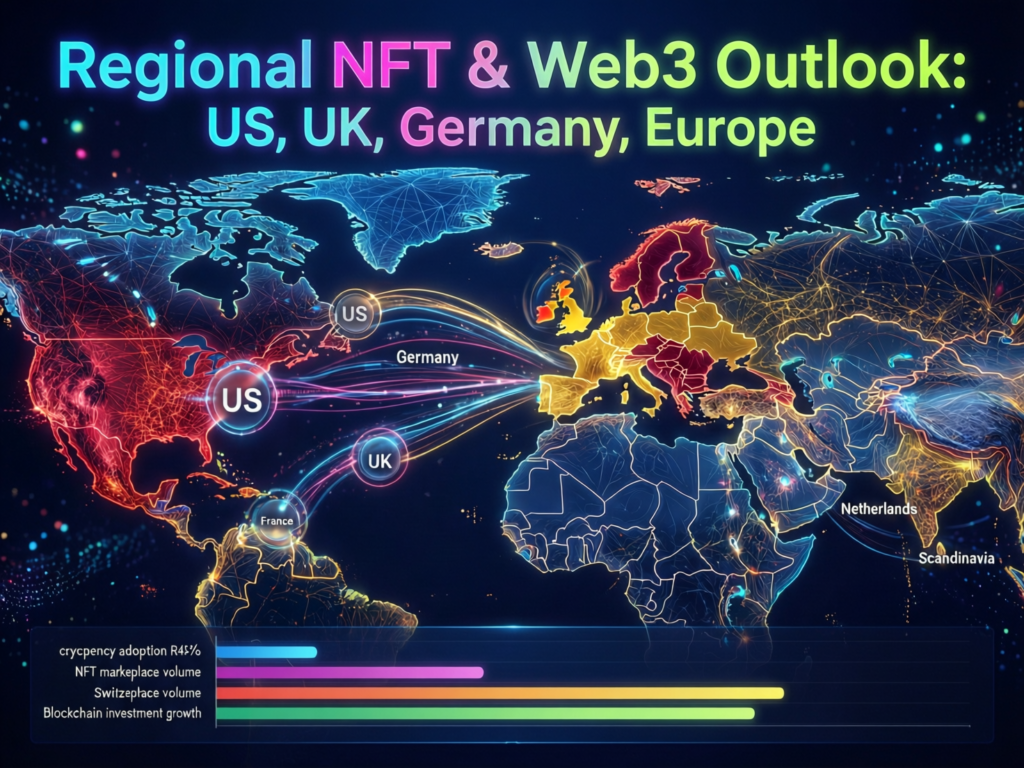
In 2025, the NFT market is smaller but more focused: the US leads in volume and experimentation, the UK and EU lean into regulation and consumer protection, while Germany and wider Europe push compliant, enterprise-grade tokenization and identity use cases shaped by MiCA, BaFin and GDPR/DSGVO.
NFT market 2025 outlook in the United States
The United States still dominates raw NFT volume, even after a 70–90% drawdown from the 2021 peak.
Key trends:
Ticketing experiments for NBA/NFL games and US music festivals exploring NFT passes with dynamic perks
American creators using NFTs as membership keys to content, experiences and Web3 creator economy royalties
Early tokenized RWAs (e.g., real estate shares, music catalogs) using NFT-like standards as receipts
Regulation remains fragmented. The SEC and CFTC focus on whether specific tokens are securities or commodities; the IRS treats many NFT transactions as taxable events, and KYC/AML rules apply via on-ramps and centralized platforms.
Are NFTs dead or evolving in the UK and wider Europe?
In the UK, mainstream press often leans skeptical – “are NFTs dead or evolving in the UK 2025?” is a familiar headline. Yet on the ground you’ll still find:
London galleries curating serious digital art drops alongside physical exhibitions
Retailers and fintechs exploring Web3 adoption in the UK finance sector 2025, aligning NFTs with Open Banking and embedded finance experiments
Sports and ticketing pilots in Premier League clubs using NFT-style passes for loyalty and access
Across Europe, the NFT market 2025 outlook is similar: speculative trading is muted, but projects in France, Spain, Switzerland and Portugal (Lisbon and Barcelona especially) still test NFT-enabled tickets and festival passes, particularly where tourism and culture are central.
Germany and EU: regulation-led Web3 and NFTs future (BaFin / MiCA)
Germany and the wider EU are heavily regulation-led. The EU’s Markets in Crypto-Assets Regulation (MiCA) became fully applicable at the end of 2024, creating a harmonized framework for many crypto-asset services and issuers. While most NFTs are outside MiCA’s strictest categories, firms still operate under BaFin supervision in Germany and must respect GDPR/DSGVO for any personal data. (EUR-Lex)
Concrete patterns emerging in Berlin, Munich and Frankfurt:
German automotive brands experimenting with NFTs for experiences, digital twins and vehicle history
Museums and galleries piloting tokenized art and provenance systems
Financial institutions focusing on tokenized assets and RWAs, with NFTs used as unique claims on physical or financial objects
These regulation-heavy markets favor enterprise Web3: systems that can pass compliance reviews, integrate with existing clouds and data warehouses, and demonstrate strong internal controls – the sort of work you’d do with a partner like Mak It Solutions that already understands business intelligence and SEO + indexing controls. (Mak it Solutions)
Web3 Future 2025 Infrastructure, Compliance and Adoption
Micro-answer: The future of Web3 in 2025 is less about speculation and more about invisible infrastructure: smart wallets, L2s, compliant custody, and integrations with cloud providers and banks governed by clear rules from the SEC, FCA, BaFin and under frameworks like MiCA and GDPR.
Web3 infrastructure trends: wallets, L2s, cloud and identity
For real users in New York or London, the best Web3 UX is barely noticeable. Teams are moving to:
Smart contract wallets and account abstraction so users log in with email, passkeys or Apple devices instead of seed phrases
Multi-chain and L2 support for cheaper NFT and RWA transactions
Web3 backends deployed on AWS and other major clouds, integrated with existing web stacks, CDNs and observability tools
Alongside this, decentralized identity and credentials with NFTs and verifiable credentials are gaining traction: think reusable KYC badges, on-chain professional certifications, or membership passes that plug into multiple apps.
If you’re planning a multi-region platform, you’re likely pairing Web3 infra with a modern web setup (SSR vs static, headless CMS, etc.), similar to how Mak It Solutions approaches server-side rendering vs static generation and headless CMS architectures. (Mak it Solutions)
Web3 regulation and compliance: SEC, FCA, BaFin, MiCA, GDPR/DSGVO
Trust in 2025 is largely a regulatory and security story:
US
The SEC and CFTC continue enforcement actions around unregistered securities and fraud, while HHS and HIPAA rules matter for any health-adjacent data. (HHS.gov)
UK
The FCA and UK-GDPR govern financial promotions and data use, with the ICO providing guidance for organizations processing personal data. (ICO)
EU/Germany
MiCA, ESMA guidance and BaFin oversight shape licensing and consumer protection; GDPR/DSGVO governs personal data on or off chain. (ESMA)
On the security side, enterprise clients and banks increasingly expect Web3 platforms to align with PCI DSS for card payment data and SOC 2-style controls for cloud security. (PCI Security Standards Council)
Enterprise Web3 adoption in finance, manufacturing and health
In 2025, serious adoption is skewed towards:
Finance and fintech: banks and neobanks in London, Berlin and Zurich testing tokenized deposits, RWAs and NFT-like passes within Open Banking frameworks
Manufacturing and automotive: German and wider EU manufacturers experimenting with NFT-backed digital twins, supply-chain provenance and post-sale experiences
Health and public sector: early, highly regulated pilots looking at Web3-style identity and consent management for patient data in systems like the UK’s NHS or EU national health services always under strict HIPAA/GDPR-style privacy regimes, if they move at all
This is where Web3 becomes another module in a broader cloud and data strategy, often alongside traditional web design and front-end development work.
NFT and Web3 Use Cases That Still Make Sense in 2025
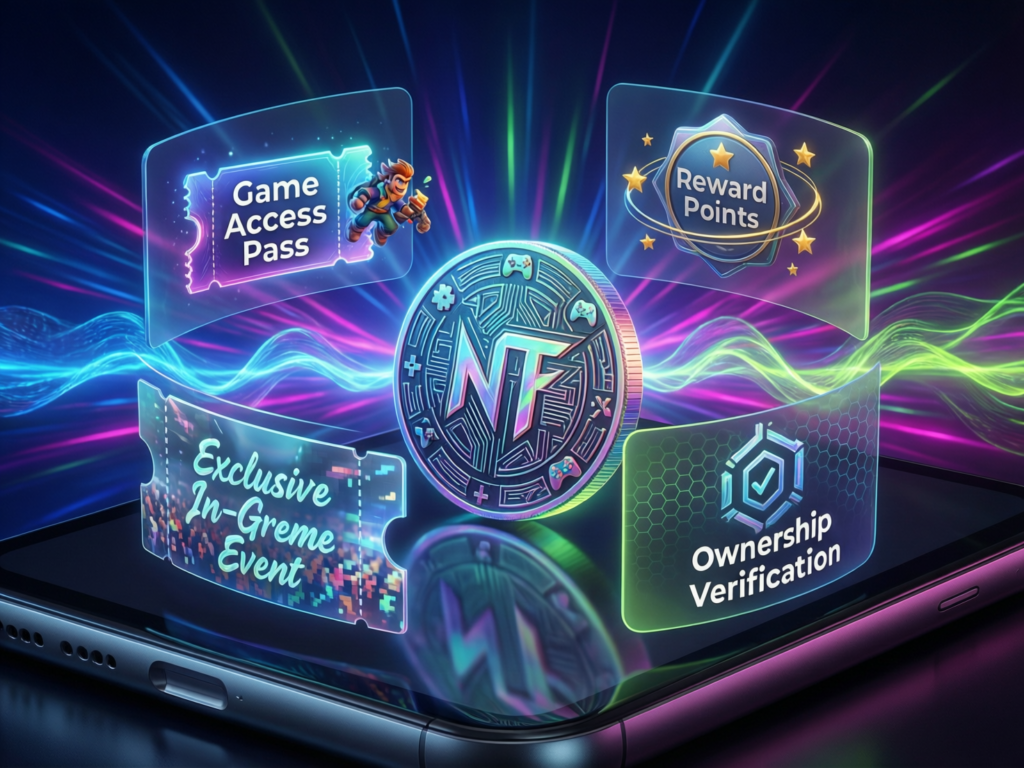
Micro-answer: The strongest 2025 NFT use cases focus on utility: owning in-game assets, getting into events, unlocking loyalty rewards, bridging physical art and RWAs, and powering identity and credentials rather than pure speculation.
NFT gaming 2025 from play-to-earn to play-to-own
The first generation of play-to-earn games often felt like DeFi farms with a UI. In 2025, serious studios in the US, UK and EU are moving to play-to-own:
Games are fun first, with NFTs used as skins, items or land – closer to DLC than a DeFi product
Secondary markets exist, but are rate-limited and UX-smoothed to avoid day-trading vibes
Esports and creator ecosystems use NFTs for team passes, VIP roles and interoperable cosmetics
Here, NFTs deliver digital ownership in Web3 that normal gamers can understand: “I own this skin and can sell it later,” not “I’m a yield farmer.”
NFT ticketing and loyalty for US, UK and EU brands
Ticketing and loyalty are among the most logical “post-bubble” NFT plays:
US NBA/NFL pilots for tickets that double as collectibles and loyalty passes
Premier League and Bundesliga experiments with NFT season tickets and membership passes
European music festivals in Barcelona, Lisbon and Berlin using NFTs to gate exclusive stages or content
On the loyalty side, NFTs back.
Membership tiers and perks for US retailers and direct-to-consumer brands
UK retailers using Web3 passes that plug into email, apps and in-store experiences
EU luxury brands issuing NFT receipts and collectibles around major fashion and art events
Because these flows touch payments, serious platforms lean on PCI DSS-aligned card handling and SOC-style controls when integrating with Stripe, Adyen, etc.
Tokenized art, RWAs and decentralized identity in Europe
Europe remains strong in tokenized art NFTs 2025.
Galleries in London, Berlin, Paris and Zurich test limited-edition digital art drops tied to physical works
Events like Art Basel Miami Beach and leading European art fairs now treat digital art as a serious category rather than a gimmick
Museums explore NFTs and verifiable credentials for provenance, copyright and licensing
At the same time, RWAs and decentralized identity and credentials with NFTs are converging. An artist might have a reusable on-chain ID, while each artwork is an NFT with provable metadata and licensing, and collectors hold tokens that can be pledged as collateral in compliant lending platforms.
Long-Term NFT & Web3 Strategy for Investors, Brands and Builders
Micro-answer
In 2025, treat NFTs as one part of a broader Web3 portfolio. Focus on teams, utility, compliance and integration with real-world value, not quick flips – and size your exposure assuming extreme volatility.
Are NFTs a good investment in 2025?
Whether NFTs are a “good investment” in 2025 depends heavily on what you mean by NFTs and your risk tolerance. JPEG-only collectibles are still among the most volatile assets in crypto; they can drop 80–100% and never recover. RWAs, tokenized funds and utility-driven passes are usually less volatile, but still high-risk compared to traditional assets.
A sensible approach is to see NFTs as one sleeve of an overall Web3 portfolio, alongside L1/L2 tokens, DeFi positions and RWA exposure. NFT portfolio diversification across Web3 assets – and conservative position sizing matters more than trying to find “the next Bored Ape.” This is informational, not investment advice; speak with a regulated advisor in your jurisdiction if you’re allocating serious capital.
How to evaluate NFT and Web3 projects in 2025
When you evaluate projects, treat them like startups plus infra vendors, not lottery tickets. A simple checklist:
Team & track record: have they shipped products before, ideally beyond crypto?
Utility vs collectibles: is there clear, ongoing value beyond speculative trading?
On-chain metrics: real users, retention, and sustainable fee/revenue patterns
Community quality: signal over noise; credible governance, not just hype
Legal and compliance footing: evidence of MiCA/SEC/FCA/BaFin awareness, not vague assurances
Security audits and controls: independent code audits; alignment with PCI DSS/SOC-style best practices for any payment or custody component
For brands, partnering with experienced vendors whether for SEO and discovery or full web and app builds helps you avoid reinventing the wheel on infra, performance and compliance.
Action plan for US/UK/EU brands and builders
If you’re a brand or builder in the US, UK or EU, here’s a pragmatic action plan for NFTs and Web3 in 2025:
Define goals & risk limits
Clarify what you want (engagement, revenue, data, innovation) and what you absolutely cannot risk (regulatory breaches, reputational harm). Map US (SEC/IRS), UK (FCA/HMRC) or EU (BaFin/MiCA/GDPR) constraints up front.
Pick one low-risk use case
Start with a narrow pilot: game items, event tickets, loyalty passes or tokenized receipts not a speculative mint. Design it so the Web3 parts feel like plumbing, not the hero feature.
Design your data and compliance architecture
Decide what lives on-chain vs off-chain; align with GDPR/DSGVO or UK-GDPR; make sure any health-adjacent or financial data respects HIPAA or PCI DSS where applicable.
Build with battle-tested web foundations
Use modern web patterns (SSR/SSG, headless CMS, analytics, SEO) and experienced partners like Mak It Solutions who already ship production systems for US, UK and German clients.
Measure, iterate and only then scale
Track engagement, retention and revenue, plus legal and security reviews. Only expand to larger user bases or new geos once you have proof of value and a compliance story you’d be happy to explain to a regulator.
Key Takeaways
NFTs and Web3 are not dead in 2025 but the speculative “flip JPEGs for quick profit” era is largely over.
Volumes and market cap are way down, yet infrastructure, gaming, ticketing, loyalty and enterprise pilots in the US, UK, Germany and wider Europe continue to grow quietly.
Regulation (MiCA, SEC, FCA, BaFin, GDPR/DSGVO, PCI DSS, HIPAA) is now the main backdrop for serious Web3 work, especially where finance or health are involved.
Best-fit use cases in 2025 center on digital ownership in Web3: game assets, event tickets, loyalty passes, tokenized assets and identity/credentials.
Investors should treat NFTs as one sleeve within a broader Web3 portfolio, not the whole bet – and brands should treat NFTs as a backend primitive, not a marketing gimmick.
Execution, compliance and UX matter more than chains and buzzwords – this is increasingly about good product, data and cloud engineering with Web3 as one tool.
If you’re exploring the future of NFTs and Web3 in 2025, you don’t need another hype deck – you need a grounded roadmap that fits your sector, GEOs and risk profile. Mak It Solutions can help you scope pilots in gaming, loyalty, ticketing or tokenization, then integrate them cleanly into your existing web, mobile and data stack.
Ready to sanity-check your idea and turn it into a real plan? Reach out to Mak It Solutions to book a Web3/NFT strategy workshop or fold Web3 into your next web or app project.
FAQs
Q : Will NFTs ever reach their 2021 prices again, or is that era over?
A : It’s unlikely that the NFT market will broadly return to 2021 pricing levels, because those peaks were driven by a unique mix of zero-rate liquidity, speculative mania and novelty. Some iconic collections or high-end art may reclaim or exceed their old highs, but most 2021 projects will never recover. Instead of betting on a full “re-pump,” assume the 2021 boom was an outlier and focus on whether a given NFT has clear long-term utility, cultural significance or cash-flow rights.
Q : Which industries are leading real-world NFT adoption in Europe in 2025?
A : In Europe, the most active real-world NFT adopters in 2025 are finance, automotive/manufacturing, culture and luxury. Banks and fintechs in cities like Frankfurt, Berlin, Paris and Zurich are experimenting with tokenized assets and collateral. German and wider EU manufacturers test NFTs for digital twins and supply-chain provenance. Museums, galleries and luxury fashion houses use NFTs for provenance, limited digital editions and customer experiences, all shaped by MiCA and strict GDPR/DSGVO requirements.
Q : How risky are NFTs compared with other Web3 assets like tokens or RWAs?
A : Purely collectible NFTs remain among the riskiest Web3 assets: they’re illiquid, thinly traded and highly sentiment-driven. Fungible L1/L2 tokens and DeFi positions share volatility but often have deeper markets and clearer economic models. RWAs and tokenized funds can be somewhat less volatile, but still face smart-contract, regulatory and counterparty risks. In practice, NFTs should be treated as a high-risk, long-tail part of a diversified Web3 allocation and never as a replacement for diversified traditional investments.
Q : Do I still need a separate crypto wallet to use NFTs and Web3 apps in 2025?
A : Not always. In 2025, many consumer-facing Web3 apps in the US, UK and EU offer smart wallets with email or social logins, custodial wallets under regulated entities, or embedded wallets tied to your existing account. You may never see a seed phrase or manually pay “gas.” That said, if you want full self-custody or to trade on open marketplaces, you’ll still use a dedicated wallet app ideally with hardware-wallet support and best-practice security.
Q : How are NFTs taxed differently in the US, UK and Germany in 2025?
A : Tax treatment varies by jurisdiction and use case, and this is not tax advice. In the US, many NFT transactions are treated like disposals of property, triggering capital gains or ordinary income depending on context. In the UK, HMRC guidance treats cryptoassets (including many NFTs) under capital gains or income tax depending on activity. In Germany, NFTs can fall under private sale rules or business income, with holding periods and classification affecting taxation. Always consult a qualified tax professional familiar with crypto rules in your country before investing or launching a project.