
IT Cost Optimization Strategies for 2025 CIOs
IT Cost Optimization Strategies for 2025 CIOs

IT Cost Optimization Strategies for 2025 CIOs
The most effective IT cost optimization strategies in 2025 give CIOs full visibility into where money is going, eliminate waste in cloud, SaaS and legacy systems, and redirect savings into innovation, security and AI. In practice, that means combining FinOps-style cloud governance, SaaS cleanup, automation and platform consolidation under a clear framework of KPIs, compliance and recurring 90-day execution cycles.
Introduction
IT cost optimization strategies in 2025 are less about “cutting IT” and more about reshaping spend toward cloud, AI and security while still keeping the lights on. Global IT spending is projected to reach roughly $5.6–$5.7 trillion in 2025, close to 9–10% growth over 2024, driven heavily by AI and cloud investments.
At the same time, cloud infrastructure spend alone is running at over $100 billion per quarter, with AWS, Azure and Google Cloud still growing at 20%+ annually. CIOs in New York, London, Berlin or Paris are being asked to fund GenAI pilots, zero-trust security and modernization without seeing a proportional budget increase.
This playbook is written for CIOs, IT directors and finance leaders in mid-market and enterprise organisations across the US, UK, Germany and wider EU. The goal: do more with less, protect performance and compliance, and still move money into cloud, AI and data where it matters most.
Note
This article shares general insights for CIOs and technology leaders. It is not legal, financial or compliance advice; always work with your own advisors before making major decisions.
What Are IT Cost Optimization Strategies in 2025?
IT cost optimization strategies are structured ways to reduce waste and reallocate IT spend toward higher-value initiatives (cloud, AI, security) while maintaining or improving performance. Instead of one-off cuts, you build a repeatable technology cost optimization framework tied to business outcomes and risk.
Definition and Scope of IT Cost Optimization
IT cost optimization is not the same as generic “cost cutting”. Cost cutting focuses on short-term reductions blanket freezes, staff cuts or cancelled projects with little regard for long-term impact.
IT cost optimization, by contrast, is about:
Eliminating waste (unused licenses, idle cloud, redundant tools)
Improving unit economics (cost per user, per transaction, per workload)
Reinvesting savings into digital, AI, security and analytics
The scope typically spans.
Infrastructure & hosting: data centres, colocation, WAN, endpoints
Cloud: IaaS/PaaS/SaaS across AWS, Azure, GCP and regional providers
SaaS & licensing: collaboration, CRM, ITSM, security, productivity suites
Support & operations: helpdesk, NOC/SOC, maintenance contracts
Workforce & vendors: internal teams, MSPs, integrators, consultants
Done well, IT cost optimization lets a London-based bank or a Munich-based manufacturer fund new AI and analytics capabilities without breaching budget envelopes.
Cost Cutting vs Strategic IT Budget Optimization (US & Europe)
One-off cost cutting is reactive: freeze hiring, cancel some tools, push renewals out a year. It may help this quarter’s P&L, but it often increases technical debt and risk.
A strategic IT budget optimization framework in 2025 looks different:
Ongoing: quarterly reviews, not a one-time exercise
Data-driven: clear baselines, benchmarks and showback/chargeback
Risk-aware: aligned with GDPR/DSGVO, UK-GDPR, HIPAA, PCI DSS and SOC 2 requirements for your sector
Geo-sensitive: accounts for EU data residency, BaFin rules in Germany, or NHS procurement constraints in the UK
In the US, you might lean more heavily on flexible cloud markets and aggressive vendor renegotiations. In continental Europe, works councils, BaFin supervision and GDPR-driven data residency rules influence where and how you optimize
Why IT Budgets Are Under Pressure in 2025
Budget pressure in 2025 is not because IT is shrinking it’s because the mix of spend is shifting.
Analysts expect global IT spend to keep rising in 2025, but much of that increase is absorbed by price hikes and a “GenAI tax” on software and infrastructure.
Surveys show cloud spending is growing fast, with many enterprises spending over $12M per year on cloud and a similar amount on SaaS alone.
Self-reported public cloud waste still sits at roughly a quarter of spend, and one survey found 78% of companies believe 21–50% of their cloud spend is wasted.
On top of that, regulated industries healthcare (HIPAA in the US, NHS in the UK), financial services (PCI DSS, Open Banking, BaFin), and public sector (EU procurement rules) must keep raising their security and compliance bar even while they trim costs.
IT Budget Planning 2025–26.
Effective IT budget planning in 2025 starts with baselines, benchmarks, and a clear split between “run”, “grow” and “transform” investments aligned to business outcomes. Before you cut, you need to know what you’re actually spending and why.
Build Your IT Financial Management and Chargeback Model
Treat IT like a business-within-the-business.
Implement IT financial management (ITFM): track spend by service, product and BU, not just GL account.
Use showback to expose costs to business units (“this is what your usage costs”), then evolve to chargeback where appropriate.
Clarify CAPEX vs OPEX: on-prem hardware refresh vs subscription SaaS, reserved cloud capacity vs pay-as-you-go.
In a US healthcare provider, that might mean allocating EHR hosting, security tools and backup storage costs to each hospital. In a UK retailer, you might show store-level cost per POS terminal, per online transaction and per warehouse system.
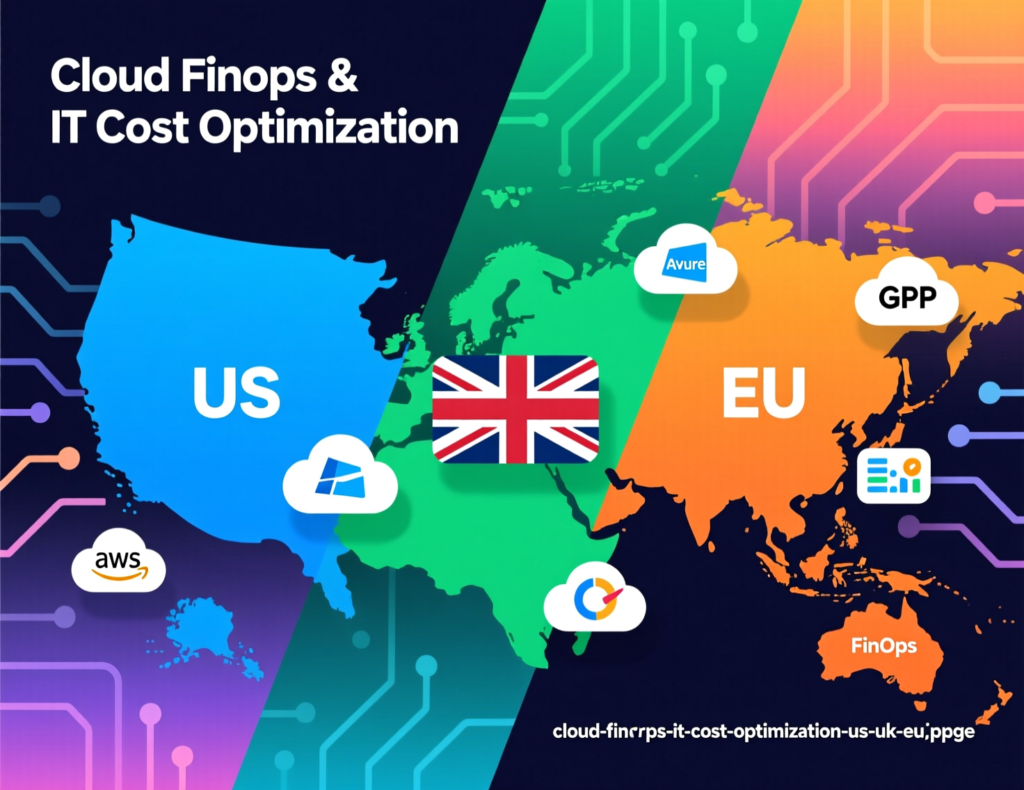
IT Budget Benchmarking 2025 for US, UK and EU Organisations
Benchmarks won’t write your budget, but they stop you arguing from anecdotes.
Global studies suggest median IT spend for many organisations sits roughly in the 3–6% of revenue range, with some sectors (like banking) reaching 6–12%.
European benchmarks show similar ratios, with variation by industry and size (e.g., higher IT intensity in financial services and telecoms across Germany, France and the Nordics)
Use these as guardrails for.
US mid-market SaaS or manufacturing firms in Austin or Atlanta
UK public sector organisations constrained by government spending reviews
German Mittelstand manufacturers balancing Industry 4.0 investments with strict DSGVO and BaFin expectations
Practical IT Budget Planning Checklist for 2025–26
A simple 6-step checklist for your 2025–26 IT budget:
Inventory: capture all IT services, apps, contracts, vendors and cloud accounts.
Classify: tag spend as run / grow / transform and by BU or product.
Benchmark: compare high-level ratios (IT % of revenue, IT per FTE) against peers.
Forecast: project costs based on contract terms, headcount plans, AI adoption and regulatory changes.
Prioritise: protect security, compliance and top-line enablers; target low-risk run-cost areas first.
Govern: set up a joint CIO/CFO review cadence with clear approval thresholds.
A downloadable “IT budget planning 2025 template” can turn this into a repeatable model for your finance and IT teams.
Core IT Cost Optimization Strategies to Do More With Less
The most effective IT cost optimization strategies combine visibility (knowing where money goes), eliminating waste, and redirecting savings into innovation and security. Focus first on transparency, then rationalisation, then reinvestment.
Gain IT Spend Visibility and Transparency First
Without visibility, every discussion becomes political. Start by.
Mapping spend by category: infrastructure, cloud, SaaS, support, projects, security
Using tools like ServiceNow, Apptio or Power BI dashboards to combine GL, contract and usage data
Tagging cloud resources by app, team and environment to support FinOps reporting.
Mak it Solutions often starts cost programmes by helping clients build simple but powerful spend dashboards that CFOs and CIOs can both trust, similar to their work on cloud cost optimization and data lakehouse architecture for US & EU enterprises. (Mak it Solutions)
IT Portfolio Rationalization and Application Rationalization
Most mid-size and enterprise organisations in New York, London or Berlin carry years of application sprawl: overlapping CRMs, multiple monitoring tools, duplicative project trackers.
Key steps:
Identify redundant applications and shadow IT, especially in SaaS.
Consolidate onto strategic platforms (e.g., Microsoft 365, Atlassian, ServiceNow, Salesforce) where it makes sense.
Decommission unused or low-value systems, after aligning with data retention and compliance requirements.
BetterCloud and other SaaS management surveys show large organisations commonly run 100–150+ SaaS apps, with a significant percentage of licenses unused or under-used.
Reduce IT Costs Without Affecting Performance or Innovation
To avoid harming service levels.
Target “run” inefficiencies first: legacy maintenance contracts, unused DR sites, over-provisioned cloud workloads.
Renegotiate contracts: bundle volumes across US and European offices, standardise terms and introduce performance-based clauses.
Right-size infrastructure: lower non-production SLAs, use auto-scaling and adopt tiered storage.
Align SLAs by business criticality: 24×7 support only where truly needed; different tiers for internal apps vs customer-facing portals.
For remote teams across the US, UK and EU, optimising service desk coverage windows, self-service and knowledge bases can cut ticket volumes without cutting quality more on that below.
Cloud, SaaS and FinOps Cost Management
For most enterprises, cloud and SaaS are where the biggest savings live. Start with a FinOps-style cloud cost optimization framework, then tackle SaaS waste and hybrid cloud choices.
Cloud Cost Optimization Strategies 2025 (AWS, Azure, GCP)
FinOps is an evolving cloud financial management practice that aligns engineering, finance and business around cloud cost ownership. Practical tactics:
Rightsizing: match instance sizes and storage types to real usage.
Reserved/committed use: commit to 1–3-year terms for steady workloads (e.g., core APIs or databases).
Autoscaling & schedules: turn off dev/test outside working hours; scale down low-traffic regions.
Storage tiering & lifecycle: move cold data to cheaper tiers or archive buckets.
Kill idle resources: unattached volumes, orphaned snapshots, forgotten POCs.
Pay special attention to EU data residency: choosing AWS regions like Frankfurt (eu-central-1), Paris (eu-west-3) or Azure’s Germany regions to align with GDPR and BaFin expectations. Mak it Solutions’ guides on future of cloud hosting and AWS vs Azure vs Google Cloud give deeper comparisons for US and EU teams. (Mak it Solutions)
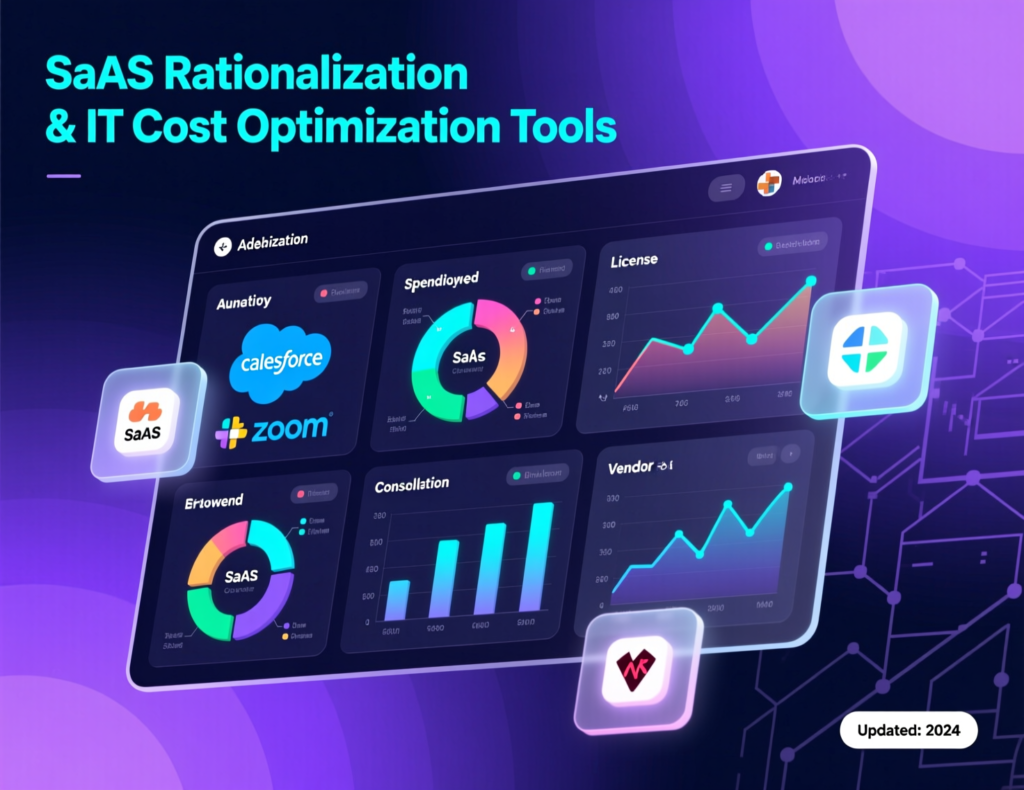
Optimize SaaS Spending and Reduce SaaS Waste
SaaS has quietly become one of the largest and least controlled parts of IT budgets: average SaaS spend per employee reached roughly $8,700 in 2024, growing over 9% year-on-year.
Focus on:
Discovery: use SSO logs, expense reports and CASB tools to find shadow IT.
License optimization: compare assigned vs active users; downgrade or reclaim where usage is low.
Role-based access: ensure users get the cheapest license that fits their role.
Vendor consolidation: rationalise overlapping collaboration, project management and analytics tools across US and European offices.
The Mak it Solutions article on self-service business intelligence is a good reference for consolidating analytics tools into governed platforms instead of multiple unmanaged dashboards. (Mak it Solutions)
Hybrid Cloud vs On-Prem: Cost Comparison and GEO Constraints
Hybrid is often a cost and compliance choice, not just a technology preference:
Keep on-prem when data residency or regulations (DSGVO/GDPR, BaFin, NHS data, some UK-GDPR contexts) require strong local control, or where predictable heavy workloads make owned infrastructure cheaper over 3–5 years.
Use public cloud (e.g., us-east-1, London, Frankfurt, Amsterdam) for elastic web apps, analytics and AI where burst capacity and managed services outweigh the premium.
Mak it Solutions’ content on edge vs cloud computing for AI workloads and multi-cloud strategy can help you decide when hybrid makes sense versus going all-in on a single provider. (Mak it Solutions)
Using Automation, AI and Platform Consolidation to Reduce IT Costs
CIOs can reduce IT run costs by automating routine work, applying AI to operations, and consolidating overlapping platforms without sacrificing service quality. The trick is to automate the toil, not the judgement.
IT Automation and Self-Service to Cut Support Costs
For remote and hybrid teams in the US, UK and EU, human-only support doesn’t scale. Consider:
Self-service portals for common requests (access, equipment, software installs)
Chatbots and virtual agents for password resets and FAQs
Knowledge bases embedded into Slack/Teams
Automated provisioning using ITSM workflows plus identity tools
Done right, you can reduce L1 ticket volume by 20–40% while improving satisfaction, especially for teams spread between San Francisco, London and Berlin.
Use AI to Reduce IT Costs While Staying Compliant (EU AI Act, GDPR)
AI and observability can dramatically reduce MTTR and manual toil in IT operations:
Incident prediction and anomaly detection from logs, metrics and traces
AI-assisted ticket triage and routing
Capacity planning and cost forecasting for cloud and infrastructure
In the EU and UK, align these systems with GDPR/DSGVO, UK-GDPR and the EU AI Act’s risk-based framework, especially if tools process personal data or make decisions that impact individuals.
Mak it Solutions’ posts on generative AI security risks and AI content with guardrails offer practical patterns for deploying AI responsibly, including role-based access, logging and data minimization. (Mak it Solutions)

Platform Consolidation vs Point Solutions
Platform consolidation is one of the strongest levers for IT cost optimization strategies:
Suites from Microsoft, ServiceNow, Atlassian, Salesforce, SAP or Oracle can reduce tool sprawl and vendor management overhead.
Point solutions often win on features or niche capabilities, but each adds integration, security and compliance overhead.
Compare total cost of ownership, not just license price: include SOC 2, PCI DSS, data residency, integrations and admin time.
Mak it Solutions frequently helps clients decide between monolith, modular monolith and microservices architectures, and those same principles apply to your vendor stack, as they describe in microservices vs monolith: how to choose in 2025. (Mak it Solutions)
GEO-Specific IT Cost Optimization Strategies (US, UK, Germany/EU)
The principles are similar globally, but regulation, procurement rules and labour models in the US, UK and EU shape how you apply IT cost optimization strategies.
United States: Compliance-Heavy but Flexible Cloud Markets
US firms often enjoy flexible cloud pricing but face stringent compliance for.
HIPAA in healthcare (HHS)
PCI DSS for payments (PCI Security Standards Council)
SOC 2 expectations for SaaS providers
New York and San Francisco-based enterprises are reallocating spend away from on-prem hardware into AI-ready infrastructure and security but every optimisation plan must account for audit evidence, vendor risk management and incident response costs.
United Kingdom.
In the UK, you need to respect.
Budget cycles tied to the UK fiscal year
Frameworks like G-Cloud / Digital Marketplace for central and local government
NHS service level expectations and UK-GDPR
IT cost optimisation here is often about:
Shared platforms across NHS Trusts or councils
Phasing out legacy systems without impacting frontline services
Using managed services for security and hosting where in-house teams are constrained
Germany and Wider EU.
Germany and the wider EU add another layer.
Strict DSGVO/GDPR enforcement and works councils shape automation and monitoring decisions. (EUR-Lex)
Financial institutions must align with BaFin and European banking regulators, which may dictate how cloud is adopted and monitored.
Data residency choices (Frankfurt, Berlin, Munich or other EU regions) impact where you can host cloud workloads and backups.
For German Mittelstand manufacturers, the winning pattern is usually a hybrid stack: core OT/OT-adjacent systems on-prem or in German sovereign clouds, with analytics and collaboration in EU-hosted SaaS.
Governance, KPIs and Next Steps for CIOs
You lock in savings by defining clear IT cost optimization KPIs, assigning owners, and working in 90-day cycles with support from the right partners.
Key KPIs and Dashboards for IT Cost Optimization
Good metrics help you avoid chasing vanity savings. Useful KPIs include:
Cost per user / per service (e.g., cost per clinician, per call centre agent)
Cloud unit economics: cost per transaction, per API call, per GB processed
Application TCO: licenses + infra + people + supportIncidents vs cost: did cheaper hosting or reduced support actually increase outages?
Dashboards should let CIOs and CFOs slice data by country (US, UK, Germany, France, Netherlands), business unit and product line. Tools and approaches used for business intelligence services at Mak it Solutions are a strong foundation for these. (Mak it Solutions)
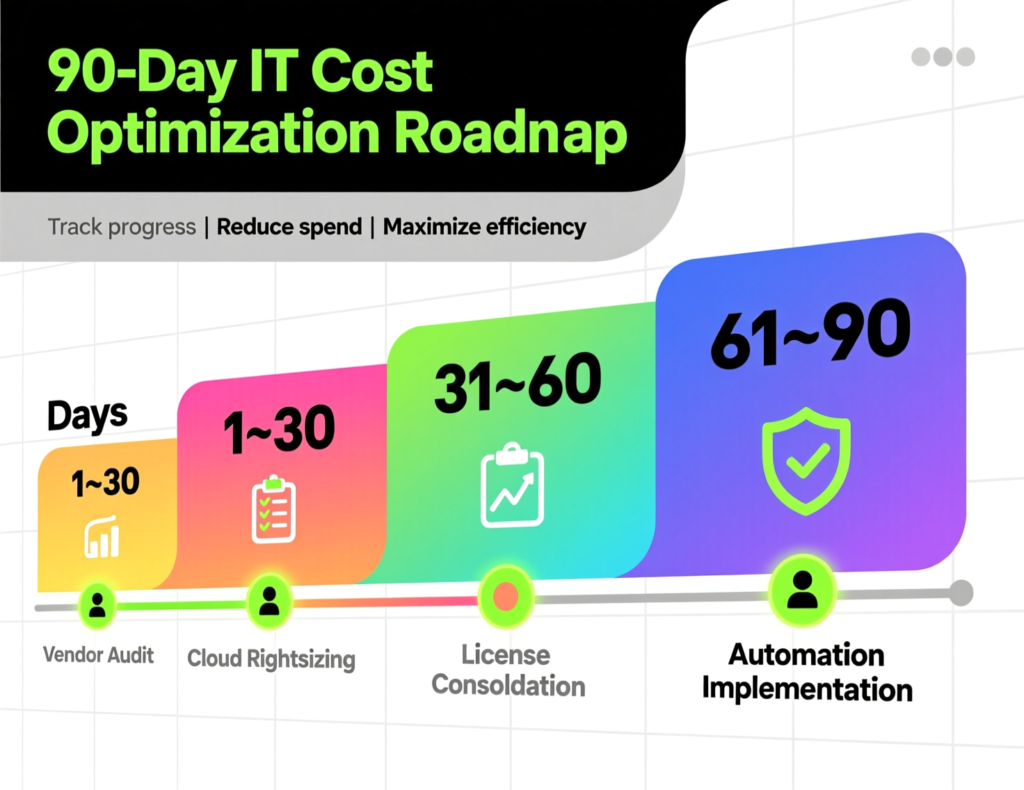
90-Day Roadmap to Launch IT Cost Optimization Initiatives
Think in 90-day sprints rather than multi-year programmes:
Assess & baseline (Weeks 1–4)
Build inventory of apps, vendors and cloud accounts
Stand up basic dashboards and KPIs
Quick wins (Weeks 5–8)
Reclaim unused SaaS licenses and right-size obvious cloud waste
Renegotiate near-term renewals and support contracts
Structural changes (Weeks 9–12)
Launch application rationalization
Plan platform consolidation, automation and AI/FinOps adoption
This is where checklists and partner playbooks from Mak it Solutions’ top CIO priorities 2025 post can plug directly into your programme. (Mak it Solutions)
When to Bring in External Partners (MSPs, FinOps, Advisory)
Consider bringing in external support when.
You lack centralised visibility across multi-cloud and SaaS
Regulatory complexity across US, UK and EU is slowing decisions
Internal teams are fully booked just “keeping the lights on”
Partners like Mak it Solutions can
Run an IT cost optimisation or cloud FinOps assessment
Help implement dashboards, tagging and governance
Co-design a roadmap for modernisation, analytics and AI that fits your GEO and compliance profile
Key Takeaways
Treat IT cost optimisation as a continuous framework, not a one-off cost-cutting exercise.
Start with visibility and ITFM/FinOps so every dollar of spend is traceable to a service or business outcome.
Target cloud, SaaS and application rationalisation for the biggest near-term savings.
Use automation, AI and platform consolidation to reduce run costs while protecting performance and compliance.
Tailor your strategy to US, UK and EU regulations, especially GDPR/DSGVO, HIPAA, PCI DSS and the EU AI Act.
Run initiatives in 90-day cycles with clear KPIs, then reinvest savings into innovation and security.
If you’re staring at rising cloud and SaaS bills while your 2025–26 budget stays flat, you’re not alone but you don’t have to solve it with blunt cuts. Mak it Solutions works with CIOs across the US, UK, Germany and wider Europe to design pragmatic IT cost optimization roadmaps, from quick FinOps wins to full portfolio rationalisation.
Share your current challenges, GEO footprint and key systems, and request a scoped IT cost optimization assessment or a short CIO-to-CIO workshop. Together, we can cut waste, fund innovation and keep your teams shipping safely. ( Click Here’s )
FAQs
Q : How much should mid-market companies budget for IT as a percentage of revenue in 2025?
A : Most mid-market companies in 2025 will land somewhere in the 3–6% of revenue range for total IT spend, with more technology-intensive sectors like financial services pushing toward the higher end. Benchmarks should be a starting point, not a target: if you’re well below your sector’s norm, you may be under-investing in resilience or innovation; if you’re far above, optimisation and rationalisation become urgent. Always view percentage of revenue alongside business strategy, growth plans and risk appetite.
Q : What are quick IT cost optimization wins a CIO can deliver in the first 90 days?
A : In the first 90 days, focus on visible quick wins: reclaim unused SaaS licenses, shut down idle cloud resources and right-size over-provisioned VMs and storage. Many organisations also renegotiate near-term renewals, reduce overlapping tools (e.g., multiple chat or project apps) and introduce basic showback reporting so business units see their consumption. These steps often deliver 5–15% savings on cloud and SaaS lines without touching headcount or critical innovation budgets.
Q : How do I choose between different cloud cost optimization and FinOps tools?
A : Start by clarifying what you need: multi-cloud visibility, automated rightsizing recommendations, integration with your ITFM/ERP system or full FinOps workflows. Then evaluate tools on three dimensions: coverage (AWS/Azure/GCP plus SaaS), governance features (tagging enforcement, budgets, alerts) and team fit (how engineers and finance will actually use it). Some organisations get most of what they need from native cloud tools; others benefit from specialised platforms and advisory partners that help embed FinOps practices.
Q : What are common mistakes companies make when trying to cut IT costs in regulated industries?
A : Common mistakes include cutting into security or compliance budgets, de-scoping monitoring and logging, or decommissioning systems without thinking through retention and audit requirements. In sectors governed by GDPR/DSGVO, UK-GDPR, HIPAA or PCI DSS, poorly planned cuts can create regulatory exposure that far outweighs any savings. Another trap is running siloed cost-cutting in one region (e.g., US) without considering global data flows and shared services used by UK or EU entities. A structured optimisation framework with risk input from legal, compliance and security is essential.
Q : How often should we review and update our IT cost optimization plan in fast-changing cloud and AI environments?
A : At a minimum, review your IT cost optimization plan quarterly, with monthly cloud and SaaS reviews where spend is high or volatile. Cloud pricing, AI services and regulations (like the EU AI Act or updated HIPAA security rules) are evolving quickly, so annual reviews alone are too slow.Many CIOs now embed FinOps and ITFM practices into their operating model: continuous tagging hygiene, rolling 12-month forecasts and 90-day savings backlogs that feed into budget and roadmap decisions.